Last Sunday I showed this video that Central Baptist Minister of Music Billy Davis shared with me last week. I preached on the heart’s longing for God as evidenced by (1) man’s innate awareness of a higher power as he observes the created order, (2) man’s awareness of objective truth and justice through the human conscience, and (3) man’s penchant for telling, over and over again, stories with gospel overtones. I felt this video and the poem it contains beautifully demonstrates these truths. Take a look.
The 2015 Central Baptist Church Holy Week Guide
Each year we publish a guide for the Holy Week services at Central Baptist Church, North Little Rock. Here is a pdf of this year’s guide. This is most wonderful week of the year. In it, we celebrate the most momentous events in all of human history: the death and resurrection of Jesus Christ.
Acts 28:17-31
17 After three days he called together the local leaders of the Jews, and when they had gathered, he said to them, “Brothers, though I had done nothing against our people or the customs of our fathers, yet I was delivered as a prisoner from Jerusalem into the hands of the Romans. 18 When they had examined me, they wished to set me at liberty, because there was no reason for the death penalty in my case. 19 But because the Jews objected, I was compelled to appeal to Caesar—though I had no charge to bring against my nation. 20 For this reason, therefore, I have asked to see you and speak with you, since it is because of the hope of Israel that I am wearing this chain.” 21 And they said to him, “We have received no letters from Judea about you, and none of the brothers coming here has reported or spoken any evil about you. 22 But we desire to hear from you what your views are, for with regard to this sect we know that everywhere it is spoken against.” 23 When they had appointed a day for him, they came to him at his lodging in greater numbers. From morning till evening he expounded to them, testifying to the kingdom of God and trying to convince them about Jesus both from the Law of Moses and from the Prophets. 24 And some were convinced by what he said, but others disbelieved. 25 And disagreeing among themselves, they departed after Paul had made one statement: “The Holy Spirit was right in saying to your fathers through Isaiah the prophet: 26 “‘Go to this people, and say, “You will indeed hear but never understand, and you will indeed see but never perceive.” 27 For this people’s heart has grown dull, and with their ears they can barely hear, and their eyes they have closed; lest they should see with their eyes and hear with their ears and understand with their heart and turn, and I would heal them.’ 28 Therefore let it be known to you that this salvation of God has been sent to the Gentiles; they will listen.” 30 He lived there two whole years at his own expense, and welcomed all who came to him, 31 proclaiming the kingdom of God and teaching about the Lord Jesus Christ with all boldness and without hindrance.
Sometimes the best part of a movie is the final scene. In fact, the final scene of a film can make or break it, and, in the best films, the final scene usually makes it. For instance, let me show you some shots of a few final scenes. See if you recognize these and why they were memorable final scenes.
This is the final scene from “Raiders of the Lost Ark.” Do you remember? After all of Indiana Jones’ amazing adventures to find the ark of the covenant and after all of his brushes with death, the ark is crated up and stored in a massive warehouse. As the camera pans back and reveals just how many crates are there, you realize that the ark of the covenant is now lost again, this time in a cavernous warehouse to be forgotten forever. I would say that this final scenes communicates a kind of irony.
Or what about this scene? Do you remember? This is from the 1978 film, “Invasion of the Body Snatchers.” I remember seeing this as a kid. In the final scene, Nancy walks up to Matthew, assuming that they are the only two people who have yet to be turned into pod people by the aliens. However, when Matthew sees her he points at her and screams an unearthly, horrible scream, revealing that he has already been turned. Ugh!!! When I first saw this as a kid, it jarred me for days!
Or here is the opposite kind of final scene: a shot from the final scene of “The Shawshank Redemption.” Here, Red walks towards Andy on the shore of Mexico. This is a powerful scene because it shows a beautiful and peaceful contrast to the dark horrors of grey, foreboding Shawshank Prison. Red and Andy are finally free and a new life can now begin for them both.
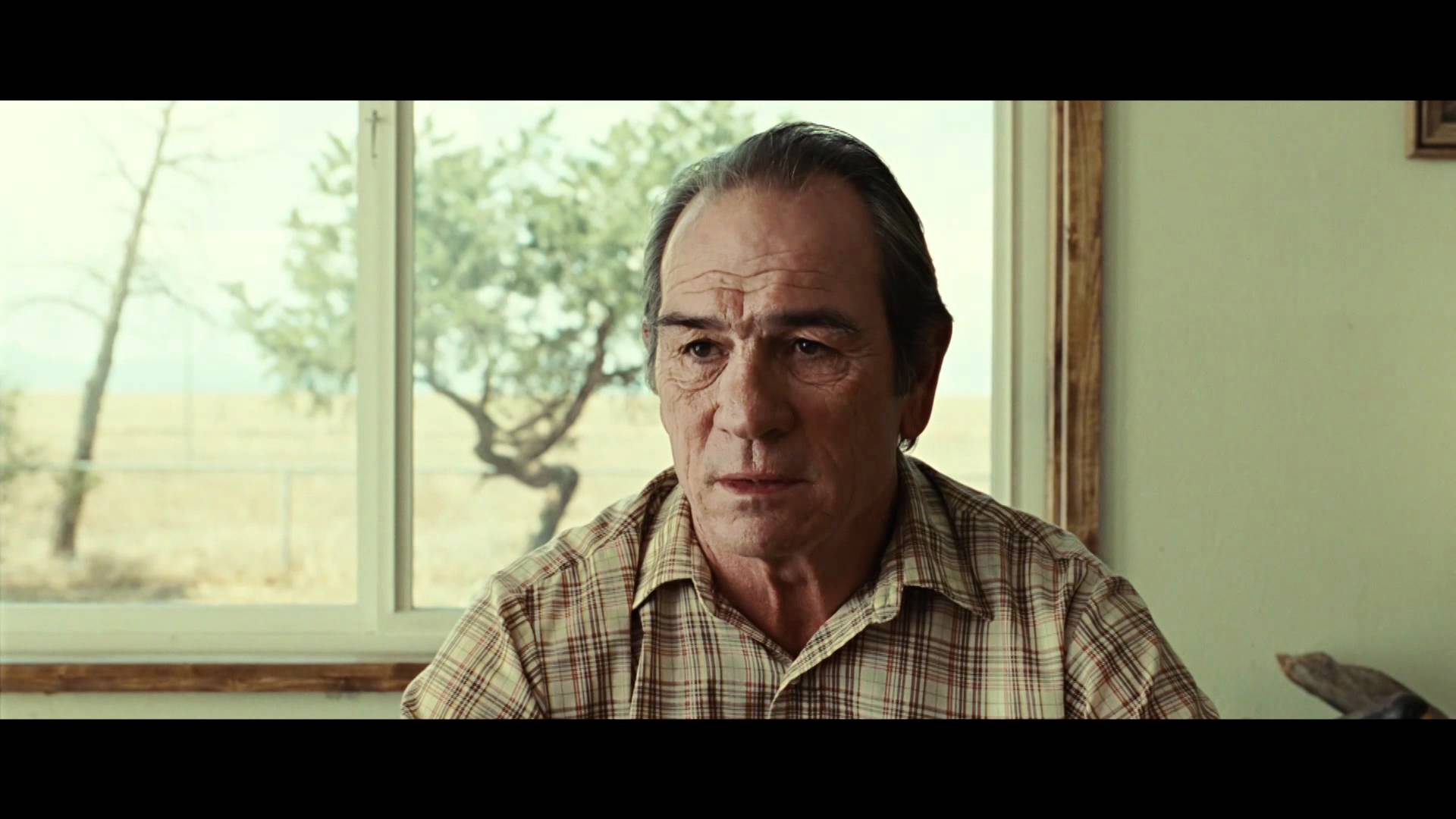
Sometimes the final scenes of movies are enigmatic and perhaps perplexing. Here is a shot of the final scene from “No Country From Old Men.” Here, Sheriff Bell is telling his wife about the dream he had the night before, the dream of his father passed him riding a horse in the cold night carrying fire in a horn on ahead where he would be waiting for his son. And then the screen goes black. Wow! What does that mean?!
Ah, then there is this: the final scene of “Planet of the Apes.” Do you remember when you first saw this? Here, Taylor and Nova walk on the shore of this planet of the Apes only to find the Statue of the Liberty and realize that they have been on earth all along! Mind…blown!!!
And what about the final scene of “The Godfather.” The movie ends with Kay asking Michael Corleone if he was responsible for Carlo’s death. He denies that he was. Kay seems to believe him but then she turns to see all of Michael’s capos come to greet him as the new Godfather just as the door is closed between him and her.
Wow! The final scene really can make or break a film!
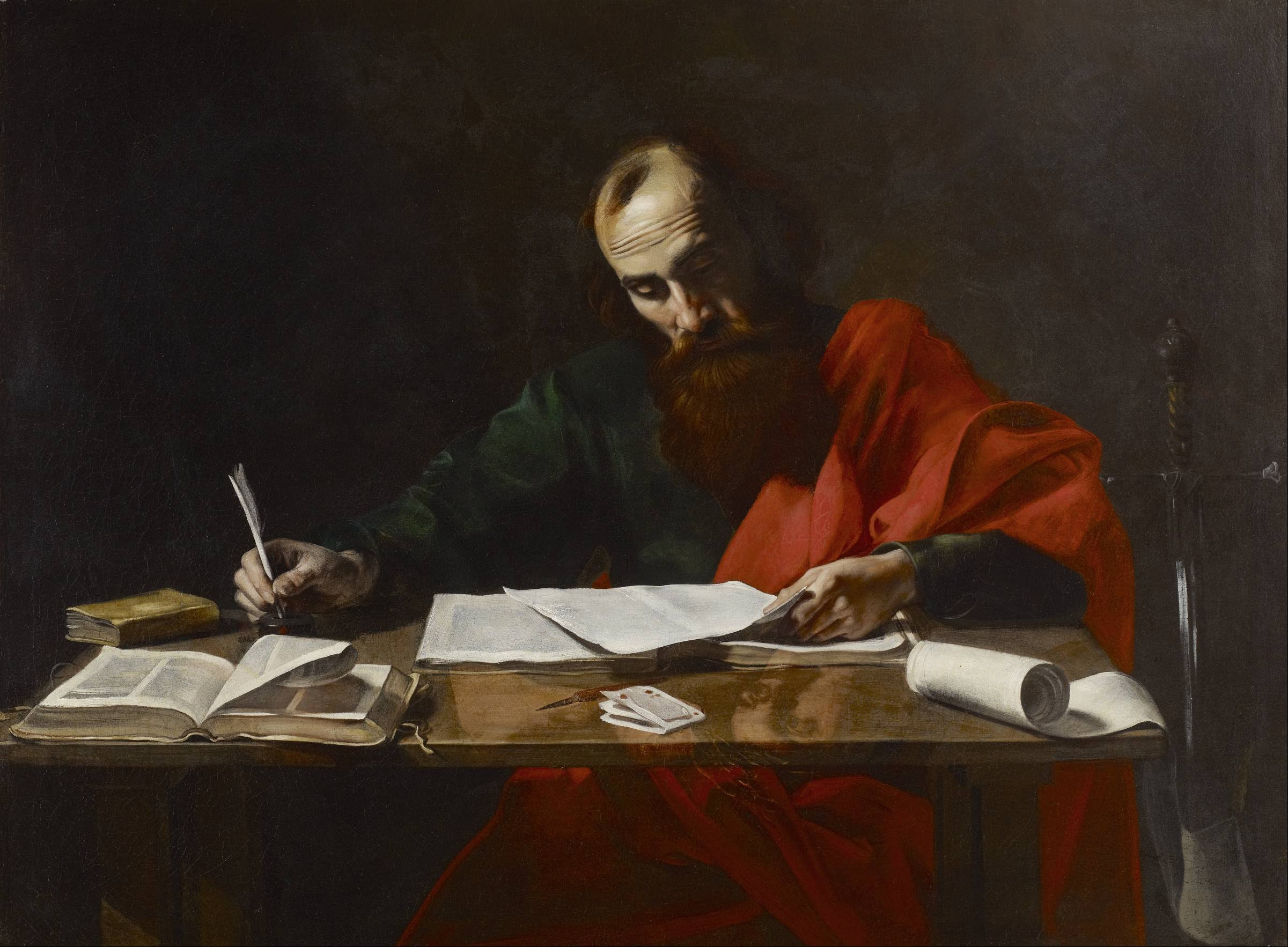
And what about the final scene of this guy’s story: the Apostle Paul? When the camera fades to black here at the end of Acts 28, what is Paul doing? What is our final vision of the great missionary hero in Acts? Acts 28:17-31 offers us the final scene, and it too caps off a great story!
In the final scene, we see Paul taking the initiative to create opportunities to tell people about Jesus.
One thing that must be said about the final scene of Acts is that it presents us nothing new, nothing startling, no great plot twist. M. Night Shyamalan would not enjoy the end of Acts. In fact, the final scene of this great book shows Paul doing exactly Paul had always done since meeting Jesus on the Damascus Road.
17 After three days he called together the local leaders of the Jews, and when they had gathered, he said to them, “Brothers, though I had done nothing against our people or the customs of our fathers, yet I was delivered as a prisoner from Jerusalem into the hands of the Romans. 18 When they had examined me, they wished to set me at liberty, because there was no reason for the death penalty in my case. 19 But because the Jews objected, I was compelled to appeal to Caesar—though I had no charge to bring against my nation. 20 For this reason, therefore, I have asked to see you and speak with you, since it is because of the hope of Israel that I am wearing this chain.” 21 And they said to him, “We have received no letters from Judea about you, and none of the brothers coming here has reported or spoken any evil about you. 22 But we desire to hear from you what your views are, for with regard to this sect we know that everywhere it is spoken against.”
Paul, under house arrest in Rome, invited the Jewish leaders to come see him. “House arrest,” R.C. Sproul tells us, “meant that Paul could enjoy the company of his friends even tough he was kept under guard twenty-four hours a day, chained by his wrist to one of the guards. The guards changed shifts every four hours, so in a twenty-four-hour period, six different guards were chained to the Apostle Paul.” Sproul goes on to say that “there were no more blessed prison guards in the history of the world than those six men who had the unspeakable privilege of being cuffed to the wrist of the world’s greatest preacher of all time.”[1]
That is true! And there was no more blessed group than these Jewish elders who were invited into his home so that he could speak to them. They came and Paul told them generally how he came to be in Rome. They responded, surprisingly, that they knew nothing about him but they did know a little about Christianity primarily because it was criticized by Jews. Thus, they told Paul that they wanted him to share what was on his mind. So Luke says this:
23 When they had appointed a day for him, they came to him at his lodging in greater numbers. From morning till evening he expounded to them, testifying to the kingdom of God and trying to convince them about Jesus both from the Law of Moses and from the Prophets. 24 And some were convinced by what he said, but others disbelieved.
Beautiful! Paul, burning with missionary zeal for the salvation of these Jewish elders “from morning till evening…expounded to them, testifying to the kingdom of God and trying to convince them about Jesus both from the Law of Moses and from the Prophets.” Note: he could not go to synagogue, as was his normal custom, so he invited the synagogue to him. Then, he laid out his case.
Dear church, when the camera fades to black on Paul in the book of Acts, he is sitting in his living room beseeching the Jewish religious leaders to trust in Christ! When the camera fades to black on you, what will it show?
This raises another practical question: do we know enough of the gospel and are we grounded firmly enough in the truths of God’s Word to be able to expound them from morning till evening? I recently spoke with an American missionary who was telling me of visiting the country of Nepal. He shared how he and another American brother got off of the plane in a state of exhaustion from the long travel to that far away country. When they exited the plane, they were taken to a local Christian church. There, the missionary was met by an apologetic pastor who greeted the two men but told him that, due to unforeseen circumstances, the two brothers would only be able to preach for three hours each instead of the customary longer sermon! The missionary I was speaking to said he was stunned and managed to get out about an hour and a half before calling it quits.
My point is not that there is anything inherently godly in a longer sermon. My point is that Paul was so filled with passion for the gospel that he was able to talk about it all day long, reasoning and trying to persuade the lost to accept Christ.
I would also like to remind all of us that our church is here today because Christians in the past took their responsibility to share the gospel seriously. They, like Paul, took the initiative to reach out to a lost and dying world. We are therefore the beneficiaries of the boldness of our forefathers and foremothers. We are here because way back then somebody said, “I will not wait. I will go. I will speak of Jesus. I will spread the gospel. Everybody must know, and I must make sure they do!”
In the final scene, we see Paul looking for the gospel to advance further and further into the world.
Luke reveals that the reaction to Paul’s message was mixed. Some believed and some did not. Paul, in response, quoted Isaiah to the Jews in order to explain to them what they were doing.
25 And disagreeing among themselves, they departed after Paul had made one statement: “The Holy Spirit was right in saying to your fathers through Isaiah the prophet: 26 “‘Go to this people, and say, “You will indeed hear but never understand, and you will indeed see but never perceive.” 27 For this people’s heart has grown dull, and with their ears they can barely hear, and their eyes they have closed; lest they should see with their eyes and hear with their ears and understand with their heart and turn, and I would heal them.’ 28 Therefore let it be known to you that this salvation of God has been sent to the Gentiles; they will listen.” [29 And when he had said these words, the Jews departed, having much dispute among themselves.]
Paul announced that the gospel had been sent even to the Jews and informed the Jews that “they will listen.” When the camera fades to black on Paul he is announcing the worldwide spread of the gospel. He is announcing that this gospel of Christ is not the plaything of the Jews. Rather, it is intended for the entire world. Indeed, “that salvation of God has been sent to the Gentiles.” It has been. It will be. It will continue onward!
There can be no doubt that one of the great marks of a missionary heart is a desire to see the gospel reach the nations. All of them. This creates problems, for it also cannot be doubted that we live in an age in which evangelism itself is seen as offensive and contrary to the unspoken and assumed codes of modern behavior. Indicative are the 1999 comments of K.R. Malkani, then spokesman of the Bharatiya Janata Party in India, concerning the Southern Baptist Convention’s call for the evangelization of Hindus.
I have read the…report of U.S. Baptists’ bid to convert Hindus to Christianity during Divali. I must say I am not surprised. The missionary approach to Hindus and Hinduism has always been illiterate and offensive…Firstly, India is more religious than any other country in the world. Morally, it is more Christian than any other Christian country. Secondly, is it not an insult to India to tell Hindus that they are all sinners and that only Jesus can save them?[2]
Paul would have answered that question, “No! No, it is not an insult to India to tell Hindus that they are all sinners and that only Jesus can save them! It is, in fact, good news, for only in admitting our need for a Savior are we in a position to receive a Savior.”
Paul announced to the Jews that the gospel had spilled the banks and was flowing everywhere. I am trying to say to some of you who may perhaps still be in a position of uncertainty over the legitimacy of worldwide efforts at evangelization that the evangelization of the world is in the very heart of God. It is in the heart of God to want all people to know Jesus. It is also in the hearts of His champions, like Paul. So must it be in ours!
In the final scene, we see Paul being consistent and bold on behalf of the Kingdom of God.
Finally, we see the boldness of Paul in the final scene of Acts. Here are Luke’s closing words:
30 He lived there two whole years at his own expense, and welcomed all who came to him, 31 proclaiming the kingdom of God and teaching about the Lord Jesus Christ with all boldness and without hindrance.
What an ending! What a final scene! There we find Paul under house arrest still doing his thing! And what was that? “Proclaiming the kingdom of God and teaching about the Lord Jesus Christ with all boldness and without hindrance.” The 6th century monk and former Roman Senator Flavius Magnus Aurelius Cassiodorus Senator wrote of this passage in these terms: “Although he was bound with chains of iron, he daily set believers free from the chains of their sins.”[3]
That is well said, and a nice summary. Modern interpreters have also tried to make sense of the way in which Luke ended Acts. For instance, Ajith Fernando writes:
Luke’s decision to close his book with a report of ongoing evangelism reminds us that evangelism is the passion that ignites our activity. God has acted decisively in Christ to save the human race. Herein lies the ultimate answer to the problems of the human race. If we love this world as God does, we will want to tell it of this liberating good news. This business will consume our passion to the day we die.[4]
John Stott put it like this:
Now the next generation must step into his shoes and continue to work. Just as Luke’s Gospel ended with the prospect of a mission to the nations, so the Acts ends with the prospect of a mission radiating from Rome to the world. Luke’s description of Paul preaching ‘with boldness’ and ‘without hindrance’ symbolizes a wide open door, through which we in our day have to pass. The Acts of the Apostles have long ago finished. But the acts of the followers of Jesus will continue until the end of the world, and their words will spread to the ends of the earth.[5]
I think Stott is getting at something important. Why, after all, does Luke not end the book of Acts with Paul’s martyrdom, his death? Tradition tells us that Paul was martyred by being beheaded. Why not end with Paul’s death? Why end with Paul evangelizing?
Is it not because Luke is saying something about the continuation of the book of Acts in and through the Church today? Is he not saying that the story of the Church does not end with the death of a champion, it continues in the lives of numerous heroes of the gospel today? Which is to say this: Church, the book of Acts continues now in you! It is your story, our story! Do you see? It does not end with the death of Paul because the Church today is still about the business that Paul was about, or we should be. And Paul was simply about the business of Jesus.
Church, let us write our chapter of Acts well. May our chapter say of us what the first twenty eight said of the early Church: that we were fired with gospel passion, that we spent ourselves on reaching out to everybody everywhere with the good news of Jesus Christ.
Let us write our chapter well, Church.
Let us write our chapter well.
[1] Sproul, R.C. Acts (St. Andrews Expositional Commentary) (Location 6633-6641). Crossway Books. Kindle Edition.
[2] RNS, “Hindus react to Southern Baptist prayer plans,” The Christian Index (November 4, 1999), p.6.
[3] Jaroslav Pelikan, Acts. Brazos Theological Commentary on the Bible. (Grand Rapids, MI: Brazos Press, 2005), p.295.
[4] Fernando, Ajith (2010-12-21). Acts (The NIV Application Commentary) (p.583-584). Zondervan. Kindle Edition.
[5] Stott, John (2014-04-02). The Message of Acts (The Bible Speaks Today Series) (Kindle Locations 7351-7355). InterVarsity Press. Kindle Edition.
Acts 28:1-16
1 After we were brought safely through, we then learned that the island was called Malta. 2 The native people showed us unusual kindness, for they kindled a fire and welcomed us all, because it had begun to rain and was cold. 3 When Paul had gathered a bundle of sticks and put them on the fire, a viper came out because of the heat and fastened on his hand. 4 When the native people saw the creature hanging from his hand, they said to one another, “No doubt this man is a murderer. Though he has escaped from the sea, Justice has not allowed him to live.” 5 He, however, shook off the creature into the fire and suffered no harm. 6 They were waiting for him to swell up or suddenly fall down dead. But when they had waited a long time and saw no misfortune come to him, they changed their minds and said that he was a god. 7 Now in the neighborhood of that place were lands belonging to the chief man of the island, named Publius, who received us and entertained us hospitably for three days. 8 It happened that the father of Publius lay sick with fever and dysentery. And Paul visited him and prayed, and putting his hands on him healed him. 9 And when this had taken place, the rest of the people on the island who had diseases also came and were cured. 10 They also honored us greatly, and when we were about to sail, they put on board whatever we needed. 11 After three months we set sail in a ship that had wintered in the island, a ship of Alexandria, with the twin gods as a figurehead. 12 Putting in at Syracuse, we stayed there for three days. 13 And from there we made a circuit and arrived at Rhegium. And after one day a south wind sprang up, and on the second day we came to Puteoli. 14 There we found brothers and were invited to stay with them for seven days. And so we came to Rome. 15 And the brothers there, when they heard about us, came as far as the Forum of Appius and Three Taverns to meet us. On seeing them, Paul thanked God and took courage. 16 And when we came into Rome, Paul was allowed to stay by himself, with the soldier who guarded him.
I suppose one of the most humorous hospital visits I ever made was to an elderly man named Ike Chambless. I received a phone call that Mr. Ike was in the emergency room of a hospital in Albany, Georgia. He had been bitten by a baby rattlesnake in his front yard. He had been working in the yard and put his hand down in a hole to remove an obstruction and, when he pulled the hand out, a baby rattlesnake was hanging from his finger. That is not the funny part! In fact, it was terrifying!
I rushed over the emergency room and found Mr. Ike sitting up in his bed, his hand badly swollen but the IV doing its job as it helped the antivenom into his body. I relaxed when I saw that Mr. Ike was ok and that he was in good spirits. We talked and even laughed about it while we sat down cheering the medicine on in its task of combating the venom!
The funny part came some moments after I had been there when the doctor, who had apparently not seen him yet, came into the room. He asked Mr. Ike to tell the story of what had happened to him. Ike did so. When he was finished the doctor said, “Well, what did you do with the snake?” To which Ike responded, “Oh it’s right there behind you.” The doctor and I both turned and looked at the counter behind the doctor. There, laid out on top of a plastic grocery store bag, was the snake!
The doctor jerked backwards away from the counter and my heart lept into my throat! Mr. Ike chuckled and said, “Oh, don’t worry. It’s dead.” The doctor, composing himself said, “Let me get somebody to put this thing in a sealed container!”
It was a funny moment! Ike and I had a good laugh about it. I do not recall the poor doctor cracking a smile!
Paul had his own snake story, though it was much more important than Mr. Ike’s. Paul’s story demonstrated in a miraculous way the power of God (not, I should add, that Mr. Ike’s didn’t!). It stands as a most interesting little story demonstrating some wonderfully big truths in the midst of an amazing life!
The power of God working in Paul’s life confounded the pagan theology of the world and drew nonbelievers to Christ.
It happened on the island of Malta where Paul and the crew of the ship found themselves after their frightening ordeal at sea.
1 After we were brought safely through, we then learned that the island was called Malta. 2 The native people showed us unusual kindness, for they kindled a fire and welcomed us all, because it had begun to rain and was cold.
“The native people” referred to in verse 2 is a translation of the Greek word barbaroi which is sometimes translated as “barbarous people.” Our word “barbarian” is a transliteration of the word barbaroi. Jaroslav Pelikan points out that this is “a term that in modern English probably carries more pejorative connotations than it does in Greek, where it means, with relative neutrality, ‘non-Greek,’ as it does in other appearances in the New Testament.”[1] Thus, no slight is intended by the term. They were simply the island inhabitants, pagans, to be sure, but considering the kindness they showed the shipwrecked crew they were obviously a benevolent people. Even so, their spiritual blindness became evident in their reaction to something surprising that happened to Paul.
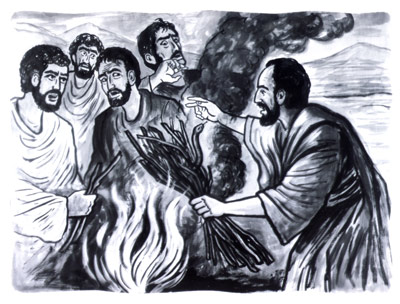
3 When Paul had gathered a bundle of sticks and put them on the fire, a viper came out because of the heat and fastened on his hand. 4 When the native people saw the creature hanging from his hand, they said to one another, “No doubt this man is a murderer. Though he has escaped from the sea, Justice has not allowed him to live.” 5 He, however, shook off the creature into the fire and suffered no harm. 6 They were waiting for him to swell up or suddenly fall down dead. But when they had waited a long time and saw no misfortune come to him, they changed their minds and said that he was a god.
Well, that is surprising indeed! Paul is bitten by a snake that he appears almost to casually shake off into the fire. A Snake being mistaken for wood is not unheard of. James Montgomery Boice has passed on a somewhat similar story from Lawrence of Arabia.
T.E. Lawrence, better known as Lawrence of Arabia, described something like this in his book Revolt in the Desert about the desert campaign in the World War I. It was cold. The Arabs had gathered sticks for a fire. One of the sticks turned out to be a snake that was revived by the fire’s warmth and slithered away into the dark night, in this case without biting anybody.[2]
What was unique about the instance involving Paul on Malta is the fact that he was bitten then shook the snake off with no ill effects.
Ben Witherington notes that critics of this story point out that there is no record of there ever having been venomous snakes on the island of Malta. However, he points out that “it may…be the case that Luke has not used the term echidna with precision” and that, furthermore, “there is a snake, which has long been found on Malta, belonging to the species Coronella austriaca, which is a type of constrictor. This is thought to better fit the description of a snake fastening itself on Paul’s hand.” Furthermore, Witherington points out that “Pliny the Elder indicates it was a common belief, even among the educated, that all snakes were poisonous and that they were often agents of divine vengeance.”[3]
Regardless of the arguments of detractors, Luke has proven himself to be an accurate historian throughout Acts and his testimony should be sufficient enough proof: Paul was bitten. The bite led the inhabitants to conclude that Paul must be a murderer or some terrible criminal. They appear to have thought that Dike, the goddess of justice, was punishing Paul for some crime.[4] In reasoning thus, they demonstrated that they held to a belief in what we would call today “karma,” a belief in cause-and-effect justice that is hardwired into the universe itself. However, Paul shook the snake off with an indifferent shrug. As a result, the islanders swung to the other extreme and called Paul a god!
Such is the nature of pagan theology: it understands neither God nor man. It is deficient in both its theology and its anthropology. Paul’s example in the episode with the snake confounded their theology and shattered its categories. In fact, Paul was living proof that their simplistic understanding of justice did not have a category for that which makes gospel good news: grace. After all, Paul was a murderer, but he had been declared righteous by the righteousness of Christ that he received by grace through faith. He was no god, but he knew the God of the universe. Thus, the snake served as an illustration to the watching islanders that what they thought they knew about God (or, as they would have put it, the gods) and man was deeply deficient.
Then, God worked powerfully through Paul to draw people to Himself.
7 Now in the neighborhood of that place were lands belonging to the chief man of the island, named Publius, who received us and entertained us hospitably for three days. 8 It happened that the father of Publius lay sick with fever and dysentery. And Paul visited him and prayed, and putting his hands on him healed him. 9 And when this had taken place, the rest of the people on the island who had diseases also came and were cured. 10 They also honored us greatly, and when we were about to sail, they put on board whatever we needed.
Paul’s ministry on Malta consisted of a miraculous blocking of poisonous death on the one hand and miraculous healings on the other. His instrument for demonstrating His power in both cases was Paul, His missionary champion. He used Paul to heal the father of the power man on Malta, Publius. Then, He used Paul to heal the crowd that thronged to him.
We are provided a cursory sketch of these events. Luke does not permit us to hear Paul’s words on Malta. Regardless, we can be sure that Paul made much of Jesus, that he used all of these circumstances to promote the gospel. We can be sure of this because this is what Paul always did. God was creating missionary moments for Paul, both through the situation with the snake and through the healings of the sick.
It is evident, then, that Paul remained a mighty and powerful instrument in the hands of God. That makes what happened next that much more moving.
And the power of God working through the Church encouraged and strengthened Paul.
Having touched so many lives through Paul and his ministry, God now touched Paul’s life through the life and ministry of the Church. As Paul approached Rome, he suddenly found himself the object of the Church’s acceptance, love, mercy, and compassion.
11 After three months we set sail in a ship that had wintered in the island, a ship of Alexandria, with the twin gods as a figurehead. 12 Putting in at Syracuse, we stayed there for three days. 13 And from there we made a circuit and arrived at Rhegium. And after one day a south wind sprang up, and on the second day we came to Puteoli. 14 There we found brothers and were invited to stay with them for seven days. And so we came to Rome. 15 And the brothers there, when they heard about us, came as far as the Forum of Appius and Three Taverns to meet us. On seeing them, Paul thanked God and took courage. 16 And when we came into Rome, Paul was allowed to stay by himself, with the soldier who guarded him.
How very touching this is! “On seeing them, Paul thanked God and took courage.” T.C. Smith writes, “Paul, the man who had been comforting others on the voyage, was now comforted…The strongest Christian also needs the sympathy, compassion, help, care, and concern of others.”[5] That is so true and so well said!
Show me a great Christian, a brave Christian, a strong Christian, a champion of the gospel, a luminary in the Church, a man through whom God has done mighty works and through whom He has touched innumerable lives, and I will show you a man who still needs the encouragement of the Church, the love of the Church, the compassion and understanding of the Church.
Nobody…nobody…is beyond the need for encouragement. This is evident from Paul’s reaction to seeing these believers come to meet him as he begins to approach Rome. It also demonstrates that we need to be sensitive to those around us, especially those we consider to be strong and boundless sources of energy. We must begin to understand that our fellow believers are a mission field for the ministry of encouragement. It is a great gift that we can give to one another.
Will Willimon put it beautifully when he said this:
In a narrative filled with accounts of power, miraculous deliverance, and divine intervention, this is perhaps the greatest power the Christian faith puts at the disciple’s disposal – the power of brothers and sisters in the church. In struggles with injustice, cruelty, and life’s difficulties, one of the church’s greatest gifts to us is the church. If Luke seems preoccupied with the church, it is perhaps because Luke knows that the church has become the content of the gospel proclamation. Jesus came preaching, not simply a new philosophy of life but a new way of living…The Acts question is not merely the intellectual one of “Do you agree?” but the political and social question, “Will you join up?”[6]
Yes, the Church, when it is the Church, represents a new life and a new way of doing life together. The Church’s movement toward Paul was a movement of affirmation not only of how the gospel had taken root in Paul’s life in such powerful and dramatic ways but also of how the gospel had likewise taken root in the life of the Roman church.
Our text is therefore a powerful and memorable display of how God worked through Paul to touch the lives of numerous people and then of how God worked through numerous people to touch the life of Paul.
God longs to work powerful through us as well: through us to the outside world and through us to our fellow Christian as well.
Be the instrument that God intends for you to be.
[1] Jaroslav Pelikan, Acts. Brazos Theological Commentary on the Bible. (Grand Rapids, MI: Brazos Press, 2005), p.290.
[2] James Montgomery Boice, Acts. (Grand Rapids, MI: Baker Books, 1997), p.418.
[3] Ben Witherington III, The Acts of the Apostles: A Socio-Rhetorical Commentary. (Grand Rapids, MI: William B. Eerdmans Publishing Company, 1998), p.777-778.
[4] T.C. Smith, “Acts.” The Broadman Bible Commentary. Vol.10. Clifton J. Allen, gen. ed. (Nashville, TN: Broadman Press, 1970), p.149.
[5] T.C. Smith, p.150.
[6] William H. Willimon, Acts. Interpretation. (Louisville, KY: John Knox Press, 1988), p.186-187.
J. Mack Stiles’ Evangelism: How the Whole Church Speaks of Jesus
My friend Jamie Rogers (church planter extraordinaire in Long Island) mentioned to me when I was up there in January that Mack Stiles’ book Evangelism was the best he had read on the subject. Having just finished it, I’d certainly concur that it is a very strong read indeed! This book is part of the series of 9 Marks titles that are relatively brief, accessible, and, in my experience, meaty. It is written by a man who clearly has a heart for seeing people come to know Jesus. If you struggle with personal evangelism or consider the whole idea terrifying, you will be greatly helped by this title.
There are three particular strengths to the book. First, its main thesis is that evangelism is a whole-church task best executed within an intentionally cultivated culture of evangelism. This idea was most helpful and, I believe, sorely needed! Many (most?) evangelism books actually prop up modern American notions of radical individualism by instructing you how to share the faith with him or her. This book is arguing that evangelism is done best when we (the Church) are sharing our faith with him or her. Thus, when a nonbeliever visits a church, they should, in addition to hearing gospel proclamation, be the recipient of authentic, loving, and careful evangelism as numerous people who engage them bear witness to what Christ has done in their lives. Again, this should be authentic, not forced, as people who have been born again simply share how Christ has changed their lives. This emphasis on creating a culture of evangelism was great appreciated!
Secondly, Stiles pushes against programmatic evangelism or the idea of canned presentations of the gospel. He seems to me to be saying that these efforts, while usually well-intended, do not ask too much but too little. Furthermore, they put the onus on the Church to create evangelistic opportunities instead of simply responding to or seeking Spirit-created opportunities as they come. I have long thought that our churches are adrift in a sea of programmatic overload. I know. I have contributed to the problem. It’s a tough thing, really. Programs are not bad in and of themselves. I applaud and use many of them. But in areas like evangelism they seem to compartmentalize what should really be a natural, organic aspect of our lives as Christians. I hear Stiles arguing for this organic approach to evangelism.
Third, the book gives great examples of what this evangelistic culture looks like. I was inspired and encouraged and convicted to read these stories of how God uses whole congregations to bring people to the faith. As a pastor, I long for such a culture of evangelism and believe that Stiles’ has offered a very helpful snapshot of what that might look like. On a practical note, such anecdotal evidence makes the reading experience so much more enjoyable as well.
This is a great book on a crucial topic that should be read and considered by all who care about evangelism and doing it rightly…which should be us all!
Ted Roberts’ “Conquer Series”: A Resource for Men Struggling With Sexual Addiction
This morning at 6 a.m. at Central Baptist Church in North Little Rock, Arkansas, twenty men gathered to begin a five week journey through Ted Roberts’ “Conquer Series.” The series is designed to address issues of sexuality in general and sexual addiction in particular for men. I am honored to be co-teaching this course with Travis Burns, a dear friend and Central Baptist member. In promoting this, we made it abundantly clear that this course is not just for men who consider themselves to have a problem and coming to it is not an admission of anything at all. On the contrary, we asked the men of the church to prayerfully consider coming simply because it is such a massive issue and an area in which lots of men do struggle and any man potentially could. I am writing to recommend this tremendous resource.
Ted Roberts is a former Marine fighter pilot who served in Vietnam. He is also a brother in Christ who had to overcome the ensnarement of sexual addiction. As a result of what God has done in his life, he founded Pure Desire Ministries out of which the Conquer Series has come and from which numerous other resources are offered. This morning as I watched the first (of five) dvd session, listened to the amazing and encouraging discussion among the men that came, and received feedback as the day went on, I determined that I wanted to draw attention to this very well done and very effective resource.
The dvd sessions are thorough, of impressive production quality, and quite moving. Ted Roberts’ is an amazing man with a truly transformative ministry and his passion is evident as one observes the Conquer Series. The approach is not a quick fix and is realistic about how difficult the journey can be for men who are stuck in this addiction, but is ultimately hopeful about the power of Christ to free us. Roberts is most emphatic that this takes a community of accountability in which men help men to break free.
As a pastor, I have long been alarmed by the number of men who come to me with confessions of sexual addictions. Please understand: I am not ashamed of or angry at or confused by these confessions. It only makes me angry at Satan and his efforts to destroy men. Rather, I am simply saddened that we have created a church culture in which men do not feel free to confess their struggles in this area until they have gone too far or until they have done serious damage to themselves or their families. The Church simply must find a way to address these issues in a timely, sophisticated, biblically faithful, Christ honoring, and redemptive way. To that end, I can think of no better first step than this series.
If you are a pastor or lead a men’s ministry or a small group, I would encourage you to consider this resource. (By the way, I am NOT being paid to say this!) Your men will be challenged and encouraged and, ultimately, your church family as well as the families of your men will be strengthened.
Acts 27
1 And when it was decided that we should sail for Italy, they delivered Paul and some other prisoners to a centurion of the Augustan Cohort named Julius. 2 And embarking in a ship of Adramyttium, which was about to sail to the ports along the coast of Asia, we put to sea, accompanied by Aristarchus, a Macedonian from Thessalonica. 3 The next day we put in at Sidon. And Julius treated Paul kindly and gave him leave to go to his friends and be cared for. 4 And putting out to sea from there we sailed under the lee of Cyprus, because the winds were against us. 5 And when we had sailed across the open sea along the coast of Cilicia and Pamphylia, we came to Myra in Lycia. 6 There the centurion found a ship of Alexandria sailing for Italy and put us on board. 7 We sailed slowly for a number of days and arrived with difficulty off Cnidus, and as the wind did not allow us to go farther, we sailed under the lee of Crete off Salmone. 8 Coasting along it with difficulty, we came to a place called Fair Havens, near which was the city of Lasea. 9 Since much time had passed, and the voyage was now dangerous because even the Fast was already over, Paul advised them, 10 saying, “Sirs, I perceive that the voyage will be with injury and much loss, not only of the cargo and the ship, but also of our lives.” 11 But the centurion paid more attention to the pilot and to the owner of the ship than to what Paul said. 12 And because the harbor was not suitable to spend the winter in, the majority decided to put out to sea from there, on the chance that somehow they could reach Phoenix, a harbor of Crete, facing both southwest and northwest, and spend the winter there. 13 Now when the south wind blew gently, supposing that they had obtained their purpose, they weighed anchor and sailed along Crete, close to the shore. 14 But soon a tempestuous wind, called the northeaster, struck down from the land. 15 And when the ship was caught and could not face the wind, we gave way to it and were driven along. 16 Running under the lee of a small island called Cauda, we managed with difficulty to secure the ship’s boat. 17 After hoisting it up, they used supports to undergird the ship. Then, fearing that they would run aground on the Syrtis, they lowered the gear, and thus they were driven along. 18 Since we were violently storm-tossed, they began the next day to jettison the cargo. 19 And on the third day they threw the ship’s tackle overboard with their own hands. 20 When neither sun nor stars appeared for many days, and no small tempest lay on us, all hope of our being saved was at last abandoned. 21 Since they had been without food for a long time, Paul stood up among them and said, “Men, you should have listened to me and not have set sail from Crete and incurred this injury and loss. 22 Yet now I urge you to take heart, for there will be no loss of life among you, but only of the ship. 23 For this very night there stood before me an angel of the God to whom I belong and whom I worship, 24 and he said, ‘Do not be afraid, Paul; you must stand before Caesar. And behold, God has granted you all those who sail with you.’ 25 So take heart, men, for I have faith in God that it will be exactly as I have been told. 26 But we must run aground on some island.” 27 When the fourteenth night had come, as we were being driven across the Adriatic Sea, about midnight the sailors suspected that they were nearing land. 28 So they took a sounding and found twenty fathoms. A little farther on they took a sounding again and found fifteen fathoms. 29 And fearing that we might run on the rocks, they let down four anchors from the stern and prayed for day to come. 30 And as the sailors were seeking to escape from the ship, and had lowered the ship’s boat into the sea under pretense of laying out anchors from the bow, 31 Paul said to the centurion and the soldiers, “Unless these men stay in the ship, you cannot be saved.” 32 Then the soldiers cut away the ropes of the ship’s boat and let it go. 33 As day was about to dawn, Paul urged them all to take some food, saying, “Today is the fourteenth day that you have continued in suspense and without food, having taken nothing. 34 Therefore I urge you to take some food. For it will give you strength, for not a hair is to perish from the head of any of you.” 35 And when he had said these things, he took bread, and giving thanks to God in the presence of all he broke it and began to eat. 36 Then they all were encouraged and ate some food themselves. 37 (We were in all 276 persons in the ship.) 38 And when they had eaten enough, they lightened the ship, throwing out the wheat into the sea. 39 Now when it was day, they did not recognize the land, but they noticed a bay with a beach, on which they planned if possible to run the ship ashore. 40 So they cast off the anchors and left them in the sea, at the same time loosening the ropes that tied the rudders. Then hoisting the foresail to the wind they made for the beach. 41 But striking a reef, they ran the vessel aground. The bow stuck and remained immovable, and the stern was being broken up by the surf. 42 The soldiers’ plan was to kill the prisoners, lest any should swim away and escape. 43 But the centurion, wishing to save Paul, kept them from carrying out their plan. He ordered those who could swim to jump overboard first and make for the land, 44 and the rest on planks or on pieces of the ship. And so it was that all were brought safely to land.
In 1840, Henry Wadsworth Longfellow published his astounding poem, “The Wreck of the Hesperus.
It was the schooner Hesperus,
That sailed the wintry sea;
And the skipper had taken his little daughtèr,
To bear him company.
Blue were her eyes as the fairy-flax,
Her cheeks like the dawn of day,
And her bosom white as the hawthorn buds,
That ope in the month of May.
The skipper he stood beside the helm,
His pipe was in his mouth,
And he watched how the veering flaw did blow
The smoke now West, now South.
Then up and spake an old Sailòr,
Had sailed to the Spanish Main,
“I pray thee, put into yonder port,
For I fear a hurricane.
“Last night, the moon had a golden ring,
And to-night no moon we see!”
The skipper, he blew a whiff from his pipe,
And a scornful laugh laughed he.
Colder and louder blew the wind,
A gale from the Northeast,
The snow fell hissing in the brine,
And the billows frothed like yeast.
Down came the storm, and smote amain
The vessel in its strength;
She shuddered and paused, like a frighted steed,
Then leaped her cable’s length.
“Come hither! come hither! my little daughtèr,
And do not tremble so;
For I can weather the roughest gale
That ever wind did blow.”
He wrapped her warm in his seaman’s coat
Against the stinging blast;
He cut a rope from a broken spar,
And bound her to the mast.
“O father! I hear the church-bells ring,
Oh say, what may it be?”
“‘T is a fog-bell on a rock-bound coast!” —
And he steered for the open sea.
“O father! I hear the sound of guns,
Oh say, what may it be?”
“Some ship in distress, that cannot live
In such an angry sea!”
“O father! I see a gleaming light,
Oh say, what may it be?”
But the father answered never a word,
A frozen corpse was he.
Lashed to the helm, all stiff and stark,
With his face turned to the skies,
The lantern gleamed through the gleaming snow
On his fixed and glassy eyes.
Then the maiden clasped her hands and prayed
That savèd she might be;
And she thought of Christ, who stilled the wave
On the Lake of Galilee.
And fast through the midnight dark and drear,
Through the whistling sleet and snow,
Like a sheeted ghost, the vessel swept
Tow’rds the reef of Norman’s Woe.
And ever the fitful gusts between
A sound came from the land;
It was the sound of the trampling surf
On the rocks and the hard sea-sand.
The breakers were right beneath her bows,
She drifted a dreary wreck,
And a whooping billow swept the crew
Like icicles from her deck.
She struck where the white and fleecy waves
Looked soft as carded wool,
But the cruel rocks, they gored her side
Like the horns of an angry bull.
Her rattling shrouds, all sheathed in ice,
With the masts went by the board;
Like a vessel of glass, she stove and sank,
Ho! ho! the breakers roared!
At daybreak, on the bleak sea-beach,
A fisherman stood aghast,
To see the form of a maiden fair,
Lashed close to a drifting mast.
The salt sea was frozen on her breast,
The salt tears in her eyes;
And he saw her hair, like the brown sea-weed,
On the billows fall and rise.
Such was the wreck of the Hesperus,
In the midnight and the snow!
Christ save us all from a death like this,
On the reef of Norman’s Woe!
What a beautiful, moving, stirring, sad poem! There can be little doubt why it is so appreciated, even to this day. That poem is certainly worth more than the $25 Longfellow was paid for it in 1840!
As I read that poem and then read Acts 27, I am struck by the amazing similarities between the two. Both involve high drama at sea. Both involve a passenger warning those on the ship about the dangers of being on the ocean at that time. Both involve a battering storm that wrecks the ships. And both involve members of the crew floating up onto dry land on pieces of the ship. There is a stark difference, however. The biblical sea adventure recorded in Acts 27 involves the saving and safety of the entire crew whereas Longfellow’s poem involves the death of the crew and, most tragically, the pitiful death of the captain’s daughter.
Everybody loves a good sea adventure! One of my favorite books is Herman Melville’s Moby Dick. While studying Acts 27 I was struck also by the similarities between that novel with this chapter as well, not so much in the storyline, of course, as in the structure. By that I mean that both Moby Dick and Acts 27 contain a great deal of technical nautical information and terminology, but this fascinating information is punctuated here and there by powerful insights that move and inspire the reader.
Acts 27, however, is God’s Word, not a novel. Even so, our chapter is filled to overflowing with a frankly surprising amount of nautical information. In fact, A.T. Robertson writes that “the great detail and minute accuracy of Luke’s account of this voyage and shipwreck throw more light upon ancient seafaring than everything else put together.”[1]
Our chapter involves Paul’s sea journey from Caesarea to Rome. Paul was certainly no stranger to sea travel. Ben Witherington notes that there are around a dozen accounts in Acts of Paul traveling the sea and that “these accounts suggest that Paul covered some three thousand miles on the sea during the nearly three decades of his ministry recorded in Acts 9-28.”[2] That is a lot of time on the water!
This was a particularly dangerous sea journey and Paul was no stranger to danger on the water! Verse 9 tells us that “much time had passed, and the voyage was now dangerous because even the Fast was already over.” This is an interesting statement that allows us to date this journey as well as to understand why it was dangerous. John Polhill explains.
“The fast” (v.9) refers to the Day of Atonement. Calculated by the phases of the moon, the Day of Atonement fell at various times from year to year but always in late September or early October. For ancient travel on the Mediterranean, mid-September to early November was considered a dangerous time for traveling the open sea. After early November such travel ceased altogether and generally was not resumed until the beginning of February at the earliest.[3]
So this not a good time to be on the sea, but on the sea they were. What happened there revealed two powerful truths that we truly need to grasp. They were held by and, in our text, demonstrated by Paul in most dramatic fashion.
If you belong to God, His promises belong to you.
Let us begin with a fundamental fact of the Christian life: if you belong to God, His promises belong to you. This was the language of Paul, “belonging to God.” What gave rise to this most telling statement was the high drama of a dangerous sea voyage as Paul was sent to Rome. We will work through the voyage details in a fairly quick manner, paying attention to Paul’s words about the promises of God.
1 And when it was decided that we should sail for Italy, they delivered Paul and some other prisoners to a centurion of the Augustan Cohort named Julius. 2 And embarking in a ship of Adramyttium, which was about to sail to the ports along the coast of Asia, we put to sea, accompanied by Aristarchus, a Macedonian from Thessalonica. 3 The next day we put in at Sidon. And Julius treated Paul kindly and gave him leave to go to his friends and be cared for. 4 And putting out to sea from there we sailed under the lee of Cyprus, because the winds were against us. 5 And when we had sailed across the open sea along the coast of Cilicia and Pamphylia, we came to Myra in Lycia. 6 There the centurion found a ship of Alexandria sailing for Italy and put us on board. 7 We sailed slowly for a number of days and arrived with difficulty off Cnidus, and as the wind did not allow us to go farther, we sailed under the lee of Crete off Salmone. 8 Coasting along it with difficulty, we came to a place called Fair Havens, near which was the city of Lasea. 9 Since much time had passed, and the voyage was now dangerous because even the Fast was already over, Paul advised them, 10 saying, “Sirs, I perceive that the voyage will be with injury and much loss, not only of the cargo and the ship, but also of our lives.” 11 But the centurion paid more attention to the pilot and to the owner of the ship than to what Paul said. 12 And because the harbor was not suitable to spend the winter in, the majority decided to put out to sea from there, on the chance that somehow they could reach Phoenix, a harbor of Crete, facing both southwest and northwest, and spend the winter there. 13 Now when the south wind blew gently, supposing that they had obtained their purpose, they weighed anchor and sailed along Crete, close to the shore. 14 But soon a tempestuous wind, called the northeaster, struck down from the land. 15 And when the ship was caught and could not face the wind, we gave way to it and were driven along. 16 Running under the lee of a small island called Cauda, we managed with difficulty to secure the ship’s boat. 17 After hoisting it up, they used supports to undergird the ship. Then, fearing that they would run aground on the Syrtis, they lowered the gear, and thus they were driven along. 18 Since we were violently storm-tossed, they began the next day to jettison the cargo. 19 And on the third day they threw the ship’s tackle overboard with their own hands. 20 When neither sun nor stars appeared for many days, and no small tempest lay on us, all hope of our being saved was at last abandoned.
And there you have it. Stranded on the sea, cold, hungry, unable to face the winds, and at the mercy of the elements, Luke, who was on the ship, writes, “all hope of our being saved was at last abandoned.” This is reminiscent of the words that Dante puts over the gate of hell in the Inferno: “Abandon all hope ye who enter here.”
Certainly this was the feeling of the men on the ship, just as, truth be told, it is the feeling of many of you here today. I wonder if so many have ever felt such hopelessness as men and women feel today. You can see it everywhere: etched on the faces of a people who are going through great trials and difficulties, in the almost nihilistic words of people who wonder if it is worth while to even attempt to hope in anything, and in our cultural obsession with entertainment distractions that attempt to shield us from the difficulties of life.
There are those of you in here today who know exactly what I am talking about. It even seems at times as if hope is waning among the people of God, as if we who are the recipients of the divine promises also wonder if it is not perhaps madness to hope. Some of you could close your eyes right now and see yourself on the deck of this storm-tossed ship. It seems like the waters are just about to overtake you, as if the tilting ship of your life is just about to capsize.
That is how the crew felt. Perhaps that is even how Luke felt. But there was one there who did not feel that way…who would not feel that way. Listen.
21 Since they had been without food for a long time, Paul stood up among them and said, “Men, you should have listened to me and not have set sail from Crete and incurred this injury and loss. 22 Yet now I urge you to take heart, for there will be no loss of life among you, but only of the ship. 23 For this very night there stood before me an angel of the God to whom I belong and whom I worship, 24 and he said, ‘Do not be afraid, Paul; you must stand before Caesar. And behold, God has granted you all those who sail with you.’ 25 So take heart, men, for I have faith in God that it will be exactly as I have been told. 26 But we must run aground on some island.”
Glorious! Behold the audacious faith of a man of God! He informed the no-doubt stunned crew that God spoke to him in the night and assured him that none of the crew would die since Paul was on board and God needed Paul to stand before Caesar in Rome. Thus, since they were, for this part of their journey, caught up in the mighty missionary movements of God, they would live because Paul was aboard!
Has it occurred to you that this is the very opposite of the story of Jonah? There, the crew’s life was in danger because disobedient Jonah was on board. Here the crew’s life was safe because the obedient Paul was on board! In Jonah, Jonah finds himself on a stormy sea as a result of his fleeing God’s call on to testify to a pagan power. In Acts 27, Paul finds himself on a stormy sea as he is obediently moving toward the fulfillment of is call to testify to a pagan power.
Paul was gripped by a definite hope of the safety he had resting in the promises of God. Notice the characteristics of Paul’s hope:
- It came from God. (v.23)
- It allowed him to “take heart” in the midst of terrifying difficulties. (v.22,25)
- It cast fear away. (v.24)
The most telling aspect of Paul’s hope was that it was founded on promises given to Paul because Paul belonged to God!
23 For this very night there stood before me an angel of the God to whom I belong and whom I worship
The promises belonged to Paul because Paul belonged to God. Furthermore, this was the God Whom Paul worshipped!
Perhaps the most foolish thing church members say is, “I know you haven’t seen me in worship in a while, but I’ve been going through a difficult time.” How utterly absurd! It is precisely the worship of God that gives us the endurance to withstand hard times and, most importantly, that opens the doors of our hearts to receive the promises of God in the midst of hard times!
Do you find that you faith is very fragile, that it is prone to collapse at the first sign of trouble? I would ask you: can you say with Paul that God is the God to whom you belong and Whom you worship? Do you belong to Him?
Church, hear me: a casual acquaintanceship with God is not going to get you through cancer, through divorce, through crippling grief, through fear, through anxiety, through addiction, through weakness, or through temptation. Only belonging to God will accomplish this!
Calvin Miller wrote:
“God,” I cried, “I need You,
Can You hear me? Are You there?”
The great glass throne seemed empty,
There was no one in His chair.
I waited in His absence.
Finally on my bloody knees
I laid my doubting obscene head
On His high-gilded guillotine,
And meekly said, “I trust!”[4]
That is what it is to belong to God! To place our doubting obscene heads on His high-gilded guillotine and meekly say, “I trust.” This is what Paul did. We must do so as well.
And if His promises belong to you, His peace does as well.
And here is the prize: with His promises comes His peace. To have one is to have the other. Pick the story back up in verse 27.
27 When the fourteenth night had come, as we were being driven across the Adriatic Sea, about midnight the sailors suspected that they were nearing land. 28 So they took a sounding and found twenty fathoms. A little farther on they took a sounding again and found fifteen fathoms. 29 And fearing that we might run on the rocks, they let down four anchors from the stern and prayed for day to come. 30 And as the sailors were seeking to escape from the ship, and had lowered the ship’s boat into the sea under pretense of laying out anchors from the bow, 31 Paul said to the centurion and the soldiers, “Unless these men stay in the ship, you cannot be saved.” 32 Then the soldiers cut away the ropes of the ship’s boat and let it go. 33 As day was about to dawn, Paul urged them all to take some food, saying, “Today is the fourteenth day that you have continued in suspense and without food, having taken nothing. 34 Therefore I urge you to take some food. For it will give you strength, for not a hair is to perish from the head of any of you.” 35 And when he had said these things, he took bread, and giving thanks to God in the presence of all he broke it and began to eat. 36 Then they all were encouraged and ate some food themselves.
Beautiful! Simply beautiful! The men were still frantic to escape on their own terms. Paul, however, encouraged them to calm down and stay on the ship. Then he told them to eat. Why? Because even though it had been fourteen days of suspense, “not a hair is to perish from the head of any of you.” Then, Paul said the blessing.
He said the blessing and started eating.
Stunned, the crew, Luke informs us, “were encouraged and ate some food themselves.”
How does a man attain to this level of peace? It is simply staggering. He attains to this level of peace when he rests so deeply and completely in the promises of God that doubting and fearing seems positively obscene to him. This was Paul.
Friends, what had happened to Paul? What had happened to give him this kind of courage? What had happened to give him this kind of peace?
I will tell you: he met Jesus on the Damascus road many years before this. He met Jesus, and he had not abandoned Jesus, and the peace of Christ had taken up residence in his mind.
It happens. It happens when men and women and boys and girls determine that their voiced creeds will be the concrete convictions of their actual hearts, that they will actually plant their feet in what they claim to be true: the gospel, the good news that Jesus has come, that Jesus has risen, that Christ is for us!
Here is how Paul put it in 2 Corinthians 1:
19 For the Son of God, Jesus Christ, whom we proclaimed among you, Silvanus and Timothy and I, was not Yes and No, but in him it is always Yes. 20 For all the promises of God find their Yes in him. That is why it is through him that we utter our Amen to God for his glory.
“In Him, it is always Yes. For all the promises of God find their Yes in him.”
In Jesus. Jesus is the promise of God.
Andrew Hess has compiled a list of all of Christ’s promises.[5] It is a powerful list to behold! Among them are these:
Matthew 5:8 – Blessed are the pure in heart, for they shall see God.
Matthew 6:3-4 – But when you give to the needy, do not let your left hand know what your right hand is doing, so that your giving may be in secret. And your Father who sees in secret will reward you.
John 8:31-32 – So Jesus said to the Jews who had believed in him, “If you abide in my word, you are truly my disciples, and you will know the truth, and the truth will set you free.”
John 10:9-10 – I am the door. If anyone enters by me, he will be saved and will go in and out and find pasture. The thief comes only to steal and kill and destroy. I came that they may have life and have it abundantly.
John 14:12-14 – Truly, truly, I say to you, whoever believes in me will also do the works that I do; and greater works than these will he do, because I am going to the Father. Whatever you ask in my name, this I will do, that the Father may be glorified in the Son. If you ask me anything in my name, I will do it.
John 15:11 – These things I have spoken to you, that my joy may be in you, and that your joy may be full.
John 15:5 – I am the vine; you are the branches. Whoever abides in me and I in him, he it is that bears much fruit, for apart from me you can do nothing.
John 15:7 – If you abide in me, and my words abide in you, ask whatever you wish, and it will be done for you.
Revelation 22:12-13 – Behold, I am coming soon, bringing my recompense with me, to repay everyone for what he has done. I am the Alpha and the Omega, the first and the last, the beginning and the end.
Revelation 22:20 – He who testifies to these things says, “Surely I am coming soon.” Amen. Come, Lord Jesus!
And here is my favorite promise:
Hebrews 13:5b – “I will never leave you nor forsake you.”
What a promise! What a beautiful promise! “I will never leave you nor forsake you.” Paul claimed this promise. He knew it! It belonged to him because he belonged to God! Do you? Do you?
On October 26, 1862, Charles Spurgeon stood before his London congregation and preached on this verse: “I will never leave you or forsake you.” Hear what he said:
Oh, I wish this promise belonged to you all! I would give my right hand if it could! But some of you must not touch it; it does not belong to some of you, for it is the exclusive property of the man who trusts in Christ. “Oh!” saith one, “then I will trust in Christ.” Do it, soul, do it; and if thou trustest in him he will never leave thee…Wicked as thou art, he will make thee holy, he will never leave thee. Though thou hast nought that should win his love, he will press thee to his bosom; he will never leave thee. Living or dying, in time or in eternity, he will never forsake thee, but will surely bring thee to his right hand, and say, “Here am I, and the children whom thou hast given me.”[6]
Ah! The promises of Jesus! Jesus is God’s Yes to humanity.
Sometimes that Yes comes in difficult and unexpected and even painful ways…but it is all God’s Yes to us in Christ!
Are you on the stormy sea? Are you panicking, afraid, fearful? Rest in the divine Yes of Jesus. Run to Him. Fall at His feet, take hold of Him, and refuse to let go.
He is a good King.
He is the promise of God.
Do you belong to Him?
[1] A.T. Robertson, Acts. Word Pictures in the New Testament. Vol.III (Nashville, TN: Broadman Press, 1930), p.163-456.
[2] Ben Witherington III, The Acts of the Apostles: A Socio-Rhetorical Commentary. (Grand Rapids, MI: William B. Eerdmans Publishing Company, 1998), p.422.
[3] John B. Polhill, Acts. The New American Commentary. Vol.26. David Dockery, gen. ed. (Nashville, TN: Broadman Press, 1992), p.518.
[4] Calvin Miller, The Divine Symphony (Minneapolis: Bethany House Publishers, 2000, p.110.
[5] https://ahessblog.files.wordpress.com/2011/10/the-promises-of-christ.pdf
[6] https://www.spurgeon.org/sermons/0477.htm

John Faulkner’s My Brother Bill
I picked up a copy of John Faulkner’s book, My Brother Bill, from Beckham’s Bookshop in New Orleans last year. Having just finished it, I can say it is a profoundly likable, charming, and enjoyable book. If you are a William Faulkner fan, you will find it insightful and interesting as well.
The book is a simple (that’s not an insult), accessible, and fairly-straight forward account of William Faulkner as told by his little brother John, who died in 1963, one year after his older brother. John Faulkner had an amazing memory and the reader will no doubt be touched by his affectionate anecdotal remembrances. John tells numerous stories of the Faulkner boys (there were three – the youngest, Dean, would later die after a student pilot, who he was training in William’s plane, crashed) and their growing up years in Oxford, Mississippi. Being the youngest of three myself, I found these brotherly remembrances quite touching. They were, in short, normal mischievous boys growing up in the deep South in the early 1900’s. William was always the leader, and John looked up to him with obvious and understandable esteem and respect.
John tells of how William (and John as well) became writers and how fame did and did not change William. A fierce devotion to Oxford remained throughout their lives, even though the good people of Oxford struggled at times to understand the occasionally eccentric William. Even so, John paints a picture of his brother as being unfailingly kind to those in need, an independent thinker, a brilliant writer and thinker, and a true friend to him.
There are intriguing anecdotes throughout the book. To name a few: William’s father did not like the novel Sanctuary (the first book that made him famous) and tried to have it suppressed until their mother told him to let him be. They were occasional Sunday School churchgoers but were never really religious. Their father attended for a while, but only because the Scopes Monkey Trial and the prospect of evolution scared him into it. That did not last long. John reveals that the family, including himself, was largely irritated by William’s integrationist phase, but that his brother had his own mind and did not care if people disagreed with him. (John strikes me as having been a good man but a fairly typical Southerner for the time regarding race.) He reveals that people occasionally thought William was a communist, but that he was not. He says that William did give $50 once to the lone Communist in Oxford simply because he felt sorry for him and his underdog position. He further reveals that his brother could run through money like nobody else and that the money largely came through his periodic stints writing for Hollywood. Along the way, John reveals a great deal about life in early-twentieth-century Mississippi.
If you enjoy memoirs and Southern history, you will appreciate this book. If you appreciate William Faulkner and his writings, you will really enjoy it! Highly recommended.
Shaun Groves’ “Jesus”: A Haunting Christological Statement
I heard this song some years back and it has never quite left me. I was thinking about it today. Skeptically, it might be because it’s got a kind of melancholic pathos to it and it’s grey and rainy out (i.e., sometimes the old Seasonal Affective Disorder still gets me! Ha!). More seriously, I suspect it’s because there is something profound about its simple melody and its powerful insights. Mother Theresa once referred to the dying lepers of Calcutta as “Christ in distressing disguise.” I think that’s what Groves is getting at here.
Of course, both Groves and Mother Theresa were simply restating what the Lord Jesus said in Matthew 25:
31 “When the Son of Man comes in his glory, and all the angels with him, then he will sit on his glorious throne. 32 Before him will be gathered all the nations, and he will separate people one from another as a shepherd separates the sheep from the goats. 33 And he will place the sheep on his right, but the goats on the left. 34 Then the King will say to those on his right, ‘Come, you who are blessed by my Father, inherit the kingdom prepared for you from the foundation of the world. 35 For I was hungry and you gave me food, I was thirsty and you gave me drink, I was a stranger and you welcomed me, 36 I was naked and you clothed me, I was sick and you visited me, I was in prison and you came to me.’ 37 Then the righteous will answer him, saying, ‘Lord, when did we see you hungry and feed you, or thirsty and give you drink? 38 And when did we see you a stranger and welcome you, or naked and clothe you? 39 And when did we see you sick or in prison and visit you?’ 40 And the King will answer them, ‘Truly, I say to you, as you did it to one of the least of these my brothers, you did it to me.’ 41 “Then he will say to those on his left, ‘Depart from me, you cursed, into the eternal fire prepared for the devil and his angels. 42 For I was hungry and you gave me no food, I was thirsty and you gave me no drink, 43 I was a stranger and you did not welcome me, naked and you did not clothe me, sick and in prison and you did not visit me.’ 44 Then they also will answer, saying, ‘Lord, when did we see you hungry or thirsty or a stranger or naked or sick or in prison, and did not minister to you?’ 45 Then he will answer them, saying, ‘Truly, I say to you, as you did not do it to one of the least of these, you did not do it to me.’ 46 And these will go away into eternal punishment, but the righteous into eternal life.”
Enjoy:
Acts 25-26
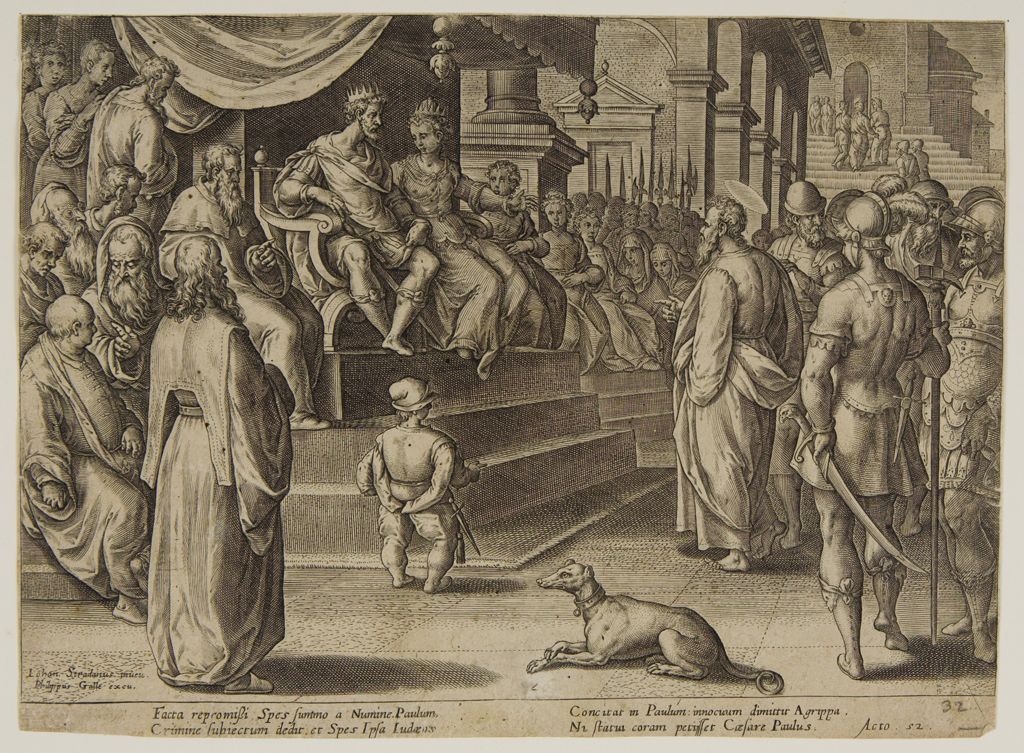
1 Now three days after Festus had arrived in the province, he went up to Jerusalem from Caesarea. 2 And the chief priests and the principal men of the Jews laid out their case against Paul, and they urged him, 3 asking as a favor against Paul that he summon him to Jerusalem—because they were planning an ambush to kill him on the way. 4 Festus replied that Paul was being kept at Caesarea and that he himself intended to go there shortly. 5 “So,” said he, “let the men of authority among you go down with me, and if there is anything wrong about the man, let them bring charges against him.” 6 After he stayed among them not more than eight or ten days, he went down to Caesarea. And the next day he took his seat on the tribunal and ordered Paul to be brought. 7 When he had arrived, the Jews who had come down from Jerusalem stood around him, bringing many and serious charges against him that they could not prove. 8 Paul argued in his defense, “Neither against the law of the Jews, nor against the temple, nor against Caesar have I committed any offense.” 9 But Festus, wishing to do the Jews a favor, said to Paul, “Do you wish to go up to Jerusalem and there be tried on these charges before me?” 10 But Paul said, “I am standing before Caesar’s tribunal, where I ought to be tried. To the Jews I have done no wrong, as you yourself know very well. 11 If then I am a wrongdoer and have committed anything for which I deserve to die, I do not seek to escape death. But if there is nothing to their charges against me, no one can give me up to them. I appeal to Caesar.” 12 Then Festus, when he had conferred with his council, answered, “To Caesar you have appealed; to Caesar you shall go.” 13 Now when some days had passed, Agrippa the king and Bernice arrived at Caesarea and greeted Festus. 14 And as they stayed there many days, Festus laid Paul’s case before the king, saying, “There is a man left prisoner by Felix, 15 and when I was at Jerusalem, the chief priests and the elders of the Jews laid out their case against him, asking for a sentence of condemnation against him. 16 I answered them that it was not the custom of the Romans to give up anyone before the accused met the accusers face to face and had opportunity to make his defense concerning the charge laid against him. 17 So when they came together here, I made no delay, but on the next day took my seat on the tribunal and ordered the man to be brought. 18 When the accusers stood up, they brought no charge in his case of such evils as I supposed. 19 Rather they had certain points of dispute with him about their own religion and about a certain Jesus, who was dead, but whom Paul asserted to be alive. 20 Being at a loss how to investigate these questions, I asked whether he wanted to go to Jerusalem and be tried there regarding them. 21 But when Paul had appealed to be kept in custody for the decision of the emperor, I ordered him to be held until I could send him to Caesar.” 22 Then Agrippa said to Festus, “I would like to hear the man myself.” “Tomorrow,” said he, “you will hear him.” 23 So on the next day Agrippa and Bernice came with great pomp, and they entered the audience hall with the military tribunes and the prominent men of the city. Then, at the command of Festus, Paul was brought in. 24 And Festus said, “King Agrippa and all who are present with us, you see this man about whom the whole Jewish people petitioned me, both in Jerusalem and here, shouting that he ought not to live any longer. 25 But I found that he had done nothing deserving death. And as he himself appealed to the emperor, I decided to go ahead and send him. 26 But I have nothing definite to write to my lord about him. Therefore I have brought him before you all, and especially before you, King Agrippa, so that, after we have examined him, I may have something to write. 27 For it seems to me unreasonable, in sending a prisoner, not to indicate the charges against him.”
1 So Agrippa said to Paul, “You have permission to speak for yourself.” Then Paul stretched out his hand and made his defense: 2 “I consider myself fortunate that it is before you, King Agrippa, I am going to make my defense today against all the accusations of the Jews, 3 especially because you are familiar with all the customs and controversies of the Jews. Therefore I beg you to listen to me patiently. 4 “My manner of life from my youth, spent from the beginning among my own nation and in Jerusalem, is known by all the Jews. 5 They have known for a long time, if they are willing to testify, that according to the strictest party of our religion I have lived as a Pharisee. 6 And now I stand here on trial because of my hope in the promise made by God to our fathers, 7 to which our twelve tribes hope to attain, as they earnestly worship night and day. And for this hope I am accused by Jews, O king! 8 Why is it thought incredible by any of you that God raises the dead? 9 “I myself was convinced that I ought to do many things in opposing the name of Jesus of Nazareth. 10 And I did so in Jerusalem. I not only locked up many of the saints in prison after receiving authority from the chief priests, but when they were put to death I cast my vote against them. 11 And I punished them often in all the synagogues and tried to make them blaspheme, and in raging fury against them I persecuted them even to foreign cities. 12 “In this connection I journeyed to Damascus with the authority and commission of the chief priests. 13 At midday, O king, I saw on the way a light from heaven, brighter than the sun, that shone around me and those who journeyed with me. 14 And when we had all fallen to the ground, I heard a voice saying to me in the Hebrew language, ‘Saul, Saul, why are you persecuting me? It is hard for you to kick against the goads.’ 15 And I said, ‘Who are you, Lord?’ And the Lord said, ‘I am Jesus whom you are persecuting. 16 But rise and stand upon your feet, for I have appeared to you for this purpose, to appoint you as a servant and witness to the things in which you have seen me and to those in which I will appear to you, 17 delivering you from your people and from the Gentiles—to whom I am sending you 18 to open their eyes, so that they may turn from darkness to light and from the power of Satan to God, that they may receive forgiveness of sins and a place among those who are sanctified by faith in me. 19 “Therefore, O King Agrippa, I was not disobedient to the heavenly vision, 20 but declared first to those in Damascus, then in Jerusalem and throughout all the region of Judea, and also to the Gentiles, that they should repent and turn to God, performing deeds in keeping with their repentance. 21 For this reason the Jews seized me in the temple and tried to kill me. 22 To this day I have had the help that comes from God, and so I stand here testifying both to small and great, saying nothing but what the prophets and Moses said would come to pass: 23 that the Christ must suffer and that, by being the first to rise from the dead, he would proclaim light both to our people and to the Gentiles.” 24 And as he was saying these things in his defense, Festus said with a loud voice, “Paul, you are out of your mind; your great learning is driving you out of your mind.” 25 But Paul said, “I am not out of my mind, most excellent Festus, but I am speaking true and rational words. 26 For the king knows about these things, and to him I speak boldly. For I am persuaded that none of these things has escaped his notice, for this has not been done in a corner. 27 King Agrippa, do you believe the prophets? I know that you believe.” 28 And Agrippa said to Paul, “In a short time would you persuade me to be a Christian?” 29 And Paul said, “Whether short or long, I would to God that not only you but also all who hear me this day might become such as I am—except for these chains.” 30 Then the king rose, and the governor and Bernice and those who were sitting with them. 31 And when they had withdrawn, they said to one another, “This man is doing nothing to deserve death or imprisonment.” 32 And Agrippa said to Festus, “This man could have been set free if he had not appealed to Caesar.”
Kent Hughes tells the amazing story of Steve Linscott.
In the early morning hours of October 4, 1980, a young nursing student was brutally murdered in the Chicago suburb of Oak Park. Following the advice of well-meaning friends, Steve Linscott, a student at Emmaus Bible College, told police about a dream he’d had the night of the crime. Oak Park police later arrested him, interpreting his dream account as the roundabout confession of a psychopathic killer. Later a jury found Linscott guilty, and he was sentenced to forty years in prison. There was just one problem – Linscott was innocent! Only after time in prison and numerous legal appeals – a process that lasted twelve years – was Linscott free and vindicated.
Those years undoubtedly brought the most difficult challenges Linscott will ever face – separated from his wife and children for three and a half years except for brief visits, wondering if he had somehow brought all this on himself and why God had allowed it to happen, surviving prison violence. Those were tough years, and yet years of growth and a growing awareness of the goodness of God. In Linscott’s words:
I have come to realize that we cannot judge God’s purposes, nor where He places us, nor why He chooses one path for our lives as opposed to another.
The Bible itself is replete with accounts of divine action (or inaction) that does not seem fair, that does not make sense except when viewed in light of God’s perfect plan. Thousands of Egyptian children were massacred while a baby named Moses was spared. Jacob was a liar and a thief, and yet it was he, not his faithful brother Esau, who received the blessing of their father Isaac and of God. On one level it makes no sense that God would allow His Son to die for the sins of humankind. But God has a plan – a perfect plan.[1]
What a difficult but powerful learning experience that was for Steve Linscott! Paul would have understood. The last chapters of Acts are simply a chronicle of Paul having to give a defense against trumped up and false charges intended to destroy him. Like Steve Linscott, however, Paul saw these challenges with the right eyes. In fact, Paul used these unjust circumstances as amazing opportunities for bearing witness to Christ.
We are going to work through chapters 25 and 26, for much of these chapters are simply the narrative unfolding of this fascinating political and legal drama. In the midst of each chapter, however, we see further evidence of the Paul’s resolve to die to self and live to Christ.
Having been turned over to Porcius Festus by his predecessor Felix, Paul continued to deny the fallacious allegations of the Jews. When Festus asked Paul if he would prefer to be tried in Jerusalem (which would certainly have given the conspirators occasion to murder Paul), Paul appealed to Caesar. As a Roman citizen, it was within his writes to do so. Craig Keener explains:
Roman citizens had the right to appeal to Caesar’s tribunal (provocation ad Caesarem)…A citizen could appeal a capital sentence (appelatio), but appealing before a case had been heard (provocatio), as Paul does here, was less common, because it was not necessarily advantageous.[2]
Paul made use of this provocatio and thereby found himself in the presence of King Agrippa. King Agrippa, in our text, is King Agrippa II, whom Clinton Arnold calls a “client-king from the northern territories (which includes a portion of the area of modern Lebanon).” Furthermore, Agrippa was “the grandson of Herod the Great, a valued friend of Rome, knowledgeable about the affairs of the Jews, curator of the temple, and someone in charge of appointing high priests in Jerusalem. If anyone could legally lay claim to the title ‘king of the Jews,’ it is Agrippa.”[3]
Thus, Paul found himself before the powers. His behavior in this situation is most telling and, indeed, convicting for us all!
Paul’s life was above reproach and baseless accusations of misconduct would not stick to him.
Before we consider the key doctrine that fueled Paul’s boldness, let us note that Paul’s life was above reproach and the baseless accusations of misconduct leveled him would not stick. His integrity was such that his opponents simply could not lie and destroy him. We will begin with Paul before Festus.
7 When he had arrived, the Jews who had come down from Jerusalem stood around him, bringing many and serious charges against him that they could not prove. 8 Paul argued in his defense, “Neither against the law of the Jews, nor against the temple, nor against Caesar have I committed any offense.”
Paul stubbornly, doggedly, and clearly offered a simple refutation of the baseless charge of sedition: “They’re wrong!” And, indeed, Paul spoke as if his innocence was self-evident to any fair-minded person observing the proceedings. When Festus asks if Paul wished to be sent to Jerusalem, Paul responds in this way:
10 But Paul said, “I am standing before Caesar’s tribunal, where I ought to be tried. To the Jews I have done no wrong, as you yourself know very well. 11 If then I am a wrongdoer and have committed anything for which I deserve to die, I do not seek to escape death. But if there is nothing to their charges against me, no one can give me up to them. I appeal to Caesar.”
And, indeed, Festus did “know very well,” for he himself said this to King Agrippa about Paul:
18 When the accusers stood up, they brought no charge in his case of such evils as I supposed.
Whatever else Festus meant by this, he certainly meant that Paul was no enemy of the state, no rank anarchist or usurper or insurrectionist. On the contrary, Festus saw the Jews’ accusations as being rather intramural and theological whereas they no doubt wanted him to see them as much more serious, thereby prompting state action against Paul.
There can be no doubt that the Jews were profoundly irritated by the inability of their wilder accusations to stick to Paul. This is because Paul was a man of integrity! He did not apologize for preaching Christ and Him crucified, but he would not allow himself to be wrongly impugned as an ignoble wretch and troublemaker.
Paul was, so to speak, keeping his accusers, and his judges, honest. He was willing to die for Christ, but he was not willing to be wrongly accused of hypocrisy and wickedness. He was a follower of Jesus, and wished to be recognized as such.
Church, live your life in such a way that no man or no woman or no group can impugn your character!
Paul was willing to suffer for the historical reality of the bodily resurrection of Jesus.
No, Paul refused to suffer for baseless charges, but he was more than willing to suffer, if need be, for a particular reality that had forever altered the course of his own life: the resurrection of Jesus Christ. We can see this in Festus’ explanation of the situation to Agrippa as well as in Paul’s on words before the king.
17 So when they came together here, I made no delay, but on the next day took my seat on the tribunal and ordered the man to be brought. 18 When the accusers stood up, they brought no charge in his case of such evils as I supposed. 19 Rather they had certain points of dispute with him about their own religion and about a certain Jesus, who was dead, but whom Paul asserted to be alive.
This is almost charming in its simplicity. “Here’s what this whole brouhaha seems to be about,” Festus said. “There’s a man named Jesus. He’s dead but Paul says He’s alive.”
I love it! That is indeed what the whole brouhaha was about! Paul, speaking to Agrippa, said this:
4 “My manner of life from my youth, spent from the beginning among my own nation and in Jerusalem, is known by all the Jews. 5 They have known for a long time, if they are willing to testify, that according to the strictest party of our religion I have lived as a Pharisee. 6 And now I stand here on trial because of my hope in the promise made by God to our fathers, 7 to which our twelve tribes hope to attain, as they earnestly worship night and day. And for this hope I am accused by Jews, O king! 8 Why is it thought incredible by any of you that God raises the dead?
Paul was, once again, being provocative. It was provocative because, yes, he was being accused on the basis of his belief in the resurrection of the dead (a belief, Paul seems to relish in pointing out, that the Pharisees who are accusing him also hold to), but Paul and the Jews all knew that it was his particular take on the resurrection that had landed him in hot water. After all, Paul was not merely arguing for a general resurrection. He was arguing that God raised Jesus from the dead!
In a moment, Paul boldly challenges Agrippa with the resurrection of Jesus Christ, but here he simply owned up to the fact that the only real point in question was a conviction he had concerning the resurrection. Let us notice that Paul denied the baseless charges of wickedness only to bring forward the primary issue: resurrection.
Paul was willing to suffer for the historical reality of the bodily resurrection of Jesus. The resurrection of Jesus mattered profoundly to Paul. He refused to deny this, even as he playfully goaded the Pharisees over their own belief in resurrection, as if to say to them, “If you have no problem believing that God can raise the dead, why do you have such a problem with the idea of God raising Jesus from the dead?”
One wonders if our modern church culture can make sense of this kind of radical commitment to theological truths? One wonders if our lowest-common-denominator age even knows how to understand a man who is willing to die for a conviction?
Roger Olson is a Baptist theologian at Baylor University in Waco, Texas. Recently, Dr. Olson wrote about an experience he had in a more left-leaning Baptist church.
I will never forget one Sunday morning “worship service” at this Baptist (so-called) church. The pastor was sitting with his new wife. His ex-wife and children were sitting in another part of the sanctuary. Some people in the church were proud that they were “handling this matter well.” The “sermon” was a dialogue between two women leaders of the congregation and the discussion between them was about doctrinal diversity within the congregation. One had been uncomfortable with the total lack of doctrinal norms or standards and the other one felt that, at times, the church had over emphasized beliefs. They eventually agreed that the “wonderful thing” about this church was that people could belong without believing anything in particular.[4]
What would Paul have made of this conversation? He no doubt would have been stunned. For Paul, for the early Church, and, most of all, for the Lord Jesus Himself, the great truths of the Kingdom of God were not filler for an otherwise bored Church, they were essential truths, the truths of the gospel.
The resurrection has never been a mere idea for the Church. The resurrection is a fact that has changed the way we view the world and everything in it. The resurrection of Jesus on that first Easter morning is the reason we have hope, the reason we gather weekly to worship, the reason we are emboldened to bare witness for Christ. Will Willimon put it like this:
Certain facts should be known, for the Christian faith is not about feelings, even very deep feelings, but about something which has happened, something which has happened to us: the fact of the risen Christ.[5]
To that, Paul would say, “Amen!”
Paul was emboldened by the living Christ to use his trial as an occasion for calling a king to accept Christ.
So powerful was the reality of the resurrection that it compelled Paul to call upon King Agrippa himself to accept Christ. Watch.
22 To this day I have had the help that comes from God, and so I stand here testifying both to small and great, saying nothing but what the prophets and Moses said would come to pass: 23 that the Christ must suffer and that, by being the first to rise from the dead, he would proclaim light both to our people and to the Gentiles.” 24 And as he was saying these things in his defense, Festus said with a loud voice, “Paul, you are out of your mind; your great learning is driving you out of your mind.” 25 But Paul said, “I am not out of my mind, most excellent Festus, but I am speaking true and rational words. 26 For the king knows about these things, and to him I speak boldly. For I am persuaded that none of these things has escaped his notice, for this has not been done in a corner. 27 King Agrippa, do you believe the prophets? I know that you believe.” 28 And Agrippa said to Paul, “In a short time would you persuade me to be a Christian?” 29 And Paul said, “Whether short or long, I would to God that not only you but also all who hear me this day might become such as I am—except for these chains.”
Festus was initially shocked by Paul’s boldness before Agrippa. “Paul,” he exclaims, “you are out of your mind; your great learning is driving you out of your mind.” Why did he say this? The key is found in Paul’s rather jarring words in verse 22 that he stood “testifying both to small and great.” And here was his testimony: “that the Christ must suffer and that, by being the first to rise from the dead, he would proclaim light both to our people and to the Gentiles.”
Do you see what has happened here? In saying this, Paul was revealing that he was not merely giving an account of what had happened to him, he was indeed bearing witness to the King himself (“testifying both to small and great”), that is, calling the King to consider these truths for himself!
Well! This a bold move indeed. Even in our own judicial system we cannot imagine a man on the witness stand calling upon a judge to consider the implications of his words for his own (i.e., the judge’s) heart! Paul goes even further and turned the table on Agrippa, questioning him outright: “King Agrippa, do you believe the prophets? I know that you believe.”
The King saw the astonishing turn of events for what they were: Paul was attempting to win the King to Christ!
He asked Paul, “In a short time would you persuade me to be a Christian?”
Paul answered, “Yes!” “Whether short or long, I would to God that not only you but also all who hear me this day might become such as I am—except for these chains.”
Ah! “I wish that you knew Christ as I know Christ, Agrippa!”
Will Willimon observes that “there can be no doubt that Luke believes that a personal experience of the risen Christ is the bedrock upon which faithful witness is built.”[6] To be sure, that is the case! We might also say that a personal experience of the risen Christ is the bedrock upon which bold, audacious, shocking, unsettling, unexpected, unquenchable, undiluted, passionate, exuberant, no-holds-barred, unconquerable witness is built!
Do you see what the risen Christ can do with a person wholly yielded to Him? He makes of him or her a champion, a leader, a proclaimer of gospel truth! He uses a man or woman like this in mighty ways!
Church, your King was slain, yet now He lives! Go…tell…everybody…and never stop!
[1] R. Kent Hughes, Acts. (Wheaton, IL: Crossway Books, 1996), p.317-318.
[2] Craig S. Keener, The IVP Bible Background Commentary: New Testament. (Downers Grove, IL: 1993), p.396.
[3] Clinton E. Arnold, “Acts.” Zondervan Illustrated Bible Backgrounds Commentary. Vol.2. Clinton E. Arnold, gen. ed. (Grand Rapids, MI: Zondervan, 2002), p.355.
[4] https://www.patheos.com/blogs/rogereolson/2015/02/another-great-moderate-baptist-leader-on-the-necessity-of-doctrines/#ixzz3TB2sYM3U
[5] William H. Willimon, Acts. Interpretation. (Louisville, KY: John Knox Press, 1988), p.181.
[6] Willimon, p.180.