I recently showed this video to a Ouachita extension class I teach. It’s very well done, very informative, and very interesting.
A Fascinating Look at the Archaeological Evidence Surrounding Ancient Jericho
Reply

I recently showed this video to a Ouachita extension class I teach. It’s very well done, very informative, and very interesting.
Matthew 7:21-23
21 “Not everyone who says to me, ‘Lord, Lord,’ will enter the kingdom of heaven, but the one who does the will of my Father who is in heaven. 22 On that day many will say to me, ‘Lord, Lord, did we not prophesy in your name, and cast out demons in your name, and do many mighty works in your name?’ 23 And then will I declare to them, ‘I never knew you; depart from me, you workers of lawlessness.’
A fascinating article appeared in The Wall Street Journal in August of last year by Sue Shellenbarger entitled, “The Case for Lying to Yourself.” The article concerned recent psychological studies on the issue of self-deception or how human beings lie to and deceive themselves. The article was saying that most human beings, to some capacity, lie to themselves and that, in the opinion of some psychologists, this can be a good thing if it causes us to try to live up to the lie we believe about ourselves. I would disagree with that second part, but the first part seems clear enough: most human beings do indeed lie to themselves. And I suspect that, when we do lie to ourselves, we usually lie in the positive, thinking more of ourselves than we should. Of course, the opposite is, at times, true: there are people who truly hate themselves. But, on the main, I suspect the human ego tends more towards glossing our own faults than playing them up. The studies cited in the article would seem to confirm that. For instance:
Many people have a way of “fooling their inner eye” to believe they are more successful or attractive than they really are, Dr. Trivers says. When people are asked to choose the most accurate photo of themselves from an array of images that are either accurate, or altered to make them look up to 50% more or less attractive, most choose the photo that looks 20% better than reality, research shows.
One more example:
For some people, self-deception becomes a habit, spinning out of control and providing a basis for more lies. In research co-written by Dr. Norton and published last year in Proceedings of the National Academy of Science, college students who were given an answer key to an intelligence test, allowing them to cheat, scored higher than a control group. They later predicted, however, that they also would score higher on a second test without being allowed to cheat. They were “deceiving themselves into believing their strong performance was a reflection of their ability,” the study says.
Giving them praise, a certificate of recognition, made the self-deception even worse: The students inflated their predicted future scores even more.[1]
Lying to ourselves comes with the Fall. Eve had to be willing to tell herself the serpent’s lie, that she would not die if she ate the forbidden fruit. Adam had to tell himself the same thing. And every human being since then has told themselves the same lie.
All of us want to downplay the unpleasant reality of the human condition, convincing ourselves that we are not, in fact, lost, in need of salvation. This reality even leads some people to tell themselves that they are saved when in fact they are not. Jesus put it like this:
21 “Not everyone who says to me, ‘Lord, Lord,’ will enter the kingdom of heaven, but the one who does the will of my Father who is in heaven. 22 On that day many will say to me, ‘Lord, Lord, did we not prophesy in your name, and cast out demons in your name, and do many mighty works in your name?’ 23 And then will I declare to them, ‘I never knew you; depart from me, you workers of lawlessness.’
R. Ken Hughes writes, “Sadly, it is really quite easy to be accorded the status of an evangelical Christian without being born-again.” He then astutely gives three ways that a person can do this, can convince himself or herself and others that he or she is a believer when he or she really is not a believer at all.
Yes, it is actually easier than we might think to delude ourselves about the nature of our walk with Jesus. Jim Elliff writes that “the unconverted church member may well be the largest obstacle to evangelism in our day.”[3]
Before we consider two facts about this, let me say that I suspect there are two equal and opposite extremes when it comes to being secure in your salvation. The one extreme is never being secure, never resting in the promises of Christ, never simply accepting that the God who says He will save us in Christ did, in fact, do so when we came to Christ in repentance and faith.
The other extreme is a cheap and shallow naivete about salvation, simply assuming you are right with Christ without any reflection on whether or not you have ever truly embraced the cross. I am talking about the kind of cheap easy-believism that can make no sense of Paul’s words in Philippians 2.
12 Therefore, my beloved, as you have always obeyed, so now, not only as in my presence but much more in my absence, work out your own salvation with fear and trembling, 13 for it is God who works in you, both to will and to work for his good pleasure.
Let me be abundantly clear: I believe completely in the security of the believer. When Christ saves you, He will never let you go. But the salvation in which we are secure is valuable enough to be sure about. That is what I would like for us to consider today.
I. Not Every Person Who Thinks He or She is Saved is, in Fact, Saved.
Let us start with the basic premise behind the words of Jesus in our text: not every person who thinks he or she is saved is, in fact, saved. Jesus says there will be people who stand before Him who will be utterly shocked to be informed that Christ does not know them.
21 “Not everyone who says to me, ‘Lord, Lord,’ will enter the kingdom of heaven, but the one who does the will of my Father who is in heaven. 22 On that day many will say to me, ‘Lord, Lord, did we not prophesy in your name, and cast out demons in your name, and do many mighty works in your name?’ 23 And then will I declare to them, ‘I never knew you; depart from me, you workers of lawlessness.’
Notice that these people had a verbal confession: “Lord, Lord!” Notice that they had powerful ministries: “did we not prophesy in your name.” Notice that they had a kind of power: “and cast our demons in your name.” Notice that their resumes contained truly awesome accounts of their accomplishments: “and do many mighty works in your name.”
You might say, “How can this be? How can a person seemingly accomplish so much in the name of Christ but not truly know Christ?” It can be because Jesus is, for these people, only a name, indeed, only a word. They do not have a relationship with Jesus. They do not know Him. Most importantly, He does not know them.
They have deceived themselves, deluded themselves. They have told themselves they are Christians, and they have adoring fans who tell them the same. But being applauded for being a disciple of Jesus is not the same thing as actually being a disciple of Jesus.
That great preacher of yesteryear, D. Martyn Lloyd-Jones, lists “the common causes of self-deception” followed by evidences that we might have deceived our own selves on this importat matter. First, some common causes of self-deception.
Next, let us consider Lloyd-Jones’ evidences of self-deception. He can we know that we might be deceived?
I believe this is very helpful and profoundly true. Many people are so enamored with this or that aspect of Christianity, aspects that are very good in and of themselves (i.e., scripture, gifts, doctrine, theology, the church, the ordinances, etc.), that they miss Christ.
Let us understand a chilling truth: it is possible to love the Bible without loving Jesus. It is possible to love the church without loving Jesus. It is possible to love doctrine without loving Jesus. It is possible to love missions without loving Jesus. It is possible to love sermons without loving Jesus. It is possible to love preaching sermons without loving Jesus. It is possible to love singing hymns without loving Jesus.
Yes, it is possible to love the great things of the faith without loving the greatest.
Friends, ask yourselves, “Do I love Jesus? Do I know Jesus? Have I embraced Jesus?”
II. The Evidence of Salvation is Sincere Faith Resulting in True Works.
What, then, is the evidence of genuine salvation? Hear our text again.
21 “Not everyone who says to me, ‘Lord, Lord,’ will enter the kingdom of heaven, but the one who does the will of my Father who is in heaven.
The evidence of salvation is sincere faith resulting in true works. Perhaps this makes you uncomfortable. Perhaps you think, “I thought we are saved by grace through faith and that not of works? What can this mean, ‘the one who does the will of my Father who is in heaven’ ‘will enter the kingdom of heaven’?”
To this I would reply, yes, we are in fact saved by grace through faith, but true, saving faith is faith that opens the heart to Jesus, who comes in, takes up residence, and then works through us. Saving faith is faith that works. James put it like this in James 2:
14 What good is it, my brothers, if someone says he has faith but does not have works? Can that faith save him? 15 If a brother or sister is poorly clothed and lacking in daily food, 16 and one of you says to them, “Go in peace, be warmed and filled,” without giving them the things needed for the body, what good is that? 17 So also faith by itself, if it does not have works, is dead.
18 But someone will say, “You have faith and I have works.” Show me your faith apart from your works, and I will show you my faith by my works.
Do you see? We receive God’s unmerited favor through faith. We do not earn our salvation. But true faith is laboring faith, working faith. James Montgomery Boice once spoke of faith and works as the two sets of oars on the ship of a person’s life. You cannot truly claim to have one if you do not have the other. Then he offered this helpful illustration.
In one of the great battles that took place between the Greeks and the Persians just prior to the Greek Golden Age, there was an incident that perfectly illustrates this principle. The Persian fleet had sailed from the Bosporus out along the Macedonian coast and then down the edge of Greece to Attica. It finally met the Greek ships in the bay of Salamis just off Athens. The Greek ships were lighter and quicker; the Persian ships were cumbersome. So, in the battle that followed, the Greeks made short work of the Persians. In on particular encounter a Greek ship managed to sail close to a large Persian vessel and brush by its side. Because it had done this quickly, the Persian oarsmen did not have time to draw their oars in, although the Greeks did. The result was that the Greek ship broke off all of the oars on that side of the Persian vessel. Few on the Persian ship realized what had happened, and because the oarsmen on the other side continue rowing, the ship swing around in a circle leaving a fresh set of oars visible to the Greek captain. The Greeks then reversed their ship, trimmed off the other set of oars, and sank the enemy.
It must have been a humorous sight, the great ship going around in circles. But it is an illustration of what happens when there is faith without works or works without faith. Oh, we can generate a big storm with one oar. We can get attention. But we will just be going around in circles spiritually. Real Christianity is a personal relationship with Jesus Christ through faith resulting in a new life that goes forward and that is increasingly productive in good works.[5]
Do you feel that you are going in circles? Do you feel that you never progress in Christ? It could be many things. It could be that you are simply walking through a valley, that God is teaching you something as you walk a hard road. It could be this. But if you find that your life never bears fruit for Christ, that you are not transformed, let me simply ask you this: have you truly trusted in Christ? Have you truly accepted Him? Do you know that you know Him.
Brothers, sisters, it is worth being sure about, and we can be sure about it. Give your life to Christ. Trust in Christ. Run to Christ.
He is waiting with open arms.
[1] https://online.wsj.com/article/SB10000872396390443343704577548973568243982.html
[2] R. Kent Hughes, The Sermon on the Mount. (Wheaton, IL: Crossway Books, 2001), p.253.
[3] Jim Elliff. Revival and the Unregenerate Church Member. (Christian Communicators Worldwide), p.8.
[4] D. Martyn Lloyd-Jones, Studies in the Sermon on the Mount. (Grand Rapids, MI: William B. Eerdmans Publishing Company, 1959-1960) p.526-535, 536-545.
[5] James Montgomery Boice, The Sermon on the Mount. (Grand Rapids, MI: Baker Books, 1972), p.261.
Dr. Ray Van Neste is Assistant Professor of Christian Studies and Director of the R.C. Ryan Center for Biblical Studies at Union University in Jackson, TN. He is also one of the pastors of Cornerstone Community Church in Jackson. He has authored numerous works on the Bible and the church. His website is “Oversight of Souls.”
An Interview With Ray Van Neste on
“The Lord’s Supper in the Context of the Local Church”
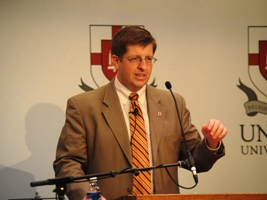 Dr. Van Neste, I would like to thank you for your insightful essay, “The Lord’s Supper in the Context of the Local Church,” found in the 2010 publication, The Lord’s Supper (Broadman & Holman Academic). You begin your essay by pointing to a diminished appreciation for healthy ritual and symbolism among modern Southern Baptists as a factor in our frequently weak approach to the Lord’s Supper. You also mention the negative and morose approach we often take to the Supper. I wonder if you would include a kind of neo-gnosticism among these factors, of the type that Harold Bloom and Philip Lee mentioned some years back? Is there a gnostic anti-materialist strain in Baptist ecclesiology and soteriology that favors the impartation of knowledge through non-material means over the physical elements of worship?
Yes, I believe so, though I don’t think this is a position which is thought out or often explicitly argued. But it is “in the air” so to speak. We seem to turn away from the earthiness of Christianity (and of life in general) in many ways. Somewhere C. S. Lewis spoke well of this issue noting specifically the earthiness of the Lord’s Supper. We are so drawn to an otherworldly, often monastic, view of spirituality. Losing our Reformational (and scriptural) moorings, too many people think of growing in godliness as withdrawing from day to day life. This has a lot of negative implications for us. C. S. Lewis has been very helpful to me in this area.
I wonder if you could react a bit to Luther’s statement (and I’m paraphrasing here) that he would rather drink blood with the papists than mere wine with the enthusiasts. Are you sympathetic to the sentiment behind this assertion?
It can be tricky to align yourself too quickly with some of Luther’s retorts! But, in general, there is a significant problem in Baptist churches of being more concerned about what the Lord’s Supper isn’t than what it is. When we stress merely what it isn’t, then we leave people wondering, “Why bother?” It isn’t anything real. It’s only a symbol. It’s not necessary for anything it seems, so why bother? As Millard Erickson has said, Baptists have produced the doctrine of the real absence of Christ!
We need much more constructive theology discussing what the Supper is, what it is supposed to communicate and how it aids us.
Must Baptists be Zwinglian in our approach to the Supper?
There is some debate as to how “Zwinglian” Zwingli was, though I am not up on the most recent aspects of that conversation. I do think, with Zwingli, that the Supper is a memorial, that is, it functions to cause us to remember. Jesus said this. The question, though, is whether or not there is more going on. Numerous Baptists through the centuries have affirmed a view of the Supper closely akin to Calvin’s view, that Christ is spiritually present with his people at the Table. So, Baptist views have varied.
I think the “fellowship” language in 1 Cor 10:16-17 is quite strong, suggesting this is not a mere memorial. It is at least profession of faith.
I’m struck by your use of sacramental language. In what sense is it appropriate to refer to the Lord’s Supper as “a sacrament”?
Yes, I chose to use this language as I noticed that prominent Baptist authors in the past (e.g. B. H. Carroll) had readily used it. When I use this term, like Baptists before me, I do not mean the Roman Catholic sense that the action in itself causes grace. I am concerned that Baptists, in reaction to Catholic overstatement of what happens at the Table, have downplayed what happens there. You often here much more about what it is not than what it is. Along with other Protestants, we can affirm that the sacraments are sure witnesses of God’s grace toward us. They are God ordained means of God’s blessing as they bear witness to the gospel.
Your call for open communion seems to go against the grain of many current conservative Southern Baptist academic voices. I found it refreshing, and I agree with you. I found your arguments to be among the more persuasive that I’ve read. Why do you believe that British Baptists have been more open to open communion than American Baptists?
Thank you. That is probably the most controversial portion of my chapter, though a key part in my mind.
This is a good question, but one I’m not sure I can answer. I haven’t looked into this enough to provide a sure footed answer, but I’ll make a couple of observations. Some will probably note that British Baptists on the whole are far less conservative than Baptists in America and suggest this explains their openness to open communion. However, I don’t think this argument will work since open communion can be found among British Baptists well before the slide to a more liberal theology took place.
Another possible contributing factor could be the impact of Landmarkism in the US and the fact there was no similar impact in the UK. The strength of Landmarkism kept many in the US from addressing the issue along the way. This would still not be a full explanation, but perhaps it is a contributing factor.
Finally, the one part of your essay that gave me pause was when you noted that, in your opinion, it is not appropriate to take the Lord’s Supper to homebound members as that would be an un-churchly observance (my phrasing there, not yours). I appreciate your own humility in saying that. You were not dogmatic about it. I also get the logic of what you are saying. But I am thinking about a time some years ago when a brother in Christ flew with me to visit another church member on his deathbed in a hospital in another state. I took the Lord’s Supper to him. The three of us had prayer together, read the Word, and observed the Supper. It was a powerful, moving experience that my friend and I still speak of. I am not trying to elevate feeling above clear inference here, but it did seem to me that, at that time, the church had gathered. For instance, there are churches with scarcely more than 3 or 4 people in them. Respectfully, I’m curious to know how what we did in that hospital room differs from a small church of the same number of believers meeting and observing the Supper?
Yes, as you noted, I am more tentative here as we are working from inferences. I don’t want to be adamant where the Scripture is less explicit. We are here considering issues of best practice.
However, if it is a church ordinance, then the difference between the hospital gathering and a small church is that the small church recognizes itself and is recognized by others as a church. The hospital gathering is not so recognized or structured.
I recognize the tension, but I also wonder what sort of parameters we have if this moves outside the gathered worship of the church. Can families observe the Supper at home as they see fit? What about retreats, conferences and seminars? The scriptures do not say only pastors can administer the supper (as most Baptist documents recognize), so we could have a few students in a dorm room celebrating Communion.
Communion in Scripture seems to be rooted in corporate worship and it seems best and safest to me to keep it there.
Last Thursday night, Ouachita Baptist University hosted Dr. Daniel Wallace of Dallas Theological Seminary. He gave a very interesting presentation on the topic, “How Much Did the Scribes Corrupt the New Testament?”
I increasingly find that people are confused by this issue and that many people have their faith undermined by it as well. Churches have regrettably not done a good job of addressing the questions surrounding how the Bible came to be, what textual variants are, and what the presence of these variants do and do not mean. I think this presentation does a very good job of laying out a basic understanding of how all of this works.
I highly recommend it, and I would encourage you to share it with anybody who may be struggling with these kinds of questions.
Daniel B. Wallace from Ouachita Baptist University on Vimeo.
Matthew 7:15-20
15 “Beware of false prophets, who come to you in sheep’s clothing but inwardly are ravenous wolves. 16 You will recognize them by their fruits. Are grapes gathered from thornbushes, or figs from thistles? 17 So, every healthy tree bears good fruit, but the diseased tree bears bad fruit. 18 A healthy tree cannot bear bad fruit, nor can a diseased tree bear good fruit. 19 Every tree that does not bear good fruit is cut down and thrown into the fire. 20 Thus you will recognize them by their fruits.
Let me introduce you to Rev. David Hart.
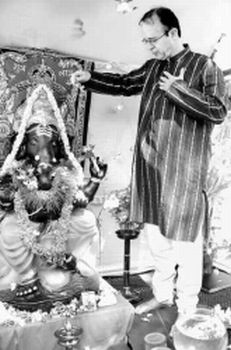
Rev. Hart is a priest in the Church of England. He is also a convert to Hinduism.
Let me repeat: he is a priest in the church of England and also a convert to Hinduism.
In 2006, The Times, of London, published a picture of Hart offering puja to the Hindu god Ganesha in front of his house in Thiruvananthapuram, India. As you can imagine, this sparked quite a controversy. When asked how a Christian priest could convert to Hinduism and still claim to be a Christian, Hart shrugged off any notion that this was a problem. Here is what he said.
Becoming a Hindu has not brought about any change in my spiritual status. The act has not shaken my Christian beliefs by even one per cent…Asking me to express my preference for any particular faith is like asking me to choose between an ice-cream and a chocolate. Both have their own distinct taste.[1]
Let me also introduce you to Pastor Thorkild Grosboll.

He pastored a church in Tarbaek, Denmark, until his retirement a few years ago. Some years before his retirement, Gosboll said this: “I do not believe in a physical God, in the afterlife, in the resurrection, in the Virgin Mary.” He continued: “I believe that Jesus was a nice guy who figured out what man wanted. He embodied what he believed was needed to upgrade the human being.” Later, he said this: “God belongs in the past. He is actually so old fashioned that I am baffled by modern people believing in his existence. I am thoroughly fed up with empty words about miracles and eternal life.”
His Bishop, Lise-Lotte Rebel, removed him from his post after all of this became clear. She removed him, however, not so much because what he said was heresy that undermined the gospel, but because, as a Danish Lutheran, he is paid by the state and has a responsibility not to confuse people. Seriously. That was her objection.
Anyway, Pastor Grosboll objected to her objection. Most tellingly, so did his congregation. They were incensed that their atheist pastor would be the subject of discipline. They loved him and wanted him left alone. Thus, they turned out in shows of public support for him. All of this eventually went to the courts, who….wait for it…removed Bishop Rebel from her oversight of the pastor. There were some further wranglings over Grosboll, but, in the end, he was allowed to keep his church and pulpit so long as he…wait for this too…no longer shared his opinions with the press. He retired in February of 2008.[2]
It is a tragic but certain fact that the bride of Christ has had to deal with false teachers in her midst for her entire existence. Jesus warned of precisely this in our text this morning.
15 “Beware of false prophets, who come to you in sheep’s clothing but inwardly are ravenous wolves. 16 You will recognize them by their fruits. Are grapes gathered from thornbushes, or figs from thistles? 17 So, every healthy tree bears good fruit, but the diseased tree bears bad fruit. 18 A healthy tree cannot bear bad fruit, nor can a diseased tree bear good fruit. 19 Every tree that does not bear good fruit is cut down and thrown into the fire. 20 Thus you will recognize them by their fruits.
Let us listen closely to our King and consider well His warning about the threat of false teachers in the church.
I. The Devil Sends False Prophets to Confuse and Derail Followers of Jesus (v.15a)
The first point is obvious in the words of Jesus: the devil sends false prophets to confuse and derail followers of Jesus. When Jesus says, “Beware of false prophets,” He is assuming their reality and their danger. Disciples of Jesus will have to contend with false teachers teaching false doctrines that undermine the gospel of Jesus. The teachers are dangerous, their teachings are dangerous and we must beware of them and guard against them.
As we consider false prophets, let us look at five biblical truths concerning them.
First of all, there are a lot of false prophets. There always have been and there always will be. In Matthew 24:11 Jesus said, “And many false prophets will arise and lead many astray.”
Second, false prophets, in general, are impressive people. The reason they have large followings is because they are charismatic figures, attractive figures, compelling figures. In Matthew 24:24, Jesus said, “For false christs and false prophets will arise and perform great signs and wonders, so as to lead astray, if possible, even the elect.”
Notice that these people have a kind of power. They have seemingly impressive results. They get big numbers and can dazzle a crowd. They are not boring. They are not dull. They are flashy, provocative, humorous, suave, and effective.
Third, they have large followings. In Luke 6:26, Jesus said, “Woe to you, when all people speak well of you, for so their fathers did to the false prophets.” Do you see? “All people,” Jesus said, “speak well” of false prophets.
You can see this today in ostensibly Christian publishing. Sometimes books are popular because they seem to be blessed by God. They are God-honoring and biblically faithful. But just because a book is popular does not mean that is the case. In fact, I have seen in my lifetime numerous titles that were bestsellers among Christians that had terrible theology, that were not biblically faithful, and that presented false teachings. So too with popular preachers. Sometimes preachers are popular because they are saying what people want to hear. A large following does not mean that a teacher is a good teacher. It may mean that he is a false prophet.
Fourth, false prophets offer an appealing message, but it is inevitably one that covers up the truth. In Ezekiel 22, false prophets are condemned with these words:
28 And her prophets have smeared whitewash for them, seeing false visions and divining lies for them, saying, ‘Thus says the Lord God,’ when the Lord has not spoken.
That is a provocative and compelling phrase: “they have smeared whitewash for them.” That means that these false prophets cover up the truth, but they cover it up with an attractive veneer. What they say sounds so very true, so very wise, so very right. However, what they say is not the truth, but a lie.
Fifth, false prophets are destined for destruction and will receive the wrath of God. In Ezekiel 13, the Lord announces the coming judgment of these false teachers.
8 Therefore thus says the Lord God: “Because you have uttered falsehood and seen lying visions, therefore behold, I am against you, declares the Lord God. 9 My hand will be against the prophets who see false visions and who give lying divinations. They shall not be in the council of my people, nor be enrolled in the register of the house of Israel, nor shall they enter the land of Israel. And you shall know that I am the Lord God.
“I am against you…My hand will be against the prophets…They shall not be in the council of my people, nor be enrolled in the register of the house of Israel, nor shall they enter the land of Israel.” It is a terrible thing to pervert the truth of the living God. Paul put it like this in Galatians 1:
6 I am astonished that you are so quickly deserting him who called you in the grace of Christ and are turning to a different gospel— 7 not that there is another one, but there are some who trouble you and want to distort the gospel of Christ. 8 But even if we or an angel from heaven should preach to you a gospel contrary to the one we preached to you, let him be accursed. 9 As we have said before, so now I say again: If anyone is preaching to you a gospel contrary to the one you received, let him be accursed.
Church: cursed be anybody who would seek to take the pure gospel of Jesus and distort it, perverting it with false teachings and strange doctrines. Why? Because the gospel is life. The gospel is salvation. The gospel points us to the very heart of God. We dare not pervert it!
When, in the 19th century, Soren Keirkegaard wrote his series of letters to the Danish church chastising the church for her abandonment of the way of Jesus, he said this about false teachers who had come in among God’s people:
Imagine that the people are assembled in a church in Christendom, and Christ suddenly enters the assembly. What dost thou think He would do?
He would turn upon the teachers (for the congregation He would judge as He did of yore, that they were led astray), He would turn upon them who “walk in long robes,” tradesmen, jugglers, who have made God’s house, if not a den of robbers, at least a shop, a peddler’s stall, and would say, “Ye hypocrites, ye serpents, ye generation of vipers”; and likely as of yore He would make a whip of small cords and drive them out of the temple.[3]
Christ will indeed deal with false teachers in the midst of the body of Christ!
II. These False Prophets Never Operate Openly, but are Almost Always Disguised as Friends and Fellow Disciples of Jesus (v.15b)
Perhaps the most pernicious attribute of false prophets is their penchant for disguising their true intentions. False prophets never operate openly, but are almost always disguised as friends and fellow disciples of Jesus. To communicate this fact, Jesus employed a startling image in our text.
15 “Beware of false prophets, who come to you in sheep’s clothing but inwardly are ravenous wolves.
Imagine a wolf that dresses as a sheep so that he might sneak into the flock and kill at will. It is a horrifying image, for it suggests that these false teachers are hard to spot but that the failure to spot them will result in devastation. They never declare themselves outright. They come dressed as one of God’s people. Everything they say sounds pretty good. There is nothing obvious about them that would reveal their pernicious intentions.
Turning to Kierkegaard again, he said this about the way that Christianity was being perverted in Denmark:
The apostasy from Christianity will not come about openly by everybody renouncing Christianity; no, but slyly, cunningly, knavishly, by everybody assuming the name of being Christian, thinking that in this way all were most securely secured against…Christianity, the Christianity of the New Testament, which people are afraid of, and therefore industrial priests have invented under the name of Christianity a seetmeat which has a delicious taste, for which men hand out their money with delight.[4]
That is true enough, and a wise warning, but let me go one step further. I am convinced that the majority of false teachers honestly do not think that they are false teachers at all. In other words, they themselves need to be shown this fact. The definition of the word “Christian” has become so fluid in our day that it is now possible to hold to utterly heretical ideas and not believe that your ideas are heretical at all. In fact, I honestly suspect that many heretics who are teaching false doctrines truly believe they are honoring God and helping the church.
I am thinking here of a man like Bishop John Shelby Spong, the retired bishop of the Episcopal Church who has made quite a nice living off of skewering the cardinal, biblical doctrines of Christianity. A few years ago, Spong publically issued his twelve theses for a new reformation in the church. Here they are:
1. Theism, as a way of defining God, is dead. So most theological God-talk is today meaningless. A new way to speak of God must be found.
2. Since God can no longer be conceived in theistic terms, it becomes nonsensical to seek to understand Jesus as the incarnation of the theistic deity. So the Christology of the ages is bankrupt.
3. The biblical story of the perfect and finished creation from which human beings fell into sin is pre-Darwinian mythology and post-Darwinian nonsense.
4. The virgin birth, understood as literal biology, makes Christ’s divinity, as traditionally understood, impossible.
5. The miracle stories of the New Testament can no longer be interpreted in a post-Newtonian world as supernatural events performed by an incarnate deity.
6. The view of the cross as the sacrifice for the sins of the world is a barbarian idea based on primitive concepts of God and must be dismissed.
7. Resurrection is an action of God. Jesus was raised into the meaning of God. It therefore cannot be a physical resuscitation occurring inside human history.
8. The story of the Ascension assumed a three-tiered universe and is therefore not capable of being translated into the concepts of a post-Copernican space age.
9. There is no external, objective, revealed standard writ in scripture or on tablets of stone that will govern our ethical behavior for all time.
10. Prayer cannot be a request made to a theistic deity to act in human history in a particular way.
11. The hope for life after death must be separated forever from the behavior control mentality of reward and punishment. The Church must abandon, therefore, its reliance on guilt as a motivator of behavior.
12. All human beings bear God’s image and must be respected for what each person is. Therefore, no external description of one’s being, whether based on race, ethnicity, gender or sexual orientation, can properly be used as the basis for either rejection or discrimination.[5]
Now, it is clear that these twelve theses, by and large, present a basically atheistic view of reality, though I do not think Spong thinks of himself as an atheist. Regardless, the overall thrust of these theses wars against biblical Christianity. That is tragic, but, unfortunately, it is not surprising given Spong’s consistent efforts to undermine the faith. But what I want to make most clear is this: these theses are coming from a man who calls himself a Christian, sincerely believes he is a Christian, and sincerely believes that these theses will help the church. In his mind, these theses do not constitute false teachings. They constitute good teachings. And the point is that he really does believe that these ideas are good.
He is a wolf in sheep’s clothing who really believes he is a sheep. When he eats some of the sheep, he honestly believes he is helping the fold.
Please understand this point: it may just be that the first person who needs to be convinced of false teaching is the one teaching it!
III. However, a Close Inspection of Fruit Will Always Reveal the Source of Any Prophet’s Message (v.16-20)
How then do we know when a person is a false prophet, a false teacher? Jesus says that we can tell by the kind of fruit the prophet produces.
16 You will recognize them by their fruits. Are grapes gathered from thornbushes, or figs from thistles? 17 So, every healthy tree bears good fruit, but the diseased tree bears bad fruit. 18 A healthy tree cannot bear bad fruit, nor can a diseased tree bear good fruit. 19 Every tree that does not bear good fruit is cut down and thrown into the fire. 20 Thus you will recognize them by their fruits.
Their “fruit” means two things: their lives and their teachings. It is oftentimes the case that false teachers are advancing their teachings for some kind of personal gain. In time, the true desires of the false teachers, often sensual in nature, will become clear. Oftentimes this bad fruit is related to either money or physical pleasures. Jude drew a direct connection between false teachers and sensuality.
3 Beloved, although I was very eager to write to you about our common salvation, I found it necessary to write appealing to you to contend for the faith that was once for all delivered to the saints. 4 For certain people have crept in unnoticed who long ago were designated for this condemnation, ungodly people, who pervert the grace of our God into sensuality and deny our only Master and Lord, Jesus Christ.
Yes, their bad fruit may be ignoble and impure desires, for wealth or pleasure or fame or control. But fruit, biblically, also refers to teaching. For instance, in Matthew 12, John the Baptist said this:
33 “Either make the tree good and its fruit good, or make the tree bad and its fruit bad, for the tree is known by its fruit. 34 You brood of vipers! How can you speak good, when you are evil? For out of the abundance of the heart the mouth speaks. 35 The good person out of his good treasure brings forth good, and the evil person out of his evil treasure brings forth evil. 36 I tell you, on the day of judgment people will give account for every careless word they speak, 37 for by your words you will be justified, and by your words you will be condemned.”
Do you see? The bad fruit of the brood of vipers condemned by John the Baptist was their “careless word[s],” words that would ultimately condemned them. Friends, beware the words of false teachers. What words constitute false teaching? John tells us in 1 John 4.
1 Beloved, do not believe every spirit, but test the spirits to see whether they are from God, for many false prophets have gone out into the world. 2 By this you know the Spirit of God: every spirit that confesses that Jesus Christ has come in the flesh is from God, 3 and every spirit that does not confess Jesus is not from God. This is the spirit of the antichrist, which you heard was coming and now is in the world already.
When a teacher fails to exalt Jesus, to honor Christ as God in flesh, to draw men and women to Jesus, and to put the spotlight on Jesus, he or she is a false teacher. More than that, he or she is channeling the spirit of the antichrist. False teachers are doing the work of the devil.
Our church has committed itself to four canons: (1) An authentic family (2) around the whole gospel (3) for the glory of God (4) and the reaching of the nations. That second canon is critical: around the whole gospel. That is our doctrinal canon, our canon of belief. We are bound to the gospel of the living Christ. We dare not, indeed we cannot abandon the gospel. It is a rock-solid commitment of this church that this pulpit should only and ever promote the gospel of Christ. It is a rock-solid commitment of this church that our Sunday School classes promote the gospel and reject anything that would pull us away from it. Furthermore, it is a conviction of this church that whatever is done or said in this place must be in harmony with the gospel of Christ.
I believe in my heart of hearts that Satan does not want Central Baptist Church to disappear. Rather, he wants us to remain where we are but abandon Christ while we are here. He gets the victory if people continue to gather but gather around things other than Christ. If Satan can sow false teachings, he can mock the one, true, living God.
Oh God! Keep us close to the cross. Keep us close to our King. Keep us close to the gospel. May we never abandon the truth for a lie.
[1] https://www.hindu.com/2006/09/13/stories/2006091302071400.htm
[2] RJN, “While We’re At It,” First Things. October 2003. https://en.wikipedia.org/wiki/Thorkild_Grosbøll
[3] Soren Kierkegaard. Attack Upon Christendom. (Princeton, NJ: Princeton University Press, 1968), p.123.
[4] Soren Kierkegaard. Attack Upon Christendom. (Princeton, NJ: Princeton University Press, 1968), p.46-47.
[5] https://anglicanecumenicalsociety.wordpress.com/2010/06/10/bishop-spong-and-archbishop-williamss-response/
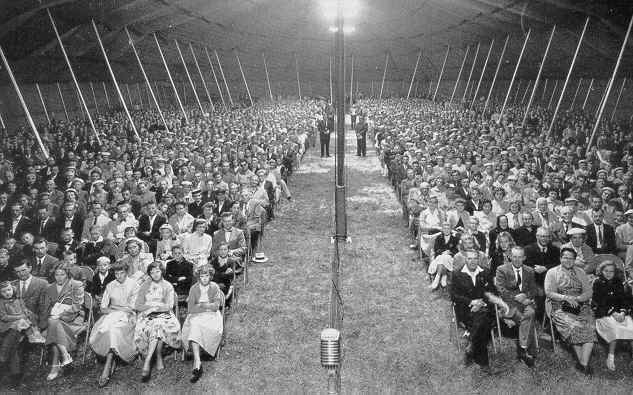 It is inevitable that iconoclasm, once enshrined as an operative principle, will, at times, need its own smashing. For instance, the fashionable contempt for “revival services” among many in the church today may itself need to be the object of contempt once it moves past a legitimate concern that we not reduce “revival” to a series of meetings and into a kind of haughty and wholesale abandonment of the very idea of a series of scheduled gatherings in which the people of God are called to gather in worship outside of the regularly prescribed times in a desire to see God move mightily.
Central Baptist Church in North Little Rock last night concluded a series of revival meetings that lasted from Sunday morning to Wednesday night. We gathered for five meetings. Kevin Griggs preached on “The Kingdom of God and How It Changes Everything” and Scotty Kerlin led us in worship. Our people, young and old, showed up in an impressive display of support. We ate together, fellowshipped together, prayed, read, listened, and sang together. Lives were touched and, I truly believe, the church was strengthened.
Last night I was reflecting on my own self-righteous penchant for shrugging off the traditions of the faith family to which I belong and in which I was raised. In an effort to say that revival is more than a series of meetings, I have been guilty of dismissing meetings themselves at times. In an effort to say that revival is more than a calendared event, I have been guilty of smugly smirking at such calendared events.
To be sure, there is a danger to the revival meeting model. It can tempt us to think that this is how God moves: when we schedule Him in and give Him permission to do so. It can reduce the very idea of revival to a beginning-and-ending model in which we tragically come to think of it as an event, and a church event at that (i.e., “revival” started on Sunday and “revival” ended on Wednesday night). It can, if presented wrongly, foster the mistaken notion that the church is only the church when we gather here for things like this, mitigating against the more biblical teaching that the church is a body of believers, not an institutional presence.
I have felt the danger of these realities and, at times, have been tempted to abandon the traditional revival model. Even so, as a pastor I have never fully abandoned it, and, indeed, have no intention of doing so. I have gone through periods of calling it other things: “A Season of Renewal” and things like that. That’s fine and good. Calling it a “revival” is neither here nor there. No, the issue is not semantics. As I reflect on the meetings of this week, this, it seems to me, is the point: In a day in which modern American Christians, perhaps especially young modern American Christian, are fairly tyrannized by the calendars we have created, by the schedules we have allowed ourselves to embrace, by the myriad of activities to which we have committed, and by the constant pressure to keep up the frantic pace of our vertigo society, it could just be that the old school revival meeting model has taken on a new prophetic nuance in, by, and through which the church can reassert itself into the midst of the modern tapestry of busyness with a gospel presence and through which Christian people can offer a clear statement to the world, their families, and themselves, that sacred seasons of respite and congregational attention are still valid because the King around which we gather is still Sovereign.
“Here! Here!” for revival meetings.
Finally, here is audio of Scott Kerlin, Kevin Griggs, and Billy Davis, our Minister of Music, singing Paul Baloche’s song, “The Same Love.”
 Earlier this year our staff came under a common conviction that our Sunday School had become too fragmented and too spread out in terms of what the classes of Central Baptist Church were teaching. It wasn’t that our classes weren’t teaching good material. All of it was based in Scripture and theologically orthodox. However, after so many years of having such a lack of cohesion, we thought it would be good for our classes to come together around a common theme and purpose. We chose The Gospel Project (TGP) curriculum as the point around which we would gather.
We were attracted to the metanarrative approach that TGP takes as well as the robust theological components in the project. I really liked the historical emphasis in some of the sidebar quotations as well as the panoply of voices from the church that is likewise present in the material. It seemed to me that such elements exhibited an intentional pushback against what theologian Tom Oden has called “neophilia,” “chronological snobbery,” or “the love of the new.” I have long chafed at the a-historical hubris of much free church Protestantism. The Gospel Project emphasis on the greater church, recent and ancient, is a breath of fresh air.
We told our teachers that we wanted all of our classes to teach TGP material for the Fall of 2013 and the Spring of 2014. This year-long journey would give us an opportunity to get on the same page, build unity, combat any isolationist impulses within our classes (and I quickly add that we saw no overt evidence of such – we just knew that this was a real threat if classes do not come together around a common theme ever so often), and advance biblical and theological education. Overall, we saw this as an opportunity to insure that the whole arc of scripture was being taught.
We were assisted greatly in this effort by David Bond of the Arkansas Baptist Convention. David came when we first proposed the idea to our teachers at a special called meeting (at which dinner was provided for our teachers) and he came twice more to teach our teachers how to approach the curriculum. This was key and, as a pastor who also teaches Sunday School, was helpful to me as well.
To further assist in this effort, I announced that I would be stopping my Sunday evening sermon series through Exodus and would, for the coming Fall and Spring, preach on the primary TGP texts from that morning’s lesson. In this way, we could bookend every Sunday with the same lesson. Furthermore, I would have an opportunity to speak to all of our classes about what we had studied.
Last Sunday was the first Sunday we did this and we were very pleased. The reactions to TGP have been strong and positive. The feedback from my addressing that morning’s text in the evening service has likewise been positive. We are very excited about this effort and what the Lord is going to do in and through it. TGP is well-written, substantive, appropriately challenging, and God-honoring. Check it out, if you haven’t yet done so.
Finally, I would be remiss if I did not praise our Sunday School teachers. This was a big thing to ask of them, and a different kind of thing to boot. They accepted it in a way that still causes me to marvel. If you would like to gauge the maturity of your church, try a Sunday School-wide change and see what happens. Our teachers showed a willingness to trust and try something new that is tragically lacking in too many churches. I am proud of them all, and of our folks. It is amazing watching God do something among His people.

Genesis 1:26-28
26 Then God said, “Let us make man in our image, after our likeness. And let them have dominion over the fish of the sea and over the birds of the heavens and over the livestock and over all the earth and over every creeping thing that creeps on the earth.” 27 So God created man in his own image, in the image of God he created him; male and female he created them. 28 And God blessed them. And God said to them, “Be fruitful and multiply and fill the earth and subdue it, and have dominion over the fish of the sea and over the birds of the heavens and over every living thing that moves on the earth.”
When I was in high school, my mom took a group of Latin students on a tour of some cities in Italy. It was an amazing trip. My favorite part, hands down, was getting to see Michelangelo’s statue of David in the Accademia di Belle Arti in Florence. What an amazing piece of work! Michaelangelo sculpted it from 1501 to 1504. It stands seventeen feet high and, truly, must be seen to be believed.
You approach the statue by walking down a long corridor at the end of which is a dome under which the statue stands. It amazed me when I saw it. It amazes me still. However, when I first saw it, what I was first struck by was not the statue itself but the other Michelangelo pieces lining the corridor on either side as you approach it. On either side of the corridor are large pieces of marble out of which partially revealed figures appear to be straining to break free. Here you see a leg, there an arm, there a torso and head.
They are still contained in the marble, but are partially freed from it. Michelangelo was the liberator, as he saw it, of the figures who were already within the marble but who needed to be freed by a master sculptor. He saw his job as removing the bonds of the marble around the figures so that they could exist unhindered.
Some see these as unfinished works of art. Others suggest that Michelangelo knew exactly what he was doing in leaving them unfinished, that he was making a statement about the bondage of man and man’s struggle to be free, to exist. Regardless, there can be no doubt that the contrast between Michelangelo’s “Prisoners” and Michelangelo’s David makes an amazing impact on the viewer. At least it did on this viewer.
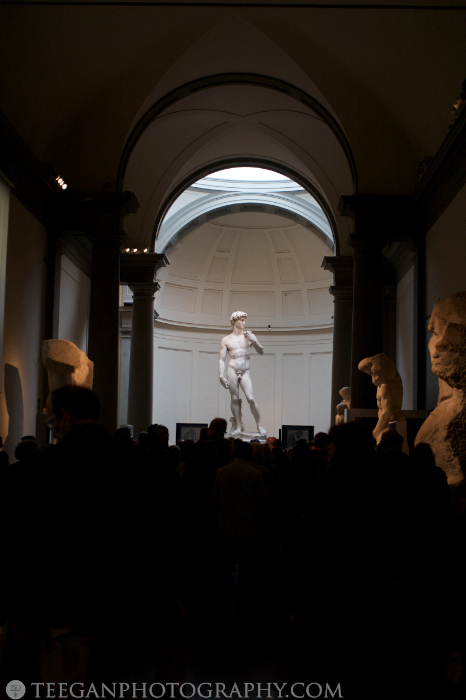
I think often of the haunting Prisoners in that hallway. They strain against the marble that contains them to your left and your right as you walk down the corridor. All the while, there stands the finished work, David, at the end. It is almost as if the Prisoners are saying, “We could be more. We might even be like David. He too was once imprisoned in marble. But we are still bound here, unfinished and unformed, slaves to the elements that entrap us.”
When thinking about the image of God, I thought about those statues and I thought about David. There is a theological point in this. We are like Michelangelo’s Prisoners: we exist, we have potential, we have dignity, we have worth. In part, that dignity and worth can still be seen. We bear the image of a Master Sculptor. We can see what we should be. But we are bound by sin, but the elements of the world that enslave and entrap us. We strain to be free. And there is Jesus, the free man, the true man, man unbound by the Fall…a man, but also God. We see Him in His perfection. We bear the image of the Father who sent Him. Yet we struggle here. We bear the image, but it is oftentimes concealed by the elements to which we are enslaved. We are the prisoners…but Christ came to make us free!
Let us tonight consider what it means to bear the image of God and how Christ comes to set us free.
I. Man Bears the Image of God (v.26a,27)
We begin with the basic biblical assertion that we do, in fact, bear the image of God. We find it in Genesis 1.
26a Then God said, “Let us make man in our image, after our likeness…27 So God created man in his own image, in the image of God he created him; male and female he created them.
What can this mean? Let us first offer two things that it does not mean.
The “image of God” does not refer to physical likeness. In John 4:24, Jesus said, “God is spirit, and those who worship him must worship in spirit and truth.” God is non-corporeal. He does not have flesh. He has been revealed as “Father” in scripture. We should defend the masculine pronoun. However, He is not a physical man. He is God! Furthermore, let us note that both men and women were created in the image of God. Thus, if “image” is taken to mean “physical likeness,” then we have some very big problems indeed!
Furthermore, the “image of God” does not refer to our bearing the image of God in the exact way that Jesus bore the image of God, thereby making us equal with Jesus. There is a sense in which Christ is called “the image of God” in a way that we are not. We find this in 2 Corinthians 4:4.
4 In their case the god of this world has blinded the minds of the unbelievers, to keep them from seeing the light of the gospel of the glory of Christ, who is the image of God.
Christ is the image of God in terms of equality with God. The usage of the term in that context is quite distinct from how it is used of us. We bear qualities that reflect God’s glory and creative power, but we ever remain the creature and God the Creator. The Son bears the image of God in perfect unity and equality. He is God.
What the image of God does refer to are those qualities stamped on humanity that reflect the glory of God and that are not and cannot be shared by animal life. We see the image of God in humanity’s capacity for intelligence, abstract thought, communication, creative ability, selfless love, imagination, and wisdom. Man is not divine, and it is wrong to suggest that he is, but he does indeed bear the mark of his divine Creator.
The fundamental implication of the image of God is that this image grants dignity, value, and worth to man. It is important to remember that all human beings, all men and women, bear this image. That image has been covered and clouded by the Fall, but it is still there and the evidence of it can still be seen. In Genesis 9, the Lord said this in His covenant with Noah:
6 Whoever sheds the blood of man, by man shall his blood be shed, for God made man in his own image.
The significance of that verse rests in the fact that it is said (a) of all human beings and (b) of fallen human beings. There are no worthless human beings. Man has dignity. The image of God rests on all of humanity. That image is not a saving image. Fallen man bearing the marred image needs redemption. But it means that even fallen, unredeemed man bears evidence that he was created by a mighty God.
Thus, all life is sacred. All life has value. Our value is not dependent upon our productivity or our social status. Our value does not rest in what we own. Our value is not a matter of race or nationality or gender. Our value rests in this simple fact: that man is unique and bears the image of God Himself.
There is a scene in William Faulkner’s novel, The Hamlet, in which some men sitting on a front porch observe a severely mentally disabled man shuffling down the street, dragging a wooden block in the dust behind him. As they watch him pass, one of the men, Ratliff, comments on the disabled man with thinly disguised contempt and has a telling and tragic conversation with his friend, Bookwright.
Ratliff watched the creature as it went on – the thick thighs about to burst from the overalls, the mowing head turned backward over its shoulder, watching the dragging block.
“And yet they tell us we was all made in His image,” Ratliff said.
“From some of the things I see here and there, maybe he was,” Bookwright said.
“I don’t know as I would believe that, even if I knowed it was true,” Ratliff said.[1]
Yes it is true: all mankind bears the image of God. All mankind. No man or woman has more value in the eyes of God than any other man or woman. We are tempted to forget this fact when we demonize others or try to reduce their worth or see only their flaws and sins. Joseph Ratzinger put it like this.
Indeed, it is hardly the case that we always and immediately see in the other the “noble form,” the image of God that is inscribed in him. What first meets the eye is only the image of Adam, the image of man, who, though not totally corrupt, is nonetheless fallen. We see the crust of dust and filth that has overlaid the image. Thus, we all stand in need of the true sculptor who removes what distorts the image; we are in need of forgiveness, which is the heart of all true reform.[2]
We scoff at Michelangelo’s Prisoners because they do not yet look like David. We scoff at the problems of others, dehumanizing them in the process, denying the image of God within them. This is a great act of evil. This is a great sin. Everybody has value. Everybody has worth. Instead, we should see everybody as valuable and should pray that all people put themselves back in the hands of the Sculptor who can bring us back into being the masterpiece we were intended to be.
II. That Image Distinguishes Man from Animal Life (v.26,28)
Another clear implication of the image of God is that it distinguishes man from animal life. This is clear in our text’s teaching that man has dominion over animal life.
26 Then God said, “Let us make man in our image, after our likeness. And let them have dominion over the fish of the sea and over the birds of the heavens and over the livestock and over all the earth and over every creeping thing that creeps on the earth.”…28 And God blessed them. And God said to them, “Be fruitful and multiply and fill the earth and subdue it, and have dominion over the fish of the sea and over the birds of the heavens and over every living thing that moves on the earth.”
Man’s dominion over animal life is not a boundless license allowing man to do whatever he wants. For example, hunting animals for food would seem appropriate. Senselessly butchering animals just to watch them die, however, is a sign of the Fall in the heart of man. Man has dominion, but man still answers to God.
The value of human life over animal life needs to be stressed in our post-Darwinian culture. In our culture, we are consistently taught that we are simply animals. We are taught that we might be a higher form of animal life, to be sure, but we remain animals nonetheless. This notion has the twin results of devaluing man and overvaluing animals. Animals have been almost humanized in our culture and humans have been animalized. We see this in a thousand different ways in popular culture and in the higher arts as well.
The attempt to reduce man to an animal stands in direct conflict with a truly biblical anthropology. The Bible teaches that man is unique and valuable. He must not be reduced to an animal. Furthermore, he must not be reduced to anything less than man who bears the image of Almighty God. Throughout human history there have been numerous attempts to reduce the dignity of man.
Dr. James Leo Garrett, Jr., the Emeritus Professor of Theology at Southwestern Baptist Theological Seminary in Fort Worth, TX, and my theology professor in seminary, wrote this in his Systematic Theology:
Once human beings are seen as being “in the image of God and after his likeness,” human beings find that the various reductionist views of human life are less convincing or less satisfying. These include (1) Marxism’s view of man as an economic animal with class struggle, not God or man, as the basis for ethics; (2) Freud’s view of humans as primarily and essentially the product of sexual drives and as dominated by aberrant sexual activity; (3) totalitarianism’s view of human beings as the political tools of the omnicompetent civil state; (4) racism’s view that racial/ethnic differences and conflicts are a very important aspect of human life and that superior and inferior races are to be differentiated; (5) naturalism’s view that a human being is “the outcome of accidental collocations of atoms”; and (6) postmodernism’s denial of any absolute truth and of linguistic coherence.[3]
That is helpful. It reminds us of the ways in which society has tried to strip man of the image of God. But man is not an animal, nor does he occupy any of these lesser stations. He is a human being, and his value rests in the fact that God Himself has created him in His image.
III. That Image Means that We Only Have True Integrity When We Live in Union With the God Whose Image We Bear
There is a final implication to the image of God. If God has made us, and if we bear His image, then that means we will never know true integrity and true inner peace unless and until we live in harmony with our God. The hope of the gospel is that, through the salvation and life Christ gives us, the image of God can be restored as the Holy Spirit strips away those things that obscure it and tempt us to deny it. In Romans 8, Paul put it like this.
29 For those whom he foreknew he also predestined to be conformed to the image of his Son, in order that he might be the firstborn among many brothers. 30 And those whom he predestined he also called, and those whom he called he also justified, and those whom he justified he also glorified.
Believers in Christ have been “predestined to be conformed to the image of his Son.” He is making us into the image of Christ. We are becoming more like Jesus, who Colossians 1:15 describes as “the image of the invisible God, the firstborn of all creation.” What this means is that the image of God is restored in us as we walk with Jesus. Paul described that process wonderfully in 2 Corinthians 3:
17 Now the Lord is the Spirit, and where the Spirit of the Lord is, there is freedom. 18 And we all, with unveiled face, beholding the glory of the Lord, are being transformed into the same image from one degree of glory to another. For this comes from the Lord who is the Spirit.
I love that: “we…are being transformed into the same image from one degree of glory to another.” The image of God is being daily restored in us. We are becoming, in Christ, what we are intended to be.
Thomas Merton passed on the following story in his collection of sayings and stories from the desert fathers:
An elder was asked by a certain soldier if God would forgive a sinner. And he said to him: Tell me, beloved, if your cloak is torn, will you throw it away? The soldier replied and said: No. I will mend it and put it back on. The elder said to him: If you take care of your cloak, will God not be merciful to His own image?[4]
Yes, God will indeed be merciful to His image. Men and women bear that image. He has given Christ so that His image-bearers can be saved, can be forgiven, can be born again to life anew and eternal. The image has been distorted, but it has not been obliterated. In Christ, it is restored and renewed. In Christ we are able to come to the One whose image we bear as blood-bought sons and daughters.
[1] William Faulkner, The Hamlet. (New York, NY: Vintage Books, 1990).
[2] Benedict XVI, Called to Communion (San Francisco, CA: Ignatius Press, 1991), p.148.
[3] James Leo Garrett, Jr., Systematic Theology. Vol.1 (North Richland Hills, TX: Bibal Press, 2011), p.466-467.
[4] Thomas Merton, The Way of the Desert (New York, NY: New Directions), p.76.
Matthew 7:13-14
13 “Enter by the narrow gate. For the gate is wide and the way is easy that leads to destruction, and those who enter by it are many. 14 For the gate is narrow and the way is hard that leads to life, and those who find it are few.
Some years back we stopped at “Rock City” on Lookout Mountain in Georgia. If you have driven around that area you know what I’m talking about: endless “See Rock City” signs encouraging you to go to this rocky, mountain top, tourist attraction. It was pretty neat, as far as tourist attractions go.
I remember one part of the path you take as you walk through Rock City that stands out. They call it “Needle’s Eye.”

It is a very narrow portion of the trail that you might find a little trying if, like me, you are a bit claustrophobic. At the time, I could get through Needle’s Eye, though I found the experience a little too close for comfort. It’s a narrow path between two high walls of rock. It was narrow, to say the least!
I thought of Needle’s Eye when working on our text for today, for that image is the kind of image Jesus evoked when He wanted to describe the nature of the Christian life. This is what He said:
13 “Enter by the narrow gate. For the gate is wide and the way is easy that leads to destruction, and those who enter by it are many. 14 For the gate is narrow and the way is hard that leads to life, and those who find it are few.
I like John Stott’s summary of this text. He put it like this:
…there are according to Jesus only two ways, hard and easy (there is no middle way), entered by two gates, broad and narrow (there is no other gate), trodden by two crowds, large and small (there is no neutral group), ending in two destinations, destruction and life (there is no third alternative).[1]
I am going to use those four divisions in looking at our text today: two gates, two ways, two crowds, and two destinations. They are the natural divisions within these words of Jesus, and each is important, communicating essential truths.
This text is a series of two’s. It is fascinating to observe how often Scripture depicts the ultimate issues of salvation in terms of two’s.
See, I have set before you today life and good, death and evil. (Deuteronomy 30:15)
And if it is evil in your eyes to serve the Lord, choose this day whom you will serve, whether the gods your fathers served in the region beyond the River, or the gods of the Amorites in whose land you dwell. But as for me and my house, we will serve the Lord. (Joshua 24:15)
When the Son of Man comes in his glory, and all the angels with him, then he will sit on his glorious throne. Before him will be gathered all the nations, and he will separate people one from another as a shepherd separates the sheep from the goats. And he will place the sheep on his right, but the goats on the left. (Matthew 25:31-33)
He has delivered us from the domain of darkness and transferred us to the kingdom of his beloved Son (Colossians 1:13)
There is a basic dichotomy to life, a division between the things of God and the things that war against God. This division presents itself to every human being, asking which we will choose: life or death, forgiveness or condemnation, salvation or judgment, light or darkness? We stand confronted by these two’s and we must make a decision.
I. Two Gates: Narrow and Wide
The first of these two’s are the two gates.
13 “Enter by the narrow gate. For the gate is wide and the way is easy that leads to destruction, and those who enter by it are many. 14 For the gate is narrow and the way is hard that leads to life, and those who find it are few.
There is a narrow gate and there is a wide gate. Interpreters often discuss what the gate is intended to be, but it would appear to be the entryway onto the two paths that lead either to salvation or destruction. In other words, every human being is faced with the choice of going into one of two doors, or one of two gates. Those gates ultimately lead to very different places.
But what is the narrow gate, the gate leading to life, and why is it narrow? We find the answer to the identity of the gate in John 10:9. There, Jesus said, “I am the door. If anyone enters by me, he will be saved and will go in and out and find pasture.” Christ Jesus is the gate, the door. The decision we make concerning Christ and whether or not to trust in Him will determine the direction of our lives.
Every human being stands before two gates. One gate is the acceptance of Jesus and it leads to life. The other gate is the rejection of Jesus and it leads to destruction. What is telling is that Jesus says there are only two gates. There is not a third. In fact, in Revelation 3, Jesus expresses His contempt for third ways in general. This is what He says to the church of Laodicea:
14 “And to the angel of the church in Laodicea write: ‘The words of the Amen, the faithful and true witness, the beginning of God’s creation. 15 “‘I know your works: you are neither cold nor hot. Would that you were either cold or hot! 16 So, because you are lukewarm, and neither hot nor cold, I will spit you out of my mouth. 17 For you say, I am rich, I have prospered, and I need nothing, not realizing that you are wretched, pitiable, poor, blind, and naked. 18 I counsel you to buy from me gold refined by fire, so that you may be rich, and white garments so that you may clothe yourself and the shame of your nakedness may not be seen, and salve to anoint your eyes, so that you may see. 19 Those whom I love, I reprove and discipline, so be zealous and repent. 20 Behold, I stand at the door and knock. If anyone hears my voice and opens the door, I will come in to him and eat with him, and he with me. 21 The one who conquers, I will grant him to sit with me on my throne, as I also conquered and sat down with my Father on his throne. 22 He who has an ear, let him hear what the Spirit says to the churches.’”
There is no third way. There is no via media when it comes to Jesus. You have not “kind of” accepted Christ. You have not “kind of” rejected Jesus. You have either accepted him or rejected Him. He is either Lord to you or He is not. This morning, right now, right here, right where you are sitting, you have either accepted Christ as Lord and Savior or you have rejected Jesus. You may tell yourself that are still in the middle. There is no middle! Not to have accepted Him is to have rejected Him.
It is interesting to note that people are apparently less likely to accept Christ the older they get, according to some research done some years back, anyway.
The probability of people accepting Jesus Christ as their personal Savior drops off dramatically after age 14, a new study by the Barna Research Group has found. Data from a nationwide sampling of more than 4,200 young people and adults indicate that youth from ages 5 through 13 have a 32 percent probability of accepting Christ as their Savior. Young people from the ages of 14 through 18 have a 4 percent likelihood of making that choice, while adults ages 19 and older have a 6 percent probability of doing so.[2]
Perhaps this means that the longer you go on rejecting Christ, the harder your heart gets. Obviously, this is not a hard and fast rule. In this very church are numbers of people who were gloriously saved later in life. Some of the greatest heroes of the faith were saved later in life. If you are here today and you are hearing the gospel, it is not too late for you. So long as you have breath in you it is not too late. You can accept Jesus this very day.
There are two gates, but they are not the same size: one is narrow and one is wide.
13 “Enter by the narrow gate. For the gate is wide and the way is easy that leads to destruction, and those who enter by it are many. 14 For the gate is narrow and the way is hard that leads to life, and those who find it are few.
Why is this so? It is so because it seems that many more people reject Christ than accept Him. Even so, let no one say that the gate to glory is too narrow for them. It is narrow, but it stands before every human being, and anybody who so desires can enter in. If you desire to come to Jesus, you can. If you desire to be saved, you will not find the narrow gate locked. The key to the gate is the grace and mercy of Jesus. We reach for the gate through the act of repentance and faith.
I have mentioned in the past how, as a kid, I went to Camp Ambassador on Lake Waccamaw in North Carolina. While there, they gathered us all around the campfire one night where a wonderful, elderly lady who we all referred to as “Aunt Sarah” told us a story. The story she told us was John Bunyan’s story Pilgrim’s Progress. In the story, Christian is journeying to the Celestial City, but first, he must pass through what Bunyan called “the wicket gate.” The wicket gate is a narrow gate, but it is the gate that opens to the path leading to eternal life. Here is Bunyan’s description of Christian going through the narrow gate.
So, in process of time, Christian got up to the gate. Now, over the gate there was written, “Knock, and it shall be opened unto you.” Matthew 7:7
He knocked, therefore, more than once or twice, saying,
“May I now enter here? Will he within
Open to sorry me, though I have been
An undeserving rebel? Then shall I
Not fail to sing his lasting praise on high.”
At last there came a grave person to the gate, named Goodwill, who asked who was there, and whence he came, and what he would have.
Christian: Here is a poor burdened sinner. I come from the city of Destruction, but am going to Mount Zion, that I may be delivered from the wrath to come; I would therefore, sir, since I am informed that by this gate is the way thither, know if you are willing to let me in.
Goodwill: I am willing with all my heart, said he; and with that he opened the gate.[3]
There are two gates: one narrow and one wide. Have you passed through the narrow gate? Have you trusted in Christ?
II. Two Ways: Hard and Easy
There are also two ways: one hard and one easy. The hard way is the way to which the narrow gate opens. The easy way is the way to which the wide gate opens.
13 “Enter by the narrow gate. For the gate is wide and the way is easy that leads to destruction, and those who enter by it are many. 14 For the gate is narrow and the way is hard that leads to life, and those who find it are few.
Now this is a fascinating thing for Jesus to say. It also appears to be problematic, at first glance, because of something that Jesus said in Matthew 11.
28 Come to me, all who labor and are heavy laden, and I will give you rest. 29 Take my yoke upon you, and learn from me, for I am gentle and lowly in heart, and you will find rest for your souls. 30 For my yoke is easy, and my burden is light.”
What can this mean? In our text Jesus says that “the gate is narrow and the way is hard that leads to life,” but in Matthew 11 He says, “My yoke is easy, and My burden is light.” Which is it? Is the way of Jesus easy or hard?
The answer to that question is, “Yes!” That is to say, the yoke and way of Jesus is a paradox. It is a blissful burden. It is a freeing enslavement. It is a light burden, but a burden nonetheless, as Jesus acknowledges. All of this is to say that the way of Jesus is a path of joy but also a path of laying down our lives. The way of Christ is a way of liberation, but it is a liberation from sin that constantly pesters and hinders us.
You will perhaps recall that I have earlier spoken of the Kingdom of God as the “already/not yet” Kingdom. That is a well-known phrase that has great explanatory power. The Kingdom of God is “already” in that it exists, it has a King, Jesus, and it has citizens, those who have come to the Father through the Son. But the Kingdom of God is “not yet” in that we still struggle with sin, still see through a glass dimly, and are still in the difficult process of becoming what we need to become in Christ. It is “already” in that we have been justified, declared free and forgiven in Christ. It is “not yet” in that we still must confess our sins as we daily struggle.
We also see the “already/not yet” Kingdom in the way the Lord spoke of His path. It is “already” in that it is easy: we walk with Jesus in victory and a song fills our hearts. It is “not yet” in that it is hard: we struggle under the temptation to abandon the path, under the burden of having to learn to think and live differently, and under the strain of being rejected by the dominant systems of the world in which we live.
Indeed, there is a sense in which following Jesus is hard. It is hard when it is contrasted with the infinitely easier though tragically deceitful path of simply thinking what everybody else thinks, doing what everybody else does, talking like everybody else talks, and believing as everybody else lives.
Discipleship is hard, brothers and sisters, but the yoke of Jesus is still easy. What a beautiful privilege it is to be on this narrow, hard path! What an honor to set our feet on this way! It requires us to lay down our lives, but we lay them at the feet of the Jesus who loves us. The martyrs all suffered and sealed their testimony with their blood, but they did so singing praises to the Savior Who first laid down His life for them.
III. Two Crowds: Few and Many
There are also two crowds: one large and one small.
13 “Enter by the narrow gate. For the gate is wide and the way is easy that leads to destruction, and those who enter by it are many. 14 For the gate is narrow and the way is hard that leads to life, and those who find it are few.
The large crowd passes through the wide gate onto the easy path. The small crowd passes through the narrow gate onto the hard path. Friends, most people will reject the path of life. That means that, in most cases, the crowd will be wrong.
I think about this when I think about our kids at school. Kids, when you are in the classroom or the cafeteria, and that topic of religion or right-and-wrong or truth comes up, and you realize that you are the only one at the table who holds the biblical position, the true position, take heart: Jesus said that His people would almost always be in the minority. The church is the minority in the world. Those who have trusted in Christ are in the minority when compared to those who have rejected Him.
I take that to mean that the majority of viewpoints that I encounter on TV will likely be false. I take that to mean that the majority of viewpoints I read online will likely be false. I take that to mean that our calling is to uphold the minority, rejected, despised truth of the gospel in the dominant culture of darkness that has rejected it. Indeed, I take that to mean that it is an honor to hold up the despised truth. It is an honor to be the only one at the lunch table who speaks up, with love but with clarity, and says, “Guys, I’m a Christian, and, as a Christian, I do not agree with what you just said. In fact, Jesus said…” That, friends, is an honor!
It is also a calling and a burden. If you do not speak the truth at that table, that table will not hear the truth. If you do not speak the truth, adults, at that dinner party, that dinner party will not hear the truth. If you do not speak the truth at that ballgame, the people at that ballgame will not hear the truth.
Dear Christian, I plead with you: do not grow silent before the majority. Jesus said the majority is on the path to destruction. The few are on the path of life. The few have come into the Kingdom and the few must represent the interests of their King.
Let me also say that this truth should motivate us to plead with the many to come to Christ. The point of this teaching is not that we write the many off to destruction. The point is that we should realize the reality of how the world is, but then embrace the challenge of calling the world to Christ.
IV. Two Destinations: Life and Destruction
Jesus finally spoke of two destinations.
13 “Enter by the narrow gate. For the gate is wide and the way is easy that leads to destruction, and those who enter by it are many. 14 For the gate is narrow and the way is hard that leads to life, and those who find it are few.
The two paths, the easy and the hard one, end somewhere. There are two final destinations to life. Jesus referred to these two destinations as “life” and “destruction.” One path leads to eternal life and the other leads to eternal destruction. The path leading to eternal life is the path of Jesus. The path leading to eternal destruction, eternal death, is the path of the world without Christ.
Jesus consistently spoke of people reaching either one of two final destinations. For instance, in Matthew 25, Jesus gave this picture of the final judgment:
31 “When the Son of Man comes in his glory, and all the angels with him, then he will sit on his glorious throne. 32 Before him will be gathered all the nations, and he will separate people one from another as a shepherd separates the sheep from the goats. 33 And he will place the sheep on his right, but the goats on the left. 34 Then the King will say to those on his right, ‘Come, you who are blessed by my Father, inherit the kingdom prepared for you from the foundation of the world. 35 For I was hungry and you gave me food, I was thirsty and you gave me drink, I was a stranger and you welcomed me, 36 I was naked and you clothed me, I was sick and you visited me, I was in prison and you came to me.’ 37 Then the righteous will answer him, saying, ‘Lord, when did we see you hungry and feed you, or thirsty and give you drink? 38 And when did we see you a stranger and welcome you, or naked and clothe you? 39 And when did we see you sick or in prison and visit you?’ 40 And the King will answer them, ‘Truly, I say to you, as you did it to one of the least of these my brothers, you did it to me.’ 41 “Then he will say to those on his left, ‘Depart from me, you cursed, into the eternal fire prepared for the devil and his angels. 42 For I was hungry and you gave me no food, I was thirsty and you gave me no drink, 43 I was a stranger and you did not welcome me, naked and you did not clothe me, sick and in prison and you did not visit me.’ 44 Then they also will answer, saying, ‘Lord, when did we see you hungry or thirsty or a stranger or naked or sick or in prison, and did not minister to you?’ 45 Then he will answer them, saying, ‘Truly, I say to you, as you did not do it to one of the least of these, you did not do it to me.’ 46 And these will go away into eternal punishment, but the righteous into eternal life.”
Again, in Luke 14, he told a parable about a great banquet that ends in a simple division of people around two final destinations.
16 But he said to him, “A man once gave a great banquet and invited many. 17 And at the time for the banquet he sent his servant to say to those who had been invited, ‘Come, for everything is now ready.’ 18 But they all alike began to make excuses. The first said to him, ‘I have bought a field, and I must go out and see it. Please have me excused.’ 19 And another said, ‘I have bought five yoke of oxen, and I go to examine them. Please have me excused.’ 20 And another said, ‘I have married a wife, and therefore I cannot come.’ 21 So the servant came and reported these things to his master. Then the master of the house became angry and said to his servant, ‘Go out quickly to the streets and lanes of the city, and bring in the poor and crippled and blind and lame.’ 22 And the servant said, ‘Sir, what you commanded has been done, and still there is room.’ 23 And the master said to the servant, ‘Go out to the highways and hedges and compel people to come in, that my house may be filled. 24 For I tell you, none of those men who were invited shall taste my banquet.’”
One more example. In Matthew 25, Jesus told a story about some virgins who go out with their lamps to meet the coming bridegroom.
1 “Then the kingdom of heaven will be like ten virgins who took their lamps and went to meet the bridegroom. 2 Five of them were foolish, and five were wise. 3 For when the foolish took their lamps, they took no oil with them, 4 but the wise took flasks of oil with their lamps. 5 As the bridegroom was delayed, they all became drowsy and slept. 6 But at midnight there was a cry, ‘Here is the bridegroom! Come out to meet him.’ 7 Then all those virgins rose and trimmed their lamps. 8 And the foolish said to the wise, ‘Give us some of your oil, for our lamps are going out.’ 9 But the wise answered, saying, ‘Since there will not be enough for us and for you, go rather to the dealers and buy for yourselves.’ 10 And while they were going to buy, the bridegroom came, and those who were ready went in with him to the marriage feast, and the door was shut. 11 Afterward the other virgins came also, saying, ‘Lord, lord, open to us.’ 12 But he answered, ‘Truly, I say to you, I do not know you.’ 13 Watch therefore, for you know neither the day nor the hour.
Do you see Jesus’ constant allusions to two final destinations? One path ends in life and the other in destruction. The sheep end in eternal life and the goats end in eternal destruction. The later-invited guests end up in the banquet hall and the originally-invited guests end up outside the hall. The wise virgins end up at the marriage feast and the foolish virgins end up on the wrong side of the shut door.
Let us be very clear about the fact that scripture is very clear: every human being will end up in either an eternal heaven or an eternal hell, and the determining issue in that is whether or not we trust in Jesus and accept what He has done for us. There is a heaven and there is a hell, and every person will find themselves in one or the other.
It is becoming increasingly unfashionable to speak of hell, though the Lord Jesus spoke of it in very clear terms. There is a place of eternal torment reserved for those who reject the salvation that will keep us from that place. I will simply point out that it makes no sense to say that Jesus came to save us and then to deny that from which He came to save us. It makes no sense to say that Jesus laid down His life for our sins and then to deny that there is a price for our sins that we would otherwise have to pay. It makes no sense to say that Jesus was tormented but that, ultimately, it would not have really mattered, since we would never have faced torment ourselves.
If you abandon hell, you gut the cross of meaning. Jesus came to save us from something.
That early pastor and preacher, John Chrysostom, once commented on the fact that people find talk about hell to be unpleasant. This is what he said:
And I know, indeed, that there is nothing less pleasant to you than these words. But to me nothing is more pleasant…Let us, then, continually discuss these things. For to remember hell prevents our falling into hell.[4]
Indeed, there is a benefit to being aware of hell. Jesus came to save us from it. Jesus is the only thing standing between us and hell. Would you be saved? Would you like for your path to end in life instead of destruction? The decision is simple: trust in Christ. Jesus is the narrow gate leading to the path of life. Paul put it like this in Romans 10:
9 because, if you confess with your mouth that Jesus is Lord and believe in your heart that God raised him from the dead, you will be saved. 10 For with the heart one believes and is justified, and with the mouth one confesses and is saved.
Have you trusted in Jesus? Have you walked through that gate?
I pray that it is so. I plead with you to trust in Christ today.
[1] John Stott, The Message of the Sermon on the Mount. (Downers Grove, IL: InterVarsity Press, 1978), p.196.
[2] RNS, “Probability of accepting Jesus drops dramatically after age 14,” The Christian Index (December 2, 1999), p.1.
[3] https://www.ccel.org/ccel/bunyan/pilgrim.iv.ii.html
[4] John Chrysostom, quoted in: The Ancient Christian Commentary on Scripture; N.T. Vol. IX (Downers Grove, IL: InterVarsity Press, 2000), p.104-105.
 My friend Darrell Paul told me I needed to read Mike Resnick’s science fiction cult classic, Santiago: A Myth of the Far Future. I have recently finished it, having read some of it to Mrs. Richardson and having listened to the rest of it read via Audible. I simply wanted to give a brief nod to Santiago as a glorious example of scifi pulp fiction that was a guilty pleasure to read/hear.
The book is essentially a Western set in the future in space. Sebastian Caine, a bounty hunter, is pursuing the ultimate prize: Santiago. Santiago is a nearly mythical figure, the greatest outlaw of them all. The legends about him abound and his exploits have created a shroud of fame and infamy before which all observers stand in awe and fear. Caine is hot on Santiago’s trail, planet hopping and following the clues…along with most every other bounty hunter in the solar system. Along the way he meets fascinating, colorful, and weird characters. Some of those meetings result in temporary traveling companions and some end in fights to the death, but all result in fascinating exchanges with memorable and odd characters.
Above all is the shadow of the deadliest bounty hunter of all, The Angel, who is likewise pursuing Santiago. Resnick’s depiction of The Angel is truly chilling. The reader will feel a palpable sense of dread and awe when The Angel is being discussed or depicted. Resnick outdid himself on that one.
In all honesty, there is not a lot that I can say that would not give away key elements of the plot. So I’ll just say that if you would like a book to read on vacation, or a break from serious reading, Santiago may just be your thing. It’s not Shakespeare, but it’s good enough, and it’s highly entertaining. There are some objectionable elements, and I suppose I’d give the book a PG-13 rating if pressed, but it’s a fun read, with some interesting twists and turns, and, above all, some characters that will stay with you for a while.