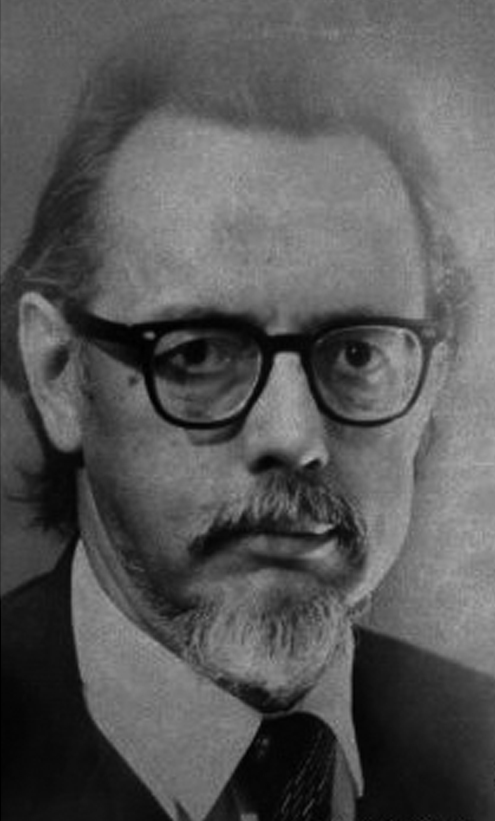
 I am no expert on the late Anabaptist theologian John Howard Yoder, but, like many others, I have benefited from his work, particularly his seminal work, The Politics of Jesus. And, like many others, I came to know Yoder’s work through the work of Stanley Hauerwas. It was through reading Hauerwas’ autobiography, Hannah’s Child, that I came to learn of Yoder’s earlier sexual misconduct. It was a disheartening revelation, for, around that same time, I learned of the sexual misconduct of Karl Barth as well as the troubled private life of New Testament scholar George Eldon Ladd (through John D’Elia’s fascinating book, A Place at the Table: George Eldon Ladd and the Rehabilitation of Evangelical Scholarship). It was a weird time. It seemed to me that numerous stalwart voices within the theological academy had, in fact, fairly sordid private lives.
Now, I knew this, of course, but I knew it theoretically. Had you asked me then if the greatest of theologians were deeply flawed and sinful, I would have responded, “But of course they are!” But it is one thing to know it and another thing to know it.
The Yoder accusations were/are deeply troubling. I will not chronicle them here. A simple Google search will tell you way more than you want to know (the essential articles are here). To summarize, though, Yoder sexually harassed a number of women under the guise of developing a theology (as he saw it) of extra-marital sexual conduct that stopped short of sexual intercourse, and, in his mind, short of sin. It seems that Yoder actually believed the kind of stuff he was saying to the women who were his victims. As I understand it, Yoder never actually had sexual intercourse with any woman other than his wife, but he, in essence, was propositioning women in theological language that would, inevitably, have led to such. (Again, my opinion.) Furthermore, he apparently did force himself upon the wife of a man who invited him to lecture while the husband was away, but, when she resisted, he stopped. Nobody has accused Yoder of rape, though what he did was clearly a violation. What he did and proposed was abusive, harassing, and adulterous. It was sinful. It was wrong. I haven’t the slightest desire or inclination to minimize Yoder’s actions. It matters not to me how he justified his actions with theological window dressing. They were pernicious actions.
Before his death in 1997, Yoder underwent a discipline process among the Mennonites. However – again, as I understand it – the victims of his harassment never saw the kind of public acknowledgment of his misdeeds that they warranted. His books continue/d to be published and his name remains a bright star in the theological world. I am evidence of this fact, by the way. I first read Yoder somewhere around the year 2000. I was completely unaware of these accusations until two or three years ago.
Apparently, Herald Press, the Anabaptist publisher of many of Yoder’s works, now feels that it needs to acknowledge Yoder’s sins. According to this story in Christianity Today, Herald Press will now include the following notice on all of Yoder’s books that they publish:
John Howard Yoder (1927–1997) was perhaps the most well-known Mennonite theologian in the twentieth century. While his work on Christian ethics helped define Anabaptism to an audience far outside the Mennonite Church, he is also remembered for his long-term sexual harassment and abuse of women.
At Herald Press we recognize the complex tensions involved in presenting work by someone who called Christians to reconciliation and yet used his position of power to abuse others. We believe that Yoder and those who write about his work deserve to be heard; we also believe readers should know that Yoder engaged in abusive behavior.
This book is published with the hope that those studying Yoder’s writings will not dismiss the complexity of these issues and will instead wrestle with, evaluate, and learn from Yoder’s work in the full context of his personal, scholarly, and churchly legacy.
The purpose of this post is to express my own struggle with this move. It is a genuine struggle: just when I think I’ve reached a conclusion I see the other side.
On the one hand, it seems reasonable to me that the victims of Yoder’s abuse should not have had to suffer the indignity of what likely appeared to them to be a kind of corporate cover-up. That is, the publishers continued to make money off of Yoder, he continued to teach at Notre Dame, and, as others have pointed out, he continued to lecture widely to much acclaim. In this sense, it seems to me a good thing that those who financially benefited off of the mythological mystique of Yoder should have to acknowledge that the man off of whom they benefited was living in radical violation of his own programme of pacifism and peace.
On the other hand, this is happening twenty-two years too late, after Yoder’s death. Furthermore, it seems an odd thing to publish the sins of an author on all of his books (from that press). It seems to me that if Yoder’s sins invalidate his works, they should be pulled. If they do not invalidate his works, they should stand. The victims need/ed justice and the reading public (like myself) needs not to be naive.
Furthermore, I do wonder about the precedence this sets. Should the works of Barth proclaim his adultery? Should the works of Paul Tillich proclaim his adultery? Should the works of Francis Schaeffer proclaim his problems with anger and temper? Should the works of George Eldon Ladd mention his deep insecurities, his ego, and his misdeeds?
All of that being said, what makes this case unique is that Yoder was arguing for pacifism, peace, and justice, for the protection of the weak against the powerful and for a radical living out of the Sermon on the Mount. Perhaps it is the incongruity between Yoder’s sexual misdeeds and the core of his entire message that makes the disconnect worthy of publication, worthy of a literary scarlet letter. Who knows?
As I think about the whole sordid affair it occurs to me that there was one author who once published his own disclaimer about his own hypocrisy and failures. In 1 Timothy 1:15, Paul announced that Christ Jesus had come into the world to save sinners, “of whom I am the foremost.” Yoder should have acknowledged this himself. We all should.
It’s a tough question, this publishing of sins, and one with which I’ll likely continue to wrestle. Regardless, there is a cautionary tale here about our words and our lives, and one we had best heed well.