
Exodus 4:18-31

Exodus 4:18-31

18 Moses went back to Jethro his father-in-law and said to him, “Please let me go back to my brothers in Egypt to see whether they are still alive.” And Jethro said to Moses, “Go in peace.” 19 And the Lord said to Moses in Midian, “Go back to Egypt, for all the men who were seeking your life are dead.” 20 So Moses took his wife and his sons and had them ride on a donkey, and went back to the land of Egypt. And Moses took the staff of God in his hand. 21 And the Lord said to Moses, “When you go back to Egypt, see that you do before Pharaoh all the miracles that I have put in your power. But I will harden his heart, so that he will not let the people go. 22 Then you shall say to Pharaoh, ‘Thus says the Lord, Israel is my firstborn son, 23 and I say to you, “Let my son go that he may serve me.” If you refuse to let him go, behold, I will kill your firstborn son.’” 24 At a lodging place on the way the Lord met him and sought to put him to death. 25 Then Zipporah took a flint and cut off her son’s foreskin and touched Moses’ feet with it and said, “Surely you are a bridegroom of blood to me!” 26 So he let him alone. It was then that she said, “A bridegroom of blood,” because of the circumcision. 27 The Lord said to Aaron, “Go into the wilderness to meet Moses.” So he went and met him at the mountain of God and kissed him. 28 And Moses told Aaron all the words of the Lord with which he had sent him to speak, and all the signs that he had commanded him to do. 29 Then Moses and Aaron went and gathered together all the elders of the people of Israel. 30 Aaron spoke all the words that the Lord had spoken to Moses and did the signs in the sight of the people. 31 And the people believed; and when they heard that the Lord had visited the people of Israel and that he had seen their affliction, they bowed their heads and worshiped.


One of the endearing aspects of the books The Hobbit and The Lord of the Rings is the sense of journey and adventure the Hobbits and their party undertake.  Along with it, J.R.R. Tolkien had the Hobbits sing a number of traveling songs as they went.  For instance, The Lord of the Rings, when Bilbo Baggins leaves the ring to Frodo and sets out for Rivendell, he sings this song:

The Road goes ever on and on

Down from the door where it began.

Now far ahead the Road has gone,

And I must follow, if I can,

Pursuing it with eager feet,

Until it joins some larger way

Where many paths and errands meet.

And whither then? I cannot say.

It may sound odd to quote that here, but the story of the Exodus is also replete with a sense of journey and adventure, though, unlike Tolkien’s stories, it was a journey and an adventure that really happened!  Even so, had Moses known Bilbo’s travel song, I can’t help but envision him singing it as he takes his staff in his hand, calls his family to his side, and sets his feet on the path back to Egypt.  Actually, it may be more accurate to suggest that Moses might have uttered under his breath the words of Alfred, Lord Tennyson’s “The Charge of the Light Brigade” (had he known them) as he set out.

Half a league half a league,

Half a league onward,

All in the valley of Death

Rode the six hundred:

‘Forward, the Light Brigade!

Charge for the guns’ he said:

Into the valley of Death

Rode the six hundred.

‘Forward, the Light Brigade!’

Was there a man dismay’d ?

Not tho’ the soldier knew

Some one had blunder’d:

Theirs not to make reply,

Theirs not to reason why,

Theirs but to do & die,

Into the valley of Death

Rode the six hundred.

Cannon to right of them,

Cannon to left of them,

Cannon in front of them

Volley’d & thunder’d;

Storm’d at with shot and shell,

Boldly they rode and well,

Into the jaws of Death,

Into the mouth of Hell

Rode the six hundred.

Yes, maybe that poem would capture the mood of what Moses felt better than Bilbo’s song.  After all, walking back into Egypt was no pleasant prospect at all!  Even so, that is what Moses did, as the latter half of Exodus 4 recounts.

I. Moses Embraces His Calling of Deliverance and Judgment (v.18-23)

Moses could not simply up and go.  After all, he had been received kindly into the house of Jethro and he was keeping his flock in Midian.  He owed his father-in-law at least some sense of explanation.

18 Moses went back to Jethro his father-in-law and said to him, “Please let me go back to my brothers in Egypt to see whether they are still alive.” And Jethro said to Moses, “Go in peace.”

It has been widely pointed out that Moses’ explanation to his father-in-law was not entirely true.  At the least, it was not the whole truth.  It certainly did not explain all that was going on in this trek back to Egypt.

Why so?  Many theories concerning Moses’ wording to Jethro have been proposed, but I am inclined to accept the most natural hypothesis:  it is awkward telling your father-in-law that you are taking his daughter into the teeth of an oppressive regime on the basis of a divine revelation you received from a burning bush on a mountain.  Furthermore, it is awkward telling your father-in-law that you have reason to believe that you will be the chosen instrument through which God will break the yoke of four-hundred years of enslavement for the Hebrews in Egypt.

I remember before I married Roni that my in-laws asked me what my plans were after we were married.  I responded that we were going to get married and move to Texas where I would attend seminary.  “How will you live?” they asked.  “We will get jobs,” I responded.  Etc.  Etc.

It was a legitimate thing for my in-laws to do.  They had the right to ask those questions.  One day, I will do the same.  But take a moment and think how that conversation with Moses would have gone had Jethro pressed him.  Perhaps Moses can be forgiven for not sharing the whole story, though, in truth, he probably underestimated Jethro’s faith.

Next, the Lord speaks to Moses again about what He intends to do in and through him in Egypt.

19 And the Lord said to Moses in Midian, “Go back to Egypt, for all the men who were seeking your life are dead.” 20 So Moses took his wife and his sons and had them ride on a donkey, and went back to the land of Egypt. And Moses took the staff of God in his hand. 21 And the Lord said to Moses, “When you go back to Egypt, see that you do before Pharaoh all the miracles that I have put in your power. But I will harden his heart, so that he will not let the people go.

The Lord calls upon Moses to execute faithfully all that He was calling Him to do.  It is then that the Lord makes a statement that has troubled many people for many years.  He says, “I will harden his heart, so that he will not let the people go.”  Many are troubled at the notion of God hardening Pharaoh’s heart, then judging him for his hard heart.  However, Augustine rightly pointed out that just because God said He would harden Pharaoh’s heart “it does not…follow that it was not Pharaoh himself that hardened his own heart.”  What he meant was that this divine saying does not mean that Pharaoh’s actions and Pharaoh’s sins did not factor into this hardening.  Augustine interpreted the hardening of Pharaoh’s heart to mean that “both God and Pharaoh caused this hardening of the heart: God, by his just judgments, Pharaoh, by his free will.”  I believe Augustine’s interpretation to be right.

Another helpful insight on this comes from the 5th/6th century Christian Caesarius of Arles.

Now let no one along with pagans or Manichaeans dare to censure or blame the justice of God.  It is to be believed as most certain that not the violence of God but his own repeated wickedness and indomitable pride in opposition to God’s commands caused Pharaoh to become hardened.  What does that mean which God said, “I will make him obstinate,” except that when my grace is withdrawn from him his own iniquity will harden him?  In order that this may be known more clearly, we propose to your charity a comparison with visible things.  As often as water is contracted by excessive cold, if the heat of the sun comes upon it, it becomes melted; when the same sun departs the water again becomes hard.  Similarly the charity of many men freezes because of the excessive coldness of their sins, and they become as hard as ice; however, when the warmth of divine mercy comes upon them again, they are melted.[1]

That is a helpful illustration:  sin is the cold that freezes the water and God’s mercy is the heat that melts it.  When God’s mercy is removed, sin has its effect.  This is a mysterious occurrence and one our minds struggle to understand.  I agree with Philip Ryken who sees in this “the paradox of divine sovereignty and human responsibility” and who notes, rightly, that this “is not a puzzle to be solved but a mystery to be adored.”[2]

Following this perplexing statement about Pharaoh, the Lord makes a beautiful assertion concerning Israel:

22 Then you shall say to Pharaoh, ‘Thus says the Lord, Israel is my firstborn son, 23 and I say to you, “Let my son go that he may serve me.” If you refuse to let him go, behold, I will kill your firstborn son.’”

This picture of Israel as God’s firstborn son is, again, beautiful and inspiring.  God is saying that Israel is the special object of His affections.  Furthermore, Israel will see that the will of their Father is done.

The love of God for His people permeates the story of the Exodus.  It is out of love that God remembers.  It is out of love that God acts.  It is out of love that God saves.  He sees in Israel the suffering of His firstborn.  Let us note, however, that Israel is the Lord’s firstborn in terms of His creation but the Lord Jesus is His firstborn in a sense that nobody or no people ever could be.  Israel was created by God.  Jesus is eternal God who was begotten of the Father.

II. Moses’ Family Embraces the Covenant of God (v.24-26)

Moses has embraced his calling, but Moses has not fully obeyed God.  We discover this in verses 24-26, verses that are startling and perplexing.

24 At a lodging place on the way the Lord met him and sought to put him to death. 25 Then Zipporah took a flint and cut off her son’s foreskin and touched Moses’ feet with it and said, “Surely you are a bridegroom of blood to me!” 26 So he let him alone. It was then that she said, “A bridegroom of blood,” because of the circumcision.

Terence Fretheim rather humorously says about verse 24, “The reader has not been prepared very well for this statement…The reader can be forgiven for wondering what is happening.”[3]  I hope we, the readers, can, for we do indeed wonder what is happening in these verses!

All of a sudden, out of the blue (from our perspective), the Lord tries to kill Moses.  Now, I do want to acknowledge that this passage is very difficult to interpret, and it is not even crystal clear exactly who God is trying to kill, Moses or one of his sons.  That being said, the most natural reading suggests he was trying to kill Moses.  Apparently the reason for this is because Moses had not circumcised his son.

However, before God kills Moses, Zipporah, Moses’ wife, grabs a flint, leaps to her son, circumcises him, touches Moses’ feet with the circumcised foreskin of their son, and pronounces Moses “a bridegroom of blood.”  Because of this, God relents and does not kill Moses.

Whew!  Didn’t see that coming!  What is going on here?

Let us remember that the Lord had instituted male circumcision as the physical mark of covenant belonging and faithfulness among the Jews with Abraham in Genesis 17.

1 When Abram was ninety-nine years old the Lord appeared to Abram and said to him, “I am God Almighty; walk before me, and be blameless, 2 that I may make my covenant between me and you, and may multiply you greatly.” 3 Then Abram fell on his face. And God said to him, 4 “Behold, my covenant is with you, and you shall be the father of a multitude of nations. 5 No longer shall your name be called Abram, but your name shall be Abraham, for I have made you the father of a multitude of nations. 6 I will make you exceedingly fruitful, and I will make you into nations, and kings shall come from you. 7 And I will establish my covenant between me and you and your offspring after you throughout their generations for an everlasting covenant, to be God to you and to your offspring after you. 8 And I will give to you and to your offspring after you the land of your sojournings, all the land of Canaan, for an everlasting possession, and I will be their God.” 9 And God said to Abraham, “As for you, you shall keep my covenant, you and your offspring after you throughout their generations. 10 This is my covenant, which you shall keep, between me and you and your offspring after you: Every male among you shall be circumcised. 11 You shall be circumcised in the flesh of your foreskins, and it shall be a sign of the covenant between me and you. 12 He who is eight days old among you shall be circumcised. Every male throughout your generations, whether born in your house or bought with your money from any foreigner who is not of your offspring, 13 both he who is born in your house and he who is bought with your money, shall surely be circumcised. So shall my covenant be in your flesh an everlasting covenant. 14 Any uncircumcised male who is not circumcised in the flesh of his foreskin shall be cut off from his people; he has broken my covenant.”

Circumcision, then, was the dramatic symbol of Israel’s belonging, Israel’s faithfulness, and God’s promise to bless Israel.  It was a very important evidence of identity and obedience, and Moses had not had his son circumcised.  Why?  We do not know.  Ephrem the Syrian actually blames Zipporah for the dilemma, claiming that Moses wanted to circumcise their son but that Zipporah had forbidden it.[4]  This seems absurd.  First of all, the Bible simply never says or hints at that idea.  Second, Zipporah is the one who acts swiftly to circumcise their son.  Third, Moses, not Zipporah, is the object of God’s wrath in this scene.  To be honest, it is difficult to read this passage and see Zipporah as anything but the hero of this little scene.

Whatever the reasons, Moses had not circumcised his son, and God took great issue with this.  Why?  Because Moses’ disobedience in this crucial area revealed a lack of complete surrender and obedience on his part and because a leader of Israel who had not brought his own family into covenant faithfulness to God would be a stumbling block to Israel instead of an aid.  How could the people be expected to follow Moses when Moses himself had been disobedient?  How could the people trust that Moses was God’s man when Moses was not following God?  How could the people even really believe that Moses was hearing from God if he had apparently not even heeded God’s call in this basic matter of identity and obedience?  Furthermore, it is an established fact that disobedience in the small things usually leads to disobedience in the big things.  Moses was about to be tested in ways he could not imagine.  How could he be expected to demonstrate radical obedience to God in the fiery trials he would soon face if he had not demonstrated such in the simple matter of circumcising his son.

More is happening here, though, than mere circumcision.  If you step back and look at this strange little section, you’ll notice certain big ideas behind it that will become crucial to Israel’s understanding of the gospel when Jesus came preaching it.  Namely, implicit in this story are the grand themes of the holiness of God, the wrath of God against sin, intercession, the shedding of blood, and forgiveness of sin on the basis of that shed blood.  It has been pointed out that this little scene is a foreshadowing of the Passover.  Just as the blood of Moses’ son caused God to pass over him without killing him, so the blood of the lamb on the doorpost would cause the angel of death to pass over the houses of Israel in Egypt.  That is true.  It does foreshadow the Passover.  But the Passover is itself a foreshadowing of the cross of Jesus Christ.  In this sense, all of these types, even if they point to each other in a secondary sense, point to Jesus in a primary sense.

Moses had sinned.  God was coming to execute judgment against Moses.  An intercessor, Zipporah, acted.  Moses was “covered” in the blood of the son.  God did not execute judgment on Moses because he was under the blood of the son.  In startling types and images, that is a picture of the gospel right here in Moses’ journey to Egypt.

We have sinned against God.  Because of our sins, we are under His judgment.  As He comes to destroy us, however, we have an intercessor, Jesus, who acts.  He lays down His life for His sheep.  He is sacrificed.  When we trust in Him we are covered by His blood.  On that basis, and on that basis only, we are cleansed and forgiven.  The judgment falls on Jesus who took our sins upon Himself.  He gets the punishment and we get the righteousness.  He is slain and we are forgiven.  And, of course, we need never mention the gospel without mentioning its consummation in the victorious resurrection of Jesus Christ.  The son does not remain slain.  He rises in victory over sin, death, and hell.

III. The People Dare to Embrace Unlooked-For Hope (v.27-31)

The Lord forgives Moses and then He calls Aaron, Moses’ helper, to Moses’ side.

27 The Lord said to Aaron, “Go into the wilderness to meet Moses.” So he went and met him at the mountain of God and kissed him. 28 And Moses told Aaron all the words of the Lord with which he had sent him to speak, and all the signs that he had commanded him to do.

Let us notice again the kindness and mercy of God.  God had called Moses to this daunting task.  Moses, in his weakness, calls out for a helper.  The Lord graciously gives him Aaron, though, once again, Aaron’s presence does not mean that Moses is free from his calling.  Aaron will be Moses’ mouth, but Moses remains God’s man.  He has made them a team, but Moses remains the captain of the team.

29 Then Moses and Aaron went and gathered together all the elders of the people of Israel. 30 Aaron spoke all the words that the Lord had spoken to Moses and did the signs in the sight of the people. 31 And the people believed; and when they heard that the Lord had visited the people of Israel and that he had seen their affliction, they bowed their heads and worshiped.

Here is a beautiful and moving scene indeed!  Moses and Aaron assemble the people in Egypt, and Aaron tells the startling story of God’s revelation to Moses of coming deliverance.  How will they respond?  Will they dare to believe that this can be true?  They do!  “And the people believed; and when they heard the Lord had visited the people of Israel and that he had seen their affliction, they bowed their heads and worshiped.”

We are privileged to witness here the dawning of hope!  The people dare to believe and dare to hope.  In the darkest chapter of their story, a ray of light breaks in.  It comes in the most unlikely of ways:  through the person of their fragile and flawed leader, Moses, and his assistant, Aaron.

At the heart of the gospel of Christ is hope.  The good news about Jesus calls us to dare to believe that God can deliver us from the worst enslavements we face.  Stanley Hauerwas once prayed this prayer before his students at Duke Divinity School:

Invade our bodies with your hope, dear Lord, that we might manifest the enthusiasm of your kingdom.  Give us the energy of children, whose lives seem fired by the wonder of it all.  Thank God, you have given us good work, hopeful work.  Our lives are not just one pointless thing after another.  We have purpose.  But give us also your patience.  School our hope with humility, recognizing that finally it is a matter of your will being done. Too often our hope turns to optimism, optimism to despair, despair to cynicism.  Save our hope by Israel-like patience so that we can learn to wait hopefully in joy.  Surely that is why you give us children – signs of hope requiring infinite patience.  Give us hope so we can learn to wait.  Christ has died, Christ has risen, Christ will come again.  Amen.[5]

Do you remember when you first encountered the audacious claims of the gospel?  Do you remember when you first dared to hope that you, a sinner, could be forgiven all your sins and set free?  Do you remember that?  I suspect your first reaction to receiving this good news was the same as Israel’s first reaction:  “they bowed their heads and worshiped.”

I do so love that the passage ends in that way.  What else could they do but bow their heads and worship?  Into their nightmare experience in Egypt, God spoke light and hope and truth.  Into the seemingly never-ending darkness of their enslavement, an unlooked-for note of deliverance rings out.

Is it possible?  Could this be true?

And there stands Moses, mute in his own insecurities, and Aaron, speaking words that he himself was still trying to grasp.  And they are standing before Israel announcing, “The night is coming to an end.  The sun is beginning to rise.  The long nightmare is concluding.  God has remembered His people.  God is coming to set us free.”

That, friends, was the hope of Israel.  That, friends, is the hope of the world through the One to whom the whole story of Israel points:  Jesus.  And we, now, are heralds of the same amazing and startling good news:  night is ending.  The sun is rising.  It is time to go home.

But before we are heralds we must be recipients.  We must marvel in this good news ourselves before we can announce it to others.  Have you received the good news?  There, in your very own Egypt, have you dared to believe that God has sent One, Jesus, to bring you home?
I pray you have.


[1] Joseph T. Lienhard, ed., Exodus, Leviticus, Numbers, Deuteronomy. Ancient Christian Commentary on Scripture. Old Testament. Vol.III. Gen.Ed., Thomas C. Oden (Downers Grove, IL: InterVarsity Press, 2001), p.30-31.

[2] Philip Graham Ryken, Exodus. Preaching the Word (Wheaton, IL: Crossway Books, 2005), p.129.

[3] Terence E. Fretheim, Exodus. Interpretation (Louisville, KY: Westminster John Knox Press, 2010), p.78.

[4] Lienhard, p.32

[5] Stanley Hauerwas, Prayers Plainly Spoken (Downers Grove, IL: InterVarsity Press, 1999), p.87.
 

Timothy Keller’s The Freedom of Self-Forgetfulness

I picked up The Freedom of Self-Forgetfulness at the 2013 Gospel Coalition meeting in Orlando, FL.  It’s a helpful booklet that is essentially an exposition of 1 Corinthians 3:21-4:7.  In it, Keller extols the Christian virtue of self-forgetfulness.  He points to Paul’s assertion that he, Paul, did not live his life under the bondage of what others thought about him or even what he thought about himself.  Rather, Paul’s sense of self and of value came from who he was in Christ.

Keller does a good job of handling the text and of critiquing the modern culture of self-esteem and self-affirmation.  He points out the danger of ego and self-reliance and points instead to a healthy sense of self-forgetfulness and reliance on Jesus for one’s sense of worth.

It’s a very simple, short work that would be an encouragement to anybody bound up in concerns about what others think of him or her.

Matthew 5:27-30

Matthew 5:27-30

27 “You have heard that it was said, ‘You shall not commit adultery.’ 28 But I say to you that everyone who looks at a woman with lustful intent has already committed adultery with her in his heart. 29 If your right eye causes you to sin, tear it out and throw it away. For it is better that you lose one of your members than that your whole body be thrown into hell. 30 And if your right hand causes you to sin, cut it off and throw it away. For it is better that you lose one of your members than that your whole body go into hell.


A few years ago I picked up a copy of Leo Tolstoy’s little novel, The Kreutzer Sonata.  It is a troubling story about a man named Pozdnyshev and his fall into moral degeneracy.  It culminates, ultimately, in him murdering his wife after he discovers her in a relationship with another man.  But the book is primarily concerned with sexual temptation and the morally crippling sin of lust.  In the story, Pozdnyshev tells how he fell into a life of lust and, finally, into a life of libertinism and sexual anarchy.

Two years before I had been corrupted by coarse boys.  Already woman, not any particular woman, but woman as a sweet something, woman, any woman…already begun to torment me.  My solitudes were unchaste.  I was tormented as ninety-nine per cent of our boys are tormented.  I was afraid, I struggled, I prayed, and – I fell!  My imagination was already corrupt.  I myself was corrupt but the final step had not yet been taken.  I was ruined by myself even before I had put my hands on another human being.

Following this, Pozdnyshev recounts the aftermath of his first actual foray into sexual sin.

I did not even realize that this was a fall.  I simply began to give myself up to those pleasures, to those necessities, which, as it was suggested to me, were natural – gave myself up to this dissipation in the same way that I had begun to drink and smoke.  And yet there was something unusual and pathetic in this first fall.  I remember well how immediately – even before I left that room – a feeling of sadness, deep sadness, came over me, so that I felt like weeping, weeping for the loss of my innocence, for a forever sullied relationship to womanhood.  Yes, the natural, simple relationship I had enjoyed with women was now forever impossible.  Purity of relationship with any woman was at an end; it could never be again.  I had become what is called a libertine.  And to be a libertine is to be in a physical condition like that of a drug addict, a drunkard, or a smoker.  As any one of these is no longer a normal man, so a man who uses women for his own pleasure is no longer normal; he is a man forever spoiled – a libertine.  As the drunkard or the addict can be instantly recognized by his face, by his actions, so it is with the rake.  He may restrain himself, may struggle with his inclinations, but his simple, pure, sincere, and fraternal relations with woman are no longer possible.  By the very way in which he looks at a young woman, or stares at her, the libertine is recognized.  So I became a libertine, and I remained one, and that was my ruin.[1]

Two things strike me about Pozdyneshev’s story.  The first is his comment, “I was ruined by myself even before I had put my hands on another human being.” And the second is his comment, “By the very way in which he looks at a young woman, or stares at her, the libertine is recognized.”

This is fascinating because it stands in perfect harmony with what Jesus says in our text this morning.  It is indeed possible to ruin ourselves inwardly without ever having touched another human being.  And there is a way we can look at people that reveals the true state of our own hearts and souls.  This is indeed fascinating and this is also troubling, because very few cultures in the history of the world have provided such sensually depraved and easily accessible images to look at as our own.  One need only leave the house, or cut on the computer, or watch television, or watch television commercials, or even listen to the radio to be confronted with these images.

We are in a strange and dangerous time as a nation.  Our nation seems to have forgotten the great danger of sexual license to the human soul, and seems, instead, to have plunged into a sea of moral debauchery to a startling extent.  I was intrigued to read, some years back, that Tom Wolfe, the author of Bonfire of the Vanities, was complaining about the sexual chaos of modern, American culture.  What intrigued me was that Wolfe is himself, using his terminology, “not religious.”  But still, he sees the problem.  He said:

Yes, there is this Puritanism, and I suppose we are talking here about what you might call the religious right.  But I don’t think these people are left or right, they are just religious, and if you are religious, you observe certain strictures on sexual activity – you are against the mainstream, morally speaking.  And I do have sympathy with them, yes, though I am not religious.  I am simply in awe of it all; the openness of sex.  In the 60s they talked about a sexual revolution, but it has become a sexual carnival.[2]

That’s a good way to put it:  the sexual revolution has become a sexual carnival.  We might even say that it has become sexual chaos.  In an essay from a few years ago, the Italian novelist Umberto Eco, himself not a Christian either, also complained about the general coarsening of society.  Like Wolfe, Eco referred to the modern “Carnivalization of life.”  He suggested that things had become so deranged in the world that soon, in order to be provocative and degraded, a man will likely be sidling up next to a woman and saying in a low, suggestive voice, “Hey, honey, doing anything after the orgy?”[3]

I. The Greatest Tragedy of Sexual Sin is its Distortion of a Great Gift

Our treatment of sexual sin does not begin with ugliness but with beauty.  It begins with the beauty of the gift of human sexuality, a gift given to us all by God, a gift with enormous power for good, a good that draws us into the very process of creation itself.  It is a powerful gift involving powerful realities:  the making of two people into one flesh, the creation of a physical and emotional and spiritual bond that goes beyond even the deep bond of friendship, human pleasure and joy, and the human dynamics of trust, devotion, communication, and care.

Sexual desire is such a powerful and profound reality, that neurophysiologists tell us it is “best understood as an emergent property of at least four interlocking physiological systems, at least eleven different regions of the brain, more than thirty distinct biochemical mechanisms, and literally hundreds of specific genes supporting these various processes.”[4]  That is to say, sexuality involves the whole person, though it ought not define the whole person.  It is a whole-body act, which means that it is a whole-body gift from God.  It also means that to use it sinfully makes it a whole-body sin.  Thus, Paul says this in 1 Corinthians 6:

18 Flee from sexual immorality. Every other sin a person commits is outside the body, but the sexually immoral person sins against his own body. 19 Or do you not know that your body is a temple of the Holy Spirit within you, whom you have from God? You are not your own, 20 for you were bought with a price. So glorify God in your body.

Sexual sin is a sin against the whole body, but the other side of that is the glorious truth that sexual obedience is a blessing for the whole body.  Again, sex itself is a great good.

It is therefore a tragedy that many Christians throughout Christian history have not stressed the beauty and goodness of sex and its rightful and appropriate place in the marriage relationship.  Let us be clear:  the Lord God calls creation good and all the good gifts He has given us in creation.  To say that sex is inherently ignoble or inherently bad is to blaspheme against God, for it is God who gives us this gift.  To suggest that sex itself is somehow regrettable is itself regrettable.

It is a good gift from a good God given to His people for their joy.  This is what makes sexual sin so dastardly and so tragic:  it distorts and misuses this good gift, and, instead of joy, brings enslavement and pain.

Imagine if you gave your son the gift of a treasured and beloved portrait of his great-great-Grandfather and your son decided to beat the dog to death with it.  Imagine if you gave your daughter a generations-old letter opener that had been passed down in your family since the time of the Revolutionary War and she used it to stab her brother.  Imagine if you took your children on their dream vacation and it’s on that trip that they tell you they hate you and are running away from home.

All of those are bad actions, but they’re made triply bad by the fact that they are distorting a good gift given.  To seek to seize hold of human sexuality in order to wield it for our own personal and selfish ends is to take a gift that has been given for our good and our joy and turn it against our Maker.

What is even more astounding is how we are tempted to use human sexuality as a replacement for God Himself.  In this sense, sex becomes our search for transcendence, our search for something more, and we end up worshiping it instead of God.  To view it in this way is to exalt the gift above the Giver.  In fact, it is to use a gift to blot out the sight of the One who has given it.  In Romans 1, Paul speaks of the connection between sexual sin and idolatry:

21 For although they knew God, they did not honor him as God or give thanks to him, but they became futile in their thinking, and their foolish hearts were darkened. 22 Claiming to be wise, they became fools, 23 and exchanged the glory of the immortal God for images resembling mortal man and birds and animals and creeping things. 24 Therefore God gave them up in the lusts of their hearts to impurity, to the dishonoring of their bodies among themselves, 25 because they exchanged the truth about God for a lie and worshiped and served the creature rather than the Creator, who is blessed forever! Amen.

To worship and idolize creation, be it a sunrise, the ocean, or sex itself, is to distort and pervert that which we are idolizing.  Sex is not bigger than God, and, when sex becomes a god, it really only becomes a demon…and demons never satisfy.  Our culture bears all the marks of a society that is idolizing sex and destroying it and ourselves in the process.  Your heart was made for God, and nothing, including the good gifts He has given, can take His place.  Calvin Miller wrote this in The Divine Symphony:

The illicit

Does not exhilarate.

It but indicts:

The sweetness of all adultery

Leaves just before the splendor,

Destroying the ecstasy

We thought might linger

To eliminate the shame.[5]

Sex outside of the worship of God is an idol that will not satisfy.  That is why a culture will either bring sex under the dominion of the God who gave it, or it will continuously idolize sex in an effort to make it more godlike.  But this leads to more and more perversion.  The philosopher Simon Blackburn put it like this:  “Living with lust is like living shackled to a lunatic.”[6]  He is right.  Lust is tempting us to attempt something insane:  to satisfy the human heart outside of God.  Failing to do so, lust turns us inward on the insanity of ourselves.

Let us also approach this as Christians.  As Christians we realize that the temptation to idolize sex is part of the Fall of man.  There is something within us, a sin nature, that seeks to distort God’s good gifts for our own means and ends.  We do not naturally think rightly about these issues.  Naturally, we are selfish about them and clouded in our thinking.  I repeat:  something is wrong with what we would call “the sex drive.”  It has been warped, misshapen by the sin nature we inherit and the sin nature we willingly perpetrate.

One can hear the frustration over this truth in Frederick Beuchner’s powerful words:

Lust is the ape that gibbers in our loins. Tame him as we will by day, he rages all the wilder in our dreams by night. Just when we think we’re safe from him, he raises up his ugly head and smirks, and there’s no river in the world flows cold and strong enough to strike him down. Almighty God, why dost thou deck men out with such a loathsome toy?

We are all sinners.  We are all sexually fallen.  And we all must seek to bring our crooked hearts back under the Lordship of Jesus Christ so that He might lead us into thinking rightly about the goodness and proper uses of this great gift.

Restored to its proper place, sex becomes again an occasion for seeing and understanding the goodness of God.  It becomes an occasion for worship and for joy and for peace.  It was not given to us to lead us into repeated cycles of addiction and darkness and guilt and shame.  It was given to us to bind us together under the blessed hand of God and, in so doing, to bring us together into a greater understanding of His love for us.

This is the greatest tragedy of sexual sin:  its misuse of something good.

II. Sexual Sin is Committed In the Heart Before It is Committed by the Body (v.27-28)

Jesus speaks of this tragedy in ways that reveal the true depths of the problem.

27 “You have heard that it was said, ‘You shall not commit adultery.’ 28 But I say to you that everyone who looks at a woman with lustful intent has already committed adultery with her in his heart.

Just as he did with anger, Jesus shows that the real problem with sexual sin is a heart problem before it is a body problem.  I repeat:  sexual sin begins in the heart and not in the actions of the body.

Many of the Jews had come to take a kind of pride in the fact that they had not literally violated the commandment, that they had not literally, physically committed adultery with their bodies.  But Jesus sees the deeper issue.  Jesus knows that though sin may reveal itself in our bodies it is born in our hearts.  Adultery really does begin in the heart, as do all sins.  R. Kent Hughes wisely said, “No sensual sin was ever committed that was not first imagined.”[7]

Jesus says it is adultery to “look at a woman with lustful intent.”  Charles Quarles points out that the word “look” is a Greek present participle and could be translated, “everyone who keeps on looking.”  He defines it as “a sensual stare, a lustful gawking.”[8]  This is not a glance.  This is not even a recognition of beauty.  This is the second glance leading to a long look, a look fueled by thoughts of more than beauty.  This is adultery of the eyes, and it is a common problem indeed.

I have a friend who once discovered that a friend of his was having an affair.  I asked him when he realized this was the case.  He said it was when he saw his friend talking to another woman to whom he seemed unusually close.  He said that although their words were measured and careful, there was something in the way he looked at her.  It was in his eyes.  And, it turns out, his hunch was right.

Our eyes are steered by our hearts.  We first consume with our eyes that which our hearts most desire.  In Proverbs 6:25, Solomon writes, “Do not lust in your heart after her beauty or let her captivate you with her eyes.”  The fixation of the eyes has the ability to capture the heart, just as the fixation of the heart has the ability to steer the eyes.

In William Golding’s novel, The Spire, Dean Jocelyn is fixated on a woman who is not his wife.  He is obsessed with her and cannot help but stare at her.  It is the sight of her hair that most grips his heart and leads him to lust after her.  He is captivated by this woman.

This is lust:  the over-long look that moves from recognition to imagination, from acknowledgment to desire, or, as somebody once put it, “from ‘Wow!’ to “How?’”  This lustful look must be guarded against and it is difficult to disguise.

I was trying this week to think of an example of a lustful look, and my mind went to little Ralphie in “A Christmas Story.”  Do you remember when his father wins the grand prize?  The prize is a lamp in the shape of a woman’s leg.  Ralphie’s mother is mortified as her husband puts it on the table in front of the picture window for all to see.  But Ralphie is not mortified.  He is transfixed, and I daresay that if you have seen that movie you will remember the look on Ralphie’s face as he reaches up to touch the lamp.

It need not even be a long look to be lustful.  I am thinking here of the end of the novel, Elmer Gantry, when the disgraced and recently-restored womanizing preacher, Elmer Gantry, ironically calls on the congregation to join him in praying for moral renewal in America.  As Gantry kneels to pray in front of the congregation, he turns his head and notices the ankles of a beautiful young woman.  In writing that little scene, Sinclair Lewis was giving us a glimpse into Elmer Gantry’s heart through Elmer Gantry’s eyes…and his heart was still corrupt.

I am thinking of Leopold Bloom and Gertie McDowell in James Joyce’s Ulysses, who commit sexual sin with each other from a distance with their eyes.  I’m thinking of the very essence of pornography, which bids us to sexual sin through grabbing the attention of our eyes.  And I’m thinking of all the ways, both subtle and explicit, that human beings look at each other suggestively and inappropriately.

Our eyes can lead us into captivity.  “The righteousness of the upright delivers them,” Proverbs 11:6 tells us,
”but the treacherous are taken captive by their lust.”  Our culture is one in which the prisons of lust and devastation of this imprisonment are evident all around us.

III. Sexual Sin is so Dangerous that Radical Steps to Handle It Are Appropriate (v.29-30)

What, then, are we to do?  How are we to combat this prison of lust?  To be sure, Christians have often gone to odd extremes in trying to combat it.

For instance, in Jesus’ day there was a group known as “the bleeding Pharisees.”  These men were so concerned about adultery that they covered their eyes when they went out in public so that they would not be tempted to lust by the sight of a woman. The 2nd/3rd century church father, Origen of Alexandria, Egypt, sought to combat lust by rolling naked over sharp briars.  Following that, he castrated himself.  That may sound extreme (and, of course, it is!), but the practice of self-castration became so widely adopted among Christian men that the Canons of the 4th century Council of Nicea had to address the issue and demand that men stop doing this. Saint Aloysius used to scourge himself until the blood flowed from his body.  Then he would put pieces of wood beneath his blanket to cause him pain during the night.  He also put riding spurs beneath his clothes so they would cut into and harrass him as he moved about during the day. Bonaventure tells us that Francis of Assisi, when he battled with lust, would throw himself into a ditch of icy water so as to “preserve the white robe of purity from the flames of sensual pleasure.” It is said that St. Jerome would resort to translating Hebrew whenever he battled with lust. [9]

Well, those are more or less extreme examples, but does God’s Word give us any help in this area of combating lust and sexual sin?  Thankfully, it does.  Let me offer some suggests here.

(1) Let your eyes be fixed on a greater beauty:  that of Jesus Christ.

The key to overcome lesser desires is to let them be dominated by a greater desire.  Lust, pornography, sexual sins, and all that go with them are fools’ gold desires.  They are distortions of the greatest good and they enslave us to petty taskmasters who, in turn, torture us unrelentingly.  Lust does not satisfy, but it tempts through desire.

If you are a Christian, however, there is one desire that eclipses them all because it is concentrated on one beauty that is greater than all.  I am talking here about the beauty of Jesus Christ.  Our hearts should be so filled with awe and admiration of the glory of God in Jesus that they do not have room for distorted images of lesser desires.

Consider the stoning of Stephen in Acts 7.  Consider the image that grabbed his attention as the Jews were literally stoning him to death.

54 Now when they heard these things they were enraged, and they ground their teeth at him. 55 But he, full of the Holy Spirit, gazed into heaven and saw the glory of God, and Jesus standing at the right hand of God. 56 And he said, “Behold, I see the heavens opened, and the Son of Man standing at the right hand of God.” 57 But they cried out with a loud voice and stopped their ears and rushed together at him. 58 Then they cast him out of the city and stoned him. And the witnesses laid down their garments at the feet of a young man named Saul. 59 And as they were stoning Stephen, he called out, “Lord Jesus, receive my spirit.” 60 And falling to his knees he cried out with a loud voice, “Lord, do not hold this sin against them.” And when he had said this, he fell asleep.

It is a stunning martyrdom account!  Stephen is so filled with awe at the resplendent beauty and glory of Jesus Christ, that he does not notice what is happening to his body.  In the same way, when our body is getting attacked and assaulted with lustful images and desires, let us turn our whole attention, immediately and completely, to the greater beauty of Jesus Christ.

St. Jerome struggled mightily with lust.  Even when he had isolated himself from other human beings, his mind and heart lusted after women.  This is what he said:

There was I, therefore, who from fear of hell had condemned myself to such a prison, with only scorpions and wild beasts as companions.  Yet I was often surrounded by dancing girls.  My face was pale from fasting, and my mind was hot with desire in a body as cold as ice.  Though my flesh, before its tenant, was already as good as dead, the fires of the passions kept boiling within me.

And so, destitute of all help, I used to lie at Jesus’ feet.  I bathed with my tears, I wiped them with my hair.  When my flesh rebelled, I subdued it by weeks of fasting.[10]

Yes.  Come to the feet of Jesus and lie there when you are tempted to flee to the false god of lust.  My our hearts be so filled with His face that there is no room for any idol.

(2) Make the decision not to lust.

This may sound simple, but it is an honest question:  do you want not to lust?  Do you want to be free?  Many people say they do but they really don’t.  For people caught up in deep patterns of lust, the thought of life without pornography or without adultery or without the momentary thrill of sexual sin is actually a scary thought.

I am thinking here of St. Augustine, who famously described in his Confessions that, as a young man, he half-heartedly prayed for chastity in this way:  “Give me chastity…but not yet.”[11]  Against Augustine’s youthful foolishness, consider the resolve and determination of Job in Job 31:1.  “I made a covenant with my eyes not to look lustfully at a young woman.” (NIV)

Have you made the decision to honor God with your heart, mind, and eyes?

(3) Run!

Our third suggestion may sound absurd, but I mean it as literally as I possibly can:  run!  RUN!!  Consider that in 1 Corinthians 6:18, Paul tells us to “flee from sexual immorality.”  In 1 Corinthians 10:14, he says, “Therefore, my beloved, flee from idolatry.”  He tells young Timothy in 2 Timothy 2:22, “So flee youthful passions and pursue righteousness, faith, love, and peace, along with those who call on the Lord from a pure heart.”

Genesis 39 tells of a time when the wife of an Egyptian official named Potiphar came onto Joseph:

11 One day he went into the house to attend to his duties, and none of the household servants was inside. 12 She caught him by his cloak and said, “Come to bed with me!” But he left his cloak in her hand and ran out of the house.

He ran out of the house!  Do not be where you should not be.  If you find yourself where you should not be, run quickly away.

(4) Get rid of whatever you need to get rid of in whatever way you need to get rid of it.

For our fourth piece of advice, consider the last two verses in our text this morning.

29 If your right eye causes you to sin, tear it out and throw it away. For it is better that you lose one of your members than that your whole body be thrown into hell. 30 And if your right hand causes you to sin, cut it off and throw it away. For it is better that you lose one of your members than that your whole body go into hell.

As we’ve already mentioned, some people have followed this literally, though it seems clear that Jesus is speaking hyperbolically to make an important point:  get rid of whatever you need to get rid of in whatever way you need to get rid of it.  I would suggest that Jesus’ words are not literal because (a) a literal reading would actually work against his main point of sexual sin being born in the human heart and (b) the literal enactment of this teaching would render the whole world blind and hands-less.  No, Jesus is using a fairly common rhetorical device in speaking so shockingly, but that fact does not speak against the jarring point that we should take whatever steps we need to take to rid ourselves of whatever is ensnaring us in this area.

Let me offer my own shocking thought:  you do not have to have a TV.  You do not have to have internet access.  You do not have to go to movies with obscene content.  You do not have to watch shows that you know will tempt you.  You do not have to carpool with that person who tempts you.  You do not have to live in that neighborhood (though you do have to live around people!).  You do not have to work at that job.  If you do, you may not have to be in that cubicle next to that person.  You do not have to go to that gym.  You do not have to run on that treadmill next to that person.  You do not have to jog down that street.  You do not have to have text messaging.  You do not have to go to that dog park.  You do not have to go to that beach.  You do not have to shop at that store.  You do not have to receive that magazine or that catalogue.  You do not have to date her.  You do not have to date him.  You do not have to be friends with him.  You do not have to shop at that store where you know she works.  You do not have to go to that restaurant where you know she is a waitress.

Do you see?  Do you see that if we were really serious about guarding our souls from lust, we would do whatever we need to do to guard our souls?  Most of the time, we simply are not willing to “cut off that hand” or “gouge out that eye.”  You cannot withdraw from society.  Even if you did you would still have to contend with your own heart.  But you can make whatever changes you need to make within society to guard your own soul.

(5) If you are married, delight yourself in your own spouse.

This is basic.  This is critical.  Delight yourself in your own wife or husband.  Though the wording may make us blush, the wisdom that the father gives the son in Proverbs 5 is very important:

15 Drink water from your own cistern,
running water from your own well.

16 Should your springs overflow in the streets, your streams of water in the public squares?

17 Let them be yours alone,
never to be shared with strangers.

18 May your fountain be blessed, and may you rejoice in the wife of your youth.

19 A loving doe, a graceful deer—may her breasts satisfy you always,
may you ever be intoxicated with her love.

20 Why, my son, be intoxicated with another man’s wife?
Why embrace the bosom of a wayward woman?

Indeed!  Fall deeper and deeper into love with your own spouse.  Nurture your own marriage.  Be satisfied with your spouse.

(6) Confess and seek help.

It is God’s will for us that we have victory in this area.  In 1 Thessalonians 4, we read this:

2 For you know what instructions we gave you through the Lord Jesus. 3 For this is the will of God, your sanctification: that you abstain from sexual immorality; 4 that each one of you know how to control his own body in holiness and honor, 5 not in the passion of lust like the Gentiles who do not know God; 6 that no one transgress and wrong his brother in this matter, because the Lord is an avenger in all these things, as we told you beforehand and solemnly warned you. 7 For God has not called us for impurity, but in holiness. 8 Therefore whoever disregards this, disregards not man but God, who gives his Holy Spirit to you.

How, then, are we to be holy in this area?  Confession is certainly one of the ways that this can happen.  May I remind you that God’s Word encourages us to confess our sins to one another and to talk about these things?  In James 5:16, James writes, “Therefore, confess your sins to one another and pray for one another, that you may be healed. The prayer of a righteous person has great power as it is working.”

To whom should you confess your struggles?  I would suggest that in the area of sexual sin, private confession to a trusted, mature Christian brother or sister is best.  If he or she is indeed trusted and mature, he or she will not slam a door in your face, laugh at you, judge you, or reject you.  Rather, he or she will pray with you, walk with you, cry with you, and help you.

May I suggest that it is precisely at this point that we as Christians often fail each other?  We do not talk about these things.  Somehow the subject of sexual sin is still taboo.  As a result, many Christian men and women who want victory are struggling in silence and in pain.  They are drowning in a sea of shame.  They do not know to whom they should speak.

We must become the kind of church that helps one another in all of our broken areas, without judgment or self-righteousness.  We must become the type of people who loves one another in the awkwardness of sexual sin, lifting one another up, encouraging one another, helping each other to heal and start again.

In conclusion, let me say this to you who have failed in this area, to you who are drowning in shame and fear:  the Lord God loves you.  He created you.  He wants you to be at peace.  He wants to give you that peace.  Jesus forgives sexual sin.  That is not an excuse to continue in sexual sin, for to do so would mean you are seeking to use Jesus for your own selfish ends.  Forgiveness is not an excuse for further sin, but forgiveness is a beautiful promise for those who have sinned.

Brothers and sisters:  Jesus is in the business of putting the broken pieces of our lives back together again.  Jesus wants to restore you and make you whole.

Will you come to Him today?  Will you give Him this area of your life?  Will you give Him your whole life?  He is our only hope.


[1] Leo Tolstoy.  The Kreutzer Sonata (New York:  The Modern Library, 2003), p.14,15.

[2] “The Liberal Elite Hasn’t Got a Clue” Monday, November 1, 2004, The Guardian https://www.guardian.co.uk/uselections2004/story/0,13918,1340525,00.html

[3] Umberto Eco, Turning Back the Clock. (New York, NY: Harcourt, Inc., 2006), p.72,76.

[4] Simon Blackburn, Lust. (New York, NY: Oxford University Press, 2004), Kindle Loc. 185.

[5] Calvin Miller, The Divine Symphony ((Minneapolis, MN:  Bethany House Publishers, 2000)), p.122.

[6] Blackburn, Kindle Loc. 63.

[7] R. Kent Hughes, The Sermon on the Mount. (Wheaton, IL: Crossway Books, 2001), p.107.

[8] Charles Quarles, The Sermon on the Mount. NAC Studies in Bible & Theology. Ed., E. Ray Clendenen (Nashville, TN: B&H Academic, 2011), p.117.

[9] Carl G. Vaught, The Sermon on the Mount. (Waco, TX: Baylor University Press, 2001), p.76. Charles Quarles, p.120-121. Umberto Eco.  The Mysterious Flame of Queen Loana (New York: Harcourt Inc., 2004, p.388. Bonaventure, The Life of St. Francis (San Fancisco, CA: HarperSanFrancisco, 2005), p.46,48.

[10] Blackburn, Kindle Loc. 417.

[11] Ibid., Kindle Loc. 397.


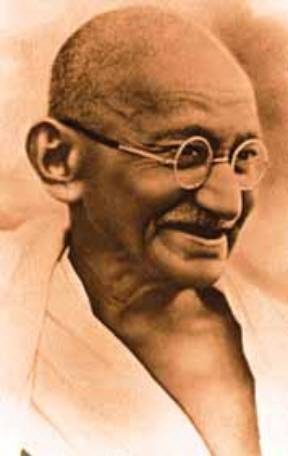
Gandhi and the Sermon on the Mount

gandhi-01

In January of this year a team of us went to Mumbai, India.  While in Mumbai, we visited the house that Mahatma Ghandi lived in for some time in that city.  That house is now a fascinating museum devoted to the life of that fascinating man.  While there I picked up Ghandi’s autobiography.  In it, Ghandi talks about his many relations with Christianity.  One Christian friend in particular encouraged Ghandi to study the New Testament and consider the truthfulness of Christianity.  Ghandi, a Hindu, did precisely that.

Ultimately, Ghandi never became a Christian, in part because of what he saw as the hypocrisy of the Christians he knew.  He once said that if Christians in India really followed Jesus, Hinduism would cease to exist in that country.  What he meant by that was that Hindus would be so overwhelmed by genuine Christianity, if ever they were actually to encounter it, that they would almost certainly convert.  His statement is a pretty condemning indictment of the Christianity that Ghandi encountered, and it challenges us to consider the ways in which our lives either draw people to Christ or repel them from Him.

Even so, Ghandi claimed that there was one part of the teachings of Jesus in particular that he found especially compelling:  the Sermon on the Mount.  He claimed to love the Sermon on the Mount even though he rejected the theological claims of Christianity about Jesus.  Thus, he liked the teachings of Jesus but not the divinity of Jesus or the cross and resurrection of Jesus.  It is a distinction that many non-Christians have tried to uphold:  the Sermon on the Mount without the Jesus of the New Testament.

As we have been working through the Sermon on the Mount, Ghandi’s (and others’) approach seems more and more absurd to me.  In point of fact, if Jesus Christ is not the divine Son of God who laid down His life for His sheep and who came forth victorious from the grave over sin, death, and hell on Easter Sunday morning, then the Sermon on the Mount, far from being a beautiful teaching, is really quite terrifying.  For the key to the Sermon on the Mount is not the teachings divorced from the Teacher.  Rather, the key is that the Sermon on the Mount is only understandable and livable as Christ indwells us and as we are consistently transformed into His image.  Without the cross and the resurrection, the Sermon on the Mount is a message of utter hopelessness, for it is only in and through the perfect righteousness of the Son of God that I can even begin to approach this sermon.

All of this is to say that the sermon cannot be separated from the Sermon Giver.  The Sermon on the Mount can only be lived because of the cross on the mount.  His eternal teachings can only be grasped because of his empty tomb.

Let us continue to study the Sermon on the Mount, and to live it.  That is, let us continue to love Jesus and follow Him.

On the Conundrum of Addressing Sexual Issues From the Pulpit: A Preacher’s Dilemma

I’ve been preaching through the Sermon on the Mount since January of this year.  This Sunday we will look at Matthew 5:27-30.

27 “You have heard that it was said, ‘You shall not commit adultery.’ 28 But I say to you that everyone who looks at a woman with lustful intent has already committed adultery with her in his heart. 29 If your right eye causes you to sin, tear it out and throw it away. For it is better that you lose one of your members than that your whole body be thrown into hell. 30 And if your right hand causes you to sin, cut it off and throw it away. For it is better that you lose one of your members than that your whole body go into hell.

Now, that is a very important passage and one we should not avoid.  I am preparing even now to preach on it.  However, the prospect of preaching on such passages always raises a tricky issue:  namely, how to do so honestly and frankly while there are children in the sanctuary.  I have to deal with this as a pastor and a parent.  So what I’ve done is written the following disclaimer that will be given to our parents this coming Wednesday night:

Dear Parents,
For many weeks now I have been preaching through the Sermon on the Mount on Sunday mornings.  This coming Sunday morning I will be preaching on Matthew 5:27-30.  In that passage, Jesus talks about lust.  As such, the sermon this coming Sunday will deal with adult themes involving lust, adultery, and human sexuality.  While I have no intention of being overly graphic or explicit, please note that the subject matter itself will deal with these kinds of issues.  I am telling you this in case you normally bring your children into the sanctuary.  I don’t really claim to know what age should or shouldn’t be in the sanctuary for this.  Personally, I would think that older kids might benefit from this, but, there too, that is a call for you as parents to make.
Thank you!
Wyman

I made a similar disclaimer Sunday night from the pulpit.  I think I am at peace, in general, with my approach to this, though it always raises interesting questions.  How old should children be before they are presented with these ideas in the context of corporate worship?  How does a pastor address issues of sexual sin and human sexuality in general without being (a) too evasive or (b) too explicit?  Were children present when Jesus preached this on the Mount (almost certainly)?  But did Jesus spend 40 minutes on this passage (almost certainly not)?  But given the encroaching tides of outright sexual anarchy and hyper-permissiveness in our culture, should we not spend 40 minutes on it (we certainly should)?

Furthermore, the problem is confounded by the weird irony that evangelical churches in America today seem to be at one of two extremes:  (a) talking about sex crassly and obsessively or (b) never mentioning it at all.  It seems to me that either extreme is an abuse.  I will say, however, that churches which never address these issues are partly to blame for the rampant, largely secret, sexual sin and guilt that are wreaking havoc in the church today (anybody who does counseling can tell you that there is an elephant in the room on any given Sunday morning, and one we need to talk about).  Surely we must present an honest, balanced, biblical view on these issues?  Even so, churches sometimes do this in the worst, most in-your-face, and almost obscene ways.

Another option is to address these things in retreat settings with men and women.  That is, have a wise Christian woman speak to women about these issues and have the pastor or whomever discuss these with men.  Age grading and appropriate content would need to be recognized in these settings as well.  In that way, embarrassment is removed and the issues can be discussed with appropriate frankness in ways we might not discuss them from the pulpit.  There’s a place for that, for sure, but my main problem with relegating sexual issues primarily or only to such settings is that in divorcing these issues from the context of Christian worship, we de-sacralize them and almost contribute to the air that these things are “unmentionable.”  In point of fact, the Bible speaks to the people of God corporately about these issues in numerous ways and on numerous occasions.

Yet another option is to say that these issues are only appropriate when parents and children discuss them and that the pulpit should stay out of the conversation.  I certainly agree that parents should be addressing these issues primarily, but the notion of a pulpit that is silent on issues of sexuality is, to my mind, a disastrous notion.  Our pulpits must proclaim the whole counsel of God, a counsel which, again, addresses these issue. Furthermore, given what is happening in America today, the suggesting that our pulpits should not speak to human sexuality is naive, foolish, and destructive.

As I say, it is an interesting conundrum.  At the end of the day, I know of no real answer other than to preach God’s word honestly and faithfully while giving parents a head’s up when the subject matter will touch on issues that they might not want their young children to confront yet.

Thoughts?

I am ashamed I have never thought of doing this…

I decided to swing by the 9Marks website and noticed there a post by Greg Gilbert entitled, “Why I Pray Publicly for Other Churches.”  In it, Gilbert mentions his practice of praying for local churches, by name, from the pulpit on Sundays.  He notes that doing so usually causes some concern in those who are unfamiliar with the practice.

Believe it or not, the practice of praying for other churches is so rare in many Christians’ experience that many don’t know exactly how to process it. More than once during my pastorate, a visitor to Third Avenue has walked up to me with a very concerned look to express surprise that such-and-such church is having troubles. After all, why would the pastor of one church pray for another church if there weren’t serious problems afoot there?!

Now, this post has really caused me to think and to feel a number of things.  First, I’m struck by the simple and refreshing obedience of it.  Second, I am saddened to realize that I am not surprised that there would be people who instinctively think, upon hearing a pastor pray for another church, that that church must be having problems.  (What does that say about the church in America today?)  Third, Gilbert’s practice likely goes a long way towards combating (a) tribalism (the defensive posture of local congregations concerned only with their own turf), (b) clergy competition, and (c) consumerism (by showing that we really are not about competing against other congregations in an ecclesial marketplace and we are not trying to demonstrate, in ways subtle or explicit, that we are “better” than other churches).

All of that being said, I do realize that there is likely something deficient in approaching prayer from purely utilitarian perspective.  That is to say, we should not pray for other churches because of the effect it might have on our own or even on the ministry in general.  To do so is to introduce ulterior motives into prayer.  So I’m not offering those effects as the goal or purpose of such praying.  I’m simply saying that those are likely corollary effects.  But above all of these should indeed be a simple desire for God to bless other Christian congregations with growth, health, vitality, and the joy and peace of Jesus.

That’s a brilliant, challenging idea from Greg Gilbert.

I’m ashamed I never thought of something so very simple, so very biblical, and so very Christlike.

Matthew 5:21-26

Matthew 5:21-26

21 “You have heard that it was said to those of old, ‘You shall not murder; and whoever murders will be liable to judgment.’ 22 But I say to you that everyone who is angry with his brother will be liable to judgment; whoever insults his brother will be liable to the council; and whoever says, ‘You fool!’ will be liable to the hell of fire. 23 So if you are offering your gift at the altar and there remember that your brother has something against you, 24 leave your gift there before the altar and go. First be reconciled to your brother, and then come and offer your gift. 25 Come to terms quickly with your accuser while you are going with him to court, lest your accuser hand you over to the judge, and the judge to the guard, and you be put in prison. 26 Truly, I say to you, you will never get out until you have paid the last penny.


The Southern Baptist Convention, of which Central Baptist Church is a part, has seven seminaries.  That is, there are seven seminaries that receive Cooperative Program funding and are officially considered to be “our seminaries.”  Each seminary has a president, as well as other officers.  While our seminaries are not perfect, they are, I believe, by and large, a credit to Southern Baptists.  Even so, they are staffed by human beings and, over the years, problems and conflicts inevitably arise.

One such conflict caught my attention some years ago.  It involved the firing of one of our seminary presidents.  I will not name the president or the seminary, for nobody should be dogged by their sins from years ago, especially when, as a friend of mine who knows him informed me, he genuinely repented and the Lord has done a real work of grace in his heart.

The title of the article I read reporting on his initial confession of wrongdoing to the Board of Trustees (that shortly thereafter led to his firing) was, “_________ Seminary president told to deal with his anger.”  The article reported that this seminary president had a serious problem with anger and that he “repeatedly bec[a]me enraged [and] used profanity with subordinates.”  The president confessed to all of this.  His particular wording struck me as interesting.  He said he had been guilty of “misappropriation of anger.”[1]

That wording (“misappropriation of anger”) is interesting because it means the “misuse” or “wrongful use” of anger.  If the brother in question used anger wrongly, that means it is possible to use anger rightly.  And, of course, we would all agree that there is a rightful appropriation of anger.  We should be angry, for instance, against injustice, the abuse of the weak by the strong, the perversion of the gospel, etc.  There are times when we should be angry.  There are even times when it is wrong not to be angry, as in the examples I just mentioned above.  For instance, in a poem by Jane M. Nirella, she writes:

God,

Grant me the grace

of anger,

Turn me into

a howling wind

to hasten change

where injustice stagnates;

make of me

a tempest

to conquer grinding sorrow.

Hammer at my

hard heart’s door;

smash the lock

of my indifference.

May the grace of anger

transform

my cowardly spirit.

Amen.[2]

In this case, Mrs. Nirella asks the Lord to help her be angry about injustice in the world.  It is almost a cry of repentance for her lack of anger.  We should have righteous anger over evil in the world.  Even so, it must be said that the majority of times we deal with anger it has more to do with pride than righteousness.  More times than not, our anger is a revelation of our own sinfulness and our own distance from God.

A few years ago I reached a point where I felt like I just needed to clear my own head, so I took an afternoon and took a long, slow walk through a place called Calloway Gardens in Columbus, GA.  Calloway Gardens is a lot like Garvan Gardens in Hot Springs.  On the way I picked up, on a whim, a little paperback copy of the sayings of that strange group of men we call “the Desert Fathers.”  The Desert Fathers is a phrase referring to a number of Christian men and women who withdrew from society moved to the desert to live in solitude in the 3rd and 4th centuries.  While they did not seek attention, they got plenty of it, and people soon flocked to see them and hear what they had to say.

As I sat in the little chapel at Calloway Gardens reading this collection of sayings, I was struck by how many times the Desert Fathers mentioned the dangers of anger.  For instance, one of the Desert Fathers named Agatho was prone to say, “Even if an angry man were to revive the dead, he would not be pleasing to God because of his anger.”  Another, a man named Isidore, who was the elder of Scete, was asked by another brother, “Why is it that the demons are so grievously afraid of you?”  He replied, “From the moment I became a monk I have striven to prevent anger rising to my lips.”  Another Desert Father, Ammonas, spent fourteen years praying that he would be free of anger.[3]

Yes, we are more apt to misappropriate anger than to use it appropriately.  And oftentimes, as in the case of the seminary president mentioned above, anger gets the better of us and we end up paying quite a price for it.  It is therefore all the more significant to notice that Jesus, after calling on His followers to exercise righteousness, began his list of illustrations of this exercise of righteous with a warning about anger.

21 “You have heard that it was said to those of old, ‘You shall not murder; and whoever murders will be liable to judgment.’ 22 But I say to you that everyone who is angry with his brother will be liable to judgment; whoever insults his brother will be liable to the council; and whoever says, ‘You fool!’ will be liable to the hell of fire. 23 So if you are offering your gift at the altar and there remember that your brother has something against you, 24 leave your gift there before the altar and go. First be reconciled to your brother, and then come and offer your gift. 25 Come to terms quickly with your accuser while you are going with him to court, lest your accuser hand you over to the judge, and the judge to the guard, and you be put in prison. 26 Truly, I say to you, you will never get out until you have paid the last penny.

I. The “You have heard…But I Say” Formula Establishes the Deity of Jesus (v.21-22)

Before we consider anger in particular, I would like for us to acknowledge a shocking little formula that Jesus uses here and that He will use in the five illustrations following this (that we will consider over the next five weeks).  You can find this formula in the beginning phrases of verses 21 and 22.

21 “You have heard that it was said to those of old… 22 But I say to you…

Why is this shocking?  It is shocking because, in using it, Jesus is claiming deity for Himself.  He is, in fact, claiming to be God.  How so?  Because when Jesus says, “You have heard that it was said,” He is referring to Almighty God.  We know this because God is the one who gave the commandment that Jesus goes on to quote (“You shall not murder; and whoever murders will be liable to judgment.”).  Furthermore, in the five illustrations that follow this one, Jesus begins with that phrase or some variation of it:  “You have heard that it was said to those of old…”  In every case He then mentions one of the commandments.

Of course, it was appropriate and right for a Rabbi to say that:  “You have heard that it was said to those of old…”  What He says next, though, is a very big problem:  “But I say to you…”  While Jesus does not go on to rebut the commandments or reject them (as we saw last week, such a notion was completely absent from His mind), He does interpret them in ways that were unique and surprising.

I do not wish to belabor this point.  I simply want to point out that unless Jesus is Himself God, the phrase, “But I say to you,” after the phrase, “You know what God said before,” is monstrously blasphemous.  If I ever stand before you and say, “God’s Word says this…but I say…” you should run me out on a rail before I finish the sentence.  Why?  Because no human being has the right to say, “But I say to you,” after quoting the words of God.  Only God can rightly say what God means and intends.  Thus, for Jesus to say, “But I say to you,” is for Jesus to say a great deal about Himself.

At this point we also need to recognize an important Old Testament prophecy that was fulfilled by Jesus Christ.  We need to do grasp this now or else we will not understand what Jesus is doing with these, “But I say to you,” phrases.  The passage is in Jeremiah 31:

31 “Behold, the days are coming, declares the Lord, when I will make a new covenant with the house of Israel and the house of Judah, 32 not like the covenant that I made with their fathers on the day when I took them by the hand to bring them out of the land of Egypt, my covenant that they broke, though I was their husband, declares the Lord. 33 For this is the covenant that I will make with the house of Israel after those days, declares the Lord: I will put my law within them, and I will write it on their hearts. And I will be their God, and they shall be my people.

The Lord said that He would establish a new covenant, a new agreement with His people.  One of the central marks of this covenant is that it will reposition the Law of God from outside of man to inside of man’s heart.  Meaning, the fulfillment of the Law will have less to do with adherence to external rules than it has to do with the internal condition of the human heart.  (Though, again, let us remember that Jesus adamantly said He did not come to abolish the Law.)

I would suggest that this was the intent and upshot of the Law all the time, but what the Lord said was that the day would come when that reality (i.e., the reality that the Law is only truly abided by and fulfilled when righteousness takes root in the human heart) would move to the forefront.  Why this is significant for us to understand at this point is because it is here, in the Sermon on the Mount, and in this section of the Sermon in particular, that Jesus begins to define righteousness in terms of heart-health not rule-keeping.  As we will see today and in the weeks to come, Jesus moves us to a deeper understanding of the nature of righteousness and holiness.  And, in so doing, He shows that the new covenant that God said would come had indeed come in Jesus Himself.  This is why, in Luke 22:20, at the last supper, Jesus takes the cup and says, “This cup that is poured out for you is the new covenant in my blood.”

II. Unchecked Anger is a Great Evil That Will Be Judged (v.21-22)

To illustrate how the new covenant under which we live works, Jesus begins with the issue of anger.

21 “You have heard that it was said to those of old, ‘You shall not murder; and whoever murders will be liable to judgment.’

So here we have the Law, the sixth commandment to be exact.  “Do not murder.”  And for ages upon ages, the people of God sought to abide by that commandment.  Of course, it is a measurable commandment.  You have either killed somebody or you haven’t.  At least, that’s how the commandment came to be viewed.  So the scribes and Pharisees, and, likely, everybody, came to view this commandment with a kind of indifference.  After all, most people have probably not killed somebody.  So this became one of the “filler” commandments in the popular consciousness.  “You shall not murder.”  “No problem,” we are inclined to think, “I haven’t murdered anybody!”

That seems clear cut.  But then Jesus adds His, “But I say to you,” and are attention is grabbed.

22 But I say to you that everyone who is angry with his brother will be liable to judgment; whoever insults his brother will be liable to the council; and whoever says, ‘You fool!’ will be liable to the hell of fire.

Do you see what Jesus is doing?  God said, “A new covenant is coming.  The Law will be written on your heart.  The heart is where true righteousness is found.”  And Jesus says, essentially, “Ok, you haven’t murdered anybody.  But what is the heart issue that leads to murder?  It is anger.  To have anger in your heart toward another person is to murder him.  What good is it if you have not murdered with your hands if you are consistently murdering with your heart?”

The wording Jesus uses here is significant. Charles Quarles notes that “the term used for ‘anger’ (orgizo) here is a very intense term.  Elsewhere in Matthew’s Gospel, the term is used only of anger that is a prelude to destructive behavior…The verse is never used to describe the anger of Jesus.”  Further, Quarles points to the fact that the word is a present participle, which denotes an ongoing, progressive state, to suggest that the word is used by Jesus to refer to “enduring anger as well as destructive rage.”[4]

So the anger Jesus is speaking of is the kind of anger that would lead to murder.  This is a deep spirit of anger, a kind of growing rage that slowly grips the angry person.  I do not say this to excuse our small bursts of anger.  In fact, the small bursts of anger we indulge lead inevitably to this deep spirit of anger.  Anger also leads to murder, but, before it gets there, it usually manifests itself verbally in insults.

22b …whoever insults his brother will be liable to the council; and whoever says, ‘You fool!’ will be liable to the hell of fire.

A.T. Robertson says that (raca) is an Aramaic word meaning “empty” and that the word for “You fool!” (more) is a Greek word meaning dull or stupid.  What is more, the word raca contains a phonetic insult in that the Aramaic pronunciation of it sounds like a man clearing his through to spit in another man’s face.[5]  Roberson quotes Bruce to the effect that raca communicates contempt for a man’s head while more, “fool,” communicates contempt for a man’s heart.[6]  So we are speaking here of anger that emanates from an enraged heart and that manifests itself initially in verbal assaults but would, if it could, manifest itself in physical assault.

If you think that you can traffic in verbal assaults without going all the way to physical assaults, please note that Jesus is putting insults as the first step in an inherently progressive process that leads to murder itself.  The heart that would insult is in fact the heart that would kill.  It does no good to say that you have merely insulted a human being, but you haven’t killed him.  In fact, an insult is nothing less than character assassination and an effort to kill a man’s name.  It is a form of murder, and it may, in fact, lead to murder.

Anger is progressive in the way that lust is progressive.  It is never satisfied.  This is likely why, if you read verse 22 carefully, the punishments for anger that Jesus mentions are increasingly more and more intense.

22 But I say to you that everyone who is angry with his brother will be liable to judgment; whoever insults his brother will be liable to the council; and whoever says, ‘You fool!’ will be liable to the hell of fire.

If you’re angry, you’re liable to judgment in court.  If you call your brother raca you will have to stand before the Sanhedrin, the high Jewish court.  And if you call a man a fool you are “liable to the hell of fire.”

We should see anger for the ugly thing it is.  Martin Luther, a man who struggled with anger himself, said this:

We indulge in anger, rage, and villainy as though we were doing a fine and noble thing.  Really, it is high time that we started to deplore and bewail how much we have acted like rogues and like unseeing, unruly, and unfeeling persons who kick, scratch, tear, and devour one another like furious beasts and pay no heed to this serious and divine command, etc.[7]

It is true that not all anger is sinful anger.[8]   It is technically true.  Experientially, though, we rarely show ourselves to be responsible stewards of anger.

III. The Solution to Anger is a Transformed Heart Confirmed by Humble Action (v.23-26)

How, then, do we guard ourselves against this pernicious evil of anger?  Jesus shows us the way in what He says next.

23 So if you are offering your gift at the altar and there remember that your brother has something against you, 24 leave your gift there before the altar and go. First be reconciled to your brother, and then come and offer your gift. 25 Come to terms quickly with your accuser while you are going with him to court, lest your accuser hand you over to the judge, and the judge to the guard, and you be put in prison. 26 Truly, I say to you, you will never get out until you have paid the last penny.

Let’s unpack these amazing words by listing the steps to combating anger that we find in them.

(1) Realize That Sinful Anger Disrupts Your Relationship With God (v.23)

It is significant that, in Jesus’ example, the person realizes his anger during worship.  He is offering a sacrifice at the Temple in Jerusalem when he remembers that another person has reason to be offended with him.

23 So if you are offering your gift at the altar and there remember that your brother has something against you, 24 leave your gift there before the altar and go.

So this happens at church!  Have you ever had that experience?  Have you ever been singing a hymn about love and forgiveness and God’s grace and then realized that you have wronged another person?  In the immediate context, you have wronged them by harboring sinful anger against them.  But it could be any wrong.

The point to note here is that Jesus cautions us not to offer our offering if we remember that we have wronged another person.  This is because the undealt-with anger renders our offering null and void.  Sinful anger and conflict disrupts our relationship with God.  This explains to us what Peter meant when he wrote this in 1 Peter 3:

7 Likewise, husbands, live with your wives in an understanding way, showing honor to the woman as the weaker vessel, since they are heirs with you of the grace of life, so that your prayers may not be hindered.

Brothers and sisters in Christ, the Lord Jesus is much more interested in the condition of your heart than in the volume of your hymn singing or the amount of your giving.  If you have wronged another person, your offerings to God, whatever they may be, will be stymied.

(2) Go to the Person You Have Wronged (v.24)

So you realize that somebody has something legitimate against you.  What then?

24 leave your gift there before the altar and go. First be reconciled to your brother, and then come and offer your gift.

Go to the person you have wronged.  The longer you wait, the harder it will become and the more your relationship will be damaged.  If you are in the wrong, go the person and make it right.  Apologize.  Ask their forgiveness.  Be reconciled.  If you are not sure that you are in the wrong but think you might be, go anyway and talk it out.  If you are convinced you are not in the wrong, ask the Lord to search your heart and make sure one way or another.

Let me just say at this point that it is amazing how much conflict ensues in churches because people will not talk.  Christian people, for some reason, have a great deal of trouble simply talking to one another.  Your personal relationships, as well as the unity of the body of Christ, are worth the initial awkwardness of the conversation you need to have.

(3) Go Quickly and Try to Make Amends (v.25a)

Next, go quickly.

25 Come to terms quickly with your accuser while you are going with him to court

Jesus recommends hopping up in the middle of church and going out to make things right.  There is no delay in His instructions.  It is gloriously awkward!  Paul says the same in Ephesians 4:

26 Be angry and do not sin; do not let the sun go down on your anger, 27 and give no opportunity to the devil.

Why should we immediately get to work when the Lord brings us conviction in this matter?  Because the devil has immediately gotten to work in the moments you are not speaking.

(4) Realize That Undealt With Anger and Wrong Will Have Its Punishment (v.25b-26)

Jesus spoke of the certainty of punishment in v.25b-26:

25 Come to terms quickly with your accuser while you are going with him to court, lest your accuser hand you over to the judge, and the judge to the guard, and you be put in prison. 26 Truly, I say to you, you will never get out until you have paid the last penny.

Next, it is important that we reject the notion that undealt-with anger is no big deal, that it will just fade away, and that it will carry no consequences.  As a matter of fact, it will have its punishment, both internally and externally.  Internally, doctors say that unresolved anger can have physical results on your heart.  It will also feed a further spirit of anger that will slowly consume your whole being.  Externally, it will erode your relationships and distort your very face.  In terms of earthly punishment, it may very well lead to devastating consequences here.  Regardless, it will ultimately be dealt with at the divine bar of justice if not repented of and confessed.

(5) Learn to Combat Anger by Allowing the Charitable Patience and Hope of Jesus to Take Root in Your Heart

Finally, it is important to understand that just as anger leads to a disposition of anger, so love leads to a disposition of love.  That is why it is so very important that we cultivate individual hearts of love as well as a corporate spirit of love.  In Ephesians 4, Paul put it like this;

1 I therefore, a prisoner for the Lord, urge you to walk in a manner worthy of the calling to which you have been called, 2 with all humility and gentleness, with patience, bearing with one another in love, 3 eager to maintain the unity of the Spirit in the bond of peace. 4 There is one body and one Spirit—just as you were called to the one hope that belongs to your call— 5 one Lord, one faith, one baptism, 6 one God and Father of all, who is over all and through all and in all. But grace was given to each one of us according to the measure of Christ’s gift.

Notice the positive virtues that combat a spirit of anger:  humility, gentleness, patience, love, eagerness for unity, peace.  Why?  Because we are one body in Jesus Christ!

Would you say that your personal disposition lends itself to congregational peace or congregational discord?  It’s in the little things that the battle is won or lost.

For instance, consider how developing the habit of charitable compliment can combat a spirit of anger.  What if you simply determined (a) to speak no ill of any person and (b) to speak good instead.  People used to say of the Scottish preacher Alexander Whyte, “Watch out for Whyte! All his geese become swans.”[9]  That is, he could find something good to say about everybody.  In doing so, he kept his own heart from anger and he did his part to fight a spirit of anger as well.

Finally, let us, as a church, help one another to combat anger.  Let us calm one another when we become tempestuous.  Let us reason with one another when we fall into blind rage.  Let us stir one another up to love and patience and kindness, realizing that we’re all on the same journey to Christlikeness, a journey in which we need the loving support of one another.  As Stanley Hauerwas put it:

Anger and lust are bodily passions.  We simply are not capable of willing ourselves free of anger or lust.  Jesus does not imply that we are to be free of either anger or lust; that is, he assumes that we are bodily beings.  Rather, he offers us membership in a community in which our bodies are formed in service to God and for one another so that our anger and our lust are transformed…Jesus, however, is not recommending that we will our way free of lust or anger, but rather he is offering us membership in a people that is so compelling we are not invited to dwell on ourselves or our sinfulness.[10]

Let us become that kind of community.


[1]  “Midwestern Seminary president told to deal with his anger”, The Christian Index (August 19, 1999), p.2.

[2]  https://findarticles.com/p/articles/mi_m1141/is_34_36/ai_63714608

[3] Thomas Merton, The Way of the Desert (New York, NY:  New Directions), p.68,30,19.

[4] Charles Quarles, The Sermon on the Mount. NAC Studies in Bible & Theology. Ed., E. Ray Clendenen (Nashville, TN: B&H Academic, 2011), p.108-109.

[5] Carl G. Vaught, The Sermon on the Mount. (Waco, TX: Baylor University Press, 2001), p.65.

[6] A.T. Robertson, Word Pictures in the New Testament. Vol.1. (Nashville, TN: Broadman Press, 1930), p.43.

[7] Martin Luther.  A Simple Way to Pray.  (Louisville:  Westminster John Knox Press, 2000), p.47-48.

[8] It is true that not all anger is sinful anger, but Boice wisely notes that this fact “does not help us much,  After pointing to biblical examples of righteous anger, Boices says that “it is not very often that our anger is like that; and, if we are honest, we must admit that far more often we are angry at some wrong done against ourselves, real or imaginary, some insult, or some undeserved neglect.”James Montgomery Boice, The Sermon on the Mount. (Grand Rapids, MI: Baker Books, 1972), p.93.

[9] R. Kent Hughes, The Sermon on the Mount. (Wheaton, IL: Crossway Books, 2001), p.94.

[10] Stanley Hauerwas, Matthew. Brazos Theological Commentary on the Bible (Grand Rapids, MI: Brazos Press, 2006), p.69.

On the Alleged Imposition of “Our Religious Views” on Secular Society

I was talking to a friend of mine the other day and the issue of politics in general and gay marriage in particular came up.  In the midst of our conversation, my friend noted that the whole issue raised the question of whether or not it was appropriate for Christians to try to impose our religious viewpoint on secular society.  It is a statement I hear frequently and often, especially on news websites in comment sections.

That has always bothered me, and I think I’m starting to figure out why.

If the statement means that the Church should not seek the violent overthrow of the United States government and the establishment of a theocracy in the United States of America, of course I would agree.  I know of no Christian calling for such and I know of no arena in which he would not be rebuked or laughed out of the room for the suggestion.  I do not deny that such an arena exists somewhere, but it exists on the utter fringes where all such kookiness of whatever stripe exists.

If the statement means that individual religious groups should not seek the national codification and enactment of their particular ecclesial traditions on the American public, I agree again.  I would be the first to oppose a movement to make the Southern Baptist Convention our national denomination.  The Constitution speaks clearly against such a notion, and, even if it did not, I would oppose it anyway as an absurd notion in a free country.

So if the statement about not imposing our religious views on secular society does not refer to a literal overthrow of the government or the creation of a state church, the only other avenue it can refer to is the ballot box:  either in the sense of electing Christian officials or in the sense of individual Christians voting their consciences in the voting booth from a Christian perspective.  In the case of something like gay marriage, the argument is being employed to suggest that voting from a Christian perspective on the definition of marriage is an unjust imposition.  But if the statement refers to this, then I have real qualms for these reasons:

  • I have a sneaking suspicion that the idea of “the Church’s religious views” and “everybody else’s secular views” is really carrying the idea of “the Church’s special interest, niche, idiosyncratic views” and “everybody else’s normal, neutral views.”  In point of fact, there are no “secular” views.  There are just views, Christian or otherwise.  Which leads me to this…
  • Everybody, from the most faithful Christian to the most strident atheist, is voting from a particular ideological vantage point.  There are no neutral views in America.  Every view is a view from a particular perspective.  Which leads me to this…
  • Every vote is therefore, by its nature, the singular, attempted imposition of a particular viewpoint on the American process.  A purely secular person is voting the ideology of post-Enlightenment modernity.  A purely atheistic person is voting the ideology of mechanistic materialism.  A pro-gay-marriage extremist is voting the ideology of 21st century neo-hedonistic sexual anarchy and moral relativism.  A New Testament Christian is voting from the perspective of Christian orthodoxy.  Which raises the question…
  • Why does nobody ever say to the thoroughgoing materialist, “Do not think you can impose your view of naked scientism, atheism, and materialism on the American public”?  But that is not a statement I would even make, because…
  • All votes emanate from ideological premises and the right to vote from whatever perspective is a guarded and cherished right.  There are no epistemological vacuums from which to vote, and there literally is no vote without attempted individual imposition of the ideology which has gripped the voter.

Therefore, the statement, “Christians should not seek to impose their religious views on others,” is not quite so simple as it sounds, especially if it is assuming the mythical notion of a vote of non-imposition and especially if it is assuming that Christian ideology is the only ideology from which one might vote.

To conclude, America is a melting pot not only of people but of viewpoints.  I assume that people vote who they are.  Christianity is not afraid to compete in the arena of ideas.  In fact, the truth of the gospel has been gripping minds and hearts for two millennia now.  But the suggestion that “the Christian voter” is an anomaly, or is violating some unspoken rule if he votes from his vantage point, is an absurdity, the practical implications of which, if pushed to their logical conclusion, would derail the entire American political process.

Exodus 4:1-17

Exodus 4:1-17

1 Then Moses answered, “But behold, they will not believe me or listen to my voice, for they will say, ‘The Lord did not appear to you.’” 2 The Lord said to him, “What is that in your hand?” He said, “A staff.” 3 And he said, “Throw it on the ground.” So he threw it on the ground, and it became a serpent, and Moses ran from it. 4 But the Lord said to Moses, “Put out your hand and catch it by the tail”—so he put out his hand and caught it, and it became a staff in his hand— 5 “that they may believe that the Lord, the God of their fathers, the God of Abraham, the God of Isaac, and the God of Jacob, has appeared to you.” 6 Again, the Lord said to him, “Put your hand inside your cloak.” And he put his hand inside his cloak, and when he took it out, behold, his hand was leprous like snow. 7 Then God said, “Put your hand back inside your cloak.” So he put his hand back inside his cloak, and when he took it out, behold, it was restored like the rest of his flesh. 8 “If they will not believe you,” God said, “or listen to the first sign, they may believe the latter sign. 9 If they will not believe even these two signs or listen to your voice, you shall take some water from the Nile and pour it on the dry ground, and the water that you shall take from the Nile will become blood on the dry ground.” 10 But Moses said to the Lord, “Oh, my Lord, I am not eloquent, either in the past or since you have spoken to your servant, but I am slow of speech and of tongue.” 11 Then the Lord said to him, “Who has made man’s mouth? Who makes him mute, or deaf, or seeing, or blind? Is it not I, the Lord? 12 Now therefore go, and I will be with your mouth and teach you what you shall speak.” 13 But he said, “Oh, my Lord, please send someone else.” 14 Then the anger of the Lord was kindled against Moses and he said, “Is there not Aaron, your brother, the Levite? I know that he can speak well. Behold, he is coming out to meet you, and when he sees you, he will be glad in his heart. 15 You shall speak to him and put the words in his mouth, and I will be with your mouth and with his mouth and will teach you both what to do. 16 He shall speak for you to the people, and he shall be your mouth, and you shall be as God to him. 17 And take in your hand this staff, with which you shall do the signs.”


Excuses are terribly easy to make, especially when they are employed to avoid something very unpleasant.  It is difficult to imagine many things more unpleasant than the prospect Moses faced of having to walk back into Egypt, face the Pharaoh whose house he had abandoned and whose laws he had broken in killing an Egyptian, and face his own people who neither saw him as a leader nor felt compelled to.  Even so, that is precisely what the Lord God called Moses to do.  Moses responds to God’s call on his life by offering excuses and objections.  Let us consider these this evening.

Objection #1:  The Israelites May Not Believe Moses (v.1-9)

The first objection was true enough as far as it went.

1 Then Moses answered, “But behold, they will not believe me or listen to my voice, for they will say, ‘The Lord did not appear to you.’”

If you listen to this objection closely, it really has more than one component.  Starting with the last component first, Moses fears the incredulity and skepticism of the Israelites:  “…they will say, ‘The Lord did not appear to you.’”  It is a reasonable fear.  God speaking to Moses through a burning bush is indeed one of the stranger occurrences of the Bible, and I suspect that any of us might be a little hesitant at having to recount the story to people not predisposed to trust us anyway.

Throughout my years as a pastor I have had numerous church members pull me aside in private and tell me of God speaking to them in odd and unusual ways.  Almost without fail they begin their testimonies with something like this:  “Now, I know this sounds crazy, and you may think I’m crazy after I tell you this, but the other day…”  I once had a lady tell me how the Lord spoke to her in a dream.  After telling me the dream, she said, “Pastor, I’m not crazy.  I promise.”

For myself, I am always quick to assure those who have had these experiences that I have literally no reason not to believe them as long as the content of the dream or vision does not violate the clear teachings of Scripture.  To be sure, we should be careful with these kinds of things, but let us be clear on this fact:  God has appeared to His people throughout time in ways diverse and fascinating.  He spoke to Moses through a burning bush.  I have no reason to think He does not occasionally speak to His people today in strange ways as well.

Moses feared the skepticism of the Israelites.  However, I rather suspect that the first part of his objection is the real crux of the matter:  “But behold, they will not believe me or listen to my voice.”  He is speaking here from experience.  Perhaps you remember Moses’ first foray into leadership over the Hebrews.  It is recorded in Exodus 2:

13 When he went out the next day, behold, two Hebrews were struggling together. And he said to the man in the wrong, “Why do you strike your companion?” 14 He answered, “Who made you a prince and a judge over us? Do you mean to kill me as you killed the Egyptian?”

That’s not exactly the most ringing endorsement.  Moses feared the rejection of those he was supposed to lead.  In his mind, he had every reason to think that this was going to go poorly.  However, God introduces another reason into the mix, and this was a reason to believe it would go just as God said it would.  Let us observe the Lord’s response to Moses.

2 The Lord said to him, “What is that in your hand?” He said, “A staff.” 3 And he said, “Throw it on the ground.” So he threw it on the ground, and it became a serpent, and Moses ran from it. 4 But the Lord said to Moses, “Put out your hand and catch it by the tail”—so he put out his hand and caught it, and it became a staff in his hand— 5 “that they may believe that the Lord, the God of their fathers, the God of Abraham, the God of Isaac, and the God of Jacob, has appeared to you.” 6 Again, the Lord said to him, “Put your hand inside your cloak.” And he put his hand inside his cloak, and when he took it out, behold, his hand was leprous like snow. 7 Then God said, “Put your hand back inside your cloak.” So he put his hand back inside his cloak, and when he took it out, behold, it was restored like the rest of his flesh. 8 “If they will not believe you,” God said, “or listen to the first sign, they may believe the latter sign. 9 If they will not believe even these two signs or listen to your voice, you shall take some water from the Nile and pour it on the dry ground, and the water that you shall take from the Nile will become blood on the dry ground.”

What is happening here?  The Lord is doing a couple of things in this response, and both are important.  The most obvious thing the Lord is doing is demonstrating His power to Moses so that Moses would believe and know that the God who called Him was the God who is able to accomplish the task to which He called him.  This is no weak God.  As we saw last week, God was not risking.  God did not have His fingers crossed, hoping this would all work out.  God knew what He was doing.  What is more, God was able to do what He called Moses to do.  Thus, God turned Moses’ staff into a snake and back into a staff again and God turned Moses’ hand leprous and back to normal again to demonstrate to Moses that He is a powerful God.

But there’s something else here, something that perhaps we might miss if we don’t think carefully.  Notice that the two demonstrations of power (the staff and the hand) and the one promised demonstration of power (turning the Nile water into blood) all would have frightened Moses as well.  It is not just that God wants Moses to see His power.  It is also that God needs Moses himself to fear His power.

Why is this so?  It is so because the first decision a minister of God has to make is a decision concerning who he is going to fear more:  God or the congregation.  Israel was Moses’ congregation.  It is a daunting and humbling thing to try to lead God’s people.  It is a daunting and humbling thing to dare to say, “Thus saith the Lord,” and no true minister will dare to say that unless he is actually speaking God’s revealed Word.  Even then, there is a subtle but powerful temptation to edit the message so as not to offend or anger the audience.

Many minsters have the same relationship with their congregations as tiger trainers do with their tigers:  they know they’re called to lead them, but they fear pushing too far lest the tiger have the trainer for lunch.  It is a tragic mentality to fall into, especially as the Bible does not present the minister/congregation relationship in terms of trainer and tiger but rather in terms of shepherd and sheep.  But the question remains:  who will God’s ministers fear more?  What will be the driving motivation of a leader’s ministry?

In truth, God needs leaders who fear Him above anybody else.  God needs leaders who know the awesome power of a Holy God.  Moses needed to reach the point where his fear of God was greater than his fear of either Pharaoh or the Israelites.  It is the same point that Jesus needs us to reach, as He says in Matthew 10:

26 “So have no fear of them, for nothing is covered that will not be revealed, or hidden that will not be known. 27 What I tell you in the dark, say in the light, and what you hear whispered, proclaim on the housetops. 28 And do not fear those who kill the body but cannot kill the soul. Rather fear him who can destroy both soul and body in hell. 29 Are not two sparrows sold for a penny? And not one of them will fall to the ground apart from your Father. 30 But even the hairs of your head are all numbered. 31 Fear not, therefore; you are of more value than many sparrows. 32 So everyone who acknowledges me before men, I also will acknowledge before my Father who is in heaven, 33 but whoever denies me before men, I also will deny before my Father who is in heaven.

Let me ask you:  who do you fear more, God or man?

Objection #2:  Moses’ Lack of Eloquence (v.10-12)

Moses’ objections seem to deteriorate in value and quality as he voices them.  Thus, his next objection was that he simply wasn’t a good speaker.

10 But Moses said to the Lord, “Oh, my Lord, I am not eloquent, either in the past or since you have spoken to your servant, but I am slow of speech and of tongue.”

One senses that Moses was grasping at straws at this point.  The Lord’s reaction was telling and needed:

11 Then the Lord said to him, “Who has made man’s mouth? Who makes him mute, or deaf, or seeing, or blind? Is it not I, the Lord? 12 Now therefore go, and I will be with your mouth and teach you what you shall speak.”

In many ways, this exchange is reminiscent of the first.  Moses objects that he is unsure of what might happen and the Lord reminds him that He, the Lord, has the power to accomplish the task.  “Who has made man’s mouth?” is therefore a crucial question.  “You did!” is the only honest answer.  In asking this question of Moses, God is reminding Moses that it isn’t simply a matter of Moses’ mouth and Moses’ power and Moses’ strength.  The Lord would speak through Moses.

It is interesting to see how often great men of God were aware of the limitations of their own mouths.  In Jeremiah 1, we find an almost identical exchange:

4 Now the word of the Lord came to me, saying,

5 “Before I formed you in the womb I knew you, and before you were born I consecrated you;
I appointed you a prophet to the nations.”

6 Then I said, “Ah, Lord God! Behold, I do not know how to speak, for I am only a youth.”

7 But the Lord said to me, “Do not say, ‘I am only a youth’;
for to all to whom I send you, you shall go,
and whatever I command you, you shall speak.

8 Do not be afraid of them,
for I am with you to deliver you,
declares the Lord.”

9 Then the Lord put out his hand and touched my mouth. And the Lord said to me,

“Behold, I have put my words in your mouth.

10 See, I have set you this day over nations and over kingdoms,
to pluck up and to break down,
to destroy and to overthrow,
to build and to plant.”

11 And the word of the Lord came to me, saying, “Jeremiah, what do you see?” And I said, “I see an almond branch.” 12 Then the Lord said to me, “You have seen well, for I am watching over my word to perform it.”

The Lord tells Moses that He will be with his mouth.  The Lord tells Jeremiah that He will put His words in his mouth.  Most dramatically, as Isaiah 6 records, the Lord touched Isaiah lips to empower him to speak:

5 And I said: “Woe is me! For I am lost; for I am a man of unclean lips, and I dwell in the midst of a people of unclean lips; for my eyes have seen the King, the Lord of hosts!” 6 Then one of the seraphim flew to me, having in his hand a burning coal that he had taken with tongs from the altar. 7 And he touched my mouth and said: “Behold, this has touched your lips; your guilt is taken away, and your sin atoned for.” 8 And I heard the voice of the Lord saying, “Whom shall I send, and who will go for us?” Then I said, “Here I am! Send me.”

God is in the business of touching the mouths of those He would have speak!  Furthermore, it would seem that a recognition of our inability to speak the Word of God in our own strength is actually a prerequisite for usefulness!  Paul reached the same point of recognition concerning his own inadequacy to speak.  In the second chapter of 1 Corinthians, Paul said this:

1 And I, when I came to you, brothers, did not come proclaiming to you the testimony of God with lofty speech or wisdom. 2 For I decided to know nothing among you except Jesus Christ and him crucified. 3 And I was with you in weakness and in fear and much trembling, 4 and my speech and my message were not in plausible words of wisdom, but in demonstration of the Spirit and of power, 5 so that your faith might not rest in the wisdom of men but in the power of God.

This is the great choice:  either we will speak out of our own power or we will speak out of the power God grants us.  If we will trust in our own power, we will freeze in fear and never speak.  If we trust in God’s power, He will give us the words.  It is important to realize that this truth is not only for prophets or preachers or teachers.  In Matthew 10, Jesus says we all need to understand this:

16 “Behold, I am sending you out as sheep in the midst of wolves, so be wise as serpents and innocent as doves. 17 Beware of men, for they will deliver you over to courts and flog you in their synagogues, 18 and you will be dragged before governors and kings for my sake, to bear witness before them and the Gentiles. 19 When they deliver you over, do not be anxious how you are to speak or what you are to say, for what you are to say will be given to you in that hour. 20 For it is not you who speak, but the Spirit of your Father speaking through you.

Moses needed to learn this crucial lesson.  So do you and I!

Objection #3:  Moses’ Fear and Uncertainty (v.13-17)

Moses’ last objection is perhaps the most pitiful.

13 But he said, “Oh, my Lord, please send someone else.”

This is roughly equivalent to, “I just don’t want to do it, Lord!”  I suspect, had there been a Tarshish to run to, Moses would have done just as Jonah did.  It was not something he wanted to do.  He felt utterly inadequate.  He felt ill-equipped.  He felt weak.  He felt uncertain.  He was afraid.  And even though God had given Moses every theological and demonstrable evidence that He would be with him, Moses still hesitated at the threshold of his calling.

I do not say this in judgment of Moses.  Who among us would not have had the same struggle?  The spirit might have been willing, but Moses’ flesh was week.  At this objection, God speaks in anger to Moses.

14 Then the anger of the Lord was kindled against Moses and he said, “Is there not Aaron, your brother, the Levite? I know that he can speak well. Behold, he is coming out to meet you, and when he sees you, he will be glad in his heart. 15 You shall speak to him and put the words in his mouth, and I will be with your mouth and with his mouth and will teach you both what to do. 16 He shall speak for you to the people, and he shall be your mouth, and you shall be as God to him. 17 And take in your hand this staff, with which you shall do the signs.”

There are two realities at work here.  First, God, in His graciousness, decides to give Moses a helper.  He decides to send along Aaron, Moses’ brother.  The Lord has compassion on Moses.

Even so, note that God’s giving of a helper does not remove the calling that God placed on Moses’ life in particular.  This is not a victory for Moses.  He does not argue God out of His decision.  Note the wording.  Even though Moses will now have Aaron, Moses still must speak the words of God.  In verse 15, we see that Moses must speak to Aaron “and put the words in his mouth.”  While God will be with both of them, He says in verse 16 that Aaron “shall be your mouth, and you shall be as God to him.”

This is critical.  It means that although God condescends to give Moses a helper, that helper does not remove the mantle that God has placed specifically on Moses’ shoulders.  Moses still must go.  Moses still must speak.

There is something here about the inviolable nature of a call.  I believe that when God has called you to do something, that calling is yours.  You will not know peace until you do it.  It is simply a matter of accepting God’s will for you life.  He may well turn to another to accomplish the task, but He does not say, “Just forget it, then!” in doing so.  Either you will come to terms with what God is calling you to do, or you will not know His peace.

It would perhaps be helpful here to conclude with yet another example of One who had a calling on His life but struggled with the pain of it.  His struggle was in a garden called Gethsemane.  It is found in Matthew 26:

36 Then Jesus went with them to a place called Gethsemane, and he said to his disciples, “Sit here, while I go over there and pray.” 37 And taking with him Peter and the two sons of Zebedee, he began to be sorrowful and troubled. 38 Then he said to them, “My soul is very sorrowful, even to death; remain here, and watch with me.” 39 And going a little farther he fell on his face and prayed, saying, “My Father, if it be possible, let this cup pass from me; nevertheless, not as I will, but as you will.” 40 And he came to the disciples and found them sleeping. And he said to Peter, “So, could you not watch with me one hour? 41 Watch and pray that you may not enter into temptation. The spirit indeed is willing, but the flesh is weak.” 42 Again, for the second time, he went away and prayed, “My Father, if this cannot pass unless I drink it, your will be done.”

Two times Jesus acknowledges the pain of His task.  Two times He subjugates what concerns He had to the will of God.  “My Father, if this cannot pass unless I drink it, your will be done.”

It is a powerful picture.  Jesus, the God-Man, knew the pain of a hard calling.  His calling was harder than any we can imagine or any that we will be called upon to undertake.  Yet Jesus desired only to do the will of the One who sent Him.  “Your will be done.”

Moses had to reach that point where he could say those words:  “Your will be done.”

Isaiah had to reach the point where he could say those words:  “Your will be done.”

Jeremiah had to reach the point where he could say those words:  “Your will be done.”

Jonah had to reach the point where he could say those words:  “Your will be done.”

Paul had to reach the point where he could say those words:  “Your will be done.”

The Lord Jesus Himself said those words:  “Your will be done.”

All that remains is for you and me to say those words:  “Your will be done.”

Will you say them?

Will you go?