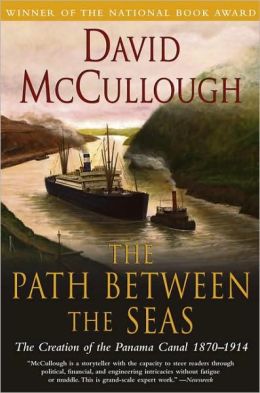
David McCullough’s The Path Between the Seas: The Creation of the Panama Canal, 1870-1914

9780671244095_p0_v1_s260x420Just a quick note of praise for David McCullough’s amazing book The Path Between the Seas: The Creation of the Panama Canal, 1870-1914.  I actually listened to this book being read by my Kindle over the last many months of driving. I must say it is absolutely astounding in its breadth, its detail, and its ability to maintain interest even though it is so very long.  The Panama Canal, as McCullough tells the story, is a symbol of all that is great and all that lamentable about human society:  the amazing ingenuity and determination, the astounding cruelty and injustice, the capacity to care about human progress, and the raw caprice of political power manipulation.  It’s all here in this one story of the epic construction of this one canal.  A great, great book. Highly recommended.

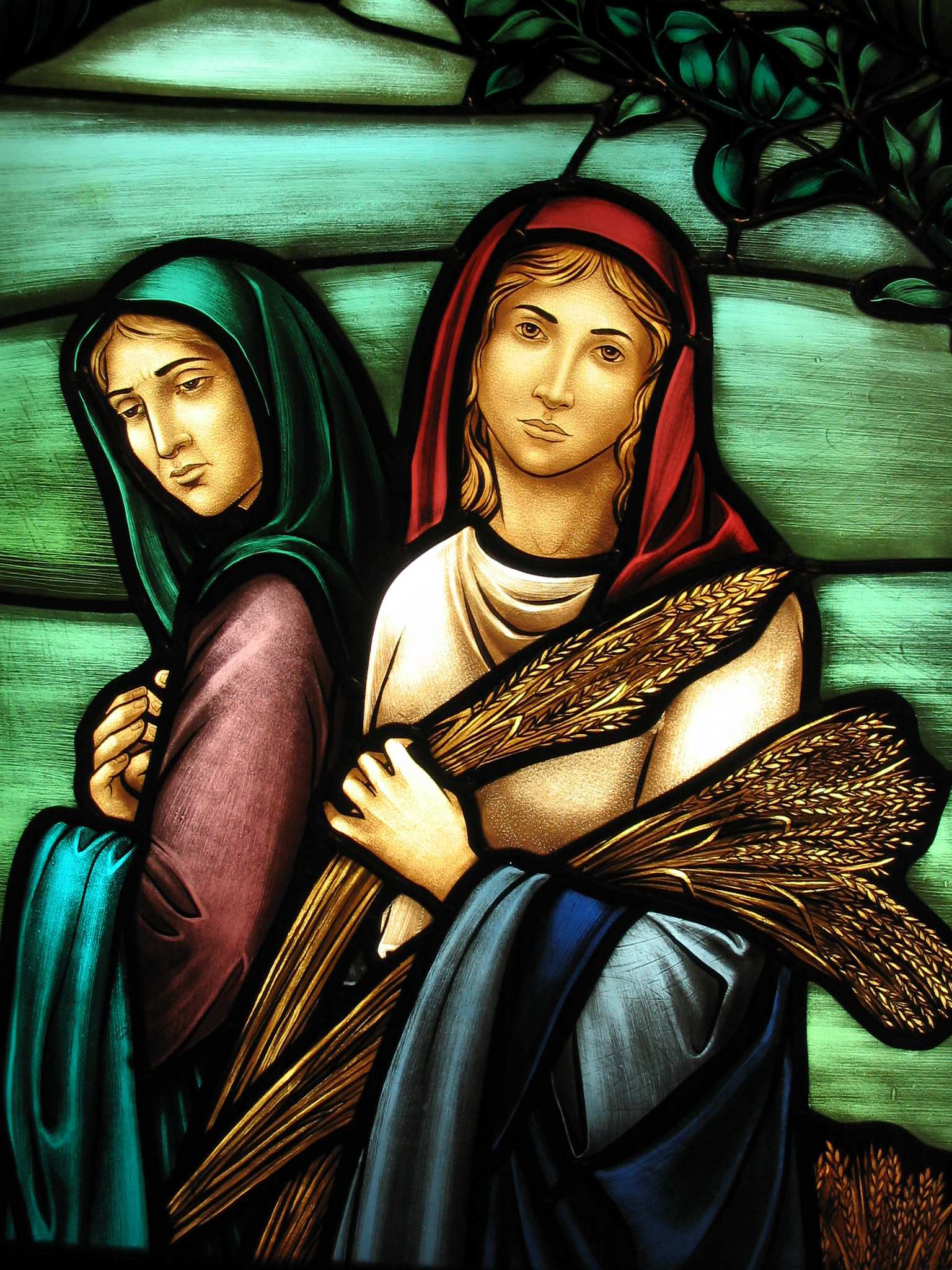
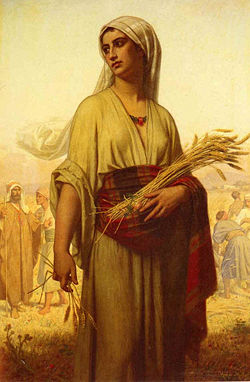
Ruth 1:6,19-22

Ruth-and-Naomi-St-JamesRuth 1:6,19-22

6 Then she arose with her daughters-in-law to return from the country of Moab, for she had heard in the fields of Moab that the Lord had visited his people and given them food.

19 So the two of them went on until they came to Bethlehem. And when they came to Bethlehem, the whole town was stirred because of them. And the women said, “Is this Naomi?” 20 She said to them, “Do not call me Naomi; call me Mara, for the Almighty has dealt very bitterly with me. 21 I went away full, and the Lord has brought me back empty. Why call me Naomi, when the Lord has testified against me and the Almighty has brought calamity upon me?” 22 So Naomi returned, and Ruth the Moabite her daughter-in-law with her, who returned from the country of Moab. And they came to Bethlehem at the beginning of barley harvest.

Have you ever been in a store or country restaurant or something along those lines and seen this sign: “Lost Dog. Three legs. Blind in one eye. Missing right ear. Tail broken. Accidentally neutered. Answers to the name ‘Lucky’”?

The joke is, of course, in the surprising disjunction between the dog’s description and the dog’s name.

Naomi would have gotten that joke. In her own mind, Naomi was that joke. For Naomi means “pleasantness” or “sweetness,” but her life had become anything but. In our text, Naomi, “pleasantness,” returned to her home broken and defeated. More than that, she returned bitter. This is because she believed that God had dealt bitterly with her.

Nonetheless, she returned to the small town of Bethlehem, her hometown. She returned with her foreign daughter-in-law, Ruth, in tow. And when she returned, the townswomen gathered around to gawk at her.

This is the scene that unfolds before us. If we read it carefully, we will be able to understand the reason for Naomi’s bitterness and we will be better equipped to evaluate our own, should bitterness come into our lives.

Naomi’s bitterness was the result of very real pain and loss.

I do not wish to sit aloof and cast cold judgment on Naomi. To be sure, I will judge a bit, but I will do so very carefully. That is because whatever blind spots Naomi had developed, there was indeed very real pain and very real loss behind the frame of mind in which we find her in our text.

19 So the two of them went on until they came to Bethlehem. And when they came to Bethlehem, the whole town was stirred because of them. And the women said, “Is this Naomi?” 20 She said to them, “Do not call me Naomi; call me Mara, for the Almighty has dealt very bitterly with me. 21 I went away full, and the Lord has brought me back empty. Why call me Naomi, when the Lord has testified against me and the Almighty has brought calamity upon me?”

“I went away full, and the Lord has brought me back empty.”

People have wondered at that saying. The beginning of chapter 1 tells us that she and her husband and sons left because famine had gripped the land. In what sense, then, had she gone away full?

An early Jewish commentary on Ruth called Ruth Rabbah deduced from Ruth’s statement that Elimelech, her husband, did not take the family away from their home in search of food per se but rather because he was wealthy and did not want to have to share his wealth with the townspeople during a difficult time. And this particular commentary further theorizes that this is why Elimelech and his sons died in Moab.[1]

That is, to be a sure, a provocative hypothesis, but also a fairly uncharitable one. The most natural reading would be that she is referring to her husband and her sons. When she left, they were alive and they were all a family together. Whether they had money or not, they had each other. But now, she was returning empty. In this approach, the emptiness refers to her deceased husband and sons. I do believe that this is what is happening, for almost certainly Naomi would have wanted to address the elephant in the room, if, that is, word had not already gotten back home in some other way.

Whatever we may think of Naomi, let us remember this: this is a woman who had undergone very real loss, and, simply put, nothing mitigates against our trust in God and our faith more than the existence of pain and suffering and devastating loss.

Joseph Heller’s novel Catch-22 is widely considered a masterpiece in 20th century comedic literature. That being said, it is also a very serious work in many ways and, at times, a very troubling work. For instance, consider this scene in which Yossarian launches a diatribe against God while speaking to Lieutenant Scheisskopf’s wife. Ironically, both are atheists, but they are arguing about the kind of God they do not believe in.

“And don’t tell me God works in mysterious ways,” Yossarian continued, hurtling on over her objection. “There’s nothing so mysterious about it. He’s not working at all. He’s playing. Or else He’s forgotten all about us. That’s the kind of God you people talk about – a country bumpkin, a clumsy, bungling, brainless, conceited, uncouth hayseed. Good God, how much reverence can you have for a Supreme Being who finds it necessary to include such phenomena as phlegm and tooth decay in His divine system of creation? What in the world was running through that warped, evil, scatological mind of His when He robbed old people of the power to control their bowel movements? Why in the world did He ever create pain?”

            “Pain?” Lieutenant Scheisskopf’s wife pounced upon the word victoriously. “Pain is a useful symptom. Pain is a warning to us of bodily dangers.”

            “And who created the dangers?” Yossarian demanded. He laughed caustically. “Oh, He was really being charitable to us when He gave us pain! Why couldn’t He have used a doorbell instead to notify us, or one of His celestial choirs? Or a system of blue-and-red neon tubes right in the middle of each person’s forehead. Any jukebox manufacturer worth his salt could have done that. Why couldn’t He?”

            “People would certainly look silly walking around with red neon tubes in the middle of their foreheads.”

            “They certainly look beautiful now writhing in agony or stupefied with morphine, don’t they? What a colossal, immortal blunderer! When you consider the opportunity and power He had to really do a job, and then look at the stupid, ugly little mess He made of it instead, His sheer incompetence is almost staggering. It’s obvious He never met a payroll. Why, no self-respecting businessman would hire a bungler like Him as even a shipping clerk!”

            Lieutenant Scheisskopf’s wife had turned ashen in disbelief and was ogling him with alarm. “You’d better not talk that way about Him, honey,” she warned him reprovingly in a low and hostile voice. “He might punish you.”

            “Isn’t He punishing me enough?” Yossarian snorted resentfully. “You know, we mustn’t let Him get away with it. Oh, no, we certainly mustn’t let Him get away scot free for all the sorrow He’s caused us. Someday I’m going to make Him pay. I know when. On the Judgment Day. Yes, That’s the day I’ll be close enough to reach and grab that little yokel by His neck and –“

            “Stop it! Stop it!” Lieutenant Scheisskopf’s wife screamed suddenly, and began beating him ineffectually about the head with both fists. “Stop it!”

            …”What…are you getting so upset about?” he asked her bewilderedly in a tone of contrite amusement. “I thought you didn’t believe in God.”

            “I don’t,” she sobbed, bursting violently into tears. “But the God I don’t believe in is a good God, a just God, a merciful God. He’s not the mean and stupid God you make Him out to be.”

            Yossarian laughed and turned her arms loose. “Let’s have a little more religious freedom between us,” he proposed obligingly. “You don’t believe in the God you want to, and I won’t believe in the God I want to. Is that a deal?”[2]

Or consider dying Ivan Ilyich’s anger at God in Leo Tolstoy’s novel, The Death of Ivan Ilyich.

He cried about his helplessness, about his terrible loneliness, about the cruelty of people, about the cruelty of God, about the absence of God.

            “Why hast Thou done all this? Why hast Thou brought me to this? Why dost Thou torture me so? For what?”

            He did not expect an answer, and he cried because there was no answer and there could be none. The pain started up again, but he did not stir, did not call out. He said to himself: “Go on then! Hit me again! But what for? What for? What have I done to Thee?”[3]

Or consider Voltaire’s Poeme sur le desastre de Lisbonne that was his complaint against God for allowing the 1755 Lisbonne earthquake to happen. That earthquake hit on Sunday, All Saint’s Day, 1755.   Between the 9.0 Richter force quake, the fire that swept Lisbonne, the massive tsunami that hit a half-hour after the earthquake began (killing many who were trying to flee up the Tagus River to escape), and the disease and pestilence that spread out from Lisbonne to Portugal and North Africa, well over 70,000 people died. So Voltaire penned his complaint, which reads in part:

These women, these infants heaped one upon the other, these limbs scattered beneath shattered marbles; the hundred thousand unfortunates whom the earth devours, who – bleeding and torn, still palpitating, interred beneath their roofs – end their lamentable days without comfort, amid the horror of their torment.

What crime and what sin have they committed, these infants crushed and bleeding on their mothers’ breasts?

No, no longer place these immutable laws of necessity before my agitated heart, this chain of bodies, spirits, and worlds. O the dreams of savants! O how profoundly chimerical! God holds the chain in his hand, and he is not in any way enchained; by his beneficent will all is determined; he is free, he is just, he is never implacable. Why then do we suffer under so equitable a master?[4]

My point in mentioning all of this (and many more examples could be cited!) is simply to say that Naomi’s response is quite natural given her devastating loss.

20 She said to them, “Do not call me Naomi; call me Mara, for the Almighty has dealt very bitterly with me. 21 I went away full, and the Lord has brought me back empty. Why call me Naomi, when the Lord has testified against me and the Almighty has brought calamity upon me?”

Perhaps you have felt like that. Perhaps you feel like that right now. The sentiment is understandable as a raw emotional response. However, as people of God, we need to speak back to our own bitterness and our own pain with gospel truth. So allow me to make two further observations about Naomi’s bitterness that I think must be made.

Naomi’s bitterness was the result of her refusal to imagine that God might be creatively blessing her in unforeseen and nearby ways.

It could just be that pain oftentimes blinds us to God’s more creative blessings. I would propose that this happened in the case of Naomi. As you hear her complaint, you will notice something interesting about the way in which she refers to God.

20 She said to them, “Do not call me Naomi; call me Mara, for the Almighty has dealt very bitterly with me. 21 I went away full, and the Lord has brought me back empty. Why call me Naomi, when the Lord has testified against me and the Almighty has brought calamity upon me?” 22a So Naomi returned, and Ruth the Moabite her daughter-in-law with her, who returned from the country of Moab.

In verse 20 and the end of verse 21, Naomi refers to God as “the Almighty.” In doing so, she is using the Hebrew word shaddai, “almighty.” Many of you will remember the great Christian song “El Shaddai” from some years back. This is that word, but without the “El.” “El Shaddai” means “God Almighty,” but Naomi refers to God simply as “Shaddai,” “the Almighty.” That is interesting because the “el” is almost never dropped from that divine title unless somebody is speaking in poetic form. In prose, it is very unusual. But this is the word that Naomi uses in her complaint.

Leon Morris has offered some helpful insights on the word and what is likely happening here.

Naomi thinks of the irresistible power of God. When he determined that bitterness should enter her life there was no other possibility. It is worth noticing that, while the name šadday is sometimes used in contexts of blessing, it is also found when it is the severity as well as the power of the Lord that is in mind (e.g. Isa. 13: 6; Joel 1: 15). This is one of very few places where it stands alone in prose (this is not unusual in poetry, but in prose ‘God Almighty’ is more common). F. I. Andersen points out that Naomi’s speech may well be poetry. In verse 22 šadday is found in good, poetic parallelism.

The divine name rendered the Almighty in Ruth 1: 21 is the Hebrew šadday. This term is used in this way forty-eight times. It is especially common in the book of Job where it is found thirty-one times. In prose it is often linked with ’el in the expression translated ‘God almighty’, but in poetry it commonly stands alone, though ’el may be used in parallelism (e.g. Job 8: 3)…

When Naomi then says ‘šadday hath dealt very bitterly with me’ and ‘šadday hath afflicted me’ (Ruth 1: 20f., AV) the emphasis will be on God’s great power. He cannot be resisted. If he sends disaster on anyone, that disaster cannot be averted. The book, of course, goes on to bring out the complementary thought that God in his grace has mercy on his people. But our author does not choose to use this name of God when he brings out the point.[5]

With that in mind, remember that we early noted how Ruth the Moabitess took the name of God, Yahweh, on her lips in responding to Naomi’s earlier plea for her to return to Moab with Orpah. In other words, Ruth, a foreigner, takes the name Yahweh in her trust but Naomi, a Jew, refers to Him oddly as the Almighty in her bitterness.

It is almost as if Naomi is coldly referring to God as “the Power” to explain her pain. There is an indictment here. “The Almighty, the Power, has testified against me and brought calamity upon me. He did this to me!” Moffatt translates verse 20 as, “call me Mara, for the Almighty has cruelly marred me.”[6]

Hardee Kennedy makes the interesting proposal that “Naomi’s spirit was not less harsh than that of the gossiping women who judged her. Indeed, the religious viewpoint from which she interpreted her misfortune as divine punishment was essentially the same as theirs.”[7] Fascinating! Many of the Bethlehemite women were undoubtedly judging Naomi whereas Naomi was judging God!

But do you notice a kind of poignant irony that the author of Ruth slips in there?

20 She said to them, “Do not call me Naomi; call me Mara, for the Almighty has dealt very bitterly with me. 21 I went away full, and the Lord has brought me back empty. Why call me Naomi, when the Lord has testified against me and the Almighty has brought calamity upon me?” 22a So Naomi returned, and Ruth the Moabite her daughter-in-law with her, who returned from the country of Moab.

“I went away full,” Naomi complains, “and the Lord has brought me back empty.”

“I have nothing!”

I have nothing!

And then the author of Ruth says this in verse 22: “So Naomi returned, and Ruth the Moabite her daughter-in-law with her, who returned from the country of Moab.”

While Noami is bitterly complaining about how God has taken everything from her and how God has testified against her and how God has wounded her and how the Almighty has ruined her, who is standing right behind her hearing all of this?

Ruth!

If you read this rightly, a terrible feeling of awkwardness starts coming over you. How did Ruth feel standing there hearing this? How did the women feel hearing this and cutting eyes nervously at this odd foreign girl standing behind her? And how could Naomi have allowed her pain to blind her to such an extent that she never stopped to think that all her loss, and all the pain that God allowed, and all the misery and the tears and the funerals and the loss might have been for His unforeseen, creative, and right-under-her-nose purpose of getting Ruth to Judah so she could eventually become King David’s great-grandmother, one of the heroine’s of Israel’s story, and eventually take her place in Matthew 1 in the genealogy of the Lord Jesus herself?

Church, I am not trying to be cold and stoic about your pain, but is it not just possible that sometimes it is not always about us? Is it possible that God has a plan that goes beyond us and that if He must at times use pain to bring about a greater good for the world He will do so?

Naomi was too busy whining to stop and consider the possibility that this weird extra baggage standing sheepishly behind her might be the whole point of the great drama she found herself in.

Naomi’s bitterness was the result of her allowing the moon of her personal tragedy to eclipse the sun of God’s larger, more amazing blessings.

Furthermore, Naomi allowed her pain to eclipse the greater blessings of God on others. Do you remember why Naomi went to Moab in the first place?

6 Then she arose with her daughters-in-law to return from the country of Moab, for she had heard in the fields of Moab that the Lord had visited his people and given them food.

There you go. They went to Moab in the first place because there was no food in Judah. There was no food! And did you notice the last little sentence of our text?

22 So Naomi returned, and Ruth the Moabite her daughter-in-law with her, who returned from the country of Moab. And they came to Bethlehem at the beginning of barley harvest.

Have you ever seen an eclipse? A solar eclipse is when the moon passes between the earth and the sun, obscuring the sun in part or in whole. Now, I find this fascinating. It is fascinating because the moon is relatively small. The moon is 27% the size of the earth. The moon has a radius of 1,079.6 miles. The earth’s radius is 3,959 miles. So the moon is relatively small compared the earth. But the earth is very small compared to the sun. The sun has a radius of 432,450 miles. That means that the sun’s radius is about 110 times the radius of the earth.

But that raises a question. How on earth (no pun intended) can an object that is 75% smaller than the earth essentially blot out an object that is 110 times larger than the earth?

The answer is that although the sun’s diameter is 400 times larger than the moon, the sun is 400 times farther away. So a smaller object that is closer to us can blot out a much larger object that is farther from us.

I propose to you that this is what is happening to Naomi in our text and this is what happens to you and to me all the time! Our pain and our loss and our tragedy is the moon. Compared to the wider world, it is relatively small, true, but it is oh so close. But behind the moon of our own circumstances is the gigantic sun of God’s greater and wider and deeper work in the world, but these seem far away in moments of pain and suffering.

So we return to the barley harvest.

22 So Naomi returned, and Ruth the Moabite her daughter-in-law with her, who returned from the country of Moab. And they came to Bethlehem at the beginning of barley harvest.

The text allows us to identify when the events that we are reading about happened since it locates them “at the beginning of barley harvest,” which is mid-to-late-April.[8]

They left Judah because of a famine. There was no food.

In Moab, calamity befell Naomi.

She returned to Judah because she heard God had removed the famine. They returned “at the beginning of barley harvest.”

When Naomi returned to Bethlehem and launches her bitter complaint against God, she allows the moon of her own suffering to eclipse and blind her to two amazing blessings: (1) the young lady standing behind her and (2) the men and women working the barley harvest standing behind the ladies.

All around Naomi were the deep, deep blessings of a good and merciful God but she could not and would not see it. Why? Because she had allowed her pain to get so close that it blotted out the horizon. It was all she could see.

Dear friends, God does not begrudge your pain, your tears, your questions, your fears…God is not stoic and unfeeling toward you! But hear me: if you allow your personal loss and your personal pain to get so close that it eclipses everything else around you, you are going to miss out on some amazing things that God is doing!

God knows this. God knows that we can only see 10 inches in front of our own faces. We are all obsessed with and dominated by the small moon of our own reality. But God knows the principle: that that which is closest determines how we do and do not see everything else. So God looked upon our blindness and said, “Then I will simply have to get even closer.”

And that is why Jesus came.

Jesus is Immanuel, God with us, God in front of us, God in our faces eclipsing the moon of our own pain with His saving sacrifice and audacious love.

The Christian only allows pain and loss to have dominance when they allow that pain and that loss to get between them and Jesus. But Jesus came to get between you and your pain. Our sight should be dominated by the cross on which He consumed our pain in His own.

Let Jesus get between you and your bitterness. View your bitterness through the lens of Jesus instead of viewing Jesus through the lens of your bitterness and amazing things will begin to happen!

Beware the example of Naomi. There are blessing standing all around you. And the blessing is named Jesus. And He loves you very much. Lift up your eyes and look upon Him!


[1] Kirsten Nielson, Ruth. The Old Testament Library. (Louisville, KY: Westminster John Knox Press, 1997), p.51.

[2] Joseph Heller, Catch-22 (New York, NY: Everyman’s Library, 1995), p.223-224.

[3] Leo Tolstoy, The Death of Ivan Ilyich. (New York, NY: Bantam Dell, 1981), p.100.

[4] David Bentley Hart, The Doors of the Sea. (Grand Rapids, MI: Wm. B. Eerdman’s Publishing Co., 2005), p.16-22.

[5] Arthur E. Cundall and Leon Morris (2008-09-19). TOTC Judges & Ruth (Tyndale Old Testament Commentaries) (Kindle Locations 3836-3841, 3860-3863, 3913-3916). Inter-Varsity Press. Kindle Edition.

[6] Quoted in Arthur E. Cundall and Leon Morris (2008-09-19). TOTC Judges & Ruth (Tyndale Old Testament Commentaries) (Kindle Locations 3833-3834). Inter-Varsity Press. Kindle Edition.

[7] J. Hardee Kennedy, Ruth. The Broadman Bible Commentary. Vol. 2. Gen. Ed., Clifton J. Allen (Nashville, TN: Broadman Press, 1970), p.470.

[8] John H. Walton, Victor H. Matthews and Mark W. Chavalas, The IVP Bible Background Commentary: Old Testament. (Downers Grove, IL: InterVarsity Press, 2000), p.278.


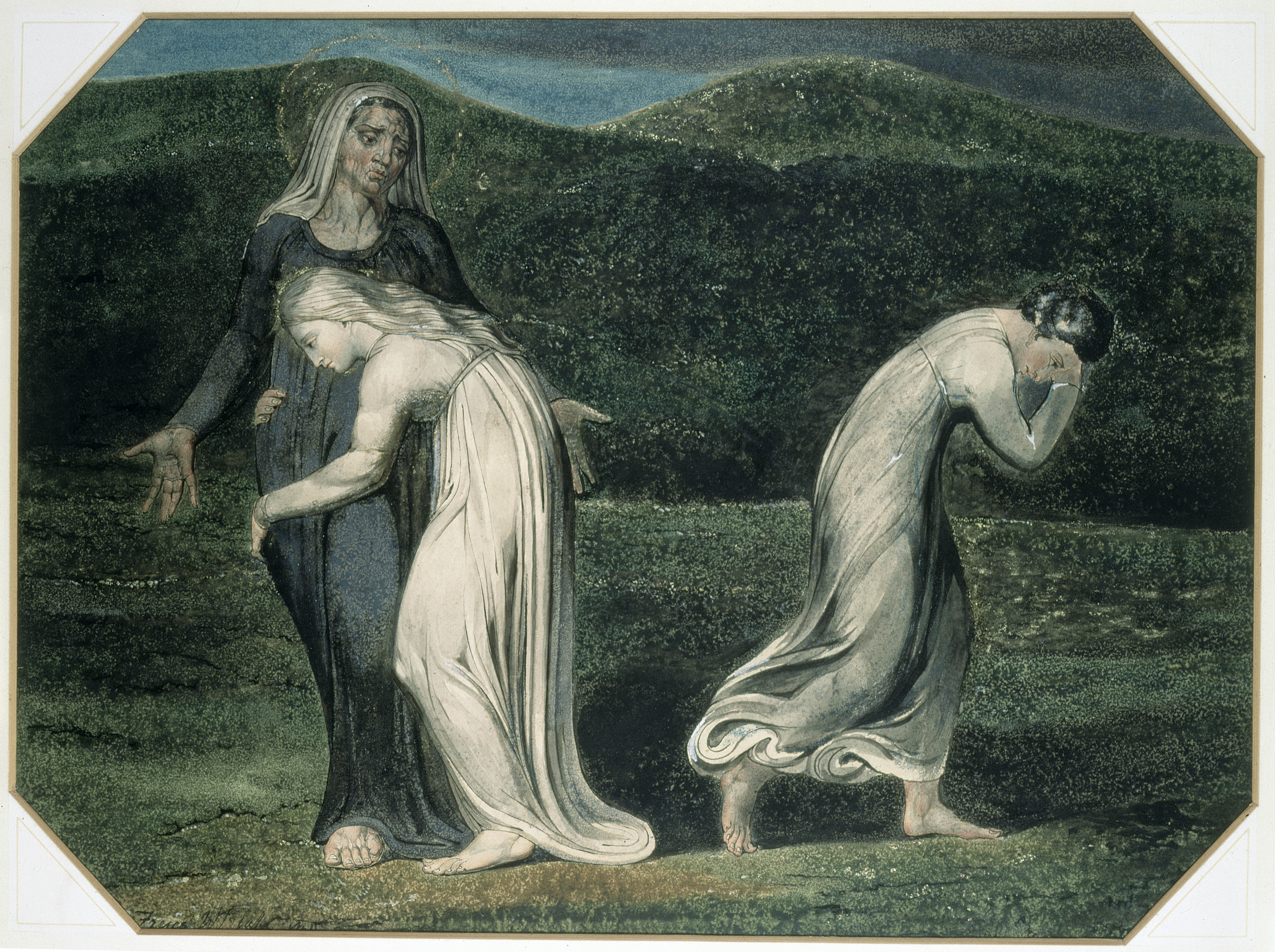
Exodus 14

BackAgainstWallExodus 14

1 Then the Lord said to Moses, 2 “Tell the people of Israel to turn back and encamp in front of Pi-hahiroth, between Migdol and the sea, in front of Baal-zephon; you shall encamp facing it, by the sea. 3 For Pharaoh will say of the people of Israel, ‘They are wandering in the land; the wilderness has shut them in.’ 4 And I will harden Pharaoh’s heart, and he will pursue them, and I will get glory over Pharaoh and all his host, and the Egyptians shall know that I am the Lord.” And they did so. 5 When the king of Egypt was told that the people had fled, the mind of Pharaoh and his servants was changed toward the people, and they said, “What is this we have done, that we have let Israel go from serving us?” 6 So he made ready his chariot and took his army with him, 7 and took six hundred chosen chariots and all the other chariots of Egypt with officers over all of them. 8 And the Lord hardened the heart of Pharaoh king of Egypt, and he pursued the people of Israel while the people of Israel were going out defiantly. 9 The Egyptians pursued them, all Pharaoh’s horses and chariots and his horsemen and his army, and overtook them encamped at the sea, by Pi-hahiroth, in front of Baal-zephon. 10 When Pharaoh drew near, the people of Israel lifted up their eyes, and behold, the Egyptians were marching after them, and they feared greatly. And the people of Israel cried out to the Lord. 11 They said to Moses, “Is it because there are no graves in Egypt that you have taken us away to die in the wilderness? What have you done to us in bringing us out of Egypt? 12 Is not this what we said to you in Egypt: ‘Leave us alone that we may serve the Egyptians’? For it would have been better for us to serve the Egyptians than to die in the wilderness.” 13 And Moses said to the people, “Fear not, stand firm, and see the salvation of the Lord, which he will work for you today. For the Egyptians whom you see today, you shall never see again. 14 The Lord will fight for you, and you have only to be silent.” 15 The Lord said to Moses, “Why do you cry to me? Tell the people of Israel to go forward. 16 Lift up your staff, and stretch out your hand over the sea and divide it, that the people of Israel may go through the sea on dry ground. 17 And I will harden the hearts of the Egyptians so that they shall go in after them, and I will get glory over Pharaoh and all his host, his chariots, and his horsemen. 18 And the Egyptians shall know that I am the Lord, when I have gotten glory over Pharaoh, his chariots, and his horsemen.” 19 Then the angel of God who was going before the host of Israel moved and went behind them, and the pillar of cloud moved from before them and stood behind them, 20 coming between the host of Egypt and the host of Israel. And there was the cloud and the darkness. And it lit up the night without one coming near the other all night. 21 Then Moses stretched out his hand over the sea, and the Lord drove the sea back by a strong east wind all night and made the sea dry land, and the waters were divided. 22 And the people of Israel went into the midst of the sea on dry ground, the waters being a wall to them on their right hand and on their left. 23 The Egyptians pursued and went in after them into the midst of the sea, all Pharaoh’s horses, his chariots, and his horsemen. 24 And in the morning watch the Lord in the pillar of fire and of cloud looked down on the Egyptian forces and threw the Egyptian forces into a panic, 25 clogging their chariot wheels so that they drove heavily. And the Egyptians said, “Let us flee from before Israel, for the Lord fights for them against the Egyptians.” 26 Then the Lord said to Moses, “Stretch out your hand over the sea, that the water may come back upon the Egyptians, upon their chariots, and upon their horsemen.” 27 So Moses stretched out his hand over the sea, and the sea returned to its normal course when the morning appeared. And as the Egyptians fled into it, the Lord threw the Egyptians into the midst of the sea. 28 The waters returned and covered the chariots and the horsemen; of all the host of Pharaoh that had followed them into the sea, not one of them remained. 29 But the people of Israel walked on dry ground through the sea, the waters being a wall to them on their right hand and on their left. 30 Thus the Lord saved Israel that day from the hand of the Egyptians, and Israel saw the Egyptians dead on the seashore. 31 Israel saw the great power that the Lord used against the Egyptians, so the people feared the Lord, and they believed in the Lord and in his servant Moses.

Now we come to the grand moment, the parting of the Red Sea. It is difficult to overestimate the significance of this stunning demonstration of divine power. A.W. Pink referred to Israel’s passage through the Red Sea as “one of the most remarkable miracles recorded in the O.T., certainly the most remarkable miracle in the history of Israel.” He then went on to say this:

From this point onwards, whenever the servants of God would remind the people of the Lord’s power and greatness, reference is almost always made to what He wrought for them at the Red Sea…The miracle of the Red Sea occupies a similar place in the O.T. scriptures as the resurrection of the Lord Jesus does in the New; it is appealed to as a standard of measurement, as the supreme demonstration of God’s power…[1]

I do not believe that is an overstatement. On the contrary, it is likely the case that this miracle was indeed the grandest miracle of all until the resurrection of Jesus Christ. In terms of the Old Testament and Israel’s history, this is the great saving act that preserved them as a people and rescued them from destruction. In that sense, this miracle pointed forward to the saving work of Christ on the cross and through the empty tomb.

The deliverance of Israel through the Red Sea was a missionary proclamation of God’s name for His glory.

It is fascinating to observe the Lord’s stated purpose for bringing Israel through the Red Sea. Listen carefully.

1 Then the Lord said to Moses, 2 “Tell the people of Israel to turn back and encamp in front of Pi-hahiroth, between Migdol and the sea, in front of          Baal-zephon; you shall encamp facing it, by the sea. 3 For Pharaoh will say of the people of Israel, ‘They are wandering in the land; the wilderness has shut them in.’ 4 And I will harden Pharaoh’s heart, and he will pursue them, and I will get glory over Pharaoh and all his host, and the Egyptians shall know that I am the Lord.” And they did so. 5 When the king of Egypt was told that the people had fled, the mind of Pharaoh and his servants was changed toward the people, and they said, “What is this we have done, that we have let Israel go from serving us?” 6 So he made ready his chariot and took his army with him, 7 and took six hundred chosen chariots and all the other chariots of Egypt with officers over all of them. 8 And the Lord hardened the heart of Pharaoh king of Egypt, and he pursued the people of Israel while the people of Israel were going out defiantly. 9 The Egyptians pursued them, all Pharaoh’s horses and chariots and his horsemen and his army, and overtook them encamped at the sea, by Pi-hahiroth, in front of Baal-zephon.

What did God set out to accomplish through this miracle? We might expect the first thing to be, “the salvation of Israel.” And, of course, that is true from a certain perspective. But notice what God Himself says: “…and I will get glory over Pharaoh and all his host, and the Egyptians shall know that I am the Lord.”

This is what I mean by calling this an act of missionary proclamation. In delivering Israel through the Red Sea, God gets the glory that Pharaoh and his people think is his and the power and might of God becomes known to the Egyptians at large.

Let us never forget this: the salvation of God’s people is a hallelujah chorus to God’s own glorious name. All of human history is a struggle (on man’s part) to see who will get glory. But God alone gets the glory! Paul says the same about the Lord Jesus in Philippians 2.

9 Therefore God has highly exalted him and bestowed on him the name that is above every name, 10 so that at the name of Jesus every knee should bow, in heaven and on earth and under the earth, 11 and every tongue confess that Jesus Christ is Lord, to the glory of God the Father.

It is not just that God’s people get saved. It is also that God Himself gets glory!

Pharaoh, upon realizing what he had done, and upon realizing that the Jews were exposed and vulnerable out in the open, determined to attack and destroy them.

The theology of the Egyptians likely contributed to some extent to Pharaoh’s desire to pursue and destroy the Israelites. Douglas Stuart has reminded us that “the gods and goddesses that controlled the world were arbitrary and capricious, quick to change their actions and attitudes, constantly vying with one another for power, not omnipresent but manifesting themselves at given locations and then leaving those locations unpredictably.” As a result, Stuart suggests that “it would be natural for Pharaoh to think that he, Yahweh, after having expended great effort to demonstrate his power to the Egyptians, might now no longer be directly involved in helping the Israelites.”[2]

Perhaps Pharaoh did project his faulty understanding of the gods onto the Yahweh God, the one true God, and perhaps this faulty understanding contributed to his ultimately disastrous decision. Regardless, Moses provides us with the view of the situation from God’s perspective in verse 4: “And I will harden Pharaoh’s heart, and he will pursue them.” Many people find this troubling. However, it is only troubling if one operates from the assumption that Pharaoh was essentially good, was desiring to do rightly, and was hardened against his own will. Despite copious evidence against such an idea, there is also the fact that the text speaks of Pharaoh’s mind being changed before God hardened his heart. Note the terminology of verses 5 and 8.

5 When the king of Egypt was told that the people had fled, the mind of Pharaoh and his servants was changed toward the people, and they said, “What is this we have done, that we have let Israel go from serving us?”

8 And the Lord hardened the heart of Pharaoh king of Egypt, and he pursued the people of Israel while the people of Israel were going out defiantly.

In a certain sense, then, God simply amplified and quickened what Pharaoh already intended to do in the darkness of his own mind and heart. Terence Fretheim has said it well:

Before God proceeds with the hardening of Pharaoh’s heart (v 8), Pharaoh is pictured as having already changed his mind (=heart)…God’s hardening activity does not occur in a vacuum; it is not contrary to Pharaoh’s (or the Egyptians’, 14:17) own general will about the matter. God intensifies a well-ingrained proclivity…In effect, God uses existent human stubbornness against itself by closing down available options.[3]

God works to deliver His people and to destroy the Egyptian army, and He does so for His own glory. Philip Ryken notes that “it is ironic that the Egyptians were defeated at daybreak because that is when their sun god [Ra] was supposedly rising in the east.”[4] Thus, this entire account teems with evidences of the supremacy of Yahweh God, the God above all other gods.

The deliverance of Israel through the Red Sea was an occasion for growth and deepening faith for God’s people.

For the Egyptians, this was a painful opportunity for growth. Through it, they came to see who the true God really is. But it was also a frightening occasion for growth for the Jews as well. We can see this in their initial difficulty in trusting that God had brought them forth through the leadership of Moses and that God was going to deliver them and save them.

10 When Pharaoh drew near, the people of Israel lifted up their eyes, and behold, the Egyptians were marching after them, and they feared greatly. And the people of Israel cried out to the Lord. 11 They said to Moses, “Is it because there are no graves in Egypt that you have taken us away to die in the wilderness? What have you done to us in bringing us out of Egypt? 12 Is not this what we said to you in Egypt: ‘Leave us alone that we may serve the Egyptians’? For it would have been better for us to serve the Egyptians than to die in the wilderness.” 13 And Moses said to the people, “Fear not, stand firm, and see the salvation of the Lord, which he will work for you today. For the Egyptians whom you see today, you shall never see again. 14 The Lord will fight for you, and you have only to be silent.” 15 The Lord said to Moses, “Why do you cry to me? Tell the people of Israel to go forward. 16 Lift up your staff, and stretch out your hand over the sea and divide it, that the people of Israel may go through the sea on dry ground. 17 And I will harden the hearts of the Egyptians so that they shall go in after them, and I will get glory over Pharaoh and all his host, his chariots, and his horsemen. 18 And the Egyptians shall know that I am the Lord, when I have gotten glory over Pharaoh, his chariots, and his horsemen.”

Assuming certain death, the Israelites cry out to the Lord and against Moses. They did so because they “lifted their eyes,” but not nearly high enough. They lifted them high enough to see Pharaoh and his army bearing down but not high enough to see the Lord God enthroned on high, faithful and true to His word and desirous to save His people. They saw the challenge but not the Victor. They saw the problem, but not the solution. They saw the might of man but not the might of the Lord God.

We can sympathize with Israel, for we undoubtedly do the same, do we not? A.W. Pink writes of our text:

This was a sore trial of faith, and sadly did Israel fail in the hour of testing. Alas! That this should so often be the case with us. After all God had done on their behalf in Egypt, they surely had good reason to trust in Him now. After such wondrous displays of Divine power, and after their own gracious deliverance from the Angel of Death, their present fear and despair were inexcusable. But how like ourselves! Our memories are so short. No matter how many times the Lord has delivered us in the past, no matter how signally His power has been exerted on our behalf, when some new trial comes upon us we forget God’s previous interventions, and are swallowed up by the greatness of our present emergency.[5]

Yes, our memories are short indeed! So God speaks to Israelites through Moses. His command? “13…Fear not, stand firm…see the salvation of the Lord…14…be silent.”

This is not what they wanted to hear! The army of mighty Egypt was coming down upon them and God told them to stand still. This was hard for them. It is also hard for us. We are a nation of fixers. Being still is not in our DNA. Especially when faced with a problem, we think we must solve the problem. We must do something. But in the truly great challenges of life, there is usually nothing to do at all. I am talking about those devastating moments when, if God does not show up, we are all goners. This is the situation in which Israel found itself on the shore of the Dead Sea. In your own ways, some of you know this feeling. You are facing something terrible, overpowering, seemingly invincible, and something against which you can literally do nothing.

Could it be that God is telling you, too, to stand still? Charles Spurgeon commented on this passage in this way to his London congregation:

I dare say you will think it a very easy thing to stand still, but it is one of the postures which a Christian soldier learns not without years of teaching. I find that marching and quick marching are much easier to God’s warriors than standing still. It is, perhaps, the first thing we learn in the drill of human armies, but it is one of the most difficult to learn under the Captain of our salvation The apostle seems to hint at this difficulty when he says, “Stand fast, and having done all still stand.” To stand at ease in the midst of tribulation, shows a veteran spirit, long experience, and much grace.[6]

May God give us the grace to stand still!

God miraculously delivered His people in a stunning display of power.

And then, God does what only God can do. He stops the Egyptian army, delivers His people through the Red Sea, then destroys the Egyptian army, and He does so in the most dramatic fashion.

19 Then the angel of God who was going before the host of Israel moved and went behind them, and the pillar of cloud moved from before them and stood behind them, 20 coming between the host of Egypt and the host of Israel. And there was the cloud and the darkness. And it lit up the night without one coming near the other all night. 21 Then Moses stretched out his hand over the sea, and the Lord drove the sea back by a strong east wind all night and made the sea dry land, and the waters were divided. 22 And the people of Israel went into the midst of the sea on dry ground, the waters being a wall to them on their right hand and on their left. 23 The Egyptians pursued and went in after them into the midst of the sea, all Pharaoh’s horses, his chariots, and his horsemen. 24 And in the morning watch the Lord in the pillar of fire and of cloud looked down on the Egyptian forces and threw the Egyptian forces into a panic, 25 clogging their chariot wheels so that they drove heavily. And the Egyptians said, “Let us flee from before Israel, for the Lord fights for them against the Egyptians.” 26 Then the Lord said to Moses, “Stretch out your hand over the sea, that the water may come back upon the Egyptians, upon their chariots, and upon their horsemen.” 27 So Moses stretched out his hand over the sea, and the sea returned to its normal course when the morning appeared. And as the Egyptians fled into it, the Lord threw the Egyptians into the midst of the sea. 28 The waters returned and covered the chariots and the horsemen; of all the host of Pharaoh that had followed them into the sea, not one of them remained. 29 But the people of Israel walked on dry ground through the sea, the waters being a wall to them on their right hand and on their left. 30 Thus the Lord saved Israel that day from the hand of the Egyptians, and Israel saw the Egyptians dead on the seashore. 31 Israel saw the great power that the Lord used against the Egyptians, so the people feared the Lord, and they believed in the Lord and in his servant Moses.

God stops the Egyptians through the pillar of cloud and fire during the night. It is not exactly clear what this looked like, though the imagery is terrifying. The Egyptians were stopped before this daunting display of divine power. Behind the wall of cloud and fire, however, an even greater miracle was taking place: God divided the waters of the Red Sea and led the children of Israel through the midst of it on dry ground. He did so by having a strong wind blow all night, separating the waters. So He used natural means, but in a miraculous way, as only God can do. He made a road for His people where a road had never been before.

Here is the great miracle of the exodus! Israel passes through the Red Sea unscathed, protected, delivered, saved, and whole. It is impossible for us to imagine this scene with adequate imagery and detail. What a grand and glorious and shocking and terrifying and beautiful miracle! What must it have felt like to pass through the walls of the sea on dry land.

Then Egypt, seeing their chance, drove forward after them. Many early Jewish commentators fancifully hypothesized that “God made the Israelites appear as mares to the Egyptian stallions, driving the latter wild with excitement at the presence or scent of an estrual mare.”[7] It was not, however, the lust of the horses, but the hatred of Pharaoh that drove them forward. So they surged forward, and, in another amazing display of power, God, seeing that His children were free on the other side, caused the watery walls to collapse back inward, crushing and destroying and drowning the forces of Egypt.

Church, behold the power of our great God! He is the overcomer of enemies, the destroyer of armies, the crusher of the powers, and the humbler of Kings! And this God is your God if you have trusted in Jesus Christ. This same God. He has not changed for even a moment.

There is something beautiful in the language of Israel passing through the Red Sea on dry ground. Victor Hamilton points out that “the Hebrew word for ‘dry ground’ in v. 21 is ḥārābâ, but the word for ‘dry ground’ in v. 22 (and in 14: 16, 29; 15: 19) is yabbāšâ. The latter is the one used in the creation story in Gen. 1: 9– 10.”[8] It is used in the creation story, in the flood story, and here. Moresoe, remember the first words of Genesis: “In the beginning, God created the heavens and the earth. The earth was without form and void, and darkness was over the face of the deep. And the Spirit of God was hovering over the face of the waters.”

So in the beginning, the Spirit of God hovers over the deep and brings forth dry ground that divides the deep. Thus, He creates. And He does so again in the flood account, as we read in Genesis 8:

2 The fountains of the deep and the windows of the heavens were closed, the rain from the heavens was restrained, 3 and the waters receded from the earth continually. At the end of 150 days the waters had abated, 4 and in the seventh month, on the seventeenth day of the month, the ark came to rest on the mountains of Ararat. 5 And the waters continued to abate until the tenth month; in the tenth month, on the first day of the month, the tops of the mountains were seen.

And He does so here, in our account of His deliverance of Israel from the Red Sea. Each is an act of creation, viewed properly. In Genesis, the early emerges as God creates the world. In the flood the earth emerges from the deep as God gives humanity a new beginning, a new Genesis. At the Red Sea the earth emerges from the deep as God saves His people, giving them a new beginning, a new start, a new genesis, a life outside of Egypt. They are, as it were, born again to be the people of God as their old enemy is destroyed and as they themselves are delivered.

Our God has authority over the waters. He creates through exercising this authority. With this in mind, a scene from Mark 4 takes on even added poignancy.

35 On that day, when evening had come, he said to them, “Let us go across to the other side.” 36 And leaving the crowd, they took him with them in the boat, just as he was. And other boats were with him. 37 And a great windstorm arose, and the waves were breaking into the boat, so that the boat was already filling. 38 But he was in the stern, asleep on the cushion. And they woke him and said to him, “Teacher, do you not care that we are perishing?” 39 And he awoke and rebuked the wind and said to the sea, “Peace! Be still!” And the wind ceased, and there was a great calm. 40 He said to them, “Why are you so afraid? Have you still no faith?” 41 And they were filled with great fear and said to one another, “Who then is this, that even the wind and the sea obey him?”

That is the question, no? Who is this Jesus that can save His people from drowning, who has the authority to speak to the sea and it must obey, who brings His people safely through the waters?

Here is the grandest miracle of all, even grander than the deliverance of Israel through the Red Sea: the God of the Exodus has come to us in Christ. We now see His glory in Jesus, who is still in the business of saving us, of delivering us, of bringing us through the waters, and of seeing us safe to the other side.

Come to Jesus, the delivering, saving King.


[1] Arthur W. Pink, Gleanings in Exodus. (Chicago, IL: Moody Publishers, 1981), p.107.

[2] Douglas K. Stuart, Exodus. The New American Commentary. Vol 2. Gen. Ed., E. Ray Clendenen (Nashville, TN: B&H Publishing Group, 2006), p.330.

[3] Terence E. Fretheim, Exodus. Interpretation (Louisville, KY: Westminster John Knox Press, 2010), p.155

[4] Philip Graham Ryken, Exodus. Preaching the Word (Wheaton, IL: Crossway Books, 2005), p.396.

[5] Arthur W. Pink, p.108.

[6] Philip Graham Ryken, p.388.

[7] Hamilton, Victor P., Kindle Locations 7303-7307.

[8] Hamilton, Victor P. (2011-11-01). Exodus: An Exegetical Commentary (Kindle Locations 7109-7111). Baker Publishing Group. Kindle Edition.

Nigel Biggar & Stanley Hauerwas Debate Just War and Pacifism: A Very Interesting Exchange

Hauerwas-Biggar-long-main_article_imageOn Sunday, November 8, of last year British just war theorist Nigel Biggar debated the provocative and always-interesting Christian pacifist Stanley Hauerwas on the relevant issues and questions concerning this fascinating topic on Justin Brierley’s “Unbelievable?” broadcast.  I thought the debate was so thought-provoking that I would post a link to the audio here (mp3 link).  Check it out.

Ruth 1:6-18

but299.1.1.cpd.300Ruth 1:6-18

6 Then she arose with her daughters-in-law to return from the country of Moab, for she had heard in the fields of Moab that the Lord had visited his people and given them food. 7 So she set out from the place where she was with her two daughters-in-law, and they went on the way to return to the land of Judah. 8 But Naomi said to her two daughters-in-law, “Go, return each of you to her mother’s house. May the Lord deal kindly with you, as you have dealt with the dead and with me. 9 The Lord grant that you may find rest, each of you in the house of her husband!” Then she kissed them, and they lifted up their voices and wept. 10 And they said to her, “No, we will return with you to your people.” 11 But Naomi said, “Turn back, my daughters; why will you go with me? Have I yet sons in my womb that they may become your husbands? 12 Turn back, my daughters; go your way, for I am too old to have a husband. If I should say I have hope, even if I should have a husband this night and should bear sons, 13 would you therefore wait till they were grown? Would you therefore refrain from marrying? No, my daughters, for it is exceedingly bitter to me for your sake that the hand of the Lord has gone out against me.” 14 Then they lifted up their voices and wept again. And Orpah kissed her mother-in-law, but Ruth clung to her. 15 And she said, “See, your sister-in-law has gone back to her people and to her gods; return after your sister-in-law.” 16 But Ruth said, “Do not urge me to leave you or to return from following you. For where you go I will go, and where you lodge I will lodge. Your people shall be my people, and your God my God. 17 Where you die I will die, and there will I be buried. May the Lord do so to me and more also if anything but death parts me from you.” 18 And when Naomi saw that she was determined to go with her, she said no more.

A couple of years ago an Episcopal church in Washington, D.C. hoisted a large banner on the side of their sanctuary that read, “Conversation, Not Conversion.” The intent of the banner was clear enough. It was intended to communicate that this particular church was one in which visitors would not be unduly pressed (or pressed at all?) to convert to Christianity. Rather, this was a place of non-threatening conversation. This kind of language is becoming more and more commonplace among churches that, understandably, wish to distance themselves from some of the cruder and more obnoxious forms of pressure-tactic-evangelism. I am wholly sympathetic to wanting to distance oneself from such. However, one does wonder if this slogan, “Conversation, Not Conversion,” might also be a demonstration of our current societal aversion to the idea of truth or ultimate truth. My more cynical self wonders if the reason we say things like this is because ultimately we do not think that anything can be known with enough certainty that it calls for conversion.

After all, conversion happens when a person sees a particular truth claim as so compelling that they can no longer imagine holding on to their current position in the light of what they now know. Conversion entails both acceptance and abandonment.

Ruth 1:6-18 is a text that contains a scene that many consider to be a definitive depiction on conversation. I am speaking of Ruth’s refusal to abandon Naomi as Naomi leaves Moab to return home to Judah and as Naomi declares herself for Yahweh and for His people. Many Jews view Ruth’s actions and declaration in Ruth 1:16-17 as the ultimate model of conversion. Kirsten Nielsen explains:

In Jewish tradition these are the very words that are used as an example for the proselyte to follow. That Ruth is seen as the prototype of a proselyte is already clear from the Targum to Ruth 1:16, where Naomi explains to Ruth the demands of the law on the convert. In the Targum to Ruth 2:6 Ruth is described as a proselyte, while in connection with Ruth 3:11 she is said to be strong enough to bear the yoke of the Lord’s law.[1]

Katharine Doob Sankenfeld offers further insights on how early Jewish converts used Ruth as a model for conversion.

Rabbinic writers interpreted her speech as a declaration of conversion and deduced from her words requirements to be accepted by all converts. A “catechism of proselytism” was developed in which each of her phrases was related to aspects of Jewish life…[2]

It is actually an interesting question to ask just how much Ruth really knew about Yahweh and the Jews. In other words, was she really a convert per se? I think we must answer this question in the affirmative. To be sure, Ruth undoubtedly had much growing to do in terms of her understanding of God and His people. Even so, her ultimate declaration of allegiance to Yahweh God and to the people of God and to her mother-in-law in particular can only accurately be spoken of in terms of a radical life change, a stunning course correction, or a conversion.

Whatever you choose to call it, Old Testament scholar Daniel Block is surely correct when he writes that, “The first words we hear from Ruth’s lips alone are among the most memorable in all of Scripture. Few utterances in the Bible match her speech for sheer poetic beauty, and the extraordinary courage and spirituality it expresses.”[3]

Let us then consider Ruth’s behavior and her words in terms of what they communicate about the nature of true conversion.

Ruth wanted a relationship with God and not merely a vague religion.

We begin with Naomi’s attempt to placate her daughters-in-law with a divine blessing.

8 But Naomi said to her two daughters-in-law, “Go, return each of you to her mother’s house. May the Lord deal kindly with you, as you have dealt with the dead and with me. 9 The Lord grant that you may find rest, each of you in the house of her husband!” Then she kissed them, and they lifted up their voices and wept.

What we have here is a widowed lady trying to say goodbye to her Moabite daughter-in-law. In doing so, she offers them kindness in the form of a divine blessing. I am not suggesting that Naomi did not sincerely mean the blessing she invoked. She did indeed wish for God to show kindness to these dear girls. However, I would like to propose that Ruth the Moabite understood Naomi’s blessing more than Naomi did. I will go further. I would like to propose that Naomi’s blessing was sincere but deficient. She intended it as a duel function blessing: to bless and to dismiss. Ruth, however, showed that she understood the nature of Yahweh more than her mother-in-law who invoked the divine name.

To get at this, we need to understand what was meant by the phrase, “May the Lord deal kindly with you.” In saying this, Naomi was invoking the idea of hesed, the lovingkindess of God. This is a profound and theologically rich word, and many argue that it comprises in itself the very theme of the entire book of Ruth. Katharine Doob Sakenfeld has helpfully defined the term.

The blessing incorporates the first of a series of uses of the Hebrew term hesed, variously translated as kindness, lovingkindness, faithfulness, or loyalty…In the Hebrew Bible hesed refers to an action by one person on behalf of another under circumstances that meet three main criteria. First, the action is essential to the survival or basic well-being of the recipient…Furthermore, the needed action is one that only the person doing the act of hesed is in a position to provide…Finally, an act of hesed takes place or is requested within the context of an existing, established, and positive relationship between the persons involved.[4]

So we can see that Naomi is using a term that is pregnant with meaning and significance. However, she is regrettably using it in an attempt to say goodbye to Ruth and Orpah and to leave them in a foreign land committed to pagan gods.

Ruth, who is ironically a much better theologian than Naomi, reveals that she is not content with a spiritual blessing that was not even being consistently applied by Naomi.

16 But Ruth said, “Do not urge me to leave you or to return from following you. For where you go I will go, and where you lodge I will lodge. Your people shall be my people, and your God my God.

Naomi seeks to placate the girls by invoking the divine name over them as she leaves them. Ruth, however, refuses to content herself with a mere blessing, with overtures of spirituality. It is as if Ruth is saying, “No, you cannot leave me with a blessing in the name of Yahweh. I do not want vague spiritually. I want Yahweh Himself! I want to know Him and His people. I will not be so easily dismissed by such inconsistent religiosity. How can Yahweh show me hesed if I remain among pagan gods.”

It is as if we tried to dismiss somebody with a “God bless you!” and they said, “Wait. If He’s going to bless me I need to know Him!”

True conversion means wanting more of God and wanting a relationship with God. It means not only wanting the hesed, the lovingkindness of God, but wanting to know Him personally so that you can see and experience and embrace His lovingkindness.

Ruth came to God despite practical and theological obstacles to her doing so.

Ruth wanted more than a spiritual blessing. And the intensity of her desire to know God is further demonstrated in her refusal to let the obstacles that Naomi and their circumstances present her to derail her.

8 But Naomi said to her two daughters-in-law, “Go, return each of you to her mother’s house. May the Lord deal kindly with you, as you have dealt with the dead and with me. 9 The Lord grant that you may find rest, each of you in the house of her husband!” Then she kissed them, and they lifted up their voices and wept. 10 And they said to her, “No, we will return with you to your people.” 11 But Naomi said, “Turn back, my daughters; why will you go with me? Have I yet sons in my womb that they may become your husbands? 12 Turn back, my daughters; go your way, for I am too old to have a husband. If I should say I have hope, even if I should have a husband this night and should bear sons, 13 would you therefore wait till they were grown? Would you therefore refrain from marrying? No, my daughters, for it is exceedingly bitter to me for your sake that the hand of the Lord has gone out against me.” 14 Then they lifted up their voices and wept again. And Orpah kissed her mother-in-law, but Ruth clung to her.

Honestly, Naomi’s efforts to deter Ruth from following her to Judah put Naomi in the “worst evangelist ever category”! When Ruth and Orpah initially refuse Naomi’s efforts to leave them behind, Ruth responds with an emotional screed concerning her own misfortune. Her arguments seem to escalate. First she points out that she is not pregnant. In verse 11, when Naomi asks, “Have I yet sons in my womb?” she uses the Hebrew word mehim, which means basically “my guts,” instead of the Hebrew words beten or rehem which refer to the womb.[5] This demonstrates the increasingly emotional and raw nature of Naomi’s reaction to her daughter-in-laws’ initial refusal to leave her.

Her allusion to yet-unborn sons who might theoretically marry the girls is likely a reference to the idea of levirate marriage. We find this teaching in Deuteronomy 25.

5 “If brothers dwell together, and one of them dies and has no son, the wife of the dead man shall not be married outside the family to a stranger. Her husband’s brother shall go in to her and take her as his wife and perform the duty of a husband’s brother to her. 6 And the first son whom she bears shall succeed to the name of his dead brother, that his name may not be blotted out of Israel. 7 And if the man does not wish to take his brother’s wife, then his brother’s wife shall go up to the gate to the elders and say, ‘My husband’s brother refuses to perpetuate his brother’s name in Israel; he will not perform the duty of a husband’s brother to me.’ 8 Then the elders of his city shall call him and speak to him, and if he persists, saying, ‘I do not wish to take her,’ 9 then his brother’s wife shall go up to him in the presence of the elders and pull his sandal off his foot and spit in his face. And she shall answer and say, ‘So shall it be done to the man who does not build up his brother’s house.’ 10 And the name of his house shall be called in Israel, ‘The house of him who had his sandal pulled off.’

Scholars debate whether or not this was what she had in mind, but it seems that her argument is at least somewhat connected to the idea.

She moves from complaining about having no more children to pointing out that she was too old to have a husband to complaining about God Himself. She bemoans that the hand of God has gone out against her. In saying this, she is revealing the nature of her spiritual disposition at this time. She is angry. This is understandable, given her loss, but she has clearly cast her lot with bitterness instead of trust. “Sharing the inadequate religious ideas of her people,” J. Hardee Kennedy writes of Naomi’s grief, “she associated life’s adverse experiences with the punitive acts (hand) of God.”[6]

Thus Naomi throws up roadblocks before Ruth. And there were other obstacles. For instance, if Ruth returned with Naomi then the tables would be turned: Ruth would find herself a widow in a foreign land. Furthermore, if the Jews rejected Ruth as a foreigner then she would truly be a woman without a country: unwelcomed in Judah but already having repudiated her own homeland.

Even so, despite all the protests, Ruth clings to Naomi! She determines to trust in Yahweh God and embrace the people of God. She could not have known how it would all work out, but none of that mattered. She was overwhelmed by a vision of God and His people and she would not be deterred.

There are 1,000 reasons not to trust Jesus! Coming to Jesus might cost you your family, your job, your friends, or your very life! The person who is unwilling to trust with all their heart, soul, and mind will always and ever be mindful of these obstacles. However, the true convert will, like Ruth, be so determined to have a relationship with God and be in his family that he will be unable to stay away.

Ruth was willing to say the name of the true God and stop saying the names of the false ones.

The purity and intensity of Ruth’s commitment can also be seen in her saying the name of the one true God. Listen closely:

15 And she said, “See, your sister-in-law has gone back to her people and to her gods; return after your sister-in-law.” 16 But Ruth said, “Do not urge me to leave you or to return from following you. For where you go I will go, and where you lodge I will lodge. Your people shall be my people, and your God my God. 17 Where you die I will die, and there will I be buried. May the Lord do so to me and more also if anything but death parts me from you.”

In verse 15, when Naomi points out that Orpah had “gone back to her people and to her gods” she uses there the general name for God, Elohim, though here it can be translated in the plural, gods, as well. “Your sister went back to her gods.” But it is telling that when Ruth says “your God [will be] my God” she uses the Hebrew divine name, Yahweh, instead of the name that foreigners would normally use for God, Elohim.[7]

This is most significant. Again we see Ruth’s repudiation of vague spirituality and her insistence on a particular God: Yahweh, the only true God. This is profoundly significant. “Since one appeals to one’s own deity to enforce an oath,” Robert Hubbard writes, “she clearly implies that Yahweh, not Chemosh, is now her God, the guardian of her future. Hence, while the OT has no fully developed idea of conversion, vv.16-17 suggests a commitment tantamount to such a change.”[8]

Indeed it does! To convert to Christ means to be willing to take His name, to say His name, to insist on no other name.

I am a great admirer of Methodist theologian Tom Oden. I have been since I first heard him lecture at Southwestern Baptist Theological Seminary in Fort Worth, Texas, when I was a student there. That being said, I am frustrated at Oden’s oft-repeated story concerning the Jewish scholar Will Herberg and his desire to convert to Christianity. Here is what Oden writes:

[Will] Herberg had weighty conversations with Reinhold Niebuhr on theology and seemed on the verge of converting to Christianity. Niebuhr urged him to rediscover his Jewish roots by studying Judaica at the Jewish Theological Seminary, which was just across the street from Union Theological Seminary. An irony worth noting: Herberg became a Jew by listening to a Christian; I became a Christian by listening to a Jew.[9]

This is supposed to be a kind of charming story. I do not find it to be charming at all. When a person wants to convert to Christ you do not dissuade them! If a person wants to know Jesus, the only way to the Father, you celebrate that!

Ruth wanted to know God and God alone and she would give ear to no discouragements. On the contrary, she dared to speak His name: Yahweh.

Ruth made a commitment that was decisive and for life.

And then there is the extent of her commitment. In short, it was decisive and it was for life. We can first see this in the closing verb of verse 14.

14 Then they lifted up their voices and wept again. And Orpah kissed her mother-in-law, but Ruth clung to her.

“Ruth clung to her.” Tellingly, the word translated “clung” is the Hebrew dbq which is the same word used in Genesis 2:24, “Therefore a man shall leave his father and his mother and hold fast [cling] to his wife, and they shall become one flesh.” In other words, this is the verb the Lord God used when He instituted marriage upon the earth. This is not to say that this was a marriage. Of course it was not. It is simply to say that this was an intense clinging that reveals a fierce determination on Ruth’s part not to be separated from Naomi, her people, or her God.

Then we see Ruth’s beautiful proclamation.

16 But Ruth said, “Do not urge me to leave you or to return from following you. For where you go I will go, and where you lodge I will lodge. Your people shall be my people, and your God my God. 17 Where you die I will die, and there will I be buried. May the Lord do so to me and more also if anything but death parts me from you.” 18 And when Naomi saw that she was determined to go with her, she said no more.

“Where you die I will die, and there will I be buried.” This is for life! She is not setting her feet on a path with any intention of ever looking back! In fact, she invokes a curse upon herself if she does so: “May the Lord do so to me and more also if anything but death parts me from you.” That is an interesting way of putting it, especially as Ruth does not name the punishment for her actions. Many Old Testament scholars suggest that such an oath was oftentimes accompanied by a hand motion communicating doom, such as a thumb slid across the throat. Likely Ruth did something very much like that when saying these words. In other words, if anything other than death separated her from Naomi, her people, and her God, this is what God would do to her.

Leon Morris has commented on the question of how much Ruth knew in this conversion of hers.

Her trust may not have been well informed, but it was real. Simeon remarks, “Her views of religion might not be clear: but it is evident that a principle of vital godliness was rooted in her heart, and powerfully operative in her life. In fact, she acted in perfect conformity with that injunction that was afterwards given by our Lord, ‘Whosoever he be of you that forsaketh not all that he hath, he cannot be my disciple’.”[10]

Yes, she does obey the words of Jesus about forsaking all. She determines that this will be her new life, her new mode of existence, her new identity. Ambrose of Milan would later argue that Ruth is therefore an example for all converts to Christianity to emulate as well.

Ruth entered the church and was made an Israelite, and [she] deserved to be counted among God’s greatest servants; chosen on account of the kinship of her soul, not her body. We should emulate her because just as she deserved this prerogative because of her behavior, [we] may be counted among the favored elect in the church of the Lord. Continuing in our Father’s house, we might, through her example, say to him who, like Paul or any other bishop, [who] calls us to worship God, your people are my people, and your God my God.[11]

Oh Church, consider what a true conversion looks like. It looks like Ruth turning her back on her old gods and her old life and taking hold in an act of radical commitment of the God of Israel, the God who is above all other gods. When you consider your standing with Jesus, can you say that you have done this? Have you? Have you taken hold of Christ? Have you decided that the obstacles no longer matter and that you simply must be counted among God’s people? Have you bid farewell to your old life, your old views, your old sins, your old habits?

I pray it is so! Come to Jesus. Say His name. Take His hand.

He is faithful to save.


[1] Kirsten Nielson, Ruth. The Old Testament Library. (Louisville, KY: Westminster John Knox Press, 1997), p.49.

[2] Katharine Doob Sankenfeld, Ruth. Interpretation. (Louisville, KY: John Knox Press, 1999), p.32.

[3] Daniel I. Block, Judges, Ruth. The New American Commentary. Vol. 6. Gen. Ed., E. Ray Clendenen. (Nashville, TN: B&H Publishing Group, 1999), p.640.

[4] Katharine Doob Sankenfeld, p.24.

[5] Robert L. Hubbard, Jr., The Book of Ruth. The New International Commentary on the Old Testament (Grand Rapids, MI: William B. Eerdmans Publishing Company, 1988), p.109.

[6] J. Hardee Kennedy, Ruth. The Broadman Bible Commentary. Vol. 2. Gen. Ed., Clifton J. Allen (Nashville, TN: Broadman Press, 1970), p.469.

[7] J. Hardee Kennedy, p.469.

[8] Robert L. Hubbard, Jr., p.120.

[9] Oden, Thomas C. (2014-11-06). A Change of Heart: A Personal and Theological Memoir (p. 134). InterVarsity Press. Kindle Edition.

[10] Arthur E. Cundall and Leon Morris (2008-09-19). TOTC Judges & Ruth (Tyndale Old Testament Commentaries) (Kindle Locations 3798-3801). Inter-Varsity Press. Kindle Edition.

[11] John R. Franke, ed., Joshua, Judges, Ruth, 1-2 Samuel. Ancient Christian Commentary on Scripture. Old Testament IV. Gen. ed., Thomas C. Oden (Downers Grove, IL: InterVarsity Press, 2005), p.184.

Exodus 13:17-22

24-larson-pillar-of-cloudExodus 13:17-22

17 When Pharaoh let the people go, God did not lead them by way of the land of the Philistines, although that was near. For God said, “Lest the people change their minds when they see war and return to Egypt.” 18 But God led the people around by the way of the wilderness toward the Red Sea. And the people of Israel went up out of the land of Egypt equipped for battle. 19 Moses took the bones of Joseph with him, for Joseph had made the sons of Israel solemnly swear, saying, “God will surely visit you, and you shall carry up my bones with you from here.” 20 And they moved on from Succoth and encamped at Etham, on the edge of the wilderness. 21 And the Lord went before them by day in a pillar of cloud to lead them along the way, and by night in a pillar of fire to give them light, that they might travel by day and by night. 22 The pillar of cloud by day and the pillar of fire by night did not depart from before the people.

Everybody everywhere needs encouragement, maybe especially in the Church.

I grew up, as some of you might have grown up, hearing preaching that oftentimes lacked encouragement. I do not wish to slander the good men who pastored me as a boy. I do not even claim that they failed to encourage. Perhaps it was more my perception than anything else. But, especially as a younger boy, this was certainly my perception: that the Christian life was a grueling journey in which the primary feeling I should feel is disappointment with myself and fear of the wrath of God.

I would go so far as to say that in popular Southern religion of yesteryear, this was a staple of preaching. Good preaching, the assumption seemed to be, was preaching that broke you under the weight of your own sin and the account you would one day give of yourself before God.

Do not get me wrong: I do believe we should feel the seriousness of sin and be aware of the judgment to come, but it does strike me as odd that a people committed to the good news of the gospel and the liberating power of Christ would be so morose in their walks!

No, everybody everywhere needs encouragement. The Lord demonstrated this in His dealings with His people. To be sure, the Lord disciplined and disciplines His children. He says the hard word when it is needed. He reveals the painful realities of our hearts. But He also encourages.

One beautiful example of this can be seen in His treatment of Israel as they exited Egypt and began moving toward the Red Sea. Here we see the amazing comfort and encouragement of God demonstrated in some quite powerful and unique ways. Let us consider the encouragement that God gives us, and let us claim it as our own, for our great God is unchanging in His ways.

God encourages us by often taking us through trials that are less than others He might have taken us through.

We first see how God encourages us in the way that He led the children of Israel away from an initial trial that would have been too daunting for His people at the time.

17 When Pharaoh let the people go, God did not lead them by way of the land of the Philistines, although that was near. For God said, “Lest the people change their minds when they see war and return to Egypt.” 18 But God led the people around by the way of the wilderness toward the Red Sea. And the people of Israel went up out of the land of Egypt equipped for battle.

This is most interesting. The most direct road to the promised land led straight through the land of the Philistines. Because of this, God decided to take them on the longer route. Why? Because He knew that the bloodshed the Israelites would encounter in any clash with the Philistines would cause many of them to want to return to Egypt. Douglas Stewart explains;

We know…that the Philistines were so daunting a fighting force at the time of the conquest, forty years later and beyond, that even at Joshua’s death their territory remained unconquered (cf. Josh 13:1-5). We also know that they were bold enough to attack Egypt proper in an effort to capture territory in the days of Ramses III, that is, about 1188 BC, suggesting that they considered themselves at that time – considerably after the Israelites had entered Canaan – potentially able to defeat even the Egyptians, depending on the circumstances. Accordingly, God did not want his people to try to enter Canaan directly by the well-established coastal road from Egypt, the Via Maris, even though that was by far the shortest and easiest route from the point of view of travel time and theoretical convenience. The Via Maris led right through the heart of Philistine territory.[1]

Here is one of the ways that God encourages us: He oftentimes takes us through challenges that are less than they might have been.

At this point, we should address an obvious objection: how on earth is facing the Red Sea with an Egyptian army closing fast on you less of a challenge than facing the Philistines? The answer is clear enough: the Lord God obviously felt that it was. Likely this was because of the fact that the Red Sea, though obviously a jaw dropping obstacle and challenge, was one before which God knew that none of the Israelites would actually die. Better a fright to the system leading to awestruck praise than survival of a brutal battle in which many of the Jews would have died.

So the point stands, amazing though it is: in taking the Israelites to the edge of the Red Sea instead of through the land of the Philistines God was actually taking them through a less daunting and taxing challenge. And so He often does with us. I say “often” because, obviously, God does not always take us around the most difficult challenges. Sometimes He does indeed take us right through the heart of them. “Yea, though I walk through the valley of the shadow of death…” Even so, He oftentimes does not, as in our text, and for this we should give Him praise and thanks.

This truth should lead us to do two things. First, it should lead us to appreciate the fact that the trial we are facing at any given moment, while difficult, could most likely be much worse. Stop and think the next time you find yourself in dire straits: God likely allowed this to happen by not allowing something even worse to happen. That is a dose of perspective that we sorely need.

Secondly, it should cause us to be careful with judging the length of time in which God leaves us in our trials. Remember: the Jews had to take a much longer route, but, in so doing, they avoided pain that many of them would have found too much to handle. Let us remember when we doggedly complain about how long this or that challenge or trial has been pestering us that it could just be that the price of ending it more quickly would be facing an even more brutal challenge. Do not complain about the longer road that takes you around the greater trial.

God encourages us by never forgetting a promise.

God also encourages us by never forgetting His promises to His people. Consider verse 19:

19 Moses took the bones of Joseph with him, for Joseph had made the sons of Israel solemnly swear, saying, “God will surely visit you, and you shall carry up my bones with you from here.”

As they left, Moses took the bones of Joseph. Why? Because Joseph had prophesied that they one day would carry his bones out of Egypt. We read of this in Genesis 50.

22 So Joseph remained in Egypt, he and his father’s house. Joseph lived 110 years. 23 And Joseph saw Ephraim’s children of the third generation. The children also of Machir the son of Manasseh were counted as Joseph’s own. 24 And Joseph said to his brothers, “I am about to die, but God will visit you and bring you up out of this land to the land that he swore to Abraham, to Isaac, and to Jacob.” 25 Then Joseph made the sons of Israel swear, saying, “God will surely visit you, and you shall carry up my bones from here.” 26 So Joseph died, being 110 years old. They embalmed him, and he was put in a coffin in Egypt.

It is important to notice that Joseph’s prophecy was rooted in the promise of God: “God will surely visit you.” On what basis could Joseph make such a bold assertion? On the basis of the covenants of God. God made a covenant with Abraham that He would bless him and his offspring and give them a land and a home and a name. As Joseph lay dying in Egypt, he knew that God would be true to His word. And God was! Thus, we read of God’s remembrance of His promise in Exodus 2.

23 During those many days the king of Egypt died, and the people of Israel groaned because of their slavery and cried out for help. Their cry for rescue from slavery came up to God. 24 And God heard their groaning, and God remembered his covenant with Abraham, with Isaac, and with Jacob. 25 God saw the people of Israel—and God knew.

Peter Enns rightly observes that “God delivers Israel from Egypt not because they somehow deserve it, but because he has a promise to keep to Abraham and the other patriarchs.”[2] That is true! He does indeed have a promise to keep…and He always keeps His promises.

Whatever else you might think of this beautiful fact, it should be for you a source of great encouragement. God is true to His word. He will not abandon you. He will not forsake you. He will not leave you in Egypt forever, but only for a time. He will come to you. He does love you. He has not forgotten you!

God encourages us by giving us signs of His presence in the day and in the night.

God has given His people His word, but, as we see in our text, He also gives us reminders of His presence. The signs of His presence that He gave to Israel on their exodus journey were startling indeed.

20 And they moved on from Succoth and encamped at Etham, on the edge of the wilderness. 21 And the Lord went before them by day in a pillar of cloud to lead them along the way, and by night in a pillar of fire to give them light, that they might travel by day and by night. 22 The pillar of cloud by day and the pillar of fire by night did not depart from before the people.

A pillar of cloud and a pillar of fire! God was leading His people as He manifested Himself in cloud and fire. This is one of the most well known miracles in the Bible. Of course, skeptics cannot help but propose naturalistic theories attempting to explain away the miraculous nature of the pillars. In particular, two naturalistic theories have been proposed.

First, some have proposed that the pillars of cloud and fire were the result of volcanic activity. There had been an eruption on the Island of Thera in 1628 B.C. that destroyed Minoan civilization. The effects might theoretically have still been visible. But the dates do not really work and it cannot explain the guided movement of the pillar to the southeast.

Others have proposed that the pillars were “the result of a brazier of some sort carried on a pole that would be used by the vanguard scouts.” But the pillar “is always portrayed as acting…rather than being operated,” as Walton, Matthews, and Chavalas put it in The IVP Bible Background Commentary.[3]

Such theories are enslaved to a naturalistic view of life that has no room for the miraculous. Let me simply say that trying to read the book of Exodus from a naturalistic perspective must be a very frustrating enterprise, for it is filled to the brim with miraculous displays of God’s power. The pillar of cloud and the pillar of fire is simply one of many such examples.

Why did God manifest Himself in such a visible way? Whatever other reasons we might point to, His desire to encourage His people must certainly be included. He wanted them to know that they were not alone. Douglas Stewart put it nicely when he wrote:

By reason of being guided by the pillar, the Israelites knew all day every day that God was present with them. Here was a supernatural, huge, and visible reminder that Yahweh was the head of his people as they marched or encamped, whether by day or by night…He manifested himself in the form of a pillar of cloud/fire for their benefit.[4]

Yes, it truly was for their benefit. It was God telling them that He would walk with them each step of the way.

As a boy I used to ask God on occasion to manifest Himself in a visible way to me. I recall doing this in the backyard when nobody else was around. It did not seem too much to me for God to give me just one little sign of His presence. In doing this, I was committing two errors: (1) I was testing God and (2) I was falling into the trap of thinking that visible displays were the only or even the best ways that God could show Himself to me.

As I have walked with Jesus, I have learned that God has in fact given His people numerous signs of His presence. One sign I would like to mention is the Lord’s Supper. You may have not thought of it in these terms, but the Lord’s Supper is an established, divinely sanctioned, consistently repeated visible symbol of the presence of God with His people. The elements of bread and juice both remind us of the saving work of Christ and remind us of the abiding presence of Christ with His people. They are, in a certain sense, our pillar of cloud and of fire.

And there is another visible and tangible evidence of God with us: each other. If the Church is the body of Christ that means that we have the privilege of being Christ to each other here and now. I do not mean ontologically, of course. We are never literally Christ. But when we love each other and forgive each other and help each other and encourage each other, Christ is present in the love and the forgiveness and the help and the encouragement. Would you like to see God visibly displayed? Then live the life of Christ for the person sitting next to you in the pew. Live the life of Christ and you will see it displayed in a powerful way.

God has not left the world without a witness of His existence and presence. The truth of the matter is that we oftentimes simply forget that we are the witness He has left! Would you like to see your brother or your sister encouraged by a divine sign? Then love them like Jesus loves you and lay down your life for one another. Then, God can be clearly seen in the changed lives of His people.

Church, be the encouragement you want and recognize the encouragement God gives.


[1] Douglas K. Stuart, Exodus. The New American Commentary. Vol 2. Gen. Ed., E. Ray Clendenen (Nashville, TN: B&H Publishing Group, 2006), p.322.

[2] Peter Enns, Exodus. The NIV Application Commentary (Grand Rapids, MI: Zondervan, 2000), p.27.

[3] John H. Walton, Victor H. Matthews and Mark W. Chavalas, The IVP Bible Background Commentary: Old Testament. (Downers Grove, IL: InterVarsity Press, 2000), p.89-90.

[4] Douglas K. Stuart, p.328.

Ruth 1:1-5

250px-RuthFieldsHughesRuth 1:1-5

1 In the days when the judges ruled there was a famine in the land, and a man of Bethlehem in Judah went to sojourn in the country of Moab, he and his wife and his two sons. 2 The name of the man was Elimelech and the name of his wife Naomi, and the names of his two sons were Mahlon and Chilion. They were Ephrathites from Bethlehem in Judah. They went into the country of Moab and remained there. 3 But Elimelech, the husband of Naomi, died, and she was left with her two sons. 4 These took Moabite wives; the name of the one was Orpah and the name of the other Ruth. They lived there about ten years, 5 and both Mahlon and Chilion died, so that the woman was left without her two sons and her husband.

In a May 17, 1999, Washington Post article entitled “Jeffersons Split Over Hemings Descendants,” staff writer Leef Smith wrote of the tense moments when, the day before, the descendants of Sally Hemings, one of Thomas Jefferson’s slaves, attended the 86th annual meeting of the Monticello Association, “a group of 700 descendants of Thomas Jefferson and his wife, Martha.” Here are a few insightful selections from the article.

They may not look alike or accept that they’re related, but when the descendants of Thomas Jefferson and one of his slaves, Sally Hemings, sat down at a white-linen luncheon this afternoon, it was like an episode of “Family Feud.”

Before people even tucked in their napkins, goodwill lost its footing and the bickering began. The occasion was the 86th annual meeting of the Monticello Association, a group of 700 descendants of Thomas Jefferson and his wife, Martha. This year, for the first time, about 35 descendants of Hemings, long thought by some to have been the mistress of the third president, were invited as guests.

Although the meeting was closed to the public and reporters, more than two dozen of whom milled outside the luncheon site at a hotel here, hints of what was going on among the 200-plus diners inside the Jefferson Ballroom were quick to leak.

First came a motion to evict the predominantly black Hemings faction and other nonvoting members from the room while the group mulled over scientific evidence made public last fall showing all but conclusively that Jefferson fathered Hemings’s youngest son, Eston. If the group accepted the evidence, it also had to consider whether the Hemings family should be admitted to the exclusive and, for now at least, all-white Monticello Association. Among other things, membership carries the privilege of burial at Monticello, Jefferson’s neoclassical home in the hills above Charlottesville.

“People sitting at my table got up and said they wanted me and my cousins to leave,” said Dorothy Westerinen, 41, a descendant of Eston Hemings. “It was painful to hear that.”

The motion to remove the guests lost, 33 to 20. But from that point on, those in attendance said later, the tone of the gathering became more contentious.

Association members also discussed their desire for more scientific and historical data to determine whether a Jefferson male other than Thomas could have fathered a child with Hemings, and they pressed for careful consideration of any evidence before opening their ranks.

Last year, DNA tests compared the Y chromosome in males who trace their ancestors to Monticello with that of male descendants of Hemings. Researchers said the scientific data matched the descendants of Eston Hemings with the male line of Jeffersons. When historical evidence was added, researchers said it all but confirmed a liaison between Thomas Jefferson and Hemings, putting a scientific imprimatur on what had long been regarded as fact on the Hemings’ side.

The new evidence led to an invitation from the Monticello Association, spurred by member Lucian K. Truscott IV, to the Hemings’ descendants to be guests at this year’s Jefferson family reunion. The gathering, attended by more than 200, was generally cordial, but some made clear their unease at the prospect of broadening the family tree.

The tension peaked at the close of today’s 3½-hour luncheon when Truscott, an outspoken critic of the arm’s-length treatment accorded the Hemings’ descendants, asked the association’s executive committee to accept the Hemings’ group as honorary members.

A two-thirds vote from attending members would have been required. But outgoing President Robert Gillespie wouldn’t allow it, saying later that honorary membership is, by tradition, reserved for officials at Jefferson’s beloved University of Virginia and the Thomas Jefferson Memorial Foundation, which operates Monticello.

An angry Truscott said Gillespie “wouldn’t allow the vote because he knew he’d lose. It was chicken.”[1]

The author of that piece may could have just as easily entitled it, “Awkwardness at the Family Reunion,” for truly that is what it was.

On the one side of the tension are the descendants of Jefferson who likely do not want to think that an ancestor who is held in such high esteem fathered multiple children with a slave girl. On the other are descendants who have good reason to think that he did and, understandably, want their place in the family tree to be acknowledged and recognized.

Curveballs work well in baseball games. They are not quite as welcome in family trees. That is the case with the Jefferson family tree and that was also the case with the Jewish family tree. Ruth represents such a curveball for the Jews. However, when we look closely at Ruth’s place in the family tree of Israel we find something that may have been uncomfortable for the early Jews, but, on closer inspection, is actually an amazing development in the story of God’s people that reveals powerful truths about both God and us.

My thesis this morning is that the very existence of the book of Ruth as a book in the Bible reveals beautiful truths that we need to understand. There are only eighty-five verses in the entire book of Ruth, but I contend that these eighty-five verses carry with them a number of stunning implications that directly impact you and me this very day.

We do not know for sure who wrote the book of Ruth, though Jewish tradition suggests that Samuel was the author.[2] Regardless, it is here, in our Bible, and its place here is significant for a number of reasons.

The existence of the book of Ruth means that the love of God is showered upon unlikely people.

First and foremost is the fact that the existence of the book of Ruth reveals that the love of God is showered upon very unlikely people. I would like for us to begin our study of the book by turning to a surprising text: Matthew 1. The beginning of the first book of the New Testament is a record of the genealogy of Jesus. Let me share with you the first six verses of this chapter.

1 The book of the genealogy of Jesus Christ, the son of David, the son of Abraham. 2 Abraham was the father of Isaac, and Isaac the father of Jacob, and Jacob the father of Judah and his brothers, 3 and Judah the father of Perez and Zerah by Tamar, and Perez the father of Hezron, and Hezron the father of Ram, 4 and Ram the father of Amminadab, and Amminadab the father of Nahshon, and Nahshon the father of Salmon, 5 and Salmon the father of Boaz by Rahab, and Boaz the father of Obed by Ruth, and Obed the father of Jesse, 6 and Jesse the father of David the king.

There it is, nestled in the middle of verse 5: “and Boaz the father of Obed by Ruth…”

If you were an early Jew, that would raise your eyebrows. Why? For two reasons: (a) Ruth was a woman and (b) Ruth was a foreigner.

The names of women were not traditionally present in Jewish genealogies. This was a patriarchal society. Yet there it is: Ruth. And in the genealogy of Jesus no less! In fact, there are five women mentioned in the genealogy of Jesus in Matthew 1: Tamar, Rahab, Ruth, Bathsheba, and Mary. What all five of these women have in common is that they were each, in their own way, surrounded by controversy. Thus, their presence is most unlikely and therefore most surprising!

This is compounded by the fact that Ruth was a foreign woman. She was a Moabite. To a purist, this too would have been most surprising. Yet there it is: the name of a Moabite woman. And here the book that bears her name is: Ruth, right here after the book of Judges.

Let us therefore begin with this initial observation: the existence of the book of Ruth reveals that the love of God is showered upon unlikely people. Do you see? If a person as unlikely as this Moabite woman can find herself in the family of God, that means that unlikely people like you and I can as well.

Perhaps you feel like an unlikely candidate for the love of God. You did not grow up doing the church scene. Or perhaps you did but long ago you walked away from it. You are, in your own mind, an outsider. You do not, in your own mind, belong with God’s people. Perhaps you even find yourself thinking, “What’s a guy like me doing in a place like this?”

If that is you, then take heart: that fact that the book after the book of Judges is named after the female Moabite heroin of the story means that there is hope for all unlikely members of the family of God! And then take even more heart: the fact that this Moabite woman is listed in the genealogy of Jesus Himself means that God can do amazing things with people who do not think they belong.

The existence of the book of Ruth means that the love of God is showered upon unworthy people.

But there’s more: the existence of the book of Ruth means that the love of God is showered upon unworthy people. It was not only that she was a woman. It was not only that she was a Moabite. It was also that her entry into this family of Jews was mired in realities that led many to conclude that she was utterly unworthy. We can see this as we begin to unpack our text:

1 In the days when the judges ruled there was a famine in the land, and a man of Bethlehem in Judah went to sojourn in the country of Moab, he and his wife and his two sons. 2 The name of the man was Elimelech and the name of his wife Naomi, and the names of his two sons were Mahlon and Chilion. They were Ephrathites from Bethlehem in Judah. They went into the country of Moab and remained there. 3 But Elimelech, the husband of Naomi, died, and she was left with her two sons. 4 These took Moabite wives; the name of the one was Orpah and the name of the other Ruth. They lived there about ten years, 5 and both Mahlon and Chilion died, so that the woman was left without her two sons and her husband.

Our story begins with a Jewish family leaving Judah in search of food and traveling east to the land of Moab. Moab was “east of the Dead Sea [and] extended from the plains north of the Arnon River south to the Zered River. The region measure[d] sixty miles north to south and about thirty miles from the Dead Sea to the eastern desert.”[3] The family consisted of Elimelech and Naomi and there two sons Mahlon and Chilion. While there, Elimelech died, leaving his widow and two sons alone. Then, his sons married: Mahlon, the oldest, married a Moabite girl named Ruth and Chilion, the youngest, married a girl named Orpah. After ten years, however, Naomi’s boys also died. Now the Jewish widow found herself alone in a foreign land with her two foreign daughter’s-in-law.

Those are the barebones of the introduction to the book of Ruth. The book presents them to us in a fairly straightforward manner. Many of the original Jewish readers, however, found two aspects of this story to be most uncomfortable.

The first problem was the marriage of Naomi’s sons to these Moabite girls. In short, it was held that Mahlon violated the law in marrying Ruth. We know that many of the Jews felt this way. For instance, in the Aramaic Targum to Ruth, which is an early Jewish translation of the book of Ruth with rabbinical comments alongside the text, it is made clear that the Jews felt that the two sons died because they violated the Law by marrying Moabite women. Here is what the Targum says:

2- The name of the man was Elimelech, and the name of his wife was Naomi, and the names of his two sons were Mahlon and Kilion, Ephrathites, noblemen, of Beth Lehem of Judah; and they came unto the field of Moab, and there they were military tribunes.

3- Elimelech, the husband of Naomi, died, and she was left a widow, and her two sons were left orphans.

4- They transgressed the decree of the Word of the Lord and took unto themselves foreign wives, of the daughters of Moab, the name of the one was Orpah, and the name of the second was Ruth, the daughter of Eglon the king of Moab, and they dwelt there for a period of about ten years.

5- And because they transgressed the decree of the Word of the Lord by intermarrying with strange peoples, their days were cut short, and the two of them, Mahlon and Kilion, also died, in an unclean land; and the woman was left bereft of her two sons and widowed of her husband.[4]

The belief of these commentators is clear enough: Jewish boys married foreign girls and that is why God killed them. Again, our text does not say that, but this is clearly how at least many Jews read the book. The names of the sons may also give a clue. Kirsten Nielsen points out that “Mahlon can be translated ‘sickness’ or ‘infertility,’ while Chilion means ‘consumptive.’”[5] This is possible, though the meanings of these names cannot be known with absolute certainty.

Furthermore, some Jewish commentators even read into the gaps in the first five verses of Ruth 1 supposed other evidences of the inappropriateness of the marriages. For instance, early rabbi commentators on Ruth “said that the sons married after their father’s death because he opposed the marriages” and “Jewish commentators since the Midrash view [verse 4] as a silent proptest against intermarriage.” Some even suggested that the wording of verse 4 implies racist attitudes on Naomi’s part which compelled their sons to find their wives on their own.[6]

Clearly, then, these marriages were not viewed in a positive light by the Jews. In fact, they were scandalous!

Furthermore, while Ruth was a foreigner, she was a citizen of a land considered to be particularly wicked: Moab.

For instance, the origins of the Moabites are utterly scandalous and shameful. We read of their beginnings in Genesis 19.

30 Now Lot went up out of Zoar and lived in the hills with his two daughters, for he was afraid to live in Zoar. So he lived in a cave with his two daughters. 31 And the firstborn said to the younger, “Our father is old, and there is not a man on earth to come in to us after the manner of all the earth. 32 Come, let us make our father drink wine, and we will lie with him, that we may preserve offspring from our father.” 33 So they made their father drink wine that night. And the firstborn went in and lay with her father. He did not know when she lay down or when she arose. 34 The next day, the firstborn said to the younger, “Behold, I lay last night with my father. Let us make him drink wine tonight also. Then you go in and lie with him, that we may preserve offspring from our father.” 35 So they made their father drink wine that night also. And the younger arose and lay with him, and he did not know when she lay down or when she arose. 36 Thus both the daughters of Lot became pregnant by their father. 37 The firstborn bore a son and called his name Moab. He is the father of the Moabites to this day. 38 The younger also bore a son and called his name Ben-ammi. He is the father of the Ammonites to this day.

Thus, the Jews traced the Moabite origins to a shameful act of drunken incest and deceit. This was not the land from which Jewish parents wanted their good Jewish sons to take wives.

Mark Dever calls the Moabites “a terrible people,” noting that “they had sent Balaam to prophesy destruction upon Israel when Israel was preparing to enter the Promised Land (Numbers 22-24)” and that “they were the first ones to seduce the sons of Israel into worshiping false gods.”[7]

The sinfulness of the Moabites can also be seen in the Old Testaments scrictures against their inclusion in the life of Israel. While Deuteronomy 7 does not mention Moab in its list of lands from which Jewish men were not to take wives, many assume that the principle would have applied there as well.

1 “When the Lord your God brings you into the land that you are entering to take possession of it, and clears away many nations before you, the Hittites, the Girgashites, the Amorites, the Canaanites, the Perizzites, the Hivites, and the Jebusites, seven nations more numerous and mightier than you, 2 and when the Lord your God gives them over to you, and you defeat them, then you must devote them to complete destruction. You shall make no covenant with them and show no mercy to them. 3 You shall not intermarry with them, giving your daughters to their sons or taking their daughters for your sons, 4 for they would turn away your sons from following me, to serve other gods. Then the anger of the Lord would be kindled against you, and he would destroy you quickly. 5 But thus shall you deal with them: you shall break down their altars and dash in pieces their pillars and chop down their Asherim and burn their carved images with fire.

Furthermore, Deuteronomy 23 explicitly denounces Moab.

3 “No Ammonite or Moabite may enter the assembly of the Lord. Even to the tenth generation, none of them may enter the assembly of the Lord forever, 4 because they did not meet you with bread and with water on the way, when you came out of Egypt, and because they hired against you Balaam the son of Beor from Pethor of Mesopotamia, to curse you. 5 But the Lord your God would not listen to Balaam; instead the Lord your God turned the curse into a blessing for you, because the Lord your God loved you. 6 You shall not seek their peace or their prosperity all your days forever. 7 “You shall not abhor an Edomite, for he is your brother. You shall not abhor an Egyptian, because you were a sojourner in his land. 8 Children born to them in the third generation may enter the assembly of the Lord.

You can see, then, that the fact that these boys married (a) foreign women and (b) Moabite foreign women was a huge problem for the Jews. But this presents an even bigger problem: in the book of Ruth, Ruth is not presented in a negative light. On the contrary, she is ultimately depicted as a woman of great character, faith, strength, and virtue. In fact, in the conclusion of the book, we will discover that Ruth is King David’s great-grandmother!

How do we rectify these to facts: the unworthiness of Ruth but the apparent favor that Ruth enjoyed in God’s eyes. Put another way, how could God be merciful and graceful to a woman from the absolute wrong side of the tracks.

It seems to me there are two options. The first option is for us to simply conclude that the book of Ruth is somehow deficient and that if it had been written the right way, God would have struck Ruth in his wrath! This kind of displeasure with the book was communicated by at least one early Jew. Robert L. Hubbard, Jr. has passed on the telling words of a particular 2nd century Jewish rabbi.

The Babylonian Talmud records the following saying of Rabbi Simeon ben Yohai (2nd cent. A.D.): “…Ruth, the Song of Songs, and Esther make the hands unclearn.”

Hubbard explains the rabbi’s comment as having “been due to the problems which the book itself posed,” among which are “conflicts between the book’s practices and parallel pentateuchal laws” such as “the marriage of Mahlon and Chilion to Moabitesses.”[8]

So that is one option: to conclude that the book is simply deficient in what it depicts. May I suggest to us, however, that this is a terrible approach! In fact, I do not think the book of Ruth is deficient at all. It is the very word of God to us!

What then should we think of this? May I propose another option: that we read Ruth as astonishing evidence that the love of God is showered upon unworthy people! Perhaps the reason why God shows such favor to a girl from the wrong side of the tracks is…wait for it…because God genuinely loves people from the wrong side of the tracks.

In fact, according to scripture, we are all from the wrong side of the tracks! Which leads us to one more observation about the existence of the book of Ruth.

The existence of the book of Ruth reveals that the love of God is showered upon you.

Ruth would have been considered an unlikely object of God’s love as well as, in the minds of many people, an unworthy object of God’s love. In other words, she would have been considered an outsider, somebody who was far away from the people of God.

It is interesting to note how often the New Testament uses the image of distance to express the idea of spiritual lostness.

For instance, in Luke 18, Jesus tells the following story:

10 “Two men went up into the temple to pray, one a Pharisee and the other a tax collector. 11 The Pharisee, standing by himself, prayed thus: ‘God, I thank you that I am not like other men, extortioners, unjust, adulterers, or even like this tax collector. 12 I fast twice a week; I give tithes of all that I get.’ 13 But the tax collector, standing far off, would not even lift up his eyes to heaven, but beat his breast, saying, ‘God, be merciful to me, a sinner!’

Did you notice it? “But the tax collector, standing far off…” We find the same image in the story of the prodigal son in Luke 15. Here, the younger son comes to his right mind and determines to return in humility to his father.

17 “But when he came to himself, he said, ‘How many of my father’s hired servants have more than enough bread, but I perish here with hunger! 18 I will arise and go to my father, and I will say to him, “Father, I have sinned against heaven and before you. 19 I am no longer worthy to be called your son. Treat me as one of your hired servants.”’ 20 And he arose and came to his father. But while he was still a long way off, his father saw him and felt compassion, and ran and embraced him and kissed him.

There it is again: “But while he was still a long way off, his father saw him and felt compassion…” Likewise, in Peter’s Pentecost sermon in Acts 2, he invokes this image in his response to the cries of the people:

37 Now when they heard this they were cut to the heart, and said to Peter and the rest of the apostles, “Brothers, what shall we do?” 38 And Peter said to them, “Repent and be baptized every one of you in the name of Jesus Christ for the forgiveness of your sins, and you will receive the gift of the Holy Spirit. 39 For the promise is for you and for your children and for all who are far off, everyone whom the Lord our God calls to himself.”

Ah, “the promise is for you and for your children and for all who are far off.” We begin to notice something important in these examples: God’s heart is for all of those who are far off.

God loves the repentant tax collector standing far off.

God runs to the returning prodigal even though he is far off.

God’s promises extend beyond the “righteous” to those who are far off.

God loves far off Ruth!

God loves far off you!

How? How does He love far off Ruth? How does He love far off you?

Paul tells us in Ephesians 2.

13 But now in Christ Jesus you who once were far off have been brought near by the blood of Christ.

He loves you through the blood of Christ. He loves you enough to send Christ for you. He loves you enough to lay down His life. He loves you enough to call to you in your distant place. He loves you enough to draw you near!

The existence of the book of Ruth means that God loves you! You!


[1] https://www.washingtonpost.com/wp-srv/local/daily/may99/reunion17.htm

[2] Katharine Doob Sankenfeld, Ruth. Interpretation. (Louisville, KY: John Knox Press, 1999), p.5.

[3] John H. Walton, Victor H. Matthews and Mark W. Chavalas, The IVP Bible Background Commentary: Old Testament. (Downers Grove, IL: InterVarsity Press, 2000), p.277.

[4] https://targum.info/meg/ruth.htm

[5] Kirsten Nielson, Ruth. The Old Testament Library. (Louisville, KY: Westminster John Knox Press, 1997), p.42.

[6] Robert L. Hubbard, Jr., The Book of Ruth. The New International Commentary on the Old Testament (Grand Rapids, MI: William B. Eerdmans Publishing Company, 1988), p.93.

[7] Mark Dever, The Message of the Old Testament. (Wheaton, IL: Crossway Books, 2006), p.239.

[8] Robert L. Hubbard, Jr., p.5,n.4.

James Earl Massey: An Appreciation and a Sermon

11_james_earl_masseyWhen I was in the Doctor of Ministry program at the Beeson Divinity School of Samford University, I met Dr. James Earl Massey.  Dr. Massey is a venerable and highly respected African American preacher.  I had never heard of Dr. Massey before coming to Beeson, though throughout my time there I came deeply to respect and appreciate this remarkable man and his ministry.  I was especially honored to sit under his teaching in a doctoral seminar on homiletics.

Beeson recently tweeted a link to a chapel sermon in which the 85-year-old preacher showed why he has earned the esteem of so many.  It struck me as profoundly poignant, and I even showed this sermon to Central Baptist Church last Wednesday night.  Trust me:  this will be a blessing to you, as evidenced by the number of Central members last Wednesday who asked me to send them the link to this sermon.  Check it out.

A Preaching Update

Just a little note that this coming Sunday, April 19, I will begin preaching through the book of Ruth on Sunday mornings at Central Baptist Church.  This will be an eight-part series.

In the evenings I will be picking back up in Exodus 13, where we stopped in August of 2013.

The audio of both will be posted each week in the sidebar to the right.  You can also check the sermon archives for previous sermons in the book of Exodus if you would like to get caught up.

An Interesting and Largely Arminian Discussion of Soteriology

grindstone-russellmooreChalk this up under “interesting theological conversations.”  Dr. Roger Olson recently visited my alma mater, Southwestern Baptist Theological Seminary (SWBTS), upon the invitation of SWBTS President, Dr. Paige Patterson, to discuss soteriology or the doctrine of salvation.  This is a rather interesting development as Dr. Olson is generally considered to be a moderate Baptist (he himself has recently and helpfully distinguished between moderate Baptists and liberal Baptists here, here, and here) and SWBTS is generally considered to be a bastion of fundamentalist Christianity.  Of course, Dr. Patterson, its President, is one of the key architects of the conservative resurgence within the SBC.  So this was an interesting meeting.  Dr. Olson, in his concluding statement, referred to it as even somewhat historic in opening up new avenues of conversation between moderate Baptists and more conservative Baptists.

Why did the meeting happen?  The simple answer is that Dr. Patterson invited Dr. Olson.  Furthermore, the conversation was part of SWBTS’s “Grindstone” series of conversations which are “sharp, theological discussions on topics that matter.”  However, it is almost certainly the case that Dr. Patterson and Dr. Olson’s shared rejection of Calvinism and their shared agreement over the alleged Anabaptist origins of Baptist life played a large part in this.

Regardless, it was a very interesting conversation and I’m glad it happened.  I am offering the video here not because I consider myself an Arminian.  I remain fairly uncomfortable with all labels involved in this debate.  I will say that I agree with Dr. Olson that classical Arminianism as represented in the person and writings of James Arminius is quite different than what most people envision when they say “Arminianism.”

If you would like to hear a soteriological conversation from an Arminian perspective, here is an interesting one.