A Jesus-Shaped Baptist: A Tribute to the Late Michael Spencer

Michael Spencer was a widely-known and beloved blogger who wrote under the name Internet Monk.  Shortly before his death on April 5, 2010, a friend of Michael’s asked if I would contribute an essay, along with some other of Michael’s friends, to a festschrift for Michael that we would self-publish.  I did so, but the project never got off the ground.  As it’s been three years, I thought I would provide my essay here.  It is a late offering to the gloriously eclectic Michael Spencer, who I was honored to call a friend.

“A Jesus-Shaped Baptist?”

When presented with the opportunity to contribute an essay in honor and memory of my friend Michael Spencer, I quickly settled on the phrase, “Jesus-shaped Baptist.”  Michael strove to be faithful to both of these visions (1. Jesus-shaped and 2. Baptist), while privileging the former over the latter at all times.  Yet Michael strove to be passionately faithful to both visions as a matter of conviction and integrity.

An Apology for Jesus-Shaped Denominationalism

The very idea of a Jesus-shaped Baptist raises an interesting question:  is it possible for one to be a convinced denominationalist and radically Christocentric at the same time?  Can one truly be a Jesus-shaped Baptist?  Is the very idea not an oxymoron?  After all, should not a desire to be Jesus-shaped necessarily cause us to abandon all denominational qualifiers?

In truth, the answer is “no.”  I note with interest that Paul’s lamenting of the divisions among the Corinthian believers in 1 Corinthians 1:12 mentions not only a party of Paul, Apollos, and Peter, but also an equally-sectarian party of Jesus.  Apparently, even those who claim to be in the party of Jesus and Jesus alone may be as sectarian as their less-nobly-monikored denominational counterparts.  To be Christocentric in name does not necessarily denote a Jesus-shaped heart, and to hold with conviction to certain denominational distinctions does not necessarily mean a dilution of one’s desire to follow Christ and Christ alone.

We all begin at and live in and come from a certain place, a certain perspective.  One may be a Jesus-shaped _________ (fill-in-the-blank) and be so with integrity so long as that particular vantage point is couched within biblical, Trinitarian orthodoxy and is seeking to interpret the scriptures with integrity and under the guidance of the Holy Spirit.  Michael understood the dialectic and inevitability of being Jesus-shaped within the context of theological and ecclesial distinctives, and his fleshing-out of this approach was simultaneously enlightening and challenging while being, of course, unavoidably idiosyncratic.

In this essay, I would like to attempt to work out what a Jesus-shaped Baptist looks like.  I will do so by considering these five marks of a Jesus-shaped Baptist:  radical Christocentrism, uncompromising orthodoxy, intentional catholicity, unapologetic denominationalism, and convictional irenicism.  As I do so, I will refer the reader in the footnotes to those writings of Michael’s that speak to or illustrate that particular attribute.[1]

Radical Christocentrism

            In the Fall of 2001, Muslim Imam Fisal Hammouda joined Bill Hybels at Willow Creek church for a dialogue about Islam.  The Imam raised eyebrows at Willow Creek and beyond by responding to Hybels’ question about the Muslim view of Jesus with the words, “We believe in Jesus – more than you do, in fact.”[2]

Many believers, however, were no-doubt less shocked by the assertion itself than by the eerie insightfulness and tragic truthfulness of the proposition.  Indeed, many who have a woefully stunted and heterodox Christology (as Islam certainly does) seem to believe more in their falsely construed Jesus than some of God’s own people do in the second person of the Trinity.

When all is said and done, the scandalous disconnect between the orthodox Christology of many in the church and the actual living of our lives anathematizes us more than any other indictment could.  The Jesus-shaped Baptist joins with the great cloud of witnesses in asserting that the living of the Christian life is inextricably interwoven with orthodox Christology.  The latter tragically does not insure the former (especially when the latter is allowed to be mere furniture of the mind), but the former can never be without the latter.

A Jesus-shaped Baptist will always keep those words in that particular order.  He is a Jesus-shaped Baptist.  He resolutely denies having a Baptist-shaped Jesus.  He is not tepid about his Baptist identity, but neither will he allow himself that self-deluding hubris which reshapes Jesus into his own image.  He seeks to embrace the Jesus of the scriptures, the Jesus who, at points, confirms his own understanding of theology and church, and at other points, pushes against his understanding and reminds him that the living Christ transcends all niche efforts at defining who He is.  This is not to suggest that high Christology entails low epistemology.  Rather, it simply means that as Christ increases, we decrease, as does our stubborn insistence that our particular understanding of issues that have been highly disputed among orthodox Christians for large swathes of two-millennia must be the only possible answer.  To put it another way, high Christology humbles the Baptist as well as all other Christians under the glory of the exalted Christ.

A Jesus-shaped Baptist understands that the elevation of distinctives over Christology can lead to that ludicrous but oft-repeated fiasco describe so aptly by William Blake:

The vision of Christ that thou dost see

Is my vision’s greatest enemy:

Thine has a great hook nose like thine,

Mine has a snub nose like to mine. . . .

Both read the Bible day and night,

But thou read’st black where I read white.[3]

Voltaire likewise lampooned the Christian reshaping of Jesus into this or that sectarian mold by proclaiming that God created man in His own image…and man has returned the favor.  The innate and instinctive desire of all denominational Christians to recast Jesus in the mold of their own particular community has more to do with self-justification and pride than with arriving at the truth, and the Jesus-shaped Baptist refuses to play that dead-end game.

A Jesus-shaped Baptist agrees with philosopher and theologian (and Baptist) Dallas Willard when he says, “Our aim is to be pervasively possessed by Jesus through constant companionship with him.”[4]  A Jesus-shaped Baptist wishes to walk through Galilee before he walks through Nashville (in the case of Southern Baptists, anyway), for it is only in the presence of the unfettered and unobscured Lamb of God that we truly live.

Uncompromising Orthodoxy

A Jesus-shaped Baptist holds tenaciously and without compromise to the faith “once for all delivered to the saints” (Jude 3).  He stands with Paul and all of the people of God in denouncing all false gospels (Galatians 1:6-9).  He affirms the seven-fold apostolic articulation of “one body…one Spirit…one hope…one Lord, one faith, one baptism, one God and Father of all” (Galatians 4:5-6) as the sine qua non of the Christian’s very existence.  A Jesus-shaped Baptist says with that uniquely fascinating earlier Baptist, John Bunyan, that he wishes simply to be called “a Christian.”

Historian Tom Nettles has approvingly pointed to 17th century British Particular Baptist Hercules Collins’ contention that Baptists believe “the essence of Christianity exists outside the parameters of denominational distinctive.”  Nettles goes on to argue that “the inerrancy of Scripture, the Trinity, the deity and humanity of Christ in one person, substitutionary atonement, justification by faith, the necessity of regeneration, God’s invincible purpose of holiness for his people, the certainty of Christ’s physical return, and the eternal destinies of heaven and hell constitutes a more central Christian commitment than the denominational peculiarities of any group that confesses these same truths….Before one may be a Baptist, he must first be a Christian.”[5] [italics mine]

This must be so!  A Jesus-shaped Baptist clings to a Jesus-centered orthodoxy with an vice-like grip.  He celebrates the great verities of the faith with all those who have and who are and who will call on the name of Christ.

Intentional Catholicity

            What is more, the Jesus-shaped Baptist holds to a healthy and intentional catholicity.[6]  Michael Spencer knew well the importance of catholicity and our friendship was grounded in it.  Our own relationship began when I submitted to Michael a series of posts I had entitled “Towards a Baptist Paleo-Orthodoxy.”  They were the first-fruit efforts of a young Baptist minister who had recently encountered the writings of Thomas Oden and his paleo-orthodoxy programme and was trying to move out of the suffocating confines of Baptist fundamentalist tribalism and into the fresh air of the Church triumphant throughout time.

Michael, too, shared in this yearning.  He had a deep appreciation for Baptist catholicity and wrote frequently towards that end.  He believed it was not only possible but necessary that Baptists stand within the great 5th century Vincentian ideal of “that which has been believed everywhere, always and by all.”  In 2007, Michael approvingly quoted the following statement from The World Council of Churches:  “Each church is the church catholic and not simply a part of it. Each church is the church catholic, but not the whole of it. Each church fulfills its catholicity when it is in communion with the other churches.”[7]  For Michael, and for many of us, Baptists are unapologetically members of the church catholic.

In the eighth chapter of his early 2nd century Letter to the Smyrnaeans, Ignatius of Antioch asserted that “wherever Jesus Christ is, there is the catholic church.”  To be sure, Roman Catholics would object to the Baptist appeal to this definition without its concomitant link to espicopacy (a link that is clear enough in Ignatius, it seems to me), but I daresay that Ignatius was saying more than even he knew when he rightly and thus defined “catholic.”

Many Baptists have applied the term “catholic” to themselves.  Steven R. Harmon begins his seminal Towards Baptist Catholicity with quotations from the 1678 Baptist “Orthodox Creed” to the effect that “the visible church of Christ on earth is made up of several distinct congregations which make up that one catholick church, or mystical body of Christ” and from the 1905 pronouncement of Judge Willis (then President of the Baptist Union of Great Britain) to the first Baptist World Congress in London that, “We believe, and our fathers have believed, in the Holy Catholic Church…The catholicity of the Church of Christ is not…a doctrine of Rome:  it is an essential consequence resulting from the principles on which Christ’s Church is founded.”[8]

Indeed, there is a growing number of Baptists who see catholicity not only as a possible option for Baptists, but as a necessary and even definitional reality inherent in the very experience of being Baptist.  This does not mean a naïve return to the various and often-embarrassing theories of succession that have been propagated by some Baptists.  It simply means that Baptists are an organic and authentic expression of the Body of Christ as it has existed throughout time and, as an authentic expression, it takes its place in the body catholic.

Baptist catholicity, then, as I see it, refers to the validity of Baptists’ triune baptism, offer of the Lord’s Supper, preaching of the Word of God, and exaltation of Christ Jesus in the gathered people of God and, through it, to the world.  Baptist catholicity refers, then, to the Baptist right to proclaim “Jesus is Lord” with integrity alongside those who assert the same even as they embrace a different understanding of ecclesial distinctives.

Baptist catholicity has an inward prophetic voice insofar as it challenges and pushes against Baptist tribalism, elitism, and factionalism.  What is more, Baptist catholicity may call the Baptist to modify or nuance some traditional Baptist stances in light of a re-reading of Holy Scripture and in consideration of solid arguments arising from within the Church throughout time.[9]  Outwardly, it prophetically calls other Christians to consider the biblical truth of believer’s baptism as well as other aspects of Baptist identity that may serve as a prophetic corrective to error in the greater body.

Unapologetic Denominationalism

            But the Jesus-shaped Baptist is, indeed, a Baptist.  He feels no compulsion towards a jettisoning of his distinctive identity in favor of a nebulous and largely undefined spirituality that would, indeed, remove the occasional awkwardness of his stance but would do so at the cost of his own conscience.[10]

To be a Baptist means that he holds to certain ideals:  regenerate church membership, believer’s baptism by immersion, congregational polity, and the priesthood of the believer (to name but a few).  He does not do so because he was born believing such things but because it is a matter of his own convictions and reading of Holy Scripture.  His conscience is captive to the Word of God.

To take but one example, the Jesus-shaped Baptist declares with the Church triumphant throughout the ages the central proclamation of “Iesus Kurios!”, but he does indeed believe that this expression of the heart must be known and grasped by the individual Christian before the death, burial, and resurrection of the Lord is proclaimed in baptism.[11]  His baptism is not an anticipation of this most crucial cry.  It is an affirmation of it in his own life.

He finds this view in the pages of the New Testament and he finds it in the early history of the church.[12]  He is fully cognizant of the ecumenical speed bump that his Baptist convictions present, but he nonetheless reaches out to believers of all denominations in the name of the risen Christ while asserting this understanding of divine truth.

Convictional Irenicism

Some years back I was a student in a seminar with Dr. Timothy George, Dean of the Beeson Divinity School.  Dr. George was commenting on his own Baptist convictions and the place they held in his desire to be a Christian first of all.  I’ll never forget how he summed it up:  “I’m a Baptist, I’m just not angry about it.”  In many ways I think that nicely sums up the convictions of my friend Michael Spencer as well.[13]

The Jesus-shaped Baptist is not an angry or bitter elitist.  He holds to his convictions and argues them from the Scriptures, but he does so with humility and irenicism.  He askews the kind of pompous myopia that seems to characterize too many denominational apologists of all stripes.  He is not bashful about being a Baptist, but neither is he belligerently so.

The Jesus-shaped Baptist yearns for the future unity of the Church, but also for increasing visible unity here and now.  His is not an ecumenism of compromise, but he does yearn and strive towards the culmination of the Lord’s prayer that His disciples would all be one (John 17:20-23).

The Jesus-shaped Baptist seeks to show the grace, mercy, kindness, and meekness of the Lord in His dealings with people.  He seeks to model the temperament of Jesus in his dealings with Christians and non-Christians alike.

Michael Spencer exhibited the attributes of a Jesus-shaped Baptist in ways that were memorable, challenging, and encouraging.  He was, of course, an imperfect man.  Even so, he will forever stand in my mind as an example of Christlikeness to which I can only hope to attain.  May his tribe increase among that wonderfully odd little corner of the Church who call themselves “the Baptists,” and may it likewise increase in the Body of Christ at large.


[1] These citations will be largely from The Internet Monk website and will be noted by title so as to avoid the unsightly clutter of multiple url addresses.  Furthermore, the use of the male pronoun throughout is purely for brevity’s sake.  The author recognizes that many of the greatest Jesus-shaped Baptists have been women!

[2] Christianity Today, December 3, 2001, p.15.

[3] Quoted in Philip Yancey, The Jesus I Never Knew (Grand Rapids, MI: Zondervan, 1995), 18.

[4] Dallas Willard, The Great Omission (New York, NY: HarperOne, 2006), 16.

[5] Tom J. Nettles and Russell D. Moore, eds., Why I Am A Baptist (Nashville, TN: Broadman & Holman Publishers, 2001), 12.

[6] IM: “A Generous Catholicity.” “The Liturgical Gangstas” series of questions and answers. “Stop Me Before I Turn Into A.W. Pink.” “Is Your Church One, Holy, Catholic, and Apostolic?”

[7] IM: “Quote.”

[8] Steven R. Harmon, Towards Baptist Catholicity. Studies in Baptist History and Thought. Vol.27. (Waynesboro, GA: Paternoster Press, 2006), p.1.

[9] “Dr. Timothy George on the Baptist View of the Lord’s Supper.” “Russ Moore on the Lord’s Supper.” “Problems With Baptists and the Lord’s Supper.” “David Chanski on the Baptist View of the Lord’s Supper.” “A Lord’s Supper Book for the Rest of Us.” “Laugh or Else: The Reasons Baptist Give for Not Celebrating The Lord’s Supper More Often.”

[10] IM: “A List of Factors Affecting Current Events in the SBC.” “A Special Challenge to Southern Baptists.” “My Thoughts on Today’s Southern Baptist Convention Meeting.” “Baptists – The New Methodists?” “Are Southern Baptists Getting It?  Maybe.”

[11] IM:  See the “The Baptist Way” series. “Rebaptism: Where To From Here?” “Rebaptism: How Did We Get Here?”

[12] Indeed, he finds in some of the most recent and fascinating partristic research further reasons to hold to his position.  Cf. Everett Ferguson, Baptism in the Early Church (Grand Rapids, MI: William B. Eerdmans Publishing Co.), 2009.

[13] IM: “My Theology Can Beat Up Your Theology.”

 

The Arkansas Baptist News “Bible Studies for Life” Commentaries

I was happy to be able to contribute to the March Sunday School commentaries in the latest Arkansas Baptist News.  Two of them appeared in the latest issue and two more will appear in the next issue.  As an aside, I was pleasantly surprised to see that the writer of the other two commentaries on the same page was none other than my friend Michael Carpenter of The Church @ Argenta.  When I jokingly told Tim Yarbrough, editor of the ABN, that I protested being on the same page as Michael, he told me he thought it would help me be more relevant! To which I say, “Touche!”

Anyway, here are the commentaries.

Matthew 5:6

Matthew 5:6

6 “Blessed are those who hunger and thirst for righteousness, for they shall be satisfied.”


John MacArthur has mentioned a fascinating story about thirst from World War I.

            During the liberation of Palestine in World War I, a combined force of British, Australian, and New Zealand soldiers was closely pursuing the Turks as they retreated from the desert.  As the allied troops moved northward past Beersheba they began to outdistance their water-carrying camel train.  When the water ran out, their mouths got dry, their heads ached, and they became dizzy and faint.  Eyes became bloodshot, lips swelled and turned purple, and mirages became common.  They knew that if they did not make the wells of Sheriah by nightfall, thousands of them would die – as hundreds already had done.  Literally fighting for their lives, they managed to drive the Turks from Sheriah.

            As water was distributed from the great stone cisterns, the more able-bodied were required to stand at attention and wait for the wounded and those who would take guard duty to drink first.  It was four hours before the last man had his drink.  During that time the men stood no more than twenty feet from thousands of gallons of water, to drink of which had been their consuming passion for many agonizing days.  It is said that one of the officers who was present reported, “I believe that we all learned our first real Bible lesson on the march from Beersheba to Sheriah Wells.  If such were our thirst for God, for righteousness and for His will in our lives, a consuming, all-embracing, preoccupying desire, how rich in the fruit of the Spirit would we be.”[1]

It raises an interesting question, doesn’t it?  Would it be possible to thirst for God the way these men thirsted for water, to see the quenching of this thirst as just as much a matter of life and death as the quenching of the thirst of these soldiers was?  Would it be possible to see the deep cisterns of God’s righteousness as the great goal of our lives, and to live our lives along the contours of that journey?

“If such were our thirst for God, for righteousness and for His will in our lives,” said the soldier, “a consuming, all-embracing, preoccupying desire, how rich in the fruit of the Spirit would we be.”

The Lord Jesus clearly felt that thirsting for righteousness in this way was not only possible but essential.  In the fourth Beatitude He said, “Blessed are those who hunger and thirst for righteousness, for they shall be satisfied.”

I. What is the Nature of Blessed “Hunger and Thirst”?

Let us begin first with the nature of this huger and thirst.  What is the nature of it and how, in fact, should we hunger?  First, let us recognize that the metaphor of food and drink was one that Jesus used often, for reasons we will discuss.  For instance, in John 4:7-15, we read of this amazing encounter between Jesus and a woman of Samaria.  Jesus begins their encounter by drawing a direct analogy between physical, temporary water and spiritual, eternal water.

7 A woman from Samaria came to draw water. Jesus said to her, “Give me a drink.” 8 (For his disciples had gone away into the city to buy food.) 9 The Samaritan woman said to him, “How is it that you, a Jew, ask for a drink from me, a woman of Samaria?” (For Jews have no dealings with Samaritans.) 10 Jesus answered her, “If you knew the gift of God, and who it is that is saying to you, ‘Give me a drink,’ you would have asked him, and he would have given you living water.” 11 The woman said to him, “Sir, you have nothing to draw water with, and the well is deep. Where do you get that living water? 12 Are you greater than our father Jacob? He gave us the well and drank from it himself, as did his sons and his livestock.” 13 Jesus said to her, “Everyone who drinks of this water will be thirsty again, 14 but whoever drinks of the water that I will give him will never be thirsty again. The water that I will give him will become in him a spring of water welling up to eternal life.” 15 The woman said to him, “Sir, give me this water, so that I will not be thirsty or have to come here to draw water.”

Later in the same chapter, in John 4:31-34, Jesus switches to the food metaphor as His disciples press him to eat.

31 Meanwhile the disciples were urging him, saying, “Rabbi, eat.” 32 But he said to them, “I have food to eat that you do not know about.” 33 So the disciples said to one another, “Has anyone brought him something to eat?” 34 Jesus said to them, “My food is to do the will of him who sent me and to accomplish his work.”

So to the woman who needed to know Him, Jesus spoke of water.  To the disciples who were growing in their understanding of Him, Jesus spoke of food.  Notice, interestingly, in the passage just cited, that the will of the Father was food to Jesus as well:  “My food is to do the will of him who sent me and to accomplish his work.”

In speaking to the Jews in John 6:27;30-35, Jesus once again drew on the analogy of food.

27 Do not work for the food that perishes, but for the food that endures to eternal life, which the Son of Man will give to you. For on him God the Father has set his seal.”

30 So they said to him, “Then what sign do you do, that we may see and believe you? What work do you perform? 31 Our fathers ate the manna in the wilderness; as it is written, ‘He gave them bread from heaven to eat.’” 32 Jesus then said to them, “Truly, truly, I say to you, it was not Moses who gave you the bread from heaven, but my Father gives you the true bread from heaven. 33 For the bread of God is he who comes down from heaven and gives life to the world.” 34 They said to him, “Sir, give us this bread always.” 35 Jesus said to them, “I am the bread of life; whoever comes to me shall not hunger, and whoever believes in me shall never thirst.”

Most familiar to us is the moving and crucial analogy Jesus made in Luke 22 between His body and blood and bread and wine.

14 And when the hour came, he reclined at table, and the apostles with him. 15 And he said to them, “I have earnestly desired to eat this Passover with you before I suffer. 16 For I tell you I will not eat it until it is fulfilled in the kingdom of God.” 17 And he took a cup, and when he had given thanks he said, “Take this, and divide it among yourselves. 18 For I tell you that from now on I will not drink of the fruit of the vine until the kingdom of God comes.” 19 And he took bread, and when he had given thanks, he broke it and gave it to them, saying, “This is my body, which is given for you. Do this in remembrance of me.” 20 And likewise the cup after they had eaten, saying, “This cup that is poured out for you is the new covenant in my blood.

Likewise in the rest of the New Testament, we find the food/drink analogy repeated.  We find Peter in 1 Peter saying, “2 Like newborn infants, long for the pure spiritual milk, that by it you may grow up into salvation— 3 if indeed you have tasted that the Lord is good.”  We also find the writer of Hebrews in Hebrews 5 saying, “12b You need milk, not solid food, 13 for everyone who lives on milk is unskilled in the word of righteousness, since he is a child. 14 But solid food is for the mature, for those who have their powers of discernment trained by constant practice to distinguish good from evil.”

So this is a very familiar and very-often used image in the Bible, this notion of eating and drinking.  But what do those verbs mean, spiritually understood?  And what is the point of these analogies?

Let us not miss the obvious point of the metaphor:  that eating and drinking are necessary to our survival.  Eating and drinking are non-negotiables.  They are not options.  We eat and drink or we die.  The most obvious implication of the metaphor of sustenance and the verbs “hunger and thirst” is necessity.  It is utterly necessary to eat and drink.  And it is utterly necessary for the follower of Jesus to hunger and thirst for righteousness.

But there is more.  We do not have to teach a baby to be hungry or to be thirsty.  We never have to say to a baby, “Ok, scream now.  Tell me you’re hungry.”  No, it is inherent.  It is an unavoidable component of the state of being alive.  Hunger and thirst simply happen to us by virtue of our existence as human beings.  This means, then, that the follower of Jesus Christ should inherently desire righteousness (that we will define in a moment) as a matter of survival.  Obviously, the unredeemed heart does not inherently desire righteousness, but it is part of the born again heart that it does.

But there is something else as well.  Not only are hunger and thirst necessary and inherent, they are progressive in human beings.  As we eat, we grow.  As we grow, the nature of our sustenance grows as well.  Fifty-year-old men do not pull out baby bottles at construction sites and take their milk for lunch.  They do not pull out small bottles of horrific smashed peas and spoon them down with little baby spoons.  That would be absurd!  Why?  Because they have graduated to solid food.  They are grown and their food has grown as well.

When Jesus says we are blessed when we “hunger and thirst for righteousness” He is saying that our hunger should be marked by urgency, necessity, newborn instinct, and ever-growing taste, need, and expectation.  Paul understood this last point well when he said to the Corinthians, “I fed you with milk, not solid food, for you were not ready for it. And even now you are not yet ready, for you are still of the flesh” (1 Corinthians 3:2-3).  The point being, they should have been ready for meat, their tastes and appetites and capacities should have progressed.  We are intended to grow in our appetite for righteousness.

Because the analogy of food and drink are so familiar to us, we can now understand the nature of this hunger.  The early Christian Chromatius said that this Beatitude is speaking of those who “virtually burn with passionate longing in their hunger and thirst.”[2]  That is not a bad way to put it.  We might also put it like this:  the hunger spoken of in the fourth Beatitude refers to an urgent, instinctive, progressive, undeniable desire and need for righteousness, without which we would starve to death.

II. What is the Righteousness for Which the Blessed “Hunger and Thirst”?

But what is the righteousness for which we are to hunger and thirst?  Having defined the nature of the hunger and thirst, let’s now try to define the object of it.  John Stott has helpfully pointed out that the Bible speaks of righteousness in three ways: legal righteousness (i.e., justification), moral righteousness (i.e., character and conduct), and social righteousness (i.e., social justice).[3]  Put in more simple terms, legal righteousness refers to salvation, moral righteousness refers to personal holiness, and social righteousness refers to fighting unrighteousness in the social order.  But to which of these is Jesus referring in the fourth Beatitude?

It is usually agreed that the word righteousness in the gospel of Matthew is not used in terms of saving righteousness, what we might called imputed righteousness, the crediting of the righteousness of Christ to our account for salvation.  If we were to look for that in the Beatitudes, we would rightly look for it in poverty of spirit and mourning.  When are hearts are broken and repented before the Lord, He saves us in Christ.  Matthew’s gospel certainly does teach salvation, but he usually refers to righteousness in terms of the second sense, moral righteousness, personal holiness, the fruit of discipleship.

Charles Quarles has noted that “in the Gospel of Matthew, the term ‘righteousness’ normally refers to actual personal righteousness that results from one’s relationship with God, that is, the righteousness of sanctification rather than the righteousness of justification.”[4]  For instance, in the beginning of the next chapter, in Matthew 6:1, Jesus says, “Beware of practicing your righteousness before other people in order to be seen by them, for then you will have no reward from your Father who is in heaven.”

Now, certainly the righteousness we manifest as we submit to, follow, and grow in Christ includes social righteousness.  A righteous man or woman of God will not be content to see his or her neighbor crushed and destroyed by some kind of injustice.  Furthermore, our moral righteousness surely stems from the righteousness of Christ at work within us.  But what Christ is speaking of here is the manifest, personal righteousness of the follower of Jesus who is becoming more like His master.  That is the object of our hunger and thirst:  lived, manifested, exhibited, personal righteousness stemming from the fact that we are born again, made alive in Christ.

Let us now apply the proper kind of hunger and thirst to the proper kind of righteousness we are called to pursue.  The hunger spoken of in the fourth Beatitude refers to an urgent, instinctive, progressive, undeniable desire and need for the personal, moral righteousness that disciples of Jesus should manifest, without which we would starve to death.

This raises an unavoidable but uncomfortable question:  do you have that kind of hunger and that kind of thirst for that kind of righteousness?  Do your bones burn to be righteous?  Does your heart strain towards greater godliness, greater holiness?  Is it your consuming desire to have more of Christ and more of the life He intends for you?

It is actually quite easy to gauge this.  What is on your mind?  What is in your head?  What do you want?  What drives you?  What motivates you?  What consumes you?  Just how badly do you want righteousness, the life of a disciple?  Are you discontented with where you are with Jesus?  Does it ever cross your mind?

What do your personal habits reflect in terms of priorities?  Have you opened God’s Word this week?  This month?  This year?  Have you prayed, called out to God?  Have you shared your faith?  Sought opportunities to share your faith?  Do you even want to share your faith?

Have you asked the Holy Spirit to reveal to you the true state of your own soul?  Have you placed yourself under the judgment of Scripture?  Do you want to?  Would it ever occur to you to do so?

Would you describe your Christian life right now, today, as a river or a swamp?  A journey or a nap?  Progress or regress?  Are you moving forward?  Do you want to move forward?  Does it even matter to you whether or not you move forward?

Do you hunger and thirst for righteousness?  Can you say that you are hungering and thirsting, right now, for righteousness?

III. What is the Satisfaction Granted Those Who “Hunger and Thirst”?

“Blessed are those who hunger and thirst for righteousness,” Jesus said, “for they shall be satisfied.”

For they shall be satisfied.  Here is the great separation between physical hunger and thirst and spiritual hunger and thirst:  physical hunger and thirst are never satisfied.  You eat and drink and are satisfied, but only for brief time.  Just some short hours later it is as if you haven’t eaten at all.  It does not satisfy.

Jesus, of course, knew this and made the point himself. “Everyone who drinks of this [physical] water will be thirsty again” (John 4:13).  “Do not work for the food that perishes” (John 6:27).  Physical water never satisfies for long.  Food inevitably perishes.  But those who hunger and thirst for righteousness “shall be satisfied.”  That fascinating Christian character, Clarence Jordan, who founded the prophetic Koinonia fellowship down there in South Georgia, said this of our Beatitude:

One might eat and eat of the superficial, cotton-candy righteousness vended by the professional religious hucksters and never have that hunger assuaged.  People might drink and drink of their holy water and never have their thirst quenched.  But the kingdom righteousness is meat indeed and drink indeed – rich, nourishing, satisfying.  Blessed are they who hunger and thirst for it, for they shall find that it meets their deepest needs.[5]

In one sense, this is clear enough.  The spiritual nourishment of righteousness is superior to physical nourishment.  But in another sense it is not so clear, for surely Jesus cannot mean that we can reach a place of righteousness where we no longer want any more righteousness.  On the contrary, the more we grow in righteousness, the more righteousness we desire.  Speaking of the fourth Beatitude, the early Christian Apollinaris said that “such fulfillment does not produce a turning away but rather an intensification of the desire.”[6]

Yet, there certainly is satisfaction in growing Godward, is there not?  Thus, spiritual food and drink satisfies, but not in the way that we think of satisfaction, not in the sense of completion.  In other words, hungering and thirsting for righteousness inevitably leads us to hunger and thirst for more righteousness while at the same time, Jesus says, those who hunger and thirst for righteousness shall be satisfied.

What are we to make of this?  Does this hunger and thirst for righteousness satisfy or does it make us hungrier and thirstier for righteousness?  The answer is yes!

As a matter of fact, what we have here is a wonderful paradox, a mystery, that type of odd truth that Jesus was always pointing to and expressing in discussing what life in the Kingdom is like.  We might state it like this:  those who hunger and thirst for righteousness are satisfied, not through the disappearance of hunger but through the sweetness and joy of greater desire for greater righteousness.  The satisfaction is in the yearning, for the yearning is itself the sweet dessert of satisfaction.

Like a great story that we do not want to end or a soul-stirring song that we keep yelling “Encore!” after, hungering and thirsting for righteousness is a journey with its own rewards, a well leading to deeper waters, a meal leading to new and surprising tastes.  The journey does not end, because the journey is life itself.  We hunger and thirst for righteousness, knowing that when we begin to approach it, whole new fields of greater righteousness lay ahead.  And as we run along, following the Lord Jesus, learning His ways and placing our feet in His footprints, we find that the journey is a dance of joy, not a burden, and our one great satisfaction in Christ is the assurance that the dance is eternal, to the praise and glory of Almighty God!


[1] John MacArthur, Matthew 1-7. The MacArthur New Testament Commentary (Chicago, IL: Moody Press, 1985), p.180, quoting E.M. Blaiklock, “Water.” Eternity (August 1966), p.27.

[2] Manlio Simonetti, ed. Matthew 1-13. Ancient Christian Commentary on Scripture. New Testament, vol.Ia. Thomas C. Oden, ed. (Downer’s Grove, IL: InterVarsity Press, 2001), p.84.

[3] John R.W. Stott, The Message of the Sermon on the Mount. (Downers Grove, IL: InterVarsity Press, 1978), p.45.

[4] Charles Quarles, The Sermon on the Mount. NAC Studies in Bible & Theology. Ed., E. Ray Clendenen (Nashville, TN: B&H Academic, 2011), p.60.  Quarles rejects the notion of this righteousness being “imputed righteousness” because “the preponderance of evidence precludes it from being a legitimate exegetical option.  The term ‘righteousness’ (dikaisosune) simply is not used elsewhere in the Gospel of Matthew in the sense of imputed righteousness.  It is highly unlikely that ‘righteousness’ refers to justification in the immediate context.  Matthew 5:10 pronounces a blessing on those who are persecuted for the sake of righteousness.  To read ‘righteousness’ as ‘justification’ here would make little sense.”

[5] Clarence Jordan, Sermon on the Mount. (Valley Forge, PA: Judson Press, 1970), p.17.

[6] Manlio Simonetti, ed., p.84.

Matthew 5:5

Matthew 5:5

5 “Blessed are the meek, for they shall inherit the earth.


It’s hard to imagine the following words being said at the funeral of a bike gang member:  “Bubba was a good man.  He was meek.”  Imagine the looks of consternation and confusion that would bring.  Meek?  Meek?

Perhaps few Beatitudes get as lost in translation as this one.  We know it’s from Jesus and, therefore, theoretically, we are in agreement, but in practice the word meek sounds to us like some sort of deficiency, some sort of lack.  Perhaps, instinctively, we equate the word with thoughts of timidity, feebleness, uncertainty, weakness.  Physically, we imagine the meek as sheepish, uncertain, perpetually shrugging their shoulders, stuck in a kind of unending, “Aw shucks!” shrug. Whatever it means, we do not generally think of it as a compliment.

This is especially so among men.  “He was a man’s man!” we say.  And, by that, we usually mean that somebody is tough, strong, assertive, in control.  Our heroes are rarely meek.  We do not watch Clint Eastwood movies to see meekness.

R.T. Kendall said that “meekness is really unnatural…Sadly, most of us never get there.  Why?  We abort the process before it is completed – by complaining, becoming bitter, being pretentious, self-righteous or self-conscious, seeking credit or pointing the finger.  The result:  meekness eludes us.”[1]

Indeed.  We are not terribly sure we know what the word means, and when we start getting close to an understanding of it we realize how far, in fact, we are from it.  John Stott, one of the fathers of modern Evangelicalism, had this to say about his recognition of his lack of meekness.

I myself am quite happy to recite the General Confession in church an call myself a ‘miserable sinner’.  It causes me no great problem.  I can take it in my stride.  But let somebody else come up to me after church and call me a miserable sinner, and I want to punch him on the nose!  In other words, I am not prepared to allow other people to think or speak of me what I have just acknowledge before God that I am.  There is a basic hypocrisy here; there always is when meekness is absent.[2]

Meekness is absent is many of us, likely most of us.  Even so, Jesus commends the meek, calling them “happy” or “blessed,” saying that they will “inherit the earth.”  It is vital, then, that we try to understand this word.

What is Meekness?

To construct a definition of meekness, it will be helpful to see how other believers have defined the word, how the ancient Greeks used the word, and how Scripture uses it.

One popular definition of meekness is, “Power under control.”  That’s important because self-control certainly does lie at the heart of meekness.  For instance, in Paul’s list of the fruit of the Spirit in Galatians, he puts gentleness, which the KJV translates “meekness,” next to self-control (5:23).

Somebody else has said, “The mark of meekness is not the absence of assertiveness.  It is the absence of self assertion.”[3]  This is significant because it rules out any idea of meekness meaning a lack of strong feeling or passion.  Rather, it suggests that the meek know how to manage their feelings and passions and are not governed by them.

One thing is for sure, meekness does not mean weakness.  In commenting on the word, one Greek scholar said, “The English word ‘meek’ has largely lost the fine blend of spiritual poise and strength meant by the Master…It is the gentleness of strength, not mere effeminacy.”[4]  “Spiritual poise and strength.”  So meekness is not the absence of strength or power.  It is simply the refusal to live life along the dictates of strength and power.  In this sense, meekness is closely connected to gentleness.

The Bible backs this connection up.  For instance, in Matthew 11:29, Jesus says, “Take my yoke upon you, and learn from me, for I am gentle and lowly in heart, and you will find rest for your souls.”  Jesus had power, but He was gentle.  Paul would say to the Corinthian believers in 2 Corinthians 10:1, “I, Paul, myself entreat you, by the meekness and gentleness of Christ…”

Jesus was meek.  Jesus was gentle.  He possessed staggering power, but He did not wield it to intimidate.  It is also interesting to note that Moses, a man surely of some strength, is described this way in Numbers 12:3, “Now the man Moses was very meek, more than all people who were on the face of the earth.”

As I mentioned earlier, it is helpful to see how the ancient Greeks used the word.  The word for “meek” is the Greek word praus.  William Barclay has pointed to three Greek usages of the word we translate “meek.”  He notes that Aristotle defined meekness as the means between “excessive” anger on the one hand and “excessive angerlessness” on the other hand.  Thus, according to Barclay, the Beatitude could read, “Blessed is the man who is always angry at the right time, and never angry at the wrong time.”  Secondly, the Greeks used the word to speak of a domesticated animal, an animal who had learned to obey his master instead of merely his impulses.  Thus, the word could mean, “Blessed is the man who has every instinct, every impulse, every passion under control.  Blessed is the man who is entirely self controlled.”  Third, the Greeks used the word to speak of humility.  Thus, Barclay tells us, the Beatitude could be rendered, “Blessed is the man who has the humility to know his own ignorance, his own weakness, and his own need.”[5]

John Wesley’s thoughts on this Beatitude can be quite helpful here.  He noted that meekness says something about (a) our relationship to God and (b) our relationship to other people.  He said that when meekness refers to us and God, it means “a calm acquiescence in whatsoever is his will concerning us, even though it may not be pleasing to nature.”  When it applies to us and other people, Wesley defined it as, “mildness to the good, and gentleness to the evil.”  Concerning our passions, he said that the meek “do not desire to extinguish any of the passions which God has for wise ends implanted in their nature; but they have the mastery of all: They hold them all in subjection, and employ them only in subservience to those ends.”[6]

That is quite helpful.  So meekness has to do with self-control, with gentleness, with being in control of one’s anger, with obedience, with humility.  Things are beginning now to become clearer.  With these factors in mind, let me offer the following as a proposed definition:  Meekness refers to a person’s self-controlled gentleness and sober humility arising from that person’s deep inner gratitude for, amazement at, and trust in God’s undeserved favor, grace, and ultimate vindication.

How Does Meekness Relate to the Other Beatitudes?

We have seen that the Beatitudes are progressive, that they stand in necessary relation one with another.  We have said that the Beatitudes can be envisioned as a ladder in the formation of Christian character.  Thus far, we have looked at three ascending rungs:  poverty of spirit, mourning, meekness.

This makes perfect sense.  The poor in spirit are those who see, recognize, and acknowledge their great need for God.  They are the opposite of the haughty in spirit, the rich in spirit, the proud.  They bring nothing to the table but their brokenness and they recognize their great need for a Savior.  Poverty of spirit is the first step towards salvation.  And the poor in spirit mourn.  Mourn what?  Why, their great brokenness, their great lostness.  We saw last week how the tears that will be wiped away from our eyes in glory are most certainly tears of unworthiness.  It is heartbreaking to see our depravity, and it is overwhelming to see His grace.

It follows, then, that the poor in spirit who grieve over their brokenness and low estate will be meek.  They come humbly to the cross.  Meekness is very close to humility.  In fact, some ancient manuscripts of the New Testament list it second.  When St. Augustine wrote the first complete commentary on the Sermon on the Mount, he dealt with meekness after poverty of spirit and before mourning.  It is understandable, but the order we have is the right order.

May I suggest that meekness marks the true ascendancy and formation of the soul?  The poor in spirit and those who mourn are bent under grief, though blessed because of it.  The meek are those who begin to live life simply and with clarity in the light of the first two virtues.  They walk meekly, not weakly, but with an awareness of their need for the Lord God.  They live with a quiet, calm, gentle mastery over life, not because they posses it, but because they are themselves possessed by the Master of life.  They have nothing to prove, nothing with which to intimidate or assert power, nothing of which to boast but Christ and His cross.

I think of the meek men I have known.  I think of my friend Joe.  Joe passed away in a freak accident a few years ago.  It was a painful loss for us because he was such a dear friend and a good man.  He was physically a big man, probably 6’4” I’d guess, and solid.  He was, I’d say, around 60 when he died.

I used to think, “I wouldn’t want to be around Joe if he got riled.”  But Joe never got riled.  Ever.  His face wore a constant smile and he was possessed of a kind of gentleness that was humbling to observe.  He could have been imposing.  He could have been intimidating.  He could have wielded his strength.  But all I ever saw Joe assert was Jesus.  All I ever knew of him was friendship.  In public and private, there was a raw authenticity about him that has challenged me deeply.

No doubt you can think of meek men and women.  Perhaps you are one.  If you are, you will not know it, because meekness by its nature disappears when grasped.  Like the old joke about the guy who wrote the book entitled, Humility and How I Achieved It, the truly meek are unaware that they are meek.  They are not trying to be meek.  That’s the point:  they are not trying to be anything but followers of Jesus.

They know the poverty of spirit that a true awareness of our state outside of Jesus brings.  They know the mourning of those who cry out for mercy.  Their old life is down there, below the lowest rung of the ladder of the Beatitudes.  They are climbing away from it, see?  They are ascending beyond that which formerly held them, and they are doing so solely by focusing on the gentle Savior in whom they rest.

You do not get to be meek by trying to be meek.  You get meekness by standing in awe of Jesus and His cross and empty tomb and then living life in the shadow of those great life-altering truths.  The believer does not aim for meekness.  He aims for Jesus, and finds meekness in the process.

“Blessed are the meek, for they shall inherit the earth.”

How do the Meek Inherit the Earth?

It is an unexpected thing for Jesus to say, “the meek…shall inherit the earth.”  The tense is future, “shall inherit,” yet the Beatitudes are bookended by the present tense inclusio of the Kingdom:  “theirs is the Kingdom of Heaven.”  Thus, the Beatitudes are future and present tense.

In seeking to understand this, it is helpful to realize that the third Beatitude is an almost verbatim recitation from Psalm 37. Listen to the first eleven verses of this psalm, paying special attention to the last one:

1 Fret not yourself because of evildoers; be not envious of wrongdoers!

2 For they will soon fade like the grass
and wither like the green herb.

3 Trust in the Lord, and do good;
dwell in the land and befriend faithfulness.

4 Delight yourself in the Lord,
and he will give you the desires of your heart.

5 Commit your way to the Lord;
trust in him, and he will act.

6 He will bring forth your righteousness as the light,
and your justice as the noonday.

7 Be still before the Lord and wait patiently for him;
fret not yourself over the one who prospers in his way,
over the man who carries out evil devices!

8 Refrain from anger, and forsake wrath!
Fret not yourself; it tends only to evil.

9 For the evildoers shall be cut off, but those who wait for the Lord shall inherit the land.

10 In just a little while, the wicked will be no more; though you look carefully at his place, he will not be there.

11 But the meek shall inherit the land and delight themselves in abundant peace.

The 37th psalm is speaking of Israel’s inheritance of the promised land, despite being assaulted by their enemies.  “But the meek shall inherit the land.”

It is interesting to note how v.11 ends:  “and delight themselves in abundant peace.”  Since Jesus is quoting this verse, it is not inappropriate to say that “for they shall inherit the earth” is Jesus’ commentary on v.11’s “and delight themselves in abundant peace.”

We “inherit the earth” in a future sense in the coming of the new Heaven and new earth at the consummation of all things.  We will, literally, inherit the earth, inherit the promised land.  But now, in Christ, we inherit the earth through the other-worldly peace that Christ gives us.  We are in possession of all we need.  We know we are still pilgrims in transit, yet the peace of the promised land is ours.  Christ has done it for us.  We live yet between the “already” and the “not yet,” to be sure.  But the promise of home is already being made known to us through the work of the Christ who has crossed the Jordan of death to bring us to a land of plenty.  He has crossed it, and He is coming back for us.

Brothers, sisters:  put your eyes and hearts on the meek and blessed Jesus.  He is gentle.  He is kind.  He is humble.  He is good.

When we seek Him instead of His gifts, He gives us the gifts unlooked for.

Blessed are the meek, for they shall inherit the earth.


[1] R.T. Kendall, The Sermon on the Mount. (Minneapolis, MN: Chosen Books, 2011), p.36.

[2] John R.W. Stott, The Message of the Sermon on the Mount. (Downers Grove, IL: InterVarsity Press, 1978), p.43.

[3] Daniel M. Doriani, The Sermon on the Mount. (Phillipsburg, NJ: Presbyterian and Reformed Publishing, 2006), p.20

[4] A.T. Robertson, Word Pictures in the New Testament. Vol.1 (Nashville, TN: Broadman Press, 1930), p.41

[5] William Barclay, Gospel of Matthew. Vol.1. The Daily Study Bible (Edinburgh: The Saint Andrew Press, 1956), p.91-93.  Charles Quarles notes F. Hauck and S. Schulz’s careful analysis of “the Hebrew OT use of the word ‘meek’ and their conclusion that “a meek person is ‘one who feels that he is a servant in relationship to God and who subjects himself to Him quietly and without resistance.’” Charles Quarles, Sermon on the Mount. NAC Studies in Bible & Theology. Ed., E. Ray Clendenen. Vol.11 (Nashville, TN: Broadman & Holman Academic, 2011), p.55.

[6] John Wesley, Sermons. Vol.1-2. The Works of John Wesley. Vol.5-6, Third Edition (Grand Rapids, MI: Baker Books, 1998), p.263.

Matthew 5:4

Matthew 5:4

“Blessed are those who mourn, for they shall be comforted.”


R. Kent Hughes has pointed to an article that appeared in the Chicago Sun-Times some years back concerning the scandals surrounding U.S. Representatives Daniel Crane and Gerald Studds.  The article was entitled “There is One Thing Worse than Sin” and was written by Dr. Thomas F. Roeser.  In it, he discussed two Congressional scandals:  Representative Crane’s inappropriate relationship with a seventeen-year-old female page and Representative Studds’ inappropriate relationship with a seventeen-year-old male page.  Both inappropriate.  Both sinful.  Both wrong.  But what struck Dr. Roeser about the scandals were the different reactions of the two Representatives to the July 14, 1983, censures they both received from the House.  This is what Roeser wrote:

Being censured is the only thing Crane and Studds have in common.  The nation got a flimmer of their philosophical differences when Crane admitted tearfully to his district, then to the full House, that “broke the laws of God and man,” casting a vote for his own censure, facing the House as the Speaker announced the tally.  Studds, in contrast, acknowledged he was gay in a dramatic speech to the House, then defended the relationship with the page as “mutual and voluntary.”  He noted that he had abided by the age of consent, and said the relationship didn’t warrant the “attention of action” of the House.  Studds voted “present” on the censure and heard the verdict from the Speaker with his back to the House.

Hughes says that, “Roser went on to contrast the different moral traditions both these men represent – properly excusing neither one for his sin.”  He quotes Roeser’s conclusion:

But there’s one consolation for Crane.  His…philosophy teaches that there is one thing worse than sin.  That is denial of sin, which makes forgiveness impossible.[1]

That’s intriguing.  Two men.  Two sins.  Two censures.  Two totally different reactions.  One Representative at least appeared to mourn over his sins, to acknowledge them, and to accept his punishment.  The other was defiant, back turned to the sentencing body.  In fact, Studds would never acknowledge the sinfulness of his actions.

Does it matter how we react to our sinfulness, our own rebellions against God?  Is it important, and, if so, why?  I would like for us to consider how the second Beatitude, “Blessed are those who mourn, for they shall be comforted,” address precisely this question.

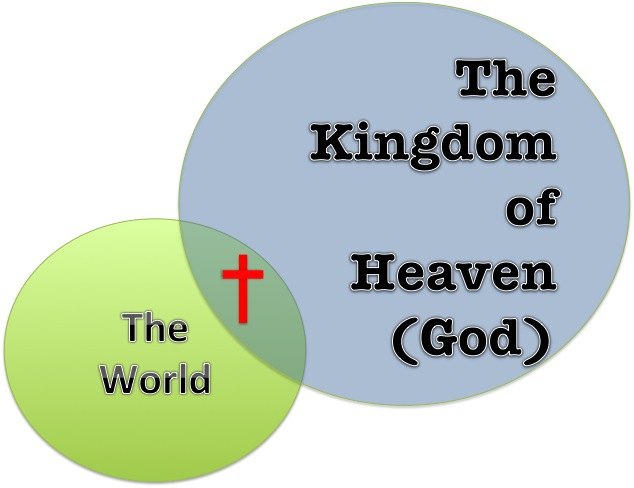
Before we do, let us remember that we defined the Beatitudes as divine, celebratory pronouncements of present and future joy for those in the Kingdom of God yet living in the world.  They do not appear to make sense to the world because the world is upside-down.  They are a roadmap for the values of the Kingdom of God in the overlap between the Kingdom of God and the fallen kingdom of this world.  They should be exhibited among the people of God, through whom the reign of God’s Kingdom is currently breaking through into this world.

The Progressive Nature of the Beatitudes

To get at the meaning of the second Beatitude, a general point about the relationship between the Beatitudes themselves is necessary.  It is a significant point, and one I would like us to consider.  Simply put, it is that the Beatitudes are interconnected and progressive.  They are interconnected insofar as they are not intended to be separated one from another.  They are progressive insofar as they are presented in a deliberate order and build one upon another.  Thus, the second Beatitude follows the first necessarily, as the third follows the second, the fourth follows the third, etc.

In this sense, it is best to think of the Beatitudes as a ladder with eight rungs, the bottom-most being poverty in spirit and the upper-most being persecution.  I believe if you will take the time to consider the particular order of the Beatitudes you will see that this makes sense.

img_8077

For instance, we considered last week that poverty of spirit refers to an acknowledgment of our souls’ impoverishment outside of the Lord God and His merciful grace.  That is to say, to be poor in spirit is to recognize our great and abiding need for Jesus Christ.  Is to realize that we bring nothing to the table but our sins whereas He brings to the table His love, which is everything.

The last Beatitude refers to the blessedness of persecution, of suffering and of possibly even laying down your life for the gospel.  We might say that a willingness to suffer for Jesus Christ is the ultimate mark of true Christian maturity, and martyrdom is the ultimate expression of that mark.  But between poverty of spirit and persecution there is a journey we must undergo, a journey of growth and maturation.

How does the recognition of the Beatitudes’ progressive nature help in our interpretation?  It helps in that we can look at the preceding Beatitude to give us a sense of direction in considering the current Beatitude.  Thus, “those who mourn” has something to do with those who are “poor in spirit.”  And that leads to a very natural conclusion:  those whom Jesus speaks of as mourning are those whose mourning arises out of the poverty of their spirit, out of the recognition of their lostness outside of Jesus Christ.  Meaning, they are mourning their spiritual poverty that is itself a result of human sinfulness.  They are mourning their sins.

This is a fascinating idea, but we might ask if there is any reason for believing that this is what “those who mourn” is addressing?

The Nature of this Mourning

Let me first say that the suggestion that “those who mourn” is a reference to “those who mourn their spiritual poverty and sinfulness” is not a rejection of the idea that the Bible offers comfort to those mourning the loss of a loved one or friend.  To be sure, scripture offers wonderful comfort to those who mourn and grieve over death and pain.  The gospel itself is comfort.  Nor would I suggest that it is wrong to say that the statement, “Blessed are those who mourn, for they shall be comforted,” is not true in regards mourning and grieving in general.  Rather, I am simply suggesting that, in the context of these Beatitudes, the mourning of which Jesus speaks is mourning over our own sinfulness.

There are nine Greek words for “sorrow.”  The one Jesus uses here (pentheo) is the most extreme, denoting the most intense form of sorrow and mourning.[2]  That is a significant fact.  It means that the mourning addressed here is profound, painful mourning emanating from the deepest recesses of the heart.  These are hard tears indeed!  And what are these tears for?  They are for the destitution of our own sinful hearts.  They are for the realities that lead us to being poor in spirit in the first place.

If the thought of mourning over sins seem theoretical to you, let me suggest that you recall how often scripture shows this reality.  For instance, we often see the godly grieving over the lostness of the world.  Consider Luke 19:41-44, which records the reaction of Jesus as He looked down at the city of Jerusalem.

41 And when he drew near and saw the city, he wept over it, 42 saying, “Would that you, even you, had known on this day the things that make for peace! But now they are hidden from your eyes. 43 For the days will come upon you, when your enemies will set up a barricade around you and surround you and hem you in on every side 44 and tear you down to the ground, you and your children within you. And they will not leave one stone upon another in you, because you did not know the time of your visitation.”

Consider Romans 9:1-3, in which Paul expresses the sadness of heart he feels over the Jews’ rejection of Jesus Christ.

1 I am speaking the truth in Christ—I am not lying; my conscience bears me witness in the Holy Spirit— 2 that I have great sorrow and unceasing anguish in my heart. 3 For I could wish that I myself were accursed and cut off from Christ for the sake of my brothers, my kinsmen according to the flesh.

Consider 1 Corinthians 5:1-2, in which Paul scolds the Corinthian church’s acceptance of a member who was having a relationship with his father’s wife.

1 It is actually reported that there is sexual immorality among you, and of a kind that is not tolerated even among pagans, for a man has his father’s wife. 2 And you are arrogant! Ought you not rather to mourn? Let him who has done this be removed from among you.

In Luke 6:25, mourning is promised those who are blithely carefree and careless in the world.  There, Jesus says, “Woe to you who laugh now, for you shall mourn and weep.”

I will never forget the first time I saw my father cry.  That is a memorable experience for a young man.  I was out of high school and was talking with my dad about the 1960’s, his generation.  He was sharing with me his opinion that the hippie movement of the 60’s had started out going in the right direction, that it was rightly protesting a great deal of the superficiality, plasticity, and hypocrisy of the American machine.  It was righteously indignant about government corruption and all that goes with it.  As he talked, he told me that, in his view, something went wrong with that movement.  Instead of moving towards Jesus Christ as the answer, it moved towards hedonism, careless and selfish free love, drugs, and debauchery.  Then he began to cry.  It caught me very much off guard at the moment, though I found it very moving:  my father crying over the lostness and sinfulness of his generation.

Have you ever shed tears for the depravity of the world?  Have you ever shed tears for your own depravity?

James seemed to feel that such tears were necessary and crucial.  In James 4:8-10, he wrote:

8 Draw near to God, and he will draw near to you. Cleanse your hands, you sinners, and purify your hearts, you double-minded. 9 Be wretched and mourn and weep. Let your laughter be turned to mourning and your joy to gloom. 10 Humble yourselves before the Lord, and he will exalt you.

Do you see how James’ words seem to be connecting the first two Beatitudes?  Poverty of spirit is reflected in James call for humility (v.10) and mourning is called for explicitly in verse 9.  Yes, the Bible knows quite a lot about the need to mourn over sin as the first step to coming to God.

I would argue that this is evident nowhere so clearly as in 2 Corinthians 7:5-13.  In this amazing passage, Paul is trying to comfort the Corinthians.  He is having to comfort them because they have come under deep conviction after receiving Paul’s first letter to them, 1 Corinthians, in which, again, he chastised them for being complicit in the open moral rebellion of a church member.  As you read this passage, keep in mind the words, “Blessed are those who mourn, for they shall be comforted.”

5 For even when we came into Macedonia, our bodies had no rest, but we were afflicted at every turn—fighting without and fear within. 6 But God, who comforts the downcast, comforted us by the coming of Titus, 7 and not only by his coming but also by the comfort with which he was comforted by you, as he told us of your longing, your mourning, your zeal for me, so that I rejoiced still more. 8 For even if I made you grieve with my letter, I do not regret it—though I did regret it, for I see that that letter grieved you, though only for a while. 9 As it is, I rejoice, not because you were grieved, but because you were grieved into repenting. For you felt a godly grief, so that you suffered no loss through us. 10 For godly grief produces a repentance that leads to salvation without regret, whereas worldly grief produces death. 11 For see what earnestness this godly grief has produced in you, but also what eagerness to clear yourselves, what indignation, what fear, what longing, what zeal, what punishment! At every point you have proved yourselves innocent in the matter. 12 So although I wrote to you, it was not for the sake of the one who did the wrong, nor for the sake of the one who suffered the wrong, but in order that your earnestness for us might be revealed to you in the sight of God. 13 Therefore we are comforted.

Truly amazing!  Paul notes that the Corinthians were “grieved into repenting” (v.9).  Interestingly, he calls this kind of grief “godly grief,” noting that “godly grief produces a repentance that leads to salvation without regret” and that godly grief produces “earnestness” in the believer (v.10-11).

The words “godly grief” suggests that there are kinds of grief that are not godly.  That is, there are kinds of grief, even grief over sin, that do not lead to repentance and salvation.  Thomas Watson, writing in 1660, spoke of a five-fold mourning that “is not the right gospel-mourning for sin.”  He defined these impure mournings, with accompanying examples, as:

  • A despairing kind of mourning (i.e., Judas Iscariot’s mourning)
  • Hypocritical mourning (i.e., Saul’s hypocritical repentance before Samuel)
  • Forced mourning (i.e., Cain’s fear of his punishment instead of his sin)
  • An outward mourning (i.e., “They disfigure their faces” Matthew 6:16)
  • A vain fruitless mourning (“Some will shed a few tears, but are as bad as ever.”)

Do any of these faulty kinds of mourning look familiar to you?  Do you recognize them in your own life?  Have you ever mourned the consequences of your actions and confused it for mourning your actual actions?  Have you ever mourned on the surface but not from your heart?  Have you ever mourned on the outside, employed a little bit of theatrics, without truly mourning?

Some of us who became believers at a young age may wonder how we can mourn over our sins.  Some of us have even listened with a kind of weird envy to those dramatic testimonies that we usually put front and center in churches:  testimonies of people caught in shocking addictions or guilty of shocking crimes who were suddenly and dramatically converted from darkness to light.  Some of us might even say to ourselves, “Why could I not have had more dramatic sins to mourn over, to be redeemed from, to tell stunned audiences about?”

Let me say that the mistake of such thoughts is a mistake of perspective:  all sins are profoundly ugly and destructive and all sinfulness should drive us to mourning.  Consider as well the sins you have committed since coming to Christ.  Consider your sins of mind.  Consider your sins of neglect and omission.  Consider your heart whenever it turns from Jesus.  Look deeply into your heart and you will have more than sufficient reason to mourn, be you eight or eighty.

True mourning is heart-brokenness over our actual sins.  The mourning that brings the blessing of God arises when one who is poor in spirit sees, is broken by, and grieves over the specific sins and the sinful disposition that has separated that one from the Lord God.  Those who mourn in this way will be blessed, for the Lord Jesus does not despise the grieving heart.

The Beauty of Comfort Christ Gives

The poor in spirit are blessed.  Those who mourn their poverty of spirit are blessed.  The Kingdom of God is for those who are broken over their great and undeniable need for God.  Those who are not so broken cannot even receive the Kingdom anyway, though they desperately need it!

I love how the great John Chrysostom put it:

Where shall they be comforted!  Tell me.  Both here and there.  For since the thing enjoined was exceeding burthensome and galling, He promised to give that, which most of all made it light.  Wherefore, if thou wilt be comforted, mourn:  and think not this a dark saying.  For when God doth comfort, though sorrows come upon thee by thousands like snow-flakes, thou wilt be above them all.  Since in truth, as the returns which God gives are always far greater than our labors; so He hath wrought in this case, declaring them that mourn to be blessed, not after the value of what they do, but after His own love towards man.[3]

The gospel tells us that the blood of Jesus Christ is sufficient to cover all our sins.  This means that you can rest in the comfort that Christ has won us!  This means that you can, indeed, be free!

We often hear Revelation 21 read at funerals, but let me ask you to consider this passage, particularly verses1-4, in the light of the second Beatitude, “Blessed are those who mourn, for they shall be comforted.”  These verses read:

1 Then I saw a new heaven and a new earth, for the first heaven and the first earth had passed away, and the sea was no more. 2 And I saw the holy city, new Jerusalem, coming down out of heaven from God, prepared as a bride adorned for her husband. 3 And I heard a loud voice from the throne saying, “Behold, the dwelling place of God is with man. He will dwell with them, and they will be his people, and God himself will be with them as their God. 4 He will wipe away every tear from their eyes, and death shall be no more, neither shall there be mourning, nor crying, nor pain anymore, for the former things have passed away.”

Ah!  The “loud voice” shouts out, “He will wipe away every tear from their eyes!”  A friend of mine once said to me, “Wyman, have you ever asked yourself why it is that everybody is crying in Heaven, that everybody has tears that need to be wiped away?”  He then suggested that the reason everybody is crying is because we know we do not deserve the Kingdom, because we are mourning what we know of our own hearts and the distance we see between our hearts and His glory.

But herein lies the comfort:  Jesus is in the business of wiping away heart-broken tears!  Jesus is in the business of picking up those who are broken under their sinfulness!  Jesus is in the business of calling home those who are far off!  Jesus is in the business of comforting those who mourn!

Bless are you who are mourning, for you will be comforted!


[1] R. Kent Hughes, The Sermon on the Mount. (Wheaton, IL: Crossway Books, 2001), p.29.

[2] John MacArthur, Matthew 1-7. The MacArthur New Testament Commentary (Chicago, IL: Moody Publishers, 1985), p.157.

[3] John Chrysostom, Homilies on the Gospel of St. Matthew. Nicene and Post-Nicene Fathers. Vol.10. First Series. Ed., Philip Schaff (Peabody, MA: Hendrickson Publishers, 2004), p.93.

Matthew 5:3

Matthew 5:3

3 “Blessed are the poor in spirit, for theirs is the kingdom of heaven.”


A number of years ago Ted Turner offended a lot of Christians by saying, “Christianity is for losers.”  Remember that?  “Christianity is for losers.”  That comment created quite the media storm.  In fact, the controversy was so intense for Turner that he eventually proposed to Johnny Hunt, the pastor of First Baptist Church, Woodstock, GA, that he, Turner, apologize for the comment at a Christian luncheon, which he did.  He has since then apologized again, saying he regretted making the comment.

That comment immediately struck me as interesting.  “Christianity is for losers.”

For some reason I did not feel particularly offended by it.  For one thing, opponents of Christianity have often leveled that charge, particularly Nietzsche, who railed against what he said was Christianity’s elevation of weakness and pity and “slave-morality.”  For another thing, I have long since stopped being outraged when non-believers act like non-believers, and the thought of having a non-believer apologize to believers strikes me as odd on a number of levels.  For yet another thing, Paul said something very close to Turner’s statement in 1 Corinthians 1 (albeit, without the intended insult and rancor) when he wrote:

26 For consider your calling, brothers: not many of you were wise according to worldly standards, not many were powerful, not many were of noble birth. 27 But God chose what is foolish in the world to shame the wise; God chose what is weak in the world to shame the strong; 28 God chose what is low and despised in the world, even things that are not, to bring to nothing things that are, 29 so that no human being might boast in the presence of God.

No, Paul didn’t say, “Christianity is for losers.”  But he did say that Christianity is generally comprised of people that the world does not call “winners.”

I suppose above everything else, my reaction to the statement, “Christianity is for losers,” was, “Well, kind of, yeah!”  Meaning, there is a kind of truth to that, isn’t there?  I read the comments of one Christian after Turner’s controversial statement who made a good point.  He asked his readers to imagine how the opposite statement would sound:  “Christianity is for winners!”  Somehow that seems more problematic that Ted Turner’s comment.

After all, everybody who is born again knows that to be born again they had to first reach a point where they realized there great need for the new birth.  We wouldn’t say that Christianity is for “losers,” but we definitely would say that Christianity is for “the lost,” right?  More than that, Christianity is for people who realize that they have become losers in the great arena of life, that they cannot win on their own, that something is very, very wrong with us, and that we need help from the inside out.

Nobody was ever saved by saying, “Jesus, I’m a winner!  Save me!”  No, we’re saved by saying, “Jesus, I am lost and broken and rightly condemned!  Have mercy on me, a sinner!”

The world condemns such sentiments, considering them to be groveling and beneath the dignity of man.  The world celebrates the strong man, the winner, the champion.  However, Jesus began His Beatitudes by saying, “Blessed are the poor in spirit, for theirs is the kingdom of heaven.”

Want to hear a controversial statement?  Try that on for size!  “Blessed are the poor in spirit, for theirs is the kingdom of heaven.”

What can that possibly mean?  Let’s consider it this morning.  First, however, let’s consider the fact that this statement begins what we call the Beatitudes, traditionally numbered at eight (though some see more than that here) and introducing the SM.

What are the Beatitudes?

The SM begins with eight Beatitudes, so called because of the Latin word beatus which, in Latin, means “blessed.”  They are:

“Blessed are the poor in spirit, for theirs is the kingdom of heaven.

“Blessed are those who mourn, for they shall be comforted.

“Blessed are the meek, for they shall inherit the earth.

“Blessed are those who hunger and thirst for righteousness, for they shall be satisfied.

“Blessed are the merciful, for they shall receive mercy.

“Blessed are the pure in heart, for they shall see God.

“Blessed are the peacemakers, for they shall be called sons of God.

“Blessed are those who are persecuted for righteousness’ sake, for theirs is the kingdom of heaven.  Blessed are you when others revile you and persecute you and utter all kinds of evil against you falsely on my account. Rejoice and be glad, for your reward is great in heaven, for so they persecuted the prophets who were before you.

Again, the number of Beatitudes has been debated and various schemes of organizing them have been proposed, but I will be working with this arrangement, combining what may look like two Beatitudes at the end of the list into one on persecution.

It is important before we begin considering the individual Beatitudes that we understand what Jesus is doing here.  Clearly these constitute a unique section, given the similarity of their wording and their prominence here at the very beginning of the SM.  There are a few interesting things we should note about these, however, that I think will help us get at a definition of what these Beatitudes are.

To begin, let’s consider whether or not the first word here should be “blessed” or “happy.”  The great Greek scholar A.T. Robertson pointed out that there is a Greek word for “blessed” (eulogetoi), but that this is not the word used in the beatitudes.  Instead, the word makarioi is used and that word means “happy.”  While most English translations have used “blessed” instead of “happy” (presumably because of the connection of the word “happy” with the idea of chance or changing circumstances, or the flippancy with which the word “happy” is used in common English), Robertson protests, “But ‘happy’ is what Jesus said…It is a pity that we have not kept the word ‘happy’ to the high and holy plane where Jesus placed it.”[1]

In other words, because of how shallow and grounded in changing circumstances the word “happy” is in the English language, most translators have rendered it “blessed” instead.  This has been done, again, to provide a higher concept than mere happiness, but also in an effort to communicate that these Beatitudes are, in fact, declarations of God over His people.  I understand this motivation, and I will be using the word “blessed” throughout, but please do note that a grand and high sense of human happiness was in the heart of Jesus when He gave these.

Secondly, William Barclay has pointed out that the word “are” that is used in each of the Beatitudes is absent from the Greek.  He points out that Jesus was actually employing here “a very common kind of expression” in Aramaic and Hebrew, and that instead of “Blessed are the poor in spirit…” it should read, “Oh the blessedness of the poor in spirit…”  This means that “the beatitudes are not simple statements; they are exclamations…[T]he beatitudes are not pious hopes of what shall be; they are not glowing, but nebulous prophecies of some future bliss; they are congratulations on what is.”[2]

This is significant for us to understand.  The Beatitudes are joyful, bursting expressions of divine favor over those whom the world rejects.  “Oh the blessedness of the poor in spirit!”

Finally, New Testament scholar Craig Blomberg has pointed out that “an important change in tenses separates vv.3 and 10 from vv.4-9.  In the first and last Beatitudes, Jesus declares God’s kingdom to be present for those who are blessed.  In the intervening verses he refers to future consolation.”[3]  This is important for two reasons.  First, as D.A. Carson has pointed out, “To begin and end with the same expression is a stylistic device called an ‘inclusio.’  This means that everything bracketed between the two can really be included under the one theme, in this case, the kingdom of heaven.”[4]  Second, this changing tense helps us understand something very important about what Jesus calls “the kingdom of heaven.”  Simply stated, the fact that some of the blessings are present and some are future reveal that the kingdom of Heaven, the kingdom of God, is a reality that is breaking into the kingdom of the world right here and right now in and through the people of God but it is also a future reality that will not be perfectly realized until the grand consummation of all things.

I’ve put together a little image that I think may help us get at this important truth, the kingdom of God as having come but still coming, as being “already/not yet.”

worldkingdom

As I say, this is a very basic image and it is intentionally designed so.  On the left we have the world.  This is the world in which we live.  It is fallen.  It is dead and dying.  It is under the curse of sin.  Satan holds sway here.

Yet the good news of the gospel of Jesus Christ is that God has stepped into this fallen world, which He originally made good, and has offered a way for us to be saved through the sacrifice of His Son on the cross and through the resurrection of Jesus from the dead.

When we come to Christ, we are changed from the kingdom of darkness and death and sin to the kingdom of God, which is a kingdom of salvation and light and truth.  The kingdom of God is so much bigger than the world!  It has so much more to offer.  We enter it through the cross, which you will note is there at the center of the overlapping circles.

For our purposes, however, I simply want to note that the kingdoms overlap a bit now in the reign of Christ among His people, the Church.  There was a time in my Christian life when I might not have put that diagram together just like that.  I would have seen the kingdom of the world here, then the cross within it, then perhaps a bridge from the cross to the whole separated kingdom of God.  In other words, there was a time when I saw the kingdom of God as wholly future.  The purpose of Jesus, then, was simply to get me ready for what was coming after death.

However, in reading the Bible I noticed that Jesus did not always use the future tense to speak of the kingdom of heaven.  In fact, He told people to repent for “the kingdom of heaven is at hand” (Matthew 3:2).  Even more provocatively, I found this in Luke 17:

20 Being asked by the Pharisees when the kingdom of God would come, he answered them, “The kingdom of God is not coming in ways that can be observed, 21 nor will they say, ‘Look, here it is!’ or ‘There!’ for behold, the kingdom of God is in the midst of you.”

The King James Version translates verse 21 to say, “The kingdom of God is within you.”

Well!  This is an astounding thought.  What this must mean is that there is a sense in which the kingdom of God is coming.  We will not receive it fully and perfectly until we die and stand before our God.  But there must be another sense in which it is already beginning to break into this old and dying kingdom into which we were born.  And that happens in the current reign of Christ in and among His people.

What this means, then, is that the church, believers in Christ, are now equipped to begin modeling what the kingdom of God is in their current lives and relationships while awaiting the complete fruition of this in the days to come.  The kingdom has come.  The kingdom is coming.  And this brings us to the Beatitudes and, indeed, the entire SM.

This means that the Beatitudes are kingdom of heaven proclamations here and now over those who have come and are coming to Christ.  It is a picture of the true state of things.  This world may see them as odd, and may, indeed, see Christianity as being for losers.  But in the kingdom of God and the economy of God, what the world rejects as useless God calls blessed.  Therefore, the poor in spirit are happy and blessed!

I love how N.T. Wright put this.  He wrote, “[The Beatitudes] are a summons to live in the present in the way that will make sense in God’s promised future; because that future has arrived in the present in Jesus of Nazareth.  It may seem upside down, but we are called to believe, with great daring, that it is in fact the right way up.”[5]

Taking all of this into consideration, here is how I have defined the Beatitudes:  The Beatitudes are divine, celebratory pronouncements of present and future joy for those in the Kingdom of God yet living in the world.  They do not appear to make sense in the world because the world is upside-down.

Who are the “Poor in Spirit”?

With this Kingdom perspective in mind, let us turn to the first Beatitude and ask ourselves who these “poor in spirit” are.  Let us begin, first, with the word “poor.”

John MacArthur notes that the word for “poor” used here, ptochos, means “to shrink, cower, or cringe” and was used in Classical Greek “to refer to a person reduced to total destitution, who crouched in a corner begging.  As he held out one hand for alms he often hid his face with the other hand, because he was ashamed of being recognized.  The term did not mean simply poor, but begging poor.”[6]  In other words, Jesus is speaking here of the poorest of the poor.  He is speaking of absolute gutter poverty and destitution.

But what kind of poverty is this?  Is it material poverty?  No, Jesus is speaking of “the poor in spirit.”  The Bible actually never hails poverty per se as a blessed state, nor does it condemn wealth per se as a curse.  To be sure, it often pronounces good news to the poor and oppressed, for whom humility is often a gift.  And it often warns the wealthy, for whom pride is often an inclination.  But it never makes a blanket statement about either.  In truth, a poor man can be proud and a wealthy man can be humble.  In terms of this first Beatitude, we might say that a materially poor man might actually be “rich in spirit” and a materially wealthy man might actually be “poor in spirit.”

No, this is not a simple reference to material poverty.  It is poverty of spirit.  But what is poverty of spirit?  Simply put, to be poor in spirit is to realize your complete bankruptcy of soul outside of the grace of Jesus Christ.  It is to realize that, without God’s saving hand, you are utterly lost and hopeless and condemned.  It is not a statement of worthlessness.  No human being is worthless.  Instead, it is a statement of perspective and the condition of our souls.  It is a recognition of our desperate need for a savior.

Some have defined poverty of spirit as humility.  I think that is not far off.  In truth, the poor in spirit refers to the man or woman who is humbled over his or her lostness, his or her need for a Savior, and his or her poverty outside of the Lord.  It is a recognition that we are not God.  Furthermore, it is brokenness under the weight of the knowledge of what we are without Him.

It is not surprising that the spirit of our proud age hates and detests this idea of being poor in spirit.  Our world does not value humility, lowliness, a recognition of the insufficiency of our own efforts.  On the contrary, our world, in its blindness, treasures the exact opposite, considering mankind to possess inherent rights to power and title and privilege.  As such, it mocks this Beatitude.

Consider, for instance, an article entitled “The Failure of Christianity,” published in 1913 in the journal, Mother Earth, by the atheist, anarchist Emma Goldman.  In it, she said this:

“Blessed are the poor in spirit, for theirs is the Kingdom of Heaven.”

Heaven must be an awfully dull place if the poor in spirit live there. How can anything creative, anything vital, useful and beautiful come from the poor in spirit? The idea conveyed in the Sermon on the Mount is the greatest indictment against the teachings of Christ, because it sees in the poverty of mind and body a virtue, and because it seeks to maintain this virtue by reward and punishment. Every intelligent being realizes that our worst curse is the poverty of the spirit; that it is productive of all evil and misery, of all the injustice and crimes in the world. Every one knows that nothing good ever came or can come of the poor in spirit; surely never liberty, justice, or equality.[7]

Do you see?  To Emma Goldman the poor in the spirit are not blessed, they are cursed.  She would say to us that there is no God to whom we are accountable and there is no God by whom we are saved.  There is no higher power than man before whom we should bend our knee.  But Jesus said precisely the opposite, and everything in our experience confirms the truthfulness of what Jesus has said.

Yes, this Beatitude is hated by the world.  The anti-Christian Roman Emporer who we know as Julian the Apostate used this Beatitude to defend his confiscation of the property of early Christians, saying that he simply wanted to help them enter the Kingdom of Heaven poor.[8]  So the world hates and mocks these words of Jesus.  Against these antagonists of the truth we might remember Jesus’ charge against the church of Laodicea in Revelation 3:17, “For you say, I am rich, I have prospered, and I need nothing, not realizing that you are wretched, pitiable, poor, blind, and naked.”

The world may despise these words, but to us they are the very words of life.  Why?  Because poverty of spirit is how we receive the grace of God in Christ!  Those who are rich in spirit have their hands full of their own perceived majesty and cannot receive Jesus as a result.  The poor in spirit, by contrast, have their arms opened in humble acceptance of all that God will mercifully grant us in Christ…and that is everything.

The Lord spoke through the prophet Isaiah in Isaiah 66:2b and said, “But this is the one to whom I will look:
he who is humble and contrite in spirit
and trembles at my word.”  Do you see the beauty of this?  The Lord looks upon the poor the spirit, “he who is humble and contrite in spirit and trembles at [His] word.”  This is not showy groveling.  This is sincere humility before a holy God.

And that is key:  the recognition of God’s utter holiness.  It is not until we see the splendor of His Spirit that we are able to see the desperation of our spirits.  It is not until we see Him as He is that we are able to see ourselves as we are.  Poverty within us does not come about until we stand in awe of the majesty within Him.  This is why D. Martyn Lloyd-Jones wrote, “The way to become poor in spirit is to look at God.”[9]

See Him, and you will see yourself.  Then you will be poor in spirit, unless you turn from the truth to a lie.

How is the Kingdom of Heaven “Theirs”?

But how are the poor in spirit “blessed”?  In particular, how is the kingdom of heaven “theirs”?  I think that question is most beautifully answered by Jesus Himself in a story He told in Luke 18 about two very different men.  Listen:

9 He also told this parable to some who trusted in themselves that they were righteous, and treated others with contempt: 10 “Two men went up into the temple to pray, one a Pharisee and the other a tax collector. 11 The Pharisee, standing by himself, prayed thus: ‘God, I thank you that I am not like other men, extortioners, unjust, adulterers, or even like this tax collector. 12 I fast twice a week; I give tithes of all that I get.’ 13 But the tax collector, standing far off, would not even lift up his eyes to heaven, but beat his breast, saying, ‘God, be merciful to me, a sinner!’ 14 I tell you, this man went down to his house justified, rather than the other. For everyone who exalts himself will be humbled, but the one who humbles himself will be exalted.”

Ah!  The Pharisee was rich in spirit, was he not?  He thought he had a lot to offer:  “God, I thank you that I am not like other men…”  Then he lists off his resume.  He was haughty.  He was proud.  He did not show genuine humility.  To hear him pray, you wonder why he even felt the need to do so if he was already so wonderful.

But the tax collector, a man deeply despised in that culture, was poor in spirit.  He doesn’t say much, just, “God, be merciful to me, a sinner!”  And he is immediately blessed by God.  How so?   “I tell you, this man went down to his house justified, rather than the other.”  The poor in spirit are richly blessed!

The kingdom of heaven is for the poor in spirit because Christ is for the poor in spirit.  In Christ, we inherit the riches of our God.  As Paul says in Romans 8:

12 So then, brothers, we are debtors, not to the flesh, to live according to the flesh. 13 For if you live according to the flesh you will die, but if by the Spirit you put to death the deeds of the body, you will live. 14 For all who are led by the Spirit of God are sons of God. 15 For you did not receive the spirit of slavery to fall back into fear, but you have received the Spirit of adoption as sons, by whom we cry, “Abba! Father!” 16 The Spirit himself bears witness with our spirit that we are children of God, 17 and if children, then heirs—heirs of God and fellow heirs with Christ, provided we suffer with him in order that we may also be glorified with him.

Christ is for the poor in spirit because Christ humbled Himself, even to the point of death on the cross.  He became low for the lowly.  He became poor for the poor in spirit.  He took our poverty and gave us instead His riches!

In “The Ballad of Reading Gaol,” Oscar Wilde wrote, “How else but through a broken heart may Lord Christ enter in?”

Indeed!

Oh blessed the poor in spirit!

Oh happy the humble before God!


[1] A.T. Robertson, Word Pictures in the New Testament. Vol.1. (Nashville, TN: Broadman Press, 1930), p.39.  On the other hand, Hughes: “Contrary to popular opinion, blessed does not mean ‘happy,’ even though some translations have rendered it this way.  Happiness is a subjective state, a feeling.  But Jesus is not declaring how people feel; rather, he is making an objective statement about what God thinks of them.” R. Kent Hughes, The Sermon on the Mount (Wheaton, IL: Crossway Books, 2001), p.17.  But Hughes’ rejection of “happy” is based less on linguistic considerations than on the current, vapid usage of the word in American culture, whose insertion into the interpretation of the Beatitudes he rightly rejects.  Stott recognizes this outright, that “the Greek can and does mean ‘happy,’” but that “it is seriously misleading to render it ‘happy’ in this case.” John Stott, The Beatitudes. John Stott Bible Studies (Downers Grove, IL: InterVarsity Connect, 1998), p.11-12.  However, Carl Vaught has pointed out that there are, in fact, two Greek words for “happiness,” and Matthew chooses the higher one: “The word that Jesus uses at the beginning of his teaching points to the concept of happiness.  There are two words for happiness in Greek that our author could have used.  One is the word eudaimonia and is the term Aristotle uses when he speaks about human happiness in the Nicomachean Ethics.  By contrast, Matthew uses the word makarios, which points beyond human happiness to a divine realm and to the kind of happiness appropriate to it.” Carl G. Vaught, The Sermon on the Mount. (Waco, TX: Baylor University Press, 2001), p.12.

[2] William Barclay, Gospel of Matthew. Vol.1. The Daily Study Bible (Edinburgh: The Saint Andrew Press, 1968), p.83.

[3] Craig L. Blomberg, Matthew. The New American Commentary. Vol.22 (Nashville, TN: Broadman Press, 1992), p.97.

[4] D.A. Carson, Jesus’ Sermon on the Mount (Grand Rapids, MI: Baker Books, 1987), p.17.

[5] Tom Wright, Matthew for Everyone. Part One. (Louisville, KY: Westminster John Knox Press, 2004), p.38.

[6] John MacArthur, Matthew 1-7. The MacArthur New Testament Commentary (Chicago, IL: Moody Press, 1985), p.145.

[8] Augustine, Sermon on the Mount, Harmony of the Gospels, Homilies of the Gospels. Nicene and Post-Nicene Fathers. First Series, Vol.6. ed., Philip Schaff (Peabody, MA: Hendrickson Publishers, 2004), p.4, n.10.

[9] D Martyn Lloyd-Jones, Studies in the Sermon on the Mount. (Grand Rapids, MI: William B. Eerdmans Publishing Company, 1976), p.42.

Matthew 5:1-2

Matthew 5:1-2

1 “Seeing the crowds, he went up on the mountain, and when he sat down, his disciples came to him. 2 And he opened his mouth and taught them, saying”


How shall I begin to lead us through the Sermon on the Mount (SM hereafter)?  You will never know how that question has weighed on me since I announced we would be taking this journey.  That question, “How shall I begin to lead us through the SM,” is roughly analogous to the question, “How shall I reconstruct the great pyramids?” or, “How shall I redirect the Nile River?”

It is a monumental task, and one that has been undertaken by the best minds and hearts of the Christian church throughout two millennia of history.  That is what makes this so daunting:  the fact that so many great men of God have turned their attention to this sermon, and have done so with such startling insight and eloquence, but have all likewise done so with a certain sense of frustration.  For try as we might this sermon recorded in Matthew 5-7 is rightly recognized as the pinnacle of all Christian instruction, the apex of the Christ’s revelation of what life in the Kingdom of God is like.

But that is not the main reason why approaching this sermon is so daunting.  I suppose what makes it so very intimidating and so very frightening, is the fact that every time I begin to read this sermon I find that I am not reading it so much as it is reading me.  This sermon is a painful sermon.  R. Kent Hughes said that this sermon was “violent.”[1]  I tend to agree.  It hits us, time and again, with the glory of Christ and, simultaneously, with the inglorious nature of man.  It shows us our distance from almighty God.  It paints a picture of life in the Kingdom that is positively otherworldly…and yet necessarily this worldly in its intent.  And there is the rub:  the sermon leaves us no room to resign it to the theoretical.  I have long since rejected the notion that Jesus gave us this sermon to create a sense of despair, to show us an utterly unattainable ideal just to crush us so we would crawl to Him in desperation.  Do not misunderstand me:  the result of the sermon, if read rightly, is always that we will crawl to him in desperation.  But the truly frightening thing about this sermon is (a) that Jesus seemed to really mean it and (b) that Jesus seemed to be really calling us to the life outlined therein.

Yes, there is a violence to this sermon in terms of how it wounds us in our shallow faith, our plastic confessions, our superficial Christianity.  But then I remember that figure who stands behind the sermon:  Jesus.  Sometimes His words do feel violent, but never cruelly so, never sadistically so, never violent for the sake of violent.  The person of our loving Lord brings to the table another intriguing thought:  what if Jesus did not preach this sermon to crush us but to heal us?  What if the pain we experience in reading this sermon is not the desired end, but rather the necessary means to the end that is Christ itself?

When I announced that I would be preaching through the SM and that I had encouraged and challenged us all to memorize the sermon, I received an email from a dear friend of mine in another state.  What his email said surprised me, though I knew and know deep down that what it says is true.  Let me share a few parts with you:

Wyman,

I would like to be the last man on earth to discourage you or your church from memorizing the sermon on the mount.  I would be the first in line to say I need this medicine in the worst way and often.   I would like to say a few simple things you already know just so I get to “hear it” again so to speak.

1.  Those who need a “radical recommitment” to Jesus were not likely to have been committed to begin with.  By that I simply mean that what we call “radical commitment” may go away at the first winds of adversity and stay gone for a while.  Those who start out “radically committed” do fail and perhaps often but then the get up and start afresh and anew after each failure.  Radical commitment I am inclined to believe means daily repentance much like some of the medieval monks and the like. (more pain) Much of the “modern” American church is just not that interested in committing to Jesus and living what He taught.  Too painful and hard?

2.   Memorizing the sermon on the mount will naturally lead to some great internalized conflicts in many that will either resolve in abandonment of the truth or the forsaking of lesser things in repentance and commitment to Jesus.  Not much room in the sermon for “gray” or mild fixes.

3.   You as the leader in the effort will quiet likely face some deep-seated and long-held views that very well may have to die or go away to follow fully.  The numbers who take it to heart and do this may be small indeed by the time you get to the end or in other words the “committed” flock may be very small indeed.  Those who can’t, won’t or are unable to follow may begin to view those who do as “weird”, strange and even resent the contrast.   Strife may ensue…

…The glory of Christ and the wonders of His Kingdom as presented in the sermon on the mount is absolutely devastating to the flesh and the “comfortable” thing we call Christianity in America.   It has broken me down to tears and repentance many times mostly due to sinful inclinations that will not give up to do what He teaches us in that simple Kingdom message.  So, my dear friend, I hope and will pray that you find God’s very best but I just had to sound the alarm that the most shocking thing you will find is heart knowledge still ruling that has

no business in there …and a glory of Christ so breathtakingly splendid and exalted as to leave self in a heap of broken shards on the ground.  Our little concept of Christ in the modern western church is so weak and pathetic in so many ways.    Self revelation can be and often is terribly painful, ugly and just down right unbearable at times.   I will pray that Roni can hang while you have your theological construct shattered into a pile of near useless rubble as Christ is lifted up high and glorious in your own “heart’s eyes” as we have made for ourselves a god far too small and of ourselves persons far too big…

…May you find the grace and love to accept the unlovely and the unlovable because the sermon on the mount is going to “produce” a lot of both or at least that has been my experience with it.  It is lovely and it is compelling but it is just as equally costly and hard to do when it involves two or more people.

Do you find that too dramatic?  Soon, you will not.  This sermon searches us and leans against us in ways that make the reading painful.  In his wonderful book, Studies in the Sermon on the Mount, D. Martyn Lloyd-Jones speaks of the beginning of the SM in this way:

These beatitudes crush me to the ground.  They show me my utter helplessness.  Were it not for the new birth, I am undone.  Read and study it, face yourself fin the light of it.  It will drive you to see your ultimate need of the rebirth and the gracious operation of the Holy Spirit.  There is nothing that so leads to the gospel and its grace as the Sermon on the Mount.[2]

Brothers and sisters, let us pray that God wounds us where we need to be wounded so that He might heal us where we need to be healed.  This sermon is a hard tonic, but it is sweet if received with an open heart.  This sermon is violent, but it is the violence of a loving friend who loves us enough to wound us with truths we do not want to hear.  This sermon does wound us…but faithful are the wounds of a friend.  The first time you read this sermon, it may feel like a cross has been dropped across your shoulders…but it is merely the cross that Jesus has called us to carry.  This sermon drives us to our knees…but it is on our knees that we are most able to receive the mercy of our tender Lord.

As we begin journeying through the SM, let me offer an analogy that might help us understand our approach. Hans Dieter Betz likened journeying the SM to touring a great cathedral.

The experience can thus be compared with visiting famous old castles or cathedrals.  Tourists may put in thirty minutes to walk through, just to get an impression, and that is what they get.  But if one begins to study such building with the help of a good guidebook, visions of whole worlds open up.  Whether it is the architecture, the symbols and images, the statues and paintings, or the history that took place in and around the buildings, under closer examination things are bound to become more and more complicated, diverse, and intriguing, with no end in sight.[3]

My intent is not to have us run through the cathedral for thirty minutes.  Instead, let us take our time, walking carefully, slowly, observing as we go the varied and multifaceted layers of this staggering and stupefying sermon.  Let us not miss what is happening in our rush to get through.

How shall we begin, then?  Simply like this:  by defining the what, the where, and the why.  We will approach these questions with a consideration of the first two verses of Matthew 5.

1 “Seeing the crowds, he went up on the mountain, and when he sat down, his disciples came to him. 2 And he opened his mouth and taught them, saying”

The What?

What is this sermon we begin considering today?  The most simple answer is found in verse 2: “And he opened his mouth and taught them…”  So Matthew 5-7 is a series of teachings from the mouth of Jesus.  They are teachings directed primarily at the disciples, as we learn in verse one: “Seeing the crowds, he went up on the mountain, and when he sat down, his disciples came to him.”  But do note that while they are initially directed toward His disciples, the crowd is nearby.  Furthermore, chapter seven will tell us that “the crowd was astonished.”

Jesus goes onto the mountain and sits, in the traditional manner of a teaching rabbi.  When He sits, His disciples move toward Him from the crowd.  Yet the instructions are loud enough to be heard by the crowd, who, apparently, move closer to hear the shocking words of the sermon.  The SM, then, is a series of verbal teachings from Jesus, seemingly initially directed toward His followers, but not kept from the crowd at large.

While it is not an insignificant point that these teachings can only be grasped by His disciples, it is furthermore significant that the wider crowd heard them.  There is therefore a sense in which the sermon is offered to the world.  This is likely what was behind John Wesley’s adamant insistence that the SM was not merely for disciples but rather for “all the children of men; the whole race of mankind; the children that were yet unborn; all the generations to come, even to the end of the world, who should ever hear the words of this life.”[4] In a sense, yes, but it is also true that conversion is necessary for the SM to be understood, grasped, and lived.  In other words, the SM is for disciples and for the whole world, but in different kinds of ways.  For disciples, it is light on the path to which they have already committed themselves.  For the world, it is an invitation and a challenge to enter this new way of living.

As we progress, considering the what, the where, and the why, let us construct a definition, building on it as we go.  What is the SM?  The SM is a message delivered by Jesus specifically to His followers but also, beyond them, to everybody who will come to Him. 

The Where?

But it is not just a sermon is it?  It is the sermon on the mount.  Perhaps no sermon has been so geographically defined as this one.  You may be interested to know that the phrase, “the sermon on the mount,” comes from St. Augustine’s 4/5th century commentary that he entitled, Our Lord’s Sermon on the Mount.[5]

Is there any significance in the fact that the sermon is preached on a mountain?  Christians throughout history have tended to believe there is, with some of the theories as to the significance of the location being fanciful and some of them less so.

The author of the anonymous fifth century commentary on Matthew, the Opus Imperfectum in Matthaeum, suggested three reasons why Jesus went up onto the mountain to deliver his sermon:  (1) in order to fulfill Isaiah 40:9 (“Go on up to a high mountain, O Zion, herald of good news;
lift up your voice with strength, O Jerusalem, herald of good news; lift it up, fear not;
 say to the cities of Judah, “Behold your God!”), (2) to show us the high and exalted nature of the things of God, and (3) because the mountain is a symbol of the church, where men and women go today to receive the words of God in Christ.[6]  That last reason seems to me to be reading a bit too much into the location of the SM, though, of course, it is right in asserting that it is in the church that we heard the Word of God today.  Jerome saw a metaphorical significance to the mountain, saying that Jesus went up the mountain “that he might bring the crowds with him to higher things.”  Augustine suggested that the mountain was the chosen place for the sermon in order to show the superiority of the gospel (“the gospel’s higher righteousness”) to the earlier teachings the Lord gave the Hebrews.  The early Christian Chromatius, writing in the 5th century, said that Jesus was trying to draw a contrast to Mt. Sinai, where the law was earlier given to the Jews:  Sinai being a mount of judgment and fear, this mountain being a mountain of blessing and of grace.[7]

Most Christians have tended to agree with Chromatius’ general point.  I certainly do.  It is almost a certainty that Jesus’ going up onto the mountain was intended to evoke an image in the minds of the Jews who witnessed it.  There was a kind of prophetic provocativeness about it.  In truth, it was likely intended to stir a memory.  That image and that memory comes from Exodus 19.  In this chapter, Israel has encamped around Mt. Sinai and God speaks to Moses:

9 And the Lord said to Moses, “Behold, I am coming to you in a thick cloud, that the people may hear when I speak with you, and may also believe you forever.” When Moses told the words of the people to the Lord, 10 the Lord said to Moses, “Go to the people and consecrate them today and tomorrow, and let them wash their garments 11 and be ready for the third day. For on the third day the Lord will come down on Mount Sinai in the sight of all the people. 12 And you shall set limits for the people all around, saying, ‘Take care not to go up into the mountain or touch the edge of it. Whoever touches the mountain shall be put to death. 13 No hand shall touch him, but he shall be stoned or shot; whether beast or man, he shall not live.’ When the trumpet sounds a long blast, they shall come up to the mountain.” 14 So Moses went down from the mountain to the people and consecrated the people; and they washed their garments. 15 And he said to the people, “Be ready for the third day; do not go near a woman.” 16 On the morning of the third day there were thunders and lightnings and a thick cloud on the mountain and a very loud trumpet blast, so that all the people in the camp trembled. 17 Then Moses brought the people out of the camp to meet God, and they took their stand at the foot of the mountain. 18 Now Mount Sinai was wrapped in smoke because the Lord had descended on it in fire. The smoke of it went up like the smoke of a kiln, and the whole mountain trembled greatly. 19 And as the sound of the trumpet grew louder and louder, Moses spoke, and God answered him in thunder. 20 The Lord came down on Mount Sinai, to the top of the mountain. And the Lord called Moses to the top of the mountain, and Moses went up.

Immediately following this, in Exodus 20, Moses receives the ten commandments from the hand of the Lord.  The wording on Exodus 19:20 is key, and it shares the same language as Matthew 5:1.

Exodus 19:20 – “And the Lord called Moses to the top of the mountain, and Moses went up.”

Matthew 5:1a – “Seeing the crowds, he went up on the mountain…”

This, again, is provocative and important.  The two mountains are being linked as are, no doubt, the two who went up the mountains, Moses and Jesus.  In the broadest possible terms, what this means is that the SM is doing something to explain more deeply the Law that was given to Moses on the mountain.  The second mountain defines the first.

Specifically, however, I am struck by the contrast in mood and tone imagery surrounding the two mountains.  The mountain Moses ascended, Mt. Sinai, is clothed in awesome power.  The imagery is turbulent and cataclysmic:  fire and smoke and thunder and power surround Mt. Sinai.  Furthermore, fear is on this mountain, for the people are instructed not to touch it lest they die.  This is the mountain of the Law, the mountain of Almighty God.

Sinai is the mountain of God’s pure righteousness unmasked and undiluted.  Upon it, Moses is given the commandments, the great standards that speak of God’s righteousness and of our great distance from it.  Sinai trembles and quakes with divine justice and divine holiness.  It is a mountain of power and of trembling, and well it should be, for Sinai is our rightful judgment and doom, for who can keep this Law?  The Law given thereon is good and right and pure, but, for us, it is unattainable, a sign of our distance from God, a reminder of the wrath to come.  Who can help but tremble before Sinai, the awesome and terrible mountain of a mighty God?

But then I look past Mt. Sinai and past Moses.  I look past them and see another mountain and another who goes upon it.  He does not come to obliterate Sinai.  In fact, He defends the law as good.  Sinai was not a mistake.   It was utterly necessary.  The Law was necessary and good and the Law will stand forever as the standard of a holy God’s righteousness.  No, this second Moses who is greater than Moses did not come to obliterate the law or do away with it.  He came to fulfill it, to accomplish what nobody had ever been able to accomplish.

I am struck by the lack of fear surrounding this second mountain and this second Moses, Jesus.  I am struck by the lack of warnings against drawing near this mountain of the Lord.  Nobody will die for coming to this mountain.  Nobody will be stoned.  Nobody will be executed.  In fact, the crowds come to this mountain, uncertain at first, but then in stark amazement at what they are hearing.  This is the mountain of the Law’s fulfillment, not in any act of man, but in a great, coming act of God in and through Jesus, the Son.

At Mt. Sinai, we tremble.  At this mountain, we rejoice.  At Sinai, we shrink in fear.  At this mountain, we come to the welcome arms of Jesus.  At Sinai, we see our doom.  At this mountain we see our salvation.

All of Scripture is a story of two mountains, one bringing death and judgment, the other revealing life and salvation.  This mountain is saying something very important about the first mountain, Mt. Sinai, and about Moses, the Law, and what it means to stand rightly before God.

Let us therefore continue building our definition.  The SM is a message delivered by Jesus specifically to His followers but also, beyond them, to everybody who will come to Him.  It is the ultimate explanation of God’s righteousness, which is expected of God’s people, and which has been and is fulfilled in Jesus, who calls His followers into this righteous life by calling them into His own life. 

The Why?

But why did Jesus preach this provocative sermon?  Was His intent simply to add three more chapters of content to Matthew’s gospel?  Was He simply trying to be dramatic or poignantly ironic?  Or was there a very concrete reason why He preached this sermon.

To find the answer to the question of why, we must move to the end of the sermon, Matthew 7.

24 “Everyone then who hears these words of mine and does them will be like a wise man who built his house on the rock. 25 And the rain fell, and the floods came, and the winds blew and beat on that house, but it did not fall, because it had been founded on the rock. 26 And everyone who hears these words of mine and does not do them will be like a foolish man who built his house on the sand. 27 And the rain fell, and the floods came, and the winds blew and beat against that house, and it fell, and great was the fall of it.”

The SM, then, is the path to wisdom.  We do not mean by “wisdom” mere knowledge or mere ethics.  We mean, rather, the path to life in God.  To reject this life-altering wisdom is to expose ourselves to collapse:  “And the rain fell, and the floods came, and the winds blew and beat against that house, and it fell, and great was the fall of it.” Great is the fall of “everyone who hears these words of mine and does not do them.”

The SM is life, for is the heartbeat of Jesus.  It is a portrait of Kingdom living[8], painted in vivid and troubling colors for all who will come and set their feet on the path of the cross.  The SM is what life in Jesus looks like.  It is a snapshot of what it looks like when the kingdom of God invades the kingdom of the world in and through the followers of Jesus.

To complete our definition, we can put it like this:  The SM is a message delivered by Jesus specifically to His followers but also, beyond them, to everybody who will come to Him.  It is the ultimate explanation of God’s righteousness, which is expected of God’s people, and which has been and is fulfilled in Jesus, who calls His followers into this righteous life by calling them into His own life.  It is the path of wisdom and of life.  It is the definitive picture of what life in the Kingdom of God looks like and must be.

Jesus invites us to come up on the mountain with Him, to sit and to learn.  More than that, He invites us to come up on the mountain with him and live.


[1] R. Kent Hughes, The Sermon on the Mount. (Wheaton, IL: Crossway Books, 2001), p.16.

[2] D. Martyn Lloyd-Jones, Studies in the Sermon on the Mount. (Grand Rapids, MI: William B. Eerdmans Publishing Company, 1959-1960), p.13

[3] Hans Dieter Betz, The Sermon on the Mount. Hermeneia. (Minneapolis, MN: Fortress Press, 1995), p.1

[4] John Wesley, Sermons. Vol.1-2. The Works of John Wesley. Vol.5-6, Third Edition (Grand Rapids, MI: Baker Books, 1998), p.249.

[5] Augustine, Sermon on the Mount, Harmony of the Gospels, Homilies on the Gospels. Nicene and Post-Nicene Fathers. First Series, Vol.6. Philip Schaff, ed. (Peabody, MA: Hendrickson Publishers, 2004), p.3.

[6] Thomas C. Oden, ed., James . Kellerman, trans., Incomplete Commentary on Matthew (Opus imperfectum). vol.1. Ancient Christian Texts. Thomas C. Oden and Gerald L. Bray, eds. (Downers Grove, IL: IVP Academic, 2010), p.83-84.

[7] Manlio Simonetti, ed. Matthew 1-13. Ancient Christian Commentary on Scripture. New Testament, vol.Ia. Thomas C. Oden, ed. (Downer’s Grove, IL: InterVarsity Press, 2001), p.71-78.

[8] The Kingdom implications are discussed more fully in the next sermon on Matthew 5:3.

An Open Letter to Tony Steward

Dear Tony,

Hey man, my name is Wyman Richardson.  I’m the pastor of Central Baptist Church in North Little Rock, AR.  I’ve been a pastor for 17 years now in churches in Oklahoma, Georgia, and Arkansas.  I hope you won’t mind this open letter.  It’s “open” only because it’s a response to a public post you made yesterday to which a friend of mine tweeted a link.  Also, I suspect some people may benefit from an open response.   Hope you won’t mind if I provide your post here for those too lazy to click the link and read it at your site.  You wrote:

This past Christmas was the first time in my life I didn’t go to a church for some sort of service. I’m not in a bible study or small group. In fact being a part of organized religion has completely melted out of my life in the last twelve months.

If you were to ask why, the answer is simple; I’ve not attended because after working in churches for 10 years – two of which some would claim are the best in the country – I haven’t found any value in going.

I’m over the concerts and speeches and the contrived effort to call a gathering of 3,000 people a family. I’m over being encouraged to move even further into the life of a consumer living “my” faith individualistically because that’s the kind of faith that best scales with the organizations efficiency scores.

In 14 months outside the small world of big churches I’m aware of how little of real life they have any grasp on. Of how made up their appearances are, and how little they have to offer at the distance they chose to live life from everyone around them.

What I value now is proximity. The only leaders I care to hear are those willing to know me and be known. Not in some official capacity over Starbucks with their church credit card in hand to take care of the employee expense. But with a friend, a person living honestly in their own right with no agenda or “line” to keep – but possessing the strength of character to have their own voice, doubts and convictions.

Simply put I don’t find that Pastors are honest people – but are purveyors of a culture and pure-breed politicians. They can only voice the culture they want or the one that they are employed by – and they dare not cross it for their honest beliefs (either in self-preservation or religious manipulation) for fear of offending the sensitives of the masses and their overseers.

And please don’t insult me by claiming I’m some bitter outsider speaking from ignorance and indifference. I’ve seen campus pastor after worship pastor after youth pastor at the best of places sleep with their secretaries, leave their families and dive into profound hypocrisy because they were leading a culture and championing a great cause of another man but never seen as valuable enough to be cultivated in their faith.

When an organization ensures culture is grasped but leaves real faith to odds – how could it’s priorities be in the right place?

Unapologetically, whether it be pride, a phase, misplaced angst or a hopeful burst of honesty – I see little value in our modern concert halls and hopeful authors. I find pulpits full of small minds, impatient elitists and disconnected politicians. I find them offering very little in comparison to the grand nature of our God, his Word, and the Faith his Son has left us to live out. I see none call people to greatness of soul, honesty of intellect, conviction of heart and freedom of voice – cause then they wouldn’t need them anymore.

Some will claim they do – but they never manage it without some hook or required subjection into a position and value below the leadership.

Why bring it up?

I’m relearning honesty after being in that world as a profession for more then 10 years. I’m still trying to find out what I think, what it means, and how a real faith in Jesus still exists in my life. I’m detoxing and looking for what remains that is real, that is love, and that is true. And this is simply one conclusion in the search, one that catches me by surprise for the ease of which it has been true.

After reading this the first time, I initially tweeted (admittedly, impulsively): “I’ll remember to inform my friends laboring in churches that we’re all, in fact, spineless vapid politicians per Tony Steward.”  Again, not the most nuanced response, but Twitter is a conduit for the blunt assertion if it is anything at all, right?  Anyway, after tweeting that it occurred to me that I’d like to figure out why your post led to that response within me, seeing as though I actually agree with so much of what you said.  This open letter is an attempt to understand my response and your post as well as to ask a few questions and interact a bit with your post.

Let me add another preface:  you tweeted shortly after your post that you were having to delete a lot of troll tweets and responses.  I’m assuming, from the timeline, that these idiotic responses were to your post.  As I have worked, again, for the better part of twenty years in institutional Christianity, let me say that I can only imagine what kind of verbal tripe has come your way from “good Christian folk” after that post.  Even so, some thoughts:

Hyperbole is understandable, especially in great intersections in life, but, honestly, defiant hyperbole is a bit much.  Here’s what I mean.  You say the following:

  • “I haven’t found any value in going [to church].”
  • “Simply put I don’t find that Pastors are honest people – but are purveyors of a culture and pure-breed politicians.”
  • “They can only voice the culture they want or the one that they are employed by – and they dare not cross it for their honest beliefs (either in self-preservation or religious manipulation) for fear of offending the sensitives of the masses and their overseers.”
  • “I find pulpits full of small minds, impatient elitists and disconnected politicians.”
  • “I see none call people to greatness of soul, honesty of intellect, conviction of heart and freedom of voice – cause then they wouldn’t need them anymore.”

These are powerful assertions indeed!  You haven’t found any value in going to church.  Pastors are dishonest.  Pastors can only say what is advantageous or permitted.  Pulpits are full of politicians.  You see none calling people to genuineness.

Now, in and of itself, this hyperbole seems excusable enough.  After all, it’s born of your personal journey and experience and you’ve no doubt seen some terrible things in church (you mention the rampant immorality of the clergy).  Nobody, frankly, should have their personal pain parsed, like I’m doing here.  And, believe me, I normally wouldn’t do it.  After all, again, I resonate with the hyperbole and the pain.  “I feel your pain.” (Sorry, I live in Clinton’s home state.)  I am not reading you as an enemy.  I get it.  Believe me, I’ve been at this longer than you have and I totally get it.

But I am parsing a bit for this reason:  you buttress your hyperbole (which, by the way, I know you wouldn’t call hyperbole, but the literal, honest-to-God truth) with a defiant note that leaves the reader with the choice of either outright agreement in the most literal way or the charge of self-delusion.

For instance, to any anticipated protest against your sweeping and grand statement that pastors (the only way I can read that is you mean all pastors) are dishonest, you say, “And please don’t insult me by claiming I’m some bitter outsider speaking from ignorance and indifference.”

Well, ok, but I wasn’t going to say that.  I was going to say, “No, you’re mistaken, all pastors are not like that, though too many of us are, but in your pain you feel that way so it’s understandable you’d put it that way.”  But you don’t really leave me that option.  Do you see how buttressed hyperbole puts even your sympathetic readers in an awkward place?

Another example:  to the wide generalization that when you look at pulpits you see “none” (none!) that are calling people to “greatness of soul” (again, an excusable enough journey through pain-fueled hyperbole), you affix this: “Some will claim they do – but they never manage it without some hook or required subjection into a position and value below the leadership.”

Ah, so there you have it.  You must be literally right there, for even those of us who would say, “Well, I get what Tony’s saying given what’s he’s been through, but in truth there are numerous pulpits calling people to greatness of soul, probably including, at times, the one’s he disparaging,” must be wrong, duped by the mere appearance of such appeals of greatness but blind to the real, sinister motive within perceived by Tony Steward.

I wonder sometimes if we run afoul of the old Shakespearean “thou dost protest too much, methinks” because we are so needing people to get that we’re hurt and disillusioned and frustrated that nothing but a wholesale iconoclasm of more moderate outlooks will suffice?

In point of fact, let me challenge you here.  It will be a duel of the subjective, so there’s no way to actually carry it out, but trust me in the way you’ve asked your readers to trust your experience:  you do not feel the depths of disillusionment with the church that I feel.  I bet you I could one-up you in anger and frustration and disillusionment.  In fact, I guarantee it.

I don’t know why that is.  It just is.  I thrive on flagellating the body of Christ.  I love, LOVE, the angry parts of the prophets.  Luther is at his best, to me, at his most ferocious.  I could feed off Kierkegaard’s rage for months!  I used to bathe in the subcategory of Christian publishing devoted to Church-critiquing.  Seriously, man.  I want to meet Jeremiah when I get to heaven.  Amos is my homeboy.

When I was doing a DMin some years ago we went through a lengthy personality assessment.  We were then teamed with an older minister to help us dissect the results.  After reading mine, he said:  “You don’t need to pastor an established church.  You have a prophet’s temperament.”  I loved it!  Awesome!  I wonder now if it was really a compliment…

Now, I don’t apologize for a prophet’s temperament (and, by the way, you have one too), but for me (and, seriously, this is for me – it’s not a subtle dig at you, though, if it’s useful, go for it) I started noticing something about my prophetic temperament, my righteous indignation at the plasticity of it all:  I was exempting myself from it.  When it started to occur to me that my fits of righteous rage at the whoredom of the Bride of Christ were (again, for me) a cover for staggering self-righteousness, I grew uneasy.

One day it occurred to me that the Bride of Christ isn’t a whore…I am.

Ever since them, I’m very careful in how I criticize the ethereal other…the “them” and “they” at which I used to cast such fiery denunciations.  In truth, I see few mistakes in “the church” that I don’t find in some form or fashion in myself.  (I can’t help but hazard an aside:  upon re-reading your letter, do you spot the part where you sound very consumeristic, shortly after condemning the consumerism of institutional Christianity?  It jumped out at me.  Go back and look.)  Now I’m less prone mentally to step out and look in, for the simple fact that I can’t ever truly step out:  I am “the church.”  Me.  I can no longer speak of her as “they.”

Which leads me to my final thought:  at the risk of critiquing a bit more, I wonder how your letter looks when I put it beside something like Hosea.  Hosea felt towards Gomer exactly as you feel (and as I often feel):  that she was a whore who had abandoned her vows and was unworthy of the closeness that she once had with her betrayed husband.  Hosea took a break, rightfully so, and who could blame him?

Then God comes along and says, “Go back to her.”

Good grief!  Go back to my adulterous wife?  Yep.  Go love her again.

Talk about the search for “proximity”!  Whew!

I don’t know, man.  You know all of this.  You’ve heard it preached.  I guess my point is this:  remember that God is in the business of turning toward His undeserving, unfaithful people, not away.  I know that because God is in the business of turning to me.  (One odd thing:  am I reading you right that you’ve gone from 10 years in mega-churches to an entire year in no church?  Not even a smaller one?  There’s literally no church near you that begins to approach something like health?)

To my knowledge, God has never taken a year off from me.

My only hope is that He never will.

I do wish you a good and healthy community of believers in which you can be nurtured.  I believe you’ll find it.  I hate that you’ve had such an unpleasant experience.  You sound as if you’re still searching.  That’s great.  Please do continue.  I believe you can find a community of Christians to which you can belong with profit.

I hope you won’t mind these cursory thoughts, which, I hope, rise above the level of trolldom.

Wyman

On Presenting the Gospel as a Story

This week I’ve had the privilege of leading the campus revival at Abundant Life School in Sherwood, AR.  As I’ve been speaking to the kids in the mornings, I’ve been taking them through “the story of the gospel.”  In particular, I’ve walked them through the four grand movements of the Christian story:  (1) creation, (2) fall, (3) redemption, (4) restoration.

dff224325c6a11e19e4a12313813ffc0_7

            I believe increasingly that such a story-approach to the gospel (i.e., presenting it in terms of a narrative that shares the qualities of all great narratives – conflict, drama, a hero, unlikely resolution, etc.) is an effective means by which to introduce and re-introduce the gospel to people.  It has been an honor to speak to the students of our story…which has the distinction of also being the truth!

            Lest you think this approach to presenting the gospel is new and dubious, I’ll remind you of some familiar words composed originally in 1866 with which you are no doubt familiar:

I love to tell the story of unseen things above,
Of Jesus and His glory, of Jesus and His love.
I love to tell the story, because I know ’tis true;
It satisfies my longings as nothing else can do.

Refrain

I love to tell the story, ’twill be my theme in glory,
 To tell the old, old story of Jesus and His love.

I love to tell the story; more wonderful it seems 
Than all the golden fancies of all our golden dreams.
I love to tell the story, it did so much for me;
 And that is just the reason I tell it now to thee.

I love to tell the story; ’tis pleasant to repeat
 What seems, each time I tell it, more wonderfully sweet.
I love to tell the story, for some have never heard 
The message of salvation from God’s own holy Word.

I love to tell the story, for those who know it best
 Seem hungering and thirsting to hear it like the rest.
 And when, in scenes of glory, I sing the new, new song, 
’Twill be the old, old story that I have loved so long.

The gospel is a grand story indeed, and presenting it in story form is effective for a number of reasons.  As I’ve reflected on this approach, a few reasons for its desirability have risen to the top.

  • Stories are engaging whereas dry didactic approaches, even of great and grand truths, often fail to hold the attention of the audience.
  • The story format carries implicit movement and expectation.
  • The gospel really is an astounding story of an astounding truth!
  • We live in a narrative-soaked culture.  Saying, “Let me tell you a great story…” carries great weight in our culture.
  • Ending the story with, “Now here’s the really amazing part:  this story that you’ve heard…is actually true!” communicates the great drama of reality for what it really is – an amazing adventure.
  • So many secular stories in our culture have (understandably) borrowed or even lived somewhat parasitically off of the Christian story that those unfamiliar with the gospel will still be somewhat familiar with some of its themes (the dying-rising hero, the fall of those who need rescuing, secured and offered salvation, etc.).

As I say, it’s been a joy to spend some time with these kids.  In particular, it’s been a joy getting to retell the story.  It is, after all, a story worth telling!

Some Personal Thoughts from South Asia

I awoke this morning to the distant sound of music that reached my ear only after washing over countless human beings between me and the speaker from which it came.  I don’t understand the words, or, really, if there are words at all.  There is a kind of rhythm to it, but it is very subtle.  It is more like a series of melodic waves coming one after another, speaking, no doubt, of the great powers to which the people look.  I am tempted to say it is “eerie,” but I suspect that is something we foreigners always say when we could just say, “very different.”  I do not lie when I say it is strangely beautiful and mesmerizing.  But it has stopped now and very soon, probably within minutes, I will hear the more discordant cacophonous sounds of the city coming to life again.

Five of us are in a mega-city in South Asia, an astonishing and astounding collection of seemingly innumerable human beings.  During the day there is a thrilling and exhausting kind of breathlessness about this place:  masses of humanity moving in constant motion in every single direction.  It occurs to me that never have I been among such numbers in all my life.  There…are…people…everywhere!  The behaviors are the same as you would see anywhere else in the world:  people walking, talking, buying, selling, laughing, arguing, eating, sleeping, staring, waiting, being waited upon, singing, worshiping, posturing, reflecting, begging, being begged.  The cosmetics of the city are also much the same as anywhere else: advertisements, political statements, religious statements, billboards, flyers, pictures of great powers, pictures of great leaders, pictures of corrupt leaders who no doubt want to stake claim to this or that part of the city, pictures of wealthy Anglos dressed in high fashion, pictures of stars, both domestic and foreign, images of American kitsch, images of un-American kitsch, pop-culture, warnings, instructions, health advisories, traffic instructions, driving instructions, food advertisements.  The smells are likewise overwhelming:  the smell of mass humanity, the smell of a thousand cooked foods from a hundred times as many street vendors, the smell of offerings to the powers, the smell of bodily functions, the smell of trash, of smoke, of burning, of refuse, the smell of construction, of welding, of shredding, of tearing, of hammering, of sawing, the smell of laundry hand-washed on stony ground, of men bathing at water sources on street corners.  And the sights, too:  skylines of unfathomable huts and shacks lining narrow, unending walkways and roads, labyrinthine passageways snaking between utterly incomprehensible mass dwellings that fluctuate between concrete rooms piled high in apartment complexes and rudimentary hovels constructed of wood and tarp and plastic and paper and trash, nice malls bedecked with Americanized advertisements for this or that clothing or perfume or sunglasses or footwear, tall office buildings, many of them largely empty, hotels, government buildings, houses of worship of every variety, symbols, signs, graffiti.

I am confronted repeatedly by my own foreignness:  my impulsive thought, “Why don’t they remove the trash from their roof?” followed by the immediate instinctive rejoinder, “Because maybe the trash makes the dwelling feel more stable or maybe it is just one more layer the rain would have to get through before reaching the inhabitants, or maybe it creates better shade or maybe that trash is their living and the roof is safest place to keep it.”  And so I have moved around this city, as I suspect our whole team has, with a kind of unending internal argument:  “Why don’t they…probably because they…”: a constant effort to understand, to comprehend, at least to accept all of this.

There was One who once stood above a great city and wept tears over it, moved by compassion for that city, saying that He could save it if only the people would consent.  I say that not to try to draw a parallel between me or us and that One, Jesus.  If anything, my coming here has reminded me of my great distance from Jesus, for Jesus’ compassion was untainted by shock, by amazement, by bewilderment…yes, even by the shameful thought, “At least I don’t live here.”  No, humanity itself, with no thought of escape, was the object of Jesus’ special affection.  Jesus knew the unfathomable depths of man’s lostness.  He was never deceived by the difference between humanity unmasked and raw and humanity well-dressed and polished.  Jesus knew that wealthy, progressive, “acceptable” humanity usually ended up carrying darker demons than the great masses who wore their lostness openly and naked under the sun.

Who, after all, are the true pagans today?  Who, after all, should be most-wept-over?

Jesus’ was a pure love, unadulterated, springing from pure and holy sources.  He did not recoil at the dirtiness and the trash.  He looked upon it rather with a sense of heart-rending but God-ordained vocation:  for the smells of suffering humanity would be His own smell, the sights of suffering humanity His own sights, the sound of suffering humanity would be His own sound.  In one great, startling, flabbergasting act on a single hill outside of a single city, Jesus would take all of the world’s lostness and paganism and refuse and pretensions and heartbreak and shame and crimes upon and into Himself, bearing it willingly, being crushed by God’s rightful sentence upon such.  He would not merely observe and weep and feel…He would act, plunging His whole spotless, sinless being into the great tapestry of human degeneracy and drowning in the mire, in the mud and the muck, in the swarming mass of human need.  And He would thereby obliterate it’s devastating effects, canceling out the curse by bearing the full brunt of it, emerging victorious in most-unlikely resurrection power, bursting forth in resplendent, uncontainable light, illuminating every dark corner, every collapsing hovel, every nook of every trash heap, outshining and out-sparkling every temple of every god with the love of the One True God, healing every wound, calming every troubled heart, wiping away every tear.

The nations need Jesus.   I need Jesus.  For in the end we who in our hubris have found ways both subtle and explicit to convince ourselves that “we” are at least not like “them” before God, that “we” are at least “advanced” and “socially evolved,” must have our arrogant and damnable pretensions shattered by the blunt and unalterable reality of the gospel:  that we are all pagans before a Holy God.  That “we all come as beggars to the cross.” (John Owen)  That we, that I, am unwashed humanity.  That we, that I, am teeming humanity, lost in backwardness and blindness.

The nations need Jesus.

I need Jesus.  With all the lostness and paganism that I still yet cling to in moments that are too frequent to be denied and too relished to be avoided…I need Jesus.

I will come to Him with all of it.  We all must come to Him with all of it.

He can bear it.

He has borne it.