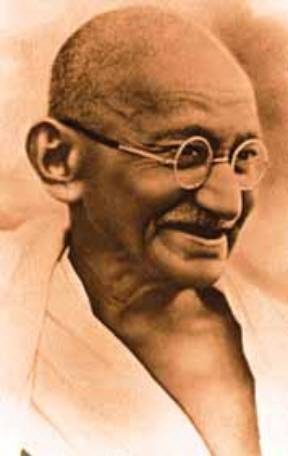
The Rule of Benedict and Spiritual Retreat

As I type this I am with the staff of The Church at Argenta at the Subiaco Abbey in Subiaco, Arkansas.  This is a Benedictine monastery.  This morning we will travel to Eureka Springs, AR, where we’ve been given permission to meet in the chapel at The Little Portion Hermitage, a familial Franciscan community founded by Christian musician and monk John Michael Talbot.  Yesterday and today, I have been leading and will be leading the staff from Argenta through selections from the 6th century Rule of Benedict, a monastic rule written by Benedict of Nursia.

It all begs the question:  what are good Baptist boys like us doing in monastic places like this?

A few months ago, Michael Gallup, a member of the Church at Argenta team, asked if I would be willing to take the staff on a spiritual retreat, something that they would not have to prepare for or work at putting together, but that would be a blessing to them spiritually.  I agreed and, after pondering it, I decided to use The Rule of Benedict as a guide for our time together, a kind of springboard from which we would jump into this or that issue, particularly in the field of pastoral ministry and leadership.  Why?  In the letter I wrote to the guys in the front of the study guide I prepared for them, I put this:

May 27, 2013

To:  Michael Carpenter

         Michael Gallup

         Cliff Hutchinson

         James Paul

Guys,

In thinking about what guide to use for our time together these next two days, I finally decided upon The Rule of St. Benedict.  The Rule is a spiritual classic.  It was written by Benedict of Nursia in the early 500’s AD.  While it has a monastic function (i.e., the establishment of orders and rules for a monastery), it also contains numerous spiritual insights and guidelines for Christians in general.  In particular, it offers a number of helpful challenges and ideas to those in ministry and church leadership.

This little guide is intended to point out certain portions of the rule that seem particularly apropos for our lives as ministers.  The questions and exercises I’ve put here are meant to encourage us to think about Benedictine principles in light of our callings and vocations.

I hope this is an encouragement to you guys.

Wyman

I suppose I have Methodist theologian Thomas Oden to blame for our being here and doing this, for it was Oden who rocked my world in a chapel address he delivered at Southwestern Baptist Theological Seminary in Fort Worth 17 or 18 years ago.  In that address, Oden told of his personal journey from radical liberalism to historic Christianity and outlined his paleoorthodoxy programme and, with it, his call for Christians to refamiliarize themselves with “the classical Christian consensus,” as he put it.    Since that time, the ancient Christian writings have become dear to me, even though I am woefully under-read in that great sea of written offerings.  Even so, I am happy to be, as Oden put it, “a young fogey” and to fight against “neophilia,” an obsession with the new.  Furthermore, I am attracted to Oden’s suggestion that, when he dies, he would like for his tombstone to read:  ”He Said Nothing New.”

Should we read the ancient works uncritically?  Absolutely not.  They are not Scripture and, therefore, they are not infallible.  Furthermore, my disagreements with Rome are real and substantive.  Even so, there is great wisdom to be found in the classics of Christianity.  The Rule of Benedict, for instance, may be studied with great profit, and I have done so for some years now.  For me, a willingness to read widely in the great streams of Christianity, judging all by Scripture, has been a great blessing and a great challenge.

Give it a shot.  A few suggestions:

The Confessions of St. Augustine

The Rule of Benedict by St. Benedict

The Imitation of Christ by Thomas A’Kempis

The Life of St. Francis by St. Bonaventure

The Little Flowers of St. Francis

On the Meaning of “Husband of One Wife”

The following is a position paper I presented to the deacons of Central Baptist Church on the meaning of the phrase “husband of one wife” in 1 Timothy 3:12.  As we ever seek to be faithful to the teaching of God’s Word, it is important that we approach disputed passages with care and with prayer.  It is to that end that I wrote the following paper.

This is a position paper, not a paper containing official policy, and it reflects only my opinions.  It is designed to contribute to an ongoing conversation.

On the Meaning of “Husband of One Wife”

Prepared for the Deacons of Central Baptist Church

By Wyman Richardson, Pastor


It is amazing how powerful three little Greek words can be:

μιας γυναικος ανδρα

That phrase appears three times in the New Testament:  in 1 Timothy 3:2, 1 Timothy 3:12, and Titus 1:6.  The first and third of those references refer to the qualifications of elders.  The second, 1 Timothy 3:12, refers to the qualifications of deacons.

Those three words have been translated in various ways in various translations and paraphrases.  Here is but a sampling of some of these:

“husband of one wife” (English Standard Version)

“faithful to their spouse” (Common English Bible)

“faithful to his wife” (New International Version)

“faithful in marriage” (Contemporary English Version)

“have only one wife [or be faithful to their wife]” (Expanded Bible)

“faithful to one wife” (Knox Bible)

“committed to their spouses” (The Message)

“men of one woman” (Mounce Reverse-Interlinear New Testament)

“husbands of only one wife” (New American Standard Version)

“be married only once” (New Revised Standard Version)

“one wife husbands” (Young’s Literal Translation)

As can be seen, there is confusion on just how to render these three words and there is confusion on how to interpret them once rendered.  For Baptist Christians, for whom the Scriptures are our marching orders, this is an important issue.

This paper has two purposes: (1) to review the possible interpretations of those three Greek words, showing the relative strengths and weaknesses of each position and (2) to offer my own thoughts.  In fulfilling the first task, I will be drawing on numerous quotations from representatives of these views.

I have prepared this position paper for you, the Deacons of Central Baptist Church, to facilitate our discussion of deacon qualifications.  I claim no exclusive, expert, or definitive knowledge of the issue.  I simply claim that how we interpret these words, and how we allow our interpretation of them to affect the calling of men into the diaconate at Central Baptist Church is worthy of careful consideration.

It is likely the case that the majority of Southern Baptist churches see in these words a prohibition against divorced men serving as deacons.  At least, that has been my experience as a pastor of Southern Baptist churches in Oklahoma, Georgia, and Arkansas.  But is that the best interpretation?  If it is, then we should not allow divorced men to be deacons, for the question at hand is not about the authority of scripture but the interpretation of scripture.

What the Bible says is the decisive issue and the end of the conversation for Christians who see Scripture as definitive and authoritative.  This is our bedrock conviction concerning the authority of the Bible and we do not apologize for our commitment to yield to what it says.  But therein lies the question:  what, in fact, does it say?  Simply repeating a particular English translation of the words does not solve the issue, for translation itself involves a degree of interpretation and, even if it is decided that “husband of one wife” is the best translation, that does not settle the issue of interpretation, of what those words mean.

In this position paper, I will be considering four different interpretations.  More than four have been proposed over the years, of course, but there are some interpretations that I will not grant the dignity of consideration.  For instance, I will not consider the Roman Catholic idea that “husband of one wife” is actually a call for singleness and celibacy and that the “wife” referred to by Paul is actually the Church.  This view was expressed by the 11th/12th century Benedictine abbess, Hildegard of Bingen, who interpreted the words in this manner:

What does this mean?…A priest should not have two roles and be at the same time the husband of a physical wife and of a spiritual spouse; but he should be the husband of one wife, namely, the holy church…Let deacons be the husbands of one wife, who rule well their children and their houses [1 Timothy 3:12].  What does this mean?  Let those who render service to the priests and assist them be the husbands of one wife by faithful marriage.  And who is this wife?  The chaste Bride who can be injured by no corruption, as a woman is corrupted when she loses the flower and innocence of virginity, which she had at the beginning of her marriage when not yet corrupted by her husband…For My friend Paul displays that bride to the priests and the other ministers of My altar so that they will choose her as their wife and not seek a carnal spouse.[1]

With all due respect to sister Hildegard and those Roman Catholics who subscribe to this view, this is clearly a false interpretation employed to buttress a priori Roman Catholic beliefs concerning celibacy.  It has no bearing in the text itself, and I will not treat it as if it does.

The four proposed interpretations of “husband of one wife” I will consider in this paper are as follows:

Interpretation #1:  A Prohibition Against Polygamous Men Serving as Deacons

Interpretation #2:  A Prohibition Against Divorced Men Serving as Deacons

Interpretation #3:  A Prohibition Against Single Men Serving as Deacons

Interpretation #4:  A Prohibition Against Unfaithful Men Serving as Deacons

Under each heading, I will attempt fairly to represent the strengths and weaknesses of each view and will offer my own opinion as well.

Interpretation #1

A Prohibition Against Polygamous Men Serving as Deacons

Many read the phrase “husband of one wife” to mean, “not married to more than one woman at a time.”  In this view, the phrase is seen as a prohibition against polygamous men serving as deacons.

Arguments in Favor of this Interpretation

On the surface of it, this seems to be the most straightforward interpretation:  a deacon can have one wife but not two or three or more.  John Calvin saw this interpretation as so self-evident that he, following John Chrysostom’s lead from the 4th century, flatly called it “the only correct one” and noted that polygamy “was generally allowed among the Jews then.”[2]  The great Greek scholar, A.T. Robertson, said that “husband of one wife” referred to “one at a time, clearly.”[3]

There is some evidence for the practice of polygamy in the 1st century.  We can see this in Josephus’ (1st century) assertion that “by ancestral custom a man can live with more than one wife” as well as in Justin Martyr’s (2nd century) observation in his Dialogue with Trypho that “it is possible for a Jew even now to have four or five wives.”[4]

In this view, Paul was anticipating the conversion of either Jewish or Greco-Roman men who had more than one wife.  Polygamy is not consistent with a Christian sexual ethic, and this view sees the words as meaning that men with multiple wives must not be given leadership status that would appear to legitimate or normalize their behavior.

Arguments Against this Interpretation

Various arguments have been posited against this view.  For starters, the question of the prevalence of polygamy in the first century is highly disputed.  Philip Towner sees this interpretation as “not likely” since “monogamy was by far the norm of that day.  Polygamy was generally regarded as abhorrent and did not need to be mentioned in such a list.”[5]  Furthermore, others have pointed out that 1 Timothy was written to Timothy in Ephesus, a Greek city, and it is in no way evident that polygamy would have been an issue there.

Another argument involves Paul’s use of this phrase in reference to women in 1 Timothy 5.  In verse 9 of that chapter, in seeking to define the guidelines for the church’s benevolent aid for widows, Paul defines the widows who are eligible for such aid as “having been the wife of one husband.”  Now, this is an extremely important verse, and one we will return to again and again, because whatever interpretation we apply to “husband of one wife” (1 Timothy 3:12) must also be an intelligible interpretation for “wife of one husband” (1 Timothy 5:9).

On this point, the polygamy argument utterly fails, for, as Greg Allison notes, “polyandry [a wife with more than one husband] was unheard of among women in this society” and that, on that basis, “‘the husband of one wife’ should not be taken as polygamy.”[6]  To simplify this, if “husband of one wife” is an argument against men having more than one wife then “wife of one husband” must consistently be an argument against women having more than one husband.  And while polygamy might, in theory, have been in practice in the first century (even in Ephesus, we might add, among Jews who might have lived there), polyandry certainly was not.

Conclusions Concerning this Interpretation

Based on the evidence, it seems to me that the polygamy interpretation, while perhaps theoretically possible, is extremely unlikely and should not be taken as a serious option.

Interpretation #2

A Prohibition Against Divorced Men Serving as Deacons

As mentioned earlier, many see this statement as a prohibition against divorced men serving as deacons.  Indeed, most of the controversy in our tradition centers around this interpretation.

Arguments in Favor of this Interpretation

There are some good arguments for this position.  One such argument is the old age of this view:  it has been held by some Christians for almost all of Christian history.  Peter Gorday notes that this interpretation was a “generally accepted tradition” among the churches known to Basil the Great in the 300’s.[7]  The 4th century Apostolic Canons say that a man “who is involved in two marriages, after his baptism…cannot be an episkopos, a bishop.”[8]  Benjamin Merkle, while ultimately rejecting this interpretation as the best one, does see this view as “the view of the early church, which valued celibacy after the divorce or death of the spouse.”[9]

Furthermore, James Brundage points out that 4th and 5th century church councils ruled against remarriage for clergymen.  They saw themselves, Brundage says, as upholding “earlier” bans on remarriage and, most significant for our considerations, they saw remarriage as a violation of Paul’s teaching that only a man who is “the husband of one wife” can serve in these capacities.[10]

Arguments Against this Interpretation

However, there are arguments against this interpretation.  While the view is indeed very old, Philip Towner points out that “there is no first-century evidence of its use in connection with divorce.”[11]

Furthermore, there is the fact that Paul does not use the word “divorce” in this verse.  As Thomas Lea and Hayne Griffin, Jr. point out, “had Paul clearly meant to prohibit divorce, he could have said unmistakably by using the Greek word for divorce (apolyo).”[12]  Of course, this is an argument from silence, and Paul could have been employing an unusual phrase for divorce, but the fact that he does not use the word is significant and worthy of note.

John MacArthur, Jr. has pointed to the absence of the definite article in Greek as evidence that Paul is likely not referencing marital status.[13]  In other words, the text does not actually say “the husband of one wife.”  When a Greek noun is without a definite article, that construction (called an anarthrous construction) suggests that the quality of the noun is being emphasized.  What this means is the phrase could be translated as something like, “a one-woman sort of man.”[14]  That would be a more literal rendering of the phrase and would suggest that Paul likely means something other than the number of wives a man has had.  It would suggest, instead, that Paul is saying something about the kind of man he is referencing.

Furthermore, Robert Saucy notes that none of the other deacon qualifications in 1 Timothy 3 can be legitimately interpreted to mean that they must have been met throughout a man’s entire life, and poignantly asks, “Why not apply this principle to all these qualifications if we’re going to apply it to this one?”[15]  For instance, should we interpret, “not given to much wine,” to mean if a man has ever been drunk at any point in his life he should not be a deacon?  Of course not.

This raises the question of whether or not these qualifications might have been violated when the prospective deacon was a non-believer without them disqualifying the man in the present day.  It seems to me that we would grant this on every other qualification.  We celebrate and open the diaconate to men who were former drunks and former bad husbands and who formerly had terrible tempers but who have now been gloriously saved by Jesus Christ.  We do so because we understand that lost people act like lost people.  Should the same not be granted to this qualification?

What is more, to say flatly that these three words prohibit a man who has ever been divorced for any reason at all at any point in his life is to risk putting it into collision with other passages.  David Instone-Brewer sees this interpretation as “technically possible but unlikely” and points to the biblical allowance of divorce in some cases as arguing against this interpretation.[16]  If Jesus allowed divorce in the case of sexual immorality (Matthew 5:31-32) and if Paul allowed it in the case of abandonment, saying that the abandoned brother, in that case, “is not enslaved” (1 Corinthians 7:15), should that not inform our reading of this text if, in fact, it is a reference to divorce at all?  And what of men who divorced their wives to try to save the lives of their children from an abusive mother?  And what of men who were abandoned and divorced despite their protests?  Does the voice of the whole counsel of God truly disqualify these men from serving?

What is more, it is doubtful that this interpretation passes “the 1 Timothy 5:9 test,” referring to the parallel verse speaking to the issue of widow care.  Let it be understood that if “husband of one wife” is taken to mean “never divorced” then “wife of one husband” must also refer to “never divorced.”  By that standard, a woman who has ever been divorced, for any reason, would be ineligible for the benevolent assistance of the church, for Paul clearly says in 1 Timothy 5:9 that only women who have been the “wife of one husband” can be enrolled in the benevolence ministry of the church.

I once posed this objection to a sincere church member at another church who interpreted “husband of one wife” to refer to divorce for any reason, asking her if she was truly comfortable telling divorced widows that we would not provide them assistance.  She rejected the notion as nonsensical.  In doing so, she was right, but also terribly inconsistent.  Again, whatever interpretation we grant to 1 Timothy 3:12 must also work with 1 Timothy 5:9.

Finally, it seems to me that if the phrase “husband of one wife” is taken as a reference to the number of wives a man has had, we must include widowed men who have remarried in that list.  To say that the phrase refers to divorced men but not to widowed-and-remarried would seem to read into the phrase a nuance it does not seem to contain.  But I do trust we would all object to barring widowed-and-remarried men from the diaconate.

Conclusions Concerning this Interpretation

This interpretation does indeed have merit, and it should not be discarded flippantly.  It certainly should not be discarded simply because we find it difficult.  If it is to be rejected, it should be rejected for sound reasons in the light of the witness of Scripture.

In my opinion, in light of the arguments for and against this view mentioned above, I find the idea that these three words mean a blanket prohibition against a divorced man serving as a deacon unconvincing.  I believe this interpretation says more than what Paul is saying and sets us up for conflict with other Biblical truths.

It is my opinion that divorce may disqualify a man under certain conditions, but it does not necessarily do so.  The fourth view will speak more to this.  But, concerning this view, Benjamin Merkle’s conclusion seems wise:

The situation of a divorced man must be treated seriously…If he is the “innocent” party in the divorce and was not unfaithful, some time is still needed for him to prove himself in his new marriage.  The same is true if he was divorced before he became a Christian (whether he was unfaithful in the relationship or not).  But if a professing believer was unfaithful to his wife and was later divorced, then extreme caution must be exercised.  The sin of unfaithfulness and divorce, like all sins, can be forgiven, and the person can become renewed.  Thus, after a period of many years in his new marriage, it may be possible, though perhaps not advisable, for a divorced man to become an elder.[17]

Interpretation #3

A Prohibition Against Single Men Serving as Deacons

I will treat this interpretation briefly.  I am surprised at how widely it is assumed that this verse prohibits single men from serving as deacons.

Arguments in Favor of this Interpretation

I suppose it could be argued that the phrase sounds like it is saying men must be married, especially if you emphasize the first word:  “HUSBAND of one wife.”  This would be an argument in favor of this interpretation.

Arguments Against this Interpretation

However, many factors mitigate against such a view.  John Chrysostom said that “Paul is not making a hard and fast rule that a bishop must have a wife, but that he must not have more than one.”[18]  This is but one example of an early (4th century) rejection of this view.

Furthermore, this statement is a qualitative statement, like others in Paul’s list of qualifications.  Trying to apply this same approach to other qualifications makes it nonsensical.  For instance, the equivalent of this interpretation applied to other qualifications would be to say that Paul’s assertion that a deacon must not be “addicted to much wine” means deacons must drink wine since Paul is addressing their handling of it.  But clearly that is an absurd notion and is not Paul’s point.  His point is that a deacon who drinks wine must be temperate and moderate in doing so and must not be a drunkard.  Along these same lines, Benjamin Merkle notes that consistently holding this view would mean that “we would have to require men to have more than one child since Paul indicates that a potential elder must man his ‘children’ (plural) well.”[19]  This is surely a silly interpretation, as would be the idea that a deacon must have children at all.

Ed Glasscock suggests that this interpretation would actually create “an inconsistency in Paul’s view” since “it surely would not be consistent to require marriage to serve the Lord as an elder or deacon (1 Tim 3:2,12), yet encourage one to stay single so as not to be distracted from serving the Lord (1 Corinthians 7:32).”[20]  And, of course, there is the point that Paul himself was single.

Gregg Allison has pointed out that this interpretation does not work with 1 Timothy 5:9 (“having been the husband of one wife”), for “widows” are, by definition, women who have been married.  Thus, this interpretation would make 1 Timothy 5:9 say something like, “widows, if they have been married…”  But that is a redundant absurdity.  Allison rightly calls that a tautology, a meaningless statement.[21]

Conclusions Concerning this Interpretation

In my opinion, this is a very weak view.  Singleness should not be a disqualification for the deacon ministry.

Interpretation #4

A Prohibition Against Unfaithful Men Serving as Deacons

Finally, there is the argument that “husband of one wife” is most faithfully rendered as “one-woman man” and is prohibiting unfaithful, womanizing men from serving as deacons.

Arguments in Favor of this Interpretation

New Testament scholar Craig Keener suggests that the phrase “husband of one wife” “probably meant a faithful husband.”[22]  He says that the phrase is referring to moral character, not number of wives.

John MacArthur, Jr. agrees, arguing that “the issue” with this saying “is moral character, not marital status.” He sees it as Paul saying that deacons “must not be unfaithful to their wives either in their actual conduct with other women, or in their minds.”[23]  Luke Timothy Johnson says “the main point of the requirement would seem to be first the avoidance of any appearance of immorality” and that “the most likely option is…that the man has proved faithful in his marriage.”[24]

Ray Stedman notes that the phrase “has given rise to a lot of controversy” but argues that “the word basically means that an elder [or deacon] is to be a one-woman man, i.e., not a philanderer, not attracted to every skirt that walks down the street, not constantly eyeing somebody or someone else’s wife. It is to be very evident that an elder is committed to one woman, his wife, whom he loves.”

Furthermore, this interpretation, unlike the others, passes “the 1 Timothy 5:9” test.  Applied there, Paul would be saying that widows who were of devious character, who have lived immorally and recklessly, and who were presumably living in the same way, would not be available for the church’s assistance.  While still presenting challenges, that is at least a workable interpretation.

Arguments Against this Interpretation

The main arguments against this view turn out to be the arguments for the other views mentioned above.  Many simply feel that other views, particularly the divorce view, have more merit.

A friend of mine objects to this view at least partly on the grounds (as he told me) that he suspects that those who want to believe this really just want to make a hard requirement easier.  Were that the case, a person would be wrong in doing so.  However, even if that were the case, motives, good or bad, do not render an interpretation right or wrong.

Even so, I wonder if this interpretation really does make the matter easier?  It seems to me that reducing “husband of one wife” to mere conjugal numerics makes it easier by making it quantifiable and simple without touching on the issue of the human heart at all.  It is much harder, in fact, to say that a man who has never been divorced might still be violating this “one-woman-man” standard if he is lecherous or a womanizer.  In such a case, the numbers work in his favor (he has had only one wife) but the weightier matter of the condition of his heart works against him.  This interpretation, in fact, calls us all into question and makes us look at our own hearts and not merely at our marital status.

My Personal Position and Proposal

Taking all things into consideration, it seems to me that the wisest course, and the one that presents the least number of challenges and inconsistencies, is to see the phrase “husband of one wife” as a reference to a man’s moral character and not the number of times he has been married.  Of course, a deficiency in a man’s moral character may be revealed in a divorce, but, then again, not every divorce is a result of a deficiency in a man’s moral character.  A man might be divorced and be a deacon, if the situation surrounding the divorce and an evaluation of the man’s current life does not reveal the besetting sin of immorality and unfaithfulness.  On the other hand, a man might have never been divorced and still not be eligible to be a deacon if he is flirtatious, a womanizer, and not a “one-woman-man.”

Divorce should give us pause and make us careful, to be sure.  Furthermore, it perhaps might be wisely deemed that a serial divorcer who has had many wives may present too much of a stumbling block to the church, even though we believe he can be forgiven through the blood of Christ.  A man who sinned in divorced should be carefully examined and appropriate time and care should be given to see that his character and name have been sufficiently restored.  A man who was sinned against in divorce or who divorced on biblical grounds should not be treated as a second class citizen, on the basis of the witness of God’s Word, though, even here, a period of time for healing and restoration before such a man is welcomed into the diaconate may be appropriate.

Admittedly, the difficulty with this view is that it does not set up nice, neat, clean “rules.”  It requires a careful evaluation of each case, taking into consideration all of the circumstance, and then submitting ourselves to the Spirit’s guidance in each case.  It requires wisdom, which the Lord promises to give those who ask (James 1:5-6).

I propose we ask the Lord for wisdom and let the Spirit guide us cautiously and carefully in this matter, always keeping a view of the cross of Christ in our eyes and hearts.


[1] Hildegard of Bingen. Scivias. The Classics of Western Spirituality (Mahwah, NJ: Paulist Press, 1990), p.274.

[2] John Calvin, 1&2 Timothy & Titus. The Crossway Classics Commentary. Eds, Alister McGrath and J.I. Packer (Wheaton, IL: Crossway Books, 1998), p.54

[3] A.T. Robertson, Word Pictures in the New Testament. Vol.IV (Nashville, TN: Broadman Press, 1931), p.572.

[4] Robertson, 88.

[5] Philip H. Towner, 1-2 Timothy & Titus. The IVP New Testament Commentary Series. Vol.14 (Downers Grove, IL: InterVarsity Press, 1994), p.84.

[6] Gregg R. Allison, Sojourners and Strangers. (Wheaton, IL: Crossway Books, 2012), p.214

[7] Peter Gorday, ed. Colossians, 1-2 Thessalonians, 1-2 Timothy, Titus, Philemon. Ancient Christian Commentary on Scripture. New Testament, vol.IX. Gen.Ed., Thomas C. Oden (Downers Grove, IL: InterVarsity Press, 2000), p.170.

[8] William Barclay, The Letters to Timothy, Titus, Philemon. The Daily Study Bible (Edinburgh: The Saint Andrew Press, 1968), p.88.

[9] Benjamin L. Merkle, Forty Questions About Elders and Deacons. (Grand Rapids, MI: Kregel Publications, 2008), p.126.

[10] James A. Brundage, Law, Sex, and Christian Society in Medieval Europe. (Chicago, IL: University of Chicago Press, 1987), p.112.

[11] Philip H. Towner, p.85.

[12] Thomas D. Lea and Hayne P. Griffin, Jr. 1,2 Timothy, Titus. The New American Commentary. New Testament, vol.34 (Nashville, TN: Broadman Press, 1992), p.109-110.

[13] John MacArthur, Jr., 1 Timothy. The MacArthur New Testament Commentary (Chicago, IL: Moody Press, 1995), p.104.

[14] Ed Glasscock, “’The Husband of One Wife’ Requirement in 1 Timothy 3.2.” Vital Biblical Issues. (Grand Rapids, MI: Kregel Publications, 1994), p.194.

[15] Robert L. Saucy, “The Husband of One Wife.” Readings in Christian Ethics. Vol.2. eds., David K. Clark and Robert V. Rakeshaw (Grand Rapids, MI: Baker Academic, 1996), p.252.

[16] David Instone-Brewer, Divorce and Remarriage in the Bible. (Grand Rapids, MI: Wm. B. Eermans Publishing Co., 2002), p.227.

[17] Merkle, p.128.

[18] Gorday, p.170.

[19] Merkle, p.125.

[20] Ed Glasscock, p.189.

[21] Allison, p.214.

[22] Craig Keener, The IVP Bible Background Commentary: New Testament. (Downers Grove, IL: InterVarsity Press, 1993), p.635.

[23] John MacArthur, Jr., p.129.

[24] Luke Timothy Johnson, The First and Second Letters to Timothy. The Anchor Bible. Vol.35A (New York, NY: Doubleday, 2001), p.214,229.

Exodus 5

Exodus 5

1 Afterward Moses and Aaron went and said to Pharaoh, “Thus says the Lord, the God of Israel, ‘Let my people go, that they may hold a feast to me in the wilderness.’” 2 But Pharaoh said, “Who is the Lord, that I should obey his voice and let Israel go? I do not know the Lord, and moreover, I will not let Israel go.” 3 Then they said, “The God of the Hebrews has met with us. Please let us go a three days’ journey into the wilderness that we may sacrifice to the Lord our God, lest he fall upon us with pestilence or with the sword.” 4 But the king of Egypt said to them, “Moses and Aaron, why do you take the people away from their work? Get back to your burdens.” 5 And Pharaoh said, “Behold, the people of the land are now many, and you make them rest from their burdens!” 6 The same day Pharaoh commanded the taskmasters of the people and their foremen, 7 “You shall no longer give the people straw to make bricks, as in the past; let them go and gather straw for themselves. 8 But the number of bricks that they made in the past you shall impose on them, you shall by no means reduce it, for they are idle. Therefore they cry, ‘Let us go and offer sacrifice to our God.’ 9 Let heavier work be laid on the men that they may labor at it and pay no regard to lying words.” 10 So the taskmasters and the foremen of the people went out and said to the people, “Thus says Pharaoh, ‘I will not give you straw. 11 Go and get your straw yourselves wherever you can find it, but your work will not be reduced in the least.’” 12 So the people were scattered throughout all the land of Egypt to gather stubble for straw. 13 The taskmasters were urgent, saying, “Complete your work, your daily task each day, as when there was straw.” 14 And the foremen of the people of Israel, whom Pharaoh’s taskmasters had set over them, were beaten and were asked, “Why have you not done all your task of making bricks today and yesterday, as in the past?” 15 Then the foremen of the people of Israel came and cried to Pharaoh, “Why do you treat your servants like this? 16 No straw is given to your servants, yet they say to us, ‘Make bricks!’ And behold, your servants are beaten; but the fault is in your own people.” 17 But he said, “You are idle, you are idle; that is why you say, ‘Let us go and sacrifice to the Lord.’ 18 Go now and work. No straw will be given you, but you must still deliver the same number of bricks.” 19 The foremen of the people of Israel saw that they were in trouble when they said, “You shall by no means reduce your number of bricks, your daily task each day.” 20 They met Moses and Aaron, who were waiting for them, as they came out from Pharaoh; 21 and they said to them, “The Lord look on you and judge, because you have made us stink in the sight of Pharaoh and his servants, and have put a sword in their hand to kill us.” 22 Then Moses turned to the Lord and said, “O Lord, why have you done evil to this people? Why did you ever send me? 23 For since I came to Pharaoh to speak in your name, he has done evil to this people, and you have not delivered your people at all.”


Tony Evans once asked his congregation to imagine with him that a man calls his son in and asks his son to take the trash out.[1]  “Oh, yes!” his son exclaims. “I will take the trash out.  You are so wise and so wonderful.  I love your commandments.  I will take the trash out!”

The son finishes speaking and the father and son stare at each other.  “Well,” the father says, “take the trash out!”

“Ah, yes!” the son responds.  “Your words are so beautiful and so true.  Who could doubt them?  In fact that they are so beautiful that I believe they are worthy to be sung in praise!”  Then the son begins to sing:  “Take the trash out!  Let us take the trash out!  I must take the traaaaaash out!  Amen!”

Again, the two stare at each other.  “Son,” the father begins, “I don’t know what’s wrong with you, but I would like for you to take the trash out now.”

“Yes!  Yes!” the boy proclaims.  “Take the trash out!  Only you could have asked such a thing!  I love you so much and I love your word so much!  I believe I will write that down and study it!”  And here the boy writes down his father’s words in a little pad he produces from his back pocket:  “Take…the…trash…out!”  “Oh, father!  I will read this every day!  I will commit it to memory!  I will hide this in my heart!  Take the trash out!”

What an absurd scene, no?  The father has issue a simple command, and the son, while claiming to love the father, does everything but obey.  That may sound familiar to us.  In fact, tragically, that little scene might be a pretty apt description of what we do in churches all the time.

Obedience can be a painful thing.  Perhaps that’s why we are so hesitant to do it.  Dallas Willard has written that, “the missing note in evangelical life today is not in the first instance spirituality but rather obedience.”[2]  That’s a pretty good take on the current situation:  spirituality without obedience.  We do so love to talk spiritual talk.  We even talk of having victory and a great walk with the Lord.  But, as Jerry Bridges wisely said, “We pray for victory when we know we should be acting in obedience.”[3]

Moses has been charged with an amazing task:  the task of walking into Egypt and demanding the freedom of the Hebrews.  And, in fact, he obeys.  This evening, however, we are going to consider the price of obedience and, with it, one of the reasons why we are so hesitant to do the Lord’s will.

I. The world does not understand God, the people of God, or the need for obeying God. (v.1-5)

I would like for us to begin with a very simple fact:  the world does not understand God, the people of God, or the need for obeying God.  That fact becomes abundantly evident in Moses’ initial clash with Pharaoh.

1 Afterward Moses and Aaron went and said to Pharaoh, “Thus says the Lord, the God of Israel, ‘Let my people go, that they may hold a feast to me in the wilderness.’”

It should be pointed out here that, at that time, religious minorities were granted some degree of freedom to worship in Egyptian society.  So Moses and Aaron are simply asking Pharaoh to grant the same liberties to the Hebrews that he has granted to others.  Of course, the Hebrews are no mere minority.  They are, in fact, as we have already seen, a large group of people that Pharaoh believes He must subjugate lest they rise up against him.

What is more interesting is the fact that Moses, once again, is, at best, telling a half-truth and, at worst, lying.  On the face of them, his words would seem to imply that they simply want some time for religious observance and that they will return.  It is a half-truth because, of course, they will worship God and the exodus itself is an act of trust in God.  But, as we know and as Moses knows, the Lord wants much more than this.  He wants His people free.

Pharaoh, of course, will have none of it.

2 But Pharaoh said, “Who is the Lord, that I should obey his voice and let Israel go? I do not know the Lord, and moreover, I will not let Israel go.” 3 Then they said, “The God of the Hebrews has met with us. Please let us go a three days’ journey into the wilderness that we may sacrifice to the Lord our God, lest he fall upon us with pestilence or with the sword.” 4 But the king of Egypt said to them, “Moses and Aaron, why do you take the people away from their work? Get back to your burdens.” 5 And Pharaoh said, “Behold, the people of the land are now many, and you make them rest from their burdens!”

Pharaoh’s question is crucial because it helps us understand not only his reaction but the reaction of the world to Christian obedience today as well.  Simply put, Pharaoh doesn’t know God and, for that reason, is utterly disinterested in Moses’ desire to obey God.  There is disdain in his voice.  “Who is the Lord, that I should obey his voice and let Israel go?  I do not know the Lord.”  Moses tries again, this time, once again, veiling the whole truth.  He suggests that the Lord is an angry God who will strike Israel if they don’t do their religious duties.  It would have been much more honest to say that God will strike Pharaoh if he doesn’t let Israel go.

Pharaoh is unmoved and clearly irritated:  “Get back to your burdens.”  This is the equivalent of, “Oh good grief!  Enough of this religious nonsense!  Get back to the real world and do your task.”

May I suggest to you that this has always been the posture of the world towards the people of God?  Even at times in our country’s history when there was more of a cultural respect for Christianity, the lost heart has never understood the redeemed heart.  And now we see this clearly as the last vestiges of the old Bible belt are slipping away.  I do not meant to sound alarmist when I say that American culture is closer to Egypt today than it has ever been:  it is a culture that does not understand or value the things of God.

We must understand this fact or we will continue the lamentable and silly tradition of Christian outrage at the incredulity of the lost.  Brothers and sister in Christ, the world simply does not care that you are here.  They do not understand your being here.  All of our talk of “God’s Word” and “the cross” and “walking with Jesus” are just religious mumblings to the world, even though they are life to us.  They are irritated by it because they have never experienced it.  It is a foreign intrusion into the worldview of modernity.  “Oh just stop that mumbo jumbo and get back to work.”  That’s what Pharaoh said.  That’s what the world says today.

I press this issue because it somehow seems to me that many believers still think that American culture should grant some legitimacy to Christian belief and practice.  Yes, it was nice when that did happen, culturally speaking.  But it likely only spoiled the church and deceived the lost into thinking they were actually saved.  I think that unnerving feeling that many people are experiencing today is simply the result of seeing the world’s true feelings towards the gospel naked and unmasked.  Many of you have grown up in situations when this was not the case.

In my own lifetime I remember when there was greater cultural respect for Christianity, but not now.  We are in Egypt.  We are in first century Rome.  The lords of the world will grant no respect to the things or the people of God.  As Pharaoh said, so says the world:  “I do not know the Lord.”  This absence of cultural concessions can either be seen as a great tragedy, or it can be seen as a great opportunity.  At the very least, everybody is being more honest these days about what they think of God and His people.  What will we do in the face of that fact?

II. Obedience in a hostile culture oftentimes brings greater suffering to God’s people. (v.6-19)

Moses and Aaron learn a hard lesson.  It’s one we must learn too.  Observe the result of their obedience.

6 The same day Pharaoh commanded the taskmasters of the people and their foremen, 7 “You shall no longer give the people straw to make bricks, as in the past; let them go and gather straw for themselves. 8 But the number of bricks that they made in the past you shall impose on them, you shall by no means reduce it, for they are idle. Therefore they cry, ‘Let us go and offer sacrifice to our God.’ 9 Let heavier work be laid on the men that they may labor at it and pay no regard to lying words.” 10 So the taskmasters and the foremen of the people went out and said to the people, “Thus says Pharaoh, ‘I will not give you straw. 11 Go and get your straw yourselves wherever you can find it, but your work will not be reduced in the least.’” 12 So the people were scattered throughout all the land of Egypt to gather stubble for straw. 13 The taskmasters were urgent, saying, “Complete your work, your daily task each day, as when there was straw.” 14 And the foremen of the people of Israel, whom Pharaoh’s taskmasters had set over them, were beaten and were asked, “Why have you not done all your task of making bricks today and yesterday, as in the past?” 15 Then the foremen of the people of Israel came and cried to Pharaoh, “Why do you treat your servants like this? 16 No straw is given to your servants, yet they say to us, ‘Make bricks!’ And behold, your servants are beaten; but the fault is in your own people.”

That is a legitimate question:  “Why do you treat your servants like this?”  To use an exhausted cliché, we feel the Hebrews pain!  We would have said the same.  What did they do to warrant such harsh and unreasonable treatment?  Their minds must have reeled with confusion and guesses.  Did somebody insult Pharaoh?  Have we not worked hard enough?

In truth, the answer to their question is found at the end of Exodus 4 where we see their reaction to Moses’ and Aaron’s arrival and proclamation of deliverance.  Do you remember?

29 Then Moses and Aaron went and gathered together all the elders of the people of Israel. 30 Aaron spoke all the words that the Lord had spoken to Moses and did the signs in the sight of the people. 31 And the people believed; and when they heard that the Lord had visited the people of Israel and that he had seen their affliction, they bowed their heads and worshiped.

There is the answer as to why they were being treated such.  They were being treated this way because they set their feet on the path of deliverance and, as we have seen, that is a path the world despises.  They are suffering for their faith.  They are suffering for obedience.  They realize this when Pharaoh answers them thus:

17 But he said, “You are idle, you are idle; that is why you say, ‘Let us go and sacrifice to the Lord.’ 18 Go now and work. No straw will be given you, but you must still deliver the same number of bricks.” 19 The foremen of the people of Israel saw that they were in trouble when they said, “You shall by no means reduce your number of bricks, your daily task each day.”

Ah!  There it is!  They are being treated in this way because they want to worship their God.  And how does Pharaoh know this?  Because Moses and Aaron went and proclaimed it to Pharaoh.  And why did they proclaim this?  Because God sent them and the people trusted them.

So here, initially, their obedience leads to suffering.  It is a difficult truth to grasp.  Teresa of Avila once famously said, “If this is how God treats his friends, no wonder he has so few of them!”  If we’re honest, we have perhaps sometimes felt that way.

In truth, obedience in a hostile culture oftentimes brings greater suffering to God’s people.  This is difficult for us to grasp because, in our country, there are whole Christian movements that seem dedicated to the exact opposite idea:  that obedience and faith bring material blessings.  You can see that in our Christian bookstores, where the titles often reflect self-help philosophies and “name-it-claim-it” heresies.  You can see that in Christian movies where everything just seems to work out for those who trust in God.

But guess what?  Sometimes, when you walk with God, things don’t get easier but harder.  Sometimes the cancer isn’t miraculously healed.  Sometimes the couple isn’t finally able to have a baby.  Sometimes the kicker misses the game winning field goal.  Sometimes the promotion doesn’t happen.

Sometimes you get fired for following Jesus.  Sometimes you lose your spouse.  Sometimes you get killed.  Sometimes not, but sometimes so.  Sometimes Pharaoh stops giving you straw for bricks and increases your workload.

Have we forgotten that the reward of obedience is in the act itself, in the privilege of simply following our King?  Have we forgotten that present suffering does not negate the goodness of God or the promise of God or the offer of future glory?  Have we reached the point where we will determine the goodness of God’s decrees on the basis of what they win for us here and now?

Our brother Paul, in 2 Corinthians 4, wrote this:

16 So we do not lose heart. Though our outer self is wasting away, our inner self is being renewed day by day. 17 For this light momentary affliction is preparing for us an eternal weight of glory beyond all comparison, 18 as we look not to the things that are seen but to the things that are unseen. For the things that are seen are transient, but the things that are unseen are eternal.

The Hebrews wanted deliverance, but what they wanted primarily was deliverance from suffering.  But sometimes the path of deliverance goes through the gate of greater suffering.

III. To be obedient is to decide that the worldly price of obedience is worth the divine blessing of it. (v.20-23)

This whole chapter has been leading up to a very awkward encounter.  Moses and Aaron must now stand before the Israelites to face their hurt and anger and confusion.  It does not go well.

20 They met Moses and Aaron, who were waiting for them, as they came out from Pharaoh; 21 and they said to them, “The Lord look on you and judge, because you have made us stink in the sight of Pharaoh and his servants, and have put a sword in their hand to kill us.”

As far as I can tell, this is the earliest example of “This stinks!” in human history.  “You have made us stink in the sight of Pharaoh and his servants!”  And notice the irony of their rebuke:  “The Lord look on you and judge!”  What they did not realize, though, was that the Lord was looking upon Moses and Aaron and had judged their actions and had found them obedient.  The Hebrews assumed that they had sinned and that God was judging their sin by bringing further pain on His people.  But the exact opposite was the case:  they had not sinned, they had obeyed, and the greater suffering they were enduring was the path they had to walk to be free.

It is, as we have said, a hard truth to see in the midst of the fire, and even Moses cannot see it.

22 Then Moses turned to the Lord and said, “O Lord, why have you done evil to this people? Why did you ever send me? 23 For since I came to Pharaoh to speak in your name, he has done evil to this people, and you have not delivered your people at all.”

In truth, this is a terrifying statement.  Moses accuses the Lord of evil.  He does so on two bases:  (1) that God allowed greater suffering to fall on His people and (2) that God had not yet delivered His people as He said He would.  He is, in other words, condemning God because He was not doing things in the manner that he, Moses, and the Hebrews thought and assumed He would.

It is a natural reaction and one we should not be too quick to condemn.  Of course it is wrong, and accusing God of evil is a sin, but Moses is speaking out of the deepest depths of his own agony.  The Lord can handle Moses’ honesty.  The Lord knows that Moses does not see the full picture, but that he soon will.  And the Lord knows that Moses too must be delivered from his own darkened understanding.

Obedience to God demands a hard decision on the front end.  To be obedient is to decide that the worldly price of obedience is worth the divine blessing of it.  Moses will have to reach the point where he decides whether or not the blessing of God is worth the pain we must sometimes go through to receive it.  The Hebrews will have to reach the same point.

And so will we.

The question confronting the church in every age is precisely this question:  will we obey God even in light of the costs of doing so?  Were it to cost us our lives to follow, would we follow?  Were it to cost us our families to obey, would we obey?  Were it to mean a life of hardship and depravation, would we still bow before our King?

I pray the answer is yes.  It should be.  It must be.  And for this reason:  because despite all of our fears and doubts and anger, in point of fact God is good.

God is gracious.

God is kind.

God is faithful.

God has not forgotten us.

God is not playing games with us.

God is not sadistic.

God is not experimenting on us.

God is worthy of our praise.

God is worthy of our trust.

God is worthy of our obedience.

Let us follow our King.


[1] I’m paraphrasing Evans’ words here, to the best of my memory.

[2] Dallas Willard, The Great Omission (New York, NY: HarperOne, 2006), 44.

[3] Jerry Bridges, The Pursuit of Holiness (Colorado Springs, CO:  NavPress, 2003), 12.


Matthew 5:31-32

Matthew 5:31-32

31 “It was also said, ‘Whoever divorces his wife, let him give her a certificate of divorce.’ 32 But I say to you that everyone who divorces his wife, except on the ground of sexual immorality, makes her commit adultery, and whoever marries a divorced woman commits adultery.

To be perfectly honest, I am approaching our subject today with a measure of caution, though I want to make it clear that I am not approaching it with any apology.  We must never apologize for preaching God’s Word.  Even so, this passage is, perhaps more than any other, the one part of the Sermon on the Mount I have not been “looking forward to” preaching.  Not because I don’t believe it is true.  It is true. But rather because the issue of divorce touches so many lives and is disagreed upon by so many Christians and is so fraught with controversy that my fear is we won’t give God’s Word a clear and accurate hearing this morning.  Frankly, I fear that our emotional reactions to the idea of divorce and to the idea of a sermon on divorce will hinder us from giving Scripture an accurate hearing.  Of course, giving it an accurate hearing assumes that I am giving it an accurate preaching, and that raises yet another question:  what exactly does Jesus say here and what does He mean by what He says?

I am also feeling a sense of caution because in any gathering of this size there will be numerous instances of divorce, each containing numerous backstories that may or may not grant legitimacy to the divorce.  I do not begrudge your emails.  Feel free to send them.  But this will, indeed, be a sermon that gets emails because of how sensitive this issue is.

I’m ok with all of that so long as we all agree on certain fundamental truths.  First, that God’s Word reveals God’s heart and we should bow to God’s heart.  Second, that God’s Word should shape our opinions and not vice verse.  And third, that the preacher’s job is to proclaim God’s Word regardless of how popular or unpopular it might be.

I suspect there is something else we can all agree on:  something is wrong with our approach to marriage in this country and this is reflected in the divorce culture in which we live.  By “divorce culture” I am referring to the whole, national malaise concerning marriage and divorce.  I am referring to the phenomenon of cheap, disposable marriages.  I am not saying that every divorce indicates that those in the marriage viewed it as cheap and disposable.  That would be absurd.  Many of you in this room have been through divorce and would see it as anything but inconsequential.  One member of our church told me this week that the aftermath of a divorce feels like standing in the rubble of your home that has just been obliterated by a tornado, wondering how to start picking up the pieces.  No, not all who have gone through a divorce are apathetic about it, but it is undeniable that our culture in general approaches the issue in many ways that reveal a spirit of profound misunderstanding about what marriage even is and what exactly is happening when divorce happens.  Even when we agonize over divorce, we oftentimes don’t have the theological and biblical understanding to understand even the origins of our own pain.

How has our culture reached this point?  How have we reached this point of confusion concerning marriage and divorce? I am inclined to lay the blame primarily at the feet of the sin of selfishness, and I think there are good reasons for doing so.  But I am also impressed by the opinion of Midge Decter who wrote this while reviewing Barbara Dafoe Whitehead’s book, The Divorce Culture:

The truth is, the divorce culture has come upon us not as the result of our selfishness—people have always been selfish—and not as the result of the tension between the sexes—that tension has been a permanent fixture of human existence—and not out of any unconcern for our children—children have seldom in history been so much attended to and so kindly treated as ours. The disarray…is brought about by the fact that the lives we lead are in respect of ease and comfort and confidence and good health simply unprecedented. Never have so many, even the poor among us, had so much. We are disoriented. We do not know whether to laugh or to cry; we do not know whom or what to thank; and we cannot think of what there might be to want next. And so we giggle and preen and complain and forget our debts and keep on seeking for things (and sometimes finding them). In short, there is no merely social cure for what ails us.[1]

I suspect there’s something to that.  We are a spoiled and comfortable people.  Our relationships reflect this fact, and so do our divorce statistics.  We are, indeed, disoriented.  And what should one do when he is disoriented?  Well, he should seek to be oriented.  And how does one get oriented?  He finds a true and fixed point of orientation.  He finds “true North,” we might say.  Or, to put it another way, he finds Jesus.

That’s what we’re going to do today.  We’re going to reorient ourselves on the issues of marriage and divorce by listening to Jesus.  What, then, does Jesus say on the issue?  How should we as Christians think?

I. Marriage is not disposable.  It is sacred before God.

Jesus has just spoken on lust.  He has said that we can commit adultery in our hearts by looking at somebody with lustful intent.  He continues to speak of adultery, this times in terms of divorce.

31 “It was also said, ‘Whoever divorces his wife, let him give her a certificate of divorce.’ 32 But I say to you that everyone who divorces his wife, except on the ground of sexual immorality, makes her commit adultery, and whoever marries a divorced woman commits adultery.

As you hear these words, it is important to remember that these two verses are a continuation of the preceding verses concerning lust and the human heart.  The sections should not be separated and isolated from one another.  Here, too, Jesus is saying something about lust and the human heart.  He is expounding further on the verses immediately preceding this.

To understand what is going on here, we must understand the specific, first century Jewish controversy concerning marriage and divorce to which Jesus is referring in these words.  The controversy involved two passages on marriage and divorce from the Old Testament and what they meant for the issue at hand.  The verses are found in Deuteronomy 22 and 24.

First, consider what Moses says in Deuteronomy 22.

13 “If any man takes a wife and goes in to her and then hates her 14 and accuses her of misconduct and brings a bad name upon her, saying, ‘I took this woman, and when I came near her, I did not find in her evidence of virginity,’ 15 then the father of the young woman and her mother shall take and bring out the evidence of her virginity to the elders of the city in the gate. 16 And the father of the young woman shall say to the elders, ‘I gave my daughter to this man to marry, and he hates her; 17 and behold, he has accused her of misconduct, saying, “I did not find in your daughter evidence of virginity.” And yet this is the evidence of my daughter’s virginity.’ And they shall spread the cloak before the elders of the city. 18 Then the elders of that city shall take the man and whip him, 19 and they shall fine him a hundred shekels of silver and give them to the father of the young woman, because he has brought a bad name upon a virgin of Israel. And she shall be his wife. He may not divorce her all his days. 20 But if the thing is true, that evidence of virginity was not found in the young woman, 21 then they shall bring out the young woman to the door of her father’s house, and the men of her city shall stone her to death with stones, because she has done an outrageous thing in Israel by whoring in her father’s house. So you shall purge the evil from your midst. 22 “If a man is found lying with the wife of another man, both of them shall die, the man who lay with the woman, and the woman. So you shall purge the evil from Israel.

This seems relatively clear enough.  In the Old Testament, if a man married a woman and then found that she was not a virgin, that she had been sexually active before their marriage, he could have her put to death.  Then, in Deuteronomy 24, Moses wrote this:

1 When a man takes a wife and marries her, if then she finds no favor in his eyes because he has found some indecency in her, and he writes her a certificate of divorce and puts it in her hand and sends her out of his house, and she departs out of his house, 2 and if she goes and becomes another man’s wife, 3 and the latter man hates her and writes her a certificate of divorce and puts it in her hand and sends her out of his house, or if the latter man dies, who took her to be his wife, 4 then her former husband, who sent her away, may not take her again to be his wife, after she has been defiled, for that is an abomination before the Lord. And you shall not bring sin upon the land that the Lord your God is giving you for an inheritance.

Here, Moses says that the discovery of “indecency” in the wife by the husband validates the giving of a decree of divorce.  This decree, it would seem, was actually for the woman’s protection as it would allow her to remarry without impunity.

Taken together, in the minds of the Jews, these two texts created a problem.  If Deuteronomy 22 reveals that sexual indecency was punishable by death and Deuteronomy 24 reveals that indecency could lead to legal divorce and the granting of a certificate of divorce, does that not mean that the indecency spoken of in Deuteronomy 24 must be of a different sort than the indecency spoken of in Deuteronomy 22, for the one leads to death and the other to a decree of divorce?

Two schools of thought quickly arose among the Jews over this question.  The followers of Rabbi Shammai took a strict view, interpreting the indecency in both chapters as infidelity, but arguing that Deuteronomy 22 referred to sexual sin before marriage by the woman which she had attempted to cover up and that Deuteronomy 24 referred to adultery after marriage.  The followers of Rabbi Hillel interpreted it much more liberally to refer to any kind of unfaithfulness.  In other words, the indecency spoken of in Deuteronomy 24 might be almost anything.

As Hillel’s more liberal interpretation caught on, it opened the door for great abuses in the area of divorce and remarriage.  Carl Vaught has pointed out that it was permissible for a man to make his wife go into a house where a person had died, which rendered her ceremonially unclean, and then give her a writ of divorce when she came out.[2]  In other words, this broad definition of indecency led to husbandly manipulation of the wife to make her indecent and unclean.  Furthermore, others argued that you could divorce your wife if she spoiled your food or if the husband “found another fairer than she.”  Daniel Doriani points to the 2nd century (B.C.) Apocryphal book, Ecclesiasticus, which says, “If she will not do as you tell her, get rid of her.”[3]

The upshot of all of this is that Jesus was being drawn into and was addressing a debate over precisely this question:  should marriages be disposable?  In general terms he was addressing this issue:  just how important is marriage?  To many of the Jews, marriage had become tragically disposable.  By following what they understood to be the letter of the law, they were able to dissolve unions that God had made between men and women.  Here, too, Jesus is saying that righteousness is not just a matter of the strict adherence of technical law.  Rather, righteousness is a matter of the inner condition of the human heart before God.  Any heart that could reduce the miracle of marriage to the parsing of particular words is a heart going in the wrong direction.

Oddly enough, we as believers often approach our text this morning with the same mentality:  what is the exact meaning of the words that will allow me to end my marriage?  However, let us note that even that is not the point.  The point is the condition of our hearts and whether or not we value marriage as the Lord God does.

When all is said and done, we modern Americans have our own equivalents to the Jewish heresy of, “If she burns your toast you can divorce her.”  Our equivalents are more subtle and are usually bathed in emotional and sentimental language:  “We fell out of love.”  “We just grew apart.” “Sometimes life takes you in different directions.”  “I’m not happy anymore.”

Brothers and sisters in Christ, marriage is not disposable and these kinds of vague sentimental assertions are simply that:  vague and sentimental.  They do not speak of the rock-solid commitment of covenant vows expressed between a man and woman before God and in sight of the assembled saints.  They do not honor the profound mystery of God making two fleshes into one flesh.  They are our own weird parallels to, “She burnt my toast.  It’s over.”  What is more, apparently divorcing for these shallow reasons does not work anyway.  I was struck by the following words in an article highlighting some research on the issue of divorce and happiness.

The popularly held notion that divorce is the answer to marital unhappiness was recently debunked by a team of leading family scholars at the University of Chicago.  Their study discovered that people who divorce their spouses when marriages get rocky are less likely to find happiness than those who stay married.  They found no evidence that unhappily married adults who divorced were any happier than unhappily married people who stay married.  Researchers, led by University of Chicago sociologist Linda Waite, also determined that 80 percent of unhappily married spouses who stayed married reported that their marriages were happy five years later.  Divorce didn’t reduce symptoms of depression or raise self-esteem compared to those who stayed married, the study found.

“In popular discussion, in scholarly literature, the assumption has always been that if a marriage is unhappy, if you get a divorce, it is likely you will be happier than if you stayed married,” said David Blankenhorn of the Institute for American Values.  “This is the first time this has been tested empirically, and there is no evidence to support this assumption.”[4]

No, divorce as a step towards happiness-maintenance does not seem to be a good idea, even by secular standards.  This was the mentality Jesus was dealing with when He said the words in our text.  In many cases, this is the mentality we are dealing with today as well.

D.A. Carson said it well when he said, “Love has become a mixture of physical desire and vague sentimentality; marriage has become a provisional sexual union to be terminated when this pathetic, pygmy love dissolves.”[5]  At the very least let us acknowledge this fact:  marriage is not disposable.  It is sacred before God.  This is a fact that our culture and, most tragically, our churches seem to have forgotten.

II. Divorce is an extreme act that must be considered only with fear and trembling and only within divinely-allowed parameters.

Even so, as Jesus acknowledges, sacred things in a fallen world do not always abide.  There are times when marriages fall apart.  Sometimes divorce must happen, at least from our perspective.  However, even if it must happen, we should see divorce as an extreme act that must be considered only with fear and trembling and only within divinely-allowed parameters.

Divorce is a big deal.  Approached wrongly or selfishly or flippantly, it invites the judgment of God.  Consider the words of the prophet Malachi in Malachi 2:

13 And this second thing you do. You cover the Lord’s altar with tears, with weeping and groaning because he no longer regards the offering or accepts it with favor from your hand. 14 But you say, “Why does he not?” Because the Lord was witness between you and the wife of your youth, to whom you have been faithless, though she is your companion and your wife by covenant. 15 Did he not make them one, with a portion of the Spirit in their union? And what was the one God seeking? Godly offspring. So guard yourselves in your spirit, and let none of you be faithless to the wife of your youth. 16 “For the man who does not love his wife but divorces her, says the Lord, the God of Israel, covers his garment with violence, says the Lord of hosts. So guard yourselves in your spirit, and do not be faithless.”

Yes, a sinful divorce is an impediment to our relationship with God.  It affects our worship and our walk.  It is, as Malachi says, a “violent” thing.  How so?  Because, as C.S. Lewis rightly pointed out, divorce is like an amputation.

…Christianity teaches that marriage is for life. There is, of course, a difference here between different Churches: some do not admit divorce at all; some allow it reluctantly in very special cases. It is a great pity that Christians should disagree about such a question; but for an ordinary layman the thing to notice is that the Churches all agree with one another about marriage a great deal more than any of them agrees with the outside world. I mean, they all regard divorce as something like cutting up a living body, as a kind of surgical operation. Some of them think the operation so violent that it cannot be done at all; others admit it as a desperate remedy in extreme cases. They are all agreed that it is more like having both your legs cut off than it is like dissolving a business partnership or even deserting a regiment. What they all disagree with is the modern view that it is a simple readjustment of partners, to be made whenever people feel they are no longer in love with one another, or when either of them falls in love with someone else.[6]

Yes, it is “a kind of surgical operation.”  It is separating one flesh back into two.  This is why, in Matthew 19, Jesus evokes the language of Genesis in responding to the Pharisees questions about divorce.

3 And Pharisees came up to him and tested him by asking, “Is it lawful to divorce one’s wife for any cause?” 4 He answered, “Have you not read that he who created them from the beginning made them male and female, 5 and said, ‘Therefore a man shall leave his father and his mother and hold fast to his wife, and the two shall become one flesh’? 6 So they are no longer two but one flesh. What therefore God has joined together, let not man separate.” 7 They said to him, “Why then did Moses command one to give a certificate of divorce and to send her away?” 8 He said to them, “Because of your hardness of heart Moses allowed you to divorce your wives, but from the beginning it was not so. 9 And I say to you: whoever divorces his wife, except for sexual immorality, and marries another, commits adultery.”

That is a fuller statement than our text this morning, and the primary addition is a harkening back to the first marriage of our first parents in the Garden of Eden.  Just as God brought Adam and Eve together and made one of two, so He does today.  For this reason, divorce, even if necessary, should be approached with fear and trembling.  It is no small thing.

So, too, in Mark 10, we Mark’s account of that scene:

2 And Pharisees came up and in order to test him asked, “Is it lawful for a man to divorce his wife?” 3 He answered them, “What did Moses command you?” 4 They said, “Moses allowed a man to write a certificate of divorce and to send her away.” 5 And Jesus said to them, “Because of your hardness of heart he wrote you this commandment. 6 But from the beginning of creation, ‘God made them male and female.’ 7 ‘Therefore a man shall leave his father and mother and hold fast to his wife, 8 and the two shall become one flesh.’ So they are no longer two but one flesh. 9 What therefore God has joined together, let not man separate.” 10 And in the house the disciples asked him again about this matter. 11 And he said to them, “Whoever divorces his wife and marries another commits adultery against her, 12 and if she divorces her husband and marries another, she commits adultery.”

The last two verses highlight the seriousness of divorce.  In verses 11 and 12 Jesus says that wrongful divorced and divorce unsanctioned by God leaves the people in a state of adultery. Carl Vaught has offered a helpful viewpoint on verses 11 and 12 in particular:

In interpreting this passage, everything hinges upon how we translate the Greek word kai in the second and third clauses.  Though it is usually translated “and,” it may also be rendered “in order to”; and if that is done in this case, the significance of the passage is transformed immediately.  Let us then translate the verses in Mark with this possibility in mind:

And He said to them, “Whoever divorces his wife in order to marry another woman, commits adultery against her; and if she divorces her husband in order to marry another man, she is committing adultery.”[7]

I am not sure that Vaught’s suggestion holds water, but it is worth noting as a possibility.  That being said, it is undeniable that the motivation behind divorce is a key element that Jesus is addressing.  To divorce your spouse simply out of a desire to be with another person is a great wrong.  To divorce your spouse for selfish reasons, or because you do not want to work at the relationship, is also a great wrong.  In truth, the legitimate bases of divorce seem to be limited indeed.

It is clear, from our text, that sexual immorality is grounds for a divorce.  It should be noted that Jesus never says you must or even should divorce your spouse if they fall sexually.  Rather, He says divorce is permitted in such cases.  I have known many Christian couples who survived affairs, who worked through the pain and tragedy of sexual sin and came through restored on the other side.  Even here, we should strive to see God work a miracle and not be quick to abandon our spouses.

Are there other acceptable reasons for divorce?  It is generally agreed that Paul offers one in 1 Corinthians 7.

12 To the rest I say (I, not the Lord) that if any brother has a wife who is an unbeliever, and she consents to live with him, he should not divorce her. 13 If any woman has a husband who is an unbeliever, and he consents to live with her, she should not divorce him. 14 For the unbelieving husband is made holy because of his wife, and the unbelieving wife is made holy because of her husband. Otherwise your children would be unclean, but as it is, they are holy. 15 But if the unbelieving partner separates, let it be so. In such cases the brother or sister is not enslaved. God has called you to peace. 16 For how do you know, wife, whether you will save your husband? Or how do you know, husband, whether you will save your wife?

This is what is known as “the Pauline exception.”  Here, God’s Word would appear to allow divorce in the case of abandonment.  If your unbelieving spouse abandons you, you are free to divorce.

Are there other cases?  Here we enter into a very old and very heated debate among Christians, and we should do so humbly.  A strict reading of Scripture (as I read it, anyway) would appear to allow divorce in only two cases:  sexual immorality and abandonment.  Some hold only to those two.  Other Christians, who equally love and value the authority of God’s Word, argue that, in context, Jesus is addressing a specific issue in a specific cultural context and in light of a specific debate among the Jews.  They argue that Jesus is striking against the Jews’ penchant for easy divorce, and that His intent was not to give an exhaustive statement and catalogue of every acceptable reason for divorce.

It is true that context should inform our reading.  Even so, the words of Jesus do not appear to me to leave a great deal of leeway, and we should not seek to distort His words for our own purposes.

What is more challenging to me, personally, is Paul’s granting of an additional reason for divorce.  Let me explain.  In 1 Corinthians 7, as we just saw, Paul, under the inspiration of the Holy Spirit, grants freedom to a spouse who has been abandoned.  Presumably this is the freedom to remarry and not be in sin.  It is likely, also, freedom to divorce.  What is interesting there is that this fact alone would mitigate against a woodenly strict reading of Jesus’ words in the gospels.  Meaning, apparently there is at least one other area in which divorce is justifiable, an area no readily apparent when we read the words of Jesus in the gospels.  Is Paul conflicting with Jesus?  By no means.  We believe that all Scripture is inspired by God.

But if that is the case (and it seems indisputable to me that it is), that may mean a couple of things.  It may simply mean that the justifiable bases for divorce have gone from one (sexual immorality) to two (sexual immorality and/or abandonment).  Or some interpret it to mean that Paul is presenting us with a paradigm in which we evaluate current situations not specifically addressed in Scripture but always in light of the teachings of Scripture.

Let me use one example:  abuse.  Jesus does not address the issue of physical abuse explicitly, and certainly not in relation to the question of marriage and divorce.  However, Scripture seems to offer teachings that might inform our consideration of such an issue.  For instance, mothers are enjoined to love their children (Titus 2:4).  Jesus assumes that even fallen men would never neglect the needs of their children (Matthew 7:9-11).  Jesus gives dire warnings against those who would harm children (Mark 9:42).  Furthermore, Jesus himself stops a group of men from violently assaulting a woman (John 8:1-11).

What are we to make of these things?  Are we free carefully to build other legitimate cases for divorce on the basis of other clear biblical principles?  As a rule, I think this is an idea fraught with danger.  Such an idea would open the door to a chaotic imposition of our own opinions on the text.  However, it is perhaps legitimate to say that sometimes life presents us with competing values.  For instance, a Christian wife will seek to value the miracle of marriage and the significance of the two-become-one work of God.  On the other hand, if this wife is being violently abused, or if her husband is abusing the children, then certainly the passages mentioned above would mean that the act of divorce in this case is not selfish or self-centered.  Rather, it is being done in light of the whole counsel of God’s Word and in an effort to protect herself and her children from violent crimes.

Another way of saying this might be to say that sometimes divorce is the lesser of wrongs, even if not explicitly mandated in Scripture.  I will be so bold as to suggest that sexual immorality, abandonment, and (in my opinion) abuse are legitimate grounds for divorce, given the understanding and approach articulated above.  Again, this is my opinion, and I hope I have shown that I have sought to ground this opinion in Scripture as well.

Regardless, even when permitted, divorce must be seen as a radical and painful step to be taken in the fear of God and in light of the whole counsel of God.

III. The grace of God meets us here and now to forgive and equip us, not to license us for shallow approaches to marriage.  

To leave the matter there would be to leave some of you with relief and others of you with great shame.  After all, in a gathering of this size, it is very likely that we have legitimate and illegitimate divorces present.  But is that the end of the matter?  If you divorced wrongly, are you simply stuck in your sin and guilt?  Even if you divorced for legitimate reasons, must you always carry around the stigma of divorce?

Let me say, on the basis of the blood of Jesus Christ, and in the shadow of the cross on which He paid our sin-debt, and in the face of the empty tomb where Jesus rose victorious:  no and no!  Does divorce fall well short of God’s ideal?  Yes.  Is it oftentimes, maybe even most times, a sin?  Yes.  But is it unforgiveable and the sin above all other sins?  Absolutely not.

I would be lying if I did not tell you that I oftentimes marvel at the way we have separated this one sin from all others.  In many churches divorced people are made to feel like second-class citizens and subpar Christians.  But may I remind you that the central point of what Jesus is doing at this juncture in the Sermon on the Mount is reminding us that righteousness is not defined by technical adherence to the letter of the Law but rather to the inner condition of the human heart?  Can I remind you that the very heart of the gospel is that Christ has come to free us from the bondage and shackles of sin, death, and hell?

Yet, it is important that the forgiveness of God not be turned into a license for selfishness.  To say, “Eh, I’ll just divorce her and God will forgive me,” is to reveal a lack of the very repentance that opens the heart to forgiveness in the first place.  That mentality makes a mockery of the cross, and God is not mocked.

But for you who have struggled under the taint of the divorced, who have been the object of Satan’s particular attacks and arrows of guilt, may I say to you that Jesus Christ, Lord of Heaven and Earth, is here, now, with open arms.  He loves all of us poor sinners, divorced or not.  His blood is more than sufficient.

Whatever you’ve done or not done, wherever you’ve been or not been, whatever road you walked to get here…the love of Jesus is sufficient!  The grace of Jesus is sufficient!  The blood of Jesus is sufficient!

Come to Jesus, brothers and sisters.  Come to Jesus and live.


[1] RJN, “While We’re At It,” First Things.  August/September 1997.

[2] Carl G. Vaught, The Sermon on the Mount. (Waco, TX: Baylor University Press, 2001), p.82.

[3] Daniel Doriani, The Sermon on the Mount. (Phillipsburg, NJ: Presbyterian & Reformed Publishing, 2006), p.69.

[4] USA Today, July 11, 2002.  Referred to In:  On Mission.  Nov.-Dec., 2002, p.9.

[5] D.A. Carson, Jesus’ Sermon on the Mount. (Grand Rapids, MI: Baker Books, 1987), p.49.

[6] C.S. Lewis, Mere Christianity. (New York, NY: HarperCollins Publishers, 1980), p.105.

[7] Vaught, p.83.

A Touching Example of Love-Fueled Sacrifice

In his autobiography, Reflections on My Call to Preach, Fred Craddock reflects on his favorite Christmas memory.

Perhaps my best Christmas was the one that seemed the  worst until some years later when I learned the mystery of it.  The Depression was at its worst; the family purse was empty. I  had overheard Momma say to Daddy that there would be no  Christmas. There was no way. And yet Christmas morning our  shoe boxes, set in a row anticipating Santa, held their annual  goodies: an apple in each, a tangerine in each, raisins still on the  stem in each, a box of sparklers in each, a packet of Black Cat  fire crackers in each. We were in business. Merry Christmas!  How did it happen? I had the answer about ten years later.  Momma said Daddy used a pair of pliers to pull one of his  molars. That molar had a gold crown, put there by an Army  dentist during World War I. Daddy removed the crown and  went to town where he sold the gold for enough to provide  gifts from Santa Claus. Daddy never spoke of it and as long as  he lived I kept his secret.

Beautiful.  Truly beautiful.

It occurs to me that we are most like our Heavenly Father when we are willing to give of ourselves for the joy of our children, be it a big sacrifice or a small one.  Regardless, the sacrifice is always big to the one for whom it was made.  Furthermore, all love-fueled sacrifices point in their selflessness to the ultimate love-fueled sacrifice:  the sacrifice of Christ on the cross.

Concerning Dallas Willard: An Appreciation from a Grateful Reader

In the Summer of 1992, I was 18 years old, had just finished my first year of college, and was serving in my first ministry position as the summer youth intern for Varnville Baptist Church in Varnville, SC.  The pastor in Varnville was named Mark Chapman (he currently pastors First Baptist Church, Winnsboro, SC).  It was a great summer and I learned a lot under Rev. Chapman’s leadership.  While there, he gave me a copy of a book I had never heard of before by an author I had never heard of before:  The Spirit of the  Disciplines by Dallas Willard.  I was immediately intrigued by the fact that Willard was (a) an ordained Southern Baptist minister and (b) the head of the School of Philosophy at the University of Southern California.  Having started reading C.S. Lewis and Francis Schaeffer a few years before this, I was hungry for intellectually satisfying Christian writings, and was anxious to see who this Dallas Willard was and what he had to say.

I read that book over the next number of nights there in the green church parsonage that the church was letting me live in during that summer.  It shook me to the core.  I recall walking into Rev. Chapman’s office and hugging his neck to thank him for giving it to me.

In The Spirit of the Disciplines I was introduced to the core of Willard’s teaching, a core that he would articulate time and again in his books:  namely, that it really is possible to follow Jesus, that this actualized discipleship was the missing component in modern American Christianity, and that the spiritual disciplines were God-given tools to help us become more like Jesus so that our hearts might be renovated to the extent that we would naturally do the things Jesus wants us to do and be the types of people he wants us to be.

I found Willard to have insights that were so penetrating all I could do was nod in stunned amazement.  “That’s it!” I would say, or, “That’s the thought I think I’ve been chasing all these years!”  His writing was clear, his analysis was poignant, his illustrations were provocative, his questions were probing, and his logic was relentless.  To use a phrase from Nietzsche, “all truths were bloody truths” to Dallas Willard.  He wrote out of conviction and out of his own life experience.

The books I read following this only heightened my appreciation for him.  The Divine Conspiracy (a book and video series I’ve used in counseling) is likely the best, overall, though Renovation of the Heart (another book I’ve used in counseling and a book through which I’m currently taking my staff and through which I will be inviting our church to journey this Fall) may bump it out of that spot on my list.  The Great Omission remains one of the more devastating critiques of the discipleship-less church ever penned.

Willard stands firmly in the tradition of Bonhoeffer and others who argued against “cheap grace” and for actual discipleship.  For this reason, his books are not always pleasant to read, or easy, but they are always worth reading.

In many ways I find it odd that I’m so drawn to Willard’s writings.  After all, I cannot say that I have personally lived out the truth to which he bears eloquent witness with any great consistency.  I am not the disciple I should be.  Yet, in so many ways, it seems to me that Willard’s books are vitally important and are ignored to our own peril (or, at least, his contentions are ignored to our own peril).  For who can deny that what the church of Jesus Christ needs more than anything today are people that actually follow the Lord in whom they claim to believe?  I sure can’t.

Dallas Willard died yesterday at the age of 77.  A friend in our church with whom I journeyed through Renovation of the Heart texted me that the news brought tears to his eyes.  I told him that it felt like losing a friend.

Requiescat in pace, Dallas Willard.

The disciple has met his Master.

Exodus 4:18-31

Exodus 4:18-31

18 Moses went back to Jethro his father-in-law and said to him, “Please let me go back to my brothers in Egypt to see whether they are still alive.” And Jethro said to Moses, “Go in peace.” 19 And the Lord said to Moses in Midian, “Go back to Egypt, for all the men who were seeking your life are dead.” 20 So Moses took his wife and his sons and had them ride on a donkey, and went back to the land of Egypt. And Moses took the staff of God in his hand. 21 And the Lord said to Moses, “When you go back to Egypt, see that you do before Pharaoh all the miracles that I have put in your power. But I will harden his heart, so that he will not let the people go. 22 Then you shall say to Pharaoh, ‘Thus says the Lord, Israel is my firstborn son, 23 and I say to you, “Let my son go that he may serve me.” If you refuse to let him go, behold, I will kill your firstborn son.’” 24 At a lodging place on the way the Lord met him and sought to put him to death. 25 Then Zipporah took a flint and cut off her son’s foreskin and touched Moses’ feet with it and said, “Surely you are a bridegroom of blood to me!” 26 So he let him alone. It was then that she said, “A bridegroom of blood,” because of the circumcision. 27 The Lord said to Aaron, “Go into the wilderness to meet Moses.” So he went and met him at the mountain of God and kissed him. 28 And Moses told Aaron all the words of the Lord with which he had sent him to speak, and all the signs that he had commanded him to do. 29 Then Moses and Aaron went and gathered together all the elders of the people of Israel. 30 Aaron spoke all the words that the Lord had spoken to Moses and did the signs in the sight of the people. 31 And the people believed; and when they heard that the Lord had visited the people of Israel and that he had seen their affliction, they bowed their heads and worshiped.


One of the endearing aspects of the books The Hobbit and The Lord of the Rings is the sense of journey and adventure the Hobbits and their party undertake.  Along with it, J.R.R. Tolkien had the Hobbits sing a number of traveling songs as they went.  For instance, The Lord of the Rings, when Bilbo Baggins leaves the ring to Frodo and sets out for Rivendell, he sings this song:

The Road goes ever on and on

Down from the door where it began.

Now far ahead the Road has gone,

And I must follow, if I can,

Pursuing it with eager feet,

Until it joins some larger way

Where many paths and errands meet.

And whither then? I cannot say.

It may sound odd to quote that here, but the story of the Exodus is also replete with a sense of journey and adventure, though, unlike Tolkien’s stories, it was a journey and an adventure that really happened!  Even so, had Moses known Bilbo’s travel song, I can’t help but envision him singing it as he takes his staff in his hand, calls his family to his side, and sets his feet on the path back to Egypt.  Actually, it may be more accurate to suggest that Moses might have uttered under his breath the words of Alfred, Lord Tennyson’s “The Charge of the Light Brigade” (had he known them) as he set out.

Half a league half a league,

Half a league onward,

All in the valley of Death

Rode the six hundred:

‘Forward, the Light Brigade!

Charge for the guns’ he said:

Into the valley of Death

Rode the six hundred.

‘Forward, the Light Brigade!’

Was there a man dismay’d ?

Not tho’ the soldier knew

Some one had blunder’d:

Theirs not to make reply,

Theirs not to reason why,

Theirs but to do & die,

Into the valley of Death

Rode the six hundred.

Cannon to right of them,

Cannon to left of them,

Cannon in front of them

Volley’d & thunder’d;

Storm’d at with shot and shell,

Boldly they rode and well,

Into the jaws of Death,

Into the mouth of Hell

Rode the six hundred.

Yes, maybe that poem would capture the mood of what Moses felt better than Bilbo’s song.  After all, walking back into Egypt was no pleasant prospect at all!  Even so, that is what Moses did, as the latter half of Exodus 4 recounts.

I. Moses Embraces His Calling of Deliverance and Judgment (v.18-23)

Moses could not simply up and go.  After all, he had been received kindly into the house of Jethro and he was keeping his flock in Midian.  He owed his father-in-law at least some sense of explanation.

18 Moses went back to Jethro his father-in-law and said to him, “Please let me go back to my brothers in Egypt to see whether they are still alive.” And Jethro said to Moses, “Go in peace.”

It has been widely pointed out that Moses’ explanation to his father-in-law was not entirely true.  At the least, it was not the whole truth.  It certainly did not explain all that was going on in this trek back to Egypt.

Why so?  Many theories concerning Moses’ wording to Jethro have been proposed, but I am inclined to accept the most natural hypothesis:  it is awkward telling your father-in-law that you are taking his daughter into the teeth of an oppressive regime on the basis of a divine revelation you received from a burning bush on a mountain.  Furthermore, it is awkward telling your father-in-law that you have reason to believe that you will be the chosen instrument through which God will break the yoke of four-hundred years of enslavement for the Hebrews in Egypt.

I remember before I married Roni that my in-laws asked me what my plans were after we were married.  I responded that we were going to get married and move to Texas where I would attend seminary.  “How will you live?” they asked.  “We will get jobs,” I responded.  Etc.  Etc.

It was a legitimate thing for my in-laws to do.  They had the right to ask those questions.  One day, I will do the same.  But take a moment and think how that conversation with Moses would have gone had Jethro pressed him.  Perhaps Moses can be forgiven for not sharing the whole story, though, in truth, he probably underestimated Jethro’s faith.

Next, the Lord speaks to Moses again about what He intends to do in and through him in Egypt.

19 And the Lord said to Moses in Midian, “Go back to Egypt, for all the men who were seeking your life are dead.” 20 So Moses took his wife and his sons and had them ride on a donkey, and went back to the land of Egypt. And Moses took the staff of God in his hand. 21 And the Lord said to Moses, “When you go back to Egypt, see that you do before Pharaoh all the miracles that I have put in your power. But I will harden his heart, so that he will not let the people go.

The Lord calls upon Moses to execute faithfully all that He was calling Him to do.  It is then that the Lord makes a statement that has troubled many people for many years.  He says, “I will harden his heart, so that he will not let the people go.”  Many are troubled at the notion of God hardening Pharaoh’s heart, then judging him for his hard heart.  However, Augustine rightly pointed out that just because God said He would harden Pharaoh’s heart “it does not…follow that it was not Pharaoh himself that hardened his own heart.”  What he meant was that this divine saying does not mean that Pharaoh’s actions and Pharaoh’s sins did not factor into this hardening.  Augustine interpreted the hardening of Pharaoh’s heart to mean that “both God and Pharaoh caused this hardening of the heart: God, by his just judgments, Pharaoh, by his free will.”  I believe Augustine’s interpretation to be right.

Another helpful insight on this comes from the 5th/6th century Christian Caesarius of Arles.

Now let no one along with pagans or Manichaeans dare to censure or blame the justice of God.  It is to be believed as most certain that not the violence of God but his own repeated wickedness and indomitable pride in opposition to God’s commands caused Pharaoh to become hardened.  What does that mean which God said, “I will make him obstinate,” except that when my grace is withdrawn from him his own iniquity will harden him?  In order that this may be known more clearly, we propose to your charity a comparison with visible things.  As often as water is contracted by excessive cold, if the heat of the sun comes upon it, it becomes melted; when the same sun departs the water again becomes hard.  Similarly the charity of many men freezes because of the excessive coldness of their sins, and they become as hard as ice; however, when the warmth of divine mercy comes upon them again, they are melted.[1]

That is a helpful illustration:  sin is the cold that freezes the water and God’s mercy is the heat that melts it.  When God’s mercy is removed, sin has its effect.  This is a mysterious occurrence and one our minds struggle to understand.  I agree with Philip Ryken who sees in this “the paradox of divine sovereignty and human responsibility” and who notes, rightly, that this “is not a puzzle to be solved but a mystery to be adored.”[2]

Following this perplexing statement about Pharaoh, the Lord makes a beautiful assertion concerning Israel:

22 Then you shall say to Pharaoh, ‘Thus says the Lord, Israel is my firstborn son, 23 and I say to you, “Let my son go that he may serve me.” If you refuse to let him go, behold, I will kill your firstborn son.’”

This picture of Israel as God’s firstborn son is, again, beautiful and inspiring.  God is saying that Israel is the special object of His affections.  Furthermore, Israel will see that the will of their Father is done.

The love of God for His people permeates the story of the Exodus.  It is out of love that God remembers.  It is out of love that God acts.  It is out of love that God saves.  He sees in Israel the suffering of His firstborn.  Let us note, however, that Israel is the Lord’s firstborn in terms of His creation but the Lord Jesus is His firstborn in a sense that nobody or no people ever could be.  Israel was created by God.  Jesus is eternal God who was begotten of the Father.

II. Moses’ Family Embraces the Covenant of God (v.24-26)

Moses has embraced his calling, but Moses has not fully obeyed God.  We discover this in verses 24-26, verses that are startling and perplexing.

24 At a lodging place on the way the Lord met him and sought to put him to death. 25 Then Zipporah took a flint and cut off her son’s foreskin and touched Moses’ feet with it and said, “Surely you are a bridegroom of blood to me!” 26 So he let him alone. It was then that she said, “A bridegroom of blood,” because of the circumcision.

Terence Fretheim rather humorously says about verse 24, “The reader has not been prepared very well for this statement…The reader can be forgiven for wondering what is happening.”[3]  I hope we, the readers, can, for we do indeed wonder what is happening in these verses!

All of a sudden, out of the blue (from our perspective), the Lord tries to kill Moses.  Now, I do want to acknowledge that this passage is very difficult to interpret, and it is not even crystal clear exactly who God is trying to kill, Moses or one of his sons.  That being said, the most natural reading suggests he was trying to kill Moses.  Apparently the reason for this is because Moses had not circumcised his son.

However, before God kills Moses, Zipporah, Moses’ wife, grabs a flint, leaps to her son, circumcises him, touches Moses’ feet with the circumcised foreskin of their son, and pronounces Moses “a bridegroom of blood.”  Because of this, God relents and does not kill Moses.

Whew!  Didn’t see that coming!  What is going on here?

Let us remember that the Lord had instituted male circumcision as the physical mark of covenant belonging and faithfulness among the Jews with Abraham in Genesis 17.

1 When Abram was ninety-nine years old the Lord appeared to Abram and said to him, “I am God Almighty; walk before me, and be blameless, 2 that I may make my covenant between me and you, and may multiply you greatly.” 3 Then Abram fell on his face. And God said to him, 4 “Behold, my covenant is with you, and you shall be the father of a multitude of nations. 5 No longer shall your name be called Abram, but your name shall be Abraham, for I have made you the father of a multitude of nations. 6 I will make you exceedingly fruitful, and I will make you into nations, and kings shall come from you. 7 And I will establish my covenant between me and you and your offspring after you throughout their generations for an everlasting covenant, to be God to you and to your offspring after you. 8 And I will give to you and to your offspring after you the land of your sojournings, all the land of Canaan, for an everlasting possession, and I will be their God.” 9 And God said to Abraham, “As for you, you shall keep my covenant, you and your offspring after you throughout their generations. 10 This is my covenant, which you shall keep, between me and you and your offspring after you: Every male among you shall be circumcised. 11 You shall be circumcised in the flesh of your foreskins, and it shall be a sign of the covenant between me and you. 12 He who is eight days old among you shall be circumcised. Every male throughout your generations, whether born in your house or bought with your money from any foreigner who is not of your offspring, 13 both he who is born in your house and he who is bought with your money, shall surely be circumcised. So shall my covenant be in your flesh an everlasting covenant. 14 Any uncircumcised male who is not circumcised in the flesh of his foreskin shall be cut off from his people; he has broken my covenant.”

Circumcision, then, was the dramatic symbol of Israel’s belonging, Israel’s faithfulness, and God’s promise to bless Israel.  It was a very important evidence of identity and obedience, and Moses had not had his son circumcised.  Why?  We do not know.  Ephrem the Syrian actually blames Zipporah for the dilemma, claiming that Moses wanted to circumcise their son but that Zipporah had forbidden it.[4]  This seems absurd.  First of all, the Bible simply never says or hints at that idea.  Second, Zipporah is the one who acts swiftly to circumcise their son.  Third, Moses, not Zipporah, is the object of God’s wrath in this scene.  To be honest, it is difficult to read this passage and see Zipporah as anything but the hero of this little scene.

Whatever the reasons, Moses had not circumcised his son, and God took great issue with this.  Why?  Because Moses’ disobedience in this crucial area revealed a lack of complete surrender and obedience on his part and because a leader of Israel who had not brought his own family into covenant faithfulness to God would be a stumbling block to Israel instead of an aid.  How could the people be expected to follow Moses when Moses himself had been disobedient?  How could the people trust that Moses was God’s man when Moses was not following God?  How could the people even really believe that Moses was hearing from God if he had apparently not even heeded God’s call in this basic matter of identity and obedience?  Furthermore, it is an established fact that disobedience in the small things usually leads to disobedience in the big things.  Moses was about to be tested in ways he could not imagine.  How could he be expected to demonstrate radical obedience to God in the fiery trials he would soon face if he had not demonstrated such in the simple matter of circumcising his son.

More is happening here, though, than mere circumcision.  If you step back and look at this strange little section, you’ll notice certain big ideas behind it that will become crucial to Israel’s understanding of the gospel when Jesus came preaching it.  Namely, implicit in this story are the grand themes of the holiness of God, the wrath of God against sin, intercession, the shedding of blood, and forgiveness of sin on the basis of that shed blood.  It has been pointed out that this little scene is a foreshadowing of the Passover.  Just as the blood of Moses’ son caused God to pass over him without killing him, so the blood of the lamb on the doorpost would cause the angel of death to pass over the houses of Israel in Egypt.  That is true.  It does foreshadow the Passover.  But the Passover is itself a foreshadowing of the cross of Jesus Christ.  In this sense, all of these types, even if they point to each other in a secondary sense, point to Jesus in a primary sense.

Moses had sinned.  God was coming to execute judgment against Moses.  An intercessor, Zipporah, acted.  Moses was “covered” in the blood of the son.  God did not execute judgment on Moses because he was under the blood of the son.  In startling types and images, that is a picture of the gospel right here in Moses’ journey to Egypt.

We have sinned against God.  Because of our sins, we are under His judgment.  As He comes to destroy us, however, we have an intercessor, Jesus, who acts.  He lays down His life for His sheep.  He is sacrificed.  When we trust in Him we are covered by His blood.  On that basis, and on that basis only, we are cleansed and forgiven.  The judgment falls on Jesus who took our sins upon Himself.  He gets the punishment and we get the righteousness.  He is slain and we are forgiven.  And, of course, we need never mention the gospel without mentioning its consummation in the victorious resurrection of Jesus Christ.  The son does not remain slain.  He rises in victory over sin, death, and hell.

III. The People Dare to Embrace Unlooked-For Hope (v.27-31)

The Lord forgives Moses and then He calls Aaron, Moses’ helper, to Moses’ side.

27 The Lord said to Aaron, “Go into the wilderness to meet Moses.” So he went and met him at the mountain of God and kissed him. 28 And Moses told Aaron all the words of the Lord with which he had sent him to speak, and all the signs that he had commanded him to do.

Let us notice again the kindness and mercy of God.  God had called Moses to this daunting task.  Moses, in his weakness, calls out for a helper.  The Lord graciously gives him Aaron, though, once again, Aaron’s presence does not mean that Moses is free from his calling.  Aaron will be Moses’ mouth, but Moses remains God’s man.  He has made them a team, but Moses remains the captain of the team.

29 Then Moses and Aaron went and gathered together all the elders of the people of Israel. 30 Aaron spoke all the words that the Lord had spoken to Moses and did the signs in the sight of the people. 31 And the people believed; and when they heard that the Lord had visited the people of Israel and that he had seen their affliction, they bowed their heads and worshiped.

Here is a beautiful and moving scene indeed!  Moses and Aaron assemble the people in Egypt, and Aaron tells the startling story of God’s revelation to Moses of coming deliverance.  How will they respond?  Will they dare to believe that this can be true?  They do!  “And the people believed; and when they heard the Lord had visited the people of Israel and that he had seen their affliction, they bowed their heads and worshiped.”

We are privileged to witness here the dawning of hope!  The people dare to believe and dare to hope.  In the darkest chapter of their story, a ray of light breaks in.  It comes in the most unlikely of ways:  through the person of their fragile and flawed leader, Moses, and his assistant, Aaron.

At the heart of the gospel of Christ is hope.  The good news about Jesus calls us to dare to believe that God can deliver us from the worst enslavements we face.  Stanley Hauerwas once prayed this prayer before his students at Duke Divinity School:

Invade our bodies with your hope, dear Lord, that we might manifest the enthusiasm of your kingdom.  Give us the energy of children, whose lives seem fired by the wonder of it all.  Thank God, you have given us good work, hopeful work.  Our lives are not just one pointless thing after another.  We have purpose.  But give us also your patience.  School our hope with humility, recognizing that finally it is a matter of your will being done. Too often our hope turns to optimism, optimism to despair, despair to cynicism.  Save our hope by Israel-like patience so that we can learn to wait hopefully in joy.  Surely that is why you give us children – signs of hope requiring infinite patience.  Give us hope so we can learn to wait.  Christ has died, Christ has risen, Christ will come again.  Amen.[5]

Do you remember when you first encountered the audacious claims of the gospel?  Do you remember when you first dared to hope that you, a sinner, could be forgiven all your sins and set free?  Do you remember that?  I suspect your first reaction to receiving this good news was the same as Israel’s first reaction:  “they bowed their heads and worshiped.”

I do so love that the passage ends in that way.  What else could they do but bow their heads and worship?  Into their nightmare experience in Egypt, God spoke light and hope and truth.  Into the seemingly never-ending darkness of their enslavement, an unlooked-for note of deliverance rings out.

Is it possible?  Could this be true?

And there stands Moses, mute in his own insecurities, and Aaron, speaking words that he himself was still trying to grasp.  And they are standing before Israel announcing, “The night is coming to an end.  The sun is beginning to rise.  The long nightmare is concluding.  God has remembered His people.  God is coming to set us free.”

That, friends, was the hope of Israel.  That, friends, is the hope of the world through the One to whom the whole story of Israel points:  Jesus.  And we, now, are heralds of the same amazing and startling good news:  night is ending.  The sun is rising.  It is time to go home.

But before we are heralds we must be recipients.  We must marvel in this good news ourselves before we can announce it to others.  Have you received the good news?  There, in your very own Egypt, have you dared to believe that God has sent One, Jesus, to bring you home?
I pray you have.


[1] Joseph T. Lienhard, ed., Exodus, Leviticus, Numbers, Deuteronomy. Ancient Christian Commentary on Scripture. Old Testament. Vol.III. Gen.Ed., Thomas C. Oden (Downers Grove, IL: InterVarsity Press, 2001), p.30-31.

[2] Philip Graham Ryken, Exodus. Preaching the Word (Wheaton, IL: Crossway Books, 2005), p.129.

[3] Terence E. Fretheim, Exodus. Interpretation (Louisville, KY: Westminster John Knox Press, 2010), p.78.

[4] Lienhard, p.32

[5] Stanley Hauerwas, Prayers Plainly Spoken (Downers Grove, IL: InterVarsity Press, 1999), p.87.


Matthew 5:27-30

Matthew 5:27-30

27 “You have heard that it was said, ‘You shall not commit adultery.’ 28 But I say to you that everyone who looks at a woman with lustful intent has already committed adultery with her in his heart. 29 If your right eye causes you to sin, tear it out and throw it away. For it is better that you lose one of your members than that your whole body be thrown into hell. 30 And if your right hand causes you to sin, cut it off and throw it away. For it is better that you lose one of your members than that your whole body go into hell.


A few years ago I picked up a copy of Leo Tolstoy’s little novel, The Kreutzer Sonata.  It is a troubling story about a man named Pozdnyshev and his fall into moral degeneracy.  It culminates, ultimately, in him murdering his wife after he discovers her in a relationship with another man.  But the book is primarily concerned with sexual temptation and the morally crippling sin of lust.  In the story, Pozdnyshev tells how he fell into a life of lust and, finally, into a life of libertinism and sexual anarchy.

Two years before I had been corrupted by coarse boys.  Already woman, not any particular woman, but woman as a sweet something, woman, any woman…already begun to torment me.  My solitudes were unchaste.  I was tormented as ninety-nine per cent of our boys are tormented.  I was afraid, I struggled, I prayed, and – I fell!  My imagination was already corrupt.  I myself was corrupt but the final step had not yet been taken.  I was ruined by myself even before I had put my hands on another human being.

Following this, Pozdnyshev recounts the aftermath of his first actual foray into sexual sin.

I did not even realize that this was a fall.  I simply began to give myself up to those pleasures, to those necessities, which, as it was suggested to me, were natural – gave myself up to this dissipation in the same way that I had begun to drink and smoke.  And yet there was something unusual and pathetic in this first fall.  I remember well how immediately – even before I left that room – a feeling of sadness, deep sadness, came over me, so that I felt like weeping, weeping for the loss of my innocence, for a forever sullied relationship to womanhood.  Yes, the natural, simple relationship I had enjoyed with women was now forever impossible.  Purity of relationship with any woman was at an end; it could never be again.  I had become what is called a libertine.  And to be a libertine is to be in a physical condition like that of a drug addict, a drunkard, or a smoker.  As any one of these is no longer a normal man, so a man who uses women for his own pleasure is no longer normal; he is a man forever spoiled – a libertine.  As the drunkard or the addict can be instantly recognized by his face, by his actions, so it is with the rake.  He may restrain himself, may struggle with his inclinations, but his simple, pure, sincere, and fraternal relations with woman are no longer possible.  By the very way in which he looks at a young woman, or stares at her, the libertine is recognized.  So I became a libertine, and I remained one, and that was my ruin.[1]

Two things strike me about Pozdyneshev’s story.  The first is his comment, “I was ruined by myself even before I had put my hands on another human being.” And the second is his comment, “By the very way in which he looks at a young woman, or stares at her, the libertine is recognized.”

This is fascinating because it stands in perfect harmony with what Jesus says in our text this morning.  It is indeed possible to ruin ourselves inwardly without ever having touched another human being.  And there is a way we can look at people that reveals the true state of our own hearts and souls.  This is indeed fascinating and this is also troubling, because very few cultures in the history of the world have provided such sensually depraved and easily accessible images to look at as our own.  One need only leave the house, or cut on the computer, or watch television, or watch television commercials, or even listen to the radio to be confronted with these images.

We are in a strange and dangerous time as a nation.  Our nation seems to have forgotten the great danger of sexual license to the human soul, and seems, instead, to have plunged into a sea of moral debauchery to a startling extent.  I was intrigued to read, some years back, that Tom Wolfe, the author of Bonfire of the Vanities, was complaining about the sexual chaos of modern, American culture.  What intrigued me was that Wolfe is himself, using his terminology, “not religious.”  But still, he sees the problem.  He said:

Yes, there is this Puritanism, and I suppose we are talking here about what you might call the religious right.  But I don’t think these people are left or right, they are just religious, and if you are religious, you observe certain strictures on sexual activity – you are against the mainstream, morally speaking.  And I do have sympathy with them, yes, though I am not religious.  I am simply in awe of it all; the openness of sex.  In the 60s they talked about a sexual revolution, but it has become a sexual carnival.[2]

That’s a good way to put it:  the sexual revolution has become a sexual carnival.  We might even say that it has become sexual chaos.  In an essay from a few years ago, the Italian novelist Umberto Eco, himself not a Christian either, also complained about the general coarsening of society.  Like Wolfe, Eco referred to the modern “Carnivalization of life.”  He suggested that things had become so deranged in the world that soon, in order to be provocative and degraded, a man will likely be sidling up next to a woman and saying in a low, suggestive voice, “Hey, honey, doing anything after the orgy?”[3]

I. The Greatest Tragedy of Sexual Sin is its Distortion of a Great Gift

Our treatment of sexual sin does not begin with ugliness but with beauty.  It begins with the beauty of the gift of human sexuality, a gift given to us all by God, a gift with enormous power for good, a good that draws us into the very process of creation itself.  It is a powerful gift involving powerful realities:  the making of two people into one flesh, the creation of a physical and emotional and spiritual bond that goes beyond even the deep bond of friendship, human pleasure and joy, and the human dynamics of trust, devotion, communication, and care.

Sexual desire is such a powerful and profound reality, that neurophysiologists tell us it is “best understood as an emergent property of at least four interlocking physiological systems, at least eleven different regions of the brain, more than thirty distinct biochemical mechanisms, and literally hundreds of specific genes supporting these various processes.”[4]  That is to say, sexuality involves the whole person, though it ought not define the whole person.  It is a whole-body act, which means that it is a whole-body gift from God.  It also means that to use it sinfully makes it a whole-body sin.  Thus, Paul says this in 1 Corinthians 6:

18 Flee from sexual immorality. Every other sin a person commits is outside the body, but the sexually immoral person sins against his own body. 19 Or do you not know that your body is a temple of the Holy Spirit within you, whom you have from God? You are not your own, 20 for you were bought with a price. So glorify God in your body.

Sexual sin is a sin against the whole body, but the other side of that is the glorious truth that sexual obedience is a blessing for the whole body.  Again, sex itself is a great good.

It is therefore a tragedy that many Christians throughout Christian history have not stressed the beauty and goodness of sex and its rightful and appropriate place in the marriage relationship.  Let us be clear:  the Lord God calls creation good and all the good gifts He has given us in creation.  To say that sex is inherently ignoble or inherently bad is to blaspheme against God, for it is God who gives us this gift.  To suggest that sex itself is somehow regrettable is itself regrettable.

It is a good gift from a good God given to His people for their joy.  This is what makes sexual sin so dastardly and so tragic:  it distorts and misuses this good gift, and, instead of joy, brings enslavement and pain.

Imagine if you gave your son the gift of a treasured and beloved portrait of his great-great-Grandfather and your son decided to beat the dog to death with it.  Imagine if you gave your daughter a generations-old letter opener that had been passed down in your family since the time of the Revolutionary War and she used it to stab her brother.  Imagine if you took your children on their dream vacation and it’s on that trip that they tell you they hate you and are running away from home.

All of those are bad actions, but they’re made triply bad by the fact that they are distorting a good gift given.  To seek to seize hold of human sexuality in order to wield it for our own personal and selfish ends is to take a gift that has been given for our good and our joy and turn it against our Maker.

What is even more astounding is how we are tempted to use human sexuality as a replacement for God Himself.  In this sense, sex becomes our search for transcendence, our search for something more, and we end up worshiping it instead of God.  To view it in this way is to exalt the gift above the Giver.  In fact, it is to use a gift to blot out the sight of the One who has given it.  In Romans 1, Paul speaks of the connection between sexual sin and idolatry:

21 For although they knew God, they did not honor him as God or give thanks to him, but they became futile in their thinking, and their foolish hearts were darkened. 22 Claiming to be wise, they became fools, 23 and exchanged the glory of the immortal God for images resembling mortal man and birds and animals and creeping things. 24 Therefore God gave them up in the lusts of their hearts to impurity, to the dishonoring of their bodies among themselves, 25 because they exchanged the truth about God for a lie and worshiped and served the creature rather than the Creator, who is blessed forever! Amen.

To worship and idolize creation, be it a sunrise, the ocean, or sex itself, is to distort and pervert that which we are idolizing.  Sex is not bigger than God, and, when sex becomes a god, it really only becomes a demon…and demons never satisfy.  Our culture bears all the marks of a society that is idolizing sex and destroying it and ourselves in the process.  Your heart was made for God, and nothing, including the good gifts He has given, can take His place.  Calvin Miller wrote this in The Divine Symphony:

The illicit

Does not exhilarate.

It but indicts:

The sweetness of all adultery

Leaves just before the splendor,

Destroying the ecstasy

We thought might linger

To eliminate the shame.[5]

Sex outside of the worship of God is an idol that will not satisfy.  That is why a culture will either bring sex under the dominion of the God who gave it, or it will continuously idolize sex in an effort to make it more godlike.  But this leads to more and more perversion.  The philosopher Simon Blackburn put it like this:  “Living with lust is like living shackled to a lunatic.”[6]  He is right.  Lust is tempting us to attempt something insane:  to satisfy the human heart outside of God.  Failing to do so, lust turns us inward on the insanity of ourselves.

Let us also approach this as Christians.  As Christians we realize that the temptation to idolize sex is part of the Fall of man.  There is something within us, a sin nature, that seeks to distort God’s good gifts for our own means and ends.  We do not naturally think rightly about these issues.  Naturally, we are selfish about them and clouded in our thinking.  I repeat:  something is wrong with what we would call “the sex drive.”  It has been warped, misshapen by the sin nature we inherit and the sin nature we willingly perpetrate.

One can hear the frustration over this truth in Frederick Beuchner’s powerful words:

Lust is the ape that gibbers in our loins. Tame him as we will by day, he rages all the wilder in our dreams by night. Just when we think we’re safe from him, he raises up his ugly head and smirks, and there’s no river in the world flows cold and strong enough to strike him down. Almighty God, why dost thou deck men out with such a loathsome toy?

We are all sinners.  We are all sexually fallen.  And we all must seek to bring our crooked hearts back under the Lordship of Jesus Christ so that He might lead us into thinking rightly about the goodness and proper uses of this great gift.

Restored to its proper place, sex becomes again an occasion for seeing and understanding the goodness of God.  It becomes an occasion for worship and for joy and for peace.  It was not given to us to lead us into repeated cycles of addiction and darkness and guilt and shame.  It was given to us to bind us together under the blessed hand of God and, in so doing, to bring us together into a greater understanding of His love for us.

This is the greatest tragedy of sexual sin:  its misuse of something good.

II. Sexual Sin is Committed In the Heart Before It is Committed by the Body (v.27-28)

Jesus speaks of this tragedy in ways that reveal the true depths of the problem.

27 “You have heard that it was said, ‘You shall not commit adultery.’ 28 But I say to you that everyone who looks at a woman with lustful intent has already committed adultery with her in his heart.

Just as he did with anger, Jesus shows that the real problem with sexual sin is a heart problem before it is a body problem.  I repeat:  sexual sin begins in the heart and not in the actions of the body.

Many of the Jews had come to take a kind of pride in the fact that they had not literally violated the commandment, that they had not literally, physically committed adultery with their bodies.  But Jesus sees the deeper issue.  Jesus knows that though sin may reveal itself in our bodies it is born in our hearts.  Adultery really does begin in the heart, as do all sins.  R. Kent Hughes wisely said, “No sensual sin was ever committed that was not first imagined.”[7]

Jesus says it is adultery to “look at a woman with lustful intent.”  Charles Quarles points out that the word “look” is a Greek present participle and could be translated, “everyone who keeps on looking.”  He defines it as “a sensual stare, a lustful gawking.”[8]  This is not a glance.  This is not even a recognition of beauty.  This is the second glance leading to a long look, a look fueled by thoughts of more than beauty.  This is adultery of the eyes, and it is a common problem indeed.

I have a friend who once discovered that a friend of his was having an affair.  I asked him when he realized this was the case.  He said it was when he saw his friend talking to another woman to whom he seemed unusually close.  He said that although their words were measured and careful, there was something in the way he looked at her.  It was in his eyes.  And, it turns out, his hunch was right.

Our eyes are steered by our hearts.  We first consume with our eyes that which our hearts most desire.  In Proverbs 6:25, Solomon writes, “Do not lust in your heart after her beauty or let her captivate you with her eyes.”  The fixation of the eyes has the ability to capture the heart, just as the fixation of the heart has the ability to steer the eyes.

In William Golding’s novel, The Spire, Dean Jocelyn is fixated on a woman who is not his wife.  He is obsessed with her and cannot help but stare at her.  It is the sight of her hair that most grips his heart and leads him to lust after her.  He is captivated by this woman.

This is lust:  the over-long look that moves from recognition to imagination, from acknowledgment to desire, or, as somebody once put it, “from ‘Wow!’ to “How?’”  This lustful look must be guarded against and it is difficult to disguise.

I was trying this week to think of an example of a lustful look, and my mind went to little Ralphie in “A Christmas Story.”  Do you remember when his father wins the grand prize?  The prize is a lamp in the shape of a woman’s leg.  Ralphie’s mother is mortified as her husband puts it on the table in front of the picture window for all to see.  But Ralphie is not mortified.  He is transfixed, and I daresay that if you have seen that movie you will remember the look on Ralphie’s face as he reaches up to touch the lamp.

It need not even be a long look to be lustful.  I am thinking here of the end of the novel, Elmer Gantry, when the disgraced and recently-restored womanizing preacher, Elmer Gantry, ironically calls on the congregation to join him in praying for moral renewal in America.  As Gantry kneels to pray in front of the congregation, he turns his head and notices the ankles of a beautiful young woman.  In writing that little scene, Sinclair Lewis was giving us a glimpse into Elmer Gantry’s heart through Elmer Gantry’s eyes…and his heart was still corrupt.

I am thinking of Leopold Bloom and Gertie McDowell in James Joyce’s Ulysses, who commit sexual sin with each other from a distance with their eyes.  I’m thinking of the very essence of pornography, which bids us to sexual sin through grabbing the attention of our eyes.  And I’m thinking of all the ways, both subtle and explicit, that human beings look at each other suggestively and inappropriately.

Our eyes can lead us into captivity.  “The righteousness of the upright delivers them,” Proverbs 11:6 tells us,
”but the treacherous are taken captive by their lust.”  Our culture is one in which the prisons of lust and devastation of this imprisonment are evident all around us.

III. Sexual Sin is so Dangerous that Radical Steps to Handle It Are Appropriate (v.29-30)

What, then, are we to do?  How are we to combat this prison of lust?  To be sure, Christians have often gone to odd extremes in trying to combat it.

For instance, in Jesus’ day there was a group known as “the bleeding Pharisees.”  These men were so concerned about adultery that they covered their eyes when they went out in public so that they would not be tempted to lust by the sight of a woman. The 2nd/3rd century church father, Origen of Alexandria, Egypt, sought to combat lust by rolling naked over sharp briars.  Following that, he castrated himself.  That may sound extreme (and, of course, it is!), but the practice of self-castration became so widely adopted among Christian men that the Canons of the 4th century Council of Nicea had to address the issue and demand that men stop doing this. Saint Aloysius used to scourge himself until the blood flowed from his body.  Then he would put pieces of wood beneath his blanket to cause him pain during the night.  He also put riding spurs beneath his clothes so they would cut into and harrass him as he moved about during the day. Bonaventure tells us that Francis of Assisi, when he battled with lust, would throw himself into a ditch of icy water so as to “preserve the white robe of purity from the flames of sensual pleasure.” It is said that St. Jerome would resort to translating Hebrew whenever he battled with lust. [9]

Well, those are more or less extreme examples, but does God’s Word give us any help in this area of combating lust and sexual sin?  Thankfully, it does.  Let me offer some suggests here.

(1) Let your eyes be fixed on a greater beauty:  that of Jesus Christ.

The key to overcome lesser desires is to let them be dominated by a greater desire.  Lust, pornography, sexual sins, and all that go with them are fools’ gold desires.  They are distortions of the greatest good and they enslave us to petty taskmasters who, in turn, torture us unrelentingly.  Lust does not satisfy, but it tempts through desire.

If you are a Christian, however, there is one desire that eclipses them all because it is concentrated on one beauty that is greater than all.  I am talking here about the beauty of Jesus Christ.  Our hearts should be so filled with awe and admiration of the glory of God in Jesus that they do not have room for distorted images of lesser desires.

Consider the stoning of Stephen in Acts 7.  Consider the image that grabbed his attention as the Jews were literally stoning him to death.

54 Now when they heard these things they were enraged, and they ground their teeth at him. 55 But he, full of the Holy Spirit, gazed into heaven and saw the glory of God, and Jesus standing at the right hand of God. 56 And he said, “Behold, I see the heavens opened, and the Son of Man standing at the right hand of God.” 57 But they cried out with a loud voice and stopped their ears and rushed together at him. 58 Then they cast him out of the city and stoned him. And the witnesses laid down their garments at the feet of a young man named Saul. 59 And as they were stoning Stephen, he called out, “Lord Jesus, receive my spirit.” 60 And falling to his knees he cried out with a loud voice, “Lord, do not hold this sin against them.” And when he had said this, he fell asleep.

It is a stunning martyrdom account!  Stephen is so filled with awe at the resplendent beauty and glory of Jesus Christ, that he does not notice what is happening to his body.  In the same way, when our body is getting attacked and assaulted with lustful images and desires, let us turn our whole attention, immediately and completely, to the greater beauty of Jesus Christ.

St. Jerome struggled mightily with lust.  Even when he had isolated himself from other human beings, his mind and heart lusted after women.  This is what he said:

There was I, therefore, who from fear of hell had condemned myself to such a prison, with only scorpions and wild beasts as companions.  Yet I was often surrounded by dancing girls.  My face was pale from fasting, and my mind was hot with desire in a body as cold as ice.  Though my flesh, before its tenant, was already as good as dead, the fires of the passions kept boiling within me.

And so, destitute of all help, I used to lie at Jesus’ feet.  I bathed with my tears, I wiped them with my hair.  When my flesh rebelled, I subdued it by weeks of fasting.[10]

Yes.  Come to the feet of Jesus and lie there when you are tempted to flee to the false god of lust.  My our hearts be so filled with His face that there is no room for any idol.

(2) Make the decision not to lust.

This may sound simple, but it is an honest question:  do you want not to lust?  Do you want to be free?  Many people say they do but they really don’t.  For people caught up in deep patterns of lust, the thought of life without pornography or without adultery or without the momentary thrill of sexual sin is actually a scary thought.

I am thinking here of St. Augustine, who famously described in his Confessions that, as a young man, he half-heartedly prayed for chastity in this way:  “Give me chastity…but not yet.”[11]  Against Augustine’s youthful foolishness, consider the resolve and determination of Job in Job 31:1.  “I made a covenant with my eyes not to look lustfully at a young woman.” (NIV)

Have you made the decision to honor God with your heart, mind, and eyes?

(3) Run!

Our third suggestion may sound absurd, but I mean it as literally as I possibly can:  run!  RUN!!  Consider that in 1 Corinthians 6:18, Paul tells us to “flee from sexual immorality.”  In 1 Corinthians 10:14, he says, “Therefore, my beloved, flee from idolatry.”  He tells young Timothy in 2 Timothy 2:22, “So flee youthful passions and pursue righteousness, faith, love, and peace, along with those who call on the Lord from a pure heart.”

Genesis 39 tells of a time when the wife of an Egyptian official named Potiphar came onto Joseph:

11 One day he went into the house to attend to his duties, and none of the household servants was inside. 12 She caught him by his cloak and said, “Come to bed with me!” But he left his cloak in her hand and ran out of the house.

He ran out of the house!  Do not be where you should not be.  If you find yourself where you should not be, run quickly away.

(4) Get rid of whatever you need to get rid of in whatever way you need to get rid of it.

For our fourth piece of advice, consider the last two verses in our text this morning.

29 If your right eye causes you to sin, tear it out and throw it away. For it is better that you lose one of your members than that your whole body be thrown into hell. 30 And if your right hand causes you to sin, cut it off and throw it away. For it is better that you lose one of your members than that your whole body go into hell.

As we’ve already mentioned, some people have followed this literally, though it seems clear that Jesus is speaking hyperbolically to make an important point:  get rid of whatever you need to get rid of in whatever way you need to get rid of it.  I would suggest that Jesus’ words are not literal because (a) a literal reading would actually work against his main point of sexual sin being born in the human heart and (b) the literal enactment of this teaching would render the whole world blind and hands-less.  No, Jesus is using a fairly common rhetorical device in speaking so shockingly, but that fact does not speak against the jarring point that we should take whatever steps we need to take to rid ourselves of whatever is ensnaring us in this area.

Let me offer my own shocking thought:  you do not have to have a TV.  You do not have to have internet access.  You do not have to go to movies with obscene content.  You do not have to watch shows that you know will tempt you.  You do not have to carpool with that person who tempts you.  You do not have to live in that neighborhood (though you do have to live around people!).  You do not have to work at that job.  If you do, you may not have to be in that cubicle next to that person.  You do not have to go to that gym.  You do not have to run on that treadmill next to that person.  You do not have to jog down that street.  You do not have to have text messaging.  You do not have to go to that dog park.  You do not have to go to that beach.  You do not have to shop at that store.  You do not have to receive that magazine or that catalogue.  You do not have to date her.  You do not have to date him.  You do not have to be friends with him.  You do not have to shop at that store where you know she works.  You do not have to go to that restaurant where you know she is a waitress.

Do you see?  Do you see that if we were really serious about guarding our souls from lust, we would do whatever we need to do to guard our souls?  Most of the time, we simply are not willing to “cut off that hand” or “gouge out that eye.”  You cannot withdraw from society.  Even if you did you would still have to contend with your own heart.  But you can make whatever changes you need to make within society to guard your own soul.

(5) If you are married, delight yourself in your own spouse.

This is basic.  This is critical.  Delight yourself in your own wife or husband.  Though the wording may make us blush, the wisdom that the father gives the son in Proverbs 5 is very important:

15 Drink water from your own cistern,
running water from your own well.

16 Should your springs overflow in the streets, your streams of water in the public squares?

17 Let them be yours alone,
never to be shared with strangers.

18 May your fountain be blessed, and may you rejoice in the wife of your youth.

19 A loving doe, a graceful deer—may her breasts satisfy you always,
may you ever be intoxicated with her love.

20 Why, my son, be intoxicated with another man’s wife?
Why embrace the bosom of a wayward woman?

Indeed!  Fall deeper and deeper into love with your own spouse.  Nurture your own marriage.  Be satisfied with your spouse.

(6) Confess and seek help.

It is God’s will for us that we have victory in this area.  In 1 Thessalonians 4, we read this:

2 For you know what instructions we gave you through the Lord Jesus. 3 For this is the will of God, your sanctification: that you abstain from sexual immorality; 4 that each one of you know how to control his own body in holiness and honor, 5 not in the passion of lust like the Gentiles who do not know God; 6 that no one transgress and wrong his brother in this matter, because the Lord is an avenger in all these things, as we told you beforehand and solemnly warned you. 7 For God has not called us for impurity, but in holiness. 8 Therefore whoever disregards this, disregards not man but God, who gives his Holy Spirit to you.

How, then, are we to be holy in this area?  Confession is certainly one of the ways that this can happen.  May I remind you that God’s Word encourages us to confess our sins to one another and to talk about these things?  In James 5:16, James writes, “Therefore, confess your sins to one another and pray for one another, that you may be healed. The prayer of a righteous person has great power as it is working.”

To whom should you confess your struggles?  I would suggest that in the area of sexual sin, private confession to a trusted, mature Christian brother or sister is best.  If he or she is indeed trusted and mature, he or she will not slam a door in your face, laugh at you, judge you, or reject you.  Rather, he or she will pray with you, walk with you, cry with you, and help you.

May I suggest that it is precisely at this point that we as Christians often fail each other?  We do not talk about these things.  Somehow the subject of sexual sin is still taboo.  As a result, many Christian men and women who want victory are struggling in silence and in pain.  They are drowning in a sea of shame.  They do not know to whom they should speak.

We must become the kind of church that helps one another in all of our broken areas, without judgment or self-righteousness.  We must become the type of people who loves one another in the awkwardness of sexual sin, lifting one another up, encouraging one another, helping each other to heal and start again.

In conclusion, let me say this to you who have failed in this area, to you who are drowning in shame and fear:  the Lord God loves you.  He created you.  He wants you to be at peace.  He wants to give you that peace.  Jesus forgives sexual sin.  That is not an excuse to continue in sexual sin, for to do so would mean you are seeking to use Jesus for your own selfish ends.  Forgiveness is not an excuse for further sin, but forgiveness is a beautiful promise for those who have sinned.

Brothers and sisters:  Jesus is in the business of putting the broken pieces of our lives back together again.  Jesus wants to restore you and make you whole.

Will you come to Him today?  Will you give Him this area of your life?  Will you give Him your whole life?  He is our only hope.


[1] Leo Tolstoy.  The Kreutzer Sonata (New York:  The Modern Library, 2003), p.14,15.

[2] “The Liberal Elite Hasn’t Got a Clue” Monday, November 1, 2004, The Guardian https://www.guardian.co.uk/uselections2004/story/0,13918,1340525,00.html

[3] Umberto Eco, Turning Back the Clock. (New York, NY: Harcourt, Inc., 2006), p.72,76.

[4] Simon Blackburn, Lust. (New York, NY: Oxford University Press, 2004), Kindle Loc. 185.

[5] Calvin Miller, The Divine Symphony ((Minneapolis, MN:  Bethany House Publishers, 2000)), p.122.

[6] Blackburn, Kindle Loc. 63.

[7] R. Kent Hughes, The Sermon on the Mount. (Wheaton, IL: Crossway Books, 2001), p.107.

[8] Charles Quarles, The Sermon on the Mount. NAC Studies in Bible & Theology. Ed., E. Ray Clendenen (Nashville, TN: B&H Academic, 2011), p.117.

[9] Carl G. Vaught, The Sermon on the Mount. (Waco, TX: Baylor University Press, 2001), p.76. Charles Quarles, p.120-121. Umberto Eco.  The Mysterious Flame of Queen Loana (New York: Harcourt Inc., 2004, p.388. Bonaventure, The Life of St. Francis (San Fancisco, CA: HarperSanFrancisco, 2005), p.46,48.

[10] Blackburn, Kindle Loc. 417.

[11] Ibid., Kindle Loc. 397.

 

Gandhi and the Sermon on the Mount

gandhi-01

In January of this year a team of us went to Mumbai, India.  While in Mumbai, we visited the house that Mahatma Ghandi lived in for some time in that city.  That house is now a fascinating museum devoted to the life of that fascinating man.  While there I picked up Ghandi’s autobiography.  In it, Ghandi talks about his many relations with Christianity.  One Christian friend in particular encouraged Ghandi to study the New Testament and consider the truthfulness of Christianity.  Ghandi, a Hindu, did precisely that.

Ultimately, Ghandi never became a Christian, in part because of what he saw as the hypocrisy of the Christians he knew.  He once said that if Christians in India really followed Jesus, Hinduism would cease to exist in that country.  What he meant by that was that Hindus would be so overwhelmed by genuine Christianity, if ever they were actually to encounter it, that they would almost certainly convert.  His statement is a pretty condemning indictment of the Christianity that Ghandi encountered, and it challenges us to consider the ways in which our lives either draw people to Christ or repel them from Him.

Even so, Ghandi claimed that there was one part of the teachings of Jesus in particular that he found especially compelling:  the Sermon on the Mount.  He claimed to love the Sermon on the Mount even though he rejected the theological claims of Christianity about Jesus.  Thus, he liked the teachings of Jesus but not the divinity of Jesus or the cross and resurrection of Jesus.  It is a distinction that many non-Christians have tried to uphold:  the Sermon on the Mount without the Jesus of the New Testament.

As we have been working through the Sermon on the Mount, Ghandi’s (and others’) approach seems more and more absurd to me.  In point of fact, if Jesus Christ is not the divine Son of God who laid down His life for His sheep and who came forth victorious from the grave over sin, death, and hell on Easter Sunday morning, then the Sermon on the Mount, far from being a beautiful teaching, is really quite terrifying.  For the key to the Sermon on the Mount is not the teachings divorced from the Teacher.  Rather, the key is that the Sermon on the Mount is only understandable and livable as Christ indwells us and as we are consistently transformed into His image.  Without the cross and the resurrection, the Sermon on the Mount is a message of utter hopelessness, for it is only in and through the perfect righteousness of the Son of God that I can even begin to approach this sermon.

All of this is to say that the sermon cannot be separated from the Sermon Giver.  The Sermon on the Mount can only be lived because of the cross on the mount.  His eternal teachings can only be grasped because of his empty tomb.

Let us continue to study the Sermon on the Mount, and to live it.  That is, let us continue to love Jesus and follow Him.