Michael Card at the 2013 THINK: Worship Conference
Reply

Well, almost entire anyway: audio is missing from two sermons due to technical difficulties. Regardless, this has been, on a personal note, an amazing journey. I stand more amazed now at this stunning Sermon on the Mount than I ever have. I also feel a sense of futility and frustration, as if the surface has only been scratched, again, personally, and as if this is really just the beginning of a personal walk with Christ through this sermon for this pastor. What an amazing, scandalous, incendiary, shocking message this is…and what an amazing Savior who preached it.
I am grateful to pastor a wonderful church who was nothing but encouraging through this series. And we, together, as a church family, are grateful for the gospel of the living Christ.

Matthew 5:1-2 (Preached on January 27, 2013, at Central Baptist Church, North Little Rock, AR) [manuscript]
Matthew 5:3 (Preached on February 3, 2013, at Central Baptist Church, North Little Rock, AR) [manuscript]
Matthew 5:4 (Preached on February 10, 2013, at Central Baptist Church, North Little Rock, AR) [manuscript]
Matthew 5:5 (Preached on February 17, 2013, at Central Baptist Church, North Little Rock, AR) [manuscript]
Matthew 5:6 (Preached on February 24, 2013, at Central Baptist Church, North Little Rock, AR) [manuscript]
Matthew 5:7 (Preached on March 3, 2013, at Central Baptist Church, North Little Rock, AR) [manuscript]
Matthew 5:8 (Preached on March 10, 2013, at Central Baptist Church, North Little Rock, AR) [manuscript]
Matthew 5:9 (Preached on March 17, 2013, at Central Baptist Church, North Little Rock, AR) [manuscript]
Matthew 5:10-12 (Preached on April 7, 2013, at Central Baptist Church, North Little Rock, AR) [manuscript]
Matthew 5:13-16 (Preached on April 14, 2013, at Central Baptist Church, North Little Rock, AR) [manuscript]
Matthew 5:17-20 (Preached on April 21, 2013, at Central Baptist Church, North Little Rock, AR) [manuscript]
Matthew 5:21-26 (Preached on April 28, 2013, at Central Baptist Church, North Little Rock, AR) [manuscript]
Matthew 5:27-30 (Preached on May 5, 2013, at Central Baptist Church, North Little Rock, AR) [manuscript]
Matthew 5:31-32 (Preached on May 19, 2013, at Central Baptist Church, North Little Rock, AR) [manuscript]
Matthew 5:33-37 [no audio due to technical difficulties] (Preached on May 26, 2013, at Central Baptist Church, North Little Rock, AR) [manuscript]
Matthew 5:38-48 (Preached on June 2, 2013, at Central Baptist Church, North Little Rock, AR) [manuscript]
Matthew 6:1-8 (Preached on June 9, 2013, at Central Baptist Church, North Little Rock, AR) [manuscript]
Matthew 6:9 (Preached on June 16, 2013, at Central Baptist Church, North Little Rock, AR) [manuscript]
Matthew 6:10 (Preached on June 23, 2013, at Central Baptist Church, North Little Rock, AR) [manuscript]
Matthew 6:11 (Preached on June 30, 2013, at Central Baptist Church, North Little Rock, AR) [manuscript]
Matthew 6:12,14-15 (Preached on July 7, 2013, at Central Baptist Church, North Little Rock, AR) [manuscript]
Matthew 6:13 (Preached on July 14, 2013, at Central Baptist Church, North Little Rock, AR) [manuscript]
Matthew 6:16-18 (Preached on July 21, 2013, at Central Baptist Church, North Little Rock, AR) [manuscript]
Matthew 6:19-24 (Preached on July 28, 2013, at Central Baptist Church, North Little Rock, AR) [manuscript]
Matthew 6:25-34 (Preached on August 4, 2013, at Central Baptist Church, North Little Rock, AR) [manuscript]
Matthew 7:1-6 (Preached on August 11, 2013, at Central Baptist Church, North Little Rock, AR) [manuscript]
Matthew 7:7-11 (Preached on August 18, 2013, at Central Baptist Church, North Little Rock, AR) [manuscript]
Matthew 7:12 (Preached on August 25, 2013, at Central Baptist Church, North Little Rock, AR) [manuscript]
Matthew 7:13-14 (Preached on September 1, 2013, at Central Baptist Church, North Little Rock, AR) [manuscript]
Matthew 7:15-20 (Preached on September 15, 2013, at Central Baptist Church, North Little Rock, AR) [manuscript]
Matthew 7:21-23 (Preached on September 22, 2013, at Central Baptist Church, North Little Rock, AR) [manuscript]
Matthew 7:24-27 [no audio due to technical difficulties] (Preached on September 29, 2013, at Central Baptist Church, North Little Rock, AR) [manuscript]
Matthew 7:28-8:1 (Preached on October 6, 2013, at Central Baptist Church, North Little Rock, AR) [manuscript]
Matthew 7:28-8:1
28 And when Jesus finished these sayings, the crowds were astonished at his teaching, 29 for he was teaching them as one who had authority, and not as their scribes. 1 When he came down from the mountain, great crowds followed him.
Reactions to sermons can be fascinating things. In Luke 4, the crowd responds to Jesus’ sermon in the synagogue by trying to throw him off a cliff. In Acts 7, Stephen’s sermon leads to his immediate execution at the hands of an angry mob. In Acts 20, we find that a young man named Eutychus responded to a long sermon by Paul in Troas by falling out of an upper story window to his death. It is reported that Jonathan Edwards’ sermon, “Sinners in the Hands of an Angry God,” caused people to weep, faint, and white-knuckle their pews.
Some reactions to sermons are humorous. On January 11, 1629, Fray Hortensio Paravicino de Arteage preached a sermon that so irritated the playwright Calderon that he promptly wrote some extra lines for the character of the Fool in his play, “The Constant Prince,” in which the Fool speaks of a sermon he heard that was “a sermon full of nonsense” and names the preacher by name.[1] Personally, I once preached a sermon in which a lady, at the back door of the church, said, as she was leaving, “Frankly, my dear…” leaving me to fill in the rest of the sermon.
Yes, reactions to sermons can be fascinating things. That was certainly the case with the crowd’s reaction to the Sermon on the Mount. The reaction reveals much about both Jesus and His hearers.
I. The Message of Christ is Astonishing (v.28)
The most obvious reaction was one of astonishment.
28 And when Jesus finished these sayings, the crowds were astonished at his teaching.
Indeed, there is something astonishing about the first words of verse 28, though this particular facet is only evident to those of us who read the gospel and was not evident to Jesus’ first hearers. “And when Jesus finished” is a formula that is used five times in the gospel of Matthew. It is always used at the end of a major discourse from Jesus. The five usages of this formula to these discourses can be found:
Many New Testament scholars believe that the five-fold use of this formula is intentionally mirroring the use of the same formula that is used to describe the conclusion of Moses’ discourses in Deuteronomy. Indeed, the structuring of Matthew around five major discourses may be alluding to the Pentateuch itself, the first five books of the Old Testament. New Testament scholar Craig Evans believes this is deliberate and that this “provides conclusive evidence that [Matthew] has indeed arranged Jesus’ teaching into five major blocks of material, probably as part of a Moses typology.”[2]
So there is something astonishing about the way Matthew has framed the conclusion of the sermon. However, more importantly, the sermon was immediately astonishing to those who first heard it. A.T. Robertson said that the Greek word translated “astonished” here literally means “were struck out of themselves.”[3]
In a moment we will consider why they were astonished, but the reaction itself is what we first notice. The message of Christ is inherently flabbergasting, amazing, astonishing. It struck His first century hearers that way, and it strikes us that way as well. In fact, whenever Jesus preached His message tended to drive people either to outrage or overwhelming joy. Such is the incendiary message of the Son of God that nobody could be indifferent to it.
Of course, many of us have become indifferent to it because we have heard it so often. Familiarity breeds contempt. But this is a not a compliment to us. It is a sad commentary on the human capacity to domesticate even the most earth-shaking truths that so many of us have lost our sense of astonishment at hearing the gospel of Christ.
Consider: were it not for Christ Jesus, we would be heading for an eternity of separation from God in Hell. When is the last time somebody asked you, “How are you today?” and you responded, “I’m fantastic. I could be in Hell right now!” Or when is the last time you were tempted to complain, but, instead, said, “As bad as this is, it’s better than Hell!”
I am not trying to joke. On the contrary, there is a serious bottom line reality that should compel us to daily astonishment: we were lost and bound for hell and now we are not…all because of Jesus. It is intriguing to note how often those who beheld Jesus felt a sense of awe at Him.
Matthew 27:54
When the centurion and those who were with him, keeping watch over Jesus, saw the earthquake and what took place, they were filled with awe and said, “Truly this was the Son of God!”
Luke 5:26
And amazement seized them all, and they glorified God and were filled with awe, saying, “We have seen extraordinary things today.”
Acts 2:43
And awe came upon every soul, and many wonders and signs were being done through the apostles.
Hebrews 12:28
Therefore let us be grateful for receiving a kingdom that cannot be shaken, and thus let us offer to God acceptable worship, with reverence and awe
Yes, the people who beheld Jesus, and the early church in general, were bathed in awe, amazement, and astonishment. How about you?
II. The Message of Christ is Uniquely Authoritative (v.29)
The primary reason for their amazement was the nature of Jesus’ teachings.
29 for he was teaching them as one who had authority, and not as their scribes.
There was something different and unique about the way this Jesus taught. To understand why, we need to understand the nature of the preaching that first century people were accustomed to hearing. New Testament scholar Charles Quarles explains:
First-century Jewish teachers appealed to the authority of their rabbinic predecessors in their teaching. The Jerusalem Talmud notes that Rabbi Hillel lectured on a controversial topic all day but that his followers did not accept his teaching until he cited the authority of his predecessors Shemaiah and Abtalion.[4]
R. Kent Hughes gives further helpful examples.
Their teachers, mostly Pharisees, were in bondage to quotation marks – they loved to quote authorities. For example, R. Elieser affirmed in the Talmud: “Nor have I ever in my life said a thing which I did not hear from my teachers.” The same was said of R. Johanan B. Zakkai: “He never in his life said anything which he had not heard from his teachers.” Thus their teaching was a chain of references: “R. Hillel says…but also R. Isaac says…” It was secondhand theology – labyrinthine, petty, legalistic, joyless, boring, and weightless.[5]
This is significant, this reliance upon earlier tradition for the establishment of present day authority. What it means is that none of the preachers that first century Jews would have listened to would have dared attempt to ground the authority of their message in their own persons. The authority of their messages hinged on the past tense. The authority of their message hinged on their ability to say, “You should believe this because I am speaking in agreement with the earlier rabbis.” Never would they have said, “You should believe this because I am speaking.”
But that is precisely what Jesus did say. He spoke consistently and confidently of His own word and how life and death for His hearers hinged on their response to His word as His word. Meaning, Jesus’ authority resided in who He was, not who He quoted. It is a powerful and jarring contrast. It sets Jesus not only apart from the other teachers, but above them. It sets Jesus on a wholly different plane.
Friends, Jesus’ voice was not one of opinion or persuasive conjecture. His voice was one of inherent and unrivaled authority. Christ and Christ alone can say, “Believe it because I said it.” Even Christian preachers today dare not say that. Our authority, such as it is, rests only in our faithful conveyance of His words, never in our own word.
Do you know that when you hear the word of Christ you hear the word of truth? Do you know this? Do you know that His word is trustworthy because it is His word?
The great tragedy of the modern age is the absence of any solid foundation of authority, any objective basis on which we can stand and say, “This is it.” But Jesus claimed to be just such a foundation. He did not come to allude but to reveal. He did not come to quote but assert. His word is the word that silences all others.
III. The Message of Christ Presents the Hearers With a Choice (8:1)
Furthermore, His word demands a choice. It demands a choice about Jesus Himself. We see this in the reaction of the crowd.
1 When he came down from the mountain, great crowds followed him.
“Great crowds followed him,” though, no doubt, some of that crowd was just caught up in the moment. That is always how it goes with crowds and Jesus. Even so, the important thing to see is that the crowd understood that the words of Jesus demanded a choice and that choice centered around the person of Jesus. Jesus’ original hearers understood that you could not separate the message of Christ from the authority of Christ that is itself rooted in the person of Christ, the divine Son of God. Modern people often try to do this, claiming they like the message of Jesus but do not buy all that is claimed about the person of Jesus.
John Stott has passed on a couple of examples of this. An adherent to Hinduism once said to Stanley Jones, “The Jesus of dogma I do not understand, but the Jesus of the Sermon on the Mount and the cross I love and am drawn to.” Another man, a Muslim Sufi teacher, similarly said that while he could not believe all that the New Testament said about Jesus, he was nonetheless “could not keep back the tears” when he read the Sermon on the Mount.[6]
It is understandable, of course, that people would be moved by the Sermon on the Mount, but the effort to embrace the Sermon without embracing the Sermon Giver is a futile effort. The One who preached the Sermon on the Mount was Christ Jesus, the second person of the Trinity, the eternal Lamb of God. This is important because the choice that the Sermon compels us to consider is a choice about whether or not to follow this Jesus.
Notice that we have no record of anybody hearing the Sermon on the Mount and saying, “Hmmm, neat sermon. Little long though.” No, they understood that they were being presented with something epoch-shaping, something world-altering, something life-changing. They understood that this message was like no other precisely because this Messenger was like no other. That is why their reaction to the Sermon was to marvel at the One who delivered it, Jesus.
And so, I think, we are faced with the same choice. The Sermon on the Mount presents us with an alternative vision of reality that we need either to embrace or reject. I am struck by the following reflection on the Sermon on the Mount from Dietrich Bonhoeffer.
I think I am right in saying that I would only achieve true inward clarity and sincerity by really starting work on the Sermon on the Mount. Here alone lies the force that can blow all this stuff and nonsense sky-high, in a fireworks display that will leave nothing behind but one or two charred remains. The restoration of the Church must surely depend on a new kind of monasticism, having nothing in common with the old but a life of uncompromising adherence to the Sermon on the Mount in imitation of Christ. I believe the time has come to rally men together for this.[7]
Yes, the way forward is an “uncompromising adherence to the Sermon on the Mount in imitation of Christ.” Not that these words have primacy over His other words, but rather that the words of this Sermon present us with the most compelling collection of the words of Jesus in all of Scripture.
We are faced, then, with the same choice with which His first hearers were faced: the choice of embracing this incendiary message of revolution, or the choice to shrug these words off as just unapproachable ideals that, yes, we should be cognizant of, but, no, we should not truly seek to embrace with our lives. And then, beyond the words, we are faced with the choice of accepting or rejecting the Jesus who said these words.
I ask you: what do you intend to do with this Jesus? What do you intend to do?
The Jesus who spoke the Sermon on the Mount is waiting for you right now, right here.
Will you come to Him?
Will you?
[1] Erika Fisher-Litche, History of European Drama and Theatre. (New York, NY: Routledge, 2002), p.91.
[2] Craig A. Evans, Matthew. New Cambridge Bible Commentary (New York, NY: Cambridge University Press, 2012), p.182-183.
[3] A.T. Robertson, Word Pictures in the New Testament. Vol.1. (Nashville, TN: Broadman Press, 1930), p.39.
[4] Charles Quarles, Sermon on the Mount. NAC Studies in Bible & Theology (Nashville, TN: B&H Academic, 2011), p.351.
[5] R. Kent Hughes, Luke. (Wheaton, IL: Crossway Books, 1998), p.148.
[6] John R.W. Stott, The Message of the Sermon on the Mount. (Downers Grove, IL: InterVarsity Press, 1978), p.212.
[7] Dietrich Bonhoeffer quoted in Paul R. Dekar, Community of the Transfiguration (Eugene, OR: Cascade Books, 2008, p.18.
Matthew 7:24-27
24 “Everyone then who hears these words of mine and does them will be like a wise man who built his house on the rock. 25 And the rain fell, and the floods came, and the winds blew and beat on that house, but it did not fall, because it had been founded on the rock. 26 And everyone who hears these words of mine and does not do them will be like a foolish man who built his house on the sand. 27 And the rain fell, and the floods came, and the winds blew and beat against that house, and it fell, and great was the fall of it.”
Imagine with me that you are a Jewish child in the first century. You have grown up being taught the Old Testament. Time and again you have been taught from God’s Word that obeying the words of Yahweh God will bring life and disobeying His words will bring death.
For instance, you have heard the words of Deuteronomy 28, which name blessings and cursings on the basis of whether or not you heed and obey the commands of the one true God. Thus, your parents read this verse to you from that chapter:
24 The Lord will make the rain of your land powder. From heaven dust shall come down on you until you are destroyed.
If you do not obey the words of Yahweh God, He will send a destructive rain upon you. Then, in verse 30, you hear these words:
30b You shall build a house, but you shall not dwell in it.
These words stay with you: if I obey the Lord God I will be blessed. If I do not obey the Lord God, He will send a rain that will destroy me. In particular, He will send a rain that will make the house I have built uninhabitable. If I do not obey God, I will build a house that will be unable to withstand the coming rains.
And imagine with me that you hear this idea reinforced in popular preaching. One rabbi tells a story in which a man who studies and obeys the Torah, the Word of God, is compared to “a builder who erected a foundation of stones and then built walls of bricks on the stone foundation so that floodwaters would not dissolve the bricks and cause the house to fall.” On the other hand, this rabbi compares a man who hears God’s Word and does not obey it to “a man who built his home with mud bricks on the ground. Even a small amount of water dissolved the bricks and caused the walls to collapse.”[1]
There’s that idea again: the man who hears and obeys God builds a house that can withstand the rains. The man who hears but does not obey God builds a house that is destined to collapse.
Then imagine with me that you, a young Jewish boy or girl who has been nurtured on the Word and Law of Almighty God, the God of Israel, the true God of all, hears another teacher teaching one day. He is standing there, surrounded by people. He is saying something truly amazing and truly terrifying. He is talking about carrying a cross. You creep closer so that you can hear. This is what you hear:
27 Whoever does not bear his own cross and come after me cannot be my disciple. 28 For which of you, desiring to build a tower, does not first sit down and count the cost, whether he has enough to complete it? 29 Otherwise, when he has laid a foundation and is not able to finish, all who see it begin to mock him, 30 saying, ‘This man began to build and was not able to finish.’ (Luke 14)
What can this mean? Two things disturb your young ears. The first is the disturbing image of carrying a cross. After all, a cross was an instrument of torture on which Roman soldiers nailed the worst of the worst criminals. What could this teacher mean, “carry your cross if you want to be my disciple.” But, secondly, that thing He said about a man building a tower…that sounded familiar to what you were taught in the Old Testament. But this teacher says that if a man started building something without counting the cost of building it before beginning, he would not finish it and would look like a fool. That sounded strangely like the idea you were taught that if you heard but did not obey God’s commands, the house of your life would collapse.
You go home chewing on these things. Who was that strange teacher who spoke of crosses and building projects? And what was this strange feeling you had stirring in your heart. You try to put all of it out of your mind. However, about a week later, as you are walking with your father, you stop. There’s his voice again: the voice of the teacher from the week before. He is surrounded by a very large crowd. His voice is raised and He is teaching again. This time, His words stop you cold.
24 “Everyone then who hears these words of mine and does them will be like a wise man who built his house on the rock. 25 And the rain fell, and the floods came, and the winds blew and beat on that house, but it did not fall, because it had been founded on the rock. 26 And everyone who hears these words of mine and does not do them will be like a foolish man who built his house on the sand. 27 And the rain fell, and the floods came, and the winds blew and beat against that house, and it fell, and great was the fall of it.”
What did He say? What did this man say? You have been taught your whole life that the rains will come and the house of your life will collapse if you do not obey the words of Almighty God, Yahweh, the covenant-keeping, delivering, saving, God of Israel. But here is this man saying, “Everyone then who hears these words of mine and does them will be like a wise man who built his house on the rock…”
How can this be? Who is this man who would dare put His words on the level of the words of God Himself, who would use the popular image of building a house on a foundation and of the rains of judgment in relation to His own self? Who would dare do such a thing? Who could do such a thing?
Disturbed and stunned, you tug at your daddy’s sleeve. “Papa,” you ask, “who is that man? Who is the man who is teaching there.”
Your father looks down at you and then back at the teacher. “They say His name is Jesus.”
I. Everybody is Building Their Lives on a Foundation (v.24,26)
Church, let us begin with a simple acknowledgment: everybody is building their lives on a foundation. This is assumed in the words of Jesus found in our text.
24 “Everyone then who hears these words of mine and does them will be like a wise man who built his house on the rock.
26 And everyone who hears these words of mine and does not do them will be like a foolish man who built his house on the sand.
“A wise man who built his house…a foolish man who built his house.” Both are building. All are building.
Now, for any who suffer from a malady of excessive literalism, let me point out that the “house” mentioned here is really our very lives. We are building our lives on something. Everybody is building on something. It may be a foundation of despair, or blind optimism, or entitlement, or self-reliance. Or it may be a foundation of Jewish theology, Muslim theology, Buddhist philosophy, atheism, or political idealism. It may be a foundation of materialism or asceticism. It may be a foundation of hedonism, in which the pursuit of pleasure drives you. It may be a foundation of fatalism in which you think that nothing you do in life really matters. It may be a foundation of nihilistic despair, in which you feel that there is no real meaning or purpose in the universe. It may be a foundation of materialism, in which the accumulation of goods is your all-consuming desire. It may be a foundation of upward mobility, in which doing a little bit better for yourself each year is the goal. It may be a foundation of meaning-through-relationship, in which having a romantic attachment defines you and your sense of self-worth. It may be a foundation of hypochondriac fear, of political ambition, of drug addiction, or of health.
It may be any number of things, but it is something. Knowing and naming our foundation is vitally important to the living of our lives. We must know that on which we are building. And we must not allow our own confessions to deceive us. There are people who say that Christ is their foundation, but He really is not. Jesus warned about this very thing in Matthew 7:21, which we considered last week. We may deceive ourselves about the reality of our true foundation. We may tell ourselves that it is Christ when it is not.
Let me ask you a question: when is the last time you looked up under the foundation of your own life in order to evaluate the foundation on which you are building? Do you know your foundation? If we are honest, we all do.
II. The Strength of Every Foundation Will Be Tested By Storms (v.25,27)
Everybody builds on a foundation and every foundation will be tested.
25 And the rain fell, and the floods came, and the winds blew and beat on that house, but it did not fall, because it had been founded on the rock.
27 And the rain fell, and the floods came, and the winds blew and beat against that house, and it fell, and great was the fall of it.”
That is a simple fact. Jesus names different foundations but common circumstances: rain, floods, wind. We might interpret these storms in two ways. In one sense they can refer to the trials of life, the trying times that befall all human beings.
It is fascinating how the trials of life reveal the integrity of our true foundations. The storms of life will indeed come and, when they do, they will test the strength of our foundations. So I ask you: have you built your life on a foundation able to withstand the brutal hardships of life? When you are hammered with cancer, will your house stand? When you are hammered with deep, painful disappointment, will your house stand? When you are hammered with abandonment, with betrayal, with violence, with a crime committed against you, will your house stand? Will your house stand when he says, “I don’t love you anymore.” Will your house stand when the doctor says, “You’ve got 3 weeks, maybe.” Will your house stand when the voice on the other line says, “I’m in jail.” Will your house stand when she says, “There’s something I have to tell you, and it’s going to hurt.”
Will your house stand when you hurt yourself, when you look in the mirror and realize that you have dropped the ball, that you have really messed up, that you have let everybody down? Will it stand when you fall? Will it stand when you are drunk on the euphoria of some great success, some great blessing? Will your foundation withstand the storm of really good things?
Clarence Jordan observed thus:
All around us we are hearing the crashing of our civilizations, as one tornado after another rips it apart. Individuals, homes, communities, and nations are collapsing at an alarming rate. If the experiences of the last fifty years prove anything, they prove that we moderns, in spite of our tremendous scientific achievement, haven’t found a decent way of life. We have learned to build houses, but we don’t seem to understand the nature of foundations. We are skillful, but we aren’t wise.[2]
These storms may indeed refer to the storms of life. But what of the ultimate test, the coming storm of judgment? When you stand before God, will your house stand? Have you built on a foundation that is so sure that that it passes that test? “What can that mean,” you ask? “What is the foundation that can stand even under the eye of a perfect and holy God?”
III. Jesus is the Only Solid Foundation for Life (v.24)
There is one, brothers and sister. There is one foundation that can withstand even that…and it can withstand it because it, this foundation I am speaking of, was given as a gift from God. The foundation I am speaking of is Christ. Here is what Jesus says in verse 24:
24 “Everyone then who hears these words of mine and does them will be like a wise man who built his house on the rock.
There is the foundation: “who hears these words of mine and does them.” Hearing, accepting, and doing the words of Jesus is the foundation. Jesus Christ is the only solid foundation for life. That foundation is laid not by mere observation of Jesus. I will remind you of the chilling words of James in James 2.
18 But someone will say, “You have faith and I have works.” Show me your faith apart from your works, and I will show you my faith by my works. 19 You believe that God is one; you do well. Even the demons believe—and shudder! 20 Do you want to be shown, you foolish person, that faith apart from works is useless?
Satan observes the work of Jesus. Satan is also utterly orthodox in his theology. Meaning, Satan knows that Jesus is the second person of the Trinity, that He was virgin-born, that He was God incarnate, that He laid down His life for His sheep on the cross of Calvary, that he rose from the dead, that He ascended on high, that He is seated at the right hand of the Father, that He intercedes for the saints, that He is coming again one day, and that His rule will be eternal.
Satan knows all of that. He knows the Bible front and back. He knows the truth. He has seen it. He has observed it. He knows it inside and out. But he has not trusted in it and he does not walk in it. The Devil’s knowledge is just that: knowledge. He knows but he does not follow. He observes but he does not walk in the ways of the Lord.
No, Jesus said that the true foundation is hearing and doing His words. There it is. That is what the Bible calls faith: trust and obedience. To hear the words of Jesus and to do them is the one, true foundation on which our lives can be built. What this means is that any attempt to live life outside of a walk with Jesus Christ is doomed for failure, for only Christ gives us the a foundation sure enough and strong enough to handle what life throws at us.
Perhaps you have heard of William Golding’s novel, The Spire. It is the story of a man, Dean Jocelin, who is obsessed with building a 404-foot spire on the cathedral of which he is Dean. He is warned time and again that the foundation of the cathedral is insufficient to handle the extra weight of so high a spire. Regardless, Jocelin persists. In the end, he is left with broken relationships, the destruction of worship within the cathedral, and a spire that sinks and settles crooked on the cathedral. He becomes the laughingstock of the entire area because he tried to build big on an insufficient foundation.
This is what Jesus is warning us about in the parable: trying to build on an insufficient foundation.
Is your life crooked? What is your foundation?
Is your life skewed? What is your foundation?
Has your life not turned out as you thought it would? What is your foundation?
Church, hear me: there is only one foundation worthy of building a life upon, and His name is Jesus.
I recently showed this video to a Ouachita extension class I teach. It’s very well done, very informative, and very interesting.
Matthew 7:21-23
21 “Not everyone who says to me, ‘Lord, Lord,’ will enter the kingdom of heaven, but the one who does the will of my Father who is in heaven. 22 On that day many will say to me, ‘Lord, Lord, did we not prophesy in your name, and cast out demons in your name, and do many mighty works in your name?’ 23 And then will I declare to them, ‘I never knew you; depart from me, you workers of lawlessness.’
A fascinating article appeared in The Wall Street Journal in August of last year by Sue Shellenbarger entitled, “The Case for Lying to Yourself.” The article concerned recent psychological studies on the issue of self-deception or how human beings lie to and deceive themselves. The article was saying that most human beings, to some capacity, lie to themselves and that, in the opinion of some psychologists, this can be a good thing if it causes us to try to live up to the lie we believe about ourselves. I would disagree with that second part, but the first part seems clear enough: most human beings do indeed lie to themselves. And I suspect that, when we do lie to ourselves, we usually lie in the positive, thinking more of ourselves than we should. Of course, the opposite is, at times, true: there are people who truly hate themselves. But, on the main, I suspect the human ego tends more towards glossing our own faults than playing them up. The studies cited in the article would seem to confirm that. For instance:
Many people have a way of “fooling their inner eye” to believe they are more successful or attractive than they really are, Dr. Trivers says. When people are asked to choose the most accurate photo of themselves from an array of images that are either accurate, or altered to make them look up to 50% more or less attractive, most choose the photo that looks 20% better than reality, research shows.
One more example:
For some people, self-deception becomes a habit, spinning out of control and providing a basis for more lies. In research co-written by Dr. Norton and published last year in Proceedings of the National Academy of Science, college students who were given an answer key to an intelligence test, allowing them to cheat, scored higher than a control group. They later predicted, however, that they also would score higher on a second test without being allowed to cheat. They were “deceiving themselves into believing their strong performance was a reflection of their ability,” the study says.
Giving them praise, a certificate of recognition, made the self-deception even worse: The students inflated their predicted future scores even more.[1]
Lying to ourselves comes with the Fall. Eve had to be willing to tell herself the serpent’s lie, that she would not die if she ate the forbidden fruit. Adam had to tell himself the same thing. And every human being since then has told themselves the same lie.
All of us want to downplay the unpleasant reality of the human condition, convincing ourselves that we are not, in fact, lost, in need of salvation. This reality even leads some people to tell themselves that they are saved when in fact they are not. Jesus put it like this:
21 “Not everyone who says to me, ‘Lord, Lord,’ will enter the kingdom of heaven, but the one who does the will of my Father who is in heaven. 22 On that day many will say to me, ‘Lord, Lord, did we not prophesy in your name, and cast out demons in your name, and do many mighty works in your name?’ 23 And then will I declare to them, ‘I never knew you; depart from me, you workers of lawlessness.’
R. Ken Hughes writes, “Sadly, it is really quite easy to be accorded the status of an evangelical Christian without being born-again.” He then astutely gives three ways that a person can do this, can convince himself or herself and others that he or she is a believer when he or she really is not a believer at all.
Yes, it is actually easier than we might think to delude ourselves about the nature of our walk with Jesus. Jim Elliff writes that “the unconverted church member may well be the largest obstacle to evangelism in our day.”[3]
Before we consider two facts about this, let me say that I suspect there are two equal and opposite extremes when it comes to being secure in your salvation. The one extreme is never being secure, never resting in the promises of Christ, never simply accepting that the God who says He will save us in Christ did, in fact, do so when we came to Christ in repentance and faith.
The other extreme is a cheap and shallow naivete about salvation, simply assuming you are right with Christ without any reflection on whether or not you have ever truly embraced the cross. I am talking about the kind of cheap easy-believism that can make no sense of Paul’s words in Philippians 2.
12 Therefore, my beloved, as you have always obeyed, so now, not only as in my presence but much more in my absence, work out your own salvation with fear and trembling, 13 for it is God who works in you, both to will and to work for his good pleasure.
Let me be abundantly clear: I believe completely in the security of the believer. When Christ saves you, He will never let you go. But the salvation in which we are secure is valuable enough to be sure about. That is what I would like for us to consider today.
I. Not Every Person Who Thinks He or She is Saved is, in Fact, Saved.
Let us start with the basic premise behind the words of Jesus in our text: not every person who thinks he or she is saved is, in fact, saved. Jesus says there will be people who stand before Him who will be utterly shocked to be informed that Christ does not know them.
21 “Not everyone who says to me, ‘Lord, Lord,’ will enter the kingdom of heaven, but the one who does the will of my Father who is in heaven. 22 On that day many will say to me, ‘Lord, Lord, did we not prophesy in your name, and cast out demons in your name, and do many mighty works in your name?’ 23 And then will I declare to them, ‘I never knew you; depart from me, you workers of lawlessness.’
Notice that these people had a verbal confession: “Lord, Lord!” Notice that they had powerful ministries: “did we not prophesy in your name.” Notice that they had a kind of power: “and cast our demons in your name.” Notice that their resumes contained truly awesome accounts of their accomplishments: “and do many mighty works in your name.”
You might say, “How can this be? How can a person seemingly accomplish so much in the name of Christ but not truly know Christ?” It can be because Jesus is, for these people, only a name, indeed, only a word. They do not have a relationship with Jesus. They do not know Him. Most importantly, He does not know them.
They have deceived themselves, deluded themselves. They have told themselves they are Christians, and they have adoring fans who tell them the same. But being applauded for being a disciple of Jesus is not the same thing as actually being a disciple of Jesus.
That great preacher of yesteryear, D. Martyn Lloyd-Jones, lists “the common causes of self-deception” followed by evidences that we might have deceived our own selves on this importat matter. First, some common causes of self-deception.
Next, let us consider Lloyd-Jones’ evidences of self-deception. He can we know that we might be deceived?
I believe this is very helpful and profoundly true. Many people are so enamored with this or that aspect of Christianity, aspects that are very good in and of themselves (i.e., scripture, gifts, doctrine, theology, the church, the ordinances, etc.), that they miss Christ.
Let us understand a chilling truth: it is possible to love the Bible without loving Jesus. It is possible to love the church without loving Jesus. It is possible to love doctrine without loving Jesus. It is possible to love missions without loving Jesus. It is possible to love sermons without loving Jesus. It is possible to love preaching sermons without loving Jesus. It is possible to love singing hymns without loving Jesus.
Yes, it is possible to love the great things of the faith without loving the greatest.
Friends, ask yourselves, “Do I love Jesus? Do I know Jesus? Have I embraced Jesus?”
II. The Evidence of Salvation is Sincere Faith Resulting in True Works.
What, then, is the evidence of genuine salvation? Hear our text again.
21 “Not everyone who says to me, ‘Lord, Lord,’ will enter the kingdom of heaven, but the one who does the will of my Father who is in heaven.
The evidence of salvation is sincere faith resulting in true works. Perhaps this makes you uncomfortable. Perhaps you think, “I thought we are saved by grace through faith and that not of works? What can this mean, ‘the one who does the will of my Father who is in heaven’ ‘will enter the kingdom of heaven’?”
To this I would reply, yes, we are in fact saved by grace through faith, but true, saving faith is faith that opens the heart to Jesus, who comes in, takes up residence, and then works through us. Saving faith is faith that works. James put it like this in James 2:
14 What good is it, my brothers, if someone says he has faith but does not have works? Can that faith save him? 15 If a brother or sister is poorly clothed and lacking in daily food, 16 and one of you says to them, “Go in peace, be warmed and filled,” without giving them the things needed for the body, what good is that? 17 So also faith by itself, if it does not have works, is dead.
18 But someone will say, “You have faith and I have works.” Show me your faith apart from your works, and I will show you my faith by my works.
Do you see? We receive God’s unmerited favor through faith. We do not earn our salvation. But true faith is laboring faith, working faith. James Montgomery Boice once spoke of faith and works as the two sets of oars on the ship of a person’s life. You cannot truly claim to have one if you do not have the other. Then he offered this helpful illustration.
In one of the great battles that took place between the Greeks and the Persians just prior to the Greek Golden Age, there was an incident that perfectly illustrates this principle. The Persian fleet had sailed from the Bosporus out along the Macedonian coast and then down the edge of Greece to Attica. It finally met the Greek ships in the bay of Salamis just off Athens. The Greek ships were lighter and quicker; the Persian ships were cumbersome. So, in the battle that followed, the Greeks made short work of the Persians. In on particular encounter a Greek ship managed to sail close to a large Persian vessel and brush by its side. Because it had done this quickly, the Persian oarsmen did not have time to draw their oars in, although the Greeks did. The result was that the Greek ship broke off all of the oars on that side of the Persian vessel. Few on the Persian ship realized what had happened, and because the oarsmen on the other side continue rowing, the ship swing around in a circle leaving a fresh set of oars visible to the Greek captain. The Greeks then reversed their ship, trimmed off the other set of oars, and sank the enemy.
It must have been a humorous sight, the great ship going around in circles. But it is an illustration of what happens when there is faith without works or works without faith. Oh, we can generate a big storm with one oar. We can get attention. But we will just be going around in circles spiritually. Real Christianity is a personal relationship with Jesus Christ through faith resulting in a new life that goes forward and that is increasingly productive in good works.[5]
Do you feel that you are going in circles? Do you feel that you never progress in Christ? It could be many things. It could be that you are simply walking through a valley, that God is teaching you something as you walk a hard road. It could be this. But if you find that your life never bears fruit for Christ, that you are not transformed, let me simply ask you this: have you truly trusted in Christ? Have you truly accepted Him? Do you know that you know Him.
Brothers, sisters, it is worth being sure about, and we can be sure about it. Give your life to Christ. Trust in Christ. Run to Christ.
He is waiting with open arms.
[1] https://online.wsj.com/article/SB10000872396390443343704577548973568243982.html
[2] R. Kent Hughes, The Sermon on the Mount. (Wheaton, IL: Crossway Books, 2001), p.253.
[3] Jim Elliff. Revival and the Unregenerate Church Member. (Christian Communicators Worldwide), p.8.
[4] D. Martyn Lloyd-Jones, Studies in the Sermon on the Mount. (Grand Rapids, MI: William B. Eerdmans Publishing Company, 1959-1960) p.526-535, 536-545.
[5] James Montgomery Boice, The Sermon on the Mount. (Grand Rapids, MI: Baker Books, 1972), p.261.
Last Thursday night, Ouachita Baptist University hosted Dr. Daniel Wallace of Dallas Theological Seminary. He gave a very interesting presentation on the topic, “How Much Did the Scribes Corrupt the New Testament?”
I increasingly find that people are confused by this issue and that many people have their faith undermined by it as well. Churches have regrettably not done a good job of addressing the questions surrounding how the Bible came to be, what textual variants are, and what the presence of these variants do and do not mean. I think this presentation does a very good job of laying out a basic understanding of how all of this works.
I highly recommend it, and I would encourage you to share it with anybody who may be struggling with these kinds of questions.
Daniel B. Wallace from Ouachita Baptist University on Vimeo.
Matthew 7:15-20
15 “Beware of false prophets, who come to you in sheep’s clothing but inwardly are ravenous wolves. 16 You will recognize them by their fruits. Are grapes gathered from thornbushes, or figs from thistles? 17 So, every healthy tree bears good fruit, but the diseased tree bears bad fruit. 18 A healthy tree cannot bear bad fruit, nor can a diseased tree bear good fruit. 19 Every tree that does not bear good fruit is cut down and thrown into the fire. 20 Thus you will recognize them by their fruits.
Let me introduce you to Rev. David Hart.
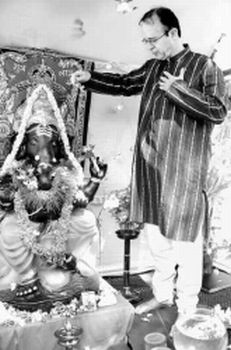
Rev. Hart is a priest in the Church of England. He is also a convert to Hinduism.
Let me repeat: he is a priest in the church of England and also a convert to Hinduism.
In 2006, The Times, of London, published a picture of Hart offering puja to the Hindu god Ganesha in front of his house in Thiruvananthapuram, India. As you can imagine, this sparked quite a controversy. When asked how a Christian priest could convert to Hinduism and still claim to be a Christian, Hart shrugged off any notion that this was a problem. Here is what he said.
Becoming a Hindu has not brought about any change in my spiritual status. The act has not shaken my Christian beliefs by even one per cent…Asking me to express my preference for any particular faith is like asking me to choose between an ice-cream and a chocolate. Both have their own distinct taste.[1]
Let me also introduce you to Pastor Thorkild Grosboll.

He pastored a church in Tarbaek, Denmark, until his retirement a few years ago. Some years before his retirement, Gosboll said this: “I do not believe in a physical God, in the afterlife, in the resurrection, in the Virgin Mary.” He continued: “I believe that Jesus was a nice guy who figured out what man wanted. He embodied what he believed was needed to upgrade the human being.” Later, he said this: “God belongs in the past. He is actually so old fashioned that I am baffled by modern people believing in his existence. I am thoroughly fed up with empty words about miracles and eternal life.”
His Bishop, Lise-Lotte Rebel, removed him from his post after all of this became clear. She removed him, however, not so much because what he said was heresy that undermined the gospel, but because, as a Danish Lutheran, he is paid by the state and has a responsibility not to confuse people. Seriously. That was her objection.
Anyway, Pastor Grosboll objected to her objection. Most tellingly, so did his congregation. They were incensed that their atheist pastor would be the subject of discipline. They loved him and wanted him left alone. Thus, they turned out in shows of public support for him. All of this eventually went to the courts, who….wait for it…removed Bishop Rebel from her oversight of the pastor. There were some further wranglings over Grosboll, but, in the end, he was allowed to keep his church and pulpit so long as he…wait for this too…no longer shared his opinions with the press. He retired in February of 2008.[2]
It is a tragic but certain fact that the bride of Christ has had to deal with false teachers in her midst for her entire existence. Jesus warned of precisely this in our text this morning.
15 “Beware of false prophets, who come to you in sheep’s clothing but inwardly are ravenous wolves. 16 You will recognize them by their fruits. Are grapes gathered from thornbushes, or figs from thistles? 17 So, every healthy tree bears good fruit, but the diseased tree bears bad fruit. 18 A healthy tree cannot bear bad fruit, nor can a diseased tree bear good fruit. 19 Every tree that does not bear good fruit is cut down and thrown into the fire. 20 Thus you will recognize them by their fruits.
Let us listen closely to our King and consider well His warning about the threat of false teachers in the church.
I. The Devil Sends False Prophets to Confuse and Derail Followers of Jesus (v.15a)
The first point is obvious in the words of Jesus: the devil sends false prophets to confuse and derail followers of Jesus. When Jesus says, “Beware of false prophets,” He is assuming their reality and their danger. Disciples of Jesus will have to contend with false teachers teaching false doctrines that undermine the gospel of Jesus. The teachers are dangerous, their teachings are dangerous and we must beware of them and guard against them.
As we consider false prophets, let us look at five biblical truths concerning them.
First of all, there are a lot of false prophets. There always have been and there always will be. In Matthew 24:11 Jesus said, “And many false prophets will arise and lead many astray.”
Second, false prophets, in general, are impressive people. The reason they have large followings is because they are charismatic figures, attractive figures, compelling figures. In Matthew 24:24, Jesus said, “For false christs and false prophets will arise and perform great signs and wonders, so as to lead astray, if possible, even the elect.”
Notice that these people have a kind of power. They have seemingly impressive results. They get big numbers and can dazzle a crowd. They are not boring. They are not dull. They are flashy, provocative, humorous, suave, and effective.
Third, they have large followings. In Luke 6:26, Jesus said, “Woe to you, when all people speak well of you, for so their fathers did to the false prophets.” Do you see? “All people,” Jesus said, “speak well” of false prophets.
You can see this today in ostensibly Christian publishing. Sometimes books are popular because they seem to be blessed by God. They are God-honoring and biblically faithful. But just because a book is popular does not mean that is the case. In fact, I have seen in my lifetime numerous titles that were bestsellers among Christians that had terrible theology, that were not biblically faithful, and that presented false teachings. So too with popular preachers. Sometimes preachers are popular because they are saying what people want to hear. A large following does not mean that a teacher is a good teacher. It may mean that he is a false prophet.
Fourth, false prophets offer an appealing message, but it is inevitably one that covers up the truth. In Ezekiel 22, false prophets are condemned with these words:
28 And her prophets have smeared whitewash for them, seeing false visions and divining lies for them, saying, ‘Thus says the Lord God,’ when the Lord has not spoken.
That is a provocative and compelling phrase: “they have smeared whitewash for them.” That means that these false prophets cover up the truth, but they cover it up with an attractive veneer. What they say sounds so very true, so very wise, so very right. However, what they say is not the truth, but a lie.
Fifth, false prophets are destined for destruction and will receive the wrath of God. In Ezekiel 13, the Lord announces the coming judgment of these false teachers.
8 Therefore thus says the Lord God: “Because you have uttered falsehood and seen lying visions, therefore behold, I am against you, declares the Lord God. 9 My hand will be against the prophets who see false visions and who give lying divinations. They shall not be in the council of my people, nor be enrolled in the register of the house of Israel, nor shall they enter the land of Israel. And you shall know that I am the Lord God.
“I am against you…My hand will be against the prophets…They shall not be in the council of my people, nor be enrolled in the register of the house of Israel, nor shall they enter the land of Israel.” It is a terrible thing to pervert the truth of the living God. Paul put it like this in Galatians 1:
6 I am astonished that you are so quickly deserting him who called you in the grace of Christ and are turning to a different gospel— 7 not that there is another one, but there are some who trouble you and want to distort the gospel of Christ. 8 But even if we or an angel from heaven should preach to you a gospel contrary to the one we preached to you, let him be accursed. 9 As we have said before, so now I say again: If anyone is preaching to you a gospel contrary to the one you received, let him be accursed.
Church: cursed be anybody who would seek to take the pure gospel of Jesus and distort it, perverting it with false teachings and strange doctrines. Why? Because the gospel is life. The gospel is salvation. The gospel points us to the very heart of God. We dare not pervert it!
When, in the 19th century, Soren Keirkegaard wrote his series of letters to the Danish church chastising the church for her abandonment of the way of Jesus, he said this about false teachers who had come in among God’s people:
Imagine that the people are assembled in a church in Christendom, and Christ suddenly enters the assembly. What dost thou think He would do?
He would turn upon the teachers (for the congregation He would judge as He did of yore, that they were led astray), He would turn upon them who “walk in long robes,” tradesmen, jugglers, who have made God’s house, if not a den of robbers, at least a shop, a peddler’s stall, and would say, “Ye hypocrites, ye serpents, ye generation of vipers”; and likely as of yore He would make a whip of small cords and drive them out of the temple.[3]
Christ will indeed deal with false teachers in the midst of the body of Christ!
II. These False Prophets Never Operate Openly, but are Almost Always Disguised as Friends and Fellow Disciples of Jesus (v.15b)
Perhaps the most pernicious attribute of false prophets is their penchant for disguising their true intentions. False prophets never operate openly, but are almost always disguised as friends and fellow disciples of Jesus. To communicate this fact, Jesus employed a startling image in our text.
15 “Beware of false prophets, who come to you in sheep’s clothing but inwardly are ravenous wolves.
Imagine a wolf that dresses as a sheep so that he might sneak into the flock and kill at will. It is a horrifying image, for it suggests that these false teachers are hard to spot but that the failure to spot them will result in devastation. They never declare themselves outright. They come dressed as one of God’s people. Everything they say sounds pretty good. There is nothing obvious about them that would reveal their pernicious intentions.
Turning to Kierkegaard again, he said this about the way that Christianity was being perverted in Denmark:
The apostasy from Christianity will not come about openly by everybody renouncing Christianity; no, but slyly, cunningly, knavishly, by everybody assuming the name of being Christian, thinking that in this way all were most securely secured against…Christianity, the Christianity of the New Testament, which people are afraid of, and therefore industrial priests have invented under the name of Christianity a seetmeat which has a delicious taste, for which men hand out their money with delight.[4]
That is true enough, and a wise warning, but let me go one step further. I am convinced that the majority of false teachers honestly do not think that they are false teachers at all. In other words, they themselves need to be shown this fact. The definition of the word “Christian” has become so fluid in our day that it is now possible to hold to utterly heretical ideas and not believe that your ideas are heretical at all. In fact, I honestly suspect that many heretics who are teaching false doctrines truly believe they are honoring God and helping the church.
I am thinking here of a man like Bishop John Shelby Spong, the retired bishop of the Episcopal Church who has made quite a nice living off of skewering the cardinal, biblical doctrines of Christianity. A few years ago, Spong publically issued his twelve theses for a new reformation in the church. Here they are:
1. Theism, as a way of defining God, is dead. So most theological God-talk is today meaningless. A new way to speak of God must be found.
2. Since God can no longer be conceived in theistic terms, it becomes nonsensical to seek to understand Jesus as the incarnation of the theistic deity. So the Christology of the ages is bankrupt.
3. The biblical story of the perfect and finished creation from which human beings fell into sin is pre-Darwinian mythology and post-Darwinian nonsense.
4. The virgin birth, understood as literal biology, makes Christ’s divinity, as traditionally understood, impossible.
5. The miracle stories of the New Testament can no longer be interpreted in a post-Newtonian world as supernatural events performed by an incarnate deity.
6. The view of the cross as the sacrifice for the sins of the world is a barbarian idea based on primitive concepts of God and must be dismissed.
7. Resurrection is an action of God. Jesus was raised into the meaning of God. It therefore cannot be a physical resuscitation occurring inside human history.
8. The story of the Ascension assumed a three-tiered universe and is therefore not capable of being translated into the concepts of a post-Copernican space age.
9. There is no external, objective, revealed standard writ in scripture or on tablets of stone that will govern our ethical behavior for all time.
10. Prayer cannot be a request made to a theistic deity to act in human history in a particular way.
11. The hope for life after death must be separated forever from the behavior control mentality of reward and punishment. The Church must abandon, therefore, its reliance on guilt as a motivator of behavior.
12. All human beings bear God’s image and must be respected for what each person is. Therefore, no external description of one’s being, whether based on race, ethnicity, gender or sexual orientation, can properly be used as the basis for either rejection or discrimination.[5]
Now, it is clear that these twelve theses, by and large, present a basically atheistic view of reality, though I do not think Spong thinks of himself as an atheist. Regardless, the overall thrust of these theses wars against biblical Christianity. That is tragic, but, unfortunately, it is not surprising given Spong’s consistent efforts to undermine the faith. But what I want to make most clear is this: these theses are coming from a man who calls himself a Christian, sincerely believes he is a Christian, and sincerely believes that these theses will help the church. In his mind, these theses do not constitute false teachings. They constitute good teachings. And the point is that he really does believe that these ideas are good.
He is a wolf in sheep’s clothing who really believes he is a sheep. When he eats some of the sheep, he honestly believes he is helping the fold.
Please understand this point: it may just be that the first person who needs to be convinced of false teaching is the one teaching it!
III. However, a Close Inspection of Fruit Will Always Reveal the Source of Any Prophet’s Message (v.16-20)
How then do we know when a person is a false prophet, a false teacher? Jesus says that we can tell by the kind of fruit the prophet produces.
16 You will recognize them by their fruits. Are grapes gathered from thornbushes, or figs from thistles? 17 So, every healthy tree bears good fruit, but the diseased tree bears bad fruit. 18 A healthy tree cannot bear bad fruit, nor can a diseased tree bear good fruit. 19 Every tree that does not bear good fruit is cut down and thrown into the fire. 20 Thus you will recognize them by their fruits.
Their “fruit” means two things: their lives and their teachings. It is oftentimes the case that false teachers are advancing their teachings for some kind of personal gain. In time, the true desires of the false teachers, often sensual in nature, will become clear. Oftentimes this bad fruit is related to either money or physical pleasures. Jude drew a direct connection between false teachers and sensuality.
3 Beloved, although I was very eager to write to you about our common salvation, I found it necessary to write appealing to you to contend for the faith that was once for all delivered to the saints. 4 For certain people have crept in unnoticed who long ago were designated for this condemnation, ungodly people, who pervert the grace of our God into sensuality and deny our only Master and Lord, Jesus Christ.
Yes, their bad fruit may be ignoble and impure desires, for wealth or pleasure or fame or control. But fruit, biblically, also refers to teaching. For instance, in Matthew 12, John the Baptist said this:
33 “Either make the tree good and its fruit good, or make the tree bad and its fruit bad, for the tree is known by its fruit. 34 You brood of vipers! How can you speak good, when you are evil? For out of the abundance of the heart the mouth speaks. 35 The good person out of his good treasure brings forth good, and the evil person out of his evil treasure brings forth evil. 36 I tell you, on the day of judgment people will give account for every careless word they speak, 37 for by your words you will be justified, and by your words you will be condemned.”
Do you see? The bad fruit of the brood of vipers condemned by John the Baptist was their “careless word[s],” words that would ultimately condemned them. Friends, beware the words of false teachers. What words constitute false teaching? John tells us in 1 John 4.
1 Beloved, do not believe every spirit, but test the spirits to see whether they are from God, for many false prophets have gone out into the world. 2 By this you know the Spirit of God: every spirit that confesses that Jesus Christ has come in the flesh is from God, 3 and every spirit that does not confess Jesus is not from God. This is the spirit of the antichrist, which you heard was coming and now is in the world already.
When a teacher fails to exalt Jesus, to honor Christ as God in flesh, to draw men and women to Jesus, and to put the spotlight on Jesus, he or she is a false teacher. More than that, he or she is channeling the spirit of the antichrist. False teachers are doing the work of the devil.
Our church has committed itself to four canons: (1) An authentic family (2) around the whole gospel (3) for the glory of God (4) and the reaching of the nations. That second canon is critical: around the whole gospel. That is our doctrinal canon, our canon of belief. We are bound to the gospel of the living Christ. We dare not, indeed we cannot abandon the gospel. It is a rock-solid commitment of this church that this pulpit should only and ever promote the gospel of Christ. It is a rock-solid commitment of this church that our Sunday School classes promote the gospel and reject anything that would pull us away from it. Furthermore, it is a conviction of this church that whatever is done or said in this place must be in harmony with the gospel of Christ.
I believe in my heart of hearts that Satan does not want Central Baptist Church to disappear. Rather, he wants us to remain where we are but abandon Christ while we are here. He gets the victory if people continue to gather but gather around things other than Christ. If Satan can sow false teachings, he can mock the one, true, living God.
Oh God! Keep us close to the cross. Keep us close to our King. Keep us close to the gospel. May we never abandon the truth for a lie.
[1] https://www.hindu.com/2006/09/13/stories/2006091302071400.htm
[2] RJN, “While We’re At It,” First Things. October 2003. https://en.wikipedia.org/wiki/Thorkild_Grosbøll
[3] Soren Kierkegaard. Attack Upon Christendom. (Princeton, NJ: Princeton University Press, 1968), p.123.
[4] Soren Kierkegaard. Attack Upon Christendom. (Princeton, NJ: Princeton University Press, 1968), p.46-47.
[5] https://anglicanecumenicalsociety.wordpress.com/2010/06/10/bishop-spong-and-archbishop-williamss-response/
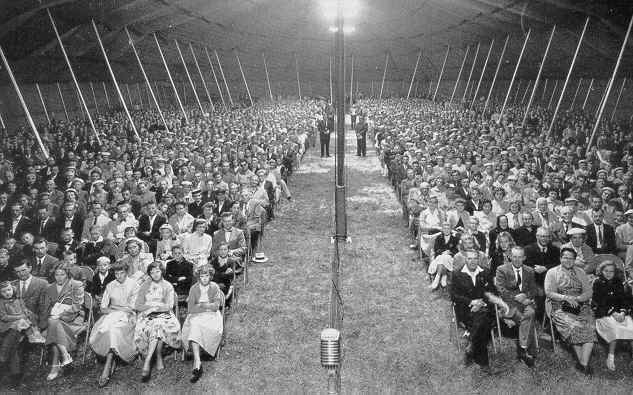 It is inevitable that iconoclasm, once enshrined as an operative principle, will, at times, need its own smashing. For instance, the fashionable contempt for “revival services” among many in the church today may itself need to be the object of contempt once it moves past a legitimate concern that we not reduce “revival” to a series of meetings and into a kind of haughty and wholesale abandonment of the very idea of a series of scheduled gatherings in which the people of God are called to gather in worship outside of the regularly prescribed times in a desire to see God move mightily.
Central Baptist Church in North Little Rock last night concluded a series of revival meetings that lasted from Sunday morning to Wednesday night. We gathered for five meetings. Kevin Griggs preached on “The Kingdom of God and How It Changes Everything” and Scotty Kerlin led us in worship. Our people, young and old, showed up in an impressive display of support. We ate together, fellowshipped together, prayed, read, listened, and sang together. Lives were touched and, I truly believe, the church was strengthened.
Last night I was reflecting on my own self-righteous penchant for shrugging off the traditions of the faith family to which I belong and in which I was raised. In an effort to say that revival is more than a series of meetings, I have been guilty of dismissing meetings themselves at times. In an effort to say that revival is more than a calendared event, I have been guilty of smugly smirking at such calendared events.
To be sure, there is a danger to the revival meeting model. It can tempt us to think that this is how God moves: when we schedule Him in and give Him permission to do so. It can reduce the very idea of revival to a beginning-and-ending model in which we tragically come to think of it as an event, and a church event at that (i.e., “revival” started on Sunday and “revival” ended on Wednesday night). It can, if presented wrongly, foster the mistaken notion that the church is only the church when we gather here for things like this, mitigating against the more biblical teaching that the church is a body of believers, not an institutional presence.
I have felt the danger of these realities and, at times, have been tempted to abandon the traditional revival model. Even so, as a pastor I have never fully abandoned it, and, indeed, have no intention of doing so. I have gone through periods of calling it other things: “A Season of Renewal” and things like that. That’s fine and good. Calling it a “revival” is neither here nor there. No, the issue is not semantics. As I reflect on the meetings of this week, this, it seems to me, is the point: In a day in which modern American Christians, perhaps especially young modern American Christian, are fairly tyrannized by the calendars we have created, by the schedules we have allowed ourselves to embrace, by the myriad of activities to which we have committed, and by the constant pressure to keep up the frantic pace of our vertigo society, it could just be that the old school revival meeting model has taken on a new prophetic nuance in, by, and through which the church can reassert itself into the midst of the modern tapestry of busyness with a gospel presence and through which Christian people can offer a clear statement to the world, their families, and themselves, that sacred seasons of respite and congregational attention are still valid because the King around which we gather is still Sovereign.
“Here! Here!” for revival meetings.
Finally, here is audio of Scott Kerlin, Kevin Griggs, and Billy Davis, our Minister of Music, singing Paul Baloche’s song, “The Same Love.”
 Earlier this year our staff came under a common conviction that our Sunday School had become too fragmented and too spread out in terms of what the classes of Central Baptist Church were teaching. It wasn’t that our classes weren’t teaching good material. All of it was based in Scripture and theologically orthodox. However, after so many years of having such a lack of cohesion, we thought it would be good for our classes to come together around a common theme and purpose. We chose The Gospel Project (TGP) curriculum as the point around which we would gather.
We were attracted to the metanarrative approach that TGP takes as well as the robust theological components in the project. I really liked the historical emphasis in some of the sidebar quotations as well as the panoply of voices from the church that is likewise present in the material. It seemed to me that such elements exhibited an intentional pushback against what theologian Tom Oden has called “neophilia,” “chronological snobbery,” or “the love of the new.” I have long chafed at the a-historical hubris of much free church Protestantism. The Gospel Project emphasis on the greater church, recent and ancient, is a breath of fresh air.
We told our teachers that we wanted all of our classes to teach TGP material for the Fall of 2013 and the Spring of 2014. This year-long journey would give us an opportunity to get on the same page, build unity, combat any isolationist impulses within our classes (and I quickly add that we saw no overt evidence of such – we just knew that this was a real threat if classes do not come together around a common theme ever so often), and advance biblical and theological education. Overall, we saw this as an opportunity to insure that the whole arc of scripture was being taught.
We were assisted greatly in this effort by David Bond of the Arkansas Baptist Convention. David came when we first proposed the idea to our teachers at a special called meeting (at which dinner was provided for our teachers) and he came twice more to teach our teachers how to approach the curriculum. This was key and, as a pastor who also teaches Sunday School, was helpful to me as well.
To further assist in this effort, I announced that I would be stopping my Sunday evening sermon series through Exodus and would, for the coming Fall and Spring, preach on the primary TGP texts from that morning’s lesson. In this way, we could bookend every Sunday with the same lesson. Furthermore, I would have an opportunity to speak to all of our classes about what we had studied.
Last Sunday was the first Sunday we did this and we were very pleased. The reactions to TGP have been strong and positive. The feedback from my addressing that morning’s text in the evening service has likewise been positive. We are very excited about this effort and what the Lord is going to do in and through it. TGP is well-written, substantive, appropriately challenging, and God-honoring. Check it out, if you haven’t yet done so.
Finally, I would be remiss if I did not praise our Sunday School teachers. This was a big thing to ask of them, and a different kind of thing to boot. They accepted it in a way that still causes me to marvel. If you would like to gauge the maturity of your church, try a Sunday School-wide change and see what happens. Our teachers showed a willingness to trust and try something new that is tragically lacking in too many churches. I am proud of them all, and of our folks. It is amazing watching God do something among His people.
