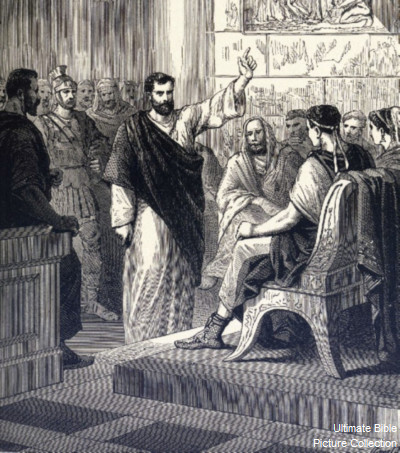
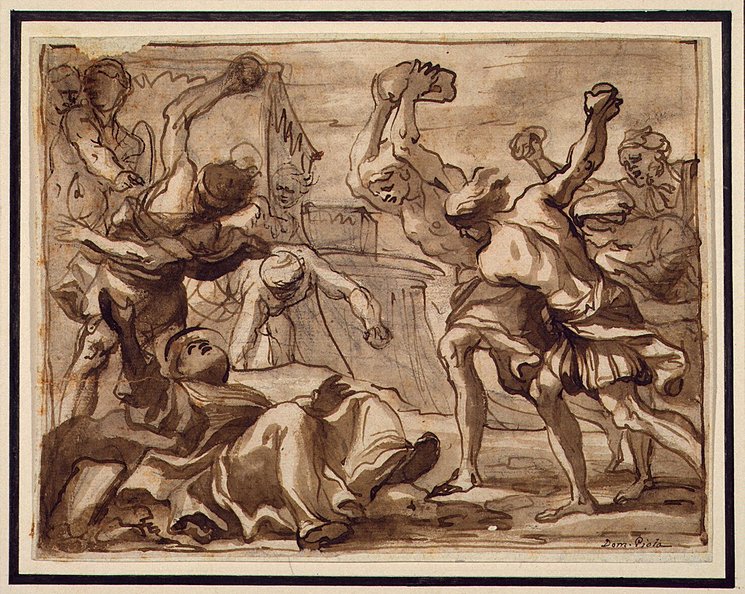
Acts 7

Stoning-of-St-StephenActs 7

1 And the high priest said, “Are these things so?” 2 And Stephen said: “Brothers and fathers, hear me. The God of glory appeared to our father Abraham when he was in Mesopotamia, before he lived in Haran, 3 and said to him, ‘Go out from your land and from your kindred and go into the land that I will show you.’ 4 Then he went out from the land of the Chaldeans and lived in Haran. And after his father died, God removed him from there into this land in which you are now living. 5 Yet he gave him no inheritance in it, not even a foot’s length, but promised to give it to him as a possession and to his offspring after him, though he had no child. 6 And God spoke to this effect—that his offspring would be sojourners in a land belonging to others, who would enslave them and afflict them four hundred years. 7 ‘But I will judge the nation that they serve,’ said God, ‘and after that they shall come out and worship me in this place.’ 8 And he gave him the covenant of circumcision. And so Abraham became the father of Isaac, and circumcised him on the eighth day, and Isaac became the father of Jacob, and Jacob of the twelve patriarchs. 9 “And the patriarchs, jealous of Joseph, sold him into Egypt; but God was with him 10 and rescued him out of all his afflictions and gave him favor and wisdom before Pharaoh, king of Egypt, who made him ruler over Egypt and over all his household. 11 Now there came a famine throughout all Egypt and Canaan, and great affliction, and our fathers could find no food. 12 But when Jacob heard that there was grain in Egypt, he sent out our fathers on their first visit. 13 And on the second visit Joseph made himself known to his brothers, and Joseph’s family became known to Pharaoh. 14 And Joseph sent and summoned Jacob his father and all his kindred, seventy-five persons in all. 15 And Jacob went down into Egypt, and he died, he and our fathers, 16 and they were carried back to Shechem and laid in the tomb that Abraham had bought for a sum of silver from the sons of Hamor in Shechem. 17 “But as the time of the promise drew near, which God had granted to Abraham, the people increased and multiplied in Egypt 18 until there arose over Egypt another king who did not know Joseph. 19 He dealt shrewdly with our race and forced our fathers to expose their infants, so that they would not be kept alive. 20 At this time Moses was born; and he was beautiful in God’s sight. And he was brought up for three months in his father’s house, 21 and when he was exposed, Pharaoh’s daughter adopted him and brought him up as her own son. 22 And Moses was instructed in all the wisdom of the Egyptians, and he was mighty in his words and deeds. 23 “When he was forty years old, it came into his heart to visit his brothers, the children of Israel. 24 And seeing one of them being wronged, he defended the oppressed man and avenged him by striking down the Egyptian. 25 He supposed that his brothers would understand that God was giving them salvation by his hand, but they did not understand. 26 And on the following day he appeared to them as they were quarreling and tried to reconcile them, saying, ‘Men, you are brothers. Why do you wrong each other?’ 27 But the man who was wronging his neighbor thrust him aside, saying, ‘Who made you a ruler and a judge over us? 28 Do you want to kill me as you killed the Egyptian yesterday?’ 29 At this retort Moses fled and became an exile in the land of Midian, where he became the father of two sons. 30 “Now when forty years had passed, an angel appeared to him in the wilderness of Mount Sinai, in a flame of fire in a bush. 31 When Moses saw it, he was amazed at the sight, and as he drew near to look, there came the voice of the Lord: 32 ‘I am the God of your fathers, the God of Abraham and of Isaac and of Jacob.’ And Moses trembled and did not dare to look. 33 Then the Lord said to him, ‘Take off the sandals from your feet, for the place where you are standing is holy ground. 34 I have surely seen the affliction of my people who are in Egypt, and have heard their groaning, and I have come down to deliver them. And now come, I will send you to Egypt.’ 35 “This Moses, whom they rejected, saying, ‘Who made you a ruler and a judge?’—this man God sent as both ruler and redeemer by the hand of the angel who appeared to him in the bush. 36 This man led them out, performing wonders and signs in Egypt and at the Red Sea and in the wilderness for forty years. 37 This is the Moses who said to the Israelites, ‘God will raise up for you a prophet like me from your brothers.’ 38 This is the one who was in the congregation in the wilderness with the angel who spoke to him at Mount Sinai, and with our fathers. He received living oracles to give to us. 39 Our fathers refused to obey him, but thrust him aside, and in their hearts they turned to Egypt, 40 saying to Aaron, ‘Make for us gods who will go before us. As for this Moses who led us out from the land of Egypt, we do not know what has become of him.’ 41 And they made a calf in those days, and offered a sacrifice to the idol and were rejoicing in the works of their hands. 42 But God turned away and gave them over to worship the host of heaven, as it is written in the book of the prophets: “‘Did you bring to me slain beasts and sacrifices,
during the forty years in the wilderness, O house of Israel? 43 You took up the tent of Moloch
and the star of your god Rephan,
the images that you made to worship;
and I will send you into exile beyond Babylon.’ 44 “Our fathers had the tent of witness in the wilderness, just as he who spoke to Moses directed him to make it, according to the pattern that he had seen. 45 Our fathers in turn brought it in with Joshua when they dispossessed the nations that God drove out before our fathers. So it was until the days of David, 46 who found favor in the sight of God and asked to find a dwelling place for the God of Jacob. 47 But it was Solomon who built a house for him. 48 Yet the Most High does not dwell in houses made by hands, as the prophet says, 49 “‘Heaven is my throne,
and the earth is my footstool.
What kind of house will you build for me, says the Lord,
or what is the place of my rest? 50 Did not my hand make all these things?’ 51 “You stiff-necked people, uncircumcised in heart and ears, you always resist the Holy Spirit. As your fathers did, so do you. 52 Which of the prophets did your fathers not persecute? And they killed those who announced beforehand the coming of the Righteous One, whom you have now betrayed and murdered, 53 you who received the law as delivered by angels and did not keep it.” 54 Now when they heard these things they were enraged, and they ground their teeth at him. 55 But he, full of the Holy Spirit, gazed into heaven and saw the glory of God, and Jesus standing at the right hand of God. 56 And he said, “Behold, I see the heavens opened, and the Son of Man standing at the right hand of God.” 57 But they cried out with a loud voice and stopped their ears and rushed together at him. 58 Then they cast him out of the city and stoned him. And the witnesses laid down their garments at the feet of a young man named Saul. 59 And as they were stoning Stephen, he called out, “Lord Jesus, receive my spirit.” 60 And falling to his knees he cried out with a loud voice, “Lord, do not hold this sin against them.” And when he had said this, he fell asleep.

In Frederick Haime’s 1865 book about his father,  An Itinerant Preacher: Or Sketches from the Life of Charles Haime, he speaks of a particular sermon his father preached that offended a wealthy man.  Here is what he wrote:

On another occasion, a rich man who gave largely to the circuit funds, deemed himself personally referred to in the sermon.  Greatly offended, he followed my father to his home, and there gave vent to his excited feelings in words by no means smooth or gentlemanly.  The reply, however, betokened nothing of fear:  “I knew not that you were in the chapel, but if the cap fitted, wear it.”[1]

I can say that I have experienced a similar occurrence in my ministry.  When I was first beginning to preach I preached a sermon on not giving up, on not stopping in our devotion to Christ, on persevering.  I can honestly say before all of you that I had nobody in mind and was not aiming it anybody.

A few months after that I was at the home of an elderly church member who was unhappy.  A deacon was with me and we listened to his complaint.  Among his complaints was this:  that I had targeted him some months before in that sermon.  Genuinely confused, I asked him to explain.  He said, “A few months ago you preached a sermon on not quitting.  And when you said that you looked right at me.  And I cannot believe you would accuse me of quitting.”  I was, and am still, flabbergasted by that, though I have since seen it happen a few more times.

It is indeed a difficult thing when you feel that you have been preached at, that a shot has been taken at you personally from the pulpit.  Oftentimes the accusation is inaccurate and the preacher was not directing anything at you in particular.  But there are times when the accusation is accurate and a preacher does in fact preach at wrongdoers.

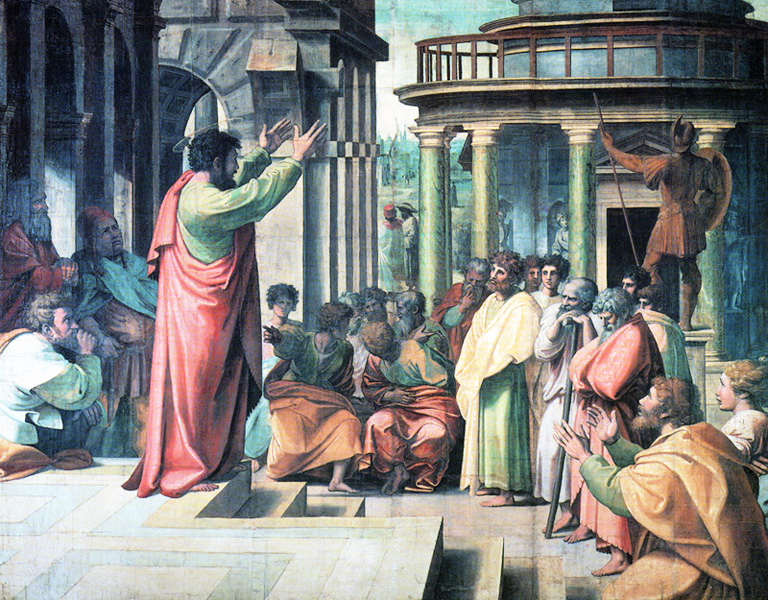
That is the case in Stephen’s great sermon in Acts 7.  He has been harassed, lied about and drug before the Sanhedrin, the religious authorities.  When questioned about the accusations, he launches into a sermon that will end with violence and bloodshed and the creation of the first Christian martyr.

In my estimation, this is a stunning and powerful sermon.  It does have its critics though.  John Stott has outlined some of the modern complaints:

Many students of Stephen’s speech have criticized it as rambling, dull and even incoherent. A good example is George Bernard Shaw in his preface to Androcles and the Lion. Calling Stephen “a quite intolerable young speaker” and “a tactless and conceited bore,” he describes him as having “delivered an oration to the council, in which he  … inflicted on them a tedious sketch of the history of Israel, with which they were presumably as well acquainted as he.”   Others have found his speech lacking not only in interest but in point. Dibelius, for instance, wrote of “the irrelevance of most of this speech.”[2]

It seems that this sermon has never been without its critics!  That being said, none have reacted with the bloodthirsty rage of those who first heard it.  Let us consider this today.

Stephen preached that human beings have a habit of opposing, ignoring, or killing those whom God sends to announce salvation to them.

This is one of the longest sermons recorded in the New Testament and there are numerous ways to approach it.  One way to approach it is to see in it Stephen’s response to the accusation that he had blasphemed against Moses and God, against the law and the temple.  This approach will tend to point to the twenty verses (v.20-39) in which Stephen tells the story of Moses thereby demonstrating his grasp of who Moses is and what his crucial place in Israel’s history is.  Then it will emphasize Stephen’s explanation of the wilderness tabernacle and the eventual construction of Solomon’s temple, culminating in Stephen’s bold pronouncement about the limitations of a physical building:

48 Yet the Most High does not dwell in houses made by hands, as the prophet says, 49 “‘Heaven is my throne, and the earth is my footstool. What kind of house will you build for me, says the Lord, or what is the place of my rest? 50 Did not my hand make all these things?’

Or one might also choose to approach this sermon by seeing in it Stephen’s argument for God’s covenant faithfulness to His people.  Stephen begins with God’s covenant with Abraham, tells the story of Israel, and ends with the Jews killing Jesus, the One who fulfilled the covenant and the promises.  Clearly this is one of his themes.

These are important points and valid approaches to this sermon.  For our purposes, however, let us consider another of Stephen’s apparent intentions:  the desire to show the Jews how human beings have a habit of opposing, ignoring, or killing those whom God sends to announce salvation to them.  The great New Testament scholar F.F. Bruce correctly argues that this is one of the major themes of the sermon, the “insistence that the Jewish people’s refusal to acknowledge Jesus as Messiah was all of a piece with their attitude to God’s messengers from the beginning of their national history.”[3]

Consider how often in the sermon Stephen points to the people of God’s rejection of the people sent by God to proclaim to them the truth.

  • Stephen tells of how Joseph’s brothers opposed him. “And the patriarchs, jealous of Joseph, sold him into Egypt; but God was with him” (v.9).  However, Stephen goes on to say that Joseph, though hated by his brothers, became the chosen instrument of Israel’s salvation.
  • Stephen tells of how the Jews were saved from starvation from fleeing to Egypt.  However, after growing and multiplying as a people there, they too were opposed by Pharaoh.  “He dealt shrewdly with our race and forced our fathers to expose their infants, so that they would not be kept alive” (v.19).
  • Stephen tells of the coming of Moses during the persecution of Israel in Egypt.  He tells of how Moses rose up to try to help and advise the Jews, but he was opposed.  “He supposed that his brothers would understand that God was giving them salvation by his hand, but they did not understand” (v.25).  The Lord Himself, Stephen stresses, chose to use the rejected one as the instrument of liberation.  “This Moses, whom they rejected, saying, ‘Who made you a ruler and a judge?’—this man God sent as both ruler and redeemer by the hand of the angel who appeared to him in the bush” (v.35).
  • Stephen tells how Israel ultimately rejected Moses even as he was delivering them from bondage and turned instead to paganism and idolatry.

Time and again Stephen turns their attention to this most uncomfortable fact:  the people who should be able to hear God the most clearly often reject Him when He speaks!  The climax of the sermon is in verses 51-53.

51 “You stiff-necked people, uncircumcised in heart and ears, you always resist the Holy Spirit. As your fathers did, so do you. 52 Which of the prophets did your fathers not persecute? And they killed those who announced beforehand the coming of the Righteous One, whom you have now betrayed and murdered, 53 you who received the law as delivered by angels and did not keep it.”

“Do you not see,” Stephen seems to thunder, “that we who are so close to the truth have oftentimes been the very ones who have missed it and, worse still, have opposed the truth when God announces it in our midst?  And do you not see that you have done it again in killing Jesus?!  Do you not see that in striking His people you are continuing the long, sad, tragic history of our people missing the truth when it is staring us in the face?!  You stiff-necked people, uncircumcised in heart and ears, you always resist the Holy Spirit!  As your fathers did, so do you!”

Oh friends!  What a terrifying truth!  What a sobering reminder!  How often in our lives, we who profess to know Jesus, do we miss the truth because we find it too uncomfortable, too unsettling, too invasive, too life-changing?

On September 6, 1955, Flannery O’Connor, in writing to Betty Hester, said, “The truth does not change according to our ability to stomach it emotionally.”  I repeat:  “The truth does not change according to our ability to stomach it emotionally.”

The statement, “Jesus is Lord,” remains the most controversial and true statement ever uttered!  The story of Acts is simultaneously the story of (a) the power of this truth to embolden some people to salvation and revolution and (b) the offensiveness of this truth that leads other people to hate it and want to stamp it out of the record of humanity.  It is, in other words, the most glorious, powerful, saving, offensive, divisive, enraging truth in the world.

It is all these things…but it is still the truth!

In response to his sermon, the crowd proved his point by murdering Stephen.

As if missing the irony of their demonic actions, the listening crowd proves Stephen’s point by rushing upon him, the bearer of the truth, in order to murder him.  “A speech like this,” William Barclay said, “could only have one end; Stephen had courted death, and death came.”[4]  Listen:

54 Now when they heard these things they were enraged, and they ground their teeth at him. 55 But he, full of the Holy Spirit, gazed into heaven and saw the glory of God, and Jesus standing at the right hand of God. 56 And he said, “Behold, I see the heavens opened, and the Son of Man standing at the right hand of God.” 57 But they cried out with a loud voice and stopped their ears and rushed together at him. 58 Then they cast him out of the city and stoned him. And the witnesses laid down their garments at the feet of a young man named Saul. 59 And as they were stoning Stephen, he called out, “Lord Jesus, receive my spirit.” 60 And falling to his knees he cried out with a loud voice, “Lord, do not hold this sin against them.” And when he had said this, he fell asleep.

Take note, Church:  “they were enraged, and they ground their teeth at him…[and] they cried out with a loud voice and stopped their ears and rushed together at him.  Then they cast him out of the city and stoned him.”

Here is a mob mentality if ever there was one.  Stephen speaks the truth, and is killed for it.

In Kurt Vonnegut’s amazing 1969 novel, Slaughterhouse Five, he keeps repeating the phrase over and over, “And so it goes.”  He repeats it in the novel whenever anybody dies or is killed.  One is tempted to say it here with the death of Stephen:  “And so it goes.”  For so it does go, does it not? Is it not the case that there are those who will seek to destroy any who dare to speak that which is true and eternal and life-giving?  Do you remember what Jesus said of Satan in John 10:10?  “The thief comes only to steal and kill and destroy. I came that they may have life and have it abundantly.”

They stop their ears, grind their teeth, and murder brave Stephen.  He seals his sermon with his blood.

I recall in high school having my Art teacher Mrs. Nancy Blue tell us how Frederic Chopin, while once playing the Military Polonaise bled on the keys as a result of his intense playing.  There is definitiveness about the shedding of blood.  It is as if a man is saying, “This is all I have to give.”

Stephen shed his blood in concluding his amazing sermons!  All he had to give for Christ was his life. And he gave it.

But in his death, Stephen reflected the One who was killed but who overcame death:  Jesus.

Stephen dies, but even his death is a sermon.  Listen closely again.  Pay attention to Stephen’s actions as he is killed.

54 Now when they heard these things they were enraged, and they ground their teeth at him. 55 But he, full of the Holy Spirit, gazed into heaven and saw the glory of God, and Jesus standing at the right hand of God. 56 And he said, “Behold, I see the heavens opened, and the Son of Man standing at the right hand of God.” 57 But they cried out with a loud voice and stopped their ears and rushed together at him. 58 Then they cast him out of the city and stoned him. And the witnesses laid down their garments at the feet of a young man named Saul. 59 And as they were stoning Stephen, he called out, “Lord Jesus, receive my spirit.” 60 And falling to his knees he cried out with a loud voice, “Lord, do not hold this sin against them.” And when he had said this, he fell asleep.

There are hints here of something almost unbelievable, almost too beautiful for words, happening here.  Did you catch them?  As Stephen was being stoned, he said two things.

59 And as they were stoning Stephen, he called out, “Lord Jesus, receive my spirit.”

60 And falling to his knees he cried out with a loud voice, “Lord, do not hold this sin against them.” And when he had said this, he fell asleep.

Did you hear that?

59 And as they were stoning Stephen, he called out, “Lord Jesus, receive my spirit.”

60 And falling to his knees he cried out with a loud voice, “Lord, do not hold this sin against them.” And when he had said this, he fell asleep.

Do these words sound familiar to you?  They should.

Then Jesus, calling out with a loud voice, said, “Father, into your hands I commit my spirit!” (Luke 23:46a)

And Jesus said, “Father, forgive them, for they know not what they do.” (Luke 23:34a)

Amazing.  Unbelievable.

59 And as they were stoning Stephen, he called out, “Lord Jesus, receive my spirit.”

Then Jesus, calling out with a loud voice, said, “Father, into your hands I commit my spirit!” (Luke 23:46a)

60 And falling to his knees he cried out with a loud voice, “Lord, do not hold this sin against them.” And when he had said this, he fell asleep.

And Jesus said, “Father, forgive them, for they know not what they do.” (Luke 23:34a)

Stephen has become so identified with Jesus that he speaks the crucifixion words of Jesus during his own stoning.  Having embraced Jesus in his life, Stephen now embraces Christ in his death.  He proves his discipleship with his repetition of the words of Christ.  And this is no mere mimicking.  Stephen may not even be aware that he is speaking the words of Christ.  He is simply speaking from the depths of his heart, but his heart has been seized by Christ.

This is what it means to take on the mind of Christ:  to live His life and speak His words in a manner that is not premeditated, to walk so long with Christ and to have our minds and hearts so taken over by Jesus that we begin to look and sound like Him.

Is it surprising, then, that Stephen sees what he sees when he looks into Heaven?

55 But he, full of the Holy Spirit, gazed into heaven and saw the glory of God, and Jesus standing at the right hand of God. 56 And he said, “Behold, I see the heavens opened, and the Son of Man standing at the right hand of God.”

It has been frequently pointed out that Jesus is normally presented as sitting at the right hand of the Father.  But here He is standing.  He is standing for Stephen.  Why?  There may be many reasons why He is standing, but the explanation of the great 4th century saint, Ambrose, probably says it better than any other could.

Jesus stood as a helpmate; he stood as if anxious to help Stephen, his athlete, in the struggle.  He stood as though ready to crown his martyr.  Let him then stand for you that you may not fear him sitting, for he sits when he judges…[5]

“Let him then stand for you…”

He stands to receive His own.  He stands to welcome His people home.

Do you know Him?  Have you trusted Him?  Are you, like Stephen, being conformed to the image of Christ?  Is His life yours?  Are His words yours?

Does He have you to that extent?

Is He yours?

Are you His?


[1] Frederick Charles Haime. An itinerant preacher; or, Sketches from the life of the rev. Charles Haime. (London: Hamilton, Adams, & Co., 1865), p.51.

[2] Stott, John (2014-04-02). The Message of Acts (The Bible Speaks Today Series) (Kindle Locations 2245-2247). InterVarsity Press. Kindle Edition.

[3] Bruce, F.F. (1988-06-30). The Book of Acts (New International Commentary on the New Testament) (p. 131). Eerdmans Publishing Co – A. Kindle Edition.

[4] William Barclay, Acts. The Daily Study Bible. (Edinburgh: The Saint Andrew Press, 1969), p.62.

[5] Francis Martin, ed. Acts. Ancient Christian Commentary on Scripture. New Testament, vol.V. Thomas C. Oden, gen. ed. (Downers Grove, IL: InterVarsity Press, 2006), p.28.
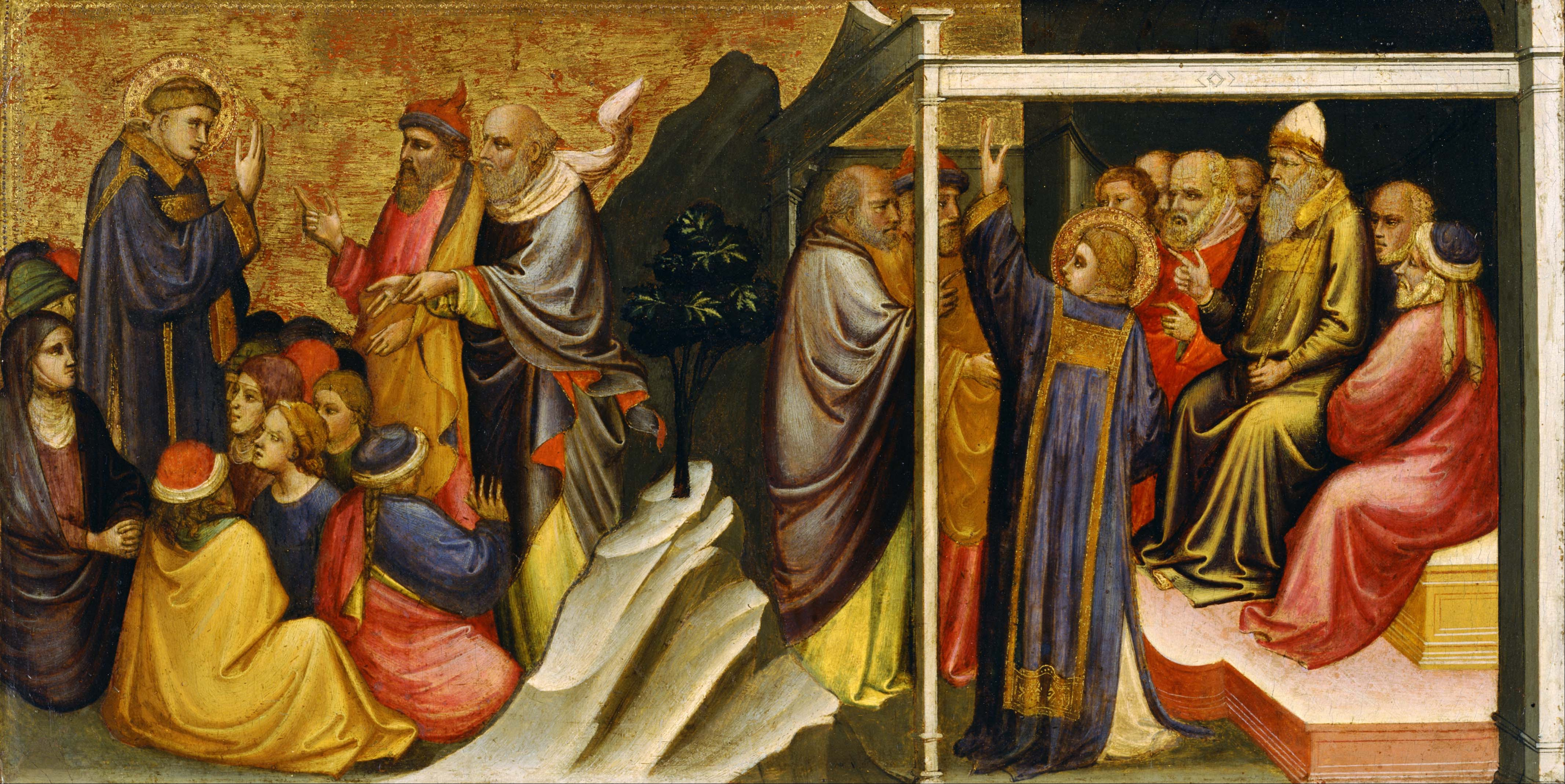

Acts 6:8-15

St._Stephen_before_th..._-_Google_Art_ProjectActs 6:8-15

8 And Stephen, full of grace and power, was doing great wonders and signs among the people. 9 Then some of those who belonged to the synagogue of the Freedmen (as it was called), and of the Cyrenians, and of the Alexandrians, and of those from Cilicia and Asia, rose up and disputed with Stephen. 10 But they could not withstand the wisdom and the Spirit with which he was speaking. 11 Then they secretly instigated men who said, “We have heard him speak blasphemous words against Moses and God.” 12 And they stirred up the people and the elders and the scribes, and they came upon him and seized him and brought him before the council, 13 and they set up false witnesses who said, “This man never ceases to speak words against this holy place and the law, 14 for we have heard him say that this Jesus of Nazareth will destroy this place and will change the customs that Moses delivered to us.” 15 And gazing at him, all who sat in the council saw that his face was like the face of an angel.

Jacob Silverman has written an article for the website www.howstuffoworks.com entitled, “Why do old couples look alike?”  It is a fascinating piece exploring the commonly held belief that the longer people are married the more they actually look alike.  Silverman cites some interesting studies showing that there may just be something to this notion.

A study published in the March 2006 issue of “Personality and Individual Differences” may have the answer. Twenty-two people, divided equally between male and female, participated in the study. They were asked to judge the looks, personalities and ages of 160 married couples. The participants viewed photographs of men and women separately and were not told who was married to whom. The subjects consistently judged people who were married as being similar in appearance and personality. The researchers also found that couples who had been together longer appeared more similar.

The article then goes on to offer some reasons why couples who are married a long time begin to look alike.  They note that “life experiences can end up being reflected physically,” so, for instance, a happy couple that smiles a lot “will develop the facial muscles and wrinkles related to smiling.”  Thus, “years of experience of an old couple’s marriage, happy or otherwise, would then be reflected in their faces.”

Furthermore, studies suggest that people tend to be drawn toward people who are genetically similar.  Silverman points to “a researcher at the University of Western Ontario [who] determined that when considering friends or romantic partners, a similar genetic profile made up about a third of the selection criteria.”  Not too similar, mind you, but similar nonetheless.  Genetically similar people appear to have healthier, happier, longer marriages.

There is also the dynamic of girls who tend to marry men who remind them in some ways of their fathers.  Silverman explains:

A study involving researchers from several universities showed that women prefer men who look like their fathers. Even women who were adopted seem to share the same predilection. Tamas Bereczkei, a researcher at Hungary’s University of Pecs who was involved in the study, called the process sexual imprinting. Women use their fathers as models by which they judge their prospective mates.

The study also found that a close father-daughter relationship more often resulted in a woman marrying someone who looked like her father. Again, the notion of imprinting arises as these fathers, by forming close emotional bonds with their daughters, seemed to provide a model of what a husband should be.[1]

That is really all quite fascinating, and there is no doubt something to it.  People who are married a long time really do start looking alike.  But if the evidence in the article is true, that phenomenon is really attributable to the fact that people who are predisposed genetically to look a certain way are drawn to one another in the first place.

But what about people who are not predisposed to look alike?  Our passage tells us about a relationship in which two people started looking alike who were not predisposed to do so.  In fact, one person was predisposed to look like the exact opposite of the Other, but, eventually, he came to look more and more like the Other.  This was not, like the relationships in the article, a romantic relationship or an earthly marriage.  Instead, it was a unique relationship built on a love that could only come from God.

I am talking about Stephen and Jesus.  I truly mean that.  When one reads the story of Stephen in the book of Acts, one cannot help but be struck by how much Stephen, by nature a rebel against God, came to look and sound more and more like Jesus the longer they knew each other.  This is especially evident in the events leading up to Stephen’s martyrdom, and it is to this series of events that we now turn our attention.

As we begin our introduction of Stephen, I would like us to consider him as a champion for Christ.  Truly he was.  His boldness, his courage, and his commitment all marked him as such.  This is why the Church still honors him today, two thousand years after the events about which we are about to read.

How was Stephen a champion for Christ?  What does a champion for Christ look like?

A Champion for Christ is One Whose Life Attracts the Attention of the Devil

Stephen was a man yielded to God who did great things.

8 And Stephen, full of grace and power, was doing great wonders and signs among the people. 9 Then some of those who belonged to the synagogue of the Freedmen (as it was called), and of the Cyrenians, and of the Alexandrians, and of those from Cilicia and Asia, rose up and disputed with Stephen.

The “then” at the beginning of verse 9 is a most telling “then.”  It connects the thoughts of verses 8 and 9.  Stephen is being used mightily by God, then…  Stephen is full of grace and power, then…

Then what?  Then opposition comes.  Then persecution comes.  From whom?  From “some of those who belonged to the synagogue of the Freedmen (as it was called), and of the Cyrenians, and of the Alexandrians, and of those from Cilicia and Asia.”  These who belonged to the synagogue of the Freedman were Jews who had earlier been deported and enslaved, most likely by the Romans, and later freed.  Thus, they were Freedman.  You will also notice that the synagogue or synagogues mentioned (it is unclear if there was only one actual synagogue for all the groups mentioned or if each group had a synagogue) were Hellenistic synagogues.  This means that Stephen, a Hellenist Jew, was being opposed by other Hellenist Jews.

In mentioning the synagogue for those from Cilicia, F.F. Bruce interestingly points out “the possibility that this was the synagogue attended by Saul, otherwise called Paul, whose native Tarsus was the principle city of Cilicia.”  He admits we cannot know if this is so because Paul, “‘a Hebrews born of Hebrews’…might have preferred to attend a synagogue where the service was conducted in Hebrew.”[2]

That is a most intriguing thought, and we know that Paul presided over Stephen’s stoning.  Regardless of whether or not there was a Cilician synagogue in which Paul was a member, a band of opponents rise up against Stephen.

There is an obvious point here, and a crucial one:  a life lived for Christ is a life that attracts the attention of the devil.  Follow Jesus and you will have your own “then,” just like Stephen did.

Be a bold witness for Christ, then the devil will try to silence you.

Be an example of Christian obedience, then the devil will try to lure you into sin.

Be a student of the Bible, then the devil will try to distract you.

Be willing to stand against the culture, then the devil will seek to get you to conform.’

A champion for Christ is one whose life attracts the attention of the devil.

A Champion for Christ is One Who Clearly Advances the Gospel With Sound and Irrefutable Words

Men rise up against Stephen and, the scriptures tell us, they “disputed” with him.  That is, they tried to argue Stephen down.

10 But they could not withstand the wisdom and the Spirit with which he was speaking.

Stephen, as we will see when we look at his amazing sermon in Acts 7, knew the scriptures well and was more than capable of standing against this crowd.  To anybody watching this scene, this looked like many against one. But it was not.  Stephen stood with the Lord.  Stephen stood with the truth.  He could not be so easily defeated.

Furthermore, Stephen went on the offensive.  He proclaimed the truth against the lies of his opponents, and “they could not withstand the wisdom and the Spirit with which he was speaking.”  He did not speak his words.  He spoke the words of the Spirit.  He was bold, a man mighty in the scriptures, a man who know the truth well.

One cannot help but wonder how many of us today could stand against an angry man and proclaim Christ in such a way that out enemies were confounded?  I will remind you that Stephen was not a seminary graduate.  He did not have a PhD.  He was not even an Apostle.  Who was he?  He was a man whose mind and heart and tongue had been touched with holy fire.  He was a student of the Bible and of divine truth.  He was a follower of Jesus, a passionate follower.

One of the great tragedies in our day is the number of men who are not so mighty in the scriptures, who are not so passionate in their discipleship, who do not so resolutely yield to their King.  One wonders at the phenomenon of men who can name every player on the Arkansas Razorback’s roster but cannot name the books of the Bible in order.  One wonders at the phenomenon of men who profess to be followers of Jesus who are so lax in their devotion, so distracted in their discipleship, so tepid in their witness, and so waning in their courage that they could not even begin to repeat what Stephen has done here.

If you were challenged like this, what would you do?  Call the preacher?  Stephen did not call a preacher.  Ask for more time?  Stephen did not ask for more time.  Hem and haw and mumble your way through a half-hearted confession of faith along the lines of, “Well, this is just what I believe”?  Stephen would not have dreamed of doing such a thing.

No!  Stephen was a man of God and he would not be bullied by the devil or his minions.  So Stephen stood like a lion surrounded by wolves and he spoke!  And as he spoke in the power of the Spirit his critics were dumfounded and frustrated.  William Larkin insightfully says of this, “Stephen has conquered their minds.  But God has not chosen through this witness to also conquer his opponents’ wills and lead them to repentance and conversion.”[3]

That is true.  They do not repent.  Far from it.  But they do hear and know that here is a champion of God whose words were irrefutable.

A Champion for Christ is One Against Whom the Devil Must Hatch Schemes and Plot Lies

Unable to thwart Stephen in a frontal assault, the devil had to resort to subterfuge.

11 Then they secretly instigated men who said, “We have heard him speak blasphemous words against Moses and God.” 12 And they stirred up the people and the elders and the scribes, and they came upon him and seized him and brought him before the council, 13 and they set up false witnesses who said, “This man never ceases to speak words against this holy place and the law, 14 for we have heard him say that this Jesus of Nazareth will destroy this place and will change the customs that Moses delivered to us.”

Is this not just like the devil?  He is resolute in his desire to steal, kill, and destroy.  So he leads these men to lie about Stephen in an effort to discredit him.  “Thwarted in open debate,” writes John Stott, “Stephen’s opponents started a smear campaign against him, for when arguments fail, mud has often seemed an excellent substitute.”[4]

A champion of Christ is one about whom the devil must hatch schemes and plot lies.  This is a compliment to Stephen.  Too often, though, this is shameful for us.  Why?  Because too often we are so easily refuted that the devil does not even have to resort to “plan B” to get us to stumble!  We make it so easy for the devil that he does not even have to get creative with us!

They lie about Stephen.  There is a kernel of truth in their lies.  This is how lies often work.  Stephen, of course, did not blaspheme, but he did indeed proclaim that Christ had fulfilled the Law.  He did indeed repeat Christ’s words about the temple being torn down, but these were words about the resurrection of Christ, not armed revolt as Stephen’s enemies made them sound.  He was repeating Jesus’ words from John 2.

18 So the Jews said to him, “What sign do you show us for doing these things?” 19 Jesus answered them, “Destroy this temple, and in three days I will raise it up.” 20 The Jews then said, “It has taken forty-six years to build this temple, and will you raise it up in three days?” 21 But he was speaking about the temple of his body. 22 When therefore he was raised from the dead, his disciples remembered that he had said this, and they believed the Scripture and the word that Jesus had spoken.

Stephen simply preached Christ, and the angry mob twisted his words, making them sound sinister and ungodly.  The irony is that in so doing they were the ones who were blaspheming.  They were the ones who were lying.

Regardless, they had to get creative.  They could not best Stephen in an open conflict.  They could not best Stephen man-to-man.  They had to lie about him to the Sanhedrin in an effort to have him silenced.

I am reminded of an episode from the life of Billy Graham.  Billy Graham has never fallen in moral scandal.  He is not a perfect man, but he has stayed true to his wife and true to his calling.  As a result, those who would like to silence Billy Graham have had to become creative over the years.  Once, when Billy Graham was preaching to a crowd on an outdoor platform, one of his critics hired a scantily clad showgirl to hop up on the stage and wrap her arms around Billy.  Then, a photographer who was planted in the audience was ready to take the picture and use it to discredit him.  However, when Billy saw the showgirl coming, he quickly stopped his sermon, lept from the stage, and ran as fast as he could away from the scene!

Even here the devil could not destroy his ministry!  But he tried.  He got creative.  He had to create false impressions since he could not best Billy in the usual ways.

Live in such a way that the devil has to get creative in his efforts to destroy you.

A Champion for Christ is One Who Reflects the Glory of God

A champion for Christ is also one who reflects the Glory of God.  We have mentioned how Stephen looked more and more like Jesus.  Here is one of the episodes where we see this clearly.

15 And gazing at him, all who sat in the council saw that his face was like the face of an angel.

They looked at Stephen, and they saw the glory of God reflected in his face.  “His face was like the face of an angel.”  Stephen was acting in an angelic way in his faithfulness as a messenger.  Now his countenance began to reflect that fact.

R.C. Sproul has referenced some interesting words from Jean-Paul Sartre about the nature of staring at people.

            The French existentialist philosopher Jean-Paul Sartre described the destructive effects of becoming the object of people’s stares.  In polite society, there is only so long we can maintain eye contact with someone before making him or her uncomfortable.  When we see someone walking down the street and our eyes meet briefly, we say hello and then look away.  People stare at paintings in art museums or at animals in zoos, but if we stare too long at a human being, we are likely to get a hostile reaction because, Sartre said, staring at others reduces them to the status of objects.[5]

Is this not true?  A belligerent stare can start a fracas.  An overly long stare can lead to sin.  An intense stare can create great discomfort.  That is so true.  There is an etiquette to staring in polite society, an unspoken rule about how long we may do so and what the nature of a stare should be.

The Sanhedrin offered warlike stares, but what they saw in return must have been disconcerting.  They did not see a wallflower shrinking in insecurity.  They did not see eyes of hatred returning evil for evil.  They did not see a look of fear cowering and trembling.  Instead, they saw the face of an angel looking back with that godly confidence that only one at peace with his Maker can have.

But there is something else here.  Do you remember when they accused Stephen of blaspheming against Moses and against God?  That is telling, when we read this passage about Stephen’s face.  Why?  Because in Exodus 34 we read this about Moses:

29 When Moses came down from Mount Sinai, with the two tablets of the testimony in his hand as he came down from the mountain, Moses did not know that the skin of his face shone because he had been talking with God. 30 Aaron and all the people of Israel saw Moses, and behold, the skin of his face shone, and they were afraid to come near him.

And in Matthew 17 we read this about Jesus:

1 And after six days Jesus took with him Peter and James, and John his brother, and led them up a high mountain by themselves. 2 And he was transfigured before them, and his face shone like the sun, and his clothes became white as light.

How amazing!  How beautiful!  Stephen is not blaspheming against Moses and against God.  Rather, he is at peace with both.  Moses’ face shone with the glory of God.  Jesus’ face shone with the glory of the Father.  And now Stephen’s face looks like the face of an angel!

Stephen has become so like his Savior that he is given the honor of reflecting the glory in his very face, just as Moses did!  Stephen is a champion for Christ, a hero in the Kingdom of God!  May we see his example and be encouraged.

There are no ordinary followers of Jesus.

We can all be champions for our King!


[1] https://science.howstuffworks.com/life/genetic/old-couples.htm

[2] Bruce, F.F. (1988-06-30). The Book of Acts (New International Commentary on the New Testament) (p. 124). Eerdmans Publishing Co – A. Kindle Edition.

[3] William J. Larkin, Jr. Acts. The IVP New Testament Commentary Series. Vol.5. Grant R. Osborne, ser.ed. (Downers Grove, IL: InterVarsity Press, 1995), p.103.

[4] Stott, John (2014-04-02). The Message of Acts (The Bible Speaks Today Series) (Kindle Locations 2188). InterVarsity Press. Kindle Edition.

[5] Sproul, R.C. Acts (St. Andrews Expositional Commentary) (Location 1917). Crossway Books. Kindle Edition.

“The Island” (A Must-See)

I had never heard of the film, “The Island,” until my father emailed me this morning about it.  It is a Russian movie about a man plagued by guilt over his own sins who flees to a small monastery.  As he lives there grappling with his own need for forgiveness (frequently reciting the Jesus Prayer, for instance), he becomes an eccentric ascetic of undeniable spiritual power.

The movie deals with fundamental spiritual themes:  sin, guilt, forgiveness, peace, and grace.  I was thrilled to see that the entire movie is on YouTube.  It is in Russian with English subtitles.  A strangely powerful, moving, thought-provoking film.  Well worth watching!  Here it is:

Acts 6:1-7

conflict-managementActs 6:1-7

1 Now in these days when th  e disciples were increasing in number, a complaint by the Hellenists arose against the Hebrews because their widows were being neglected in the daily distribution. 2 And the twelve summoned the full number of the disciples and said, “It is not right that we should give up preaching the word of God to serve tables. 3 Therefore, brothers, pick out from among you seven men of good repute, full of the Spirit and of wisdom, whom we will appoint to this duty. 4 But we will devote ourselves to prayer and to the ministry of the word.” 5 And what they said pleased the whole gathering, and they chose Stephen, a man full of faith and of the Holy Spirit, and Philip, and Prochorus, and Nicanor, and Timon, and Parmenas, and Nicolaus, a proselyte of Antioch. 6 These they set before the apostles, and they prayed and laid their hands on them. 7 And the word of God continued to increase, and the number of the disciples multiplied greatly in Jerusalem, and a great many of the priests became obedient to the faith.

R. Kent Hughes has told one of the most heartbreaking stories I think I have ever heard about church conflict.

            When a certain Dallas church decided to split, each faction filed a lawsuit to claim the church property.  A judge finally referred the matter to the higher authorities in the particular denomination.  A church court assembled to hear both sides of the case and awarded the church property to one of the two factions.  The losers withdrew and formed another church in the area.

            During the hearing, the church courts learned that the conflict had all begun at a church dinner when a certain elder received a smaller slice of ham than a child seated next to him.  Sadly, this was reported in the newspapers for everyone to read.  Just imagine how the people of Dallas laughed about that situation![1]

I also have in my files an Associated Press article about a conflict in a church in Spartanburg, SC, that ended up before a judge some years ago.  His response to the case was most interesting.

Magistrate tells church, pastor to settle their own dispute

The Associated Press

Spartanburg, [SC] – A magistrate told church members and the pastor they are trying to fire that he may not have the authority to settle their months long dispute and urged them to resolve their differences out of court.

The dispute involves Foster Chapel Baptist Church and its efforts to oust its pastor, the Rev. Douglas E. Dennis.  On several occasions, the church has voted to fire Dennis, but he has refused to stop representing himself as pastor or to leave the parsonage.

On Thursday, Magistrate Robert Hall told about 60 church members crowded into a Spartanburg County courtroom for Dennis’ eviction hearing that they need to settle the issue themselves.

“I’m asking you as a judge, and maybe I shouldn’t, but I’m asking you as a Christian, to resolve this matter,” Hall told the crowd, which included Dennis’ supporters and church supporters…

Dennis refused to comment on whether he things the dispute is resolvable.  “I’ll be back in the pulpit on Sunday.  That’s all I can say.” he said.[2]

When cannot help but be struck by this image:  a judge pleading as a Christian with a church to please resolve their conflicts like Christians without the involvement of the court.  Implicit in his plea were the ideas (a) that the Church should resolve its own conflicts and (b) that the Church actually can resolve its own conflicts.

Both of these ideas are true, as the Church’s example in Acts 6 makes clear.

Conflict In the Church is Inevitable

Having overcome the first bouts of persecution as well as an egregious attempt on the parts of two members to live deceptively in the midst of the Church (Ananias and Sapphira), the body of believers now must cross the bridge of conflict.

1 Now in these days when the disciples were increasing in number, a complaint by the Hellenists arose against the Hebrews because their widows were being neglected in the daily distribution.

“A complaint…arose.”  That is saying a lot by saying a little.  For our purposes, let us not miss the obvious point:  conflict in the Church is inevitable.  It will happen.

Everything is going well.  The Church is growing.  The Church has successfully cleared some dangerous hurdles.  Then conflict comes.  It always comes.  Why?  Because the Church consists of human beings trying to do life together in the Lord.  As human beings, we conflict.

What was the nature of the conflict?  Well, the immediate cause was the fact that a group within the church, the Hellenists, felt that another group, the Hebrews, were receiving preferential treatment.  Before we consider the specific complaint, let us understand these terms:  Hellenists and Hebrews.

At this point in the life of the Church, centered in Jerusalem, we are not yet dealing with Gentile converts.  We are dealing with Jews who had embraced Jesus.  And in the Church there were two general categories of Jews.  There were the Hebrew Jews.  These were the Jews who were from the area of Palestine and who spoke Aramaic and Hebrew.  The other Jews were Hellenists.  This likely means that they were Jews from the Diaspora, that is, the scattering across the nations of the Jews from earlier years and persecutions and exiles.  What likely happened here is that many Jews who had been scattered over other lands decided, perhaps in their waning years, to return to the promised land.  Perhaps there were nostalgic reasons for this.  Perhaps there were spiritual reasons for it.  Perhaps they simply wanted to be buried in the land of their fathers.  Regardless, they came home.  They were called Hellenists because they had lived so long outside of Palestine that they had, to a certain extent, been Hellenized.  Hellenization refers to the historical phenomenon of the spread of Greek culture throughout the world through the conquests and intentional Hellenizing efforts of Alexander the Great.  Thus, these Hellenist Jews spoke Greek.

You can imagine how the Hebrew Jews thought of themselves as purer and truer Jews than the Hellenist Jews who spoke this foreign language of the pagans.  But here is the rub:  in the Church Hebrew Jews and Hellenist Jews had both come to know Jesus, had both been born again, and had both been brought into the Church.  So what you have in the early Church are tensions between these differing groups of Jewish converts.

It is not surprising, then, that the Hellenist Jews, those from “the outside,” would be the ones who felt slighted.  Slighted how?  Interestingly enough, they felt slighted about food.  Hear Luke’s description again.

1 Now in these days when the disciples were increasing in number, a complaint by the Hellenists arose against the Hebrews because their widows were being neglected in the daily distribution.

Do you see?  The Hellenist Jewish converts felt that their widows, the Hellenist widows, were not being properly cared and provided for when the food was distributed to help the widows and the poor every day.  They felt that the Hebrew widows were receiving disproportionately more food than the Hellenist widows.  And this, of course, was seen to be unfair.

What was this daily distribution of food?  It was likely a hold over from the synagogue practice of the Jews.  William Barclay explains:

In the Synagogue there was a routine custom.  There were officials who were known as receivers of alms.  Two collectors went round the market and round the private houses every Friday morning and made a collection partly in money and partly in goods for the needy.  Later in the day this was distributed.  Those who were temporarily in need received enough to enable them to carry on; and those who were permanently unable to support themselves received enough for fourteen meals, that is enough for two meals a day for the ensuing week.  The fund from which this distribution was made was called the Kuppah or Basket.  In addition to this there was a house-to-house collection made daily for those in pressing need.  This was called the Tamhui, or Tray.  It is clear that the Christian Church had very wisely taken over this custom.[3]

So these Jews would have been familiar with the people of God providing for the daily needs of those who could not feed themselves.  Remember, though, that these Jews who embraced Jesus would have been cast out of the synagogues and removed from the benevolence lists.  Even so, the Church now saw it as their responsibility to care for those in need, so they picked up the practice of the Kuppah and the Tamhui and carried it on, this time with the loving words of Jesus ringing in their ears.

Even with these kindly benevolent intentions, complaints arose.  I repeat:  conflict is inevitable.  The question is not, “Will the Church face conflict?”  The question is, “How will the Church respond when it faces conflict?”

It is a question the early Church had to ask themselves.  It is a question we must ask ourselves as well.  Fortunately, we have a beautiful example of conflict rightly handled and responded to in our text this morning.

Resolution Of Conflict Comes When People Who Are Looking at the Bigger Picture of the Church’s Mission Help Those Caught in the Smaller Picture of the Conflict to Resolve it for the Good of All

The apostles learn of this conflict.  It finally reaches their ears.  “Some folks are unhappy,” they are told.  Their response is most interesting.  Listen closely.

2 And the twelve summoned the full number of the disciples and said, “It is not right that we should give up preaching the word of God to serve tables. 3 Therefore, brothers, pick out from among you seven men of good repute, full of the Spirit and of wisdom, whom we will appoint to this duty. 4 But we will devote ourselves to prayer and to the ministry of the word.” 5 And what they said pleased the whole gathering, and they chose Stephen, a man full of faith and of the Holy Spirit, and Philip, and Prochorus, and Nicanor, and Timon, and Parmenas, and Nicolaus, a proselyte of Antioch. 6 These they set before the apostles, and they prayed and laid their hands on them.

What immediately jumps out is the fact that the twelve felt that the Church was capable of solving its conflicts.  “We can fix this!” they seem to be saying.  Tellingly, they gathered “the full number of the disciples” to address this issue.  Conflict is always a Church issue because conflict always has the potential to spill over into the Church at large.

Writing in the 16th century, the German Lutheran Johann Spangenberg perhaps unfairly saw in the original complaint of these Hellenists “no little grumbling, but rather a poisonous rage, a barbed cursing and berating against the deep apostles.”  I say this is perhaps unfair because there is no evidence that the complaint came from any kind of demonic rage or that it was unjust.  It appears rather to have been precisely the kind of conflict that arises when Christians try to do life together.  Spangenberg went on to point out that there would have been no conflict in the early Church had God “punished such grumblers a he punished the children of Israel with fiery and poisonous snakes in the wilderness…or as Ananias and Sapphira died a sudden death.  But,” he observed, “God now prefers to use his lovingkindness rather than his wrath.”[4]

That is a jarring but very true observation.  God could have just struck everybody dead like he did Ananias and Sapphire.  But, of course, he does not do this.  What is happening here is very different from what was happening with Ananias and Sapphire.  Here we find normal conflict.  With Ananias and Sapphira we found intentional deceitfulness.  But Spangenberg’s point is a good one.  God does not allow us to to do an end run around conflict resolution by His simply killing people who are in conflict.  No, the Church must learn to live together.  The Church must learn how to get along.  The Lord knew that the Church needed to cross this bridge sooner rather than later since conflict is an inevitable part of the Church’s shared life.

When we look at the Apostles’ instructions on how this conflict was to be resolved, we discover a crucial truth:  resolution of conflict comes when people who are looking at the bigger picture of the church’s mission help those caught in the smaller picture of the conflict to resolve it for the good of all.

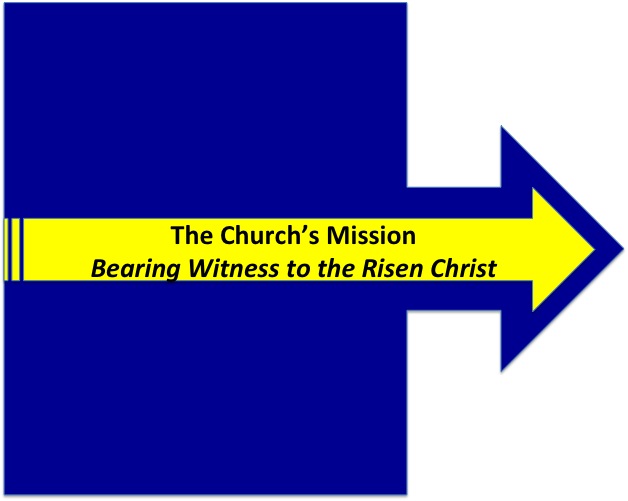
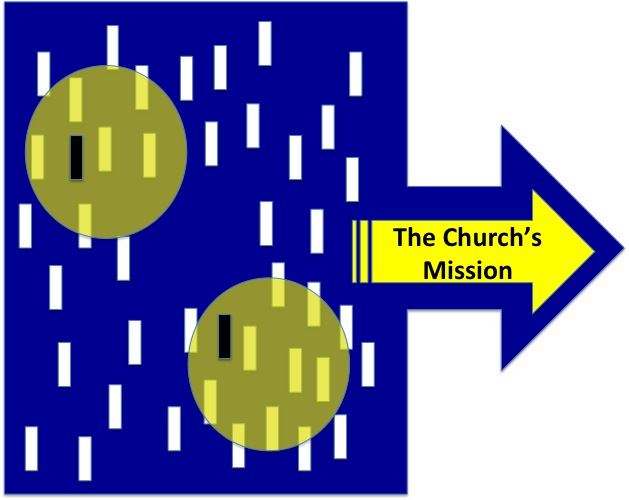
Let us take a moment and think through how conflict happens in a Church.  Start at the beginning.  The Lord establishes a church and gives it a mission.

1

This mission is unchanging and we have seen it amply illustrated here in the first chapters of Acts.  The mission of the Church is to bear witness to the resurrected Christ in word and deed and reflect His presence among His people.

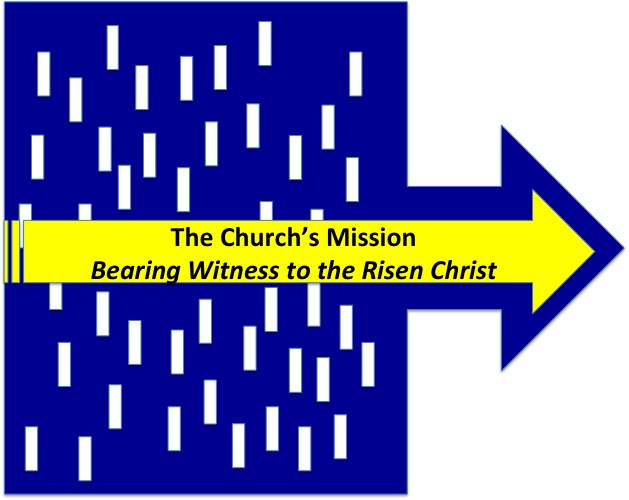
Then, into this Church with a mission, God draws people.

2

People come in.  He grows His Church.  And, perhaps for a while, the people who make up the Church are united around God’s mission and God’s purpose.  God’s mission for the Church emboldens followers of Jesus to attempt great things for the Kingdom of God.

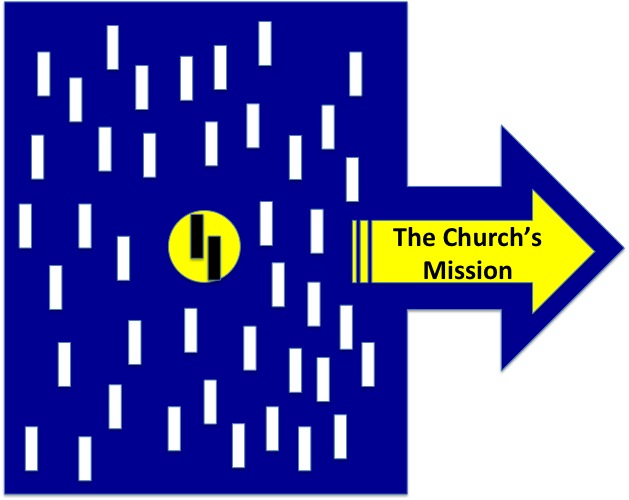
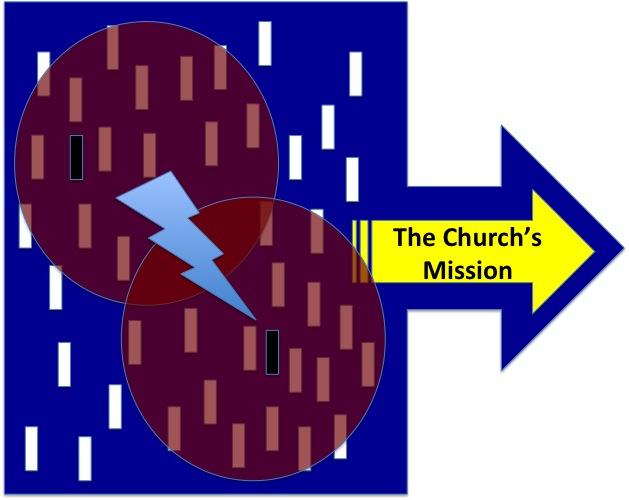
However, inevitably, people being people, something unfortunate happens along the way:  two people within the church conflict.

3

Who knows why?  It could be for an important reason.  It could be for a petty reason.  It could have to do with present perceived wrongs.  It could have to do with past perceived wrongs.  It may arise from personality conflicts.  It may arise from words carelessly or deliberately spoken.  It may arise just from two people who rub each other the wrong way, who irritate each other, perhaps, whose personality differences finally bubble over in conflict.

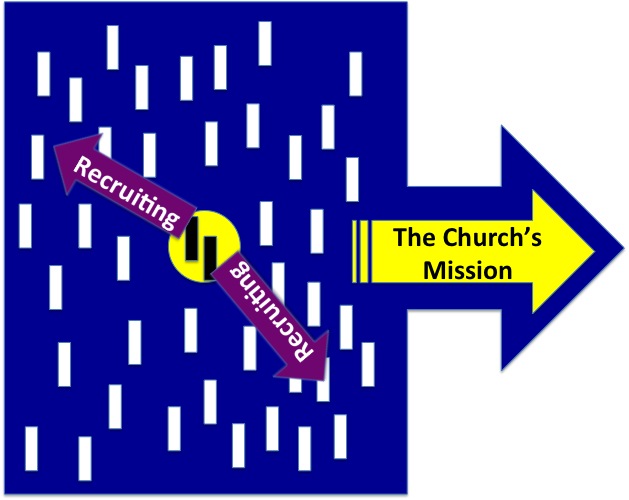
So two people enter into their own personal arena of conflict within the Church.  The longer they do this, the more they begin to drift from God’s mission for the Church because the longer they dwell in the arena of conflict the bigger it gets.  And do you know how it gets bigger?  It gets bigger through recruitment.  Yes, recruitment.

4

When human beings conflict, they naturally and instinctively want to bolster the solidity and assumed righteousness of their own positions by bringing others into the sphere of conflict, but on their side.  So they recruit.  They recruit by reaching out to others, initially those in their own circle of friends, telling them their particular version of the conflict, playing up the perceived faults of the other and downplaying any possible faults in themselves in the process.  People recruit in conflicts by offering narratives of the situation that their friends, already predisposed to believe and defend them, will find reasonable.

What is significant here is that both people are doing this.  Both people are telling their friends their versions of the story.  Now, some of these other folks will politely listen, offer words of encouragement, but refuse to enter into the sphere of conflict.  Maybe this is because they are smart enough to know that there is always another side.  Maybe this is because, even though they love the friend who has reached out to them with their version of the story of the conflict, they know their friend has weaknesses, they know their friend may actually be wrong in this situation.  Who knows?

Regardless, human nature being what it is, there are lots of folks who will enter into the conflict.

5

They will enter in the background, ideally, as gossip partners or verbal instigators, a cheering section, if you will. After a season of recruiting, the two people have effectively built networks of mutual affirmation for their respective versions of what is happening in the conflict.  And, of course, in any person’s version of a conflict, they are right and the other is a blithering idiot who may just be evil.  Now, this is potentially dangerous.  In fact, church splits occur when the respective networks on either side of a conflict grow so large that they divide the Church.

6

But here is the thing, it is not the mere forming of sides, even large sides, that ultimately split churches.  It is the increasing diminishment of the central divine mission of the Church that occurs when the localized mission of the opponents grows larger and larger that ultimately splits the Church.  Put another way, as the goal of winning the conflict grows larger, God’s goal for the Church, His mission for the Church to be a proclaiming, witness-bearing, Christ-demonstrating body grows smaller.  The mission of God for the Church becomes effectively eclipsed by the mission of those in the conflict to win.

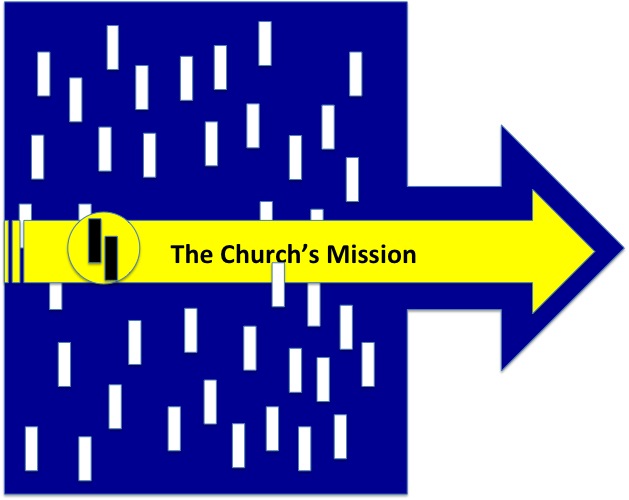
How, then, is conflict resolved?  I repeat:  resolution of conflict comes when people who are looking at the bigger picture of the church’s mission help those caught in the smaller picture of the conflict to resolve it for the good of all.  Resolution comes when mature Christians who have not lost sight of the central mission of the Church call those embroiled in conflict to put their smaller mission of conflict-victory alongside the larger God-given mission of witness bearing so that they can see how very small and, at times, how very petty the conflict and the individual agendas that comprise that conflict really are.

8

What does this look like?  It looks like this:  “Hey man, can we talk for a minute?  Listen, I know that the two of you are at odds, have gotten your wires crossed, and are in conflict.  I don’t know who’s right and who’s wrong.  My guess is, you probably both are partially right and partially wrong.  That’s how these things usually are.  But as your friend, can I ask you to do something for me and for the Church at large?  Can I ask you to remember who we are and what we’re here for?  I’m afraid that this whole situation has become so big and so deep and so ugly that you guys are forgetting that people around us are lost and going to hell and they need a Church that is united in the gospel and speaking together.  Can I just say to you that whatever you stand to gain in this conflict if you win does not come close to matching what we are all going to lose if this thing isn’t resolved, and resolved quickly?  So please, take a moment and think about this.  God is wanting to do something here.  God is wanting us to do something here.  This conflict, no matter how legitimate the concerns that lie behind it might be, really does threaten the entire body.  Let’s all humble ourselves, apologize, forgive, and come back together around Christ.”

9

Please note that what I am calling for here is not a burying of the problem without resolution.  In fact, in our text this morning, they did take practical, wise steps based on solid judgment and wisdom to resolve the problem.  No, what I’m calling for here is for all of us to allow the greater mission to which we have been called to help us keep our smaller issues and conflicts in perspective.  This approach will call us to humility, a hesitancy to recruit others to our cause (because we will not want to spread the conflict), and a desire to resolve the issue quickly.

I would propose to you that we see precisely this in our text this morning.  Listen again.

2 And the twelve summoned the full number of the disciples and said, “It is not right that we should give up preaching the word of God to serve tables. 3 Therefore, brothers, pick out from among you seven men of good repute, full of the Spirit and of wisdom, whom we will appoint to this duty. 4 But we will devote ourselves to prayer and to the ministry of the word.” 5 And what they said pleased the whole gathering, and they chose Stephen, a man full of faith and of the Holy Spirit, and Philip, and Prochorus, and Nicanor, and Timon, and Parmenas, and Nicolaus, a proselyte of Antioch. 6 These they set before the apostles, and they prayed and laid their hands on them.

Now notice a few important things:

  • The Apostles clearly saw the potential for specific conflicts within the Church to affect adversely the entire Church.  Thus, verse 2, they “summoned the full number of the disciples.”
  • The first thing they did was put the localized conflict beside the God-ordained mission of the Church to create perspective.  Thus, verse 2b, “It is not right that we should give up preaching the word of God [i.e., the mission of the Church] to serve tables [i.e., the arena of the specific conflict].”
  • They then called upon the entire Church to be part of the solution.  Thus, verse 3, “Therefore, brothers, pick out from among you seven men of good repute, full of the Spirit and of wisdom, whom we will appoint to this duty.”
  • They offered wise, practical steps for conflict resolution, which the Church embraced.  Thus in verse 5 we see the seven men mentioned.  Interestingly, all of them have Greek, Hellenistic names.   Do you see the wisdom of this?  They appointed people from the offended party and gave them leadership, thereby bringing them into leadership and responsibility bearing and communicating to the Hebrew believers that these Hellenist believers were indeed full, equal members of the Church.

What a wise, careful, beautiful example of conflict resolution!

A Church That Commits Itself to Peacemaking and Conflict Resolution is a Blessed and Healthy Church

And what is the result of a Church committing itself to peacemaking and conflict resolution?

7 And the word of God continued to increase, and the number of the disciples multiplied greatly in Jerusalem, and a great many of the priests became obedient to the faith.

Brothers, sisters:  peace is a choice.

Peace is a choice.  And it is a choice that pays great dividends.  The Church embraced an intentional process of peace and “the word of God continued to increase,” and they grew, and even “a great many of the priests became obedient to the faith.”  This is what happens when a Church resolves conflict and when individual believers resolve conflicts rightly.

The Apostles and the early believers have shown us how to resolve conflicts and maintain peace.  I would submit to you that conflict can only grow unchecked if we refuse to follow their lead.

The Body of Christ is crucial to the advancement of the Kingdom of God in the world.  This is why Christ created a Church.  We are the stewards and heralds of the amazing truth that the Jesus who was crucified and buried is now alive.

Do not…do not…allow unresolved conflicts, hurt feelings, disgruntled attitudes, and a refusal to embrace intentional peacemaking with others and ourselves derail the grand adventure to which we have been called!


[1] R. Kent Hughes, Acts. (Wheaton, IL: Crossway Books, 1996), p.76.

[2] The State Newspaper, Friday, June 2, 2000 https://www.thestate.com/headlines/ regiondocs/02churchsc.htm

[3] William Barclay, Acts. The Daily Study Bible. (Edinburgh: The Saint Andrew Press, 1969), p.50.

[4] Esther Chung-Kim and Todd R. Hains, eds. Acts. Reformation Commentary on Scripture. New Testament, vol.VI. Timothy George, gen. ed. (Downers Grove, IL: InterVarsity Press, 2014), p.73.

Brad Gooch’s Flannery: A Life of Flannery O’Connor

671Flanneryjpg_00000000378Brad Gooch’s Flannery: A Life of Flannery O’Connor is a very good, very strong consideration of one of the more fascinating, complex, and intriguing figures in American literature.  Gooch’s biography is fairly straight-forward in telling O’Connor’s story, but where it shines is in the engaging way it tells the story and the attention-grabbing details Gooch offers along the way.

Gooch presents us with an O’Connor that is deeply committed to her Catholic faith, intellectually rigorous, strident and meticulous in the crafting of her stories, and gloriously opinionated and feisty.  His image of her emotional life is compelling, with the passing of her father and her battle with lupus being the major struggles of her all-too-brief life.  She spoke intimately of the former with very few people, and did not care to have the latter broadcast and speculated upon beyond that which she herself was willing to share.

One need not even know the actual details of her often tense relationship with her mother, Regina, to surmise from her frequent use of the type of the exasperated Southern woman in her stories that she had ample experience with just this kind of character.  Indeed, O’Connor based her female characters on more than a few women in her family, but Regina appears time and again in the tales.  The two women could not have been more different (except for their shared devotion to the Catholic Church), and their relationship at Andalusia appears to have progressed primarily as a result of Flannery’s forbearance and careful avoidance of her mother’s excesses.  Regina also knew to give her precocious daughter the space she needed to create.

Gooch does a great job of showing how much O’Connor appreciated friends and community, and this biography should forever dispel the image of O’Connor as a recluse.  In fact, she had numerous friends with whom she maintained strong relationships, oftentimes primarily through letters as her health declined.  She knew what it was to be in love and to have her heart broken.  It is regrettable that she never knew requited romantic love.  On two occasions, women professed to being in love with Flannery.  One professed it to Flannery and the other professed it to others, being too afraid to tell Flannery.  Regardless, she was staunchly orthodox in her views of human sexuality and communicated this fact more than once.

Gooch does a phenomenal job setting O’Connor’s stories in the realities she was facing at different moments of her life.  He shines especially in showing where certain details of her stories arose from and in pointing out the many inside jokes she built into her stories.  Also, Gooch’s depiction of the scandal that O’Connor’s stories frequently caused in and around Milledgeville, GA, and among her relations was illuminating and frequently humorous.

This is a great work and effectively draw the reader emotionally into the story of O’Connor’s life.  Highly recommended!

Acts 5:17-42

AthenaActs 5:17-42

17 But the high priest rose up, and all who were with him (that is, the party of the Sadducees), and filled with jealousy 18 they arrested the apostles and put them in the public prison. 19 But during the night an angel of the Lord opened the prison doors and brought them out, and said, 20 “Go and stand in the temple and speak to the people all the words of this Life.” 21 And when they heard this, they entered the temple at daybreak and began to teach. Now when the high priest came, and those who were with him, they called together the council, all the senate of the people of Israel, and sent to the prison to have them brought. 22 But when the officers came, they did not find them in the prison, so they returned and reported, 23 “We found the prison securely locked and the guards standing at the doors, but when we opened them we found no one inside.” 24 Now when the captain of the temple and the chief priests heard these words, they were greatly perplexed about them, wondering what this would come to. 25 And someone came and told them, “Look! The men whom you put in prison are standing in the temple and teaching the people.” 26 Then the captain with the officers went and brought them, but not by force, for they were afraid of being stoned by the people. 27 And when they had brought them, they set them before the council. And the high priest questioned them, 28 saying, “We strictly charged you not to teach in this name, yet here you have filled Jerusalem with your teaching, and you intend to bring this man’s blood upon us.” 29 But Peter and the apostles answered, “We must obey God rather than men. 30 The God of our fathers raised Jesus, whom you killed by hanging him on a tree. 31 God exalted him at his right hand as Leader and Savior, to give repentance to Israel and forgiveness of sins. 32 And we are witnesses to these things, and so is the Holy Spirit, whom God has given to those who obey him.” 33 When they heard this, they were enraged and wanted to kill them. 34 But a Pharisee in the council named Gamaliel, a teacher of the law held in honor by all the people, stood up and gave orders to put the men outside for a little while. 35 And he said to them, “Men of Israel, take care what you are about to do with these men. 36 For before these days Theudas rose up, claiming to be somebody, and a number of men, about four hundred, joined him. He was killed, and all who followed him were dispersed and came to nothing. 37 After him Judas the Galilean rose up in the days of the census and drew away some of the people after him. He too perished, and all who followed him were scattered. 38 So in the present case I tell you, keep away from these men and let them alone, for if this plan or this undertaking is of man, it will fail; 39 but if it is of God, you will not be able to overthrow them. You might even be found opposing God!” So they took his advice, 40 and when they had called in the apostles, they beat them and charged them not to speak in the name of Jesus, and let them go. 41 Then they left the presence of the council, rejoicing that they were counted worthy to suffer dishonor for the name. 42 And every day, in the temple and from house to house, they did not cease teaching and preaching that the Christ is Jesus.

The story of the Church in Acts has taken some fascinating, unexpected and, at times, frightening turns.  In the latter half of Acts 5, the story continues with, we might say, three characters moving front and center:  God, the world, and the Church.  I hesitate to call God a character in the story for obvious reasons:  He is God.  He is above all characters and above the story.  He is writing the story.  Yet He, in Christ, and even in His Church, has entered the story and is working in powerful ways.  He was working in the story of the first century Church and He is working in the story of the twenty-first century Church as well.

Let us consider this text with a story approach, paying attention to the actions of each of the characters.  Taking this approach, we will be looking at the sections of the text that pertain to each instead of working through it in the exact order presented.

God:  Protection and Commission

We see the actions of God in the words of a deliverer who rescues the apostles after they are thrown in prison for preaching the gospel.

19 But during the night an angel of the Lord opened the prison doors and brought them out, and said, 20 “Go and stand in the temple and speak to the people all the words of this Life.”

In verses 19 and 20 we see the two divine actions at this juncture in the tale:  protection and commission.  God protects His Church by delivering the apostles from prison.  How many apostles were imprisoned we do not know, but this appears to be a larger group than simply Peter and John.  They had been charged to stop preaching and, of course, they refused, saying that they could not disobey God for fear of man.  Their preaching was so effective and bold, and God used it so mightily, that the Church continued to grow at a rate that was alarming to the religious authorities.  Thus, they were incarcerated.

We have spoken before of the absolute necessity of the Church surviving and continuing its mission.  God protects His people.  Jesus had told Peter in Matthew 16:18 that “the gates of hell shall not prevail against” the Church.  Here He offers a physical affirmation of that fact by sending an angel to release the apostles.  In so doing, the Lord thereby showed, in a microcosm, what He does for Church throughout the ages:  He protects and frees His Bride to proclaim and live and advance.

And then God reiterates His commission through this messenger.

20 “Go and stand in the temple and speak to the people all the words of this Life.”

We may see in these words a concise summation of the so-called Great Commission from Matthew 28.

18 And Jesus came and said to them, “All authority in heaven and on earth has been given to me. 19 Go therefore and make disciples of all nations, baptizing them in the name of the Father and of the Son and of the Holy Spirit, 20 teaching them to observe all that I have commanded you. And behold, I am with you always, to the end of the age.”

It is also a summation of His commission delivered at His ascension in Acts 1:8.

But you will receive power when the Holy Spirit has come upon you, and you will be my witnesses in Jerusalem and in all Judea and Samaria, and to the end of the earth.

What is most telling is that the Church’s marching orders do not change, and they certainly do not change as a result of changes in environment or escalating risk.  No, the Church has been called to a task:  bearing witness to the risen Christ.  That was the Church’s calling.  That is the Church’s calling.  That will always been the Church’s calling until the Lord returns.

The World:  Acceptance or Opposition (To Greater and Lesser Extents)

If the Church’s calling remains unchanged, it would seem, tragically, that the world’s blind response does as well.  By “the world” I am referring in this text to the Sanhedrin.  While they were certainly religious men, they had missed the truth and rejected it.  In fact, they warred against it.  Thus, their actions may be seen as indicative of how the world acts, even if their actions were bathed in a pious veneer.

When we look at the world, we see either acceptance of the gospel or opposition to greater or lesser extents.  For instance, we may see the naked hostility of the world in the Sanhedrin’s arrest of the apostles.

17 But the high priest rose up, and all who were with him (that is, the party of the Sadducees), and filled with jealousy 18 they arrested the apostles and put them in the public prison.

At the 2014 annual meeting of the Southern Baptist Convention in Baltimore, Maryland, Russell Moore, the director of the Ethics and Religious Liberty Commission of the SBC, recognized the wife of Iranian Pastor Saeed Abedini.  Pastor Saeed Abedini had been in an Iranian prison for almost two years at the time of that meeting, and Dr. Moore had arranged for his wife to be present with us so that we might recognize her and pray for her husband and family.  As we did so, and as I watched this brave woman and thought of her husband, I was struck by the reality of persecution throughout the ages.  Here, standing before us, was the wife of a man literally suffering the fate of first century apostles:  imprisonment for preaching the gospel.

Yes, the response of the world is tragically consistent:  it hates the Lord Jesus and all that represent Him.  But we also see in this text that there are degrees of opposition to the Church.  A more moderate opposition can be seen in the Pharisee Gamaliel, who stands to caution the Sanhedrin against venting its full fury against the new movement.

33 When they heard this, they were enraged and wanted to kill them. 34 But a Pharisee in the council named Gamaliel, a teacher of the law held in honor by all the people, stood up and gave orders to put the men outside for a little while.

They were “enraged” because when they sent for the prisoners, it was discovered that they were no longer in prison and were, in fact, proclaiming Christ in public once again.  It is against this rage that Gamaliel stands and speaks.  His calming of the Sanhedrin is interesting and reflects the political and cultural dynamics of the religious authorities at that time.  F.F. Bruce informs us that “the Pharisees were in the minority, but they commanded much more public respect than did the Sadducees, so much so that the Sadducean members of the court found it impolitic to oppose the Pharisees’ demands. This was particularly important in a case like the present, in which the defendants enjoyed the people’s goodwill.”[1]

Gamaliel speaks:

35 And he said to them, “Men of Israel, take care what you are about to do with these men. 36 For before these days Theudas rose up, claiming to be somebody, and a number of men, about four hundred, joined him. He was killed, and all who followed him were dispersed and came to nothing. 37 After him Judas the Galilean rose up in the days of the census and drew away some of the people after him. He too perished, and all who followed him were scattered.

Gamaliel cautions them not to act rashly as they were all aware that other so-called messiah’s had arisen before and begun movements only to see those movements dissolve and disappear.  He gives two examples, though he could have given hundreds.  We know very little about this Theudas, but Bruce provides us with some interesting historical information about the second name Gamaliel mentions, Judas the Galilean.

When Judaea was reduced to the status of a Roman province in A.D. 6, after the deposition of Archelaus, a census was held under the direction of the legate of Syria, P. Sulpicius Quirinius, to determine the amount of tribute to be paid by the new province to the imperial exchequer. Judas, a man from Gamala in Gaulanitis (Golan), inaugurated a religious and nationalist revolt, contending that it was high treason against God, Israel’s one true king, for his people in his land to pay tribute to a pagan ruler. The revolt was crushed by Rome, but the spirit which animated it lived on, and emboldened the party of the Zealots to take the lead in the Jewish revolt of A.D. 66. Judas’s movement proved not to be so ineffective as Gamaliel supposed it was.[2]

Thus, Gamaliel argues, they had been here before.  They had seen revolutionaries rise up before, and all for naught.  His next words, however, reveal some uncanny insights and cautions.

38 So in the present case I tell you, keep away from these men and let them alone, for if this plan or this undertaking is of man, it will fail; 39 but if it is of God, you will not be able to overthrow them. You might even be found opposing God!” So they took his advice, 40 and when they had called in the apostles, they beat them and charged them not to speak in the name of Jesus, and let them go. 41 Then they left the presence of the council, rejoicing that they were counted worthy to suffer dishonor for the name.

This is why I say that the world opposes the Church to greater and lesser extents.  Not all seek to obliterate the Church, though there is no doubt that this is the ultimate desire of Satan:  the eradication of the people of God.  Gamaliel, famed for his wisdom and moderation, cautions the Sanhedrin to take care.  If it is not of God, it will fail.  If it is of God, you will be warring against God.  “In other words,” Gamaliel seems to say, to use our terminology, “let it play out.”

This is a fascinating development, and Gamaliel carries the day, though not, tellingly, until the apostles are beaten.  R.C. Sproul has offered an interesting response to Gamaliel’s advice.

            I would say that half of Gamaliel’s advice was good.  He was half right and half wrong when he said, “If this plan…is of men, it will come to nothing.”  Islam is not of God, and it has not failed; it has been around for centuries.  There are abundant evidences in history of false religions under the wrath of God that have not disappeared from the face of the earth.  The Gnostic heresy that plagued the church in the second and third centuries is alive and well today and is being taught in the pages of the Orlando Sentinel by a theologian at Princeton University trying to revive, along with Dan Brown’s The Da Vinci Code, the Gnostic literature of the early church.[3]

This is true enough.  Many ungodly movements do succeed.  Gamaliel’s approach is not perfect, but it does show a degree of restraint.  I think we may yet see the hand of God even in this.  The God who can turn the hearts of pagan kings to His own ends is the God who can temper the Sanhedrin so that the Church may advance.  Even so, let us note that the world opposes the Church.  It has for two millennia.  Should the Lord tarry, it will for two millennia more.

The message of the gospel is antithetical to the entire program of the world.

The Church:  Faithfulness, Boldness, and Trust in God’s Protection

Regardless, it is that gospel that has been entrusted to the Church and it is that Gospel that the Church must never stop proclaiming.  We see this in the response of the Church to this persecution.

21a And when they heard this, they entered the temple at daybreak and began to teach.

The “this” they heard was the angelic instruction for them to go back out and continue preaching from verse 20:  “Go and stand in the temple and speak to the people all the words of this Life.”  So they did precisely that.  This is powerful.  Attention should be paid!  The persecuted Church refused to stop bearing witness to the risen Christ.  This is fuel on the fire of the Sanhedrin’s rage and also fuel on the fire of their own astonishment!

21b Now when the high priest came, and those who were with him, they called together the council, all the senate of the people of Israel, and sent to the prison to have them brought. 22 But when the officers came, they did not find them in the prison, so they returned and reported, 23 “We found the prison securely locked and the guards standing at the doors, but when we opened them we found no one inside.” 24 Now when the captain of the temple and the chief priests heard these words, they were greatly perplexed about them, wondering what this would come to. 25 And someone came and told them, “Look! The men whom you put in prison are standing in the temple and teaching the people.” 26 Then the captain with the officers went and brought them, but not by force, for they were afraid of being stoned by the people. 27 And when they had brought them, they set them before the council. And the high priest questioned them, 28 saying, “We strictly charged you not to teach in this name, yet here you have filled Jerusalem with your teaching, and you intend to bring this man’s blood upon us.” 29 But Peter and the apostles answered, “We must obey God rather than men. 30 The God of our fathers raised Jesus, whom you killed by hanging him on a tree. 31 God exalted him at his right hand as Leader and Savior, to give repentance to Israel and forgiveness of sins. 32 And we are witnesses to these things, and so is the Holy Spirit, whom God has given to those who obey him.”

42 And every day, in the temple and from house to house, they did not cease teaching and preaching that the Christ is Jesus.

“They did not cease.”

“They did…not…cease!”

What a testimony of courage!  What a testimony of resolve!

When I was a new pastor, just out of seminary, I endured one of my first ever contentious deacons’ meetings.  Thankfully, I have had very few of those!  I left the church that night and returned to the apartment in which my wife, I, and our then baby girl Hannah lived.  Hannah had a plastic toy horse that would neigh when you pressed a button on its belly.  As I walked into our apartment that night, I heard the repetitive neighing of that toy horse.  The button had gotten stuck just before I arrived and it would not stop neighing.

The sound immediately assaulted my ears and my entire body tensed at the sound of it.  I was reeling emotionally from the meeting and was myself unaware of how frustrated and angry I had become.  I walked into the apartment, picked up the horse, tried to get it to stop, then realized it simply was not going to.  As my wife and small child looked on, I picked up the ever-neighing toy horse, said, “Excuse me,” and walked out the front door.  I went to the car I had just recently exited, lodged the toy horse up under the front driver’s side tire, got in the car, cranked it up, and back over the toy.  I heard it crack and splinter under the tire.  I pulled the car back, then up, then back again, then up again, etc.  Each time I felt a little calmer, my stress level decreasing with each act of vehicular violence against this small toy horse.

Finally, I stopped, got out of the car, picked up the flattened plastic remains and carried the horse back into the house and held it out before my shocked wife and daughter who were wondering what on earth had happened to me.  As I extended the horse before them, to my absolute horror and outrage, it neighed once again!  As a result, we all began to laugh until the tears flowed!  It was the plastic horse that would not die!  It kept making that sound over and over and over again!

That is a funny story, and one that I am not terribly proud of, but I cannot help but see a truth in it:  the story of that little plastic horse is the story of the Church throughout time.  People have tried to silence it.  People have tried to crush it.  People have tried to stop it.  But the message continues!  It will not, it cannot stop proclaiming the message!  It has one message, hardwired into its very soul, and it cannot stop!

No matter how throttled and bludgeoned, the Church cannot stop announcing its message.  No matter how often the enemy makes the Church bleed, it cannot stop!  In fact, the persecution of the Church tends to increase the boldness of its proclamation.  John Stott quotes Bishop Festo Kivengere who “said in February 1979, on the second anniversary of the martyrdom of Archbishop Janani Luwum of Uganda: ‘Without bleeding the church fails to bless.’”[4]

Here is the story of the Church of Acts.

Here is the story of the Church today.

It has a message and it has a mission.  It received both from Jesus.  Whatever else it might do, it must be faithful to the message and the mission.


[1] Bruce, F.F. (1988-06-30). The Book of Acts (New International Commentary on the New Testament) (p. 114). Eerdmans Publishing Co – A. Kindle Edition.

[2] Bruce, p. 116-117.

[3] Sproul, R.C. Acts (St. Andrews Expositional Commentary) (Location 1793). Crossway Books. Kindle Edition.

[4] Stott, John (2014-04-02). The Message of Acts (The Bible Speaks Today Series) (Kindle Locations 2058-2059). InterVarsity Press. Kindle Edition.

Acts 5:1-16

ananias-and-sapphiraActs 5:1-16

1 But a man named Ananias, with his wife Sapphira, sold a piece of property, 2 and with his wife’s knowledge he kept back for himself some of the proceeds and brought only a part of it and laid it at the apostles’ feet. 3 But Peter said, “Ananias, why has Satan filled your heart to lie to the Holy Spirit and to keep back for yourself part of the proceeds of the land? 4 While it remained unsold, did it not remain your own? And after it was sold, was it not at your disposal? Why is it that you have contrived this deed in your heart? You have not lied to man but to God.” 5 When Ananias heard these words, he fell down and breathed his last. And great fear came upon all who heard of it. 6 The young men rose and wrapped him up and carried him out and buried him. 7 After an interval of about three hours his wife came in, not knowing what had happened. 8 And Peter said to her, “Tell me whether you sold the land for so much.” And she said, “Yes, for so much.” 9 But Peter said to her, “How is it that you have agreed together to test the Spirit of the Lord? Behold, the feet of those who have buried your husband are at the door, and they will carry you out.” 10 Immediately she fell down at his feet and breathed her last. When the young men came in they found her dead, and they carried her out and buried her beside her husband. 11 And great fear came upon the whole church and upon all who heard of these things. 12 Now many signs and wonders were regularly done among the people by the hands of the apostles. And they were all together in Solomon’s Portico. 13 None of the rest dared join them, but the people held them in high esteem. 14 And more than ever believers were added to the Lord, multitudes of both men and women, 15 so that they even carried out the sick into the streets and laid them on cots and mats, that as Peter came by at least his shadow might fall on some of them. 16 The people also gathered from the towns around Jerusalem, bringing the sick and those afflicted with unclean spirits, and they were all healed.

When I was a boy there was a pastor in a church in my hometown who was accused of behaving immorally with a woman in the congregation.  Word of this had spread among the church members and, on the following Sunday, he stood in the pulpit before a large audience to preach his final sermon on his way out.  A friend of mine was sitting in the sanctuary and observed what I am telling you today.

This church is an old church and a stately church and had at the time an elevated, partially enclosed pulpit that the preacher ascended into to preach.  Above that pulpit was a huge chandelier that came down to a point in which sat a large light bulb that shone down upon the pulpit.  The minister preached his final sermon, neither affirming or denying the allegations, and, when he stopped preaching, the large light bulb hanging above the pulpit detached, fell, and shattered just before the pulpit.  A friend of mine was present in this service and witnessed this happened.  He shared that it was a very weird and very strange thing that caught everybody’s attention.

We should perhaps be careful not to read too much into these things, but we should also be careful not to read too little into them.  After all, the Lord God reserves the right to make powerful and chilling points when He needs to.  God above sometimes speaks in startling and unexpected ways, especially, it seems, when the holiness of his church is at stake.

God is Jealous for the Holiness of His Church Because He is Himself Holy

God has so spoken before, but in much, much more dramatic fashion.  Our text provides us with this incident.  The Church is growing.  It has passed its first test of persecution and people are coming into fellowship with Christ and His Church in droves.  Then we read this:

1 But a man named Ananias, with his wife Sapphira, sold a piece of property, 2 and with his wife’s knowledge he kept back for himself some of the proceeds and brought only a part of it and laid it at the apostles’ feet. 3 But Peter said, “Ananias, why has Satan filled your heart to lie to the Holy Spirit and to keep back for yourself part of the proceeds of the land? 4 While it remained unsold, did it not remain your own? And after it was sold, was it not at your disposal? Why is it that you have contrived this deed in your heart? You have not lied to man but to God.”

This is a startling rebuke, and one that we need to consider carefully.  To begin with, let us note that, contrary to what some have said, the early church was not practicing communism in its radical sharing of goods.  There was no ideological rejection of the idea of private property and no ideological affirmation of the idea that the leadership somehow possessed inherent rights of ownership.  On the contrary, what the early church practiced was nothing other than an agreed-upon generosity and life together.  They gave what they had to ensure that the poor would be cared for.  They were driven not by political ideas or coercion, but rather by the Spirit of God.

Peter recognizes precisely this when he says, “While it remained unsold, did it not remain your own?  And after it was sold, was it not at your disposal?”  Meaning, “The property was yours and yours to do with as you would.”  What, then, was the problem.  The problem was dishonesty and ego-driven posturing.  The problem was that Ananias and his wife Sapphira acted as if they were giving all the proceeds of the land so that people would think them more generous than they were.  Had they simply come and said, “We would like to give half the proceeds from the sale of the property,” there would have been no issue.  But what they did was give a portion of the proceeds and claim that they had given all.  This is why Peter says that they had lied to God.

It is important that we not miss a crucial insight into the nature of the Trinity in the language of Peter’s rebuke.  Please note that Peter says in verse 3 that Ananias lied “to the Holy Spirit.”  Then, in verse 4, that Ananias lied “not…to man but to God.”  The implication is clear:  to lie to the Holy Spirit is to lie to God.  The Venerable Bede commented, “It is therefore clear that the Holy Spirit is God.”  Furthermore, Basil the Great, the 4th century Cappadocian Father, said that Peter’s words “show that sins against the Holy Spirit and against God are the same.”[1]

It is a serious thing to lie to God, as we will now see.

5 When Ananias heard these words, he fell down and breathed his last. And great fear came upon all who heard of it. 6 The young men rose and wrapped him up and carried him out and buried him. 7 After an interval of about three hours his wife came in, not knowing what had happened. 8 And Peter said to her, “Tell me whether you sold the land for so much.” And she said, “Yes, for so much.” 9 But Peter said to her, “How is it that you have agreed together to test the Spirit of the Lord? Behold, the feet of those who have buried your husband are at the door, and they will carry you out.” 10 Immediately she fell down at his feet and breathed her last. When the young men came in they found her dead, and they carried her out and buried her beside her husband. 11 And great fear came upon the whole church and upon all who heard of these things.

Oh my!  What is happening here?!  Why has God struck these two members of the Church dead?  It is because of a fact that the modern Church is close to forgetting:  God is jealous for the holiness of His Church because He is Himself holy!  Do you understand the seriousness and the tragedy of the moral and ethical and spiritual collapse of the Church?  If the Church of the first century were to fall, imploding inwardly as a result of unchecked wickedness like that trafficked in by Ananias and Sapphire, then the primary vehicle through which God reaches the nations with the gospel would disintegrate.  It is imperative that the Church survive, and for it to survive as the Church, it is imperative that it walk in obedience.

It is indeed no small thing for those who claim to know and walk with Jesus to harbor a spirit of rebellion against Him in their hearts and to risk spreading that rebellion to others.  Erasmus questioned why it was that Ananias and Sapphira were treated so harshly “because a little bit of money was withheld in an otherwise generous act” when just before this he held out the hope of redemption to those who killed the Lord Jesus.  He answered astutely that Jesus “wished to show by the destruction of a few how much more serious it is to fall back into sin after the grace and light of the gospel have been received.”[2]

Ours is Church age of permissiveness and sentimentality and latitudinarianism.  But the early Church was not like this.  They knew that visibly associating with the Body of Christ, ostensibly because of having been born again through the blood of Christ, carried with it high demands for obedience and integrity.  Peter, before whose feet Ananias and Sapphira fell, further elaborated on this need for holiness in 1 Peter 1.

13 Therefore, preparing your minds for action, and being sober-minded, set your hope fully on the grace that will be brought to you at the revelation of Jesus Christ. 14 As obedient children, do not be conformed to the passions of your former ignorance, 15 but as he who called you is holy, you also be holy in all your conduct, 16 since it is written, “You shall be holy, for I am holy.” 17 And if you call on him as Father who judges impartially according to each one’s deeds, conduct yourselves with fear throughout the time of your exile, 18 knowing that you were ransomed from the futile ways inherited from your forefathers, not with perishable things such as silver or gold, 19 but with the precious blood of Christ, like that of a lamb without blemish or spot. 20 He was foreknown before the foundation of the world but was made manifest in the last times for the sake of you 21 who through him are believers in God, who raised him from the dead and gave him glory, so that your faith and hope are in God.

If you are going to call God “Father,” then you should live as His child.  Jesus said in John 14:15, “If you love me, you will keep my commandments.”  You will.  This is not legalism or an unrealistic demand for protection.  The New Testament throughout exalts the forgiving nature of God.  He forgives us and we are to forgive one another.  The Church is comprised of struggling pilgrims en route, and we must be patient with one another.  But patience does not mean acquiescence to known rebellion.

To know the truth is to be accountable for it.  To know the truth well is to be even more accountable.  In James 3:1, James writes, “Not many of you should become teachers, my brothers, for you know that we who teach will be judged with greater strictness.”  There is a greater judgment that comes with knowing the truth.  As a result the Church must be careful to be vigilant in personal holiness.

Many of you are familiar with William R. Newell’s 1895 hymn, “At Calvary.”  I remember especially liking this hymn as a boy when I would stand beside my parents and brothers and we would sing it in church.

Years I spent in vanity and pride,

Caring not my Lord was crucified,

Knowing not it was for me He died on Calvary.

Refrain

Mercy there was great, and grace was free;


Pardon there was multiplied to me;


There my burdened soul found liberty at Calvary.

By God’s Word at last my sin I learned;

Then I trembled at the law I’d spurned,

Till my guilty soul imploring turned to Calvary.

Refrain

Now I’ve given to Jesus everything,

Now I gladly own Him as my King,

Now my raptured soul can only sing of Calvary!

Refrain

Oh, the love that drew salvation’s plan!

Oh, the grace that brought it down to man!

Oh, the mighty gulf that God did span at Calvary!

Many of you have also heard of Donald Grey Barnhouse.  Barnhouse was pastor of the Tenth Presbyterian Church in Philadelphia, Pennsylvania from 1927 to his death in 1960.  He was a faithful pastor and a great man of God.  You may be interested to know that Barnhouse refused to allow Tenth Presbyterian Church the third stanza of “At Calvary.”[3]

Now I’ve given to Jesus everything,

Now I gladly own Him as my King,

Now my raptured soul can only sing of Calvary!

He explained that he forbade this because he feared that God might strike those dead who were singing this halfheartedly or flippantly.  He used our text this morning as his justification.  Had not God struck dead Ananias and Sapphira for their dishonest overtures of having given God all when they had not?  And does God not change?  And does God not have rights over His creation to do as He deems best?

Oh, Church:  consider carefully and well what you are saying when you claim to have given God all!

God Uses the Holiness and Integrity of His Church to Clarify Spiritual Reality and Further the Spread of the Gospel and the Reach of the Kingdom

God strikes Ananias and Sapphira dead for their duplicity and deceitfulness.  The verses that immediately follow should be seen as arising from this jarring display of divine holiness.  What is recorded here is directly connected to the terrifying display of power just witnessed.

12 Now many signs and wonders were regularly done among the people by the hands of the apostles. And they were all together in Solomon’s Portico. 13 None of the rest dared join them, but the people held them in high esteem. 14 And more than ever believers were added to the Lord, multitudes of both men and women,

Do not miss the flow of the account or the amazing implications inherent therein:  there is a direct connection between the obedience and faithfulness of the Church and its effectiveness in the world.  This is not because the Church is working on its own and solely accountable for any so-called “results.”  On the contrary, the Lord God is always working above and beyond the obedience of His own people…but He also works through it.  It would be better to say that the obedience of the Church is itself fruit of and evidence for that kind of faith that the Lord uses to do great works.  He moves mountains through mustard seeds.  Where His people have faith, God moves.  Where His people abandon faith, we are unable to see His mighty deeds.  We may see this truth in the lack of miracles performed in Nazareth (as recounted in Matthew 13), when Jesus visited there.

53 And when Jesus had finished these parables, he went away from there, 54 and coming to his hometown he taught them in their synagogue, so that they were astonished, and said, “Where did this man get this wisdom and these mighty works? 55 Is not this the carpenter’s son? Is not his mother called Mary? And are not his brothers James and Joseph and Simon and Judas? 56 And are not all his sisters with us? Where then did this man get all these things?” 57 And they took offense at him. But Jesus said to them, “A prophet is not without honor except in his hometown and in his own household.” 58 And he did not do many mighty works there, because of their unbelief.

So it is today as well.  Our disbelief and our lack of faith stymies what we can become and what God will do through us.  We close ourselves off to the greater works of God when we fail to trust and to obey.  Disobedience is an inevitable fruit of such a lack.  As a result, the world is robbed of the Church’s true calling:  to be transformative salt and light in its living out, stewardship, and proclamation of the gospel.

However, when such disobedience and faithlessness is rooted out, God works mightily through His people.  Our text paradoxically says that many were too afraid to join the Church but that others came in as a result.  This is how the gospel works:  it draws and it repels.  Upon hearing it, some hate it, some fear it, and some come to Christ.  This dynamic was at work in the early Church and it is at work in the Church today as well.  This is seen in the above-mentioned growth of the Church, but also in the continuing works of power being wrought through the Church.

15 so that they even carried out the sick into the streets and laid them on cots and mats, that as Peter came by at least his shadow might fall on some of them. 16 The people also gathered from the towns around Jerusalem, bringing the sick and those afflicted with unclean spirits, and they were all healed.

This is most astounding!  People were being healed to the point that the sick were being brought where Peter was walking in the hopes that his shadow would fall upon them and they would be healed.  This raises a fairly obvious question.  Did Peter’s shadow have healing properties?  Of course not.  It is God alone who heals.  Rather, it was their faith, mixed, perhaps, with a degree of chaff, that opened their hearts and bodies to the healing power of God.  A.T. Robertson wrote of this:

There was, of course, no virtue or power in Peter’s shadow.  That was faith with superstition, of course, just as similar cases in the Gospels occur (Matt. 9:20; Mark 6:56; John 9:5) and the use of Paul’s handkerchief (Acts 19:12).  God honours even superstitious faith if it is real faith in him.  Few people are wholly devoid of superstition.[4]

He is right.  Oftentimes saving faith is weak faith, faith that does not fully understand, faith that must grown more deeply in its understanding.  Such was the faith of those who came seeking Peter’s shadow.  They would afterward, no doubt, come to understand more clearly that it is Christ that heals, but do their actions here not evidence an admirable faith in the healing power of God?

See what God can do through a people yielded to Him!  See a Church alive through the empowering Spirit:  obedient, powerful, world changing!  See the holy fear that falls upon the assembled saints when they give themselves completely to King Jesus!  See the watching world:   partially resisting, partially hating, partially trembling, partially coming!  See the Church tremble in awareness that the God upon Whom they call and in Whose name they advance is a holy consuming fire who is not mocked!

See the life to which we have been called!

The Church, the Body and Bride of Christ!


[1] Francis Martin, ed. Acts. Ancient Christian Commentary on Scripture. New Testament, vol.V. Thomas C. Oden, gen. ed. (Downers Grove, IL: InterVarsity Press, 2006), p.60-61.

[2] Esther Chung-Kim and Todd R. Hains, eds. Acts. Reformation Commentary on Scripture. New Testament, vol.VI. Timothy George, gen. ed. (Downers Grove, IL: InterVarsity Press, 2014), p.63.

[3] R. Kent Hughes, Acts. (Wheaton, IL: Crossway Books, 1996), p.76.

[4] A.T. Robertson, Acts. Word Pictures in the New Testament. Vol.III (Nashville, TN: Broadman Press, 1930), p.62.

Craig Gross’ Eyes of Integrity: The Porn Pandemic and How it Affects You

518d1aKGzZL._SY344_BO1,204,203,200_Craig Gross is the founder of xxxChurch, a Christian ministry seeking to minister to those caught up in sexual addiction and pornography.  They have been around a while now, and, as far as I can tell, do good work.  When I saw on Twitter that this book was available for $1.99, I decided to check it out.

While Eyes of Integrity does not offer any groundbreaking new insights that differ from other Christian works on the topic, I think it is one of the better resources available.  This is primarily due to Gross’ extensive work in this ministry and the ministry’s numerous encounters with those caught up in sexual addictions or the sex industry.  Particularly moving and helpful were the many stories and comments Gross provides from folks who have posted on their website.  These were painful to hear, but convicting, as they put a human face on a serious and epidemic problem.

Gross’ advice, again, is not new, but that is because the way out, while difficult, is really not a mystery:  deep, sincere repentance before God, true accountability, honesty, transparency, and a return to God’s view of human sexuality and, indeed, of human beings.  In unpacking these elements, Gross does offer numerous practical and helpful ideas.

No, the way out is not a mystery, but it can be an excruciating process for those caught in addiction.  This is where the personal stories that Gross provides are most helpful.  They bring a powerful and often emotional look at real people who have had to work through the realities of porn addiction and the havoc it brings.

Porn is a massive problem in the United States, which Gross illustrates most helpfully.

Today pornography is a 57-billion-dollar, worldwide industry, making more than the combined revenues of all the professional football, baseball, and basketball teams in America. Porn revenue in the United States (12 billion dollars) exceeds the combined revenues of ABC, CBS, and NBC (6.2 billion dollars), and, disgustingly enough, child pornography alone generates 3 billion dollars annually. In 2005 national online data polling estimated that one out of every ten websites is pornographic. Twenty percent of men admitted to looking at online porn while at work, while far more admit to using it in the privacy of their homes. (Kindle Locations 151-155)

And again:

According to a Wharton study:

The common wisdom is that pornographic material is the dirty secret of the Internet, accounting for vast amounts of traffic and enormous revenues. Jupiter Media Metrix, a company which tracks Internet usage, found that 30 million different users visited adult sites in March, accounting for 33.8 percent of all people who used the world wide web, according to media development coordinator Kumar Rao.

One study reported that 72 percent of those who dabble in porn are men and 28 percent are women. This study also found that more than 220 million dollars was spent at fee-based sites in 2001, up from 148 million dollars in 1999. By 2005 the number was up to an estimated 320 million dollars. (Kindle Locations 161-167)

This is sobering but gives a helpful insight into the extent of the problem.  Because of the pervasiveness of the problem, it is important that we have effective tools for helping people see the issues so they might exit this devastating world.  To that end, I’d like to recommend Gross’ book.  This would be a tremendous work to give to somebody who is struggling or to have men’s or women’s groups work through and discuss.


Acts 4:23-37

prayer_corporate-prayerActs 4:23-37

23 When they were released, they went to their friends and reported what the chief priests and the elders had said to them. 24 And when they heard it, they lifted their voices together to God and said, “Sovereign Lord, who made the heaven and the earth and the sea and everything in them, 25 who through the mouth of our father David, your servant, said by the Holy Spirit, “‘Why did the Gentiles rage,
and the peoples plot in vain? 26 The kings of the earth set themselves,
and the rulers were gathered together,
against the Lord and against his Anointed’— 27 for truly in this city there were gathered together against your holy servant Jesus, whom you anointed, both Herod and Pontius Pilate, along with the Gentiles and the peoples of Israel, 28 to do whatever your hand and your plan had predestined to take place. 29 And now, Lord, look upon their threats and grant to your servants to continue to speak your word with all boldness, 30 while you stretch out your hand to heal, and signs and wonders are performed through the name of your holy servant Jesus.” 31 And when they had prayed, the place in which they were gathered together was shaken, and they were all filled with the Holy Spirit and continued to speak the word of God with boldness. 32 Now the full number of those who believed were of one heart and soul, and no one said that any of the things that belonged to him was his own, but they had everything in common. 33 And with great power the apostles were giving their testimony to the resurrection of the Lord Jesus, and great grace was upon them all. 34 There was not a needy person among them, for as many as were owners of lands or houses sold them and brought the proceeds of what was sold 35 and laid it at the apostles’ feet, and it was distributed to each as any had need. 36 Thus Joseph, who was also called by the apostles Barnabas (which means son of encouragement), a Levite, a native of Cyprus, 37 sold a field that belonged to him and brought the money and laid it at the apostles’ feet.

In William Faulkner’s Sanctuary, a character identified only as “the stranger” is speaking to a young woman and says this:

“You see,” he said, “I lack courage:  that was left out of me.  The machinery is all here, but it won’t run.”[1]

That is an interesting confession.  It would be hard to admit that you do not have courage, but, in truth, how many of us would have to admit precisely that?  Many of us do not know if we have courage or not because we have never truly been in situations where courage was required.  But time and again human beings show that “the machinery is all there, but it won’t run.”

I am thinking here of pedestrians who stand idly by while a man beats a woman to death on the street in broad daylight.  I am thinking here of church officials who stand idly by while predator priests pray on children.  I am thinking here of young people in schools who let bullied kids continue to get bullied instead of getting involved.  The examples go on and on.

Yes, perhaps there is at least anecdotal evidence to suggest that we human beings are not as courageous as we like to think.  There are acts of amazing heroism, to be sure, but does it not sometimes seem as if these acts pale in comparison to acts of cowardice.

Courage.

Among the Christian virtues we tend to stress, courage is usually absent.  Why?  Because we have not grown up in a persecuted context.  We have not had to exercise courage.  Even so, as the culture is increasingly secularized, it will take more and more courage to follow Jesus.  We will increasingly have to decide (a) whether we are willing to suffer for our King and (b) what we will do when we do suffer for our King.

The second half of Acts 4 is interesting in that it shows us what the early band of Christians decided to do in the face of persecution.  Their response is illuminating.  It reveals amazing faith and amazing resolve and amazing courage.

In our text, Peter and John are released and return to the gathered believers to report what has happened.  The Sanhedrin, after warning them to stop preaching about Jesus, let them go.  F.F. Bruce has relayed some fascinating words from a modern Jewish historian about the misstep that the Jewish Sanhedrin took in their handling of Peter’s preaching.

This was the first mistake which the Jewish leaders made with regard to the new sect. And this mistake was fatal. There was probably no need to arrest the Nazarenes, thus calling attention to them and making them ‘martyrs.’ But once arrested, they should not have been freed so quickly. The arrest and release increased the number of believers; for these events showed on the one hand that the new sect was a power which the authorities feared enough to persecute, and on the other hand they proved that there was no danger in being a disciple of Jesus (he, of course, being the one who had saved them from the hand of their persecutors!).[2]

This is an interesting assessment of the Sanhedrin’s handling of the case.  Regardless, they did let Peter and John go.  We are then able to see what they and the gathered Church did in response to this persecution.

The Persecuted Church Demonstrated Radical Dependence on God Through Impassioned Prayer

Most notably in our text is the immediate response of prayer.

23 When they were released, they went to their friends and reported what the chief priests and the elders had said to them. 24a And when they heard it, they lifted their voices together to God and said,

At the risk of causing offense, allow me to say that what these early believers most decidedly did not do was call their senator and complain!  I, of course, realize that there were no Christian senators to call, but I believe the principle stands.  There is nothing in the disposition of the gathered church upon hearing of this persecution that evidences a desire on their part to trust in the strength of man.  On the contrary, they fled to God!

Prayer was anything but theoretical or merely spiritual to the Church.  It was life!  They cried out to the only One who could save them:  the Lord God.  The Reformation era commentator, Rudolph Gwalther, has commented poignantly on this reality.

[Luke] tells of how the church sought the support and help of God only by prayer.  They were not careless, nor did they make light of the dangers approaching.  They did not flee to human wisdom, help or counsel but sought all manner of aid and support by prayers.  This is the sure sanctuary of the church, because God promises everywhere to be the defender of those who seek help from him.[3]

Yes, prayer is “the sure sanctuary of the church.”  People flee to the Church for protection, but where does the Church flee?  To God.  They depended upon the strength and faithfulness of God, as the beginning words of their prayer made clear.

24b “Sovereign Lord, who made the heaven and the earth and the sea and everything in them,

They refer to God as “Sovereign Lord,” using the Greek word despotas, from which we get the word despot.  Interestingly, this title is used around twenty-five times in the Old Testament.  It is used only three times to refer to God the Father in the New Testament and three times to refer to Jesus.  Some suggest that the infrequent usage of this title in the New Testament might be evidence that, by the time of the first century, the word was taking on more of a negative connotation, much like the word despot carries today.  Even so, the fact that this title is used here is significant.  In a time of trouble they speak of God in terms of power and might and rule.  A people being persecuted by the authorities are proclaiming aloud that there is yet a higher authority than earthly rulers.

25 who through the mouth of our father David, your servant, said by the Holy Spirit, “‘Why did the Gentiles rage,
and the peoples plot in vain? 26 The kings of the earth set themselves,
and the rulers were gathered together,
against the Lord and against his Anointed’—

The early church, in their prayer, saw the persecution of the believers as a fulfillment of Psalm 2, which they here reference.  It is worth our while to consider this Psalm in its entirety.

1 Why do the nations rage
and the peoples plot in vain?

2 The kings of the earth set themselves,
and the rulers take counsel together,
against the Lord and against his Anointed, saying,

3 “Let us burst their bonds apart
and cast away their cords from us.”

4 He who sits in the heavens laughs;
the Lord holds them in derision.

5 Then he will speak to them in his wrath,
and terrify them in his fury, saying,

6 “As for me, I have set my King
on Zion, my holy hill.”

7 I will tell of the decree:
The Lord said to me, “You are my Son;
today I have begotten you.

8 Ask of me, and I will make the nations your heritage, and the ends of the earth your possession.

9 You shall break them with a rod of iron
and dash them in pieces like a potter’s vessel.”

10 Now therefore, O kings, be wise;
be warned, O rulers of the earth.

11 Serve the Lord with fear,
and rejoice with trembling.

12 Kiss the Son,
lest he be angry, and you perish in the way,
for his wrath is quickly kindled.
Blessed are all who take refuge in him.

Originally, “his Anointed” was understood to refer to David.  The early Church saw David as a type and interpreted to be also a reference to the Messiah, Jesus.  What is telling is that in this particular prayer, the gathered Church appeals to the Psalm in the context of earthly kings and rulers persecuting them.  That is most fascinating!  The same body who saw this as a reference to nations raging against Christ also saw this as a reference to the nations raging against the Church.  This was only natural, for they understood themselves to be the body of Christ.  To rage against the Church is to rage against Christ!  They did not, of course, view the Church to be Christ, but they did see the union of Christ and His bride to be of such a quality that you could not strike against one without striking out against the other.

27 for truly in this city there were gathered together against your holy servant Jesus, whom you anointed, both Herod and Pontius Pilate, along with the Gentiles and the peoples of Israel, 28 to do whatever your hand and your plan had predestined to take place. 29 And now, Lord, look upon their threats and grant to your servants to continue to speak your word with all boldness, 30 while you stretch out your hand to heal, and signs and wonders are performed through the name of your holy servant Jesus.”

Do you see?  They raged against Christ and now they rage against His Church.  But do they ask to be removed from this tribulation?  No!  They ask instead, that God would grant them “to continue to speak your word with all boldness”!  Unbelievable!  They pray for courage and strength and boldness!

Would that we were possessed of such wondrous resolve and determination!  Would that we ceased our complaining and prayed for greater boldness instead!  Would that the Church today had the same sense of mission as the Church then!

Heaven’s response to this prayer is telling.

31 And when they had prayed, the place in which they were gathered together was shaken, and they were all filled with the Holy Spirit and continued to speak the word of God with boldness.

Ah!  Divine power shakes the place where they are and they filled with the Spirit of the living God.  And, once again, this filling resulted in impassioned emboldened proclamation of the gospel!

Do not forget the power of prayer.  Do not forget that our ultimate victory lies not in earthly conquest but in divine empowerment to speak the truth boldly and in love.

The Persecuted Church Clung to Christ and to One Another and Grew

In addition to greater boldness, the Church’s impassioned plea for divine help enables them to continue in their life together.  The verses that follow are very similar to those of Acts 2:42-47.

32 Now the full number of those who believed were of one heart and soul, and no one said that any of the things that belonged to him was his own, but they had everything in common. 33 And with great power the apostles were giving their testimony to the resurrection of the Lord Jesus, and great grace was upon them all. 34 There was not a needy person among them, for as many as were owners of lands or houses sold them and brought the proceeds of what was sold 35 and laid it at the apostles’ feet, and it was distributed to each as any had need. 36 Thus Joseph, who was also called by the apostles Barnabas (which means son of encouragement), a Levite, a native of Cyprus, 37 sold a field that belonged to him and brought the money and laid it at the apostles’ feet.

It is right that these verses should be so similar to those of Acts 2, for the Church is continuing in the same power of the same Spirit that moved in and among them at Pentecost.  Their lives together are marked by radical unity and radical love and radical generosity.

We see, for instance, another reference to the fact that the early Church gave of their possessions in order to care for those in need.  Ben Witherington writes of the phrase “sold them” (v.34), “the use of the iterative imperfect verbs (“they used to sell…,” etc.) suggests historical distance from a practice that was repeated or ongoing for a period of time.”   Interestingly, he also suggests that this description of life in the early church may have had an apologetic purpose for Theophilus, the one for whom this account was written.

…but he also uses language that a Theophilus would recognize as reflecting the Greek ideals about how true friends should act.  Aristotle said that true friends held everything I common…and were of one mind…much the same as is said here.  What is interesting about the Christian use of such conventions is that while friendship in the Greco-Roman mold often involved reciprocity between those who were basically social equals, what Luke seems to be inculcating here is conventions whereby Christians with goods will provide funds to the community for those who are needy without thought of return, and thus he is suggesting something more akin to family duties.[4]

There can be no doubt that there is an apologetic reality to this description.  Only a risen and living Savior could take a people and make them into this kind of family.  Only a risen and living Savior could bind a people together in such unity, in such singularity of purpose, in such stalwart resolve, in such unabated courage, and in such a radical demonstration of agape love.

The way the Church does life together speaks powerfully to the watching world of who God is.  Will Willimon observed astutely when he wrote:

            When you think about it, the quality of the church’s life together is evidence for the truthfulness of the resurrection.  The most eloquent testimony to the reality of the resurrection is not an empty tomb or a well-orchestrated pageant on Easter Sunday but rather a group of people whose life together is so radically different, so completely changed form the way the world builds a community, that there can be no explanation other than that something decisive has happened in history.  The tough task of interpreting the reality of a truth like the resurrection is not so much the scientific or historical, “How could a thing like that happen?” but the ecclesiastical.  “Why don’t you people look more resurrected?”[5]

Behold the praying, loving, trusting, proclaiming people of God!

May we become such a people!


[1] William Faulkner.  Sanctuary.  (New York:  Vintage Books, 1993), p.17.

[2] Bruce, F.F. (1988-06-30). The Book of Acts (New International Commentary on the New Testament) (p. 97). Eerdmans Publishing Co – A. Kindle Edition.

[3] Esther Chung-Kim and Todd R. Hains, eds. Acts. Reformation Commentary on Scripture. New Testament, vol.VI. Timothy George, gen. ed. (Downers Grove, IL: InterVarsity Press, 2014), p.53-54.

[4] Ben Witherington III, The Acts of the Apostles: A Socio-Rhetorical Commentary. (Grand Rapids, MI: William B. Eerdmans Publishing Company, 1998), p.205.

[5] William H. Willimon, Acts. Interpretation. (Louisville, KY: John Knox Press, 1988), p.51-52.

Acts 4:1-22

Peters_Defense_to_Sanhedrin_80-437Acts 4:1-22

1 And as they were speaking to the people, the priests and the captain of the temple and the Sadducees came upon them, 2 greatly annoyed because they were teaching the people and proclaiming in Jesus the resurrection from the dead. 3 And they arrested them and put them in custody until the next day, for it was already evening. 4 But many of those who had heard the word believed, and the number of the men came to about five thousand. 5 On the next day their rulers and elders and scribes gathered together in Jerusalem, 6 with Annas the high priest and Caiaphas and John and Alexander, and all who were of the high-priestly family. 7 And when they had set them in the midst, they inquired, “By what power or by what name did you do this?” 8 Then Peter, filled with the Holy Spirit, said to them, “Rulers of the people and elders, 9 if we are being examined today concerning a good deed done to a crippled man, by what means this man has been healed, 10 let it be known to all of you and to all the people of Israel that by the name of Jesus Christ of Nazareth, whom you crucified, whom God raised from the dead—by him this man is standing before you well. 11 This Jesus is the stone that was rejected by you, the builders, which has become the cornerstone. 12 And there is salvation in no one else, for there is no other name under heaven given among men by which we must be saved.” 13 Now when they saw the boldness of Peter and John, and perceived that they were uneducated, common men, they were astonished. And they recognized that they had been with Jesus. 14 But seeing the man who was healed standing beside them, they had nothing to say in opposition. 15 But when they had commanded them to leave the council, they conferred with one another, 16 saying, “What shall we do with these men? For that a notable sign has been performed through them is evident to all the inhabitants of Jerusalem, and we cannot deny it. 17 But in order that it may spread no further among the people, let us warn them to speak no more to anyone in this name.” 18 So they called them and charged them not to speak or teach at all in the name of Jesus. 19 But Peter and John answered them, “Whether it is right in the sight of God to listen to you rather than to God, you must judge, 20 for we cannot but speak of what we have seen and heard.” 21 And when they had further threatened them, they let them go, finding no way to punish them, because of the people, for all were praising God for what had happened. 22 For the man on whom this sign of healing was performed was more than forty years old.

Something heartbreaking has been happening to Christians in Iraq.  The militant Islamic group Isis has launched a deliberate campaign to eradicate Christianity in Iraq.  Christian communities that have been in this region for seventeen hundred years are being wiped out before our very eyes.  It is a scandal and a terrible tragedy.

In the last couple of weeks, something interesting has been happening in the city of Mosul, the second largest city in Iraq.  Christians have been waking up to find the Arabic letter nun painted on their homes.  The letter stands for “Nazarene” which is a pejorative term for “Christian” in that region.  Isis is marking the homes of Christians as they persecute them.

This is chilling, but this is also telling.  It strikes me that even today, two thousand years after the birth of the Church, followers of Jesus are still being saved by and persecuted for the name,  Jesus of Nazareth.  The early Christians were similarly marked by the name, as is evident when we see the reaction of the Jewish authorities to Peter’s sermon after the miraculous healing of the lame man.

1 And as they were speaking to the people, the priests and the captain of the temple and the Sadducees came upon them, 2 greatly annoyed because they were teaching the people and proclaiming in Jesus the resurrection from the dead.

A.T. Robertson defined the Greek words for “came upon them” as “burst upon them suddenly or stood by them in a hostile attitude.”[1]  This is a sudden seizure of Peter and John by men who are extremely displeased with what has happened.

3 And they arrested them and put them in custody until the next day, for it was already evening. 4 But many of those who had heard the word believed, and the number of the men came to about five thousand. 5 On the next day their rulers and elders and scribes gathered together in Jerusalem, 6 with Annas the high priest and Caiaphas and John and Alexander, and all who were of the high-priestly family.

The attention Peter and John attracted with the healing and Peter’s sermon was not welcome attention in the eyes of the Jewish authorities.  Disturbances were not welcome for they tended to attract the attention of the Romans…and that was most certainly not welcome.  William Barclay wrote, “The Roman government was very tolerant; but on public disorder it was merciless.”[2]

When verse 5 mentions “rulers and elders and scribes” it is referring, Robertson tells us, to “the three classes composing the Sanhedrin (rulers=chief priests who were Sadducees, the scribes usually Pharisees, the elders not in either class:  24 priests, 24 elders, 22 scribes).”[3]  Interestingly, it has also been noted that two men we know who were involved in the trial of Jesus were involved in this situation:  Annas and Caiaphas.

7 And when they had set them in the midst, they inquired, “By what power or by what name did you do this?”

And there it is:  “By what power or by what name did you do this?”  Then as now, the name we are under is the critical issue.  What name do we carry?  Whose name do we claim?

Peter’s response is phenomenal.  It is one of the most Jesus-focused sermons ever recorded.  They want to know what name they claim, so Peter unpacks it for them.  Here is what Peter says about this name.

Jesus: The Victory-Giving Victor

8 Then Peter, filled with the Holy Spirit, said to them, “Rulers of the people and elders, 9 if we are being examined today concerning a good deed done to a crippled man, by what means this man has been healed, 10 let it be known to all of you and to all the people of Israel that by the name of Jesus Christ of Nazareth, whom you crucified, whom God raised from the dead—by him this man is standing before you well.

Here is the name:  Jesus Christ of Nazareth!  Peter follows this revelation with a rebuke then with hope:  “whom you crucified, whom God raised from the dead – by him this man is standing before you well.”

Christ is victor:  “God raised [him] from the dead.”  Christ is victory-giving:  “by him this man is standing before you well.”

Jesus is the victory-giving victor!

He rose and we rise with Him if we have trusted in Him.  Paul put it like this in 2 Timothy 2:

8 Remember Jesus Christ, risen from the dead, the offspring of David, as preached in my gospel,

11 The saying is trustworthy, for: If we have died with him, we will also live with him;

John Chrysostom said, “So powerful was his resurrection that he is the cause of resurrection for others as well.”[4]  Yes!  Jesus, the victory-giving victor!

In 1963, speaking of the economy, John F. Kennedy said, “A rising tide lifts all boats.”  That phrase has since come to be often used in a general sense to mean that some phenomena are so powerful that they affect everything within their sphere.

A rising tide lifts all boats.

A rising Savior lifts all believers.

Jesus is the victory-giving victor who lifts up all who come to Him!  Are you broken, lost, trapped in sin and rebellion?  Come to Christ and He will lift you up.  Come to Christ and He will save you.

Jesus: The Rejected Most Important Part

Peter continues.

11 This Jesus is the stone that was rejected by you, the builders, which has become the cornerstone.

In saying this, Peter is quoting Psalm 118.  Listen to the wider context of the verse he quotes, and keep in mind that Peter has just healed a lame man outside one of the gates of the temple.

19 Open to me the gates of righteousness,
that I may enter through them
and give thanks to the Lord.

20 This is the gate of the Lord; the righteous shall enter through it.

21 I thank you that you have answered me
and have become my salvation.

22 The stone that the builders rejected
has become the cornerstone.

23 This is the Lord’s doing;
it is marvelous in our eyes.

24 This is the day that the Lord has made;
let us rejoice and be glad in it.

Unbelievable!  The Psalm that Peter quotes speaks of a man entering the gate of the Lord joyfully to give thanks, just like the lame man who was healed.  Then the psalmist writes, “The stone that the builders rejected has become the cornerstone.”

You will notice that Peter makes a very small change in the way he quotes the Psalm.  Here is how David puts it:

22 The stone that the builders rejected
has become the cornerstone.

Here is how Peter quotes it:

11 This Jesus is the stone that was rejected by you, the builders, which has become the cornerstone.

Did you catch that?  “The stone that the builders rejected,” David says.  “The stone that was rejected by you, the builders,” Peter says.

He says this because, speaking with the authority of the Spirit, he correctly identifies the builders who reject the cornerstone as the religious authorities who killed Jesus and who were now persecuting His Church.

Imagine a builder who was so foolish that he would reject the cornerstone!  What tragic irony!  Those who should have known better than anybody were so foolish that they rejected the most important part.

Jesus is the most important but rejected part.

He is the cornerstone, the only part that matters, and those who should have seen this more clearly than anybody else missed it and rejected Him.

Later, in his first letter, in 1 Peter 2, Peter further developed this idea by adding that we who follow Jesus are smaller stones who are being built up in the rejected cornerstone, Christ.

4 As you come to him, a living stone rejected by men but in the sight of God chosen and precious, 5 you yourselves like living stones are being built up as a spiritual house, to be a holy priesthood, to offer spiritual sacrifices acceptable to God through Jesus Christ. 6 For it stands in Scripture: “Behold, I am laying in Zion a stone,
a cornerstone chosen and precious,
and whoever believes in him will not be put to shame.” 7 So the honor is for you who believe, but for those who do not believe, “The stone that the builders rejected
has become the cornerstone,” 8 and “A stone of stumbling,
and a rock of offense.”

Some will embrace Jesus the cornerstone.  Others will reject Him.  The Jewish authorities who arrested Peter and John rejected Him.  Why?

The Venerable Bede argued that the Jews rejected Christ because He was a stone “which was not one-sided but two-sided,” Who brought not only the Old Testament but the message of the New Testament.  He was, Bede said, “Christ, who would bring together in himself two peoples.”  The Jews, however, “preferred to remain in one wall, that is, to be saved alone.”  Thus, Bede said, they rejected Christ the cornerstone who God “placed…at the chief position in the corner, so that from two Testaments and two peoples there might rise up a building of one and the same faith.”[5]

I think that is a great way of unpacking Peter’s metaphor!

Dear friends, there are many reasons why people might reject Christ:  fear, hatred, distraction, rebellion.  Regardless, rejecting Christ puts you squarely in the camp of these blind religious authorities.  To reject Christ is to reject the most important part of life.

Jesus: The Only Way

Peter, ever more and more courageous, next goes even further.

12 And there is salvation in no one else, for there is no other name under heaven given among men by which we must be saved.”

He says that Jesus is the only way.  The only way.  Remove the cornerstone and the entire building collapses.

They want to know what name carries such authority to heal and to raise.  Peter tells them that it is the name above all other names.  Jesus said the exact same thing.  In John 14:6, Jesus said, “I am the way, and the truth, and the life. No one comes to the Father except through me.”

This startling statement of exclusivity did not sit well with the authorities of that time and it certainly does not sit well with our modern pluralistic society.

For instance, the following exchange happened in a 2002 Reader’s Digest interview with actress Susan Sarandon:

Reader’s Digest:  Do you and your family go to church?

Sarandon:  No.  I think we have a spiritual family and would have no objection if we could find a church that was connected to the real world and not exclusive.[6]

Whatever she might mean by that, it must be understood that there is an element of exclusivity at the very heart of the Christian faith.  Salvation is exclusively in Christ.  Life is exclusively in Christ.  Peace, hope, and joy is exclusively in Christ.  True love, the love that lays down its life for another, is exclusively in Christ.

Jesus, Peter says, is the only way.

Jesus: The Exalter of the Ordinary

And He is the exalter of the ordinary.  Jesus takes the ordinary and lifts it to staggering heights.  We see this in the amazement of the religious authorities at Peter’s sermon.

13 Now when they saw the boldness of Peter and John, and perceived that they were uneducated, common men, they were astonished. And they recognized that they had been with Jesus.

Here is what made the very ordinary man Peter and the very ordinary man John so unbelievably extraordinary:  “they had been with Jesus.”

The 7th/8th century Bede wrote that “lettered men were not sent to preach, so that the faith of those who believed would not be thought to have come about by eloquence and teaching instead of by God’s power.”[7]  Paul said much the same in 1 Corinthians 1.

20 Where is the one who is wise? Where is the scribe? Where is the debater of this age? Has not God made foolish the wisdom of the world? 21 For since, in the wisdom of God, the world did not know God through wisdom, it pleased God through the folly of what we preach to save those who believe. 22 For Jews demand signs and Greeks seek wisdom, 23 but we preach Christ crucified, a stumbling block to Jews and folly to Gentiles, 24 but to those who are called, both Jews and Greeks, Christ the power of God and the wisdom of God. 25 For the foolishness of God is wiser than men, and the weakness of God is stronger than men. 26 For consider your calling, brothers: not many of you were wise according to worldly standards, not many were powerful, not many were of noble birth. 27 But God chose what is foolish in the world to shame the wise; God chose what is weak in the world to shame the strong; 28 God chose what is low and despised in the world, even things that are not, to bring to nothing things that are, 29 so that no human being might boast in the presence of God. 30 And because of him you are in Christ Jesus, who became to us wisdom from God, righteousness and sanctification and redemption, 31 so that, as it is written, “Let the one who boasts, boast in the Lord.”

Our God has a sense of humor.  He uses the despised, the lowly, the ignored, and the mundane to accomplish His great feats.  Do you remember how Mary began her beautiful song, the Magnificat, in Luke 1?

46 And Mary said, “My soul magnifies the Lord,

47 and my spirit rejoices in God my Savior,

48 for he has looked on the humble estate of his servant.
For behold, from now on all generations will call me blessed;

49 for he who is mighty has done great things for me,
and holy is his name.

Jesus, the exalter of the ordinary!

Jesus: The Unstoppable-Message Giver

Finally, Peter reveals that Jesus is the unstoppable-message giver.  He puts a message in the hearts of His followers that is simply unstoppable.  Watch:

14 But seeing the man who was healed standing beside them, they had nothing to say in opposition. 15 But when they had commanded them to leave the council, they conferred with one another, 16 saying, “What shall we do with these men? For that a notable sign has been performed through them is evident to all the inhabitants of Jerusalem, and we cannot deny it. 17 But in order that it may spread no further among the people, let us warn them to speak no more to anyone in this name.” 18 So they called them and charged them not to speak or teach at all in the name of Jesus. 19 But Peter and John answered them, “Whether it is right in the sight of God to listen to you rather than to God, you must judge, 20 for we cannot but speak of what we have seen and heard.” 21 And when they had further threatened them, they let them go, finding no way to punish them, because of the people, for all were praising God for what had happened. 22 For the man on whom this sign of healing was performed was more than forty years old.

What courage!  What conviction!  What amazing boldness!  “Whether it is right in the sight of God to listen to you rather than to God, you must judge, for we cannot but speak of what we have seen and heard.”

It was once said of John Knox, “He feared God so much that he never feared the face of any man.”[8]  The same could be said of Peter, John, and the early believers.  Can it be said of us, of you?

We began this morning with the fact that the Christians of Iraq are being persecuted almost out of existence.  Would you like to know what Anglican Canon Andrew White, “the Bishop of Baghdad,” said this week.  Listen:

Things are so desperate, our people are disappearing.  We have had people massacred, their heads chopped off.  Are we seeing the end of Christianity? We are committed come what may, we will keep going to the end, but it looks as though the end could be very near.[9]

“We are committed come what may, we will keep going to the end.”

We will keep going to the end.

We will keep going to the end.

Why?

Because of the name.

Because of Jesus.

Jesus, the victory-giving victor.

Jesus, the rejected most important part.

Jesus, the only way.

Jesus, the exalter of the ordinary.

Jesus, the unstoppable-message giver.


[1] A.T. Robertson, Acts. Word Pictures in the New Testament. Vol.III (Nashville, TN: Broadman Press, 1930), p.49.

[2] William Barclay, Acts. The Daily Study Bible. (Edinburgh: The Saint Andrew Press, 1969), p.34.

[3] Robertson, p.50.

[4] Francis Martin, ed. Acts. Ancient Christian Commentary on Scripture. New Testament, vol.V. Thomas C. Oden, gen. ed. (Downers Grove, IL: InterVarsity Press, 2006), p.47.

[5] Martin,p.48-49.

[6] Reader’s Digest, August 2002, p.82.

[7] Martin, p.51.

[8] Barclay, p.38.

[9] https://www.independent.co.uk/news/world/middle-east/iraq-crisis-bishop-of-baghdad-warns-end-could-be-very-near-for-christianity-after-isis-takeover-9630554.html