[**UPDATED With a Response from Dr. Sider] Reflections on Ron Sider’s Recent Christianity Today Article on the Church and Homosexuality

On November 18, Christianity Today published an article by Ron Sider entitled “Tragedy, Tradition, and Opportunity in the Homosexuality Debate.”  I worked through it slowly once, then again.  I was so impressed by it that I took to Twitter to promote it and even stated there that I think the article perfectly captures my own feelings on the matter.  I also contacted Dr. Sider to thank him for the piece.

I am still deeply grateful for the piece, but after sending it to a number of friends and hearing their feedback and perceptions of the article, I think I should downgrade “perfectly” to “comes very close to” capturing my own feelings on the matter.  It’s interesting how the perception of friends can assist one in reading a text more carefully, picking up on things you miss on your own.  I have decided to post Sider’s article here and interact with it throughout.  In an effort not to be overly long, I won’t spend an excessive amount of time on those areas I agree with other than to note, briefly, why I do.

But there is one particular area that, on yet another reading, gives me pause and with which I will interact at some greater length.  You can read the original here though I am including the work in its entirety below.  (I have not asked permission from CT to do this.  Should they object to having the entire article posted, I will, of course, remove it.)  I will interact with the article throughout in this color.

Tragedy, Tradition, and Opportunity in the Homosexuality Debate
We need a better approach to the traditional biblical ethic on sexuality.
Ronald J. Sider / posted November 18, 2014
Tragedy, Tradition, and Opportunity in the Homosexuality Debate

As 2014 comes to a close, many believe the question of the legal, public status of gay marriage has been effectively settled—even before the Supreme Court finally pronounces on the matter. Fierce battles over religious freedom will continue, but already about 60 percent of all Americans now live in states where gay marriage is legal. In those states, and perhaps soon in the entire country, the public policy issue is largely settled at least for a generation or two.

But the change in public policy need not—and should not—settle the issue for the church. Instead all of us are being compelled to examine our beliefs and practices. This is a good thing. We deeply need a new approach to our neighbors and our churches’ own members, especially those who live with a same-sex attraction or orientation. To find this will require acknowledging the tragedy of our recent history, the continuity of Christian teaching, and the opportunity for a new kind of ministry.

The Tragedy

We must start with the tragedy that evangelical Christians who long to be biblical are widely perceived as hostile to gays. And it is largely our own fault. Many of us have actually been homophobic. Most of us tolerated gay bashers. Many of us were largely silent when bigots in the society battered or even killed gay people. Very often, we did not deal sensitively and lovingly with young people in our churches struggling with their sexual orientation. Instead of taking the lead in ministering to people with AIDS, some of our leaders even opposed government funding for research to discover medicine to help them.

This is true enough, though I should point out that the word “homophobic,” as used by the culture at large, is bordering on becoming so large in meaning that it is about to lose all meaning.  Even so, an acknowledgement of the Church’s complicity in creating or allowing a culture of hostility towards homosexuals is necessary and needed.  I would only add the thought that this fact does not mean that everything labeled as hostile is necessarily so (i.e., the mere assertion, on the basis of scripture, that homosexual behavior is sinful and outside of God’s will for His creation.)

At times, we even had the gall to blame gay people for the tragic collapse of marriage in our society, ignoring the obvious fact that the main problem by far is that many of the 95 percent of the people who are heterosexual do not keep their marriage vows. In fact, self-described evangelicals get divorced at higher rates than Catholics and Mainline Protestants! We have frequently failed to distinguish gay orientation from gay sexual activity—even though if any of us were judged by the persistent inclinations of our hearts, on sexual matters or otherwise, none of us could stand.

If the devil had designed a strategy to discredit the historic Christian position on sexuality, he could not have done much better than what the evangelical community has actually done in the last several decades.

Simply put:  this is a devastating observation, made more so because it just so happens to be absolutely true.

Some believe that the track record of evangelicals is so bad that we should just remain silent on this issue. But that would mean abandoning our submission to what finally I believe is clear biblical teaching. It would mean forgetting the nearly unanimous teaching of Catholic, Orthodox, and Protestant Christians over two millennia. And it would mean failing to listen to the vast majority of contemporary Christians (who now live in the global South).

How very refreshing to hear a scholar acknowledge that the biblical witness on homosexuality is “clear” and that the tradition of the Church on the matter is “nearly unanimous” and cuts across all divisions and reaches back “over two millennia.”  Furthermore, I am VERY happy to see it acknowledged that so-called “progressive” (i.e., revisionist) Christians are ignoring the strong, clear, non-white voices on these matters in the global South.  I have long marveled that denominations which most champion multiculturalism and ethnic and racial equality in the Church (all realities worthy of championing, I might add!) could act with such cavalier disregard concerning the voices of Christians in the global South.  I once had a liberal Episcopalian bishop in Atlanta tell me that Christians in Africa “are really different and weird.”  How telling, and how very sad.

Biblical Consistency


What follows is a clear, concise exegesis and hermeneutic of the Bible on this issue.  I would encourage a close reading of Sider’s summary.


The primary biblical case against homosexual practice is not the few texts that explicitly mention it. Rather, it is the fact that again and again the Bible affirms the goodness and beauty of sexual intercourse—and everywhere, without exception, the norm is sexual intercourse between a man and a woman committed to each other for life. Although this is familiar ground, and less and less contested even by those who advocate for a revision of Christian ethics, it is important to state just how strongly and consistently the Bible speaks to the goodness of marriage between a man and a woman, and equally consistently to the immorality of sexual acts (heterosexual and homosexual) that do not honor that bond.

In the creation account in Genesis, the “man and his wife were both naked and they felt no shame” (Gen. 2:25). Their sexual attraction is good and beautiful. A whole book of the Bible—Song of Solomon—celebrates the sexual love of a man and woman. There are many, many Old Testament laws and proverbs that discuss the proper boundaries for sexual intercourse. In every case it must be between a man and a woman. Jesus celebrates marriage (John 2:1-11) and tightens the restrictions on divorce—again always in the context of a man and a woman. Paul affirms the goodness of sexual intercourse by urging a husband and wife to satisfy each others’ sexual desires (1 Corinthians 7:1-7).

This widespread biblical affirmation of the goodness of sexual intercourse when it occurs within the life-long commitment of a man and a woman provides the context for understanding the few biblical texts that explicitly mention same-sex intercourse (Leviticus 18:22, 20:13; Romans 1:24-27; 1 Corinthians 6:9; 1 Timothy 1:10). Notably, none of these texts address motives or specific types of homosexual acts. Instead, they pronounce a sweeping condemnation of same-sex intercourse—whether female with female or male with male.

The truth is that many revisionist as well as all traditionalist scholars agree with the conclusion Richard Hays drew in his careful study, in The Moral Vision of the New Testament, in 1996: Paul (and Jesus, and the rest of the New Testament) “presupposes and reaffirms the … [Levitical] condemnation of homosexual acts.” Even scholars who defend homosexual practice by Christians today (like Dan O. Via, John McNeill, and Walter Wink) agree that wherever the Bible refers to homosexual practice, it condemns it as contrary to God’s will.

To be sure, evangelicals today do not take everything taught in the New Testament as normative for today. Not many of us require women to cover their heads in church, for example, as Paul urged for the church in Corinth (1 Corinthians 11). Some Christians today advance a number of arguments to claim that (at least in the case of a monogamous, life-long commitment) same-sex intercourse should be morally acceptable in our churches:

  • A great deal of homosexual intercourse in Greco-Roman society was pederastic (a dominant older male with a passive younger male) and not infrequently involved slavery and rape;
  • The ancient Greco-Roman world knew nothing about a permanent life-long orientation or a long term male-male sexual partnership;
  • Many people in Paul’s time condemned homosexual intercourse because it required a male to play the role of a woman which in that time was considered a disgrace because males were superior to women;
  • Some Greco-Roman and Jewish writers condemned homosexual intercourse because it could not lead to procreation.

Obviously a mutually supportive life-long caring same-sex relationship is very different from the often temporary and oppressive relationships described above. And we do not believe that sexual intercourse must be for the purpose of procreation to be legitimate.

But two things are important about these arguments. First, Paul never argues that homosexual practice is wrong because it is pederastic or oppressive or wrong for a male to play the role of a woman. He simply says, in agreement with the unanimous Jewish tradition, that it is wrong. And second, there are in fact examples in ancient literature of long term (even life-long) homosexual partnerships. A number of ancient figures, including Plato’s Aristophanes in the Symposium, also talk about a life-long same-sex orientation.

Some argue for abandoning the historic Christian teaching on same-sex intercourse by pointing out that Christians today no longer accept what the Bible says about slavery and the inferiority of women. But in the case of both, there is a trajectory within the canonical Scriptures that pointed toward a very different viewpoint. What Paul asked the slave-master Philemon to do when his runaway slave Onesimus (now a Christian) returned was so radical that its wide implementation would—and eventually did—end slavery.

On women, Jesus defied the male prejudices of his day and treated women as equals. Women were apostles (Rom 16:7) and prophets (Acts 21:9; 1 Corinthians 11:5) in the early church. When contemporary Christians totally reject slavery and affirm the full equality of women in church and society, they are extending a trajectory clearly begun in the biblical canon. In the case of same-sex intercourse, on the other hand, there is nothing in the biblical canon that even hints at such a change.

If the biblical teaching on sexual intercourse is decisive for the church today, then celibacy is the only option for those who are not in a heterosexual marriage. But many today argue that celibacy is impossible for most gays. Dan Via, a proponent of same-sex practice, argues that a homosexual orientation is the “unifying center of consciousness” for a gay person, and that God’s promise of “abundant life” must include “the specific actualization of whatever bodily-sexual orientation one has been given by creation.”

Such an argument would have astonished Jesus and Paul—both unmarried celibates who went out of their way to praise the celibate life. It is profoundly unbiblical to argue that one’s sexual orientation is the defining aspect of one’s identity (the “unifying center of consciousness” as Via insists). For Christians, our relationship to God and the new community of Christ’s church provide our fundamental identity, not our sexual orientation. That is not to claim that our identity as men and women with particular sexual orientations is irrelevant or unimportant for who we are. But that sexual orientation dare never be as important to us as our commitment to Christ and his call to live according to kingdom ethics.

Indeed, the historic position that sexual intercourse must be limited to married heterosexuals demands celibacy for vastly more people than just the relatively small number with a same-sex orientation. Widows and widowers, along with tens of millions of heterosexuals who long for marriage but cannot find a partner, are also called to celibacy.

I am very grateful for Sider’s handling of Scripture.  Again:  this is as clear a summary as you are likely ever to find.  I have nothing to add to this except to point out how N.T. Wright’s recent comments for the Humanum gathering at the Vatican affirm Sider’s on the overall voice of scripture concerning male and female relationships.  Here are Wright’s comments:

In addition to the unanimous biblical teaching, church history’s nearly unanimous condemnation of same-sex practice and the same teaching on the part of the churches that represent the overwhelming majority of Christians in the world (Catholics, Orthodox and churches in the global South) today ought to give us great pause before we bless same-sex intercourse.

A New Approach

However, simply repeating biblical truth (no matter how strong our exegesis or how sound our theology), listening to two millennia of church history, and dialoguing carefully with other Christians everywhere are not enough. We need a substantially new approach.

For starters, we must do whatever it takes to nurture a generation of Christian men and women who keep their marriage vows and model healthy family life.

Second, we need to find ways to love and listen to gay people, especially gay Christians, in a way that most of us have not done.

In addition to living faithful marriages and engaging in loving conversation, I believe evangelicals must take the lead in a cluster of additional vigorous activities related to gay people.

We ought to take the lead in condemning and combating verbal or physical abuse of gay people.

We need much better teaching on how evangelical parents should respond if children say they are gay. Christian families should never reject a child, throw her out of their home, or refuse to see him if a child announces that he is gay. One can and should disapprove of unbiblical behavior without refusing to love and cherish a child who engages in it. Christian families should be the most loving places for children—even when they disagree with and act contrary to what parents believe. Please, God, may we never hear another story of evangelical parents rejecting children who “come out of the closet.”

We ought to develop model programs so that our congregations are known as the best place in the world for gay and questioning youth (and adults) to seek God’s will in a context that embraces, loves, and listens rather than shames, denounces, and excludes. Surely, we can ask the Holy Spirit to show us how to teach and nurture biblical sexual practice without ignoring, marginalizing, and driving away from Christ those who struggle with biblical norms.

I agree with this, especially since Sider does not (cannot) include the proclamation of the clear biblical and historical witness of the Church that he so ably elucidated above under the opprobrious verbs “shames, denounces, and excludes.”  In other words, it frequently seems to me that those arguing for the Church not to “shamedenounce[or] exclude” homosexuals are actually arguing for us not to proclaim the truth, no matter how lovingly.  This is clearly not what Sider means.  He is speaking (or so it seems to me) of cruel, personal shaming as opposed to love, patience, and help.

Now I come to the two paragraphs that, upon further reflection and help from friends, I feel more cautious about.

Our evangelical churches should be widely known as places where people with a gay orientation can be open about their orientation and feel truly welcomed and embraced. Of course, Christians who engage in unbiblical sexual practices (whether heterosexual or gay Christians) should be discipled (and disciplined) by the church and not allowed to be leaders or members in good standing if they persist in their sin. (The same should be said for those who engage in unbiblical practices of any kind, including greed and racism.) However, Christians who openly acknowledge a gay orientation but commit themselves to celibacy should be eligible for any role in the church that their spiritual gifts suggest.

Imagine the impact if evangelical churches were widely known to be the best place in the world to find love, support, and full affirmation of gifts if one is an openly, unabashedly gay, celibate Christian.

I am in basic agreement here.  Sider has upheld the clear biblical witness, he has said that a person cannot be a member in good standing and simply act out on sinful sexual behaviors as if they are acceptable, and he is calling for the Church to disciple and discipline those who struggle, but to do so consistently (i.e., not to single this sin out but to take this loving and careful approach with all sinful lifestyles that threaten to pull us further from God’s will for our lives).

On all points, I agree.

What does give me pause now, however, is Sider’s idea of “an openly, unabashedly gay, celibate Christian.”  Clearly he is drawing a distinction between sexual orientation and sexual behavior.  He earlier noted that we are more than our sexual inclinations, a point with which I agree.  But I do wonder now how one would call themselves “unabashedly gay” while repudiating homosexual sex and embracing celibacy.  And if the Church is to embrace this proclamation of unabashed gayness, what exactly does that mean?  Does Sider see the orientation itself as somehow not deficient or would he say that sexual behavior is more deficient than orientation.  If the Church embraces a posture of “full affirmation” of unabashed gayness, does this mean that we are now saying that the orientation itself should be celebrated?

Perhaps Sider is trying to strike a via media between the controversial assumptions undergirding the reparative therapy movement on the one hand and an outright, uncritical acquiescence toward and call for full acceptance of all facets of the homosexual movement on the other.  In other words, perhaps he is trying to say that we need not seek to have a person move beyond a self-identification with being gay so long as they embrace a commitment to celibacy and, obviously, a concomitant repudiation of sinful sexual behavior.  But does the biblical witness sustain such a dichotomy:  homosexual sexual behavior is sinful but homosexual orientation is…what…morally neutral so long as not acted upon? 

It would seem to me that we should, yes, absolutely accept those who struggle with homosexual orientation so long as they embrace celibacy.  In such a case, how is the struggling homosexual different from any other Christian who struggles with any other sin but is seeking to bring it under the Lordship of Christ?  But it also seems to me that while we should recognize that for many the issue of orientation will be a life-long struggle, we should still not not celebrate an orientation that is ostensibly (inherently?) seeking to manifest itself in sinful behaviors.

Again, I am deeply appreciative of Sider’s piece, but I would appreciate some clarity on this final point.

Finally, here is Sider’s conclusion:

I have no illusions that this approach will be easy. To live this way will be highly countercultural—contrasting both with our society at large and our own past history. Above all, it will require patience. Restoring our compromised witness on the biblical vision for marriage will be a matter of generations, not a few years. But if evangelicals can choose this countercultural, biblical way for several generations, we may regain our credibility to speak to the larger society. I hope and pray that the Lord of the church and the world will weave love, truth, and fidelity out of the tangled strands of tragedy, tradition, and failure we have inherited—and that the next generation will be wise and faithful leaders in that task.

Ronald J. Sider is the founder of Evangelicals for Social Action. This article is adapted from a chapter in the forthcoming book (co-authored with Ben Lowe): Always Reforming: An Intergenerational Dialogue on the Future of American Christianity (Baker, 2015).
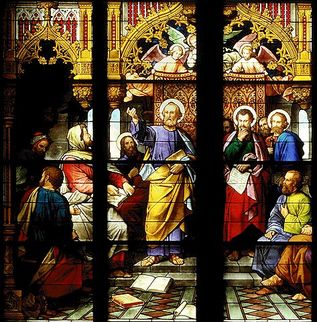
Acts 15:1-35

council-of-jerusalemActs 15:1-35

1 But some men came down from Judea and were teaching the brothers, “Unless you are circumcised according to the custom of Moses, you cannot be saved.” 2 And after Paul and Barnabas had no small dissension and debate with them, Paul and Barnabas and some of the others were appointed to go up to Jerusalem to the apostles and the elders about this question. 3 So, being sent on their way by the church, they passed through both Phoenicia and Samaria, describing in detail the conversion of the Gentiles, and brought great joy to all the brothers. 4 When they came to Jerusalem, they were welcomed by the church and the apostles and the elders, and they declared all that God had done with them. 5 But some believers who belonged to the party of the Pharisees rose up and said, “It is necessary to circumcise them and to order them to keep the law of Moses.” 6 The apostles and the elders were gathered together to consider this matter. 7 And after there had been much debate, Peter stood up and said to them, “Brothers, you know that in the early days God made a choice among you, that by my mouth the Gentiles should hear the word of the gospel and believe. 8 And God, who knows the heart, bore witness to them, by giving them the Holy Spirit just as he did to us, 9 and he made no distinction between us and them, having cleansed their hearts by faith. 10 Now, therefore, why are you putting God to the test by placing a yoke on the neck of the disciples that neither our fathers nor we have been able to bear? 11 But we believe that we will be saved through the grace of the Lord Jesus, just as they will.” 12 And all the assembly fell silent, and they listened to Barnabas and Paul as they related what signs and wonders God had done through them among the Gentiles. 13 After they finished speaking, James replied, “Brothers, listen to me. 14 Simeon has related how God first visited the Gentiles, to take from them a people for his name. 15 And with this the words of the prophets agree, just as it is written, 16 “‘After this I will return,
and I will rebuild the tent of David that has fallen;
I will rebuild its ruins,
and I will restore it, 17 that the remnant of mankind may seek the Lord,
and all the Gentiles who are called by my name,
says the Lord, who makes these things 18 known from of old.’ 19 Therefore my judgment is that we should not trouble those of the Gentiles who turn to God, 20 but should write to them to abstain from the things polluted by idols, and from sexual immorality, and from what has been strangled, and from blood. 21 For from ancient generations Moses has had in every city those who proclaim him, for he is read every Sabbath in the synagogues.” 22 Then it seemed good to the apostles and the elders, with the whole church, to choose men from among them and send them to Antioch with Paul and Barnabas. They sent Judas called Barsabbas, and Silas, leading men among the brothers, 23 with the following letter: “The brothers, both the apostles and the elders, to the brothers who are of the Gentiles in Antioch and Syria and Cilicia, greetings. 24 Since we have heard that some persons have gone out from us and troubled you with words, unsettling your minds, although we gave them no instructions, 25 it has seemed good to us, having come to one accord, to choose men and send them to you with our beloved Barnabas and Paul, 26 men who have risked their lives for the name of our Lord Jesus Christ. 27 We have therefore sent Judas and Silas, who themselves will tell you the same things by word of mouth. 28 For it has seemed good to the Holy Spirit and to us to lay on you no greater burden than these requirements: 29 that you abstain from what has been sacrificed to idols, and from blood, and from what has been strangled, and from sexual immorality. If you keep yourselves from these, you will do well. Farewell.” 30 So when they were sent off, they went down to Antioch, and having gathered the congregation together, they delivered the letter. 31 And when they had read it, they rejoiced because of its encouragement. 32 And Judas and Silas, who were themselves prophets, encouraged and strengthened the brothers with many words. 33 And after they had spent some time, they were sent off in peace by the brothers to those who had sent them. [KJV: 34 Notwithstanding it pleased Silas to abide there still.] 35 But Paul and Barnabas remained in Antioch, teaching and preaching the word of the Lord, with many others also.

Let me share with you some words from Will Willimon.

How many Christians have had their enthusiasm smothered by the bickering of the church?…These church meetings with people crowding the microphone, bickering over budgets, basing their vote on their personal prejudices rather than on the Word of God – how many Christians have had the fire of their initial enthusiasm extinguished by unpleasant church meetings?  Why can we not all act like Christians and agree?  Why does there have to be such contentiousness within the Body of Christ?[1]

These are good questions, all!  Why indeed?  Unfortunately, the Church throughout the ages has experienced a great deal of contentious strife.  This happens in our own day, but perhaps there is some comfort in knowing that it happened in the ancient Church as well.

We last saw that the early Church, when faced with a divisive and controversial issue, came together in the Spirit of God to make decisions.  We considered at that time the content of the controversy.  We saw that the critical question was this:  was Jesus enough or should the Church proclaim that salvation came through Jesus and the keeping of the Law, particularly the mark of circumcision?  Thankfully, the early Church proclaimed the sufficiency of Christ alone to save by grace alone all who would come to Him through faith, Jew and Gentile alike.

The content of the Jerusalem Council is most important, but the process of the Council is important as well.  In other words, we should consider not only what they said but how they said it.  When we do this we find that the Jerusalem Council stands as a model for how to disagree and yet maintain Christian character and witness.  Willimon states that “the method of debate in 15:7-21 is a useful guide for how the church ought to argue.”[2]  Furthermore, in the Journal of Biblical Perspectives in Leadership, J. Lyle Story wrote an article entitled, “The Jerusalem Council: A Pivotal and Instructive Paradigm,” in which he argued that “Luke uses Acts 15:1-16:5 not only to legitimize the Gentile mission, but in being one of a series of case studies that demonstrates a process of conflict–resolution–advance of the Christian message, it reveals how the Church can resolve its conflicts, which will lead to an advance in terms of internal strength and numerical growth.”[3]

This is well said.  The Jerusalem Council does “reveal how the Church can resolve its conflicts.”  The method of the Jerusalem Council will will be our focus today.

I have decided to approach this by offering seven principles for Christian conflict resolution.  They arise from the text itself and are demonstrated by the Church in Acts 15.  They stand as markers for us today and should be embraced by the Church and by Christians today just as they were then.

1.  Seek the wisdom and counsel of wise Christians outside of those immediately involved in the conflict. (v.2)

Let us first notice that when debate arose among two groups, they all agreed to seek the wisdom and counsel of wise Christians outside of those immediately involved in the conflict.

2 And after Paul and Barnabas had no small dissension and debate with them, Paul and Barnabas and some of the others were appointed to go up to Jerusalem to the apostles and the elders about this question.

Read that carefully.  The conflicts began in the church at Antioch between Paul and Barnabas on the one side and those Jewish believers who were advocating the necessity of circumcision on the other.  At this point, it is confined to the Antioch church.  However, Luke tells us that “Paul and Barnabas and some of the others were appointed to go up to Jerusalem.”  Who appointed them?  The church at Antioch did.  Why?  Because they realized that this issue had implications that were much larger than their own congregation and they further realized that an issue this big really did need the insights and wisdom of the larger Church.  So they sent those involved in the disagreement to the apostles and elders in Jerusalem.

I ask you:  have you ever considered seeking the wisdom of a circle larger than your own?  This principle of ever-widening circles of involvement is firmly rooted in scripture.  For instance, we see this in Jesus’ instructions concerning church discipline in Matthew 18.

15 “If your brother sins against you, go and tell him his fault, between you and him alone. If he listens to you, you have gained your brother. 16 But if he does not listen, take one or two others along with you, that every charge may be established by the evidence of two or three witnesses. 17 If he refuses to listen to them, tell it to the church. And if he refuses to listen even to the church, let him be to you as a Gentile and a tax collector.

While the situations are a bit different, the principle is clear in each:  we often need the wider voice of the Church to resolve localized conflicts and we should seek this when significant conflicts arise.  The believers at Antioch understood this.  So should we.

I have heard of churches honoring this principle in creative ways.  I have heard of a church in which two business men locked in a seemingly unresolvable conflict sought the assistance of the church.  In this case, they asked for a larger group of Christian business people to convene, to hear their sides, and then to help them resolve the problem.  They committed themselves to humbling themselves before other Christians who loved them and who sought to be impartial and objective and biblical in the matter.

Such could happen today if we determined to seek the church’s help.  Consider the wisdom of seeking help when you conflict with another Christian in ways that seem unresolvable.

2.  Do not go personal.  Treat each other with dignity. (v.5,7,13,23)

We also see an air of dignity and mutual respect in the way that the participants of the Jerusalem Council addressed each other.  Consider the terminology in the following verses.

5 But some believers who belonged to the party of the Pharisees rose up and said, “It is necessary to circumcise them and to order them to keep the law of Moses.”

7 And after there had been much debate, Peter stood up and said to them, “Brothers, you know that in the early days God made a choice among you, that by my mouth the Gentiles should hear the word of the gospel and believe.

13 After they finished speaking, James replied, “Brothers, listen to me.

23 with the following letter: “The brothers, both the apostles and the elders, to the brothers who are of the Gentiles in Antioch and Syria and Cilicia, greetings.

“Believers.”  “Brothers.”  “Brothers.”  “The brothers.”

What is significant is that these words are seemingly applied to the whole audience, which certainly included the brothers who were in error.  And let us remember:  one side in the debate was definitely in the wrong.  These efforts at Christian conflict resolution did not include slathering a fake and vapid veneer of toothy but empty congeniality over very real issues that needed resolution.  In the end, the brothers in error will be told in no uncertain terms that they are wrong.  But there is the point:  they were referred to as “brothers” and “believers.”  Meaning, the brothers did not allow the discussion to go personal.  Peter did not stand and say, “Hey, you vile, wicked, heretical heathens, pay attention!”  James did not stand up and say, “For starters, you guys are idiots.”  Insults like that are known as ad hominems, “to the person.”  They did not throw ad hominems at those in the wrong.  Rather, they respected their dignity as human beings and stuck to the issues at hand.

It is helpful to consider how ineffective and counterproductive personal insults are in reaching resolution.  Nobody, locked in an intense debate, has ever said, “You know, I was convinced you were wrong until you questioned my sanity and my intelligence…then I knew that you were right.”  Nobody has ever said, “I was about to walk away in disagreement until you insulted my mother…then I knew that I was in the wrong.  Thank you!”

No!  Insults degrade and tear down constructive dialogue.  Insults and personal attacks move us further from resolution, not closer to it.

The early Church did not launch personal attacks against those in error.  Rather, they treated all with dignity.

3.  Look at the question from God’s perspective and not merely from your own. (v.7-9)

What is more, they sought God’s perspective on the matter and did not restrict themselves merely to their own viewpoints.  This is evident in Peter’s words to the Council.

7 And after there had been much debate, Peter stood up and said to them, “Brothers, you know that in the early days God made a choice among you, that by my mouth the Gentiles should hear the word of the gospel and believe. 8 And God, who knows the heart, bore witness to them, by giving them the Holy Spirit just as he did to us, 9 and he made no distinction between us and them, having cleansed their hearts by faith.

Do you see what Peter did?  He essentially says, “Listen, let us consider how God views the matter.  God saved them just like He saved us.  God gave them the Holy Spirit just like He gave us the Holy Spirit.  God accepted them just like He accepted us.”

Essentially what Peter is doing here is taking the conversation upstairs instead of downstairs.  Taking the conversation downstairs means sinking further and further into the morass of our own agendas, our own assumptions, and our own desires to be right, to win.  Taking the conversation upstairs means ascending into God’s will together:  asking what the Lord would want in this situation, asking how He might work and guide us through these difficult issues.

G.R. Evans, in his wonderful biography of John Wyclif, quotes a 14th century Dominican Provincial who, when faced with a difficult question and decision, “asked to be excused from answering so hard a question and advised that when his order faced difficult business (ardua negotia), it was the custom of the friars to sing a hymn and invoke the Holy Spirit so that the Spirit might guide them to the truth.”[4]

This is sage counsel.  Seek the Lord’s perspective when you conflict.

4.  Be orderly. (v.12)

And seek the Lord in an orderly manner.

12 And all the assembly fell silent, and they listened to Barnabas and Paul as they related what signs and wonders God had done through them among the Gentiles.

“And all the assembly fell silent.”  There was an orderliness about these proceedings.  The brothers in error speak.  Peter speaks.  Paul and Barnabas speak.  James speaks.  In fact, the counsel appears to be more and more orderly as it progresses.  This is a rarity in human conflict.

Our innate inclinations are to let our passions override our reason and to let conflicts grow in intensity and strife.  It would perhaps be a good idea for all of us to remember that if, in a conflict, we find ourselves speaking (1) increasingly louder, (2) increasingly faster, and (3) with increasing emotion, we and all involved would be best served if we stopped speaking altogether and took a long walk to cool down.  It is likely the case that nobody has ever regretted being quick to hear and slow to speak.  There have been regrets uncountable around the opposite behaviors, however.

5.  Let the scriptures speak over your opinions. (v.14-18)

Tellingly, James, in his concluding speech, appeals to the Bible.

14 Simeon has related how God first visited the Gentiles, to take from them a people for his name. 15 And with this the words of the prophets agree, just as it is written, 16 “‘After this I will return,
and I will rebuild the tent of David that has fallen;
I will rebuild its ruins,
and I will restore it, 17 that the remnant of mankind may seek the Lord,
and all the Gentiles who are called by my name,
says the Lord, who makes these things 18 known from of old.’

Whether we know it or not, there is a priority of sources to which we appeal in any disagreement.  The default and preferred sources are our own opinions and ego.  We do not have to be taught to appeal to our own ego and opinions.  We are born knowing how to do this.  That is, we tend to put our own feelings on any given matter in the driver’s seat when we disagree with others (and when we do not).  But this does not necessarily have to be so.  We could, for instance, allow the scriptures to speak.  James does so here, and it is refreshing that he does.

It is astounding how many Christians will abandon the primacy of the Bible when they are caught in a disagreement with somebody.  At times it appears that our commitment to the authority of the scriptures is largely theoretical.  We do not mind letting the Bible have the final say on matters of doctrine.  However, we grow more and more uncomfortable when it comes to the practical matters of living life and especially to issues of conflict resolution.

How many Christians, however, have taken to social media outlets like Facebook to (usually passively aggressively) voice their frustrations about another person instead of going to the person themselves and alone as the scriptures prescribe?  How many Christians gossip about other believers with whom they differ, attacking them behind their backs, when the Bible allows no such thing?  Why are we so quick to believe the Bible when it says, “For God so love the world…” but not when it tells us to go to those with whom we differ directly and alone and resolve the conflict?

Furthermore, when we are conflicting on controversial issues, are we content to allow the Bible to have its say?  When you think of the great hot-topic issues today, do you search your own opinions of how you think God should view an issue as opposed to searching the scriptures to see how God does in fact view the issue?  Who gets the last word?  You or the God’s Word?

For James, the definitive issue in the Jerusalem Council was, “Thus saith the Lord.”  So may it be with us as well!

6.  Fight for unity. (v.22,23,25)

And these brothers fought hard to preserve and maintain the unity of the Church as well.  Consider:

22 Then it seemed good to the apostles and the elders, with the whole church, to choose men from among them and send them to Antioch with Paul and Barnabas. They sent Judas called Barsabbas, and Silas, leading men among the brothers, 23 with the following letter: “The brothers, both the apostles and the elders, to the brothers who are of the Gentiles in Antioch and Syria and Cilicia, greetings.

25 it has seemed good to us, having come to one accord, to choose men and send them to you with our beloved Barnabas and Paul

The Church fought for unity both in its methodology and in how it explained its decisions to the churches.  “It seemed good to the apostles and the elders, with the whole church…”  “it has seemed good to us, having come to one accord…”

They are fighting and striving for unity.  They know what is at stake.  They know that the world coming to know the gospel hinges at least to some extent on the survival and faithfulness and flourishing of God’s Church.  They are saying to those Christians awaiting a verdict, “We are together!  It is going to be ok.  We have made a decision.  We are unified.  Here is the answer and now let us unite around the gospel.”

7.  When in doubt, advance the resolution that will honor Christ, further the gospel, and strengthen the people of God. (v.31-32)

The fruit of the Council’s decision is most illuminating.

31 And when they had read it, they rejoiced because of its encouragement. 32 And Judas and Silas, who were themselves prophets, encouraged and strengthened the brothers with many words.

The Council’s decision opened the door to unity, to joy, to encouragement, and to the strengthening of the brothers.  In short, it honored Christ, furthered the gospel, and strengthened the people of God.

G.R. Evans lists three criteria from the great 11th/12th century French abbot Bernard of Clairvaux which could be used in making any decision:

An exhortation of [John] Wyclif’s given at the inception of a Doctor sets out his personal idea of the academic calling.  A scholar, especially a theologian, should be honest…When he speaks or writes he should ask himself the three questions listed by Bernard of Clairvaux:  an liceat, an deceat, an expediat.  Is it allowed?  Is it appropriate?  Is it profitable?[5]

This is helpful:  “Is it allowed?  Is it appropriate?  Is it profitable?”  In the case of the Jerusalem Council they asked if their decision would ultimately profit the Church.  Will we be stronger and more faithful and healthier and better as a result of making this decision?  Will the Church be built up or destroyed?  Will this bring us closer to Jesus or further from Him?

These are questions of fruit, but the fruit of any decision can help us determine the wisdom of the decision.  If the fruit of a decision honors the Lord Jesus, advances the gospel, and unifies the Church, it is the right decision.

Brothers.  Sisters.  Hear me:  we will conflict at times.  It is inevitable.  Be it two people in this congregation or two groups in this congregation.  I thank God for the health of this church, but let us not be naïve:  conflicts will come.  When they do, what will we do?  How will we act?  Will we take the path of personal victory at all costs?  Or will we honor the Lord Jesus and His bride and choose the path of biblical, God-honoring conflict resolution.

Much depends on which path we choose.

May we choose the path that most honors Christ.


[1] William H. Willimon, Acts. Interpretation. (Louisville, KY: John Knox Press, 1988), p.128.

[2] William H. Willimon, p.129.

[3] https://www.regent.edu/acad/global/publications/jbpl/vol3no1/Story_JBPLV3I1_pgs33-60.pdf

[4] G.R. Evans, John Wyclif: Myth and Reality (Downers Grove, IL:  IVP Academic, 2005), p.144.

[5] G.R. Evans, p.68. 

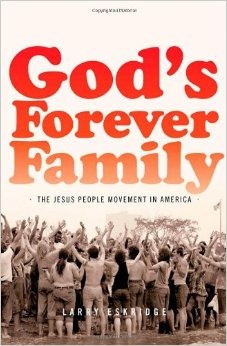
Larry Eskridge’s God’s Forever Family: The Jesus People Movement in America

imageLarry Eskridge’s God’s Forever Family is a fascinating look at one of the more intriguing movements within American Christianity:  the Jesus People.  Beginning in the late 1960’s in California, the Jesus People began as a movement of Christian kids who identified with the hippie culture of the time as well as hippie kids who embraced the gospel as it was being presented in culturally relevant, fresh, attractive, and often controversial ways.  Eskridge tells of the movement’s origins in the Haight Ashbury area of San Francisco, of its geographical expansion, and of the colorful characters that played key roles in the movement’s advance, evolution, and, at times, missteps.

It is a story of indisputably passionate zeal for the gospel of the Christ.  At its best, the Jesus People introduced an enthusiasm for sincere, relevant worship and modeled a stunning boldness in evangelistic witness.  At its worst, it was a movement high on zeal but, occasionally, low on doctrinal foundations.  This made the movement at times susceptible to charismatic false teachers or ideas that could lure segments of these predominantly young people away from biblical truth and orthodoxy.

One of the major and, personally, most challenging aspects of the story was the way in which established churches responded to the movement.  At times, they did so admirably.  Though I would want to add some cautions, I think that Chuck Smith and Calvary Chapel should be commended for having a great burden for these young people.  At other times, the established churches did not respond well.  I cringed to read accounts of established churches turning up their noses at these young people and their unconventional ways of speaking and dressing.  Eskridge quotes one elderly church lady’s response to being asked if she could help house a homeless young hippie.  After looking at the young man with his disheveled and unclean appearance, she responded, “That dirty thing between my clean sheets?!”  In a microcosm, that was the general response and mindset of the churches that refused to engage these young people.

Other important and very interesting aspects of the story include the birth of contemporary Christian music out of the Jesus People movement, the hijacking of certain elements of the Jesus People by David Berg’s Children of God cult, Billy Graham’s admirable openness to and championing of the Jesus People, the eastward and even international expansion of the Jesus People with greater or lesser success (depending on numerous regional factors), the communal living experiments among many of the Jesus People, and the numerous testimonies of Christians attesting to just how powerfully God moved and worked in and through this movement.

Whether you are familiar with this movement or not, you will benefit from this very well-written, extremely informative, and wonderfully engaging book.

Acts 15:1-21


council-of-jerusalemActs 15:1-21

1 But some men came down from Judea and were teaching the brothers, “Unless you are circumcised according to the custom of Moses, you cannot be saved.” 2 And after Paul and Barnabas had no small dissension and debate with them, Paul and Barnabas and some of the others were appointed to go up to Jerusalem to the apostles and the elders about this question. 3 So, being sent on their way by the church, they passed through both Phoenicia and Samaria, describing in detail the conversion of the Gentiles, and brought great joy to all the brothers. 4 When they came to Jerusalem, they were welcomed by the church and the apostles and the elders, and they declared all that God had done with them. 5 But some believers who belonged to the party of the Pharisees rose up and said, “It is necessary to circumcise them and to order them to keep the law of Moses.” 6 The apostles and the elders were gathered together to consider this matter. 7 And after there had been much debate, Peter stood up and said to them, “Brothers, you know that in the early days God made a choice among you, that by my mouth the Gentiles should hear the word of the gospel and believe. 8 And God, who knows the heart, bore witness to them, by giving them the Holy Spirit just as he did to us, 9 and he made no distinction between us and them, having cleansed their hearts by faith. 10 Now, therefore, why are you putting God to the test by placing a yoke on the neck of the disciples that neither our fathers nor we have been able to bear? 11 But we believe that we will be saved through the grace of the Lord Jesus, just as they will.” 12 And all the assembly fell silent, and they listened to Barnabas and Paul as they related what signs and wonders God had done through them among the Gentiles. 13 After they finished speaking, James replied, “Brothers, listen to me. 14 Simeon has related how God first visited the Gentiles, to take from them a people for his name. 15 And with this the words of the prophets agree, just as it is written, 16 “‘After this I will return,
and I will rebuild the tent of David that has fallen;
I will rebuild its ruins,
and I will restore it, 17 that the remnant of mankind may seek the Lord,
and all the Gentiles who are called by my name,
says the Lord, who makes these things 18 known from of old.’ 19 Therefore my judgment is that we should not trouble those of the Gentiles who turn to God, 20 but should write to them to abstain from the things polluted by idols, and from sexual immorality, and from what has been strangled, and from blood. 21 For from ancient generations Moses has had in every city those who proclaim him, for he is read every Sabbath in the synagogues.”


R. Kent Hughes recounts a story told by Winston Churchill that is worthy of our consideration.

Winston Churchill told of a British family that went out for a picnic by a lake.  In the course of the afternoon the five-year-old son fell into the water.  Unfortunately, none of the adults could swim.  As the child was bobbing up and down and everyone on the shore was in a panic, a passerby saw the situation.  At great risk to himself, he dove in fully clothed and managed to reach the child just before he went under for the third time.  He was able to pull him out of the water and present him safe and sound to his mother.  Instead of thanking the stranger for his heroic efforts, however, the mother snapped peevishly at the rescuer, “Where’s Johnny’s cap?”[1]

That’s a jarring little story that makes a crucial point:  it is a travesty to be unable to celebrate great things because of a fixation on lesser things.  I offer this story to you because I think it might help us understand what is happening in this amazing fifteenth chapter of Acts.  If we were to use the story as an allegory for Acts 15, we might interpret it along these lines:  the little boy drowning in the lake represents the Gentile world which was lost and drowning in sin, death, and judgment.  The man who dove in and pulled the boy to shore would represent Paul, Barnabas, Peter and, indeed, all those within the early Church who felt that they should take the gospel to the nations and call all people to salvation in Christ Jesus.  The mother on the shore missing the greater good news because of a fixation on the boy’s cap would represent those Jewish converts within the Church upset that the Gentiles who were being saved had not embraced the external rite of circumcision.

The events of Acts 15 are crucial because the very future of the Church hung in the balance.  At the heart of this debate and this council was this question:  do non-Jewish converts to Christianity have to embrace circumcision in addition to accepting Christ?  In other words, was Christianity a reform movement within first century Judaism or was it something more, a truly global message for all people with worldwide ramifications?  Or, to put it yet another way:  is Jesus enough?  Is his death on the cross and His rising from the dead and his grace sufficient to save, or must we add the Jewish rites to the faith of the believer for him or her to be saved?

James Montgomery Boice has written, “The hardest of all ideas for human beings to grasp is the doctrine of salvation by grace alone.  This is because we all always want to add something to it.”[2]  I believe he is right.  We do indeed want to add something to the doctrine of salvation by grace alone.  We deep down seem to have trouble believing and accepting the amazing good news that Jesus is enough.  That struggle has always been with the Church and it is reflected in Acts 15.

The early Church wrestled with a crucial question:  Is Jesus enough?

Acts 15 is the record of the first Church council.  It is occasioned by a controversy that arose around Gentiles coming to Christ through the ministry of Paul and Barnabas.

1 But some men came down from Judea and were teaching the brothers, “Unless you are circumcised according to the custom of Moses, you cannot be saved.”

On this side of the cross, and as Gentiles ourselves, we may scoff at such a question.  But to do so is to betray an ignorance of just how difficult it was for Jewish converts to understand fully the uncomfortable implications of the person and work of Christ on everything they thought they understood about holiness and salvation.  Bluntly stated, circumcision was a big deal.  It was important.  Had you grown up a Jew you would have heard and known the words of God to the great patriarch Abraham in Genesis 17.

9 And God said to Abraham, “As for you, you shall keep my covenant, you and your offspring after you throughout their generations. 10 This is my covenant, which you shall keep, between me and you and your offspring after you: Every male among you shall be circumcised. 11 You shall be circumcised in the flesh of your foreskins, and it shall be a sign of the covenant between me and you. 12 He who is eight days old among you shall be circumcised. Every male throughout your generations, whether born in your house or bought with your money from any foreigner who is not of your offspring, 13 both he who is born in your house and he who is bought with your money, shall surely be circumcised. So shall my covenant be in your flesh an everlasting covenant. 14 Any uncircumcised male who is not circumcised in the flesh of his foreskin shall be cut off from his people; he has broken my covenant.”

This seems clear enough.  Circumcision was the sign of covenant faithfulness and belonging.  It was a crucial outward act of obedience demonstrating, ideally, that a person’s heart was turned towards God.  As a result, circumcision was considered essential for Jews and possibly for Gentiles as well.

Craig Keener explains that some Jews felt Gentiles could be saved without circumcision so long as they kept the commandments given to Noah.  Others, however, argued that they had to convert to Judaism and receive the mark of circumcision.  Keener points out, “Josephus reported that some of his colleagues demanded the circumcision of Gentiles who had come to them for refuge, but Josephus himself forbade this requirement.”[3]

Even so, it is perhaps difficult for us to appreciate just how important the sign of circumcision was to the Jews and how difficult it was for some Jewish converts to be able to say that Gentile believers did not need to receive the sign.  Consider, for instance, these words from the Jewish book of Jubilees that was written around 180-170 B.C.

Anyone who is born whose own flesh is not circumcised on the eighth day is not from the sons of the covenant which the Lord made for Abraham since he is from the children of destruction.  And there is therefore no sign upon him so that he might belong to the Lord because he is destined to be destroyed and annihilated from the earth because he has broken the covenant of the Lord our God.[4]

Fast forward to the days of the early Church and these Jewish believers in Christ had to come to terms with just what it meant for the mark of circumcision that Christ had laid down his life.  Did the Gentiles have to be circumcised?  Was faith enough?  Were they truly clean if they did not follow the Law?

Difficult questions indeed for this first generation of believers, and it gave rise to no small controversy.

2 And after Paul and Barnabas had no small dissension and debate with them, Paul and Barnabas and some of the others were appointed to go up to Jerusalem to the apostles and the elders about this question. 3 So, being sent on their way by the church, they passed through both Phoenicia and Samaria, describing in detail the conversion of the Gentiles, and brought great joy to all the brothers. 4 When they came to Jerusalem, they were welcomed by the church and the apostles and the elders, and they declared all that God had done with them. 5 But some believers who belonged to the party of the Pharisees rose up and said, “It is necessary to circumcise them and to order them to keep the law of Moses.”

Here we see the sides in the debate.  On the one hand we see Jewish Christians who said, “It is good that these Gentiles have accepted Christ.  But that is just the first step.  They now need the sign of the covenant in their flesh.”  On the other were Jewish Christians like Paul and Barnabas who said, “Not so.  It is enough that they have received the grace of God through faith.  The blood of Christ has rendered them clean.  Their hearts have been circumcised by grace through faith.  Jesus is enough.”

At this point let us simply acknowledge that the Church has struggled throughout her history with the question of whether or not Jesus is truly enough.  There is a kind of allure to the making of external rules and the establishment of a checklist by which we can “prove” that a person is or is not a good Christian.  We call this kind of thing legalism:  the legislation of external rules that ostensibly give evidence of one’s salvation.  This is very dangerous, all the more so because this kind of thinking inevitably devolves from, “Keep these rules as evidence that you are saved,” into, “Keep these rules and you will be saved.”  Thus, the rules became salvation.

Legalism has plagued the Church for ages.  William Manchester has offered a list of behaviors that were forbidden in John Calvin’s Geneva:

feasting, dancing, singing, pictures, statues, relics, church bells, organs, altar candles; “indecent or irreligious” songs, staging or attending theatrical plays; wearing rouge, jewelry, lace, or “immodest” dress; speaking disrespectfully of your betters; extravagant entertainment, swearing, gambling, playing cards, hunting, drunkenness, naming children after anyone but figures in the Old Testament; reading “immoral or irreligious books.

Some of those may make a kind of sense to us.  Others are outright strange.  But that is how legalism works!  Philip Yancey continued with this observation about Calvin’s Geneva:

A father who christened his son Claude, a name not found in the Old Testament, spent four days in jail, as did a woman whose hairdo reached an “immoral” height.  The Consistory beheaded a Child who struck his parents.  They drowned any single woman found pregnant.  In separate incidents, Calvin’s stepson and daughter-in-law were executed when found in bed with their lovers.[5]

Legalism has a tendency to turn dark and violent indeed!  Sometimes it is just silly.  Richard John Neuhaus has commented on a strange dustjacket to a C.S. Lewis book that he once saw.

Many years ago an evangelical publisher brought out a book by C. S. Lewis with his picture on the back of the dustjacket. He was holding his hand in an odd way, as though there was something in it, but there was nothing there. Around his head was a large cloud. It was, of course, a cloud of pipe smoke, but the publisher, in order not to offend, had brushed out the pipe, with the result that Lewis’ head was surrounded by this numinous nimbus. My classmates and I referred to him as See Shekinah Lewis.[6]

Some years back, while pastoring in South Georgia, I drove to Atlanta to pick up a Hispanic pastor of a Hispanic church in New York.  He was flying into town for a mission’s conference our church was hosting.  As we drove back south, we began to talk about legalism.  I mentioned to him that in most Southern Baptist churches of the South, smoking is permissible but drinking alcohol is not.  He chuckled and informed me that in the Hispanic churches of the North, they do not care if you have a glass of wine but they say that you are probably not going to Heaven if you smoke!

These are all interesting and sometimes amusing conversations, but at the heart of them is a deadly serious question:  is Jesus enough to save us?  Is the cross enough?  Is the empty tomb enough?  Should we add external and oftentimes arbitrary rules that are not revealed in God’s Word into the mix?

Peter, Paul, and Barnabas argued that Jesus was enough and that we are saved by grace through faith in Christ.

To resolve the question, the apostles and the elders all gather together to talk it through.  As I mentioned earlier, much was at stake in the Jerusalem council.

6 The apostles and the elders were gathered together to consider this matter. 7 And after there had been much debate, Peter stood up and said to them, “Brothers, you know that in the early days God made a choice among you, that by my mouth the Gentiles should hear the word of the gospel and believe. 8 And God, who knows the heart, bore witness to them, by giving them the Holy Spirit just as he did to us, 9 and he made no distinction between us and them, having cleansed their hearts by faith. 10 Now, therefore, why are you putting God to the test by placing a yoke on the neck of the disciples that neither our fathers nor we have been able to bear? 11 But we believe that we will be saved through the grace of the Lord Jesus, just as they will.” 12 And all the assembly fell silent, and they listened to Barnabas and Paul as they related what signs and wonders God had done through them among the Gentiles.

The council began with an open debate on the question.  One side said that Gentile converts had to be circumcised in addition to accepting Christ.  The other said rejected this and argued that Christ was enough.  Then Peter stands to speak.  In his amazing presentation he makes a couple of absolutely key points, especially in verses 8 and 9.

8 And God, who knows the heart, bore witness to them, by giving them the Holy Spirit just as he did to us, 9 and he made no distinction between us and them, having cleansed their hearts by faith.

Peter notes first that the Gentiles received the Holy Spirit just like they did.  In saying this he was stressing the equality of these groups before God as evidenced by God’s equal distribution of the Spirit to all who trusted in Christ.  Then, more bluntly, he works out the implications of this fact by concluding that God “made no distinction between us and them.”  This is the crux of the matter.  Do we all stand on level ground before the cross of Christ or not?  We do!  We share in an equality of sin and lostness, to begin with, and then, by grace through faith, we share in the equality of salvation.  He saves all who come to Him!

After going on to question the very premise behind the arguments of the pro-circumcision party by pointing out that not even they had really kept the Law, Peter offers his definitive conclusion:

11 But we believe that we will be saved through the grace of the Lord Jesus, just as they will.

There it is!  We are all saved through the grace of the Lord Jesus!  Jew and Gentile alike!  There is one way to the Father, and it is not the physical mark of circumcision:  it is Christ!  Thus, we dare not add to the cross.

Paul and Barnabas confirm Peter’s words by offering anecdotal evidence from their first missionary journey:  the Gentiles were being saved and receiving the Holy Spirit!  God was at work among those previously considered to be outside.  They therefore agreed, we dare not add to Jesus!  He is enough!

Tullian Tchividjian, in his book Jesus + Nothing + Everything, has written movingly of the human desire to add works to the cross.

Christianity and . . . For many of us, it may be Jesus and our achievements, Jesus and our strengths, Jesus and our reputation, Jesus and our relationships, Jesus and our family’s prosperity, Jesus and our ambitions and goals and dreams, Jesus and our personal preferences and tastes and style, Jesus and our spiritual growth, Jesus and our hobbies and recreational pursuits and entertainment habits—and, especially, Jesus and our personal set of life rules.

Jesus plus X. The formula looks so innocent and harmless, even commendable (we’re helping Jesus out!). But no such equation can ever lead anywhere good. Ultimately there can be only one equation—Jesus plus nothing.[7]

“Jesus plus nothing.”

Here is the very heart of salvation.  We may thank God that the Jerusalem council repudiated legalism and exalted the work of Christ as sufficient to save us!

James agreed that salvation is a work of grace in the human heart, but showed that holy living and righteousness should be expected of those who have been saved.

Next, James the brother of Jesus stands to speak.  His presentation is powerful and needed because it reveals that while Jesus truly is enough, that does not mean that the life of the believer should not on that basis demonstrate holiness.  In other words, just because we need add nothing to Christ to be saved, that does not mean that those who have been saved by Christ should do nothing as a result.  On the contrary, coming to the Christ who saves by His grace alone means embracing His life, a life of holiness.

13 After they finished speaking, James replied, “Brothers, listen to me. 14 Simeon has related how God first visited the Gentiles, to take from them a people for his name. 15 And with this the words of the prophets agree, just as it is written, 16 “‘After this I will return, and I will rebuild the tent of David that has fallen; I will rebuild its ruins, and I will restore it, 17 that the remnant of mankind may seek the Lord, and all the Gentiles who are called by my name, says the Lord, who makes these things 18 known from of old.’ 19 Therefore my judgment is that we should not trouble those of the Gentiles who turn to God,

It is occasionally alleged that James and Paul were at odds over this question, but let us notice that they actually stand in absolute agreement:  Gentiles do not need to be circumcised to be saved.  Salvation is by grace received through faith alone.  This is how we are saved.  But, helpfully, James moves on to talk about what this means for the believer’s life.

20 but should write to them to abstain from the things polluted by idols, and from sexual immorality, and from what has been strangled, and from blood. 21 For from ancient generations Moses has had in every city those who proclaim him, for he is read every Sabbath in the synagogues.”

Ah!  So the point is not that we should not call for holiness and right living.  The point is that we do not earn our salvation through external actions added to the work of Christ.  There is indeed a place – a very important place! – for good works in the Christian life.  But they arise out of a heart redeemed by grace through faith and are not earners of the unmerited favor of God.

There was therefore no contradiction in calling upon the believers to not eat food sacrificed to idols (thereby creating confusion in the minds of their pagan neighbors who would interpret such an act as idol worship) and to flee sexual immorality.

But here is the great difference:  the Christian flees sexual immorality not in an effort to warrant his salvation, but rather in an effort to live in trust and peace with the God who has so mercifully saved him.  The Christian does not want to do wickedness.  He flees it not with an eye toward earning a place in Heaven but with an eye toward thanking and honoring the God who made him or her and who saved him or her and who called him or her to a new way of life.  The believer now wants to cast off the cloak of sin, death, and hell and all the wickedness that goes with it.  We now want to honor our great King who laid down everything for us!

Brothers!  Sisters!  We have been saved by the grace of God!  Jesus is enough!  Jesus is enough!  Now, let us live for Him!


[1] R. Kent Hughes, Acts. (Wheaton, IL: Crossway Books, 1996), p.196.

[2] James Montgomery Boice, Acts. (Grand Rapids, MI: Baker Books, 1997), p.259.

[3] Craig S. Keener, The IVP Bible Background Commentary: New Testament. (Downers Grove, IL: 1993), p.364.

[4] Clinton E. Arnold, “Acts.” Zondervan Illustrated Bible Backgrounds Commentary. Vol.2. Clinton E. Arnold, gen. ed. (Grand Rapids, MI: Zondervan, 2002), p.355.

[5] Philip Yancey.  What’s So Amazing About Grace.  (Grand Rapids, MI:  Zondervan Publishing House, 1997), p.234.

[6] RJN, “While We’re At It,” First Things.  October 2001.

[7] Tchividjian, Tullian (2011-10-14). Jesus + Nothing = Everything (p. 39-40). Crossway. Kindle Edition.


Acts 14:19-28

tumblr_lvcvlgUn9O1qbhp9xo1_1280Acts 14:19-28

19 But Jews came from Antioch and Iconium, and having persuaded the crowds, they stoned Paul and dragged him out of the city, supposing that he was dead. 20 But when the disciples gathered about him, he rose up and entered the city, and on the next day he went on with Barnabas to Derbe. 21 When they had preached the gospel to that city and had made many disciples, they returned to Lystra and to Iconium and to Antioch, 22 strengthening the souls of the disciples, encouraging them to continue in the faith, and saying that through many tribulations we must enter the kingdom of God. 23 And when they had appointed elders for them in every church, with prayer and fasting they committed them to the Lord in whom they had believed. 24 Then they passed through Pisidia and came to Pamphylia. 25 And when they had spoken the word in Perga, they went down to Attalia, 26 and from there they sailed to Antioch, where they had been commended to the grace of God for the work that they had fulfilled. 27 And when they arrived and gathered the church together, they declared all that God had done with them, and how he had opened a door of faith to the Gentiles. 28 And they remained no little time with the disciples.

Dave Howard tells an amazing story about a Colombian pastor he worked with named Lupercio Taba.

One Sunday Taba was preaching from his pulpit when a man appeared at a side window of the church, aimed a pistol at him, and ordered him to stop preaching.  The congregation, seeing the danger, dove to the floor and hid under the pews.  Taba, however, went right on preaching the gospel.  The man then fired four shots at him.  Two shots went past the preacher’s head, one on one side, one on the other, and lodged in the wall behind him.  Two shots went past his body, one under one arm, one under the other, and also lodged in the wall.  The would-be assassin then dropped his gun and fled.  Taba, still unmoved, continued his sermon.[1]

There is something surprising and intriguing about a preacher so intent on his sermon that he does not have time to duck when shot upon.  That, friends, is focus!  I think that kind of unflinching resolve is settled upon years before in the past when a man or woman decides that obedience to the Lord God is simply more important than life itself.  That is to say, endurance arises from a clear vision of the priority of things and a determination to lay down one’s life for the first things.

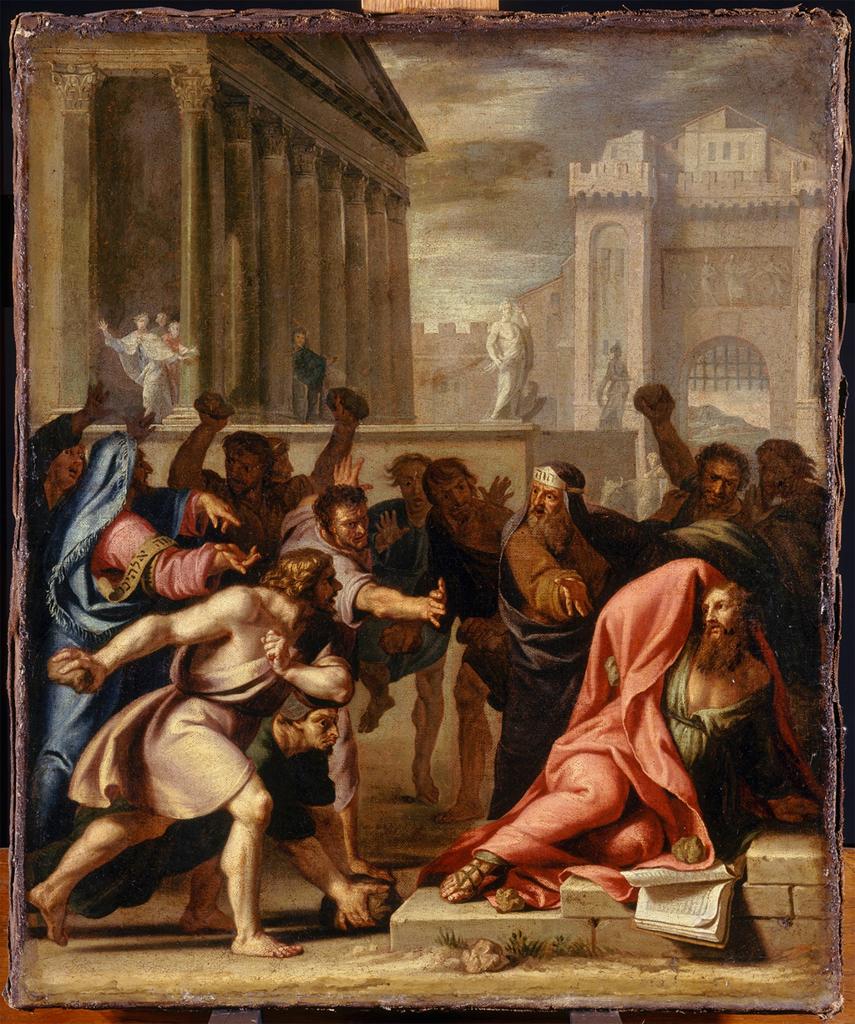
Lupercio Taba did this.  Stephen did it is well, you might recall, when he was being stoned in Acts 7.

54 Now when they heard these things they were enraged, and they ground their teeth at him. 55 But he, full of the Holy Spirit, gazed into heaven and saw the glory of God, and Jesus standing at the right hand of God. 56 And he said, “Behold, I see the heavens opened, and the Son of Man standing at the right hand of God.” 57 But they cried out with a loud voice and stopped their ears and rushed together at him. 58 Then they cast him out of the city and stoned him. And the witnesses laid down their garments at the feet of a young man named Saul. 59 And as they were stoning Stephen, he called out, “Lord Jesus, receive my spirit.” 60 And falling to his knees he cried out with a loud voice, “Lord, do not hold this sin against them.” And when he had said this, he fell asleep.

Stephen also was marked by an intensity of focus that rendered him unable to panic in the face of persecution.  What makes his focus all the more amazing is that he actually died!  But he died without ever once taking his eyes off of Jesus.

Singularity of focus is the mother of determination.  Those who are fixated on one great good cannot be bothered with anything that would distract them from it!  To the extent that the Church is focused on Christ, the Church models endurance.  A weak focus on Christ walks hand in hand with a lack of endurance.  A radical focus on Christ walks hand in hand with astonishing endurance!

Jay Adams once wrote, “In counseling, week after week, I continually encounter one outstanding failure among Christians:  a lack of what the Bible calls ‘endurance’; they give up.”[2]  In the light of the example of the early believers, this is quite an indictment!

We cannot, we dare not give up!

Perhaps the patron saint of endurance and singular focus was Paul.  Watch his example in Acts 14:19-28.

Paul demonstrated a God-focused endurance and determination to spread the gospel.

Luke begins with a note of jarring, understated, blunt violence.

19 But Jews came from Antioch and Iconium, and having persuaded the crowds, they stoned Paul and dragged him out of the city, supposing that he was dead.

Paul was a man who knew what it was to suffer for the gospel.  Here is his testimony of suffering from 2 Corinthians 11:

21b But whatever anyone else dares to boast of—I am speaking as a fool—I also dare to boast of that. 22 Are they Hebrews? So am I. Are they Israelites? So am I. Are they offspring of Abraham? So am I. 23 Are they servants of Christ? I am a better one—I am talking like a madman—with far greater labors, far more imprisonments, with countless beatings, and often near death. 24 Five times I received at the hands of the Jews the forty lashes less one. 25 Three times I was beaten with rods. Once I was stoned. Three times I was shipwrecked; a night and a day I was adrift at sea; 26 on frequent journeys, in danger from rivers, danger from robbers, danger from my own people, danger from Gentiles, danger in the city, danger in the wilderness, danger at sea, danger from false brothers; 27 in toil and hardship, through many a sleepless night, in hunger and thirst, often without food, in cold and exposure. 28 And, apart from other things, there is the daily pressure on me of my anxiety for all the churches. 29 Who is weak, and I am not weak? Who is made to fall, and I am not indignant?

In Galatians 6:17, Paul moving writes, “From now on let no one cause me trouble, for I bear on my body the marks of Jesus.”  And he did!  This most unlikely convert bore beatings and stonings and whippings and imprisonment because Christ and His Kingdom were worth it!  Here, in our text, he is stoned and presumed dead.  They drag him out of the city and dropped his broken, bloodied, bruised body in a heap of dirt and dust and left him for dead.  And when his persecutors left, his friends gathered around to look at the corpse of their friend.  But God said, “Not yet!”  Watch:

20 But when the disciples gathered about him, he rose up and entered the city, and on the next day he went on with Barnabas to Derbe.

Luke, again, understates something very jarring.  In doing so, he heightens the almost bewildered humor of it all!  Imagine the disciples gathered around.  They are looking at the lifeless body of their friend.  “He was a good friend,” Barnabas said.  “He was nothing but kind to me,” said another.  “Could be a little gruff at times, but nobody could deny that he was a work of grace,” said another.  Then they pause, encircling Paul’s body, and softly weep.

Then all of a sudden:  “What are you guys standing around moping for!  We’ve got work to do!  Ouch, I’m gonna feel that in the morning!  Let’s go back into the city!”

I love it!  I absolutely love it!  What most of those who stoned Paul must have thought of seeing him walking back into town!  Ha!  What a wonderfully delicious thought!

Why does Paul go back into the city?  To chastise and rebuke his persecutors?  Nothing in the text suggests that this is why he returned.  Undoubtedly he returned to strengthen the believers there again before moving on with Barnabas to Derbe.

The great John Chrysostom captured the heart of Paul well when he said this to his ancient congregation so many years ago:

Believe me, it is possible to suffer things now worse than what Paul suffered.  Those enemies pelted him with stones, but it is now possible to pelt with words that are worse than stone.  What then must one do?  The same that he did.  He did not hate those who cast the stones.  After they dragged him out, he entered their city again, to be a benefactor to those who had done him such wrongs…He was announcing a kingdom, he was leading them away from error and bringing them to God.  Such things are worthy of crowns, worthy of proclamations by heralds, worthy of ten thousand good things, not worthy of stones.  And yet having suffered the opposite, he did the opposite to what was expected.  For this is the splendid victory.[3]

It is a victory!  There is victory in not giving up, in not quitting, in being willing to pay the price!

Paul called upon the Church to be ready to demonstrate a God-focused endurance and determination to spread the gospel.

Had Paul simply demonstrated this amazing capacity for focus and endurance in his own person, he would be forever enshrined as a singular hero but one beyond our grasp.  On the contrary, though, what he did next was to call the churches to the same focus and endurance that he himself had exhibited.

21 When they had preached the gospel to that city and had made many disciples, they returned to Lystra and to Iconium and to Antioch, 22 strengthening the souls of the disciples, encouraging them to continue in the faith, and saying that through many tribulations we must enter the kingdom of God.

It is a sobering thought, and one that seems oddly out of tune when placed beside modern sermons about self-esteem and happiness and success:  “encouraging them to continue in the faith, and saying that through many tribulations we must enter the kingdom of God.”

Paul is not saying that by tribulation we earn entry into the kingdom.  Rather, he is saying that the road of the Kingdom and to the Kingdom is, on this side of Heaven, marked by certain hardships.  Sometimes these hardships are intense, such as those suffered by Paul.  At other times they might be less so.  Regardless, it is a fact that that those seeking to live obediently to Christ will pay a price.  Another great Christian from yesteryear, Basil the Great, the 4th century bishop of Caesarea, put it well when he said this:

The just person’s entire life is tribulation…God does rescue the holy from affliction, but he does so not by rendering them untested but by blessing them with endurance….Whoever rejects affliction deprives himself of approval.  Just as none is crowned who has no rival, so none can be pronounced worthy except through tribulations.[4]

We may be encouraged by Paul’s own example of endurance as well as by his call for the Church to be prepared to accept suffering.  We need not be caught off guard, and we need not buckle when trying times come.  Christ is with His suffering Church in the midst of her pangs.  It is the presence of Christ that enabled Paul to walk back into that city and it is the presence of Christ that enables us to be able to walk back into that board room or that living room or that school room or that church building after we have paid the price for being faithful to our King.

Paul and Barnabas organized the churches for disciple making, stability, and mission.

And it is compelling to see that Paul and Barnabas do not merely proclaim an ideal, they organize the churches for disciple making, stability, and mission.  On his return journey, heading back to Antioch, here at the end of this missionary journey, Paul strengthens and organizes the churches.

23 And when they had appointed elders for them in every church, with prayer and fasting they committed them to the Lord in whom they had believed.

Paul and Barnabas appoint elders in every church.  What does this mean?  As for the word (“elders”) itself, it needs to be recognized that it is used interchangeably with a few different words in the New Testament, all of which point to the same position in the Church.  Mark Dever explains.

            It is striking that in the New Testament the words “elder,” “shepherd” or “pastor,” and “bishop” or “overseer” are used interchangeably in the context of the local church office.  This is seen most clearly in Acts 20, when Paul meets with the “elders” of the church in Ephesus (v. 17).  Several verses later, Paul tells these same elders to keep watch over themselves and over the flock of which the Holy Spirit has made them “overseers” (another translation for “bishop”).  In the very next sentence, he exhorts these elders, these overseers, to “be shepherds [from the same root as ‘pastors’] of the church of God, which he bought with his own blood” (v. 28).  In the space of twelve verses, the same men are referred to as elders, overseers, and shepherds…Clearly, the New Testament refers to elders, shepherds or pastors, and bishops or overseers in the context of the local church interchangeably.[5]

So these elders would essentially be what we would refer to as pastors today.  As for Paul and Barnabas “appointing” them, does this mean that they simply unilaterally informed the young congregations as to who their elders would be?  Perhaps not.  T.C. Smith has made an interesting observation about this language of appointment.

The word which is translated appointed is cheirotonesantes, which really means “choosing by a show of hands.”  This implies a popular vote on the elders, though it seems more likely that the apostles guided the selection…We suppose that an elder held the position of overseer in the congregation and that the office was patterned after the zekenim (elders) the Jewish structure.[6]

There is some ambiguity in the actual wording of the passage as to how exactly these elders were appointed.  Perhaps there was a combination of congregational affirmation and appointment by the disciples.  Regardless, as John Polhill points out, “In the letters of Ignatius around the turn of the first/second century and in Didache 15:1, it is clear that the congregations elected their leadership.”[7]  So very early on in Christian history we see congregational involvement in the choosing of leadership and we find it elsewhere in the New Testament as well (as, for instance, in the choosing of deacons in Acts 6:1-6).

A friend of mine recently told me that he was at a pastor’s meeting and a met a local pastor for the first time.  In the course of discussing their churches, my friend mentioned that the church he pastored would soon be voting on a new minister.  To his surprise, this pastor he had only just met rebuked him and said the practice of the church choosing its ministers was wrong and unbiblical and sinful.  I would like to suggest that this is extremely wrongheaded, and the evidence would suggest that at least some measure of congregational involvement in the choosing of local church leadership is biblical.

The greater question than these technical considerations is why were these missionaries establishing elders in the churches?  It is because they knew that the local churches would require good, solid leadership to help them remain on course and faithful in the midst of very trying times.  Paul did not intend to leave the churches that God used him to plant to their own devises in the midst of ravenous wolves.  He appointed elders and organized for effective growth and continuance.

And Paul also encouraged the churches to keep pressing on!

24 Then they passed through Pisidia and came to Pamphylia. 25 And when they had spoken the word in Perga, they went down to Attalia, 26 and from there they sailed to Antioch, where they had been commended to the grace of God for the work that they had fulfilled. 27 And when they arrived and gathered the church together, they declared all that God had done with them, and how he had opened a door of faith to the Gentiles. 28 And they remained no little time with the disciples.

Celebration time!  Paul and Barnabas return from their first missionary journey with tales of mighty moves of God and astounding displays of His power and grace.  They came home with soul-stirring accounts of what God was doing in the wider world and, in so doing, they gave the people a taste of what God had in store for His Church.

But let us remember Paul’s appearance as he stood before the church that sent him and Barnabas out:  he stood with tattered cloak and a battered and bruised body.

But he stood thus with a fire in his eyes like a champion in the midst of the arena.  He had conquered.  But he had not conquered by sword and spear.  He conquered in the name of Jesus.  He had conquered with the cross of God’s mercy and forgiveness and love.  He had gone forth in the name of the Lamb and born in His body the marks of the Lamb.

He was alive.

He was free.

He was a champion of the gospel calling the gathered Church to rise up and do likewise right where they were.

May we thank God for the focused, enduring, proclaiming passion of Paul and Barnabas and all the great men and women who have gone before us.

What an example!

What a privilege!

What a calling!


[1] R. Kent Hughes, Acts. (Wheaton, IL: Crossway Books, 1996), p.188.

[2] Jay E. Adams.  Godliness through Discipline.  (Phillipsburg, NJ:  P&R Publishing, 1972), p. 18-19.

[3] Francis Martin, ed. Acts. Ancient Christian Commentary on Scripture. New Testament, vol.V. Thomas C. Oden, gen. ed. (Downers Grove, IL: InterVarsity Press, 2006), p.177-178.

[4] Francis Martin, ed., p.179.

[5] Mark Dever, By Whose Authority? Elders in Baptist Life. (Washington, D.C.: 9Marks, 2006), p.15-16.

[6] T.C. Smith, “Acts.” The Broadman Bible Commentary. Vol.10. Clifton J. Allen, gen. ed. (Nashville, TN: Broadman Press, 1970), p.89.  Also, Witherington:  “The term is not unusual…and was probably originally borrowed from the Jewish usage of the term, during a time when the Christian church was still in close contact with the synagogue (cf., e.g., Acts 4:5; 11:30; 15:6; 1 Tim. 5:17; 1 Pet. 5:1-2; 2 John 1; 3 John 1; and especially compare our text to Titus 1:5.)”  Ben Witherington III, The Acts of the Apostles: A Socio-Rhetorical Commentary. (Grand Rapids, MI: William B. Eerdmans Publishing Company, 1998), p.429.

[7] John B. Polhill, Acts. The New American Commentary. Vol.26. David Dockery, gen. ed. (Nashville, TN: Broadman Press, 1992), p.319.

Acts 14:1-18

Paul-preachingActs 14:1-18

1 Now at Iconium they entered together into the Jewish synagogue and spoke in such a way that a great number of both Jews and Greeks believed. 2 But the unbelieving Jews stirred up the Gentiles and poisoned their minds against the brothers. 3 So they remained for a long time, speaking boldly for the Lord, who bore witness to the word of his grace, granting signs and wonders to be done by their hands. 4 But the people of the city were divided; some sided with the Jews and some with the apostles. 5 When an attempt was made by both Gentiles and Jews, with their rulers, to mistreat them and to stone them, 6 they learned of it and fled to Lystra and Derbe, cities of Lycaonia, and to the surrounding country, 7 and there they continued to preach the gospel. 8 Now at Lystra there was a man sitting who could not use his feet. He was crippled from birth and had never walked. 9 He listened to Paul speaking. And Paul, looking intently at him and seeing that he had faith to be made well, 10 said in a loud voice, “Stand upright on your feet.” And he sprang up and began walking. 11 And when the crowds saw what Paul had done, they lifted up their voices, saying in Lycaonian, “The gods have come down to us in the likeness of men!” 12 Barnabas they called Zeus, and Paul, Hermes, because he was the chief speaker. 13 And the priest of Zeus, whose temple was at the entrance to the city, brought oxen and garlands to the gates and wanted to offer sacrifice with the crowds. 14 But when the apostles Barnabas and Paul heard of it, they tore their garments and rushed out into the crowd, crying out, 15 “Men, why are you doing these things? We also are men, of like nature with you, and we bring you good news, that you should turn from these vain things to a living God, who made the heaven and the earth and the sea and all that is in them. 16 In past generations he allowed all the nations to walk in their own ways. 17 Yet he did not leave himself without witness, for he did good by giving you rains from heaven and fruitful seasons, satisfying your hearts with food and gladness.” 18 Even with these words they scarcely restrained the people from offering sacrifice to them.

I would like to tell you a story of two different preachers.  The first is a modern preacher who is preaching this very morning at his very large church in another state.  Over the last year some interesting and unsettling things have come out about this preacher and his efforts to foster a sense of devotion to him among the members of his church.

For instance, images of pages from a coloring book that the children of the church color in their Sunday School classes have recently come to light.  This coloring book was produced by the church.  One page has a picture of the pastor preaching before a group of people.  The children are to color in the pastor and the people watching him.  Above the picture is the word “Unity.”  The words below the header and on the bottom of the page are disconcerting.  It says, “We are united under the visionary.”  Under this it quotes Romans 13:1:  “Everyone must submit himself to the governing authorities.”  (I will point out that while there are other passages that speak of a kind of authority for pastors, Romans 13:1 is normally interpreted as referring to the state authorities.)  On the bottom of the page are these words:  “_______ Church is built on the vision God gave Pastor _______.  We will protect our unity in supporting his vision.”  Another page has a picture of this pastor standing beside another well-known pastor.  In addition to informing the children that their pastor spent some time with this other famous pastor, this page asks them to think about how they can honor those who are above them.

In addition to this, an image of a poster that hangs in the offices of this church is entitled, “Reasons _______ Church is the Best Place to Work.”  Among the numbered reasons on the poster are the following:

1. We serve a Lead Pastor who seeks and hears from God.

3. We serve a Lead Pastor we can trust.

7. We serve a Lead Pastor who pours into us spiritually and professionally.

16. We serve a Lead Pastor who goes first.

I share the concerns of other observers who worry what this kind of emphasis on the pastor and honoring the pastor and obeying the pastor means for this church.  Christian history is full of charismatic leaders who were given too much authority and too much honor.  In the end, everybody loses.

On the other hand, let me tell you about another pastor.  This pastor was named Robert Nichols.  He and his wife and son and daughter lived in a small southern town where he served as the pastor of a local church.  Shortly after beginning as pastor, Nichols realized that the church clerk and her husband had a bit of a racket going.  The clerk would collect the offerings, give all the cash to her husband, who would then deposit the money into his account and write the church a personal check for the amount.  He would then count the amount of the checks he wrote as his tithe and claim huge tax deductions for this.

So pastor Nichols, wise to their scheme, fired this man’s wife and effectively ended their dishonesty.  This gave rise to six years of terror in which the man, while still attending the church, besieged the pastor and his family with threatening letters and phone calls trying to run them out of town.  In addition, he would act in a disruptive manner during worship services, trying to distract and unnerve the pastor while he was preaching.  This gave way to the house getting shot-gunned on numerous occasions as well as dynamited a number of times over this six year period.

The law was called and an ATF agent was assigned but, amazingly, they could not stop the harassment or assaults.  Ultimately, this powerful church member lied to a local drunk and told him that the pastor was having an affair with his wife and should be killed.  This led the man to enter the parsonage, shoot and kill the pastor’s wife, and seriously maim the pastor.  The grief stricken pastor would spend the remainder of his days in and out of mental facilities until he died in his late 40’s.  Many of you will be familiar with this story because you have read the book written by the pastor’s daughter entitled The Devil in Pew Number Seven.[1]

Now, why would I tell you these two stories:  one concerning a pastor who is being given too much honor and devotion and the other about a pastor who faced horrifying opposition?  It is because the Church has faced both of these reactions throughout the ages:  undue glorification and undue persecution.  Both are very real challenges and both are present in our passage this morning.

Let us consider these realities in Acts 14:1-18.  We join Paul and Barnabas as they continue their missionary journey by traveling to Iconium.

The early believers were tough, persistent, witness-bearers faced with serious opposition.

Paul and Barnabas entered Iconium and, as was their custom, went first to the synagogues to preach.

1 Now at Iconium they entered together into the Jewish synagogue and spoke in such a way that a great number of both Jews and Greeks believed. 2 But the unbelieving Jews stirred up the Gentiles and poisoned their minds against the brothers.

So many believed but many did not.  This, too, was customary for Paul’s ministry.  William Larkin points out that the phrase “stirred up the Gentiles and poisoned their minds” literally means “made their souls evil against” the brothers and that this implies they preyed on their feelings and not their intellects since “the ‘soul’ is that inward place of feeling that may be influenced by others.”[2]

Perhaps you have experienced this in your own efforts to reach people with the gospel.  Oftentimes the opposition we receive is not grounded in conviction or sound arguments but only in an emotional aversion to the gospel.  This seems especially to be the case with prominent critics of Christianity:  they make arguments against Christianity that tap into emotion-driven stereotypes of irrational fears and rarely engage the essence of the gospel itself.

Regardless, those Jews who did not believe stirred up opposition to Paul and Barnabas.  What Luke next tells us is fascinating.

3 So they remained for a long time, speaking boldly for the Lord, who bore witness to the word of his grace, granting signs and wonders to be done by their hands. 4 But the people of the city were divided; some sided with the Jews and some with the apostles. 5 When an attempt was made by both Gentiles and Jews, with their rulers, to mistreat them and to stone them, 6 they learned of it and fled to Lystra and Derbe, cities of Lycaonia, and to the surrounding country, 7 and there they continued to preach the gospel.

The opening words of verse 3 are powerful and convicting:  “So they remained for a long time.”  What makes them so powerful are the words of verse 2 that they follow:  “But the unbelieving Jews stirred up the Gentiles and poisoned their minds against the brothers.”  Thus, Paul and Barnabas receive opposition, “so they remained for a long time.”

It is humorous watching some New Testament scholars struggle with verse three and suggest that it must be a later scribal addition to the text since it does not appear logically to follow verse two.  After all, who in their right mind would stay in a place for a long time because they were being opposed?  Answer:  those people who know that the reason why they are being opposed is the message that those opposing them most need to hear.

The point is not that Paul and Barnabas never left a place.  We have seen them leave towns and escape towns before.  The point is that they did not do so haphazardly and they certainly did not do so because they did not want to experience pain or persecution.  While they did avoid being killed on numerous occasions, they clearly demonstrated that they were willing to be killed for the gospel when and if the Lord should decide that this needed to happen.

The early believers were tough, persistent, witness-bearers faced with serious opposition.  They had grit.  They had resolve.  They had determination.  They had a fierce singularity of purpose:  the exaltation of Christ and His gospel and the advance of the Kingdom of God.  They had counted the cost and had determined that the gospel was worth suffering for.

“So they remained for a long time…”

Do we?  Do you?  Do I?

Here is evidence that the importance of the gospel has taken root in our lives:  when we are willing to take the arrows for speaking the truth.  Is there a time to shake the dust from our feet?  Yes.  God will make it clear when it is time for us to move on after boldly proclaiming the truth of the gospel.  But let us be clear:  that time will not often come before we pay a personal price for Christ Jesus.  This was the approach of the early missionary Church.  It must be our approach as well.

The early believers gave all the glory to God whenever misguided people tried to make too much of them.

The early Church faced some staunch opposition and persecution, but pendulums swing both ways, and, in their next city, Lystra, they faced the opposite:  the misguided worship of the people.

8 Now at Lystra there was a man sitting who could not use his feet. He was crippled from birth and had never walked. 9 He listened to Paul speaking. And Paul, looking intently at him and seeing that he had faith to be made well, 10 said in a loud voice, “Stand upright on your feet.” And he sprang up and began walking.

Here we find a miracle that is a typical New Testament miracle…if miracles can ever be called typical!  Jesus healed the paralytic man in the beginning of Matthew 9 and He healed the paralytic man who was lowered down from the roof in the beginning of Mark 2 and he healed the lame man by the Pool of Bethesda in the beginning of John 5.  In Act we saw God use Peter to heal a lame man in the beginning of Acts 3.  And here God works through Paul and Barnabas to heal this man who cannot use his feet.

Whereas we might expect such a miracle to bring division and some measure of opposition, we find a most unusual reaction in Lystra.

11 And when the crowds saw what Paul had done, they lifted up their voices, saying in Lycaonian, “The gods have come down to us in the likeness of men!” 12 Barnabas they called Zeus, and Paul, Hermes, because he was the chief speaker.

Oh my!  The gathered crowds look at Paul and Barnabas and claim that they are gods, specifically the gods Hermes and Zeus respectively.  Paul was likely called Hermes because Hermes was “the Greek god of oratory and the inventor of speech” and Barnabas may have been called Zeus “because of an ancient legend found in their region that Zeus and Hermes had once descended to earth in human guise.”[3]  James Montgomery Boice has offered a summary of this legend.

According to Ovid’s story [Metamorphoses], Zeus and Hermes had once visited a valley near Lystra.  They went from door to door, but the people refused to take them in.  Finally, they came to a poor house occupied by a man named Philemon…and his wife Baucis.  These elderly people received Zeus and Hermes.  So they stayed the night.  In the morning the gods took the couple up out of the city to a mountain, and when they looked back on the valley they saw that the gods had flooded it, drowning everyone.  Then, while they were looking on, Philemon and Baucis saw that the gods had transformed their poor hovel into a great temple with a glittering gold roof.[4]

Ben Witherington has provided some other interesting reasons why these people saw Paul and Barnabas as Hermes and Zeus.

An inscription has been found near Lystra with a dedication to Zeus of a statue of Hermes, another inscription speaks of priests of Zeus, an even more telling is a stone altar found near Lystra dedicated to the Hearer of prayer (i.e., surely Zeus) and to Hermes.  The local Zeus, Zeus Ampelites, was portrayed on reliefs as an elderly man with a beard, and his companion (Hermes) as a young male assistant.  The identification of Barnabas and Paul in these roles has led to the suggestion that the audience may have even thought these two resembled the familiar local reliefs of Zeus and Hermes.  D.S. Potter thus concludes, “The passage is therefore of considerable importance as evidence for the physical appearance of Paul at this stage of his career.”  At the least it probably suggests Barnabas was the elder of the two men and Paul was perhaps in his forties at most (cf. Acts 7:58).[5]

There are reasons, then, why these pagan people were predisposed to see these two men through whom this work of power had come as the gods Hermes and Zeus come among them.  Of course, they were tragically misguided in this, as their efforts to honor Paul and Barnabas reveal.

13 And the priest of Zeus, whose temple was at the entrance to the city, brought oxen and garlands to the gates and wanted to offer sacrifice with the crowds. 14 But when the apostles Barnabas and Paul heard of it, they tore their garments and rushed out into the crowd, crying out, 15 “Men, why are you doing these things? We also are men, of like nature with you, and we bring you good news, that you should turn from these vain things to a living God, who made the heaven and the earth and the sea and all that is in them. 16 In past generations he allowed all the nations to walk in their own ways. 17 Yet he did not leave himself without witness, for he did good by giving you rains from heaven and fruitful seasons, satisfying your hearts with food and gladness.” 18 Even with these words they scarcely restrained the people from offering sacrifice to them.

The people try to offer sacrifice to Paul and Barnabas as incarnations of Hermes and Zeus.  This is utterly terrifying to Paul and Barnabas.  They cry out in horror and tear their garments, protesting that they are not gods but that instead they have come to point them to the one true God.

This business of receiving worship that is due God and God alone is a serious business.  Do you recall what happened to Herod in Acts 12?

20 Now Herod was angry with the people of Tyre and Sidon, and they came to him with one accord, and having persuaded Blastus, the king’s chamberlain, they asked for peace, because their country depended on the king’s country for food. 21 On an appointed day Herod put on his royal robes, took his seat upon the throne, and delivered an oration to them. 22 And the people were shouting, “The voice of a god, and not of a man!” 23 Immediately an angel of the Lord struck him down, because he did not give God the glory, and he was eaten by worms and breathed his last.

Even then, Paul and Barnabas’ reaction is not fueled by some self-serving desire not to be struck down.  No, their reaction is fueled again by a deep burden that these people need Christ and that these efforts to deify Paul and Barnabas reveal the distance that yet remained between these lost people and the Lord of life.  Therefore, they refuse all the efforts of the people to make them the objects of worship.

Yes, the Church has historically been tempted by two extreme reactions to the gospel.  The extreme reaction of persecution tempts the Church to despair or to quit or to lose courage.  The extreme reaction of deifying the Church or enthroning some leader in the Church with undue praise or glorification tempts the Church to see itself as God or Godlike.  Both of these temptations will lead to the ruin of the Church:  the temptation to despair or the temptation to see itself as God.

It is therefore all the more shocking to see that some pastors still allow themselves to receive praise that should be directed only to God.  For instance, a February 1, 2012, Christian Post article entitled “Video of __________ [a popular American pastor whose name I will omit] Being ‘Crowned King’ Leaves Viewers Confused” should give us pause.

A 14-minute video clip showing __________ of __________ Baptist Church being crowned by Rabbi Ralph Messer during one of the church’s televised services has gone viral, with members of the Christian community expressing complete confusion over the video…

The rabbi conducted something of a ritual during Sunday’s service at __________ that raised eyebrows across the Internet.

Messer offered __________ on air what he claimed was a 312-year-old priceless Hebrew scroll saved from the Auschwitz death camp after World War II. He then wrapped the __________ minister in it as mood-enhancing music played in the background, and called for __________ to be lifted up on a chair, similar to a throne. While __________ was being carried across the podium, Messer spoke of biblical kingship, which __________ was supposed to represent.

The rabbi went on to say that __________ sits now between two courts, the court of justice and the court of blessings. Worshippers in attendance applauded as __________ was ushered about in the air on the chair.

The meaning of __________ crowning as “king” has apparently been lost on the public, as those commenting on the online video have expressed confusion and skepticism.

Confusion and skepticism indeed.

The title “King” should be reserved for God alone, and no pastor and no Christian anywhere should allow themselves to become the object and focus of the adoration of the Church or the world.  The motto of the Christian’s life should be the motto of John the Baptist’s life:  “He must increase, but I must decrease” (John 3:30).

There is a powerful lesson in our text:  do not be discouraged by opposition and do not be lured in by praise.  The gospel will bring both reactions in unique and tempting ways.  But what we must keep ever before our minds are two different reactions.  The first is the reaction of those who will believe in Christ as a result of our witness.  These who believe need for us to stay focused and stay clear in our hearts and minds.  They need for us not to be distracted by either opposition or praise.  They need to hear the word and see it lived out in the life of the Church!

And above that, a reaction that should matter above all others:  God’s reaction.  Paul and Barnabas stayed the course because they never forgot that they operated before an audience of one:  the Lord Jesus.  His pleasure with them was preeminent in their minds.  They were unable to fear persecution or to be lured in by praise because they had fixed their gaze on the crucified and risen lamb who had come and was coming again.

May we do the same!  May we never stop doing the same!


[1] https://www.cnn.com/SPECIALS/2011/terror.small.town/part1/

[2] William J. Larkin, Jr. Acts. The IVP New Testament Commentary Series. Vol.5. Grant R. Osborne, ser.ed. (Downers Grove, IL: InterVarsity Press, 1995), p.209.

[3] John B. Polhill, Acts. The New American Commentary. Vol.26. David Dockery, gen. ed. (Nashville, TN: Broadman Press, 1992), p.314.

[4] James Montgomery Boice, Acts. (Grand Rapids, MI: Baker Books, 1997), p.255.

[5] Ben Witherington III, The Acts of the Apostles: A Socio-Rhetorical Commentary. (Grand Rapids, MI: William B. Eerdmans Publishing Company, 1998), p.422.

Howard E. Covington, Jr.’s Lady on the Hill: How Biltmore Estate Became an American Icon

51s9sFi7u3L._SY344_BO1,204,203,200_Like seemingly countless numbers of others, I can say that the Biltmore House in Asheville, NC, holds a very dear place in my heart and in my wife’s heart.  We honeymooned in Asheville almost 20 years and, since that time, have returned to the grounds of Biltmore numerous times.  I can certainly say that I have been affected by the charm of Biltmore and, while I do not necessarily take the entire tour of the house when I return these days, I love going back.

The last time I was at Biltmore was in August of this year.  While there I picked up Howard Covington’s Lady on the Hill.  I’m very glad I did!  The book is less a straight history of the house (though it is a history) than an exploration of how this grand home and estate passed from being the personal home of George Vanderbilt in the late 19th/early 20th century to being what it is today:  one of America’s most famous homes, a privately owned, highly successful tourist destination that attracts thousands of people every year with its charming preservation of Vanderbilt’s original vision in ways that are classic but also unique and fresh.

Dominating this particular angle of the Biltmore story is the character of William Cecil, George Vanderbilt’s grandson and the primary figure in transitioning the house from a glorious but aging money-pit to the astonishing success story that it is today.  Cecil’s story is one of a fierce determination to keep the house in the hands of the family, to make it profitable so that he could preserve it as it should be preserved, and to open it to all who would like to come to America’s home.

It is a story of preservation but also innovation.  Cecil refused to change the house into a museum.  He was determined that people who visited should see it as it was intended to be:  a home.  This approach, as well as Cecil’s unapologetic intention that the house be profitable (so that, again, he could preserve it as it should be preserved), ran him afoul of the conservative preservationist community who essentially accused Cecil of being more influenced by Walt Disney than America’s other great home preservationists.  Cecil responded by remaining faithful to his convictions and to his unorthodox but ultimately triumphant vision for what the house and grounds could be.

The book is well written and engaging.  Those who have visited the house will find many of the details fascinating.  Above all, the enthralling backstory of how Biltmore came to be what it is today will provide visitors with a profound appreciation for the genius and vision of a number of people, but, preeminently, of George Vanderbilt (of course) and his grandson William Cecil.

The book should also be read by leaders.  Cecil is a case study in what can happen when a person is governed by clear thinking, fierce determination, and the compelling power of conviction.  These qualities could lead Cecil to be prickly at times, but it seems clear that none who encountered him failed to appreciate his resolve and grit.  These qualities also led Cecil to accomplish what he did:  the preservation and opening and continuance of one of America’s most beloved homes.

If you have visited Biltmore, this is a must-read.  If you have not but intend to, this book will well-prepare you to appreciate deeply what you are experiencing at Biltmore when you go.

Acts 13:42-52

berchem-paul_and_barnabas_in_lystraActs 13:42-52

42 As they went out, the people begged that these things might be told them the next Sabbath. 43 And after the meeting of the synagogue broke up, many Jews and devout converts to Judaism followed Paul and Barnabas, who, as they spoke with them, urged them to continue in the grace of God. 44 The next Sabbath almost the whole city gathered to hear the word of the Lord. 45 But when the Jews saw the crowds, they were filled with jealousy and began to contradict what was spoken by Paul, reviling him. 46 And Paul and Barnabas spoke out boldly, saying, “It was necessary that the word of God be spoken first to you. Since you thrust it aside and judge yourselves unworthy of eternal life, behold, we are turning to the Gentiles. 47 For so the Lord has commanded us, saying, “‘I have made you a light for the Gentiles, that you may bring salvation to the ends of the earth.’” 48 And when the Gentiles heard this, they began rejoicing and glorifying the word of the Lord, and as many as were appointed to eternal life believed. 49 And the word of the Lord was spreading throughout the whole region. 50 But the Jews incited the devout women of high standing and the leading men of the city, stirred up persecution against Paul and Barnabas, and drove them out of their district. 51 But they shook off the dust from their feet against them and went to Iconium. 52 And the disciples were filled with joy and with the Holy Spirit.

Our church’s four canons are (1) “An authentic family” (2) “around the whole gospel” (3) “for the glory of God” (4) “and the reaching of the nations.”  The idea in this way of putting it is that the gospel is the center of our life together as a church and we gather around it the way people gather around a fire for life and for light.  The gospel, in other words, draws us in together and gives us life.

This is no mere ideal or exercise in wishful thinking.  It has been our experience together as a church.  The gospel of Christ provides a framework for our life together.  It sets the trajectory and equips us with what we need to love one another, to forgive one another, to make peace with one another.  This is as it should be.

I am struck, though, by the fact that the gospel not only has the power to draw in and unite, it also has the power to scatter and condemn.  This is evident in scripture, in the history of the Church, and in our individual lives as well.  What is good news to the one who receives it is hated news to the one who rejects it.  Consider our text and how it reveals the uniting and scattering power of the gospel.

The gospel has the power to draw, to save, to unite, and to enthuse.

Paul has just finished his powerful, controversial sermon in the synagogue of Antioch in Pisidia.  We will first observe how the gospel has the power to draw, to save, to unite, and to enthuse.

42 As they went out, the people begged that these things might be told them the next Sabbath. 43 And after the meeting of the synagogue broke up, many Jews and devout converts to Judaism followed Paul and Barnabas, who, as they spoke with them, urged them to continue in the grace of God. 44 The next Sabbath almost the whole city gathered to hear the word of the Lord.

What a beautiful scene!  The people are hungry for the gospel and they “begged” Paul to preach again the next week.  This is a scene that was consistently repeated throughout Jesus’ ministry:  the crowds pressing in wanting to hear more.  In Christian history, this hunger for the Word usually is a sign of revival.  Conversely, when a people have grown spiritually cold this hunger for the Word is absent.

They call upon Paul to preach again, and Luke tells us that “the next Sabbath almost the whole city gathered to hear the word of the Lord.”  Missionaries tell of scenes like this when they preach in areas where the gospel has not previously been heard or when they preach in areas where the Church is persecuted.  There is a hunger and the people literally call for the preachers not to stop.  One cannot help but read this amazing account and marvel at the coldness of our own day.  Ours is a day in which the clock is watched and preachers know quickly when they preach too late or too long.

Perhaps familiarity truly does breed contempt.  Perhaps the American Church has had such easy access to the gospel for so long that we no longer marvel at its revolutionary message.  Regardless, it is an established truth that a Church in which God is a moving is a Church that does not face the gospel with indifference.

Later in our text, we see another example of the unifying, enthusing power of the gospel.

48 And when the Gentiles heard this, they began rejoicing and glorifying the word of the Lord, and as many as were appointed to eternal life believed. 49 And the word of the Lord was spreading throughout the whole region.

What they are rejoicing about is Paul’s pronouncement that he intends to proclaim the gospel to the Gentiles.  They rejoiced and they glorified God!  The Gentiles, of course, had even more reason to rejoice.  That the gospel would come to them was an absolute scandal to those Jews who felt that they and they alone were the objects of God’s affection.  These Gentiles, even the God-fearers who were drawing near, were keenly aware of their status as outsiders.  Thus, at the announcement that the gospel was for them as well, they were exuberant with praise and joy!

Luke tells us at the end of verse 48 that “as many as were appointed to eternal life believed.”  This has proven to be a controversial verse for many as it clearly states the predestining purposes of God.  John Stott offers some helpful comments.

Some commentators, offended by what they regard as an extreme predestinarianism in this phrase, have tried in various ways to soften it. But the Greek verb tassō means to ‘ordain’ (AV, RSV), sometimes in the sense of to ‘assign someone to a (certain) classification’ (BAGD).[1]

Long ago I determined to preach the scriptures regardless of whether or not what they clearly teach fits in my “system.”  I also long ago decided to be skeptical of nice, neat systems.  I would not consider myself a Calvinist.  I would not consider myself an Arminian.  There are, in my view, elements of truth in each system.  But I have long been struck by the fact that the mystery of the relationship between divine sovereignty and human responsibility is just that:  a mystery that resides in the heart of God.  Emphasize one side and you will see the other calling out to you from scripture.

I love this about God’s Word:  it keeps us off balance on those issues that transcend our own limited understandings.  Does God sovereignly elect?  Yes.  Is man responsible to respond?  Yes.  Does verse 48 say “as many as were appointed to eternal life believed”?  Yes.  Yes it does.  There would seem to be no exegetical reason to suggest that it says anything other than what a plain reading of it appears to say.  Thus, the Word of God should stand.

Does this fit uneasily in your system?  Good!  It will keep you from making an idol of your system.  Does this make you uneasy?  Good!  It will keep you humble.

Regardless, the beauty of this moment is clear.  Many lost souls are coming to Jesus and they have a deep hunger for the Word of God!  Like water before parched travelers, they cannot get enough.  This is how the gospel works.

The gospel has the power to draw and to save and enthuse!

The gospel has the power to divide and to enrage.

But it also has the power to divide and to enrage.  We see this in the reaction of those Jews who were displeased at the enthusiasm of those who received the gospel.

45 But when the Jews saw the crowds, they were filled with jealousy and began to contradict what was spoken by Paul, reviling him. 46 And Paul and Barnabas spoke out boldly, saying, “It was necessary that the word of God be spoken first to you. Since you thrust it aside and judge yourselves unworthy of eternal life, behold, we are turning to the Gentiles. 47 For so the Lord has commanded us, saying, “‘I have made you a light for the Gentiles, that you may bring salvation to the ends of the earth.’”

While some rejoice, others fume.  They fume because they are jealous of the crowds rushing to Paul and they fume because Paul’s unexpected gospel did not fit into their established boundaries of orthodoxy.  Perhaps there were more practical concerns.  F.F. Bruce offers a rather humorous but insightful theory as to one possible aspect of the Jews’ irritation.

Knowing (as we unfortunately do) how regular Christian worshipers can manifest quite un-Christian indignation when they arrive at church on a Sunday morning to find their customary seats occupied by rank outsiders who have come to hear some popular visiting speaker, we can readily appreciate the annoyance of the Jewish community at finding their synagogue practically taken over by a Gentile audience on this occasion.[2]

Ha!  Perhaps we do have a first century example of, “Excuse me, but you’re sitting in my pew!”  But, in all seriousness, the major problem was why these folks were crowding the pews.  They were not coming to hear the normal take on the Law and the Prophets.  They were coming to hear these newcomers and their scandalous message that Jesus was the promised Messiah.

Something else is happening here.  It needs to be recognized that at least a strong number of those Gentiles to whom Paul was turning with the gospel were the Gentile God-fearers and proselytes who first heard Paul in and around the synagogues.  Thus, many of these Gentiles were not necessarily outsiders to the synagogue leaders; they were converts or potential converts.  In this way, Paul was not only disturbing the interior peace of the synagogue, he was making the synagogues smaller by leaving with some of those who previously attended.  Bruce has offered a helpful description of the way the Jews likely viewed Paul and his team.

They regarded him as one who poached on their preserves, a sheep stealer who seduced from the synagogue many well-disposed Gentiles for whose complete conversion to Judaism they had hoped—and seduced them by offering them God’s full blessing, with incorporation in his people, on what seemed to be easier terms than those which the synagogue required from would-be proselytes.[3]

Obviously, in their estimation, this could not be allowed to stand, so the synagogue leaders took action, stirring up dissent and opposition.

50 But the Jews incited the devout women of high standing and the leading men of the city, stirred up persecution against Paul and Barnabas, and drove them out of their district. 51 But they shook off the dust from their feet against them and went to Iconium. 52 And the disciples were filled with joy and with the Holy Spirit.

The leaders turn to “devout women of high standing” as well as the city fathers.  Their argument was undoubtedly that these outsiders were disturbers of the peace and disrupters of synagogue life.  So the wealthy and the powerful are enlisted to strike out against these early missionaries.  And, in fact, they drive them out of town.

However, we learn two things about the missionaries in their reactions.  First, “they shook off the dust from their feet” and left for Iconium.  Second, they “were filled with joy and with the Holy Spirit.”  The first phrase comes from the instructions that Jesus gave the disciples in Matthew 10.

5 These twelve Jesus sent out, instructing them, “Go nowhere among the Gentiles and enter no town of the Samaritans, 6 but go rather to the lost sheep of the house of Israel. 7 And proclaim as you go, saying, ‘The kingdom of heaven is at hand.’ 8 Heal the sick, raise the dead, cleanse lepers, cast out demons. You received without paying; give without pay. 9 Acquire no gold or silver or copper for your belts, 10 no bag for your journey, or two tunics or sandals or a staff, for the laborer deserves his food. 11 And whatever town or village you enter, find out who is worthy in it and stay there until you depart. 12 As you enter the house, greet it. 13 And if the house is worthy, let your peace come upon it, but if it is not worthy, let your peace return to you. 14 And if anyone will not receive you or listen to your words, shake off the dust from your feet when you leave that house or town. 15 Truly, I say to you, it will be more bearable on the day of judgment for the land of Sodom and Gomorrah than for that town.

To shake a place’s dust from their feet was a de facto proclamation that God’s judgment would fall on these who had driven the word of life from their borders. These that drove the disciples from their city were sealing their own fate in rejecting the gospel of life and those commissioned by God to share it.  Jesus warned that a people who would reject the gospel and its messengers were a people in a worse position than Sodom and Gomorrah.  What a chilling thought!

While this was bad news for those who opposed Paul and his team, the reaction of the missionaries showed that it was no defeat for them.  On the contrary, they were filled with joy and the Holy Spirit.  They were not joyful at the thought of terrible judgment falling on those who rejected and persecuted them.  Rather, their joy was the joy of knowing that they were in the Father’s will.  Their joy was the joy of knowing that the persecutions they endured were part and parcel of the persecutions that Christ endured.  Thus, they were counted worthy to suffer for the name.

And tellingly, they were filled with the Holy Spirit.  God was at work, filling their hearts with love and peace and boldness and courage.  They were taking on the mantle of Christ and they were carrying His cross.  What might appear to be a road of pain was, to these brave brothers, the road of peace.

So it can be with us.  The gospel that draws as well as scatters is the gospel that has been entrusted to us.  We are heralds of the great King.  Ours is the high privilege and stewardship of proclamation and witness bearing.  We get to share in the life and struggles and joys of Paul and Barnabas and Peter and this amazing host of early witnesses.  More importantly, we have the privilege of sharing with them in the life of Christ, which is open to us all and which is our calling as well as theirs.

Be a steward of the gospel!  Be a proclaimer of the gospel!  It draws and it scatters, but it is ours to carry to the world!


[1] Stott, John (2014-04-02). The Message of Acts (The Bible Speaks Today Series) (Kindle Locations 4051-4054). InterVarsity Press. Kindle Edition.  Likewise, Bruce:  “There is no good reason for weakening the predestinarian note here, as (e.g.) H. Alford does by rendering “as many as were disposed to eternal life.” The Greek participle is from , and there is papyrus evidence for the use of this verb in the sense of “inscribe” or “enroll” (cf. , “thou hast signed a decree,” in Theodotion’s version of Dan. 6:12). The idea of being enrolled in the book of life or the like is found in several biblical contexts (e.g., Ex. 32:32–33; Ps. 69 [LXX 68]:28; Isa. 4:3 Dan. 12:1; Luke 10:20; Phil. 4:3; Rev. 13:8; 17:8; 20:12–15;21:27), in the pseudepigrapha (e.g., Jub. 30:20; 1 Enoch 47:3; 104:1; 108:3), and in rabbinical literature (e.g., TJ Rosh ha-Shanah 1.9.57a; TB Rosh ha-Shanah 16b). The Targum of Jonathan on Isa. 4:3 (“written among the living”)explains this as being “written for the life of the age to come” (i.e., eternal life).”  Bruce, F.F. (1988-06-30). The Book of Acts (New International Commentary on the New Testament) (p. 269). Eerdmans Publishing Co – A. Kindle Edition.”

[2] Bruce, F.F. (1988-06-30). The Book of Acts (New International Commentary on the New Testament) (p. 265). Eerdmans Publishing Co – A. Kindle Edition.

[3] Bruce, F.F., p. 266.

Acts 13:13-41

close-to-corinthActs 13:13-41

13 Now Paul and his companions set sail from Paphos and came to Perga in Pamphylia. And John left them and returned to Jerusalem, 14 but they went on from Perga and came to Antioch in Pisidia. And on the Sabbath day they went into the synagogue and sat down. 15 After the reading from the Law and the Prophets, the rulers of the synagogue sent a message to them, saying, “Brothers, if you have any word of encouragement for the people, say it.” 16 So Paul stood up, and motioning with his hand said: “Men of Israel and you who fear God, listen. 17 The God of this people Israel chose our fathers and made the people great during their stay in the land of Egypt, and with uplifted arm he led them out of it. 18 And for about forty years he put up with them in the wilderness. 19 And after destroying seven nations in the land of Canaan, he gave them their land as an inheritance. 20 All this took about 450 years. And after that he gave them judges until Samuel the prophet. 21 Then they asked for a king, and God gave them Saul the son of Kish, a man of the tribe of Benjamin, for forty years. 22 And when he had removed him, he raised up David to be their king, of whom he testified and said, ‘I have found in David the son of Jesse a man after my heart, who will do all my will.’ 23 Of this man’s offspring God has brought to Israel a Savior, Jesus, as he promised. 24 Before his coming, John had proclaimed a baptism of repentance to all the people of Israel. 25 And as John was finishing his course, he said, ‘What do you suppose that I am? I am not he. No, but behold, after me one is coming, the sandals of whose feet I am not worthy to untie. 26 “Brothers, sons of the family of Abraham, and those among you who fear God, to us has been sent the message of this salvation. 27 For those who live in Jerusalem and their rulers, because they did not recognize him nor understand the utterances of the prophets, which are read every Sabbath, fulfilled them by condemning him. 28 And though they found in him no guilt worthy of death, they asked Pilate to have him executed. 29 And when they had carried out all that was written of him, they took him down from the tree and laid him in a tomb. 30 But God raised him from the dead, 31 and for many days he appeared to those who had come up with him from Galilee to Jerusalem, who are now his witnesses to the people. 32 And we bring you the good news that what God promised to the fathers, 33 this he has fulfilled to us their children by raising Jesus, as also it is written in the second Psalm, “‘You are my Son, today I have begotten you.’ 34 And as for the fact that he raised him from the dead, no more to return to corruption, he has spoken in this way, “‘I will give you the holy and sure blessings of David.’ 35 Therefore he says also in another psalm, “‘You will not let your Holy One see corruption.’ 36 For David, after he had served the purpose of God in his own generation, fell asleep and was laid with his fathers and saw corruption, 37 but he whom God raised up did not see corruption. 38 Let it be known to you therefore, brothers, that through this man forgiveness of sins is proclaimed to you, 39 and by him everyone who believes is freed from everything from which you could not be freed by the law of Moses. 40 Beware, therefore, lest what is said in the Prophets should come about: 41 “‘Look, you scoffers,
be astounded and perish;
for I am doing a work in your days,
a work that you will not believe, even if one tells it to you.’”

Preaching sermons is like raising children:  everybody is an expert on it until they actually have to do it.

Gordon MacDonald said of one sermon he preached, “The sermon was so bad that I asked someone else to give the benediction while I left the building, ran home, and spent the afternoon in the fetal position trying to forget I’d preached that morning.”  Matt Chandler said, “I have my first sermon on my computer, and it’s painful, all of it—exegeses, application, flow of thought, illustrations, theology—it was a train wreck of epic proportions…”[1]  The Apostle Paul once preached Eutychus to death (Acts 20:7-12)!

Indeed, somebody once said that nowhere is the power of the gospel more evident than in the fact that it survives its own preaching.  This is likely true!  Even so, there is power in the gospel proclaimed.  Acts can almost be seen as a chronicle of powerful sermons preached.  Among those, the sermon recorded in our text is one of the greatest.  Here we are privileged to witness the first sermon that Paul ever preached.  This is his inaugural sermon in a ministry that would inspire the ages to come even to our current day.

In our text, Paul, Barnabas, and some others travel to Antioch at Pisidia, a city that, New Testament scholar Ben Witherington III points out, “is not necessarily the most obvious choice for the next place to evangelize.”  It may be the case that they traveled there because the Roman proconsul Sergius Paulus, who Paul had led to Christ earlier in the first part of our chapter, had family there who owned a massive estate in the area.[2]  That is, they likely had strategic connections in the area and so they made their journey and took the gospel to this region.

13 Now Paul and his companions set sail from Paphos and came to Perga in Pamphylia. And John left them and returned to Jerusalem, 14 but they went on from Perga and came to Antioch in Pisidia. And on the Sabbath day they went into the synagogue and sat down.

Let me briefly mention that there is a bit of a scandal in the second half of verse 13 that is not fully fleshed out here.  I am speaking of Luke’s statement, “And John left them and returned to Jerusalem.”  We learn later in the scriptures that Paul and John Mark had a falling out.  Why?  It is hard to say, but it has been noted that whereas previously Luke referred to Barnabas and Paul, here he refers to “Paul and his companions.”  This change in wording likely reflects the fact that Paul’s leadership had become clear and he was now established as the leader of the team instead of Barnabas.  There is no evidence that Barnabas took issues with this new state of affairs.  In fact, one commentator writes, “In nothing is the greatness of Barnabas more manifest than in his recognition of the superiority of Paul and acceptance of a secondary position for himself.”[3]  But it is possible that John Mark did not accept this new order with such understanding.  John Mark, after all, was Barnabas’ cousin.  Perhaps he felt protective of his cousin and was defensive and resentful of this change.  Regardless, he leaves the team and Paul, Barnabas, and the others press on to Antioch of Pisidia.  Upon arriving there, Paul and his companions made their customary visit to the synagogue.

15 After the reading from the Law and the Prophets, the rulers of the synagogue sent a message to them, saying, “Brothers, if you have any word of encouragement for the people, say it.”

What an amazing opportunity!  Paul and his team are noticed in the synagogue and the synagogue leaders ask him if he would like to share any words with the gathered crowd.  Now, I know of no preacher who would do such a thing today:  stand and ask if anybody would like to come to the platform and preach.  The very thought makes modern preachers uncomfortable.  And, indeed, the synagogue leaders who invited Paul to speak would soon come to be uncomfortable themselves.

Observe Paul’s sermon and observe his approach.  Here is a consummate preacher and here is a model for us all.

Paul clearly explains the gospel.

What Paul does in his sermon is build up to and then clearly announce the good news of the gospel of Christ.  He builds up to it by first giving a sketch of Israel’s history.  In this, he is doing what Stephen did in his famous sermon in Acts 7, though with different emphases.

16 So Paul stood up, and motioning with his hand said: “Men of Israel and you who fear God, listen. 17 The God of this people Israel chose our fathers and made the people great during their stay in the land of Egypt, and with uplifted arm he led them out of it. 18 And for about forty years he put up with them in the wilderness. 19 And after destroying seven nations in the land of Canaan, he gave them their land as an inheritance. 20 All this took about 450 years. And after that he gave them judges until Samuel the prophet. 21 Then they asked for a king, and God gave them Saul the son of Kish, a man of the tribe of Benjamin, for forty years. 22 And when he had removed him, he raised up David to be their king, of whom he testified and said, ‘I have found in David the son of Jesse a man after my heart, who will do all my will.’

Paul begins with the children of Israel in Egypt and tells their story through the Exodus, the conquest of the land, and the eventual establishment of David as King.  He then moves beyond this to show that, out of the Davidic line, God finally brought a greater King.

23 Of this man’s offspring God has brought to Israel a Savior, Jesus, as he promised. 24 Before his coming, John had proclaimed a baptism of repentance to all the people of Israel. 25 And as John was finishing his course, he said, ‘What do you suppose that I am? I am not he. No, but behold, after me one is coming, the sandals of whose feet I am not worthy to untie. 26 “Brothers, sons of the family of Abraham, and those among you who fear God, to us has been sent the message of this salvation. 27 For those who live in Jerusalem and their rulers, because they did not recognize him nor understand the utterances of the prophets, which are read every Sabbath, fulfilled them by condemning him. 28 And though they found in him no guilt worthy of death, they asked Pilate to have him executed. 29 And when they had carried out all that was written of him, they took him down from the tree and laid him in a tomb. 30 But God raised him from the dead, 31 and for many days he appeared to those who had come up with him from Galilee to Jerusalem, who are now his witnesses to the people. 32 And we bring you the good news that what God promised to the fathers, 33 this he has fulfilled to us their children by raising Jesus, as also it is written in the second Psalm, “‘You are my Son, today I have begotten you.’ 34 And as for the fact that he raised him from the dead, no more to return to corruption, he has spoken in this way, “‘I will give you the holy and sure blessings of David.’ 35 Therefore he says also in another psalm, “‘You will not let your Holy One see corruption.’ 36 For David, after he had served the purpose of God in his own generation, fell asleep and was laid with his fathers and saw corruption, 37 but he whom God raised up did not see corruption.

Here we see Paul laying out the elements of the gospel.  They are:

  • God sends the Savior, Jesus. (v.23-26)
  • Jesus is crucified. (v.27-29)
  • Jesus rises from the dead. (v.30-37)
  • If we trust in Him our sins will be forgiven. (v.38-39)

What a stark contrast to much of what passes for preaching today!  Ours is the age of what has been called “moralistic therapeutic deism,” the idea that God wants us to be good, that God wants to fix all of our problems, but that otherwise God is uninvolved in our lives.  Paul, on the other hand, preaches the gospel with passion and clarity.  He speaks of Christ:  His coming, His death, His rising from the dead, and His offered salvation and forgiveness!

Paul’s primary focus is not his own popularity or his own financial security.  He is not looking to establish a career or to “win friends and influence people.”  Nor does he seek first and foremost to inspire his hearers to works of philanthropy and benevolence.  This is not to say that philanthropy is bad.  It is good indeed!  But it is significant that the content of Paul’s proclamation was unapologetically historical and theological before it was ethical.  He told the story of what Christ had done!  He presented the gospel.

The life of the Christian arises out of the truth and reality of the gospel, not separate from it.  Once the gospel takes root, the new life in Christ – which includes works of kindness and goodness and charity – will flow, but what separates the Church from mere philanthropic societies is the doctrinal core out of which Her goodness flows.  Love of man and efforts to feed and clothe him arise, for the church, out of an awareness of the uniqueness of man as created in the image of God and the love of God for man.  Our theology inevitably forms our anthropology, and, more than that, the presence of Christ in us is what enables us to love as Christ loves.

Paul knew this.  Paul knew that the gospel is at the very heart of our salvation and our life before God and man.  The cross and resurrection are the controlling and course-setting realities around which the Church gathers and out of which she lives.  Thus, Paul preaches the gospel!

Paul calls his hearers to receive Christ personally.

But Paul preaches no theoretical gospel.  He then moves on a personal challenge for his hearers.

38 Let it be known to you therefore, brothers, that through this man forgiveness of sins is proclaimed to you, 39 and by him everyone who believes is freed from everything from which you could not be freed by the law of Moses.

Notice the movement of his sermon.  He moves from the history of Israel, to the coming of Christ, to the need for “you…brothers” to believe and be freed.  That “you” is vitally important.  It means that the gospel is not an abstraction, nor is it an important but impersonal truth.  No, the gospel is life for Paul’s audience…for us.

Christ was born and He was born for you!  Christ died and He died for you!  Christ rose and He rose for you!  Christ intercedes at the right hand of the Father and He intercedes for you!  Christ is coming again and He is coming for you!

Do you see?  Christ, Paul tells his audience and us, offers freedom and “forgiveness of sins.”  But we need to trust.  We need to believe.  We need to receive this amazing gift.

Have you?

Paul warns against rejecting the gospel.

This call to accept Christ carries with it an implicit warning about rejecting Him that Paul makes explicit in his sermon’s conclusion.

40 Beware, therefore, lest what is said in the Prophets should come about: 41 “‘Look, you scoffers,
be astounded and perish;
for I am doing a work in your days,
a work that you will not believe, even if one tells it to you.’”

A.T. Robertson suggests that Paul may have added this warning conclusion because he “noticed anger on the faces of some of the rabbis.”[4]  The 16th century Swiss reformed preacher Rudolph Gwalther said that there had to be some reason for this sudden rebuke by Paul and concluded that Paul must have “perceived in the hearers tokens of obstinancy and unbelief.”[5]  This is likely so.  The synagogue leaders could not have been thrilled by what Paul had just preached.  Regardless, he cautions his audience to pay heed and listen and refuse to turn away from the offer of salvation.

In Matthew 22, Jesus told an amazing parable about the dangers of refusing the invitation to be saved.

1 And again Jesus spoke to them in parables, saying, 2 “The kingdom of heaven may be compared to a king who gave a wedding feast for his son, 3 and sent his servants to call those who were invited to the wedding feast, but they would not come. 4 Again he sent other servants, saying, ‘Tell those who are invited, “See, I have prepared my dinner, my oxen and my fat calves have been slaughtered, and everything is ready. Come to the wedding feast.”’ 5 But they paid no attention and went off, one to his farm, another to his business, 6 while the rest seized his servants, treated them shamefully, and killed them. 7 The king was angry, and he sent his troops and destroyed those murderers and burned their city. 8 Then he said to his servants, ‘The wedding feast is ready, but those invited were not worthy. 9 Go therefore to the main roads and invite to the wedding feast as many as you find.’ 10 And those servants went out into the roads and gathered all whom they found, both bad and good. So the wedding hall was filled with guests.

This is the very essence of Paul’s warning.  He is warning them not to refuse the offered salvation, not to turn away from life itself.  And, like Jesus foretold in the parable, the Jews were indeed turning from the offer of salvation and Paul was indeed taking it to the Gentiles, those previously considered to be outsiders.

Even so, the personal application of this truth is paramount:  we must not ignore or reject the offer of eternal life.  We must make sure that we have said, “Yes!”  If we reject the offer to come in, we will find ourselves shut outside forever.  What a heart breaking tragedy!  What an avoidable tragedy!

Whatever it is that is making you hesitate, set it aside now and run to the open arms of Jesus!


[2] Ben Witherington III, The Acts of the Apostles: A Socio-Rhetorical Commentary. (Grand Rapids, MI: William B. Eerdmans Publishing Company, 1998), p.403.

[3] A.T. Robertson, Acts. Word Pictures in the New Testament. Vol.III (Nashville, TN: Broadman Press, 1930), p.184.

[4] A.T. Robertson, p.195.

[5] Esther Chung-Kim and Todd R. Hains, eds. Acts. Reformation Commentary on Scripture. New Testament, vol.VI. Timothy George, gen. ed. (Downers Grove, IL: InterVarsity Press, 2014), p.183.

Acts 13:1-12

Paul Blinds Elymas Acts 13:6-12Acts 13:1-12

1 Now there were in the church at Antioch prophets and teachers, Barnabas, Simeon who was called Niger, Lucius of Cyrene, Manaen a lifelong friend of Herod the tetrarch, and Saul. 2 While they were worshiping the Lord and fasting, the Holy Spirit said, “Set apart for me Barnabas and Saul for the work to which I have called them.” 3 Then after fasting and praying they laid their hands on them and sent them off. 4 So, being sent out by the Holy Spirit, they went down to Seleucia, and from there they sailed to Cyprus. 5 When they arrived at Salamis, they proclaimed the word of God in the synagogues of the Jews. And they had John to assist them. 6 When they had gone through the whole island as far as Paphos, they came upon a certain magician, a Jewish false prophet named Bar-Jesus. 7 He was with the proconsul, Sergius Paulus, a man of intelligence, who summoned Barnabas and Saul and sought to hear the word of God. 8 But Elymas the magician (for that is the meaning of his name) opposed them, seeking to turn the proconsul away from the faith. 9 But Saul, who was also called Paul, filled with the Holy Spirit, looked intently at him 10 and said, “You son of the devil, you enemy of all righteousness, full of all deceit and villainy, will you not stop making crooked the straight paths of the Lord? 11 And now, behold, the hand of the Lord is upon you, and you will be blind and unable to see the sun for a time.” Immediately mist and darkness fell upon him, and he went about seeking people to lead him by the hand. 12 Then the proconsul believed, when he saw what had occurred, for he was astonished at the teaching of the Lord.

This text is significant because it reveals the early Church’s intentional efforts to reach the world with the gospel.  Its significance is compounded by the fact that these missionaries are sent forth from a church that was comprised of both Jews and Gentiles, the church at Antioch.  It is noteworthy that the church that was able to embrace the radical if difficult implications of the gospel (i.e., that Jews and Gentiles alike were welcomed into the Kingdom of God through Christ) was the church that commissioned and sent some out to take the gospel to all.  Those who are most grateful for their salvation are usually those who are most eager to share it.

The Spirit calls God-focused believers out of the Church for particular, commissioned tasks and the Church, ideally, agrees and supports those who are called.

We say that the church at Antioch commissioned these missionaries.  This is true, but only after God had done so.

1 Now there were in the church at Antioch prophets and teachers, Barnabas, Simeon who was called Niger, Lucius of Cyrene, Manaen a lifelong friend of Herod the tetrarch, and Saul. 2 While they were worshiping the Lord and fasting, the Holy Spirit said, “Set apart for me Barnabas and Saul for the work to which I have called them.” 3 Then after fasting and praying they laid their hands on them and sent them off.

Craig Keener provides some helpful background information on these specific names.

Simeon and Manaen (Menahem) are Jewish names, suggesting strong Jewish representation still in the leadership of the church…But Simeon’s surname “Niger” was a very respectable and common Roman name; he may be a Roman citizen, although this is not clear…the meaning of Simeon’s Latin nickname suggests a dark complexion and may indicate that he was descended from proselytes form the Romanized coast of North Africa (perhaps also Lucius).  Cyrene, on the North African coast, had a large Jewish population.

            That Manaen was “brought up” with Herod may mean they had the same wet nurse.  Slaves who grew up in the master’s household with the son who would inherit them were often later freed by the son, who had been their companion at play…Thus, until the fall of Herod Antipas (“the tetrarch”) perhaps a decade before, Manaen had held a socially prominent position (and is probably Luke’s main source for the Antipas material unique to his Gospel).[1]

What a fascinating and eclectic group this church at Antioch was!  Jews and Gentiles, a lifelong friend of Herod the tetrarch, and possible a dark-skinned African were leaders and teachers in the church.  Eclectic, and beautiful!  The leadership of the Church was reflective of the population of Heaven itself:  people from all tribes and languages and ethnicities and backgrounds.

There is also an important Trinitarian note in these verses.  Note that in verse 2 the Holy Spirit says, “Set apart for me Barnabas and Saul.”

“For me.”

Clearly, the Holy Spirit speaks with the voice of God.  John Chrysostom saw in the words of the Holy Spirit yet further evidence of the Spirit’s divinity.  “What being,” he asked, “unless of the same authority, would have dared to say this?”[2]  What being indeed!  The three-in-oneness of God is a doctrine we dare not abandon.  God is Father, Son, Spirit, three-in-one, and here we see once again the deity of the third Person of the Trinity.

It is also convicting to see the spiritual and communal posture of the Church both before and after the Spirit’s call.  Before the Spirit speaks, we are told that “they were worshiping the Lord and fasting.”  After the Spirit speaks we are told that they fasted and prayed before laying hands on Barnabas and Paul.  Fasting is mentioned twice and then worship and prayer.

It is not coincidental that the Spirit speaks to a church that is fasting and worshiping and praying.  These were a focused, deliberate, committed people.  Their gaze was Godward and then, with the eyes of Christ, worldward.  They had devoted themselves to the discipline of the faith and God spoke and moved.

At times we are tempted to question God and to complain.  “Why do I never hear from God?” we ask.  “Why has God not called me to some great task?” we ask.  “Why do others hear and I do not?”

Our text would beg us to ask another question:  “Have I put myself in a position to hear from God?  Have I emptied myself of all distraction and pretense so that I might hear from Him?  Does my degree of devotion and commit communicate that I even want to be called?”

When is the last time you prayed and worshiped and fasted, intensely seeking a movement of God or a call from God?  When is the last time you even carved out space to hear from God?

There are even more uncomfortable questions for me as a pastor.  Am I leading us to be a fasting, praying, worshiping Church?  Are my priorities as a pastor and are our priorities as a staff and are our priorities as a Church reflective of the priorities of the early Church in and through which God did such amazing things?  Are we too busy to hear?  Are we even too busy with ministry to hear?  When is the last time we were simply still before God?  When is the last time as a Church we cried out with focus and determination to God, refusing to stop?  This was the posture of the early Church, and God did amazing things in and through them!

The Church’s commission of Paul and Barnabas is beautiful.  The Lord calls men and women out of the Church to certain tasks, then, if the Church is attentive, the Church confirms the calling with prayer and acts of commission.

I felt called to the pastorate at the age of fifteen.  I went to my parents about it and then to my pastor.  My pastor told me that there was one way to see if this was actually a calling and that was to preach.  He told me that right after I preached I would likely think either that I would do this for the rest of my life or that I would never do it again.

So I preached, if you can call it that.  It was unpolished, rough, and weak.  But I felt a confirmation of my calling in it.  One of the great helps in this was my home church.  I will never forget how they gathered around me after that and encouraged me:  shaking my hand, hugging my neck, offering words of confirmation, encouragement, and enthusiasm.  I especially treasured the words of Grandfather, who was too ill to attend that night.  Even so, after he watched a videotape of the sermon, he called to encourage me and tell me that he had watched it twice!  He was indeed a patient man if he subjected himself to that sermon two times!

The point is that the church joined its confirmation with the Lord’s calling in giving me a sense of purpose and responsibility.  I felt then and now that the Lord was leading and the Church was supporting.  I am no Barnabas and I am no Paul, but I gladly offer my own imperfect but sincere testimony to the example of the early Church and say that this is a wonderful and awesome display of the body of Christ at work, and one that the recipients of such do not soon forget.

Encourage young people and people of any age who feel called!  Encourage them in their gifts and encourage them in their service.  Tell them you are with them.  Pray for them.  Stand beside them.  Get behind them and let them know you have their backs!  Paul and Barnabas must have felt especially blessed to have been sent out by such a church as the church of Antioch.  So have all who have been called by God and confirmed by their churches!

The first missionaries called out from the Church had ministries of proclamation and confrontation.

So these heroes of the faith begin their ministry.  Immediately they face challenges.  It is clear that the work of these first missionaries was a work of proclamation and confrontation.

4 So, being sent out by the Holy Spirit, they went down to Seleucia, and from there they sailed to Cyprus. 5 When they arrived at Salamis, they proclaimed the word of God in the synagogues of the Jews. And they had John to assist them.

Let us not miss the fact that Paul goes first to “the synagogues of the Jews.”  We call him the great missionary to the Gentiles, and this is so.  But the fact remains that Paul always went first to his kinsmen, the Jews.  He would later explain his reason for this in the beginning of Romans 9.

1 I am speaking the truth in Christ—I am not lying; my conscience bears me witness in the Holy Spirit— 2 that I have great sorrow and unceasing anguish in my heart. 3 For I could wish that I myself were accursed and cut off from Christ for the sake of my brothers, my kinsmen according to the flesh. 4 They are Israelites, and to them belong the adoption, the glory, the covenants, the giving of the law, the worship, and the promises. 5 To them belong the patriarchs, and from their race, according to the flesh, is the Christ, who is God over all, blessed forever. Amen.

No, Paul had not abandoned the Jews.  Far from it!  He now preached with boldness and clarity and passion to his kinsmen.  Here we see his ministry of proclamation.  This early band of missionaries went about telling people the good news of Jesus Christ, calling all men to come to Jesus.  It is clear that they saw themselves as more than social reformers or philanthropists.  In point of fact, they saw themselves as heralds of the one true King!

So they proclaimed, but this proclamation brought with it opposition.  As a result, theirs was a ministry of proclamation and confrontation.

6 When they had gone through the whole island as far as Paphos, they came upon a certain magician, a Jewish false prophet named Bar-Jesus. 7 He was with the proconsul, Sergius Paulus, a man of intelligence, who summoned Barnabas and Saul and sought to hear the word of God. 8 But Elymas the magician (for that is the meaning of his name) opposed them, seeking to turn the proconsul away from the faith. 9 But Saul, who was also called Paul, filled with the Holy Spirit, looked intently at him 10 and said, “You son of the devil, you enemy of all righteousness, full of all deceit and villainy, will you not stop making crooked the straight paths of the Lord? 11 And now, behold, the hand of the Lord is upon you, and you will be blind and unable to see the sun for a time.” Immediately mist and darkness fell upon him, and he went about seeking people to lead him by the hand.

Paul’s confrontation with Bar-Jesus was an astonishing showdown between the Kingdom of God and the kingdom of darkness.  Bar-Jesus stood at Sergius Paulus’ side and poisoned his mind in much the same way that Wormtongue poisoned the mind of Theoden King in The Lord of the Rings.  In doing so, he was keeping Sergius Paulus from the truth and from salvation while increasing his own condemnation through his wicked acts all the while.

Paul final has enough, turns on Bar-Jesus and proclaims him a “son of the devil.”  “No one familiar with Aramaic,” John Polhill writes, “could have missed the pun.  His name, Bar-Jesus…meant etymologically son of the Savior.  He was no son of the Savior; quite the opposite, he was the son of the devil.”[3]  Paul’s stinging rebuke of Bar-Jesus is reminiscent of Peter’s rebuke of Simon Magus in Acts 8.

Paul foretells that the Lord will strike Bar-Jesus blind “for a time,” which He immediately does.  There is actually a note of mercy in the temporary nature of this punishment, but it was hopefully sufficient to get Bar-Jesus’ attention.  One thing is certain:  It got Sergius Paulus’ attention!

12 Then the proconsul believed, when he saw what had occurred, for he was astonished at the teaching of the Lord.

This was power evangelism to accompany verbal evangelism.  In the face of such an amazing and unnerving display of the power of God, this ruler trusted in Christ.  In this, we find a stark contrast to Herod, who, in his arrogance, was struck down by an angel and consumed by worms at the end of Acts 12.  Herod embraced arrogance and was destroyed.  Sergius Paulus embraced humility and faith and was given life eternal.

These early missionaries had ministries of proclamation and confrontation.  The two often go hand-in-hand.  Where the gospel is preached, the devil will actively oppose.

Calvin Miller once told me of a missionary friend of his who was ministering in an African village.  While there he attracted the attention and opposition of the village witch doctor.  The witch doctor sought to drive the missionary from the village and oppose and undo what progress he had made.  The missionary told Calvin Miller of a time when he had enough and, to his own astonishment, informed the witch doctor in the hearing of the village that at noon the next day the true God would strike their sacred totem pole and split it down the middle.  All that night he prayed, realizing that his presence in the village depended upon God moving in this way.

The next day was a clear and beautiful day without a cloud in the sky.  He looked uneasily at the clear sky around 11 a.m.  His heart was beginning to sink when, just before noon, the sky darkened and ominous clouds came over the village.  At noon an amazing lightning bolt shot from the clouds and split the sacred pole in two.  The witch doctor was driven from the village and many people came to know the Lord.

Now, you will either believe that or you want.  Calvin Miller shared with me that he always knew his friend to be truthful and honest.  Regardless, it cannot be denied that the Word has often come with power in the history of the Church and that the Lord often uses startling means to demonstrate His presence.

Perhaps we do not see these things because we do not have the faith to see or receive them.  Perhaps the Lord will do no such miracles in our presence because of our suffocating disbelief.  But this much remains true:  the Church must regain its place as the going, advancing, proclaiming Church.  The Church must expect opposition and it must stand with power and with courage and with love when it is opposed.

Older believers used to speak of “the church militant.”  By that they meant that the Church advanced under the banner of Christ the Kingdom of God in the world.  The word “militant” has a negative connotation today, but, in this older sense, it is a good term.  I believe in our text today we see the Church militant.  Dietrich Bonhoeffer, in his dissertation, Sanctorum Community, helpfully noted, however, that “in history the church-community is, was, and remains ecclesia militans [church militant], not triumphans [triumphant].”[4]  That is, we advance and grow and fly the banner of Christ with love and boldness and conviction, but we are ever a pilgrim Church on this side of heaven, ever growing ourselves towards Christlikeness and sometimes struggling and falling as we do so.  We have not arrived.  We dare not grow arrogant or triumphalist.  We are called to grow together in grace, taking the gospel to the nations, preaching Christ with clarity and conviction, but with an awareness of our own need of grace as we go.

This is the picture of the early Church that we see in our text.

Behold the worshiping, praying, fasting, sending, commissioned, proclaiming, confronting, loving, courageous Church of the living God!

May we do the same!


[1] Craig S. Keener, The IVP Bible Background Commentary: New Testament. (Downers Grove, IL: 1993), p.357-358.

[2] Francis Martin, ed. Acts. Ancient Christian Commentary on Scripture. New Testament, vol.V. Thomas C. Oden, gen. ed. (Downers Grove, IL: InterVarsity Press, 2006), p.158.

[3] John B. Polhill, Acts. The New American Commentary. Vol.26. David Dockery, gen. ed. (Nashville, TN: Broadman Press, 1992), p.293-294.

[4] Dietrich Bonhoeffer.  Sanctorum Communio: A Theological Study of the Sociology of the Church.  Dietrich Bonhoeffer Works, vol.1 (Minneapolis, MN: Fortress Press, 1998), p.138, fn.29.