
Apologia: A Sermon Series In Defense of the Faith, Part IIa – “Can We Trust the Bible?”

apologiaIf you grew up in church, it is likely that one of the first songs you ever sang as a child went like this:

Jesus loves me

This I know

For the Bible

Tells me so

Little ones

To Him belong

They are weak

But He is strong

Yes, Jesus loves me

Yes, Jesus loves me

Yes, Jesus loves me

The Bible tells me so

It is a sweet and, indeed, powerful little song…and it is gloriously true! The song makes a fundamental theological assertion: Jesus loves me. Then it twice gives the basis for our ability to know this fact: “the Bible tells me so.” This little song also points implicitly to a historical reality: the fact that the Church throughout time has stood confidently upon the claims of the Bible and what it says about God and us. But today that little statement, “the Bible tells me so,” is much more likely to be met with indifference or outright scorn than with confidence.

There can be no question that the major attacks on Christianity today are centered around the Bible. The average college student today or the average person with a normal amount of exposure to the major media outlets today will have heard numerous times that the Bible is unreliable, that it was written so far after the events that they purport to record that it cannot be trusted, that powerful leaders and churchmen altered the true message of the Bible to make it say what they wanted it to say, and that what we have is riddled with errors and contradictions and outright lies. In truth, the fundamental confidence in the Bible that many of you grew up feeling and seeing around you has largely been eroded in modern culture. More than that, any weight that the statement, “Because the Bible says so…” might have had at a certain point in our cultural history is by and large gone today.

Because of this, the Church needs to talk about how we got the Bible and the process of its formation. In truth, modern skepticism about the Bible presents the Church today with a unique opportunity to learn again the story that too many Christians today have never even heard, namely, the story of how the Bible came to be. It is, in fact, a truly amazing story and one that should engender faith and confidence in the Church. Young people in particular need to know that they can trust the Bible they hold in their hands, that they can have confidence that what they are reading is what was written, and that God speaks today through His word just as He has for two thousand years.

For our purposes today, I will be focusing on the New Testament in particular since that brings the topic into more manageable parameters in terms of size and since the New Testament in particular is the main point of the attack today for Christians. I am approaching this message with a particular premise in mind. That premise is this: the reliability of the New Testament is important as it is from the Bible that we learn information about the person of Jesus: who He is, why He came, and what He has done and is doing.

Let me also present three very basic facts related to the historical development of the Bible that will frame the presentation today.

  1. The books of the New Testament were written. The original manuscripts are called “the autographs.” The autographs were written between 50-100 AD. None of the autographs have yet been discovered.
  2. Immediately after the autographs were written, copies began to be made of the autographs and spread throughout the world. We refer to these as “the New Testament manuscripts.” We currently have around 5,800 Greek fragments, partial manuscripts, and complete manuscripts of the books of the New Testament. We have over 20,000 if we include manuscripts written in Latin and various other languages.
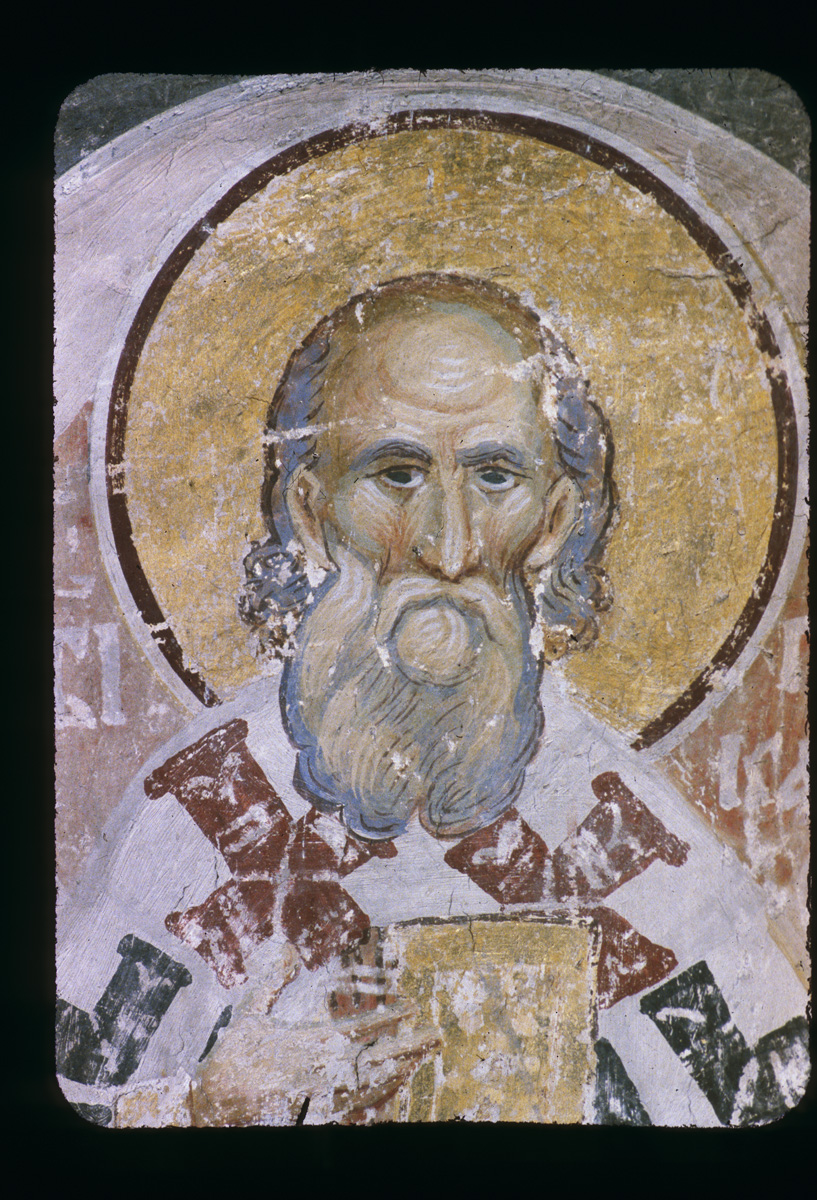
  3. In the year 367 AD, Athanasius, in his Festal Letter, provided the earliest known list of the 27 books of the New Testament as we know them.

These three basic facts will be important as we work through the issues surrounding the question of the reliability of the New Testament.

The Bible claims to have been inspired by God.

The most basic and fundamental fact is that the Bible claims divine inspiration for itself. That is, the writers of the Bible saw the Bible as having come from God, as having been inspired by God.

We find the key passage for this in 2 Timothy 3.

16 All Scripture is breathed out by God and profitable for teaching, for reproof, for correction, and for training in righteousness, 17 that the man of God may be complete, equipped for every good work.

The Greek word for “breathed out” is theopneustos. Theo = God, pneustos = breathed out. “All Scripture is theopneustos.” “All Scripture is God breathed.” Mark Strauss has offered some helpful insights on this word that provide a needed nuance to our understanding of it.

The Greek word translated “God-breathed” is theopneustos, a term possibly coined by Paul himself to express the nature of inspiration. The King James Version rendering, “inspired by God,” finds it roots in the Latin Vulgate (divinitus inspirata). Unfortunately “in-spired” might suggest that God “breathed into” Scripture its authority, while theopneustos more likely means that God “breathed out” Scripture. Inspiration does not mean divine validation of a human work, but God’s self-revelation of his own purpose and will.[1]

God, therefore, breathed out the scriptures. While it is true that “the scriptures” Paul would have been referencing in this particular verse would have been the Old Testament Scriptures (for the New Testament was obviously in the process of being written), it is clear that the New Testament writers saw their writings as being likewise scripture and therefore likewise God breathed. For instance, in 2 Peter 3, Peter referred to Paul’s writings as “scripture.”

15b just as our beloved brother Paul also wrote to you according to the wisdom given him, 16 as he does in all his letters when he speaks in them of these matters. There are some things in them that are hard to understand, which the ignorant and unstable twist to their own destruction, as they do the other Scriptures.

The Bible proclaims divine inspiration for itself. It sees itself as more than a collection of mere writings. It sees itself as God’s words to man mediated through inspired writers. For the skeptic, this will be an insufficient argument, for skeptics would simply point out that the Bible saying that the Bible is divinely inspired is a circular argument. But for the Church this is the first place to start: the Bible is God’s word.

The doctrine of inspiration, as in God’s inspiration of scripture, is closely related to a larger doctrine, the doctrine of revelation. Revelation refers to the broader idea of God’s disclosure of otherwise hidden truths. Thus, in the case of the Bible, God has revealed truth by inspiring men to write His word.

I believe the doctrine of revelation is ground zero in the battle for truth in the world today. When all is said and done, the first question that must be answered is the question that the serpent asked Eve in Genesis 3:1 in the garden of Eden: “Now the serpent was more crafty than any other beast of the field that the Lord God had made. He said to the woman, ‘Did God actually say…’” Along side the serpent’s question we should also put Pontius Pilate’s question from John 18:38, “What is truth?”

“Did God actually say?”

“What is truth?”

These two questions asked at two critical points in human history (the temptation of Eve and the crucifixion of Jesus) are still the questions being asked today. Has God actually spoken? Has God truly revealed anything about Himself? Does truth exist? How can we know it if it does? From where does truth come?

This is what is at stake in the modern world and, in truth, this is what has been at stake in every age of the world’s history: can we know the truth.

For Christians, the answer is a definitive, Yes! We know the truth because the Truth, Jesus, has come among us. “I am the way, the truth and the life” (John 14:6). Jesus is the apex, the summit of God’s revelation of Himself. But we know about Jesus through the scriptures that have been divinely inspired. Therefore, the Bible is not our object of worship. That would be idolatry. But the Bible does point toward the object of our worship, Jesus. To do so with any integrity, however, the Bible must be true and reliable and without error. And this is what the Bible is claiming for itself when it uses the word theopneustos, God breathed.

The writers of the Bible were aware of the need for accuracy and attested to the fact that they had been very careful in what they wrote.

The Bible is God’s word, but, again, it was mediated through men who were inspired by God to write the words. It is therefore profoundly significant that the writers of scripture gave testimony concerning the care they took with their writings. Consider, for instance, Luke’s preface to his book in Luke 1.

1 Inasmuch as many have undertaken to compile a narrative of the things that have been accomplished among us, 2 just as those who from the beginning were eyewitnesses and ministers of the word have delivered them to us, 3 it seemed good to me also, having followed all things closely for some time past, to write an orderly account for you, most excellent Theophilus, 4 that you may have certainty concerning the things you have been taught.

Luke acknowledges that many had written about the life of Christ and the beginnings of the Church, that these who had written had received and were now passing on the eyewitness accounts of those who saw and experienced the crucial events of the life of Christ, that he had closely studied the things that he was now writing, that he was structuring his letter in an orderly and careful way so that it would be accessible and understandable, and that the point of his gospel was that we “may have certainty concerning the things [we] have been taught.”

Certainty. This is what Luke felt the writings of the scripture could give us.

The point is that Luke makes a clear assertion of historical reliability and care with what he has written. Paul made the further point in 1 Corinthians 15 that the events described in his own teachings (and, by extension, his own writings) could be verified because many of the people who were hearing Paul were alive to witness the things about which he was teaching and writing.

3 For I delivered to you as of first importance what I also received: that Christ died for our sins in accordance with the Scriptures, 4 that he was buried, that he was raised on the third day in accordance with the Scriptures, 5 and that he appeared to Cephas, then to the twelve. 6 Then he appeared to more than five hundred brothers at one time, most of whom are still alive, though some have fallen asleep. 7 Then he appeared to James, then to all the apostles. 8 Last of all, as to one untimely born, he appeared also to me. 9 For I am the least of the apostles, unworthy to be called an apostle, because I persecuted the church of God. 10 But by the grace of God I am what I am, and his grace toward me was not in vain. On the contrary, I worked harder than any of them, though it was not I, but the grace of God that is with me. 11 Whether then it was I or they, so we preach and so you believed.

Paul therefore leaned heavily on the fact of eyewitness corroboration for his teachings. This emphasis on accuracy and reliability is telling. Paul was not trying to spin a yarn for money or fame. Rather, he was passing on a story that had been verified by many others and for which he was willing to die.

Peter made it very clear that accuracy and reliability were important to him as well. In 2 Peter 1, he wrote:

16 For we did not follow cleverly devised myths when we made known to you the power and coming of our Lord Jesus Christ, but we were eyewitnesses of his majesty.

Peter bases the accuracy of his writings on the fact that he was writing about things he had personally seen. He was an eyewitness. He was not making up a story. He was simply reporting the facts.

Church, if skeptics and critics wish to say that the biblical writers were intentionally and deliberately conspiring to mislead a gullible public, they can do so…but that is what they will, in fact, have to say. The writers of scripture were abundantly clear that they were passing on accurate and reliable information.

While the canon of the New Testament was not formally recognized until the late 4th century, the writings of the New Testament were being read and referred to by early Christian writers as early as the AD 90-110.

These writings, as we have said, were not formally codified until the 4th century. This fact has led some to the profoundly over-simplistic conclusion that there was no Bible for four hundred years. This is extremely bad thinking, however. What the Church did in the 4th century was finally and formally recognize the canon and establish the parameters of the definitive contents of the Bible, but in doing so they were not creating the Bible, they were simply and finally acknowledging what the Church had known for four hundred years already.

We know this because we have the writings of the church fathers, that is, the writings of those men who wrote immediately after the close of the canon. And guess what we find in the writings of the church fathers of the first three hundred years? A staggering number of references to the writings of the New Testament.

In his book, Is the New Testament Reliable? A Look at the Historical Evidence, Paul Barnett notes that three early Christian writers referenced the vast majority of the New Testament in their writings from 96-110 AD.

2

Clement, writing around 96 AD, references Matthew, Mark, Luke, Romans, 1 Corinthians, Ephesians, 1 Timothy, Titus, Hebrews, James, and 1 Peter.
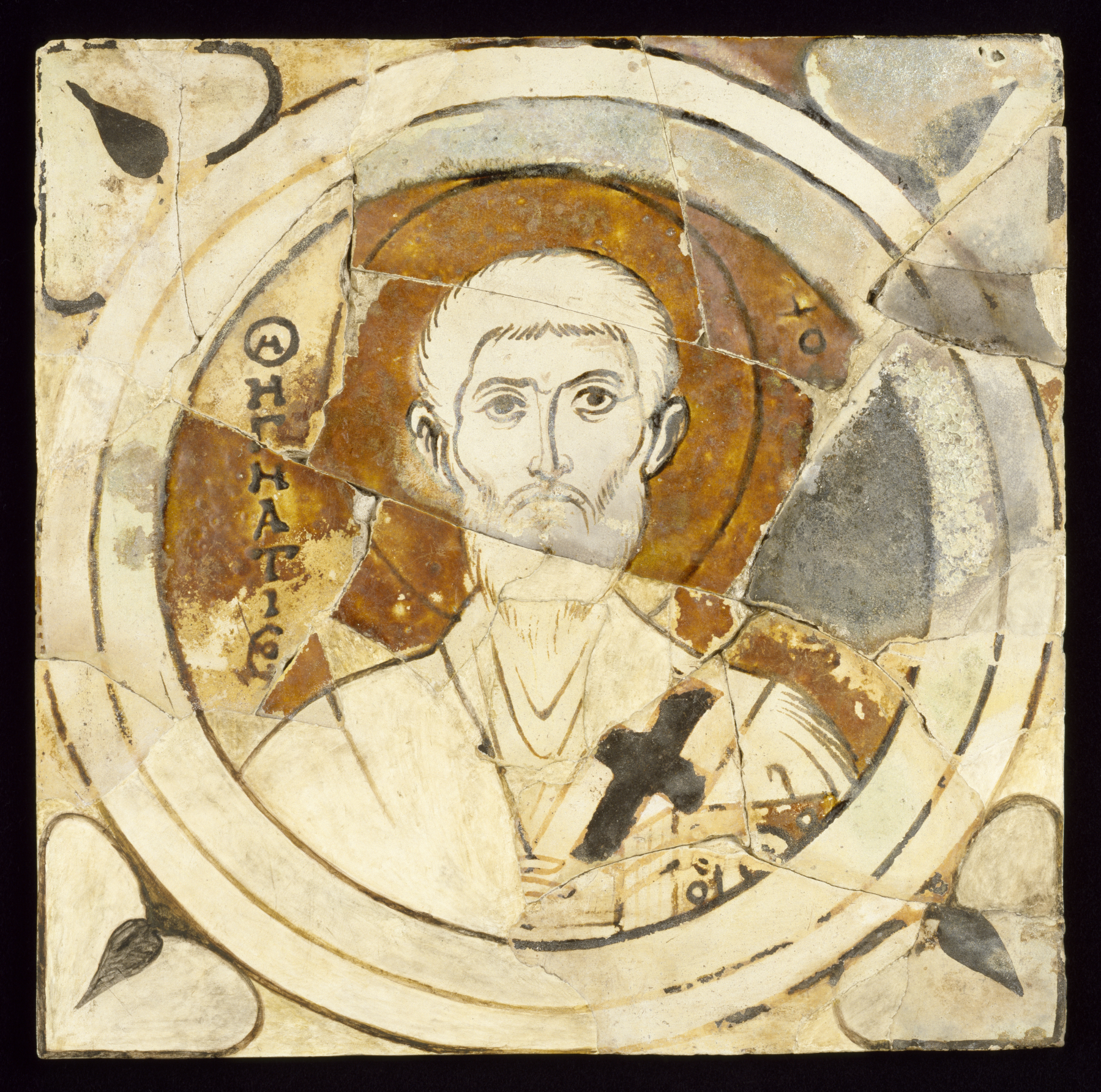
3

Ignatius, writing around 108 AD, references Matthew, Mark, Luke, John, Acts, Romans, 1 Corinthians, 2 Corinthians, Galatians, Ephesians, Philippians, Colossians, 1 Thessalonians, 1 Timothy, 2 Timothy, Titus, Philemon, Hebrews, James, 1 Peter, 2 Peter, 1 John, 3 John, and Revelation.
4

Polycarp, writing around 110 AD, references Matthew, Mark, Luke, John, Acts, Romans, 1 Corinthians, 2 Corinthians, Galatians, Ephesians, Philippians, Colossians, 2 Thessalonians, 1 Timothy, 2 Timothy, Hebrews, 1 Peter, and 1 John.

Paul Barnett concludes that “on the basis of these three early Christian authors it can be stated that twenty-five pieces of the New Testament were definitely in circulation by about the year 100.”[2] This is compelling evidence of the early writing and accessibility of the New Testament that we have today.

In addition to these, the New Testament quotations of Justin Martyr, Irenaeus, Clement of Alexandria, Origen, Tertullian, Hippolytus, Eusebius have been counted and, in all, these early writers quote from or reference or paraphrase the gospels, the book of Acts, Paul’s letters, the general epistles, and Revelation 36,289 times. This evidence led famed Princeton scholar Bruce Metzger to write, “so extensive are these citations that if all other sources for our knowledge of the text of the New Testament were destroyed, they would be sufficient alone for the reconstruction of the entire New Testament.”

Dan Wallace, perhaps the leading evangelical New Testament scholar today, observes of these patristic allusions to the New Testament:

Commentaries, homilies, and other writings by ancient church leaders known as church fathers are so plentiful that if all the Greek and versional witnesses were destroyed, the text of the New Testament could be virtually reconstructed just from the data in these patristic writings.

The quotations of the New Testament by the fathers number well over a million. The fathers write as early as the late first century, with a steady stream through the thirteenth, making their value for determining the wording of the New Testament text extraordinary.[3]

Furthermore, Josh McDowell passes on this telling story:

Sir David Dalrymple was wondering about the preponderance of Scripture in early writing when someone asked him, “Suppose that the New Testament had been destroyed, and every copy of it lost by the end of the third century, could it have been collected together again from the writings of the Fathers of the second and third centuries?” After a great deal of investigation Dalrymple concluded: “Look at those books. You remember the question about the New Testament and the Fathers? That question roused my curiosity, and as I possessed all the existing works of the Fathers of the second and third centuries, I commenced to search, and up to this time I have found the entire New Testament, except eleven verses.”[4]

Even the physical forms of the writings we have bear testimony to the early Church’s acknowledgment of and dependence upon the writings of the New Testament. Paul Barnett explains:

Justin, a leader of Christianity in Rome in the middle of the second century, refers to the memoirs composed by the [apostles], which are called gospels, are read as long as time permits…Justin describes how the church leaders read and applied the message of the Gospels to the assembled believers each Sunday in every city. This is only one of numerous examples indicating that the Christians of the second century read the New Testament, as well as the Old Testament, in their Sunday-by-Sunday church gatherings. Consistent with this is the recovery in recent years of manuscripts of the New Testament texts. Significantly these papyrus records are written on both sides indicating that they were parts of books that scholars call codices. A scroll was usually written on only one side, but the codex, which consisted of separate sheets stitched together, was really an early form of a book. It seems that the Christians of the second century moved away from using scrolls (which were cumbersome) and (perhaps) pioneered the employment of the codex for its convenience for reading and teaching in the churches. As it happens we have the four Gospels and the Acts in a single codex (P45), Paul’s letters and Hebrews in a single codex (P46), and the Revelation in a single codex (P47). It is reasonably clear that these codices had been assembled for reading in churches and for instruction based on those readings. Many scholars date these three codices approximately to the end of the second century, though it is not possible to be absolutely precise. The critical observation is that the texts of the New Testament were thoroughly established within a century or so of the end of the era of the apostles.[5]

It is a beautiful thing to behold! Very early in the Church’s history we find her doing exactly what we are doing today: gathering together in worship around the written word of God and hearing what the Spirit was saying to the Church. They did so because they believed the scriptures to be God’s word and they believed them to be accurate and reliable.

So can we, to the praise and glory of God.


[1] Hays, J. Daniel; Duvall, J. Scott (2012-04-01). How the Bible Came to Be (Ebook Shorts) (Kindle Locations 82-89). Baker Publishing Group. Kindle Edition.

[2] Paul Barnett, Is the New Testament Reliable? (Downers Grove, IL: InterVarsity Press, 1986), p.39.

[3] Hays, J. Daniel; Duvall, J. Scott (2012-04-01). How the Bible Came to Be (Ebook Shorts) (Kindle Locations 535-539). Baker Publishing Group. Kindle Edition.

[4] Josh McDowell, The New Evidence That Demands a Verdict. (Nashville, TN: Thomas Nelson Publishers, 1999), p.43.

[5] (2013-07-01). In Defense of the Bible: A Comprehensive Apologetic for the Authority of Scripture (Kindle Locations 4827-4840). B&H Publishing Group. Kindle Edition.
“Charleston church victims’ families forgive suspect in court”

That’s the headline of this article.  It is worth reading and the videos embedded therein are worth viewing.

I am preaching a sermon series on apologetics right now…but this article provides more evidence for the truth of the gospel of Christ and what Jesus can do with a human heart than anything I could or will say.

Love and forgiveness are and will always be the greatest apologetic.

Pray for the suffering believers in Charleston.

Apologia: A Sermon Series In Defense of the Faith, Part I – “Does God Exist?”

apologiaToday we are beginning a series called “Apologia: A Defense of the Faith.” This series is going to seek to offer a defense of the Christian faith against common objections leveled against it. It is possible that many of you have never heard a series quite like this in church and that some of you will not even like this series. Some of you may even consider it inappropriate. If that is the case, I will only suggest to you that you possibly have not appreciated the extent to which modernity and radical secularism has advanced in the modern world. It is possible that there may even be a bit of a generational divide concerning who will appreciate this and who will not, though I could be wrong on this. What I mean is, some of you who are older will remember a time when much of what I am going to say today was simply assumed, even by many outside the church, so you may feel that apologetic sermons are unnecessary. However, for many younger people, they are growing up in a world in which the things I am about to say are not assumed. Thus, it is becoming increasingly clear that the Church, and, in particular, pastors, must reclaim an apologetic voice.

All of that being said, I suspect that the majority of you of whatever age will see the need for the church today to address the challenges that are facing us in an increasingly secularized age. Among the many aspects of our heritage that we must reclaim, the apologetic task looms possibly largest of all. Apologia is a Greek word that means “defense.” Apologetics refers to the discipline of defending the faith with evidences.

We will begin with the most fundamental challenge facing the church today: the challenge of atheism. Atheism, or a-theism, is the belief that there is no God. It is distinguished from agnosticism, a position of uncertainty on the question of whether or not God exists. Both atheism and agnosticism are distinguished from theism, the belief that God exists. All Christians are theists though no all theists are Christians. Theism, again, is simply the belief that there is a God, and adherents to many different religions embrace this belief.

We, of course, are Christian theists. We believe there is a God and that He has revealed Himself definitively in Jesus Christ. It is out of this fundamental conviction that we will begin the apologetic task.

Before we begin discussing the existence of God, I would like to explore the notion of proof as that word is used, for instance, in the question, “Can you prove that God exists?” If we mean by that word the kind of proof I can offer that this stage on which I am standing exists, then no, for God is not a tangible thing I can pick up, hold in one hand, and point to with another. “God is a Spirit: and they that worship him must worship him in spirit and in truth.” (John 4:24). So of course we cannot prove God’s existence in that sense.

But, of course, that is not saying very much because the fact of the matter is that we cannot prove in that sense any of the greatest things in life, the things we hold most dear. For instance, can you prove that your spouse loves you? Many of you would say yes, but I would counter that you cannot prove that in the way I can prove this stage exists. I can touch this stage and you can see it. It is empirically verifiable. Love is not. In that sense, you cannot prove your husband loves you or that your children love you or that what you and a close friend actually have is friendship. You cannot prove, in that sense, loyalty, devotion, genuine concern, compassion, empathy, etc. That is to say, love and devotion and loyalty and compassion are not material objects that can be held, touched, and examined. You cannot pick up a substance called “love” and point to it.

But does a lack of empirically verifiable proof mean you cannot know something? Of course not. The truth is, you can know that your spouse loves you, that your children love you, that what you and another have is friendship, etc. And how can you know these things? You can know them because of a long trail of evidences, deductions based on those evidences, and intuitions formed by experience. A great deal of our lives is built upon just this kind of evidence-based knowledge of things.

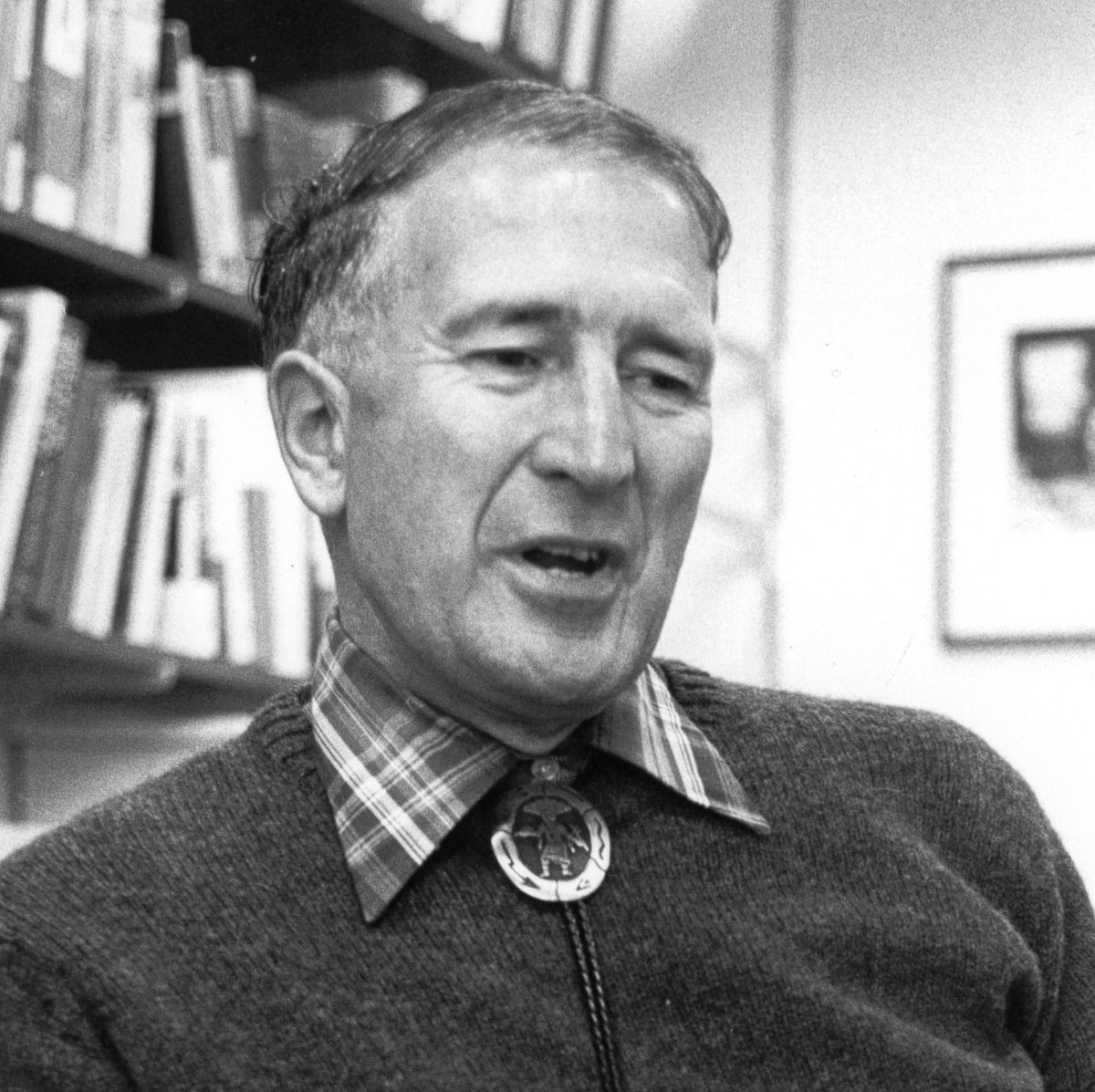
Let me introduce you to Dr. Antony Flew.

1

He was born in 1923 and passed away in 2010. Flew was a prolific scholar and for decades was one of the most famous atheists in the world. He wrote such influential atheist works as God and Philosophy, Darwinian Evolution, The Presumption of Atheism, and God: A Critical Inquiry. In 2004, Flew shocked the world by announcing that he had rejected his atheism and now believed in the existence of God. He did not convert to Christianity, but merely to theism. But why did he did so? Because, he said, he had to follow Socrates’ dictum that we should follow the evidence wherever it leads.[1] Thus, Flew argued that it was the evidence that drove him to the inescapable conclusion that God exists.

In Psalm 14:1, the psalmist famously wrote, “The fool says in his heart, ‘There is no God.’” That is a powerful way of speaking to the inescapability of the conclusion that there is a God. But what are the evidences for God, for, after all, many people do indeed say, “There is no God.”

Logical Evidence

There are many logical deductions that point to a Creator outside of the natural order. Thomas Aquinas, the 13th century theologian, philosopher, and churchman, offered his famous five proofs for the existence of God in his Summa Theologica.

The argument from motion

The first is the argument from motion. In this argument, Aquinas noted that things in the world are in motion. Whatever is in motion has been put in motion by something else. But taken back far enough, this means there must be something that put everything else in motion that is not itself put in motion.

Therefore, whatever is in motion must be put in motion by another. If that by which it is put in motion be itself put in motion, then this also must needs be put in motion by another, and that by another again. But this cannot go on to infinity, because then there would be no first mover, and, consequently, no other mover; seeing that subsequent movers move only inasmuch as they are put in motion by the first mover; as the staff moves only because it is put in motion by the hand. Therefore it is necessary to arrive at a first mover, put in motion by no other; and this everyone understands to be God.

Thus, Aquinas argued against an infinite regress, the idea that in infinity past there is nothing but a series of things being put into motion by other things. Behind it all, he argued, is God, the unmoved mover.

The argument from causation

In this argument, Aquinas applied the same logic to cause and effect, noting that every effect in the world must have a cause preceding it. Furthermore, Aquinas argued that when you look at the world you see (1) a first cause, (2) an intermediate cause, and (3) a final cause. In the universe, Aquinas argued, there must be a first cause, an uncaused cause, else there will be no intermediate or final cause.

The second way is from the nature of the efficient cause. In the world of sense we find there is an order of efficient causes. There is no case known (neither is it, indeed, possible) in which a thing is found to be the efficient cause of itself; for so it would be prior to itself, which is impossible. Now in efficient causes it is not possible to go on to infinity, because in all efficient causes following in order, the first is the cause of the intermediate cause, and the intermediate is the cause of the ultimate cause, whether the intermediate cause be several, or only one. Now to take away the cause is to take away the effect. Therefore, if there be no first cause among efficient causes, there will be no ultimate, nor any intermediate cause. But if in efficient causes it is possible to go on to infinity, there will be no first efficient cause, neither will there be an ultimate effect, nor any intermediate efficient causes; all of which is plainly false. Therefore it is necessary to admit a first efficient cause, to which everyone gives the name of God.

Thus, God is the uncaused cause.

The argument from contingency

Next, Aquinas drew the distinction between possible things and necessary things. Possible things are things that could possibly not have existed. Necessary things are things that exist by necessity and could not possibly have not existed. Possible things once did not exist or else they would be necessary things.

But every necessary thing either has its necessity caused by another, or not. Now it is impossible to go on to infinity in necessary things which have their necessity caused by another, as has been already proved in regard to efficient causes. Therefore we cannot but postulate the existence of some being having of itself its own necessity, and not receiving it from another, but rather causing in others their necessity. This all men speak of as God.

Thus, the chain of caused necessities must have an uncaused necessity at its origin. God is the uncaused necessity.

The argument from the maximum

The fourth argument calls for a recognition of a definitive standard by which everything else is judged to be either more or less. In other words, we cannot speak of gradation or more or less unless there is a definitive standard by which these things are judged rendering them more or less. The implications of this in terms of moral goodness are inescapable.

Among beings there are some more and some less good, true, noble and the like. But “more” and “less” are predicated of different things, according as they resemble in their different ways something which is the maximum, as a thing is said to be hotter according as it more nearly resembles that which is hottest; so that there is something which is truest, something best, something noblest and, consequently, something which is uttermost being; for those things that are greatest in truth are greatest in being, as it is written in Metaph. Now the maximum in any genus is the cause of all in that genus; as fire, which is the maximum heat, is the cause of all hot things. Therefore there must also be something which is to all beings the cause of their being, goodness, and every other perfection; and this we call God.

God, then, is the ultimate good above which there is no other good and by which all lesser goods are judged.

The argument from design

Finally, Aquinas argued that the world bears the mark of having been designed for specific purposes.

The fifth way is taken from the governance of the world. We see that things which lack intelligence, such as natural bodies, act for an end, and this is evident from their acting always, or nearly always, in the same way, so as to obtain the best result. Hence it is plain that not fortuitously, but designedly, do they achieve their end. Now whatever lacks intelligence cannot move towards an end, unless it be directed by some being endowed with knowledge and intelligence; as the arrow is shot to its mark by the archer. Therefore some intelligent being exists by whom all natural things are directed to their end; and this being we call God.[2]

Thus, God is the intelligent director.

All of these arguments have, of course, been critiqued through the ages. Even so, there is a simple logic here that is more than worthy of consideration.

Experiential Evidence

But there are other types of evidence. These are not without logic, of course, but they are not based on such tight deductions as are Aquinas’ arguments. For instance, consider what it means that belief in God is part of the experience of the vast majority of the world’s population. There is a deep and nearly universal sense throughout the world that there is a God. For instance, in late 2012, the Pew Research Center released its findings on “The Global Religious Landscape.”

Worldwide, more than eight-in-ten people identify with a religious group. A comprehensive demographic study of more than 230 countries and territories conducted by the Pew Research Center’s Forum on Religion & Public Life estimates that there are 5.8 billion religiously affiliated adults and children around the globe, representing 84% of the 2010 world population of 6.9 billion.[3]

Most telling, this belief in the existence of God or a higher power or powers is evident even among many who profess not to believe in Him. A 2013 Washington Post article entitled “Some nonbelievers still find solace in prayer” offers a fascinating look at spiritually among self-described atheists. They focus on a self-described atheist named Sigried Gold.

3

Each morning and night, Sigfried Gold drops to his knees on the beige carpeting of his bedroom, lowers his forehead to the floor and prays to God.

In a sense.

An atheist, Gold took up prayer out of desperation. Overweight by 110 pounds and depressed, the 45-year-old software designer saw himself drifting from his wife and young son. He joined a 12-step program for food addiction that required — as many 12-step programs do — a recognition of God and prayer.

Four years later, Gold is trim, far happier in his relationships and free of a lifelong ennui. He credits a rigorous prayer routine — morning, night and before each meal — to a very vivid goddess he created with a name, a detailed appearance and a key feature for an atheist: She doesn’t exist.

While Gold doesn’t believe there is some supernatural being out there attending to his prayers, he calls his creation “God” and describes himself as having had a “conversion” that can be characterized only as a “miracle.” His life has been mysteriously transformed, he says, by the power of asking.

“If you say, ‘I ought to have more serenity about the things I can’t change,’ versus ‘Grant me serenity,’ there is a humility, a surrender, an openness. If you say, ‘grant me,’ you’re saying you can’t do it by yourself. Or you wouldn’t be there,” said Gold, who lives in Takoma Park.

While Gold’s enthusiasm for spiritual texts and kneeling to a “God” may make him unusual among atheists, his hunger for a transcendent experience with forces he can’t always explain turns out to be more common.

New research on atheists by the Pew Research Center shows a range of beliefs. Eighteen percent of atheists say religion has some importance in their life, 26 percent say they are spiritual or religious and 14 percent believe in “God or a universal spirit.” Of all Americans who say they don’t believe in God — not all call themselves “atheists” — 12 percent say they pray.[4]

As I said, this is utterly fascinating and is, I believe, a microcosmic look at a universal truth: that everybody, deep down, believes there is a power above us, even if they tell themselves they do not believe this. Experientially, we feel this, we know this, and it is so regardless of our professed creeds to the contrary. Is this conclusive evidence? No. Truth is not defined by the majority and the mere fact that many people believe that God exists, including many atheists, does not make it so. Even so, the worldwide religious impulse of man is striking and significant.

Paul, in Romans 1, wrote that everybody knows there is a God, that the evidence of God is so plain that all of humanity is accountable before Him.

19 For what can be known about God is plain to them, because God has shown it to them. 20 For his invisible attributes, namely, his eternal power and divine nature, have been clearly perceived, ever since the creation of the world, in the things that have been made. So they are without excuse.

God and His character are “plain,” Paul writes. It is plain “because God has shown it to them.” Thus, it is not surprising that an atheist would daily pray to a higher power he claims not to believe in while crediting this non-existent higher power with freeing him from the powers of addiction. Neither is it surprising that “eighteen percent of atheists say religion has some importance in their life, 26 percent say they are spiritual or religious and 14 percent believe in ‘God or a universal spirit.’”

Man is a religious being, and he is so for a reason: he knows that there is a God.

Moral Evidence

One of the most powerful evidences for the existence of God emanates from our own sense of morality. We all know that we are morally accountable. This sense of moral accountability can only make ultimate sense if there is a Lawgiver outside of the natural order to Whom we will one day give an account. Furthermore, naturalism, the belief that the created order is all there is, and evolutionary atheism simply do not have the categories to make sense of the moral accountability we all feel.

Simply put, humanity may tell itself that we are merely animals, but no man or woman can truly live consistently with this audacious statement. Where this is most evident is in our innate sense of ultimate moral accountability, the sense that we will one day give an account for our actions and that the concepts of “right” and “wrong” are not mere social constructs.

This, of course, is the only option left to us if there is no God: right and wrong are defined by society that consists of soulless animals but rise no higher than that. But this idea raises all kinds of problems. For one thing, we intuitively know that there is a difference between what human beings do to each other and what animals do to each other. Many of you will be aware of the fact that a little over a week ago, a woman was killed on a wildlife preserve in Africa. She had her window down and a lion lunged at her, biting and killing her. I saw this reported on numerous news venues. It was indeed a tragedy! But that lion undoubtedly kills animals all the time and it is never reported. No matter what might say about human beings simply being advanced animals, we know that is not so. There is something very different and that difference goes beyond mankind being advanced.

Furthermore, if morality is determined by society and rises no higher than that, then that means there are no objective, ultimate standards for morality. In other words, we may say that what Hitler did was wrong, but all we can really mean by that is that we as a people disagree with what Hitler and his minions did. But we cannot say that Hitler has violated an objective standard, a standard that is outside and above all of humanity. I would propose to you that we know better than this, though. We know that genocide, for instance, is the violation of something sacred and transcendent, a standard that is binding for all people everywhere, a standard that is right whether human society recognizes it to be so or not.

In a debate between Christian philosopher William Lane Craig and popular atheist Sam Harris at Notre Dame on the topic, “Is the foundation of morality natural or supernatural?” Dr. Craig concluded his presentation by quoting an article in the Duke Law Journal by Arthur Leff of the Yale Law School entitled “Unspeakable Ethics, Unnatural Law.” In it, Leff was trying to answer how we can arrive at any ultimate standard for law and morality without God. Leff was either an atheist or an agnostic, he did not believe that God existed.

In the article, he rightly noted that the idea of a transcendent, objective, ultimate standard for right and wrong demands God. Furthermore, Leff argued that if there is no God that means that right and wrong and the law emanate from within us.

We are never going to get anywhere (assuming for the moment that there is somewhere to get) in ethical or legal theory unless we finally face the fact that, in the Psalmist’s words, there is no one like unto the Lord. If He does not exist, there is no metaphoric equivalent. No person, no combination of people, no document however hallowed by time, no process, no premise, nothing is equivalent to an actual God in this central function as the unexaminable examiner of good and evil. The so-called death of God turns out not to have been just His funeral; it also seems to have effected the total elimination of any coherent, or even more-than-momentarily convincing, ethical or legal system dependent upon finally authoritative extrasystemic premises…Put briefly, if the law is “not a brooding omnipresence in the sky,” then it can be only one place: in us. If we are trying to find a substitute final evaluator, it must be one of us, some of us, all of us-but it cannot be anything else. The result of that realization is what might be called an exhilarated vertigo, a simultaneous combination of an exultant “We’re free of God” and a despairing “Oh God, we’re free.”

He went on to say that if the law emanates from within man, that means there is no ultimate rationale or reason why one claim to right and wrong is superior to a competing claim to right and wrong.

At that point, you see, we are really forced to see ourselves as lawmakers rather than law finders, and we are immediately led into a regress that is, fatally, not infinite. We can say that a valid legal system must have some minimum process for rational determination and operation. We can say that the majority cannot consistently disadvantage any minority. We can say that, whatever else a majority can do, it cannot systematically prevent a minority from seeking to become a majority. We can say all sorts of things, but what we cannot say is why one say is better than any other, unless we state some standard by which it definedly is. To put it as bluntly as possible, if we go to find what law ought to govern us, and if what we find is not an authoritative Holy Writ but just ourselves, just people, making that law, how can we be governed by what we have found?

Leff’s conclusion is as telling as it is sad.

All I can say is this: it looks as if we are all we have. Given what we know about ourselves and each other, this is an extraordinarily unappetizing prospect; looking around the world, it appears that if all men are brothers, the ruling model is Cain and Abel. Neither reason, nor love, nor even terror, seems to have worked to make us “good,” and worse than that, there is no reason why anything should. Only if ethics were something unspeakable by us, could law be unnatural, and therefore unchallengeable. As things now stand, everything is up for grabs.

Nevertheless:
Napalming babies is bad.

Starving the poor is wicked.
Buying and selling each other is depraved.
Those who stood up to and died resisting Hitler, Stalin, Amin, and

Pol Pot-and General Custer too-have earned salvation. Those who acquiesced deserve to be damned.
There is in the world such a thing as evil.
[All together now:] Sez who?

God help us.[5]

One feels the tension in Leff’s position. Having concluded that we cannot definitively pronounce something as objectively and ultimately wrong, he then attempts to say that some things are. But why? Why?

Fortunately, most people, even those who claim that there is no definitive, ultimate right and wrong, live as if there is. Paul acknowledged that this was the case, and wrote in Romans 2 that when the world demonstrates an innate knowledge of right and wrong, it inadvertently bear witness to the existence of God.

14 For when Gentiles, who do not have the law, by nature do what the law requires, they are a law to themselves, even though they do not have the law. 15 They show that the work of the law is written on their hearts, while their conscience also bears witness, and their conflicting thoughts accuse or even excuse them 16 on that day when, according to my gospel, God judges the secrets of men by Christ Jesus.

We know there is a law and there is a Lawgiver. Our very hearts give testimony to this all the time. We know this law is written into the very fabric of the universe and that it does not emanate from the collective subjective opinions of man.

The Evidence of Jesus

Above all of these evidences, however, is the evidence of Jesus Himself. Simply put, Jesus believed that God existed, that God had sent Him into the world, and that He was God. Consider the words of Jesus from John 14.

8 Philip said to him, “Lord, show us the Father, and it is enough for us.” 9 Jesus said to him, “Have I been with you so long, and you still do not know me, Philip? Whoever has seen me has seen the Father. How can you say, ‘Show us the Father’? 10 Do you not believe that I am in the Father and the Father is in me? The words that I say to you I do not speak on my own authority, but the Father who dwells in me does his works. 11 Believe me that I am in the Father and the Father is in me, or else believe on account of the works themselves.

Jesus was driven by this fundamental conviction: God exists, God loves us, God is the righteous Judge of the universe, and we should be in relationship with Him. Furthermore, Jesus said that He was God come among us, that He was the way to the Father, and that He had the power to forgive sins. You must understand that if atheism is true, Jesus was utterly mistaken and absolutely deluded.

Let me ask those of you who have trusted in Christ, who are walking with Christ a question: in your experience with Jesus, have you found Him to be deluded, deranged, and deceitful? For make no mistake: if atheism is true then Jesus is precisely these things.

Church, Jesus believed in God. Jesus is God. It is a profoundly serious thing to say that the convictions of Jesus Christ were the ravings of an unstable man.

As Christians, we call all men to come to the Father through the Son. God exists. God loves you. God has provided a way for you to come home. That way is Jesus. God is perfectly holy and just. We will all one day stand before Him and give an account. The whole point of the gospel of Jesus Christ is that we can be covered by the blood of Christ and made clean and whole, that we can be forgiven.

L. Mencken famously said of his atheism, “If I am wrong, I will square myself when confronted in afterlife by the apostles with the simple apology, ‘Gentlemen, I was wrong.’”[6]

That is a charming thought, but what of the consequences of rejecting God in this life? What of the consequences of rejecting the Lord Jesus?

“[I]t is appointed for man to die once, and after that comes judgment” (Hebrews 9:27).

There will be no time for gentlemanly apologies after we die. Now is the day of salvation. Come to Jesus, God with us, and be saved.


[1] John D. Wilsey, “The ‘Tergiversation’ of Antony Flew: A Review and Assessment of There is a God.” Southwestern Journal of Theology. Vol. 54, Number 1 (Fall 2011), p.45-54.

[2] Aquinas, Thomas (2013-07-10). Summa Theologica (All Complete & Unabridged 3 Parts + Supplement & Appendix + interactive links and annotations) (Kindle Locations 748-783). e-artnow. Kindle Edition.

[3] https://www.pewforum.org/2012/12/18/global-religious-landscape-exec/

[4] https://www.washingtonpost.com/local/non-believers-say-their-prayers-to-no-one/2013/06/24/b7c8cf50-d915-11e2-a9f2-42ee3912ae0e_story.html

[5] https://digitalcommons.law.yale.edu/cgi/viewcontent.cgi?article=3810&context=fss_papers

[6] Quoted in Losing Mum and Pup: A Memoir (Christopher Buckley) – Highlight Loc. 2735-37

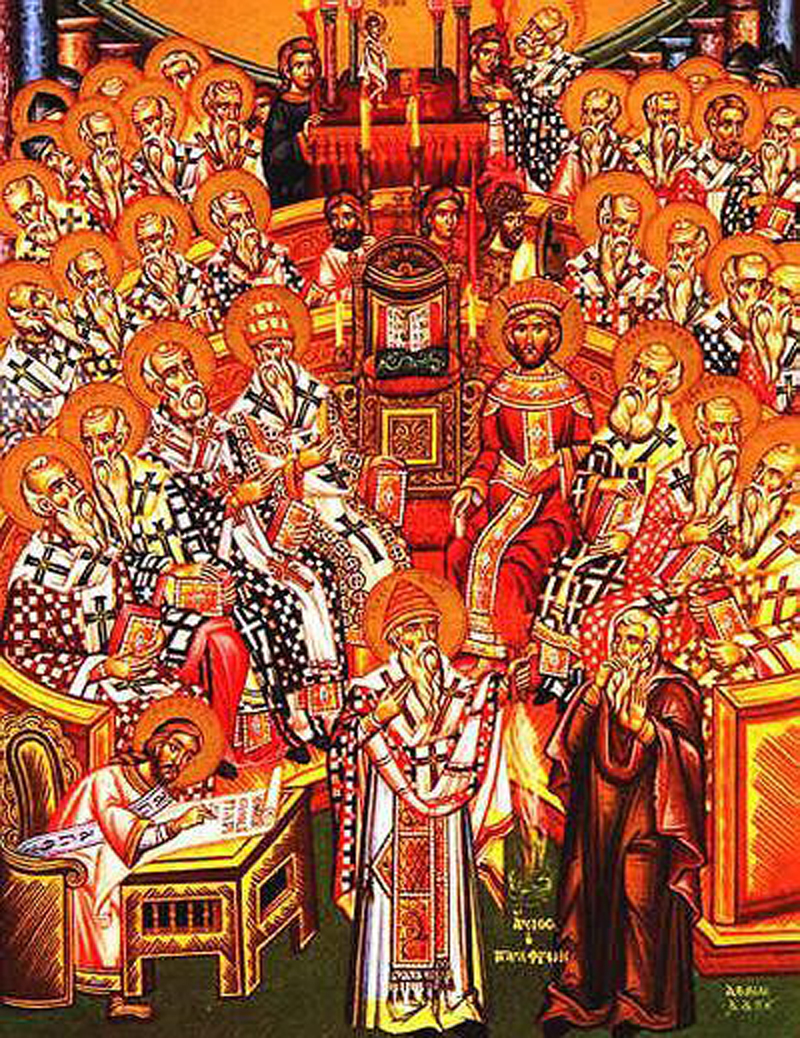
The Council of Nicaea, 325 AD (Patristic Summaries Series)

THE_FIRST_COUNCIL_OF_NICEAThe next number of posts in the Patristic Summaries Series will concern what is known as “The Seven Ecumenical Councils” of the Church.  In writing these posts, I am consulting (a) historical insights from Leo Donald Davis’ The First Seven Ecumenical Councils: Their History and Theology and Peter L’Huillier’s The Church of the Ancient Councils: The Disciplinary Work of the First Four Ecumenical Councils and (b) the primary sources surrounding each council (to the extent that we have them) in volume 14 of the post-nicene writings of Philip Schaff and Henry Wace’s (editors) 38 volume Nicene and Post Nicene Fathers (Second Series).

The Emperor Constantine convened the first great ecumenical council in 325 AD primarily to address the Arian attack on the full deity of Christ, though the council addressed many other issues as well.  The most significant contribution of the council was, of course, the Nicene Creed.

I believe in one God,
the Father Almighty,
maker of heaven and earth,
and of all things visible and invisible;

And in one Lord Jesus Christ,
the only begotten Son of God,
begotten of his Father before all worlds,
God of God, Light of Light,
very God of very God,
begotten, not made,
being of one substance with the Father;
by whom all things were made;
who for us men and for our salvation
came down from heaven,
and was incarnate by the Holy Ghost
of the Virgin Mary,
and was made man;
and was crucified also for us under Pontius Pilate;
he suffered and was buried;
and the third day he rose again
according to the Scriptures,
and ascended into heaven,
and sitteth on the right hand of the Father;
and he shall come again, with glory,
to judge both the quick and the dead;
whose kingdom shall have no end.

And I believe in the Holy Ghost the Lord, and Giver of Life,
who proceedeth from the Father [and the Son];
who with the Father and the Son together
is worshipped and glorified;
who spake by the Prophets.
And I believe one holy Catholic and Apostolic Church;
I acknowledge one baptism for the remission of sins;
and I look for the resurrection of the dead,
and the life of the world to come. AMEN.

Along with The Apostles’ Creed, The Nicene Creed is acknowledged to be one of the most substantive, concise, beautiful, and theologically rich statements on the essence of Chrisitianity ever written.  The creed was adopted with very little opposition and it should be rightly hailed as the seminal achievement of the Council of Nicaea.

Baptists are traditionally considered to be anti-creedal.  This is an oversimplification to be sure.  While Baptists unapologetically hold to the Reformation maxim sola scripture, we really mean by it suprema scripture.  That is, Baptists have never held that all creedal statements are utterly useless and wholly flawed.  On the contrary, Baptists have simply asserted that the witness of Scripture outweighs all other statements of man, no matter how revered, and should be granted preeminence and supremacy.  In point of fact, the 38th article of the 1679 General Baptist “Orthodox Creed” commends the Apostles’, Nicene, and Athanasian creeds to all Baptists as valuable and worthy of study and consideration.

The subtle but profound debates surrounding the terminology of the creed, particularly pertaining to Christology, are important but go far beyond the nature of these patristic summaries.  Suffice it to say, the language of the creed is in no way accidental.  Rather, it communicates biblical orthodoxy as agreed upon by conciliar consensus and establishes an orthodox line of demarcation against all inferior Christological assertions.

In addition to the creed, the Council of Nicaea approved a number of canons addressing various and sundry realities facing the church at that time.  For instance, the canons forbade those who mutilated themselves from holding ecclesial office, addressed the question of how the church should receive back repentant schismatic bishops, condemned usury, forbade the clergy from taking women disciples into their homes, addressed the issue of deaconesses, etc.  These canons are fascinating and insightful, and are still essentially binding to large segments of Christianity today.

The Council of Nicaea has been the subject of a great deal of misunderstanding.  On the popular level this is undoubtedly due to Dan Brown’s Da Vinci Code nonsense.  Wherever these misunderstands originate, it is almost a given today among those who have never studied what happened at Nicaea that the council was convened by a sinister Emperor who arbitrarily and almost single-handedly defined orthodoxy over against earlier and more appealing orthodoxies within early Christianity, that he used a structure of power to establish further structures of power in order to subjugate the people to oppressive systems of belief he himself proclaimed true and binding, and that Constantine chose at the Council which books would be included in the canon of scripture editing out those texts that challenged the increasingly narrow orthodoxy of institutional Christianity.  This last allegation is simply inexplicable since the Council said nothing about the canon of scripture in terms of what books should be included therein.  These readings of the Council are borne from ignorance at best and a modernistic agenda at worst.

That is not to say that the Council was perfect or infallible or devoid of politics or anything of the sort.  I am no apologist for any pronouncements of any gathering of Christians, no matter how august that gather might be.  Rather, it is simply to say that the Council articulated a vision of orthodoxy that has struck the vast majority of the Church as biblical and God-honoring and true for the vast majority of her history.  Baptist Christians should study the results of Nicaea with great appreciation and interest.  They will, however, along with many other believers, judge the fruits of even this amazing assembly by holy writ.

Ruth 4:13-22

solomon_obedRuth 4:13-22

13 So Boaz took Ruth, and she became his wife. And he went in to her, and the Lord gave her conception, and she bore a son. 14 Then the women said to Naomi, “Blessed be the Lord, who has not left you this day without a redeemer, and may his name be renowned in Israel! 15 He shall be to you a restorer of life and a nourisher of your old age, for your daughter-in-law who loves you, who is more to you than seven sons, has given birth to him.” 16 Then Naomi took the child and laid him on her lap and became his nurse. 17 And the women of the neighborhood gave him a name, saying, “A son has been born to Naomi.” They named him Obed. He was the father of Jesse, the father of David. 18 Now these are the generations of Perez: Perez fathered Hezron, 19 Hezron fathered Ram, Ram fathered Amminadab, 20 Amminadab fathered Nahshon, Nahshon fathered Salmon, 21 Salmon fathered Boaz, Boaz fathered Obed, 22 Obed fathered Jesse, and Jesse fathered David.

In 1962, Roald Dahl, the beloved author of works like Charlie and the Chocolate Factory, Matilda, and James and the Giant Peach, published a short story entitled “Genesis and Catastrophe: A True Story.” The story begins with the delivery of a baby boy in an inn some years ago. The doctor seeks to comfort the wife with the news that she has had a boy and that the baby is perfectly healthy. The mother, however, is worried, for, as she explains to the doctor, she had lost three children already and was fearful she would lose this one as well. The doctor assured her that such a thing would not happen in this case, that the baby was perfectly healthy if somewhat small. After some moments, Dahl describes the husband coming into the inn where his wife has just delivered.

Slowly, the mother turned her head and looked at the small, incredibly serene face that lay on the pillow beside her.

“Is this my baby?”

“Of course.”

“Oh…, oh…but he is beautiful.”

The doctor turned away and went over to the table and began putting his things into his bag. The mother lay on the bed gazing at the child and smiling and touching him and making little noises of pleasure. “Hello, Adolfus,” she whispered. “Hello, my little Adolf.”

“Ssshh!” said the innkeeper’s wife. “Listen! I think your husband is coming.”

The doctor walked over to the door and opened it and looked out into the                    corridor.

“Herr Hitler?”

“Yes.”

“Come in, please.”

A small man in a dark-green uniform stepped softly into the room and looked

around him.

“Congratulations,” the doctor said. “You have a son.”

The story ends with the woman repeating her deep desire for her newborn son to live after her rather callous husband expressed real pessimism about that prospect.

The doctor walked over to the husband and put a hand on his shoulder. “Be good to her,” he whispered. “Please. It is very important.” Then he squeezed the husband’s shoulder hard and began pushing him forward surreptitiously to the edge of the bed. The husband hesitated. The doctor squeezed harder, signaling to him urgently through fingers and thumb. At last, reluctantly, the husband bent down and kissed his wife lightly on the cheek.

“All right, Klara,” he said. “Now stop crying.”

“I have prayed so hard that he will live, Alois.”

“Yes.”

“Every day for months I have gone to the church and begged on my knees that

this one will be allowed to live.”

“Yes, Klara, I know.”

“Three dead children is all that I can stand, don’t you realize that?”

“Of course.”

“He must live, Alois. He must, he must. . . Oh God, be merciful unto him now…”

And thus the story ends. It is a jarring story. It is jarring, I think, because it ends with the birth of a baby that we the readers know will go on to become one of the most evil men in human history. It ends with a note of dread, bad news for mankind, and despair, to such an extend that the reader is forced to contemplate how much agony might have been spared the world had the baby Adolf Hitler not survived. That is the genius and troubling nature of this memorable little story.

What strikes me about Dahl’s story is that is takes the reader on the exact opposite emotional journey than the book of Ruth does. Dahl’s story begins with good news then ends with very bad news surrounding a baby who has been born. The book of Ruth begins with bad news and ends with good news surrounding a baby who has been born. Mark Dever says of Ruth, “The book starts very down, and ends very up.”[1] Dahl’s story descends into despair. The book of Ruth consistently ascends into joy. The stories have certain surface similarities, but the ultimate contrasts could not possibly be starker.

We now reach the apex of joy in the book of Ruth, the triumphal of glorious conclusion toward which we have been climbing all along. Ruth’s transformation is now complete: she has become Boaz’s wife and now bears him a son. “In ‘becoming [Boaz’s] wife,’” writes Daniel Block, “Ruth’s social progression is completed. She had graduated from the status of nokriyya, ‘foreigner’ (2:10), to sipha, ‘lowest servant’ (2:13), to ‘ama, ‘maidservant’ (3:9), and now to ‘issa, ‘wife.’”[2] Naomi’s transformation is now complete: she has passed from bitterness to great joy. Even Boaz has had a kind of transformation: he has passed from being an older man struck by the beauty and character of mysterious Ruth to now being Ruth’s redeemer and husband.

There are many transformations in this book, and all of them are related in some way to this birth of this child here in text.

A child is born who brings hope to a people in need.

The little boy who is born at the end of Ruth is a child who brings hope to a people in need. The description of Ruth’s entry into the world is told quickly, but these few verses are rich with meaning.

13 So Boaz took Ruth, and she became his wife. And he went in to her, and the Lord gave her conception, and she bore a son. 14 Then the women said to Naomi, “Blessed be the Lord, who has not left you this day without a redeemer, and may his name be renowned in Israel! 15 He shall be to you a restorer of life and a nourisher of your old age, for your daughter-in-law who loves you, who is more to you than seven sons, has given birth to him.” 16 Then Naomi took the child and laid him on her lap and became his nurse.

There are numerous clues in our text to suggest that this baby was special and that he would play a part in God’s great plan of redemption. Consider:

  • He was a baby who was a gift from God. (“the Lord gave her conception, and she bore a son”)

While Ruth is never called “barren” in the book of Ruth[3], we do note in chapter 1 that after many years of marriage she did not have any children.

3 But Elimelech, the husband of Naomi, died, and she was left with her two sons. 4 These took Moabite wives; the name of the one was Orpah and the name of the other Ruth. They lived there about ten years, 5 and both Mahlon and Chilion died, so that the woman was left without her two sons and her husband.

At that time this likely would have been marked by the public as a less than positive sign. After years of marriage to Mahlon, Ruth did not have a child, but in quick succession she married and bore a son to Boaz. We also note the author’s language, “the Lord gave her conception.”

Why she did not have a child with Mahlon is really not the point. The point is the contrast in the two unions: Mahlon and Ruth produce no children after many years. Boaz and Ruth produce a son quickly. Thus, again, regardless of the question of barrenness, Ruth takes her place along the other Old Testament matriarchs who initially were unable to have children but who then were blessed by God to do so: Sarah (Genesis 11:30), Rebekah (Genesis 25:21), Rachel (Genesis 29:30), Hannah (1 Samuel 1:2), and Samson’s mother (Judges 13:2).

  • He was a baby who would provide for Naomi. (“Blessed be the Lord, who has not left you this day without a redeemer.”)

This baby, then, was the tangible evidence that God had not abandoned Naomi. This baby was the reason why Naomi could now pass from despair to joy!

  • He was a baby who would be significant for the future of Israel. (“and may his name be renowned in Israel”)

Furthermore, this child was to have national significance. His importance transcended the merely local. Perhaps the women meant this as merely a blessing, the kind of thing they might say over any child. Even so, their words meant more than they likely realized. This child would indeed go on to have national significance.

  • He was a baby who would bring restoration and nourishment. (“He shall be to you a restorer of life and a nourisher of your old age”)

In a certain sense, this child was also the difference between life and death for Naomi. When she returned to Bethlehem from Moab, her prospects were bleak to say the least. Being a destitute widow with a tag-along foreign daughter-in-law at this time in history was not ideal. But now, through this baby, the line and name of Elimelech would continue and she, Naomi, would have someone to care for her in her old age.

We see, then, that on the bottom level of the story a child has been born who changed everything. Simply his birth gave hope and life and encouragement. Beyond that, he would go on to play a significant role in the life of Israel.

A child is born who points to a greater One to come.

On the upper level of the story, the level of salvation history, this child pointed to a greater One to come. This is most evident in the provided genealogy.

17 And the women of the neighborhood gave him a name, saying, “A son has been born to Naomi.” They named him Obed. He was the father of Jesse, the father of David. 18 Now these are the generations of Perez: Perez fathered Hezron, 19 Hezron fathered Ram, Ram fathered Amminadab, 20 Amminadab fathered Nahshon, Nahshon fathered Salmon, 21 Salmon fathered Boaz, Boaz fathered Obed, 22 Obed fathered Jesse, and Jesse fathered David.

Katherine Doob Sakenfeld has offered some interesting insights on the structure of ancient genealogies that come to bear on our interpretation of this text.

The seventh position in a genealogical list is often significant in ancient Near Eastern tradition, being reserved for an ancestor due special honor; here the name of Boaz is in the seventh position. The tenth slot, here given to David, may also be a numerical indication of special honor…[I]t seems likely that the genealogy was designed deliberately to place Boaz and David in their numerical positions, and so to draw the readers’ attention to the upright behavior of Boaz, the central male figure of the story, as well as to the significance of the story itself as a part of King David’s heritage.[4]

The high points of the genealogy provided are therefore Boaz and David. This is understandable for the fact that Boaz was David’s great-grandfather is the great reveal of Ruth. That is, the stage was hereby set for David to come. But the stage being set for King David meant also that the stage was set for a greater King than David. This King was oftentimes referred to by David’s name. Consider.

Matthew 1

1 The book of the genealogy of Jesus Christ, the son of David, the son of Abraham.

Matthew 9

27 And as Jesus passed on from there, two blind men followed him, crying aloud, “Have mercy on us, Son of David.”

Matthew 12

22 Then a demon-oppressed man who was blind and mute was brought to him, and he healed him, so that the man spoke and saw. 23 And all the people were amazed, and said, “Can this be the Son of David?”

Matthew 15

22 And behold, a Canaanite woman from that region came out and was crying, “Have mercy on me, O Lord, Son of David; my daughter is severely oppressed by a demon.”

Matthew 20

30 And behold, there were two blind men sitting by the roadside, and when they heard that Jesus was passing by, they cried out, “Lord, have mercy on us, Son of David!” 31 The crowd rebuked them, telling them to be silent, but they cried out all the more, “Lord, have mercy on us, Son of David!”

Matthew 21

9 And the crowds that went before him and that followed him were shouting, “Hosanna to the Son of David! Blessed is he who comes in the name of the Lord! Hosanna in the highest!”

Matthew 22

41 Now while the Pharisees were gathered together, Jesus asked them a question, 42 saying, “What do you think about the Christ? Whose son is he?” They said to him, “The son of David.”

Son of David! Son of David! The book of Ruth, then, establishes the preface: Boaz the great-grandfather of David. Then revelation unfolds until we come to the New Testament and see the even bigger reveal: Jesus the “son of David.” This title meant that Jesus came in the Davidic line, that He was indeed the King above the king, the true champion of Israel. All the story of Ruth, then, is the establishment of the lineage out of which the true King would come: Jesus!

Church, we must begin to develop a longer memory. Do you see that the story of Ruth is the story of Jesus is the story of us? Do you see that what happened way back there in Bethlehem, then Moab, then back in Bethlehem has a direct causal relationship to what is happening now in North Little Rock, Arkansas? Why? Because it was here that David’s great grandmother gave birth to David’s grandfather Obed, from whom Jesse came, from whom David came, from whom, eventually, in human terms anyway, Jesus the son of Mary came! This point is emphasized again in the very beginning of the book of Matthew.

1 The book of the genealogy of Jesus Christ, the son of David, the son of Abraham. 2 Abraham was the father of Isaac, and Isaac the father of Jacob, and Jacob the father of Judah and his brothers, 3 and Judah the father of Perez and Zerah by Tamar, and Perez the father of Hezron, and Hezron the father of Ram, 4 and Ram the father of Amminadab, and Amminadab the father of Nahshon, and Nahshon the father of Salmon, 5 and Salmon the father of Boaz by Rahab, and Boaz the father of Obed by Ruth, and Obed the father of Jesse, 6 and Jesse the father of David the king.

Do you see? Through David’s lineage Jesus, begotten by the Holy Spirit, comes into the world through the Virgin Mary…and you and I, through Jesus, are grafted into the amazing and unlikely story of God’s salvation of a people! We are here, because Ruth was there…and Ruth was there because the Author of the story knows what He is writing! And here is the beauty of it: the Author of this story is also the Author of your story and He has made a way for you to come home, for you to join the amazing unfolding story of His love for His people.

You join that story by joining yourself to Jesus. He is the way, the truth, and the life. Let all who weary and bitter and tired and broken and rebellious and wayward and grieving and rejoicing come! Let us all come to the King of Kings! He will not turn us away.


[1] Mark Dever, The Message of the Old Testament. (Wheaton, IL: Crossway Books, 2006), p.241.

[2] Daniel I. Block, Judges, Ruth. The New American Commentary. Vol. 6. Gen. Ed., E. Ray Clendenen. (Nashville, TN: B&H Publishing Group, 1999), p.725.

[3] Old Testament professor Dr. Claude Mariottini has written an interesting post entitled “Was Ruth Barren?” that is worth considering. https://claudemariottini.com/2010/05/12/was-ruth-barren/

[4] Katharine Doob Sakenfeld, Ruth. Interpretation. (Louisville, KY: John Knox Press, 1999), p.85.

Roger Olson’s Proposal on How the Church in America Should Approach Marriage

I’m going to post this as simply a point of interest, though one I am very much still thinking through.  For some time I have heard conversations similar to this come up among pastors.  My only opinions at the moment are (a) that there likely needs to be a definitive break between the church and secular society on the question of marriage and (b) that such a break would indeed raise a number of difficult questions about how the church views marriage and, in particular, divorce that the church would really have to think through.  My interest in this is convictional:  I simply do believe that what the state says about marriage and what the church says about marriage are two very separate things except insofar as they conveniently overlap.  The recent social experiments are causing the church today to think through the lines of demarcation, and I think, on the whole, that is a positive thing.  More on these later, but, for now, check out Olson’s first post and then his second clarifying post.

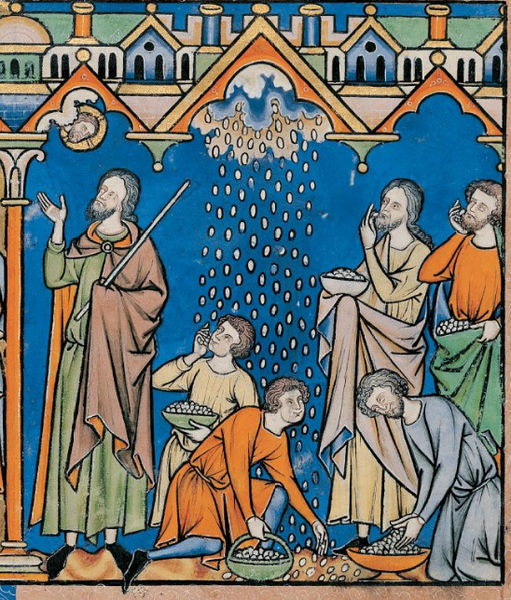
Exodus 16

mannaExodus 16

1 They set out from Elim, and all the congregation of the people of Israel came to the wilderness of Sin, which is between Elim and Sinai, on the fifteenth day of the second month after they had departed from the land of Egypt. 2 And the whole congregation of the people of Israel grumbled against Moses and Aaron in the wilderness, 3 and the people of Israel said to them, “Would that we had died by the hand of the Lord in the land of Egypt, when we sat by the meat pots and ate bread to the full, for you have brought us out into this wilderness to kill this whole assembly with hunger.” 4 Then the Lord said to Moses, “Behold, I am about to rain bread from heaven for you, and the people shall go out and gather a day’s portion every day, that I may test them, whether they will walk in my law or not. 5 On the sixth day, when they prepare what they bring in, it will be twice as much as they gather daily.” 6 So Moses and Aaron said to all the people of Israel, “At evening you shall know that it was the Lord who brought you out of the land of Egypt, 7 and in the morning you shall see the glory of the Lord, because he has heard your grumbling against the Lord. For what are we, that you grumble against us?” 8 And Moses said, “When the Lord gives you in the evening meat to eat and in the morning bread to the full, because the Lord has heard your grumbling that you grumble against him—what are we? Your grumbling is not against us but against the Lord.” 9 Then Moses said to Aaron, “Say to the whole congregation of the people of Israel, ‘Come near before the Lord, for he has heard your grumbling.’” 10 And as soon as Aaron spoke to the whole congregation of the people of Israel, they looked toward the wilderness, and behold, the glory of the Lord appeared in the cloud. 11 And the Lord said to Moses, 12 “I have heard the grumbling of the people of Israel. Say to them, ‘At twilight you shall eat meat, and in the morning you shall be filled with bread. Then you shall know that I am the Lord your God.’” 13 In the evening quail came up and covered the camp, and in the morning dew lay around the camp. 14 And when the dew had gone up, there was on the face of the wilderness a fine, flake-like thing, fine as frost on the ground. 15 When the people of Israel saw it, they said to one another, “What is it?” For they did not know what it was. And Moses said to them, “It is the bread that the Lord has given you to eat. 16 This is what the Lord has commanded: ‘Gather of it, each one of you, as much as he can eat. You shall each take an omer, according to the number of the persons that each of you has in his tent.’” 17 And the people of Israel did so. They gathered, some more, some less. 18 But when they measured it with an omer, whoever gathered much had nothing left over, and whoever gathered little had no lack. Each of them gathered as much as he could eat. 19 And Moses said to them, “Let no one leave any of it over till the morning.” 20 But they did not listen to Moses. Some left part of it till the morning, and it bred worms and stank. And Moses was angry with them. 21 Morning by morning they gathered it, each as much as he could eat; but when the sun grew hot, it melted. 22 On the sixth day they gathered twice as much bread, two omers each. And when all the leaders of the congregation came and told Moses, 23 he said to them, “This is what the Lord has commanded: ‘Tomorrow is a day of solemn rest, a holy Sabbath to the Lord; bake what you will bake and boil what you will boil, and all that is left over lay aside to be kept till the morning.’” 24 So they laid it aside till the morning, as Moses commanded them, and it did not stink, and there were no worms in it. 25 Moses said, “Eat it today, for today is a Sabbath to the Lord; today you will not find it in the field. 26 Six days you shall gather it, but on the seventh day, which is a Sabbath, there will be none.” 27 On the seventh day some of the people went out to gather, but they found none. 28 And the Lord said to Moses, “How long will you refuse to keep my commandments and my laws? 29 See! The Lord has given you the Sabbath; therefore on the sixth day he gives you bread for two days. Remain each of you in his place; let no one go out of his place on the seventh day.” 30 So the people rested on the seventh day. 31 Now the house of Israel called its name manna. It was like coriander seed, white, and the taste of it was like wafers made with honey. 32 Moses said, “This is what the Lord has commanded: ‘Let an omer of it be kept throughout your generations, so that they may see the bread with which I fed you in the wilderness, when I brought you out of the land of Egypt.’” 33 And Moses said to Aaron, “Take a jar, and put an omer of manna in it, and place it before the Lord to be kept throughout your generations.” 34 As the Lord commanded Moses, so Aaron placed it before the testimony to be kept. 35 The people of Israel ate the manna forty years, till they came to a habitable land. They ate the manna till they came to the border of the land of Canaan. 36 (An omer is the tenth part of an ephah.)

The miracle of the fish at Valley Forge in the winter of 1778 is a disputed tale of an allegedly miraculous catch of shad in the Schuylkill River. In her article, “Starving Soldiers at Valley Forge,” written for The History Channel, Stephanie Butler offers a nice summary.

In December of 1778, the Continental Army was retreating in the face of a British advance on Philadelphia, but they also needed a place, as Armies did back then, to make winter quarters.

The Army’s commanding general, George Washington, chose a spot on the Schuylkill River called Valley Forge…Pennsylvania winters are harsh and the army was tired. They had neither winter clothing nor a regular supply of food. Most of the soldiers lived on near starvation rations.

When Washington arrived at Valley Forge, just days before Christmas, his army numbered about 10,000 and his situation was desperate…There was heavy snow Christmas Day and since they still were working on building cabins, most of the men still were in tents. They hadn’t been paid, didn’t have enough food, and many had no shoes, but Washington did his best to see the men had some kind of Christmas.

He hosted a somewhat meager dinner for his officers, and then saw to it that each soldier had an allotment of rum and something to eat. Both the general and Mrs. Washington did their best to visit each encampment.

It also was at Valley Forge that Washington is said, on Christmas Day, to have ridden into the woods to pray. It’s presumed the general prayed for strength and guidance, but no one really knows.  Besides, what he prayed about is his business, but his need to find some time to be alone and to talk to God suggests the spiritual side of this remarkable individual. It also could be argued, given what followed, that God was giving a little extra attention to the Washington’s prayers.

Amazingly — and this was recorded by several of the foreign officers, including the Marquis De Lafayette — the morale of the Continental Army at Christmastime revived.  Even without adequate rations and amid appalling living conditions, the men sang, told stories, and enjoyed their Christmas.

There also was, a few weeks later, an early running of the shad. It was far too early for this protein rich fish to make its appearance, but for many soldiers, freezing and near starvation, it was nothing short of a miracle. The work of the Army continued too.  Even in the snow, under the direction of Baron Von Steuben, a former Prussian officer, the Continental Army remade itself.[1]

Should we believe such a story? Who knows? Regardless, it would appear that something happened that was (a) quite unusual and (b) was regarded as a miracle by many who were there. I rather suspect the story is true. It would not, after all, be the first time that God miraculously fed a starving people.

Exodus 16 is a chapter that records a much earlier feeding miracle, and one on a grand scale at that! Here we find the miraculous feeding of the children of Israel in the wilderness with quail and manna. This astounding occurrence says a great deal about God, of course, but it also reveals a great deal about us.

God is faithful to provide for His people.

The most obvious point of Exodus 16 is that God is faithful to provide for His people. If God’s deliverance through the Red Sea was not sufficient enough evidence, and if His miraculous changing of the bitter waters of Marah did not put an end to their doubts, then God’s actions in this chapter certainly should have…or at least we would have thought. Notice the providing hand of God.

4 Then the Lord said to Moses, “Behold, I am about to rain bread from heaven for you, and the people shall go out and gather a day’s portion every day, that I may test them, whether they will walk in my law or not. 5 On the sixth day, when they prepare what they bring in, it will be twice as much as they gather daily.” 6 So Moses and Aaron said to all the people of Israel, “At evening you shall know that it was the Lord who brought you out of the land of Egypt, 7 and in the morning you shall see the glory of the Lord, because he has heard your grumbling against the Lord. For what are we, that you grumble against us?”

13 In the evening quail came up and covered the camp, and in the morning dew lay around the camp. 14 And when the dew had gone up, there was on the face of the wilderness a fine, flake-like thing, fine as frost on the ground.

First we see the promise then we see the fulfillment. God sends quail and manna. As with virtually every miracle in the Bible, many have proposed a naturalistic explanation. Thus, Terence Fretheim has pointed out that the Bible’s description of manna “corresponds quite closely to a natural phenomenon in the Sinai Peninsula.” He explains:

A type of plant lice punctures the fruit of the tamarisk tree and excretes a substance from this juice, a yellowish-white flake or ball. During the warmth of the day it disintegrates, but it congeals when it is cold. It has a sweet taste. Rich in carbohydrates and sugar, it is still gathered by natives, who bake it into a kind of bread (and call it manna). The food decays quickly and attracts ants. Regarding the quails, migratory birds flying in from Africa or blown in from the Mediterranean are often exhausted enough to be caught by hand.[2]

The insight about quail getting tired seems absurd, and the insight about manna seems plausible to an extent. Regardless, if both of these natural explanations play a part, they only play a part in the sense that God took natural phenomenon and miraculously bent them toward His own will. Of course, this is what God does all of the time when He acts in miraculous ways. Consider the feeding of the five thousand. That miracle involved “natural” phenomenon: bread and fish (though bread, of course, has to be made). But Jesus took bread and fish and multiplied it miraculously.

If God used the excretions of plant lice and the exhaustion of migrating quail to fulfill his promise of provision, it was no less miraculous. Just think of it: for forty years God had the little plant lice secrete enough substance to provide manna every morning for hundreds of thousands of Israelites. And if God caused the quail to grow exhausted just over where the Israelites were encamped, he did so every evening for forty years.

Regardless, these questions of how are not as significant as the reality that God did in fact provide! Here we see an astonishing and faithful fulfillment of that which Jesus taught us to pray: “Give us this day our daily bread” (Matthew 6:11).

Our God is a providing God.

God’s provisions cannot be increased by human greed or diminished by human despair.

He is a providing God, and His provisions can neither be increased by human greed nor diminished by human despair. Predictably, many of the Israelites wanted more than what was provided. The results were disastrous as God had foretold.

17 And the people of Israel did so. They gathered, some more, some less. 18 But when they measured it with an omer, whoever gathered much had nothing left over, and whoever gathered little had no lack. Each of them gathered as much as he could eat. 19 And Moses said to them, “Let no one leave any of it over till the morning.” 20 But they did not listen to Moses. Some left part of it till the morning, and it bred worms and stank. And Moses was angry with them.

25 Moses said, “Eat it today, for today is a Sabbath to the Lord; today you will not find it in the field. 26 Six days you shall gather it, but on the seventh day, which is a Sabbath, there will be none.” 27 On the seventh day some of the people went out to gather, but they found none. 28 And the Lord said to Moses, “How long will you refuse to keep my commandments and my laws?

Those who gathered more manna than they needed and those who set out on the Sabbath looking for more than they already had been provided with were both justly rebuked. Here is a powerful principle that we had best come to terms with: God provides enough. Greed and despair warp our perspectives of His character or, maybe more accurately, reveal that we have a perspective that has been warped.

I have recently been reading the canons of the Council of Nicaea from 325 A.D. The seventeenth canon states:

Forasmuch as many enrolled among the Clergy, following covetousness and lust of gain, have forgotten the divine Scripture, which says, “He hath not given his money upon usury,” and in lending money ask the hundredth of the sum, the holy and great Synod thinks it just that if after this decree any one be found to receive usury, whether he accomplish it by secret transaction or otherwise, as by demanding the whole and one half, or by using any other contrivance whatever for filthy lucre’s sake, he shall be deposed from the clergy and his name stricken from the list.[3]

This means that the church of the 4th century forbade loaning money on interest. My purpose is not to discuss the ethics of interest. My point is simply to say that here at the first ecumenical council of the Church they had to condemn the clergy fleecing the people for more money than they needed. It is but one example of countless examples of greed, of failing to trust God as we should for His provision.

It is fascinating that God builds safeguards against both greed and despair in this wilderness arrangement for food: there will be enough.

What would it be like if we reached the point where we thought God had given us enough?

God’s provisions tend not to be appreciated as they should by His people.

One of the recurring themes of Israel’s wilderness wonderings is the theme of failing to appreciate God’s gracious provisions. Note the repetitious use of the image of grumbling.

2 And the whole congregation of the people of Israel grumbled against Moses and Aaron in the wilderness, 3 and the people of Israel said to them, “Would that we had died by the hand of the Lord in the land of Egypt, when we sat by the meat pots and ate bread to the full, for you have brought us out into this wilderness to kill this whole assembly with hunger.”

Peter Enns says of this charge, “Only the most calloused heart or the most stupid mind could conceive of such a ridiculous charge.”[4] That is blunt, but true. After God’s great provision and miraculous deliverance of His children from Egypt and at the waters of Marah, they still grumbled and complained. Even in Moses’ revelation that God would send food to the Israelites he indicted them for their absurd grumbling.

6 So Moses and Aaron said to all the people of Israel, “At evening you shall know that it was the Lord who brought you out of the land of Egypt, 7 and in the morning you shall see the glory of the Lord, because he has heard your grumbling against the Lord. For what are we, that you grumble against us?” 8 And Moses said, “When the Lord gives you in the evening meat to eat and in the morning bread to the full, because the Lord has heard your grumbling that you grumble against him—what are we? Your grumbling is not against us but against the Lord.”

The Lord likewise notes their complaining spirit.

11 And the Lord said to Moses, 12 “I have heard the grumbling of the people of Israel.

Our grumbling says a great deal about us and how we see the world. Victor Hamilton has made an interesting observation about the nature of the grumbling mind-set.

The Israelites’ mind-set is not unlike that of criminals released from incarceration. Imprisonment, but with three meals a day and a place to lay one’s head at night, seems more inviting than struggling with the challenges of liberty. Being told what to do and when to do it and how to do it may be easier than having to make one’s own (responsible) decisions. In a strange way Egypt can become Eden. A ghetto can become a garden, or so it seems. Pharaoh can become a “nice guy,” a life-giver, while Moses can become a villain, a life-taker.[5]

A refusal to trust leads to a complaining spirit that, in terms, hinders us from actually seeing reality for what it is. This is the story of the human race. Indeed, there is ample evidence in scripture to suggest that most people simply do not take the time to thank God for the provisions He does indeed supply. We can see this in Luke 17, for instance, in Jesus’ healing of the ten lepers.

11 On the way to Jerusalem he was passing along between Samaria and Galilee. 12 And as he entered a village, he was met by ten lepers, who stood at a distance 13 and lifted up their voices, saying, “Jesus, Master, have mercy on us.” 14 When he saw them he said to them, “Go and show yourselves to the priests.” And as they went they were cleansed. 15 Then one of them, when he saw that he was healed, turned back, praising God with a loud voice; 16 and he fell on his face at Jesus’ feet, giving him thanks. Now he was a Samaritan. 17 Then Jesus answered, “Were not ten cleansed? Where are the nine? 18 Was no one found to return and give praise to God except this foreigner?” 19 And he said to him, “Rise and go your way; your faith has made you well.”

Dear church, do not allow grumbling to overtake your minds and hearts. When is the last time you stopped and said, “Thank you, God, for providing for me”?

God’s provisions should lead to rest and worship.

And what is the ultimate purpose of God’s provision? Holy rest. Sabbath rest. Praise.

The Lord provides. His people gather. Then we should rest. We find one of the clearest articulations of the need for Sabbath rest in our text.

22 On the sixth day they gathered twice as much bread, two omers each. And when all the leaders of the congregation came and told Moses, 23 he said to them, “This is what the Lord has commanded: ‘Tomorrow is a day of solemn rest, a holy Sabbath to the Lord; bake what you will bake and boil what you will boil, and all that is left over lay aside to be kept till the morning.’” 24 So they laid it aside till the morning, as Moses commanded them, and it did not stink, and there were no worms in it. 25 Moses said, “Eat it today, for today is a Sabbath to the Lord; today you will not find it in the field. 26 Six days you shall gather it, but on the seventh day, which is a Sabbath, there will be none.” 27 On the seventh day some of the people went out to gather, but they found none. 28 And the Lord said to Moses, “How long will you refuse to keep my commandments and my laws? 29 See! The Lord has given you the Sabbath; therefore on the sixth day he gives you bread for two days. Remain each of you in his place; let no one go out of his place on the seventh day.” 30 So the people rested on the seventh day.

Peter Enns rightly observes, “It is not simply that the Sabbath is ‘observed’ by the Israelites in that they refrain from gathering food. Rather, it is God who refrains from supplying the food. It is he who ceases working, so that no manna or quail is to be founded.”[6] This is consistent with the Genesis account of creation. In Genesis 2 we read:

2 By the seventh day God had finished the work he had been doing; so on the seventh day he rested from all his work. 3 Then God blessed the seventh day and made it holy, because on it he rested from all the work of creating that he had done.

There is an absurd notion in our country, perhaps mainly among men (it seems to me), that excessive, self-destructive busyness ostensibly in the name of providing for our families is a virtue to be celebrated. In fact it is a vice to be deplored. I am aware of the fact that at times and seasons of life and in certain circumstances people simply must work more than they should. Again, I understand this. I am talking here, though, about the modern penchant for unnecessary busyness. It is largely unnecessary because it is embraced in order to fund things we simply do not need in many cases. We thereby shortchange our children and our spouses by being busier than we need to be.

In the process, we lose the very idea and logic of Sabbath rest. We fail to rest because we do not take seriously God’s absolute seriousness about the Sabbath rhythm of life: work for six days and rest on the seventh.

We are especially adept at pointing out absurd legalisms concerning Sabbath observance, and there can be no denying that the Church has sometimes fallen into such legalisms to the same extent that many Pharisees did. However, the problem in most churches today is not legalism concerning the Sabbath but crude license concerning it. That is, we barely observe it at all, it seems to me. Please note, however, that as God led His children through the wilderness He insisted on Sabbath rest.

How do we best give praise to God for His provisions? Surely not by frantically grasping for more than we need. No, we best give praise by observing Sabbath rest and worship to the glory of His great name.

God provides. He does so in astounding and beautiful ways. Open your eyes to the manna He gives us every day. Work to gather then stop to rest. Through all, praise His great name!


[1] https://www.history.com/news/hungry-history/starving-soldiers-at-valley-forge

[2] Terence Fretheim, Exodus. Interpretation. (Louisville, KY: Westminster John Knox Press, 2010), p.182.

[3] https://www.christian-history.org/council-of-nicea-canons.html#17

[4] Peter Enns, Exodus. The NIV Application Commentary (Grand Rapids, MI: Zondervan, 2000), p.324.

[5] Hamilton, Victor P. (2011-11-01). Exodus: An Exegetical Commentary (Kindle Locations 8426-8429). Baker Publishing Group. Kindle Edition.

[6] Peter Enns, p.325.

Franz Kafka’s The Metamorphosis

the_metamorphosis_by_xmihax-d5k11yvFranz Kafka’s famous short story, “The Metamorphosis,” is an enigmatic and elusive tale about a salesman named Gregor Samsa who awakens one morning to find that he has been changed into a bug.  I should say instead that the tale is elusive in terms of its interpretation.  The story itself, on its surface, is rather straightforward.

Samsa wakes up to find that he is a bug.  His parents and his sister (all of whom he provides for and the last whom he adores) knock on the door in vain, as does a representative from his job who comes by to chastise him.  When they finally see Gregor, they are terrified and disgusted.  The remainder of the story involves the family’s failed attempts to come to terms with Gregor’s metamorphosis.  The most compassionate is his sister, Greta, who feeds Gregor by leaving food in his room while he hides under a couch.  Eventually, however, she too proclaims her disgust with Gregor and he dies brokenhearted.

What makes the story so intriguing is that it really does not tip its hand too much to possible meanings.  Some have seen it as Kafka’s story about his own self (notice the consistent consonant/vowel structure of the names:  Kafka – Samsa) and his sense of alienation from the world.  Others have surmised that it might be a statement on the dehumanizing and eventual destruction of the Jews (as represented by Gregor).

It’s hard to say, though I find myself drawn to a something like a class-structure interpretation.  Maybe.  It seems to me that Gregor, the worker, is dehumanized, is shown a measure of pity by those who cannot understand him, and is eventually abandoned by those with brighter prospects.  I am struck by the last sentence, which sees Greta stretching her blossoming body out after her parents, taking notice, reflect on the fact that they need to find her a suitable mate: “And it was like a confirmation of their new dreams and excellent intentions that at the end of their journey their daughter sprang to her feet and stretched her young body.”  Thus, the book begins with a downward metamorphoses:  that of a man into a bug.  It ends with an upward metamorphosis:  that of a girl into a beautiful young woman.  The downward metamorphosis ends in dehumanization, a loss of meaning and significance, and then a death that is welcomed by the others who were so burdened by his grotesque existence.  The upward metamorphoses ends in a humanization, the opening of prospects and a bright future, and a general sense of celebration by others who witness it.

On the other hand, I am struck by the note of existential despair in the story, Gregor’s horror at realizing that his very existence is a burden, that his presence is loathsome to those around him, and the utter futility of his life theretofore.  Who hasn’t at time felt a bit like Gregor:  alone, misunderstood, barely human?

It is a powerful little tale, and one that stays with you.  I suppose the brilliance of it is that different readers can see different aspects of their own lives in the tragedy of Gregor Samsa.  If you haven’t read it, you should.  It’s compelling, troubling, thought-provoking, and significant.

Ruth 4:1-12

boazsandalRuth 4:1-12

1 Now Boaz had gone up to the gate and sat down there. And behold, the redeemer, of whom Boaz had spoken, came by. So Boaz said, “Turn aside, friend; sit down here.” And he turned aside and sat down. 2 And he took ten men of the elders of the city and said, “Sit down here.” So they sat down. 3 Then he said to the redeemer, “Naomi, who has come back from the country of Moab, is selling the parcel of land that belonged to our relative Elimelech. 4 So I thought I would tell you of it and say, ‘Buy it in the presence of those sitting here and in the presence of the elders of my people.’ If you will redeem it, redeem it. But if you will not, tell me, that I may know, for there is no one besides you to redeem it, and I come after you.” And he said, “I will redeem it.” 5 Then Boaz said, “The day you buy the field from the hand of Naomi, you also acquire Ruth the Moabite, the widow of the dead, in order to perpetuate the name of the dead in his inheritance.” 6 Then the redeemer said, “I cannot redeem it for myself, lest I impair my own inheritance. Take my right of redemption yourself, for I cannot redeem it.” 7 Now this was the custom in former times in Israel concerning redeeming and exchanging: to confirm a transaction, the one drew off his sandal and gave it to the other, and this was the manner of attesting in Israel. 8 So when the redeemer said to Boaz, “Buy it for yourself,” he drew off his sandal. 9 Then Boaz said to the elders and all the people, “You are witnesses this day that I have bought from the hand of Naomi all that belonged to Elimelech and all that belonged to Chilion and to Mahlon. 10 Also Ruth the Moabite, the widow of Mahlon, I have bought to be my wife, to perpetuate the name of the dead in his inheritance, that the name of the dead may not be cut off from among his brothers and from the gate of his native place. You are witnesses this day.” 11 Then all the people who were at the gate and the elders said, “We are witnesses. May the Lord make the woman, who is coming into your house, like Rachel and Leah, who together built up the house of Israel. May you act worthily in Ephrathah and be renowned in Bethlehem, 12 and may your house be like the house of Perez, whom Tamar bore to Judah, because of the offspring that the Lord will give you by this young woman.”

It is fitting that we are approaching the Lord’s Supper table on this day when we also approach Ruth 4:1-12. That is because these verses speak of a bridegroom’s redemption of his bride. That is also exactly what the Lord’s Supper speaks of as well: a Bridegroom’s redemption of His bride. As I hope to show, this text is where the bottom level story (the actual story of Boaz and Ruth) and the upper level story (the story of Christ and His Church) come closest to one another. As we read this text in preparation for the Lord’s Supper, I would like to consider the fact that Boaz’s purchase of his bride, Ruth, was eager, public, and legally binding. So is Jesus’ purchase of His bride.

Eager. Public. Legally binding.

Eager. Boaz was eager to secure Ruth as his bride.

1 Now Boaz had gone up to the gate and sat down there. And behold, the redeemer, of whom Boaz had spoken, came by. So Boaz said, “Turn aside, friend; sit down here.” And he turned aside and sat down.

Chapter 3 ended with the startling events on the threshing floor that saw Ruth pledge herself to Boaz and Boaz assure her that he would redeem and marry her if at all possible. There was one problem: there was a relative closer to Naomi and Ruth than Boaz was and, by law, that relative was given the first option of redemption. Boaz would only be able to redeem Ruth if this other relative chose not to.

Our chapter begins with Boaz eagerly seeking to redeem Ruth. He went to the place where such business was handled: the city gates. And when did he go? The next morning, the morning after Ruth came to him and lay at his feet on the threshing floor. The night before Boaz had said to Ruth, “Stay here for the night, and in the morning if he wants to do his duty as your guardian-redeemer, good; let him redeem you. But if he is not willing, as surely as the Lord lives I will do it. Lie here until morning” (v.13). Twice he mentioned the morning. He was eager for Ruth to be his bride. He would handle this as soon as humanly possible. Even Naomi knew that he would be eager to resolve this, for in verse 18 of Ruth 3 she had told Ruth, “Wait, my daughter, until you find out what happens. For the man will not rest until the matter is settled today.” And indeed he did not.

The redeemer was eager to redeem the one needing redemption. So it was with Boaz and Ruth. So it is with Jesus. In Luke 15:20 Jesus likened God to a patriarch who runs and embraces his prodigal son when he returns home. Eagerness. In 2 Peter 3:9, Peter writes, “The Lord is not slow to fulfill his promise as some count slowness, but is patient toward you, not wishing that any should perish, but that all should reach repentance.” The Father is eager to see people come to faith in Christ. He is, in fact, eager to see you come to the saving knowledge of Christ if you have not.

Boaz summoned the closer redeemer. Interestingly, he did not use his name. Some early Jewish commentators assumed the man’s name was Tob because of verse 3:13. In that verse, Boaz said to Ruth, “Remain tonight, and in the morning, if he will redeem you, good; let him do it.” The Hebrew word for “good” or “all right” is “tob,” so these commentators read that word as a name instead of an exclamation: “Tob, let him do it.” Clearly, however, that is not his actual name. Kiersten Nielson argues that “the author’s anonymization of the man must…be an expression of indirect condemnation of him as a man who refuses to safeguard the good name of the family for posterity. He deserves to remain nameless.”[1]

Boaz summoned this nameless redeemer and he did so eagerly!

And he did so publically, not secretly. Boaz went to the city gate through which the workers would pass as they returned in the morning from their labors. He had no intention of working a sly deal. On the contrary, this would be handled in the full light of day and in the sight of all.

2 And he took ten men of the elders of the city and said, “Sit down here.” So they sat down. 3 Then he said to the redeemer, “Naomi, who has come back from the country of Moab, is selling the parcel of land that belonged to our relative Elimelech. 4 So I thought I would tell you of it and say, ‘Buy it in the presence of those sitting here and in the presence of the elders of my people.’ If you will redeem it, redeem it. But if you will not, tell me, that I may know, for there is no one besides you to redeem it, and I come after you.” And he said, “I will redeem it.” 5 Then Boaz said, “The day you buy the field from the hand of Naomi, you also acquire Ruth the Moabite, the widow of the dead, in order to perpetuate the name of the dead in his inheritance.” 6 Then the redeemer said, “I cannot redeem it for myself, lest I impair my own inheritance. Take my right of redemption yourself, for I cannot redeem it.”

Boaz summoned ten men to serve as witnesses of what was about to happen. It is not terribly clear whether this number was particularly significant. Concerning the ten witnesses, Leon Morris writes

Obviously this could give a solid body of witness, but whether there was any legal requirement met by this number or not our information from antiquity does not reveal. In more recent times, ten, of course, is a significant number. Thus ten men are required for a synagogue service. Slotki sees in the number “The quorum required for the recital of the marriage benedictions. Boaz held them in readiness for the pending ceremony.” However, he cites no evidence that the custom is so old. The Midrash Rabbah regards this passage as giving justification for ten at ‘the blessing of the bridegroom’ (vii. 8).[2]

Perhaps, then, there is custom behind ten witnesses. Perhaps customs grew out of Boaz’s summoning of these ten. Regardless, notice that Boaz sought a public redemption of Ruth, one that could not be questioned, one that had witnesses.

The transaction went as follows: Boaz informed the unnamed redeemer that he, the redeemer, had first rights to redeem the late Elimelech’s land from Ruth. There is considerable discussion about what this means since land did not pass from husband to wife at that time. Regardless, the redeemer had first rights if he so desired. And he did so desire. He said in the presence of all that he wanted the land. Then Boaz added a caveat that changed everything. If he bought the land, he informed him, he also redeemed Elimelech’s Moabite daughter-in-law, Ruth. “I cannot redeem it for myself,” the man said in recanting his claim, “lest I impair my own inheritance. Take my right of redemption yourself, for I cannot redeem it.”

This is a very interesting thing for him to say: “lest I impair my own inheritance.” Daniel Block gives a helpful explanation of what the redeemer likely meant.

Given his own age and the age of Ruth, he might have thought she might bear him no more than one child. Since this child would be legally considered the heir and descendant of Elimelech, upon the death of the go’el he would inherit the property that had come into his hands through this present transaction as well as the go’el’s inherited holdings. Furthermore, since the name of Elimelech had been established/raised up through the child, the go’el’s entire estate would fall into the line of Elimelech, and his own name would disappear. Third, in view of Boaz’s introduction of Ruth as “the Moabitess,” he might have pondered the ethnic implication of the transaction, concluding that his patrimonial estate would not be jeopardized by falling in to the hands of one with Moabite blood in his veins.[3]

The obstacle to Boaz’s redemption of Ruth had been removed! He could now secure her and bring her into his home. And he had achieved this in the sight of all.

Jesus, too, achieved the redemption of His people in the sight of all and not on the sly. “Nevertheless,” Jesus said in Luke 13:33, “I must go on my way today and tomorrow and the day following, for it cannot be that a prophet should perish away from Jerusalem.” So Jesus went through the city gates of Jerusalem only to come out of them again carrying a cross. In the sight of God and man, Jesus redeemed His bride. He was suspended between heaven and earth on the cross, bidding all to bear witness that He was laying indisputable claim to His bride by paying the price for her.

Christ redeemed fallen man in the presence of all, and this act of redemption was legally binding. So too was Boaz’s redemption of Ruth.

7 Now this was the custom in former times in Israel concerning redeeming and exchanging: to confirm a transaction, the one drew off his sandal and gave it to the other, and this was the manner of attesting in Israel. 8 So when the redeemer said to Boaz, “Buy it for yourself,” he drew off his sandal. 9 Then Boaz said to the elders and all the people, “You are witnesses this day that I have bought from the hand of Naomi all that belonged to Elimelech and all that belonged to Chilion and to Mahlon. 10 Also Ruth the Moabite, the widow of Mahlon, I have bought to be my wife, to perpetuate the name of the dead in his inheritance, that the name of the dead may not be cut off from among his brothers and from the gate of his native place. You are witnesses this day.” 11 Then all the people who were at the gate and the elders said, “We are witnesses. May the Lord make the woman, who is coming into your house, like Rachel and Leah, who together built up the house of Israel. May you act worthily in Ephrathah and be renowned in Bethlehem, 12 and may your house be like the house of Perez, whom Tamar bore to Judah, because of the offspring that the Lord will give you by this young woman.”

It was an odd way to signify that the transaction was complete, official, binding. The redeemer took off his shoe and handed it to Boaz, signifying thereby that he was letting the right of redemption pass him by so that it could rest on eager Boaz. Thus, Boaz redeemed Naomi’s land and Naomi and Ruth.

But here there is something interesting in our text, something unexpected, something frankly unusual. There are two words that are used in this conversation between Boaz and the redeemer. The word for “redeem” is the Hebrew word ga’al and the word for “buy” or “acquire” is the Hebrew word qanah. You can see both at play in the heart of the conversation from verses 4-6.

4 So I thought I would tell you of it and say, ‘Buy it in the presence of those sitting here and in the presence of the elders of my people.’ If you will redeem it, redeem it. But if you will not, tell me, that I may know, for there is no one besides you to redeem it, and I come after you.” And he said, “I will redeem it.” 5 Then Boaz said, “The day you buy the field from the hand of Naomi, you also acquire Ruth the Moabite, the widow of the dead, in order to perpetuate the name of the dead in his inheritance.” 6 Then the redeemer said, “I cannot redeem it for myself, lest I impair my own inheritance. Take my right of redemption yourself, for I cannot redeem it.”

What is unusual about this is the word “buy.” In the legal requirements of the redeemer, the language was not of buying but of redeeming. And a redeemer certainly would not speak of buying or acquiring a person. It is very unusual that Boaz speaks of buying Ruth. Furthermore, it is very unusual to see these two words, redeem and acquire, used together to describe a human transaction.

In a fascinating article entitled “‘Redemption-Acquisition’: The Marriage of Ruth as a Theological Commentary on Yahweh and Yaweh’s People,” Brad Embry points out the heart of the issue.

While the two terms redeem and acquire are fairly common, their use together is not, only appearing explicitly in two other places apart from Ruth: Exod 15:13-15 and Ps 74:2…[T]he concept of “redeem-acquire” is implicit in two more selections: Deut 32:6 and Isa 11:11.
In the case of each of the other intertextual references (Exod 15:13-19; Ps 74:2; Deut 32:6; Isa 11:11), the complex “redeem-acquire” is employed exclusively to express an action undertaken by Yahweh on behalf of Israel and likely draws on the exodus tradition. In the story of Ruth, two things seem to fall under qualification for redemption-acquisition. The first is the land for sale by Naomi. The second is Ruth. As such, only in the book of Ruth is the complex “redeem-acquire” used to articulate the relationship between two human characters. In this way, the author of Ruth has constructed a story in which two of the primary characters, while functioning within an unfolding story of loss and restoration for a particular household, can also be emblematic of Yahweh’s actions on behalf of Israel.[4]

This is profoundly important. This is why I say that here the lower and upper levels of our story converge, for it is only in Yahweh’s redemption of His people that the “redeem-acquire” formula is used. For instance, in Exodus 15:13-16.

13  “You have led in your steadfast love the people whom you have redeemed; you have guided them by your strength to your holy abode. 14 The peoples have heard; they tremble; pangs have seized the inhabitants of Philistia. 15 Now are the chiefs of Edom dismayed; trembling seizes the leaders of Moab; all the inhabitants of Canaan have melted away. 16 Terror and dread fall upon them; because of the greatness of your arm, they are still as a stone, till your people, O Lord, pass by, till the people pass by whom you have purchased.

Furthermore, in Psalm 74 we find the same formula.

2 Remember your congregation, which you have purchased of old, which you have redeemed to be the tribe of your heritage! Remember Mount Zion, where you have dwelt.

Do you see why this matters? When Boaz used the formula “redeem-acquire” in talking to the redeemer about Ruth, he was using a formula that is only used to refer to God’s redemption of His people. Thus, when Boaz spoke of redeeming and buying Ruth, he was painting a picture that theretofore had only been painted to describe Yahweh God’s love for us. In this way, the lower level and the upper level converge: Boaz’s redemption and purchase of Ruth is a picture of God’s redemption and purchase of His people, then, now, and forever. It is how God loves us.

Does this language of purchase carry over into the New Testament? Indeed it does. In 1 Corinthians 6, Paul writes:

19 Or do you not know that your body is a temple of the Holy Spirit within you, whom you have from God? You are not your own, 20 for you were bought with a price. So glorify God in your body.

In Revelation 5, we read:

8 And when he had taken the scroll, the four living creatures and the twenty-four elders fell down before the Lamb, each holding a harp, and golden bowls full of incense, which are the prayers of the saints. 9 And they sang a new song, saying, “Worthy are you to take the scroll and to open its seals, for you were slain, and by your blood you ransomed people for God from every tribe and language and people and nation, 10 and you have made them a kingdom and priests to our God, and they shall reign on the earth.”

The word for “ransom” in verse 9 is the same word Paul uses in 1 Corinthians 6 for “bought.”

What a glorious, beautiful truth! The God who purchased His people out of slavery in Egypt is the same God who purchases His people through the blood of Christ our Redeemer. Jesus our Redeemer buys us on the cross. He lays down His life to purchase us by paying the debt we cannot pay, and the elements on this very table speak of that amazing purchase. The juice and the bread are symbols of the blood and body of Christ. They are the means by which He purchases all who will come to Him in faith and repentance, all who will lay themselves at His feet.

Behold the Lamb who was slain! Behold the God who purchases His bride! Behold the Redeemer who is eager to save!


[1] Kirsten Nielson, Ruth. The Old Testament Library. (Louisville, KY: Westminster John Knox Press, 1997), p.83,n.124.

[2] Arthur E. Cundall and Leon Morris (2008-09-19). TOTC Judges & Ruth (Tyndale Old Testament Commentaries) (Kindle Locations 4442-4447). Inter-Varsity Press. Kindle Edition.

[3] Daniel I. Block, Judges, Ruth. The New American Commentary. Vol. 6. Gen. Ed., E. Ray Clendenen. (Nashville, TN: B&H Publishing Group, 1999), p.660.

[4] Brad Embry. “‘Redemption-Acquisition’: The Marriage of Ruth as a Theological Commentary on Yahweh and Yaweh’s People.” Journal of Theological Interpretation. 7.2 (2013), p.258-259. This is a very insightful article that I find quite persuasive. Embry’s argument has strongly influenced my argument in this portion of the sermon.

Exodus 15:22-27

odrs-8-08Exodus 15:22-27

22 Then Moses made Israel set out from the Red Sea, and they went into the wilderness of Shur. They went three days in the wilderness and found no water. 23 When they came to Marah, they could not drink the water of Marah because it was bitter; therefore it was named Marah. 24 And the people grumbled against Moses, saying, “What shall we drink?” 25 And he cried to the Lord, and the Lord showed him a log, and he threw it into the water, and the water became sweet. There the Lord made for them a statute and a rule, and there he tested them, 26 saying, “If you will diligently listen to the voice of the Lord your God, and do that which is right in his eyes, and give ear to his commandments and keep all his statutes, I will put none of the diseases on you that I put on the Egyptians, for I am the Lord, your healer.” 27 Then they came to Elim, where there were twelve springs of water and seventy palm trees, and they encamped there by the water.

Have you ever noticed that valleys tend to come fast on the heels of mountaintops? Why is it that the greatest moments tend to give rise to the most anticlimactic moments? There are times when we are tempted to agree with T.S. Eliot’s famous conclusion to his poem “The Hollow Men.”

This is the way the world ends


This is the way the world ends


This is the way the world ends


Not with a bang but a whimper.

There is almost a cruel irony to life.

I once spoke with a man who told me that his great-grandfather survived the brutal and bloody 1862 Battle of Antietam in which the combined number of dead, wounded, and missing was over 22,000. Shortly after the end of the war, however, a hoisted cotton bail fell on his grandfather and killed him.

In the oft-repeated words of Kurt Vonnegut from Slaughterhouse Five, “So it goes.”

Perhaps that is how the Israelites felt when they came to the bitter waters of Marah after having just survived the Red Sea. Which is to say that it would indeed be ironic to survive the Red Sea only to die beside an oasis. But for a moment this looked like exactly what was about to happen.

For a moment.

God delivers the grumbling children of Israel through a contrasting water miracle.

The Israelites have just been delivered from Pharaoh’s army in the startling passage through the Red Sea. God is on their side. Then, in the first part of Exodus 15, they rejoice with singing and dancing! These are thrilling times indeed. Now they set out toward home. But there is a problem.

22 Then Moses made Israel set out from the Red Sea, and they went into the wilderness of Shur. They went three days in the wilderness and found no water. 23 When they came to Marah, they could not drink the water of Marah because it was bitter; therefore it was named Marah. 24 And the people grumbled against Moses, saying, “What shall we drink?”

Three days in and the people, understandably, were parched. Surely God did not bring them through the Red Sea simply to have them die in the wilderness, did He? The “water of Marah” may refer either to “the Bitter Lakes” or an oasis called Bir Marah “where the water is saline with heavy mineral content.”[1]

Clearly this was an untenable situation. Hundreds of thousands of thirsty Israelites hear that water is near. Their hearts soar with expectation! They rejoice at the faithful provision of God. They begin to press forward. Then those at the back hear an approaching murmur. It grows louder as it spreads. What is that they are saying? “It is undrinkable! It is marah! It is bitter!”

You will perhaps recognize this word marah. It is what Naomi renames herself in the end of Ruth 1 as she launches her complaint against God to the Bethlehemite women. Bitter! The water is bitter!

Nobody likes undrinkable water, not even the Lord! As He says to the church of Laodicea in Revelation 3:15-16 concerning their bland non-commitment, “I know your works: you are neither cold nor hot. Would that you were either cold or hot! So, because you are lukewarm, and neither hot nor cold, I will spit you out of my mouth.” Furthermore, in Jude 12, Jude writes of the taunting disappointment of expecting water and finding none when he metaphorically describes the false teachers as “waterless clouds.”

Whether it be grossly lukewarm or bitter or merely a mirage that does not deliver what it promises, undrinkable water is a plague. Thus, they “grumbled” against Moses. Moses, in turn, “cried to the Lord.”

But before we see how this episode concludes, let us ponder a moment on the nature of human fickleness. To respond with unraveling fear before a bitter oasis when the Lord God miraculous delivered you through the waters of the Red Sea just three days earlier is as glorious an example of human fickleness as one could ever want. “What is remarkable,” Philip Ryken writes, “is not that God was able to perform the miracle at Marah, but that he was willing to do it for such a bunch of malcontents…God’s grace is so amazing that he even provides for whiners, provided that we really are his children.”[2]

This is very well said. How very, very quickly we forget. And this is why it is difficult to judge the children of Israel too harshly. Do we not do the exact same thing? Do we not fret about oases after being delivered through seas? Certainly we do. No sooner has the Lord delivered us from life-threatening challenges than we start complaining about challenges that are trifles in comparison.

To be sure, the prospect of slowly dying from lack of water in the wilderness is no mere trifle, but, again, this episode happened after the most staggering act of miraculous deliverance in human history to date. The Lord, however, is indeed merciful to His grumbling children.

25a And he cried to the Lord, and the Lord showed him a log, and he threw it into the water, and the water became sweet.

Once again, God saved His people in a watery miracle, this time by having them throw “a log” into the water that rendered it drinkable. Victor Hamilton explains that, “ʿĒṣ normally means “tree,” but “stick, twig” is the meaning in some passages (Ezek. 37: 16, 19).”[3] Regardless, it had the desired effect.

Was the tree just a tree that God miraculous enabled to change the nature of the water, or did the tree have inherent neutralizing properties unknown to the Israelites and God simply pointed them to the natural solution to their predicament? Both cases have been argued. Roy Honeycutt, for instance, suggests that “the tree possessed purifying qualities, and the Lord utilized the created order for the fulfillment of his own purposes. The latent energies of the world came to life under the responsible direction of a man committed to the will of God, and Israel was delivered.”[4]

I personally see this as a miraculous transformation of otherwise normal wood into an agent of change for the water. Regardless, God showed up once again and saved His people. I say this is a “contrasting water miracle” because it does indeed offer ironic contrasts to the miracle of the Red Sea. Consider:

  • At the Red Sea Israel did not want to go into the water but they had to. At Marah Israel wanted to get into the water but could not at first.
  • At the Red Sea Israel thought they would die beside a large body of water. At Marah Israel thought they would die before a small body of water.
  • At the Red Sea God saved Israel by keeping them from contact with the water. At Marah God saved Israel by enabling them to have contact with the water.
  • At the Red Sea Israel moved from fear to joy. At Marah Israel moved from joy to fear to joy again.

It is indeed intriguing to consider the nature of these watery miracles. The constant, however, was the love and grace and provision of Almighty God, Who delivered His people.

God delivers His children through an early giving of Law.

There is another miracle here, and it does not involve water. In fact, we may be tempted not to consider it a miracle at all, but truly it is. I speak here of God’s giving of an initial law to Israel as well as His charging them to obey and live.

25b There the Lord made for them a statute and a rule, and there he tested them, 26 saying, “If you will diligently listen to the voice of the Lord your God, and do that which is right in his eyes, and give ear to his commandments and keep all his statutes, I will put none of the diseases on you that I put on the Egyptians, for I am the Lord, your healer.” 27 Then they came to Elim, where there were twelve springs of water and seventy palm trees, and they encamped there by the water.

I say that this giving of “a statute and a rule” is a miracle because revelation always is. Out of the abundance of His own mercies, God established His law with His people. We are not at Sinai yet and the great giving of the Law, but here we find a kind of proto-law. Furthermore, he reinforced in their minds that obedience will lead to life. Specifically, the Lord told Israel that if they were obedient and kept His commandments, “I will put none of the diseases on you that I put on the Egyptians”

That was an interesting way to put it: “I will put none of these diseases on you.” Victor Hamilton has offered some fascinating insights into how we likely should understand this saying

To what might “the sicknesses that I set upon Egypt” refer? Possibly characteristic Egyptian sicknesses like dysentery or elephantiasis. More likely the reference is to the plagues of chaps. 7– 12, although the word “sickness” is never used to describe any of them. If this is correct, the plagues in Egypt begin with nobody being “able to drink the water” (Exod. 7: 18, 21, 24). Similarly, Israel’s journey Canaan-ward begins with nobody “able to drink the water.” Egypt’s water got a staff (Exod. 7: 17). Israel’s water got a stick.[5]

Hamilton is right. This is likely a reference to the plagues put on Egypt. God is telling His people that He will not do to them what He did to Egypt, but they need to trust in Him and walk with Him and obey Him.

Hamilton’s point about the first plague of Egypt rendering the water undrinkable (by turning the water of the Nile into blood) is important. Perhaps God’s assurance that He would not do to Israel what He did to Egypt is evidence that the Israelites were grumbling precisely this accusation beside the bitter waters of Marah. Perhaps some of them were thinking, “He rendered their water undrinkable. Now He has done it to us. He has brought us out here to strike us with the same plagues with which He struck Egypt.”

To which God says, “No! I will not treat my own people as I treated wicked, murderous Egypt. But you must walk with Me and obey Me.”

This principle still applies. God is immutable, unchanging, and does not vary how He deals with His people. To obey God’s commandments is to walk the path of life. To disobey is to walk the path of death.

Of course, this presents us with a dilemma, as none of us are able to walk the path of obedience with perfection or complete purity. This is where the gospel shines the most splendidly, for this gospel tells us that there was One who walked the path of perfect obedience for us: Jesus. When we come to Him, we are covered by His righteousness, His obedience, and His perfection. This, of course, must not give rise to thoughts of lawlessness on our parts, as if the righteousness of Christ could be stolen and manipulated by wicked hands. In truth, the man who comes to Christ will never dare consider that the righteousness of God is in any way a license for sin. Paul deals a definitive deathblow to such an absurd idea in Romans 6.

1 What shall we say then? Are we to continue in sin that grace may abound? 2 By no means! How can we who died to sin still live in it? 3 Do you not know that all of us who have been baptized into Christ Jesus were baptized into his death? 4 We were buried therefore with him by baptism into death, in order that, just as Christ was raised from the dead by the glory of the Father, we too might walk in newness of life. 5 For if we have been united with him in a death like his, we shall certainly be united with him in a resurrection like his. 6 We know that our old self was crucified with him in order that the body of sin might be brought to nothing, so that we would no longer be enslaved to sin. 7 For one who has died has been set free from sin. 8 Now if we have died with Christ, we believe that we will also live with him. 9 We know that Christ, being raised from the dead, will never die again; death no longer has dominion over him. 10 For the death he died he died to sin, once for all, but the life he lives he lives to God. 11 So you also must consider yourselves dead to sin and alive to God in Christ Jesus. 12 Let not sin therefore reign in your mortal body, to make you obey its passions. 13 Do not present your members to sin as instruments for unrighteousness, but present yourselves to God as those who have been brought from death to life, and your members to God as instruments for righteousness. 14 For sin will have no dominion over you, since you are not under law but under grace.

Here we begin to understand that what God did for Israel at the waters of Marah God does for the hearts of all who will come to Christ: He changes the bitter into sweet, the unpalatable into the delightful, death into life. God is still in the business of delivering His grumbling children. He does so through and in Jesus, the King who makes all things new.

Are you stuck in the bitter waters of Marah? Come to the everlasting waters of Christ! Take His hand and take His way and He will lead you home.


[1] John H. Walton, Victor H. Matthews and Mark W. Chavalas, The IVP Bible Background Commentary: Old Testament. (Downers Grove, IL: InterVarsity Press, 2000), p.91.

[2] Philip Graham Ryken, p.422.

[3] Hamilton, Victor P. (2011-11-01). Exodus: An Exegetical Commentary (Kindle Locations 8013-8014). Baker Publishing Group. Kindle Edition.
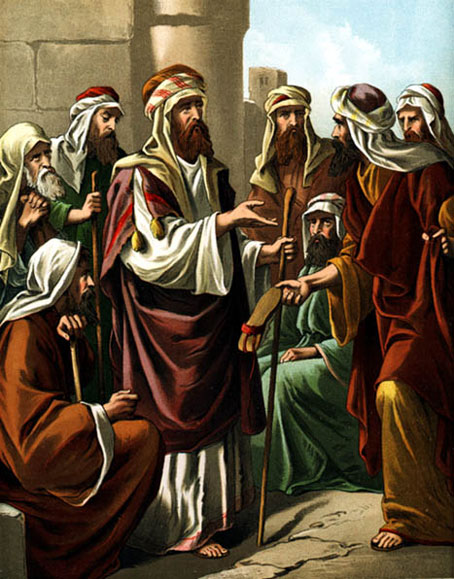
[4] Roy L. Honeycutt, Jr. “Exodus.” The Broadman Bible Commentary. Vol.1, Revised (Nashville, TN: Broadman Press, 1969), p.379.

[5] Hamilton, Victor P., Kindle Locations 8129-8133.