John 19:30

Screen Shot 2015-08-27 at 3.08.11 PMJohn 19

30 When Jesus had received the sour wine, he said, “It is finished,” and he bowed his head and gave up his spirit.

In 1970, Alexander Solzhenitsyn was awarded the Nobel Prize in Literature. Near the end of his speech, Solzhenitsyn made a most remarkable statement: “One word of truth shall outweigh the whole world.”[1] In his speech, he was calling on writers and artists to speak truth and to speak it against a world full of lies. We should not despair, Solzhenitsyn argued, because truth is weightier than falsehood. Thus, his statement.

It is the kind of statement that stays with you: “One word of truth shall outweigh the whole world.”

I think there is great wisdom there. One single word that is true has more substance, more weight, than an entire world of falsehood. There is great power in a single word of truth.

The sixth word from the cross is a single word. It is a single word of truth, and it outweighs the whole world. That word, in the Greek of the New Testament, is this: tetelestai. Most of our English translations translate it as, “It is finished.”

Tetelestai.

It is finished.

One word of truth shall outweigh the whole world.

An ocean of ink has been spilt trying to explain this one word of truth.

For instance, the great Southern Baptist Greek scholar A.T. Robertson calls it “a cry of victory in the hour of defeat.”[2] The Dutch New Testament scholar Herman Ridderbos said that “this cry indicated for [Jesus] not only the end of the road that he had to travel but also the completed work of salvation that he had accomplished for his own as the new foundation laid once for all for the life of the world.”[3] The Australian commentator Francis Moloney says the sixth word means that “the task given to him by the Father…has now been consummately brought to a conclusion.”[4] And the American Baptist John MacArthur says it means that “sin was atoned for…Satan was defeated and rendered powerless…Every requirement of God’s righteous law had been satisfied; God’s holy wrath against sin had been appeased…every prophecy had been fulfilled.”[5]

What an amazing word, tetelestai. We will approach it by considering what each of the three words in our English translation suggests.

“It”: The Enabling of Our Salvation

It is finished.”

What is it?

“It” is the task for which Jesus came, the commission He received and accepted from the Father. “It” is the reason why Jesus came. “It” is the great work of salvation that culminated in the cross and then the resurrection.

“It is finished. I have completed the task. I have done what I came to do.”

N.T. Wright points out that there is a series of six miracles that frame the gospel of John. For instance, John explains the changing of water into wine in John 2:11 with these words: “This, the first of his signs, Jesus did at Cana in Galilee, and manifested his glory. And his disciples believed in him.” It was the first of six signs. The six, Wright argues, are these:

The first sign: the changing of water into wine (John 2)

The second sign: the healing of the nobleman’s son at Capernaum (John 4:46-54)

The third sign: the healing of the paralyzed man at the pool (John 5:1-9)

The fourth sign: the multiplication of loaves and fishes (6:1-14)

The fifth sign: the healing of the man born blind (John 9:1-12)

The sixth sign: the raising of Lazarus (John 11:1-44)

Wright goes on to argue that “John cannot have intended the sequence to stop at six.” This is because John alludes to Genesis 1 throughout the book therefore necessitating a total of seven signs “completing the accomplishment of the new creation.”[6] If this is the case, then the cross would be the seventh sign, the sign of culmination. On the cross Jesus proclaims, “It is finished,” meaning that His great work is now complete.

But if “it” is finished, then “it” has enabled our salvation, for this was the reason why He came. “For the Son of Man came to seek and to save the lost” (Luke 19:10). “It is finished. I have now made a way for the lost to be saved.”

And if “it” refers to Christ’s finished work and the enabling of our salvation, then that means “it” also refers to the ending of the reign of the devil, the ending of the brutal tyranny of the one Paul referred to as “the prince of the power of the air, the spirit that is now at work in the sons of disobedience” in Ephesians 2:2. This likely explains what is happening in Luke 10 when Jesus rejoices over the triumphant report of those he sent out two by two to preach the Kingdom. In verse 18-19, Jesus responded by saying, “I saw Satan fall like lightning from heaven. Behold, I have given you authority to tread on serpents and scorpions, and over all the power of the enemy, and nothing shall hurt you.” In other words, the proclamation of the life-giving gospel of Christ goes hand in hand with the end of the devil’s reign of terror.

In the mid-1700’s, the great Charles Wesley wrote the amazing hymn, “’Tis Finished! The Messiah Dies.” It was one of his favorites, and he was still editing it on his deathbed. It reads:

’Tis finished! The Messiah dies,

Cut off for sins, but not His own:

Accomplished is the sacrifice,

The great redeeming work is done!

’Tis finished! all the debt is paid;

Justice divine is satisfied;

The grand and full atonement made;

God for a guilty world hath died.

The veil is rent in Christ alone;

The living way to Heaven is seen;

The middle wall is broken down,

And all mankind may enter in.

The types and figures are fulfilled;

Exacted is the legal pain;

The precious promises are sealed;

The spotless Lamb of God is slain.

The reign of sin and death is o’er,

And all may live from sin set free;

Satan hath lost his mortal power;

’Tis swallowed up in victory.

Saved from the legal curse I am,

My Savior hangs on yonder tree:

See there the meek, expiring Lamb!

’Tis finished! He expires for me.

Accepted in the Well-beloved,

And clothed in righteousness divine,

I see the bar to heaven removed;

And all Thy merits, Lord, are mine.

Death, hell, and sin are now subdued;

All grace is now to sinners given;

And lo, I plead the atoning blood,

And in Thy right I claim Thy Heaven!

Tetelestai.

“It is finished!”

Heaven is now opened and no one ever need go to hell! The devil has been served his papers and you can now live in triumph over him.

“Is”: The Certainty of Our Salvation

And then there is an amazing word of certainty. “It is finished!”

Christ’s work is finished.

The death-bringing curse of sin is finished.

Your guilty verdict is finished.

Craig Keener translates tetelestai as “it has been completed” and points out that “the perfect tense most likely connotes action finished in the past with continuing effects in the present.”[7] That is an important point, for “It is finished!” does indeed reverberate onward and onward. Richard John Neuhaus writes, “‘It is finished.’ But it is not over. It will not be over until every knee shall bow and every tongue confess that Jesus Christ is Lord.”[8]

For instance, the work of Christ on the cross marked the end of the devil’s reign for those who are in Christ, but the devil will not ultimately be vanquished until the end. So his reign is “finished” positionally, for those who are in Christ, but, experientially, the devil still bites at us and harasses us. This means “It is finished!” is our daily bread. We should daily remind ourselves of this most crucial truth.

The same dynamic is at work in salvation. “It is finished!” means that the work of Christ is complete and cannot be added to. Thus, our salvation is secure. Even so, Paul could write in Philippians 2:

12 Therefore, my beloved, as you have always obeyed, so now, not only as in my presence but much more in my absence, work out your own salvation with fear and trembling.

What is he doing here? Well he is certainly not trying to sow the seeds of doubt. Instead, he is recognizing that though our salvation is secure because “It is finished!” we nonetheless need to (a) make sure that we have truly trusted Christ and (b) walk in such a way as to honor the fact that we have been saved. So “It is finished!” but we should grow in our confidence in this fact by living consistently with that great truth. We need to grow into tetelestai.

“It is finished!”

It is!

The inability to grasp this “is” is at the heart of a lot of Christians’ unhappiness today. We say “It is finished!” but we seem so very unsure. As a result, many have no confidence and no joy. The late Christian counselor David Seamands remarked:

            Many years ago I was driven to the conclusion that the two major causes of most emotional problems among evangelical Christians are these: the failure to understand, receive, and live out God’s unconditional grace and forgiveness; and the failure to give out that unconditional love, forgiveness, and grace to other people…We read, we hear, we believe a good theology of grace. But that’s not the way we live. The good news of the Gospel of grace has not penetrated the level of our emotions.[9]

That is a great way to put it: “The good news of the Gospel of grace has not penetrated the level of our emotions.” Our inability to accept that we have been forgiven and tha we are loved is an inability to accept Jesus’ tetelestai.

I ask you: do you really believe that you are indeed forgiven, that it is in fact finished? Do you truly believe that Christ has set you free, that you have been forgiven, that the devil no longer has mastery over you? This is what tetelestai is calling us to, this kind of trust and faith and certainty.

“Finished”: The Basis for Our Current Peace

What this means is that we can now live in the light of tetelestai. We can now proclaim, “It is finished!” In so proclaiming, we are set free from a legion of tyrannies that seek to erode our confidence and joy.

N.T. Wright translates tetelestai as “It’s all done!” and notes that the word is “the word that people would write on a bill in the ancient world after it had been paid.”[10] What a beautiful image!

I believe we should go about writing tetelestai on all of our anxieties, on all of our fears, on all of our irrational worries, on all of our rational worries, on our crippling insecurities, on our temptations to anger and rage, on our desires for vengeance, on our lusts and our greed, on our obsessive need to be accepted, on our insecure longing to be number one!

On all of these, Tetelestai!

Over the accusations of the devil we should shout, Tetelestai!

Over our fears that erode faith, over our successes that erode humility, over our failings that erode our grasp of God’s love for us, over our sins that plague us, our addictions that harass us, and our needs that consume us: Tetelestai!

Christ, suspended between Heaven and earth, shouts, Tetelestai!

What a wonderful work He has done!

What a wonderful Savior He is!

What a beautiful cross we gather around!

Tetelestai! It is finished!


[1] www.nobelprize.org/nobel_prizes/literature/laureates/1970/solzhenitsyn-lecture.html

[2] A.T. Robertson, Word Pictures in the New Testament. Vol.V (Nashville, TN: Broadman Press, 1960), p.304

[3] Herman Ridderbos, The Gospel of John. (Grand Rapids, MI: William B. Eerdmans Publishing Company, 1992), p.618.

[4] Francis J. Moloney, S.D.B., The Gospel of John. Sacra Pagina. Vol. 4 (Collegeville, MN: The Liturgical Press, 1998), p.504.

[5] John MacArthur, John 12-21. The MacArthur New Testament Commentary (Chicago, IL: Moody Press, 2008), p.356.

[6] N.T. Wright, John for Everyone. Part Two (Louisville, KY: Westminster John Knox Press, 2004), p.130-131.

[7] Craig Keener, The Gospel of John. Vol. 2 (Peabody, MA: Hendrickson Publishers, 2003), p.1147.

[8] Richard John Neuhaus, Death on a Friday Afternoon. (New York, NY: Basic Books, 2000), p.205.

[9] Philip Yancey. What’s So Amazing About Grace. (Grand Rapids: Zondervan Publishing House, 1997), p.15.

[10] N.T. Wright, p.131.

John 19:28

Screen Shot 2015-08-27 at 3.08.11 PMJohn 19

28 After this, Jesus, knowing that all was now finished, said (to fulfill the Scripture), “I thirst.”

There is a very famous statement that is often attributed to St. Francis of Assisi. It goes like this: “Preach the gospel all the time. Use words only when necessary.” As it turns out, Francis almost certainly never said that, but it is a powerful sentiment, in my opinion. It has its critics, to be sure, but the point of it is clear enough: our lives preach the gospel more powerfully than our words. Critics of the statement point out that the actual content of the gospel must be clearly preached for it to be grasped. I agree completely. But the point of the saying stands: our words, while necessary, do not carry as much weight as our actions.

I think we can see this reality playing out on the cross. The gospel was being displayed in the suffering and death of Christ. He suffering was His sermon and His words were few. But He did find some words necessary; seven, to be exact. This fifth word from the cross, “I thirst,” is a very short word. In it we see that Jesus was using words only when necessary. But this short word is not an easy word. It is certainly not a cheap word. It, too, contains the gospel. So on the cross the gospel was preached in action and preached in words, and here it is preached in the words, “I thirst.”

The fifth word from the cross presents us with an illuminating irony that highlights the agony of the cross and the mystery of the incarnation.

There is an illuminating irony in the words, “I thirst,” particularly since they appear in John’s gospel. Jesus has spoken of water before in John’s gospel. The irony has to do with the water as well as with the idea of a cup.

Do you remember Jesus’ conversation with the woman at the well? In John 4, Jesus passes through Samaria. He disciples find convenient excuses to be elsewhere. So Jesus comes alone to a well and there he meets a Samaritan woman.

7 A woman from Samaria came to draw water. Jesus said to her, “Give me a drink.” 8 (For his disciples had gone away into the city to buy food.) 9 The Samaritan woman said to him, “How is it that you, a Jew, ask for a drink from me, a woman of Samaria?” (For Jews have no dealings with Samaritans.) 10 Jesus answered her, “If you knew the gift of God, and who it is that is saying to you, ‘Give me a drink,’ you would have asked him, and he would have given you living water.” 11 The woman said to him, “Sir, you have nothing to draw water with, and the well is deep. Where do you get that living water? 12 Are you greater than our father Jacob? He gave us the well and drank from it himself, as did his sons and his livestock.” 13 Jesus said to her, “Everyone who drinks of this water will be thirsty again, 14 but whoever drinks of the water that I will give him will never be thirsty again. The water that I will give him will become in him a spring of water welling up to eternal life.” 15 The woman said to him, “Sir, give me this water, so that I will not be thirsty or have to come here to draw water.”

When one puts the statement, “whoever drinks of the water that I will give him will never be thirsty again,” beside the statement, “I thirst,” all one can do is marvel. How can the source of a water that quenches all thirst forever say, “I thirst”? How can the spring of eternal life be dry? And let us make no mistake: Jesus is, in Himself, the spring of eternal water. In John 7, we read:

37 On the last day of the feast, the great day, Jesus stood up and cried out, “If anyone thirsts, let him come to me and drink. 38 Whoever believes in me, as the Scripture has said, ‘Out of his heart will flow rivers of living water.’”

We come and drink from Christ…and now this Christ says, “I thirst.” There is only one inescapable conclusion: something terrible happened on the cross. To be sure, the gospel tells us that something indescribably beautiful happened on the cross as well, but, first, something terrible: the spring of living water, the source of that nourishment that banishes all thirst cries out, “I thirst!”

What is more, there is another image that comes to mind at this point with the full force of irony. I am speaking of the image of the cup. In the garden of Gethsemane, when Jesus goes to pray, He prays about a cup. We find this in Matthew 26.

36 Then Jesus went with them to a place called Gethsemane, and he said to his disciples, “Sit here, while I go over there and pray.” 37 And taking with him Peter and the two sons of Zebedee, he began to be sorrowful and troubled. 38 Then he said to them, “My soul is very sorrowful, even to death; remain here, and watch with me.” 39 And going a little farther he fell on his face and prayed, saying, “My Father, if it be possible, let this cup pass from me; nevertheless, not as I will, but as you will.” 40 And he came to the disciples and found them sleeping. And he said to Peter, “So, could you not watch with me one hour? 41 Watch and pray that you may not enter into temptation. The spirit indeed is willing, but the flesh is weak.” 42 Again, for the second time, he went away and prayed, “My Father, if this cannot pass unless I drink it, your will be done.”

Jesus prays that the cup might pass, but only if it be the Father’s will. The cup can be understood in many ways. It may refer to the Father’s wrath, as it did often throughout the Old Testament. It may also be seen as an image for the painful task that lay before Jesus. In this sense, the cup is the cross. Regardless, Christ pays, “My Father, if it be possible, let this cup pass from me…”

It is an intriguing image, this cup, for the Father does not let it pass and Jesus drinks it. But in so drinking, He thirsts. The irony is in this fact: Jesus thirsts while yet drinking the cup the Father gives Him. But this cup of the cross is not a nourishing cup for Jesus. It is a cup of pain. It is a cup of agony, to the extent that the fount of all living water, while drinking it, thirsts and cries out.

The fifth word from the cross presents us with a painful fulfillment of a prophesied suffering.

Of course, John himself gives us some help in understanding this word from the cross.

28 After this, Jesus, knowing that all was now finished, said (to fulfill the Scripture), “I thirst.”

That parenthesis is important: “to fulfill the Scripture.” In other words, the cry of thirst fulfilled Old Testament prophecies about the suffering servant. James Montgomery Boice proposes that Jesus was thinking of all the Old Testament prophecies that needed to be fulfilled, realized that one had not, and so cried out on that basis.

Apparently his mind had also run over other prophecies, almost, it would seem, checking them off to assure himself that everything prophesied concerning his life had been accomplished. Was there anything in Genesis that had been left undone? No. Exodus? No. Deuteronomy? No. At last he reached Psalm 69 where it is said in verse 21, “They put gall in my food and gave me vinegar for my thirst.” Already they had offered him gall to deaden his pain…but there had been no offer of vinegar for his thirst. Therefore, he calls out “I thirst” that this might be completed.[1]

While I appreciate the emphasis on Christ knowing that all prophecy needed to be fulfilled, there is something clinical and mechanistic about Boice’s idea. In fairness, Boice is simply appealing to an image to help us understand, but it almost runs the danger of depicting Jesus as “tacking on” this fifth word to make sure all the boxes were checked.

No, He actually did thirst, and, in so doing, He fulfilled the scriptures. But what scriptures specifically? It should be noted that John does not actually say. Many point to Psalm 22.

14 I am poured out like water, and all my bones are out of joint; my heart is like wax; it is melted within my breast; 15 my strength is dried up like a potsherd, and my tongue sticks to my jaws; you lay me in the dust of death.

This is quite possible. The imagery works and is a more than fitting picture of what Christ was suffering on the cross. “My tongue sticks to my jaws; you lay me in the dust of death,” is a profoundly jarring and memorable picture of the agonies of Christ on the cross. Even so, the majority view appears to be that Jesus was referring to Psalm 69.

19 You know my reproach, and my shame and my dishonor; my foes are all known to you. 20 Reproaches have broken my heart, so that I am in despair. I looked for pity, but there was none, and for comforters, but I found none. 21 They gave me poison for food, and for my thirst they gave me sour wine to drink.

This psalm mentions thirst as well as the fact that the suffering servant was given “sour wine” to drink. This matches well the words that follow the fifth word from the cross, John 19:29.

29 A jar full of sour wine stood there, so they put a sponge full of the sour wine on a hyssop branch and held it to his mouth.

Perhaps the most powerful aspect of Psalm 69, however, is the suffering servant’s declaration that His heart has been broken. Surely this is speaking of the deep wells of pain that Christ experienced in His soul on the cross and, specifically, the amazing moment when Christ became cursed for us.

I do not deny that Psalm 22 and 69 are almost certainly what is being alluded to, but Psalm 42 should also be considered. Again, John does not name the specific text that is being fulfilled, and some argue that the parenthetical reference to fulfillment is speaking of all the Old Testament texts that speak of the agony of the Son. Regardless, there is another thirst spoken of in Psalm 22 that brings a helpful nuance to this fifth word.

1 As a deer pants for flowing streams, so pants my soul for you, O God. 2 My soul thirsts for God, for the living God. When shall I come and appear before God? 3 My tears have been my food day and night, while they say to me all the day long, “Where is your God?” 4 These things I remember, as I pour out my soul: how I would go with the throng and lead them in procession to the house of God with glad shouts and songs of praise, a multitude keeping festival. 5 Why are you cast down, O my soul, and why are you in turmoil within me? Hope in God; for I shall again praise him, my salvation 6 and my God.

This, too, fits well the scene of the cross. It also potentially helps us understand further the cry, “My God, my God, why has thou forsaken me?” In Psalm 22 the suffering, lonely servant thirsts for God and thirsts for the day when He will stand again before the God. This speaks of a fracture in their relationship that will be overcome in time. There is a note of hoped-for completion in this depiction. There is also a note of victory:

5 Why are you cast down, O my soul, and why are you in turmoil within me? Hope in God; for I shall again praise him, my salvation 6 and my God.

The fifth word from the cross presents us with a despair-destroying solidarity and a life-granting substitution.

But what of the actual meaning of, “I thirst”? What does it mean for us? I would propose that it is a statement of solidarity from Jesus that drives away despair. It also highlights Christ’s substitutionary work.

There is a fascinating and beautiful picture in Revelation 7 that speaks of the significance of the fifth word.

13 Then one of the elders addressed me, saying, “Who are these, clothed in white robes, and from where have they come?” 14 I said to him, “Sir, you know.” And he said to me, “These are the ones coming out of the great tribulation. They have washed their robes and made them white in the blood of the Lamb. 15 “Therefore they are before the throne of God, and serve him day and night in his temple; and he who sits on the throne will shelter them with his presence. 16 They shall hunger no more, neither thirst anymore; the sun shall not strike them, nor any scorching heat. 17 For the Lamb in the midst of the throne will be their shepherd, and he will guide them to springs of living water, and God will wipe away every tear from their eyes.”

“They shall…neither thirst anymore.” Why? “The Lamb in the midst of the throne will be their shepherd, and he will guide them to springs of living water, and God will wipe away every tear from their eyes.” The significance of this lies in the fact that it points to what the thirst of Christ has won for us. In short, Christ thirsts so that we will inherit a Kingdom in which there is no thirst at all. He thirsts in order that our thirsts might be quenched.

This means that suffering humanity can draw strength and courage from the fifth word from the cross. Those who are thirsty today can look to the cross and see that Christ understands their thirst, has taken their thirst upon Himself, and has forever quenched the thirsty souls of man. Herman Ridderbos put it beautifully, when he wrote:

“I thirst” is…a lament wrung from him out of the depth of his suffering in which his solidarity with those who had lamented their suffering in Scripture consists above all in the fact that he and they took their suffering to God and laid it out before him…That Jesus knew…that in his suffering he was fulfilling a divine calling…in no way detracts from the deep reality of his suffering and solidarity with his own.[2]

Yes, the thirsting Christ stands in despair-destroying solidarity with all hurting humanity. But there is one more dynamic that needs to be considered.

I mentioned earlier that part of the significance of “I thirst” is that it is situated in John’s gospel and that Jesus speaks of thirsting and water in fascinating ways in John. Specifically, we need to revisit John 2 at this point.

1 On the third day there was a wedding at Cana in Galilee, and the mother of Jesus was there. 2 Jesus also was invited to the wedding with his disciples. 3 When the wine ran out, the mother of Jesus said to him, “They have no wine.” 4 And Jesus said to her, “Woman, what does this have to do with me? My hour has not yet come.” 5 His mother said to the servants, “Do whatever he tells you.” 6 Now there were six stone water jars there for the Jewish rites of purification, each holding twenty or thirty gallons. 7 Jesus said to the servants, “Fill the jars with water.” And they filled them up to the brim. 8 And he said to them, “Now draw some out and take it to the master of the feast.” So they took it. 9 When the master of the feast tasted the water now become wine, and did not know where it came from (though the servants who had drawn the water knew), the master of the feast called the bridegroom 10 and said to him, “Everyone serves the good wine first, and when people have drunk freely, then the poor wine. But you have kept the good wine until now.” 11 This, the first of his signs, Jesus did at Cana in Galilee, and manifested his glory. And his disciples believed in him.

Now here is a fascinating thing indeed. In Jesus’ first miracle in John’s gospel he (a) turns water into wine and (b) turns this water into high quality wine. Thus, Jesus’ ministry begins with Him providing good wine for others.

But here, at the end of His life, Jesus asks for water and is given “sour wine” (v.29). “Here is Jesus, thirsty” remarks N.T. Wright, “and they give him the low-grade sour wine that the soldiers used. He gave others the best wine, so good that people remarked on it. He himself, at his moment of agony, has the cheap stuff that the lower ranks in the army drank when on duty.”[3]

Here we see again the substitutionary nature of the atonement. Jesus provides good wine for others, but, for Himself, there is only sour wine. He gives us what is sweet and generous and remarkable. He takes upon Himself what is sour and poor and wretched. He freely gives bountifully out of His abundance, but for Himself there is only the stingy and mocking offering of a humanity that does not know up from down.

Christ gives good wine.

Christ is given gutter wine.

This is the cross: Christ putting Himself in our place and taking upon Himself our curse. He thirsts so that we can be filled. He is stripped and exposed so that we can be clothed and protected. He is mocked and beaten so that we can be healed and blessed. He is tormented so that we can be saved.

“I thirst…so that you will not have to.”

Behold the Lamb of God who takes away the sin of the world!


[1] James Montgomery Boice, The Gospel of John. Vol. 5 (Grand Rapids, MI: Baker Books, 1999), 1523-1524.

[2] Herman Ridderbos, The Gospel of John. (Grand Rapids, MI: William B. Eerdmans Publishing Company, 1992), p.616-617.

[3] N.T. Wright, John for Everyone: Part Two. (Louiville, KY: Westminster John Knox Press, 2004), p.130.

James White on Robert Jeffress’ Comments Concerning ISIS

I’m not a fan of James White.  I don’t know that that comment needs a real explanation.  It is what it is.  But I will qualify it a bit.  I don’t hate James White or loathe him or anything of the sort.  It’s just that certain of his theological positions are troubling to me and at times I find his approach on some issues to be grating.  Other aspects of his ministry I’m deeply grateful for. For instance, James White of Alpha and Omega Ministries has been throwing down some very helpful, very balanced, and very wise counsel concerning how we speak about Islam. Case in point, consider the first 45 minutes of this video in which he responds to Robert Jeffress’ outlandish comments from the pulpit of First Baptist Dallas.  Well done Dr. White.  Here’s the video…

A One Year Reading Plan for Karl Barth’s Church Dogmatics

564426I do better with structure, especially when it comes to reading large works.  Barth’s Dogmatics is considered the most significant theological work of the twentieth century and one of the most substantial theological works ever written.  I have been thinking of reading through the Dogmatics next year and finally, a few days back, sat down and worked through the table of contents and developed a plan.  I’ve tried to add extra days when the sections are larger.  I’ll be working through the Hendrickson set available through Christian Book Distributors here (though it should be noted that T&T Clark has republished the Dogmatics here in paperback with translations of all foreign-language terms [also available here via Logos]).  Come along for the journey!  Here’s the reading plan…


2016 Reading Plan for Karl Barth’s Church Dogmatics
Volume I.1
1-Jan 1.1 The Church, Theology, Science
2-Jan 1.2 Dogmatics as an Enquiry
3-Jan 1.3 Dogmatics as an Act of Faith
4-Jan 2.1 The Necessity of Dogmatic Prolegomena
5-Jan 2.2 The Possibility of Dogmatic Prolegomena
6-Jan 3.1 Talk about God and Church Proclamation
7-Jan
8-Jan 3.2 Dogmatics and Church Proclamation
9-Jan 4.1 The Word of God Preached
10-Jan 4.2 The Word of God Written
11-Jan 4.3 The Word of God Revealed
12-Jan 4.4 The Unity of the Word of God
13-Jan 5.1 The Question of the Nature of the Word of God
14-Jan 5.2 The Word of God as the Speech of God
15-Jan 5.3 The Speech of God as the Act of God
16-Jan 5.4 The Speech of God as the Mystery of God
17-Jan 6.1 The Question of the Knowability of the Word of God
18-Jan 6.2 The Word of God and Man
19-Jan 6.3 The Word of God and Experience
20-Jan
21-Jan 6.4 The Word of God and Faith
22-Jan 7.1 The problem of Dogmatics
23-Jan
24-Jan 7.2 Dogmatics as a Science
25-Jan 7.3 The Problem of Dogmatic Prolegomena
26-Jan 8.1 The Place of the Doctrine of the Trinity in Dogmatics
27-Jan 8.2 The Root of the Doctrine of the Trinity
28-Jan
29-Jan 8.3 Vestigium Trinitatis
30-Jan 9.1 Unity in Trinity
31-Jan 9.2 Trinity in Unity
1-Feb 9.3 Triunity
2-Feb 9.4 The Meaning of the Doctrine of the Trinity
3-Feb 10.1 God as Creator
4-Feb 10.2 The Eternal Father
5-Feb 11.1 God as Reconciler
6-Feb 11.2 The Eternal Son
7-Feb 12.1 God as Redeemer
8-Feb 12.2 The Eternal Spirit
9-Feb
Volume I.2
10-Feb 13.1 Jesus Christ as the Objective Reality of Revelation
11-Feb
12-Feb 13.2 Jesus Christ the Objective Possibility of Revelation
13-Feb
14-Feb 14.1 God’s Time and our Time
15-Feb
16-Feb 14.2 The Time of Expectation
17-Feb
18-Feb 14.3 The Time of Recollection
19-Feb
20-Feb 15.1 The Problem of Christology
21-Feb 15.2 Very God and Very Man
22-Feb
23-Feb 15.3 The Miracle of Christmas
24-Feb
25-Feb 16.1 The Holy Spirit the Subjective Reality of Revelation
26-Feb
27-Feb 16.2 The Holy Spirit the Subjective Possibility of Revelation
28-Feb
29-Feb 17.1 The Problem of Religion in Theology
1-Mar 17.2 Religion as Unbelief
2-Mar
3-Mar 17.3 True Religion
4-Mar
5-Mar 18.1 Man as a Doer of the Word
6-Mar 18.2 The Love of God
7-Mar
8-Mar 18.3 The Praise of God
9-Mar
10-Mar
11-Mar 19.1 Scripture as a Witness to Divine Revelation
12-Mar
13-Mar 19.2 Scripture as the Word of God
14-Mar
15-Mar
16-Mar 20.1 The Authority of the Word
17-Mar
18-Mar
19-Mar 20.2 Authority under the Word
20-Mar
21-Mar
22-Mar
23-Mar 21.1 The Freedom of the Word
24-Mar
25-Mar
26-Mar 21.2 Freedom under the Word
27-Mar
28-Mar 22.1 The Word of God and the Word of Man in Christian Preaching
29-Mar 22.2 Pure Doctrine as the Problem of Dogmatics
30-Mar
31-Mar 22.3 Dogmatics as Ethics
1-Apr 23.1 The Formal Task of Dogmatics
2-Apr 23.2 The Dogmatic Norm
3-Apr
4-Apr 24.1 The Material Task of Dogmatics
5-Apr 24.2 The Dogmatic Method
6-Apr
7-Apr Volume II.1
8-Apr 25.1 Man before God
9-Apr
10-Apr 25.2 God before Man
11-Apr
12-Apr 26.1 The Readiness of God
13-Apr
14-Apr
15-Apr 26.2 The Readiness of Man
16-Apr
17-Apr 27.1 The Hiddeness of God
18-Apr
19-Apr 27.2 The Veracity of Man’s Knowledge of God
20-Apr
21-Apr 28.1 The Being of God in Act
22-Apr
23-Apr 28.2 The Being of God as the One who loves
24-Apr
25-Apr 28.3 The Being of God in Freedom
26-Apr
27-Apr 29 The Perfections of God
28-Apr
29-Apr 30.1 The Grace and Holiness of God
30-Apr 30.2 The Mercy and Righteousness of God
1-May
2-May 30.3 The Patience and Wisdom of God
3-May
4-May 31.1 The Unity and Omnipresence of God
5-May
6-May 31.2 The Constancy and Omnipotence of God
7-May
8-May
9-May
10-May
11-May 31.3 The Eternity and Glory of God
12-May
13-May
14-May
Volume II.2
15-May 32.1 The Orientation of the Doctrine
16-May 32.2 The Foundation of the Doctrine
17-May 32.3 The Place of the Doctrine in Dogmatics
18-May 33.1 Jesus Christ, Electing and Elected
19-May
20-May 33.2 Th Eternal Will of God in the Election of Jesus Christ
21-May
22-May 34.1 Israel and the Church
23-May 34.2 The Judgment and the Mercy of God
24-May 34.3 The Promise of God Heard and Believed
25-May 34.4 The Passing and the Coming Man
26-May
27-May 35.1 Jesus Christ, the Promise and its Recipient
28-May
29-May 35.2 The Elect and the Rejected
30-May
31-May
1-Jun 35.3 The Determination of the Elect
2-Jun
3-Jun 35.4 The Determination of the Rejected
4-Jun
5-Jun
6-Jun 36.1 The Command of God and the Ethical Problem
7-Jun
8-Jun 36.2 The Way of Theological Ethics
9-Jun 37.1 The Basis of the Divine Claim
10-Jun 37.2 The Content of the Divine Claim
11-Jun 37.3 The Form of the Divine Claim
12-Jun
13-Jun 38.1 The Sovereignty of the Divine Decision
14-Jun 38.2 Th eDefiniteness of the Divine Decision
15-Jun 38.3 The Goodness of the Divine Decision
16-Jun 39.1 The Presupposition of the Divine Judgment
17-Jun 39.2 The Execution of the Divine Judgment
18-Jun 39.3 The Purpose of the Divine Judgment
19-Jun
Volume III.1
20-Jun 40 Faith in God the Creator
21-Jun 41.1 Creation, History and Creation History
22-Jun
23-Jun 41.2 Creation as the External Basis of the Covenant
24-Jun
25-Jun
26-Jun
27-Jun 41.3 The Covenant as the Internal Basis of Creation
28-Jun
29-Jun
30-Jun
1-Jul 42.1 Creation as Benefit
2-Jul 42.2 Creation as Actualisation
3-Jul 42.3 Creation as Justification
4-Jul
Volume III.2
5-Jul 43.1 Man in the Cosmos
6-Jul 43.2 Man as an Object of Theological Knowledge
7-Jul
8-Jul 44.1 Jesus, Man for God
9-Jul 44.2 Phenomena of the Human
10-Jul
11-Jul 44.3 Real Man
12-Jul
13-Jul 45.1 Jesus, Man for other Men
14-Jul 45.2 The Basic Form of Humanity
15-Jul
16-Jul 45.3 Humanity as Likeness and Hope
17-Jul
18-Jul 46.1 Jesus, Whole Man
19-Jul 46.2 The Spirit as Basis of Soul and Body
20-Jul 46.3 Soul and Body in their Interconnexion
21-Jul 46.4 Soul and Body in their Particularity
22-Jul 46.5 Soul and Body in their Order
23-Jul 47.1 Jesus, Lord of Time
24-Jul
25-Jul 47.2 Given Time
26-Jul
27-Jul 47.3 Allotted Time
28-Jul 47.4 Beginning Time
29-Jul 47.5 Ending Time
30-Jul
Volume III.3
31-Jul 48.1 The Concept of Divine Providence
1-Aug 48.2 The Christian Belief in Providence
2-Aug 48.3 The Christian Doctrine of Providence
3-Aug 49.1 The Divine Preserving
4-Aug
5-Aug 49.2 The Divine Accompanying
6-Aug
7-Aug 49.3 The Divine Ruling
8-Aug
9-Aug
10-Aug 49.4 The Christian under the Universal Lordship of God the Father
11-Aug
12-Aug 50.1 The Problem of Nothingness
13-Aug 50.2 The Misconception of Nothingness
14-Aug 50.3 The Knowledge of Nothingness
15-Aug
16-Aug 50.4 The Reality of Nothingness
17-Aug 51.1 The Limits of Angelology
18-Aug
19-Aug 51.2 The Kingdom of Heaven
20-Aug
21-Aug 51.3 The Ambassadors of God and their Opponents
22-Aug
Volume III.4
23-Aug 52.1 The Problem of Special Ethics
24-Aug 52.2 God the Creator as Commander
25-Aug 53.1 The Holy Day
26-Aug 53.2 Confession
27-Aug 53.3 Prayer
28-Aug
29-Aug 54.1 Man and Woman
30-Aug
31-Aug
1-Sep 54.2 Parents and Children
2-Sep 54.3 Near and Distant Neighbors
3-Sep 55.1 Respect for Life
4-Sep
5-Sep 55.2 The Protection of Life
6-Sep
7-Sep 55.3 The Active Life
8-Sep
9-Sep
10-Sep 56.1 The Unique Opportunity
11-Sep 56.2 Vocation
12-Sep
13-Sep 56.3 Honour
Volume IV.1
14-Sep 57.1 God with Us
15-Sep 57.2 The Covenant as the Presupposition of Reconciliation
16-Sep
17-Sep 57.3 The Fulfilment of the Broken Covenant
18-Sep 58.1 The Grace of God in Jesus Christ
19-Sep 58.2 The Being of Man in Jesus Christ
20-Sep 58.3 Jesus Christ the Mediator
21-Sep 58.4 The Three Forms of the Doctrine of Reconciliation
22-Sep 59.1 The Way of the Son of God into the Far Country
23-Sep
24-Sep 59.2 The Judge Judged in our Place
25-Sep
26-Sep
27-Sep 59.3 The Verdict of the Father
28-Sep
29-Sep
30-Sep 60.1 The Man of Sin in the Light of the Obedience of the Son of God
1-Oct
2-Oct 60.2 The Pride of Man
3-Oct
4-Oct 60.3 The Fall of Man
5-Oct 61.1 The Problem of the Doctrine of Justification
6-Oct 61.2 The Judgment of God
7-Oct 61.3 The Pardon of Man
8-Oct
9-Oct 61.4 Justification by Faith Alone
10-Oct 62.1 The Word of the Holy Spirit
11-Oct 62.2 The Being of the Community
12-Oct
13-Oct 62.3 The Time of the Community
14-Oct 63.1 Faith and its Object
15-Oct 63.2 The Act of Faith
16-Oct
17-Oct
18-Oct
Volume IV.2
19-Oct 64.1 The Second Problem of the Doctrine of Reconciliation
20-Oct 64.2 The Homecoming of the Son of Man
21-Oct
22-Oct
23-Oct 64.3 The Royal Man
24-Oct
25-Oct
26-Oct 64.4 The Direction of the Son
27-Oct
28-Oct 65.1 The Man of Sin in the Light of the Lordship of the Son of Man
29-Oct 65.2 The Sloth of Man
30-Oct
31-Oct
1-Nov 65.3 The Misery of Man
2-Nov 66.1 Justification and Sanctification
3-Nov
4-Nov 66.2 The Holy One and the Saints
5-Nov 66.3 The Call to Discipleship
6-Nov 66.4 The Awakening to Conversion
7-Nov
8-Nov 66.5 The Praise of Works
9-Nov 66.6 The Dignity of the Cross
10-Nov 67.1 The True Church
11-Nov 67.2 The Growth of the Community
12-Nov 67.3 The Upholding of the Community
13-Nov 67.4 The Order of the Community
14-Nov
15-Nov 68.1 The Problem of Christian Love
16-Nov 68.2 The Basis of Love
17-Nov 68.3 The Act of Love
18-Nov
19-Nov 68.4 The Manner of Love
20-Nov
21-Nov
22-Nov
23-Nov
Volume IV.3.1
24-Nov 69.1 The Third Problem of the Doctrine of Reconciliation
25-Nov 69.2 The Light of Life
26-Nov
27-Nov
28-Nov 69.3 Jesus is Victor
29-Nov
30-Nov
1-Dec 69.4 The Promise of the Spirit
2-Dec
3-Dec 70.1 The True Witness
4-Dec 70.2 The Falsehood of Man
5-Dec 70.3 The Condemnation of Man
6-Dec
Volume IV.3.2
7-Dec 71.1 Man in the Light of Life
8-Dec 71.2 The Event of Vocation
9-Dec 71.3 The Goal of Vocation
10-Dec 71.4 The Christian as Witness
11-Dec
12-Dec 71.5 The Christian in Affliction
13-Dec 71.6 The Liberation of the Christian
14-Dec
15-Dec 72.1 The People of God in World-Occurrence
16-Dec 72.2 The Community for the World
17-Dec
18-Dec 72.3 The Task of the Community
19-Dec 72.4 The Ministry of the Community
20-Dec
21-Dec 73.1 The Subject of Hope and Hope
22-Dec 73.2 Life in Hope
23-Dec
24-Dec
Volume IV.4
25-Dec 1. Baptism with the Holy Spirit
26-Dec 2. Baptism with Water
27-Dec
28-Dec
29-Dec
30-Dec
31-Dec

On the Unique Ministry of Curt Cloninger

I was recently reminded once again of the profoundly unique and effective ministry of Curt Cloninger.  Curt is an actor who does dramatic monologues, oftentimes for the Church.  You can get a sense of the range of things he has done by visiting his website here.  I’ll be using a few things from Curt’s dvd, “Celebrate the Child,” over the next week and while I was working through his dvd I was struck once again by just what a talented guy he is.  Check him out.  Here’s the kind of thing he does:

The Robert E. Webber Center for an Ancient Evangelical Future

Agnus-Dei-Slide-2I was doing some research on Thomas C. Oden recently when I came across a video he did for a conference at The Robert E. Webber Center for an Ancient Evangelical Future, a center of which I had never heard.  I was familiar with Robert Webber, the author of Ancient Future Faith: Rethinking Evangelicalism for a Postmodern World and the other books in that series.  Robert Webber’s basic agenda essentially paralleled that of Tom Oden: allowing the voice of the Great Tradition to inform our evangelical identity and mission.  The website has a lot of good resources, not the least of which is media from the three annual conferences they have held thus far.  Check it out!

Concerning Kent Dobson’s Resignation and the Zeitgeist

BullseyeEvery now and again, somebody hits the bullseye.  I mean they just absolutely nail it.  Such was the case recently when Dustin Messer wrote an article for Reformation21 evaluating Ken Dobson’s resignation from the pastorate of Mars Hill Bible Church.  I do not know Kent Dobson and I do not know Dustin Messer, but I do know that the latter’s evaluation of the former’s resignation is as spot-on a critique of the zeitgeist of left-leaning hip Evangelicalism as one is likely to find.  Check it out:  “Following Rob Bell: The Edges of Orthodoxy and the Center of the Zeitgeist.”

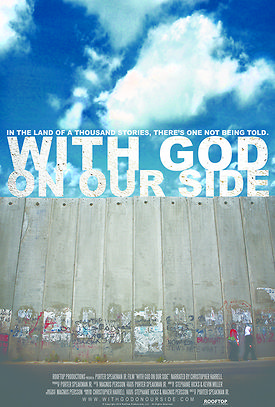
“With God on Our Side” – A Documentary That Should Be Considered

WGOOS Poster (Large)I love documentaries.  I always have.  A well-done documentary can entertain and educate.  Honestly, it seems like we are living in a golden age of documentary making at present.  There are a number of fascinating ones out there, and it seems as if the bar has been raised in terms of quality and the ability to engage and hold the viewer’s attention.  I recently saw one that has stayed with me and continues to cause me to think and chew on its central thesis, not least because it is one that I have experienced and, to some extent, still do.  It is called, “With God On Our Side.”

Porter Speakman, Jr.’s “With God On Our Side” is a consideration of Christian Zionism.  Specifically it is a consideration of the kind of approach seen in someone like John Hagee (who figures prominently in the film).  In short, Christian Zionism is the idea that the covenant God made with Israel in Genesis applies to the modern state of Israel.  Therefore, to stand with the modern state of Israel is to stand with God.  Conversely, to fail to stand with Israel, or to stand against them, is to stand against God.  This is why you see a heavy focus on Israel in certain segments of Evangelical Protestantism today along with a seeming inability to critique any of Israel’s actions.  This kind of thinking usually goes hand-in-hand with premillennial dispensationalism and its emphasis on the reestablishment of Israel as a fulfillment of prophecy.

That summary is woefully inadequate, to be sure, but I think that’s a fairly faithful articulation of the gist of Zionism.  I should know.  I was exposed to a pretty heavy dose of this kind of thinking as a kid, primarily through the Scofield Reference Bible and the general church culture in which I grew up.  What is more, it is fairly pervasive in conservative Protestantism, perhaps especially in the South.

I should perhaps go ahead and share where I currently am on the issue.  In short, I am somewhat conflicted.  Paul speaks of a “partial hardening” of Israel in Romans 11:25, a term that would seem to suggest that the Jews will indeed experience a revival at some point in the future.  This idea being presented by an apostle is significant, because it means there is still a significant place for national Israel.  What is more, the question of the continuing and literal fulfillment of the covenants with Israel, particularly regarding the land, is an interesting and intriguing one, especially in the light of Christ as the fulfillment of the promises made to Israel.  I do not claim to have all of this figured out, but I can say I have an instinctive reaction against anything that would dilute this fact:  the covenants reach their fulfillment in Christ.

All of this is a much bigger issue than this post can tackle, but I raise these considerations simply to say that I, along with many others, stand in a position of respect and admiration for the Jewish people without adopting the approach of some of the more radical expressions of Christian Zionism.  By “radical” I am referring to a mentality that seems incapable of critiquing the actions of modern Israel and that thinks the Church should be supportive of Israel in whatever she does.  On the other hand, I should say that the left’s demagoguery concerning Israel (see Noam Chomsky, among others) and its labeling of anything Israel does as “terrorism,” even acts meant to defend itself against terrorism, strikes me as naive and overly simplistic. In short, I try to be objective and biblical, though the issues can be murky and muddled at times when we view the modern situation.

Christian Zionism is the focus of “With God On Our Side.”  It is seeking to show that this kind of thinking has led some evangelicals to minimize, overlook, or even be incapable of seeing some of the actions of modern Israel as questionable or wrong.  What is more, and most tragically, it prizes national Israel over segments of the Church, particularly the Church in modern day Palestine.

I suppose this last point is what has affected me most.  I have long thought about the fact that there are Christians, that there is an expression of the Church, on the other side of the wall.  Furthermore, I have often wondered what Palestinian Christians must think of Western Zionism.  The thought has long troubled me, and I have long thought that, whatever our position as Christians on modern Israel and the Israeli-Palestinian conflict might be, I am first and foremost bound in solidarity by the blood of Christ to Christians on either side of that conflict.  Put another way, the cross of Christ means that I have more in common with a Palestinian Christian than I do with a non-Christian Israeli.

This not a geo-political position per se.  It is a theological position.  But it is a theological position that must inform my politics.

The documentary does a fantastic job of exposing some of the blind spots and muddled thinking of Christian Zionism in the West, particularly in the way that it keeps us from standing with the Christians in the region.  The filmmakers interview Palestinian pastors and church leaders and let us hear their voices.  It is a painful thing to hear.  For instance, it is staggering to hear a Palestinian pastor speak of being invited to a Dallas, TX, church and of having a man pull away his hand and turn from him in disgust when the man realized that the pastor was a Palestinian Christian and not a Jewish Christian.  That is simply unbelievable.  It is devastatingly wrong.

I repeat:  this documentary should be seen.

Has it answered all of my questions?  No.  But has it given a critical and seldom-heard voice to a neglected part of the Church of the Lord Jesus?  Absolutely it has.  And it has left this viewer with a powerful reminder:  whatever our politics may be, if it leads us to turn a blind eye to suffering followers of Jesus, it cannot be right.

Now, is it possible to have a fundamental respect for Israel and even to stand with Israel and yet not neglect the suffering people of Palestine (Christian or not, I should add)?  It is indeed.  But that cannot be done with the type of overly-simplistic and highly-naive thinking that categorizes a great deal of the conservative Protestant world that I call my home.