
 Exodus 24
1 Then he said to Moses, “Come up to the Lord, you and Aaron, Nadab, and Abihu, and seventy of the elders of Israel, and worship from afar. 2 Moses alone shall come near to the Lord, but the others shall not come near, and the people shall not come up with him.” 3 Moses came and told the people all the words of the Lord and all the rules. And all the people answered with one voice and said, “All the words that the Lord has spoken we will do.” 4 And Moses wrote down all the words of the Lord. He rose early in the morning and built an altar at the foot of the mountain, and twelve pillars, according to the twelve tribes of Israel. 5 And he sent young men of the people of Israel, who offered burnt offerings and sacrificed peace offerings of oxen to the Lord. 6 And Moses took half of the blood and put it in basins, and half of the blood he threw against the altar. 7 Then he took the Book of the Covenant and read it in the hearing of the people. And they said, “All that the Lord has spoken we will do, and we will be obedient.” 8 And Moses took the blood and threw it on the people and said, “Behold the blood of the covenant that the Lord has made with you in accordance with all these words.” 9 Then Moses and Aaron, Nadab, and Abihu, and seventy of the elders of Israel went up, 10 and they saw the God of Israel. There was under his feet as it were a pavement of sapphire stone, like the very heaven for clearness. 11 And he did not lay his hand on the chief men of the people of Israel; they beheld God, and ate and drank. 12 The Lord said to Moses, “Come up to me on the mountain and wait there, that I may give you the tablets of stone, with the law and the commandment, which I have written for their instruction.” 13 So Moses rose with his assistant Joshua, and Moses went up into the mountain of God. 14 And he said to the elders, “Wait here for us until we return to you. And behold, Aaron and Hur are with you. Whoever has a dispute, let him go to them.” 15 Then Moses went up on the mountain, and the cloud covered the mountain. 16 The glory of the Lord dwelt on Mount Sinai, and the cloud covered it six days. And on the seventh day he called to Moses out of the midst of the cloud. 17 Now the appearance of the glory of the Lord was like a devouring fire on the top of the mountain in the sight of the people of Israel. 18 Moses entered the cloud and went up on the mountain. And Moses was on the mountain forty days and forty nights.
In his book, The Beauty of the Infinite, theologian David Bentley Hart makes the argument that the persuasive power of Christianity rests in the beauty of the person and work of Jesus and in the peace that Jesus gives.
Christ is a persuasion, a form evoking desire, and the whole force of the gospel depends upon the assumption that this persuasion is also peace: that the desire awakened by the shape of Christ and his church is one truly reborn as agape, rather than merely the way in which a lesser force succumbs to a greater, as an episode in the endless epic of power.
He argues that “Christian theology has no stake in the myth of disinterested rationality: the church has no arguments for its faith more convincing than the form of Christ; enjoined by Christ to preach the gospel, Christians must proclaim, exhort, bear witness, persuade – before other forms of reason can be marshaled.” And again:
What Christian thought offers the world is not a set of “rational” arguments that (suppressing certain of their premises) force assent from others by leaving them, like the interlocutors of Socrates, at a loss for words; rather, it stands before the world principally with the story it tells concerning God and creation, the form of Christ, the loveliness of the practice of Christian charity – and the rhetorical richness of its idiom. Making its appeal first to the eye and heart, as the only way it may “command” assent, the church cannot separate truth from rhetoric, or from beauty.[1]
I believe Hart is correct. The beauty, the loveliness, the sheer resplendent glory of Christ and His message, life, and, at her best, Church carry within themselves an inherent evangelistic appeal that transcends cold rationality. Nor is this mere emotionalism, for the beauty of Christ extends to the truth of Christ, buttressing it and undergirding it. What this means is that the Church must remove the ugliness of her own sinfulness, her own pettiness, and her own idols so that the latent beauty of Jesus Christ can shine forth.
 Mark 6
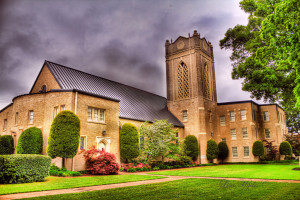 Just a little note to say that I am preaching revival services at First Baptist Church, Newport, Arkansas, this week so there will be no sermon audio or manuscripts posted until next week. It has been an honor to be able to spend time in worship this week with this wonderful church, with Greg Dills, their pastor, and with Billy Davis, the Central Baptist Church Minister of Music who is leading the worship team in revival this week. Please pray for tonight’s concluding meeting. We’ve seen the Lord do amazing things!
 Exodus 23
 1 John 2
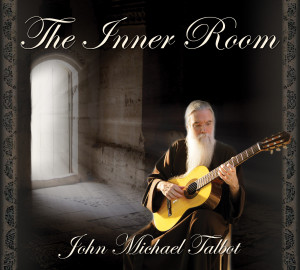 When I was in high school I was in a music store in Sumter, SC, when I noticed an album with a monk on the cover. I was intrigued so I bought it. I was immediately struck by and drawn to the beautiful, meditative music of
 Exodus 23